
Review · KATHMANDU
Kathmandu: 12-Day Full-Board Everest Base Camp Private Trek
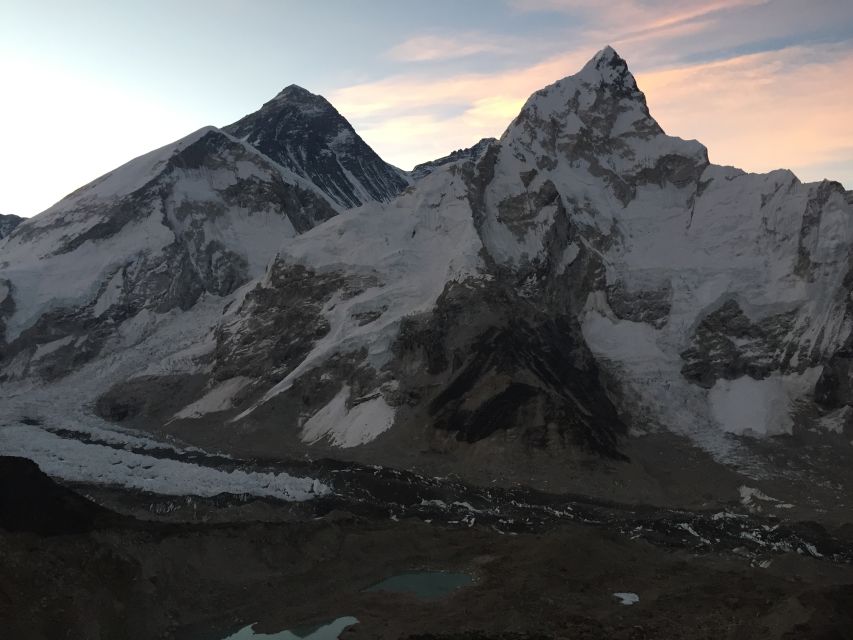
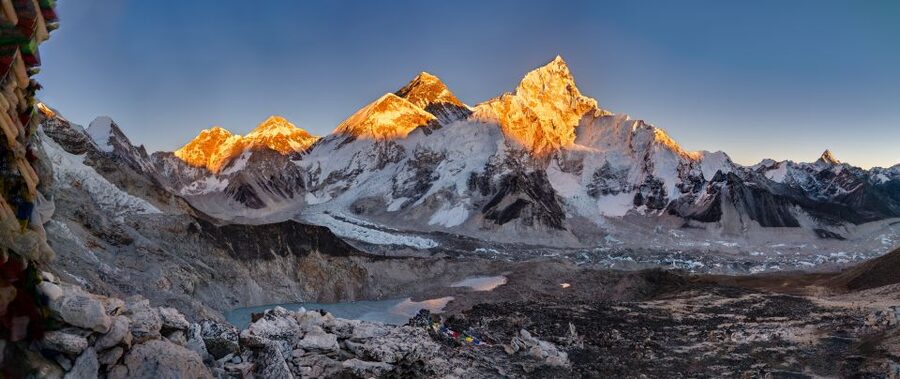
Everest Base Camp is the headline, but Kala Patthar at 5,545 meters is the moment that often stays with you. From this high viewpoint, you get the clearest mountain panorama of the route, after walking through Sherpa villages, Buddhist country, and the rugged Khumbu Valley.
I like that this is a private trek with a slow acclimatization plan, including rest days in Namche Bazaar and Dingboche. I also like the practical package: flights, permits, three daily meals, a porter for every two people, and cold-weather gear are all covered.
The main drawback is the physical demand. You’ll walk about five to seven hours most days, with long high-altitude days near Base Camp and Kala Patthar. Lukla flights can also be disrupted, so you need travel insurance and extra flexibility.
Key points before you book
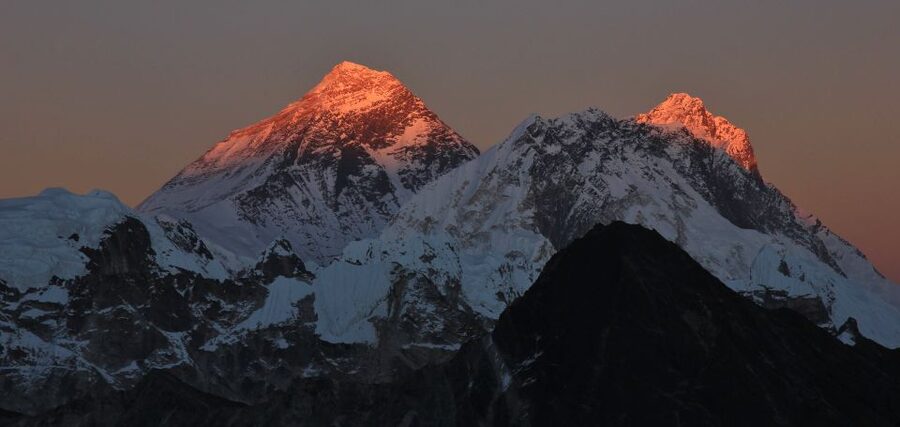
- Kala Patthar reaches 5,545 meters: This is the highest point of the trek and the best place on the route for broad Everest views.
- Two acclimatization days are built in: You rest and take short hikes in Namche Bazaar and Dingboche.
- The private format gives you a personal guide: The group is not shared with strangers, and the English-speaking guide leads the full route.
- The package includes useful mountain gear: You receive a down jacket, sleeping bag, and duffle bag, along with a porter shared by two people.
- The price covers major costs: At $1,550 per person, flights, meals, permits, guesthouses, and guide expenses are included.
- The route has real flight risk: In peak seasons from March to May and September to November, Lukla flights may use Ramechhap Manthali instead of Kathmandu.
Why the route to Everest Base Camp works
This is a classic 14-day Everest Base Camp route, not a quick dash to the mountain. You begin in Kathmandu, fly to Lukla, walk up the Khumbu Valley, reach Base Camp and Kala Patthar, then retrace the route toward Lukla.
That extra time matters. The route rises from Lukla at 2,820 meters to Kala Patthar at 5,545 meters, so your body needs time to adjust. The planned rest days in Namche Bazaar and Dingboche are not wasted days. They help reduce the risk of altitude trouble and give you time to look around.
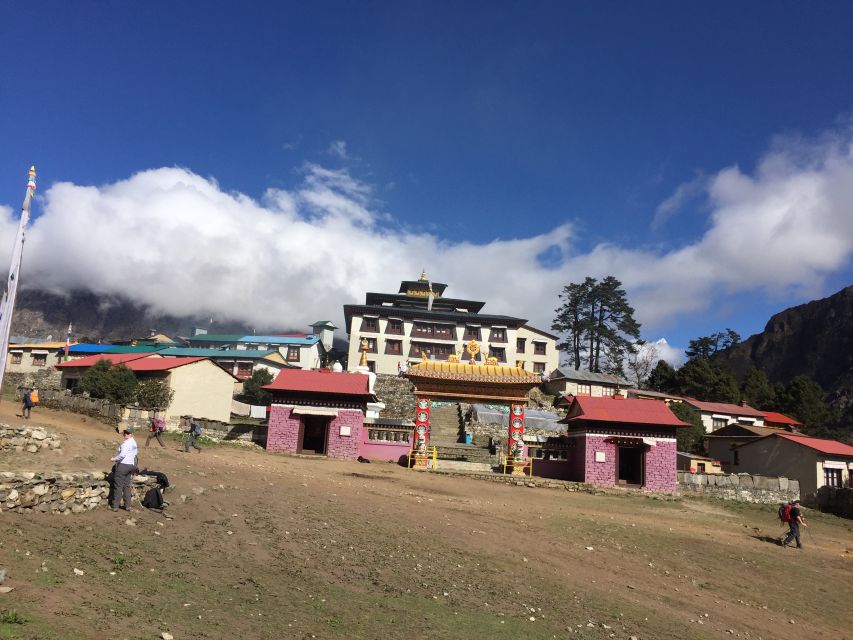
The walk also has a good cultural rhythm. You pass Sherpa villages, visit Tengboche Monastery, spend time in Namche Bazaar, and sleep in mountain guesthouses. The scenery changes from lower valley paths to stark high-altitude terrain, so each day feels different.
You should still treat the schedule as demanding. The longest and hardest sections come late, when the air is thin and the trail reaches its highest elevations.
More Everest Base Camp treks around Kathmandu:
- Everest Base Camp Trek – 14 Days
★ 5.0 · 1,499 reviews - Everest Base Camp Trek
★ 5.0 · 842 reviews - Everest Base Camp Trekking
★ 5.0 · 485 reviews
Kathmandu arrival and the flight to Lukla
Your trip begins with airport pickup at Tribhuvan International Airport. Staff meet you according to your arrival time and transfer you to a hotel.
The next morning, you fly to Lukla and begin walking toward Phakding. The flight is short, but the schedule can be affected by mountain weather and airport congestion. A recent trekker specifically advised leaving extra buffer days because Nepal’s airports can be chaotic.
In peak months, flights may be diverted from Kathmandu to Ramechhap Manthali. That can mean an additional transfer before the flight, so do not plan a tight international connection immediately after the trek.
Lukla is the practical gateway to the Khumbu. From there, the first walk to Phakding covers about seven kilometers and takes roughly four hours. At 2,657 meters, Phakding gives you a manageable first day rather than sending you straight into a hard climb.
Phakding to Namche Bazaar, 10 kilometers uphill
The route from Phakding to Namche Bazaar takes about seven to eight hours. You walk roughly 10 kilometers, with the trail gaining height toward the Sherpa capital.
This is where the trek begins to feel serious. The path moves through the Khumbu Valley, across mountain terrain, and toward higher villages. Namche Bazaar sits at 3,440 meters and is an important place to pause.
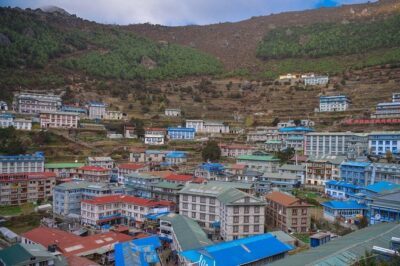
Namche is more than a sleeping stop. It is a lively Sherpa trading center and a useful place to learn how mountain communities function along the route. You have a full acclimatization day here, with a short hike and local exploration.
That rest day is one of the route’s smart features. You can walk high enough to help your body adjust, then sleep back at Namche. You may find the day easier than the long walking days, but do not treat it as a free pass. Altitude affects people differently.
Tengboche Monastery and the walk to Dingboche
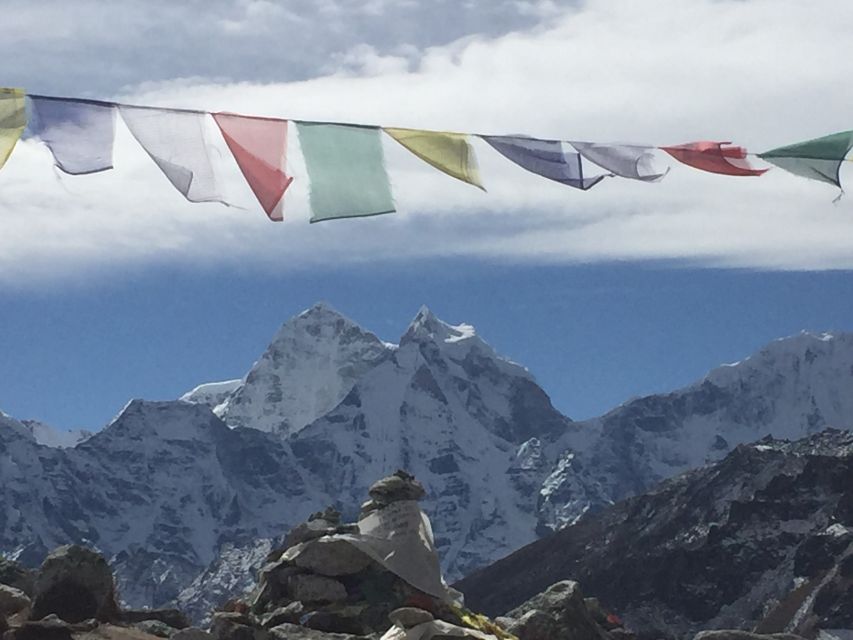
From Namche, you walk about 11 kilometers to Tengboche, also called Thyangboche. The day takes six to seven hours and reaches 3,867 meters.
Tengboche Monastery is one of the cultural highlights of the route. It adds a spiritual dimension to what could otherwise become a string of mountain viewpoints and walking hours. The monastery also sits in a setting with broad views of the surrounding Himalayan peaks.
From Tengboche, you continue to Dingboche at 4,365 meters. This section takes about five to six hours and covers around 10 kilometers. The valley begins to feel more exposed and severe as you climb higher.
Dingboche has another planned acclimatization day. You take a local hike, rest, and prepare for the difficult stretch ahead. I value this pause because the next stages bring colder conditions, thinner air, and longer high-altitude walking.
More treks around Kathmandu:
- Annapurna Circuit Trek with Tilicho Lake
★ 5.0 · 368 reviews - Everest Base Camp Trekking – 13 Day
★ 5.0 · 365 reviews - Everest Base Camp Trek
★ 5.0 · 350 reviews - Everest Base Camp Trek -14 Days
★ 5.0 · 321 reviews
Dingboche to Lobuche, 9 kilometers at high altitude
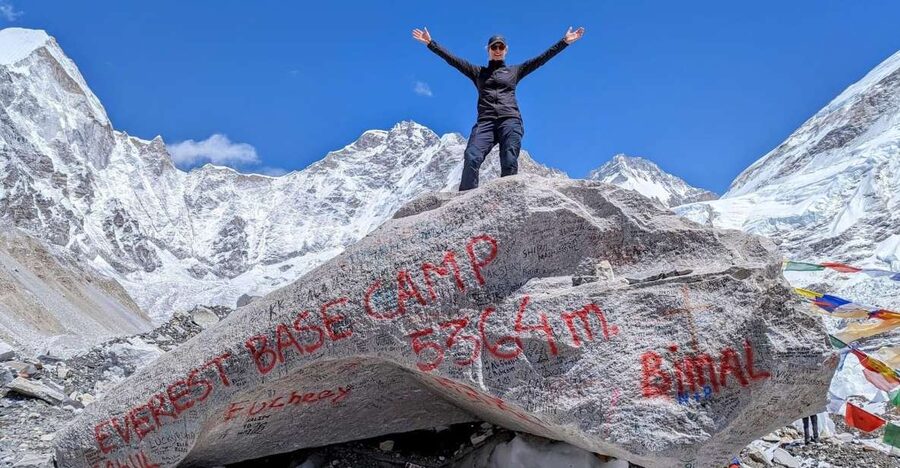
The walk from Dingboche to Lobuche reaches 4,890 meters and takes about six to seven hours over roughly nine kilometers. At this elevation, the distance may look modest on paper, but the thin air changes the effort.
This is a day for steady pacing. You should not race your guide or fellow walkers. The private format can help here, since your guide can set a pace that suits your condition rather than a large group’s schedule.
Lobuche is a staging point for the most important day of the route. You are close to Everest Base Camp, but the toughest walking is still ahead. Warm clothing, gloves, proper socks, and a good sleeping bag become practical needs rather than optional comforts.
The package includes a down jacket and sleeping bag, which saves you from buying or renting every item separately. You still need your own hiking shoes, warm layers, toiletries, water protection, and travel insurance.
Everest Base Camp and Gorak Shep
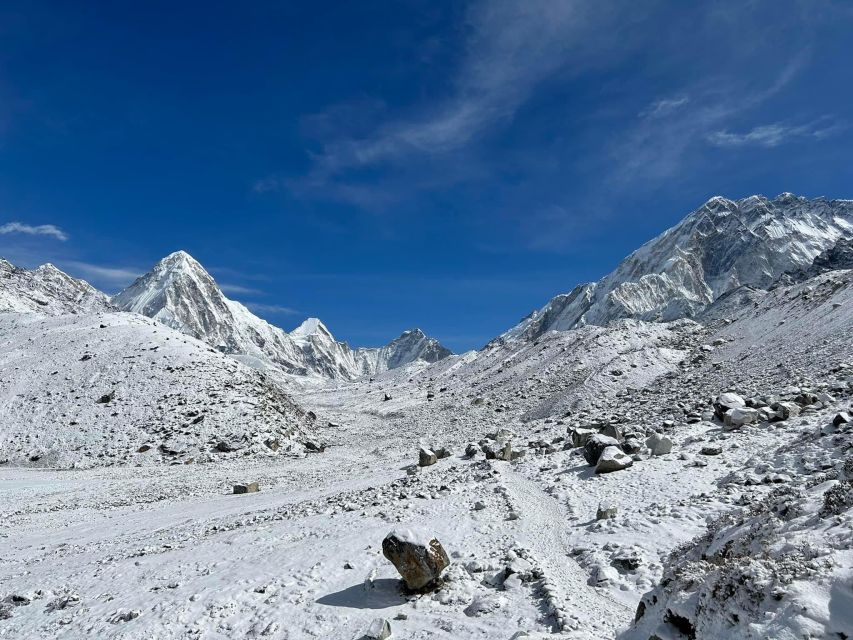
The route from Lobuche to Everest Base Camp reaches 5,365 meters and then continues to Gorak Shep at 5,180 meters. This is an eight to nine-hour day covering about 11 kilometers.
You walk to Base Camp, take in the mountaineering center of the Everest route, and then return to sleep at Gorak Shep. The schedule is long, and you should expect the altitude to slow you down.
Base Camp itself is not the highest point of the trek, and depending on the season, its appearance can change. The value lies in reaching the destination after days of walking from Lukla, with the Khumbu peaks around you and the route’s great objective finally in front of you.
Gorak Shep is a basic high-altitude stop. Do not expect comfort on the level of a city hotel. Guesthouse accommodation is included for 11 nights during the trek, but conditions become simpler as you move higher.
Kala Patthar at sunrise and the long return
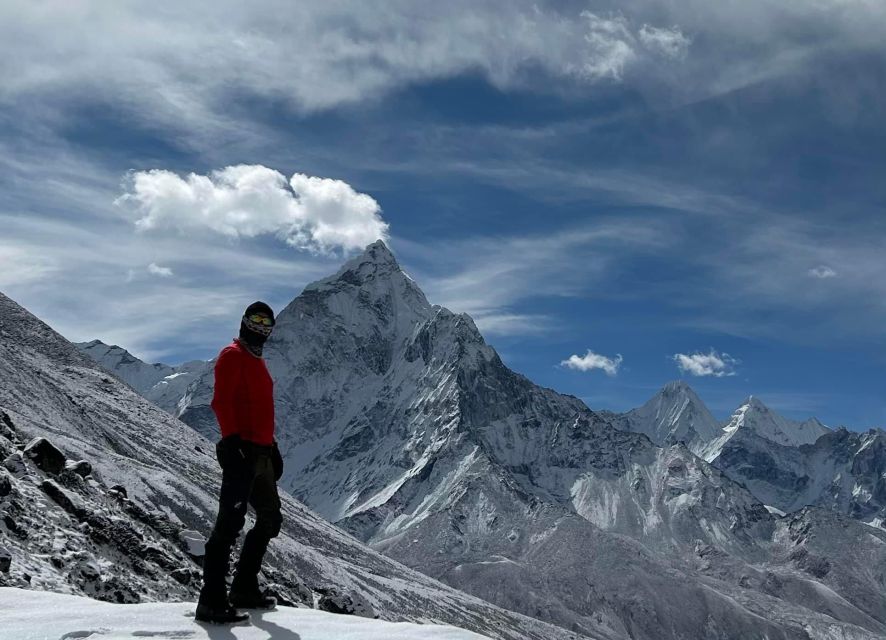
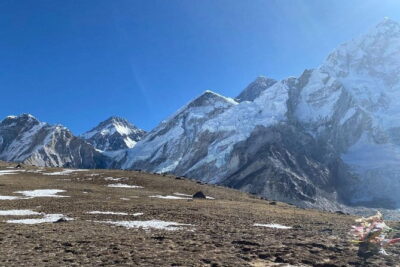
The next morning begins with the climb to Kala Patthar, at 5,545 meters. This is the highest point of the entire trek and the place to focus on if your main goal is a wide view of Everest and the surrounding Himalayan massif.
After the climb, you walk all the way to Pangboche at about 4,000 meters. The day lasts around nine hours and covers approximately 21 kilometers, making it one of the most demanding sections.
The reward is that you descend significantly after the viewpoint. Going lower helps your body, but the distance still makes this a serious day. You need good footwear, a sensible pace, and enough energy left after the early climb.
Pangboche provides a more forgiving stopping point than Gorak Shep. The change in elevation also reminds you that the route is not only about reaching the highest possible point. Descending safely is just as important.
Pangboche to Namche and back to Lukla
From Pangboche, you walk about 16 kilometers to Namche Bazaar in roughly eight hours. The route returns through familiar territory, but the direction changes how the valley feels.
You then walk from Namche to Lukla, about 17 kilometers over seven to eight hours. By this stage, your legs may be tired, even though you are losing altitude. The final walking day is not merely a gentle stroll to the airport.
This return route also gives you a second look at places you passed quickly on the way up. You may notice different views, villages, and trail details now that your attention is no longer fixed on gaining altitude.
The following day, you fly back to Kathmandu and have a free afternoon. That gives you a little breathing room before your final departure on Day 14.
What $1,550 includes and what it does not
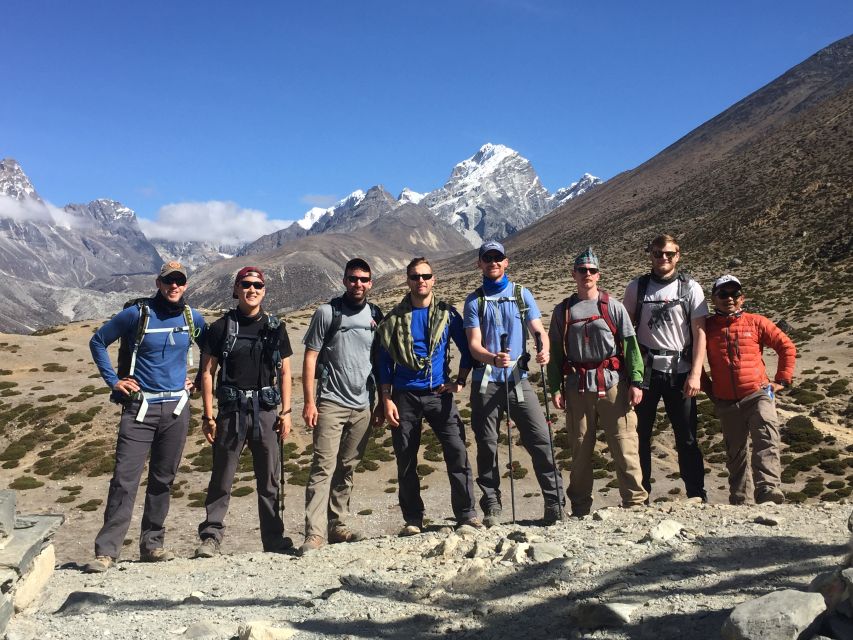
At $1,550 per person, the price is strong for a 14-day private Everest Base Camp trek because it covers several expensive and essential items:
- Round-trip Kathmandu to Lukla airfare
- Ground transportation
- An English-speaking guide and the guide’s expenses
- One porter for every two people
- Three meals each trekking day
- Three cups of tea or coffee during the trek
- Seasonal fresh fruit
- Sagarmatha National Park permit
- Khumbu Rural Municipality entrance ticket
- Eleven nights of guesthouse accommodation during the trek
- Down jacket, sleeping bag, and duffle bag
- An assistant guide for groups larger than six people
The full-board setup makes budgeting easier. You are not paying separately for every meal along the trail, and the porter arrangement reduces the weight you carry.
There are still personal costs. Travel insurance is not included, and it is mandatory. Personal expenses, extra purchases, and a personal porter for a solo trekker are also excluded.
If you are traveling alone, check the porter arrangement carefully. The included porter is one for two members, while a solo trekker needs to budget for personal porter support if required.
Packing for the Khumbu
The supplied equipment helps, but you still need a serious personal packing list. Bring a passport, passport-sized photo, cash, credit card, toiletries, towel, change of clothes, and a waterproof bag.
For the trail, pack hiking shoes or waterproof shoes, warm shoes, hiking pants, breathable clothing, long sleeves, a jacket, gloves, socks, a warm layer, and snow clothing. An umbrella, camera, binoculars, and GPS or map are also listed as useful items.
A sleeping bag is included, but bringing your own can make sense if you prefer a familiar fit. You should also carry travel insurance documents. Drones are not allowed, and making fires is prohibited.
The simple rule is to pack for cold, wet, and changing conditions without overloading yourself. Your porter carries the main load, but you still need a day pack with your immediate essentials.
Who this private trek suits best
This experience suits you if you want the full Everest Base Camp route with a private English-speaking guide, built-in acclimatization, and major costs handled in advance.
It is a good match for people with a solid fitness base who can manage five to seven hours of walking most days. The route is not suitable for people with low fitness, high blood pressure, altitude sickness, pregnancy, or a body weight over 275 pounds, or 125 kilograms. It is also not suitable for wheelchair users, babies under one year, or people over 95.
The private setup is useful if you value a personal pace and direct contact with your guide. A recent trekker completed the route with a guide named Suraj and gave special credit to him and the organizer for good care throughout the trek. Guide assignments can vary, so confirm who will lead your departure.
Two very positive bookings praised the guiding and organization, but you should still remember that mountain logistics can change. Flight delays, weather, and altitude are part of the experience, not problems a company can always remove.
Should you book this Everest Base Camp trek?
Book it if you want a well-supported, classic route with Base Camp, Kala Patthar, Sherpa villages, Tengboche Monastery, two acclimatization days, and a private guide. The $1,550 price includes enough major items to make it good value, especially the Lukla flights, permits, meals, porter, and cold-weather gear.
Think twice if you need a relaxed holiday, dislike basic guesthouses, or cannot allow flexibility around flights. You should also be honest about your fitness and medical condition.
For a fit walker who wants the Everest experience without arranging every permit, flight, meal, and porter separately, this is a practical choice. Add travel insurance, allow extra time around the flights, and prepare properly for the 5,545-meter Kala Patthar day.
FAQ
How long is the Everest Base Camp trek?
The complete program lasts 14 days, from arrival in Kathmandu through final departure. The walking route begins in Lukla and includes Base Camp, Kala Patthar, and the return to Lukla.
What is the highest point of the trek?
Kala Patthar is the highest point, at 5,545 meters. It is reached during the morning climb after the Base Camp visit.
Are flights between Kathmandu and Lukla included?
Yes. The package includes round-trip airfare between Kathmandu and Lukla. In peak seasons from September to November and March to May, flights may be diverted from Ramechhap Manthali.
Are meals included during the trek?
Yes. Three meals per day are included during the trek, along with three cups of tea or coffee and seasonal fresh fruit.
Is travel insurance required?
Yes. Travel insurance is mandatory, but it is not included in the price.
What accommodation and equipment are included?
The trek includes 11 nights of guesthouse accommodation, a down jacket, sleeping bag, and duffle bag. A porter is included for every two members, and solo trekkers can arrange a personal porter at an additional cost.
New treks around Kathmandu
- Kathmandu or Pokhara: 5-Day Annapurna Base Camp (ABC) Trek★ 4.5 · 2 reviews
- Pokhara: 2 Day Ghorepani & Poon Hill Private Trekking★ 4.9 · 8 reviews
- From Kathmandu: 6-Day Langtang Valley Guided Trek★ 5.0 · 2 reviews
- Pokhara: 5-Day Annapurna Base Camp (ABC) Trek★ 5.0 · 9 reviews
- Kathmandu: Langtang Valley 6-Day all inclusive Guided Trek★ 5.0 · 2 reviews
- Kathmandu: 6 Days Langtang Valley Trek with Kyanjin Ri★ 5.0 · 7 reviews
- Kathmandu: 9- Day Annapurna Circuit Trek★ 5.0 · 2 reviews
- Kathmandu: 6-Day Limitless Langtang Trek★ 5.0 · 21 reviews
Everest Base Camp Treks, side by side.
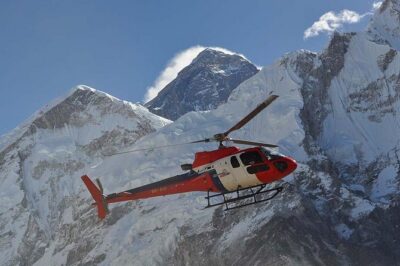
Everest Base Camp Trek with Helicopter Return from Gorakshep to Lukla
Read our review →
Trekking in Annapurna/Langtang/Everest/Upper Mustang regions
Read our review →Lists this trek appears in