
Review · KATHMANDU
Kathmandu: 9- Day Annapurna Circuit Trek
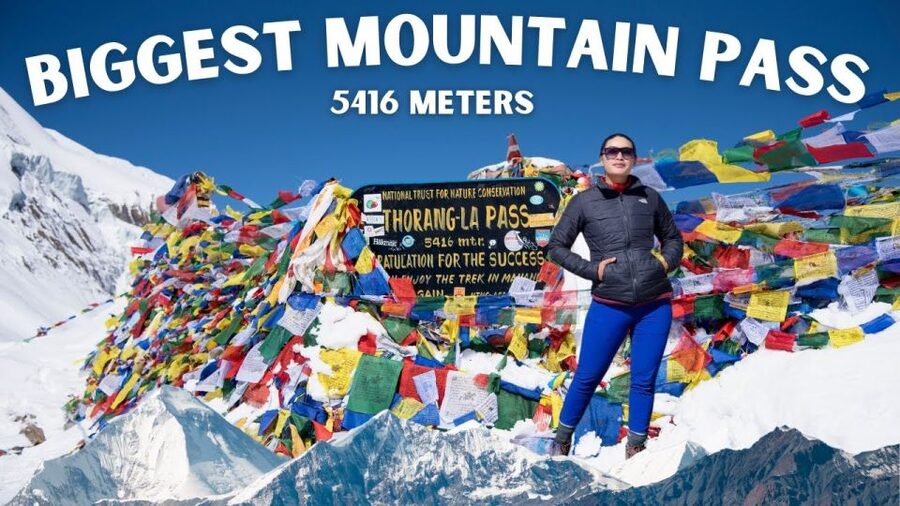
The big draw here is the Thorong La crossing at 5,416 meters, reached after days of walking from subtropical forest into dry, high mountain country. In nine days, you pass through Chame, Pisang, Manang, Yak Kharka, Muktinath, and Marpha, with Annapurna and Dhaulagiri views along the way.
I like the sharp change in scenery and the built-in acclimatization day in Manang, where you hike to Ice Lake at 4,600 meters. I also like the practical package: an English-speaking guide, tea house lodging, trekking permits, TIMS card, and shared bus transport are included.
The main caution is the pace. Reaching Chame at 2,710 meters on the first day, then crossing a 5,416-meter pass on Day 7, makes this a tough, compressed trek. Meals are not included, and you’ll need to be ready for cold, thin air and long walking days.
Key points to know before booking
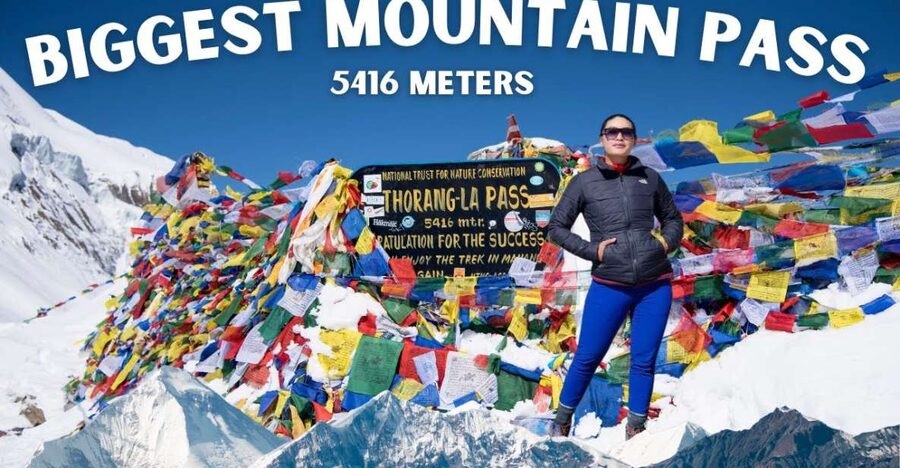
- Thorong La reaches 5,416 meters: This is the physical high point and the most demanding section of the trek.
- Manang includes an acclimatization hike: The route allows one rest day, but the Ice Lake walk still climbs to 4,600 meters.
- The scenery changes quickly: Expect forests, alpine terrain, dry desert-like country, mountain views, and apple orchards.
- Tea house lodging is included: You sleep along the route rather than returning to a city hotel each night.
- Meals cost extra: Budget separately for food throughout the trek.
- The package costs $516 per person: Permits, a guide, lodging, and key bus rides make this a useful value for a short guided circuit.
Why this nine-day route feels so dramatic
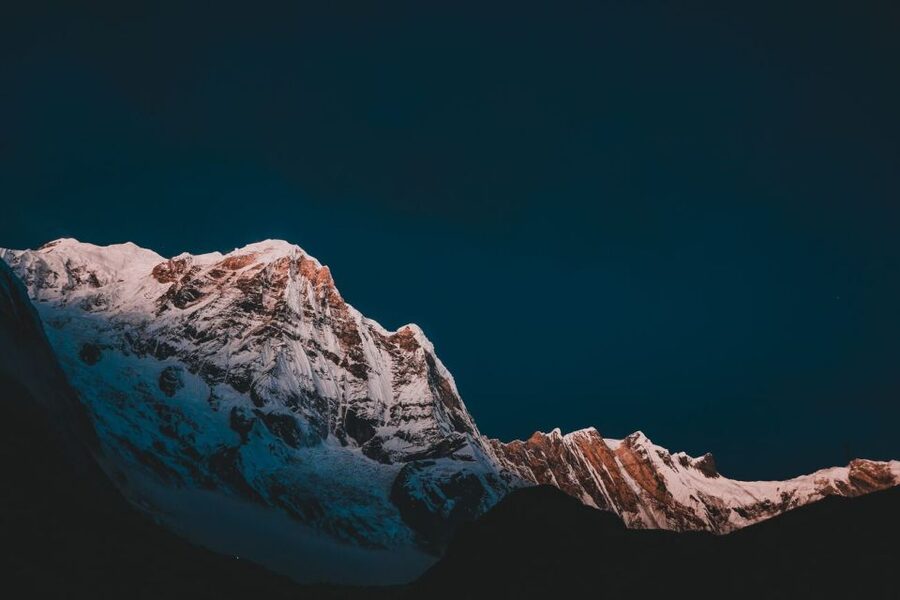
The Annapurna Circuit is appealing because it does not give you just one type of Himalayan view. The route begins low, at about 820 meters in Besishahar, then climbs through forests and villages before reaching the dry, severe country around Thorong La.
That variety matters. You are not simply walking toward a single viewpoint. You watch the plants, weather, buildings, and terrain change as the air thins. The route also gives you a look at several sides of the Annapurna region, including views toward the Annapurna and Dhaulagiri ranges.
This version is short. That can be good if you have limited time in Nepal, but it also means the days are tightly packed. The schedule starts with a drive from Kathmandu and ends with a bus ride from Marpha to Pokhara. You get the main crossing and several key villages, but not the leisurely pace of a longer circuit.
The guide is English-speaking, which gives you help with the route and day-to-day trekking needs. The experience is described as private, while the long-distance transport is by shared bus. That combination is worth understanding: you have a private trek experience, but the listed Kathmandu to Besishahar and Marpha to Pokhara transfers use shared buses.
More Annapurna treks around Kathmandu:
- Annapurna Circuit Trek with Tilicho Lake
★ 5.0 · 368 reviews - Annapurna base camp trek 5 Days
★ 5.0 · 252 reviews - 14-Day Private Annapurna Base Camp Trek
★ 5.0 · 180 reviews
Day 1: Kathmandu to Besishahar, then Chame
The first day is mostly about reaching the trail country. You drive from Kathmandu to Besishahar, the gateway to the Annapurna route, at roughly 820 meters. The itinerary then continues toward Chame, which sits at 2,710 meters.
That is a major gain in height on the opening day. Even if much of the day is spent in transport, you should treat this as the beginning of the altitude challenge rather than a simple transfer. Chame gives you the first clear sense that you are entering high mountain country.
The practical point is to keep your day bag organized. Your passport or a copy is required, and your guide will handle the trekking side of the trip with the included permits and TIMS card. Keep essential clothing, water, and personal items close rather than buried in luggage.
The day may feel long because it combines a substantial bus ride with the move to a much higher overnight stop. That fast rise is one reason your fitness, rest, and attitude toward the following days matter.
Day 2: Chame to Pisang at 3,300 meters
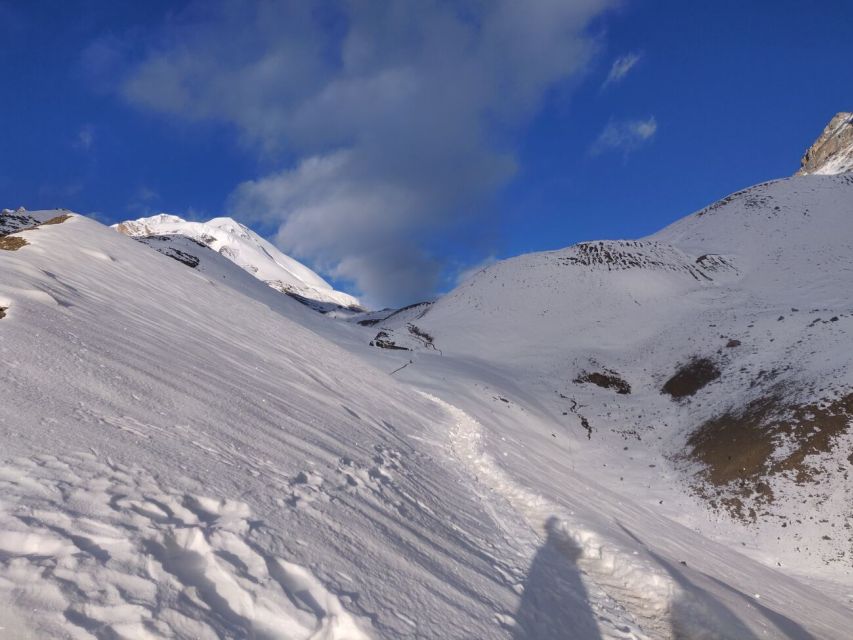
From Chame, you trek to Pisang, climbing to about 3,300 meters. This is where the route begins to feel properly alpine, with mountain scenery becoming the main event.
Pisang is a useful stop because it marks a clear change in the journey. You are higher, the surroundings are more rugged, and the route is moving toward the drier country around Manang. The walk also gives you time to settle into the rhythm of a tea house trek.
Tea house accommodation is included, but this is not a hotel-based holiday. The appeal is simple: you stay near the route and spend the night in the mountain communities along the way. The tradeoff is that comforts are likely to be basic, and you should pack with that in mind.
Food is available for purchase, but it is not covered in the $516 price. This is an important cost detail. You should plan for meals as an extra expense every day, rather than assuming the included lodging comes with a meal package.
Day 3: Pisang to Manang and the first major cultural stop
The trail continues from Pisang to Manang, at approximately 3,540 meters. Manang is more than a place to sleep. It is the main acclimatization stop and one of the most important villages on this short route.
By now, you have moved far beyond the lower forests. The country feels more exposed and severe, and the local culture becomes a larger part of the experience. The itinerary specifically points to the cultural character of the region, so this is a good place to slow down and notice the settlement rather than treating it as only a checkpoint.
The altitude is now serious. Your body has had only a few days to adjust, and the next day reaches even higher ground. Walk at the pace your guide sets, drink regularly, and take unusual tiredness seriously. The purpose of the next day is not simply to fill time. It is meant to help your body cope with the pass still ahead.
More treks around Kathmandu:
- Everest Base Camp Trek – 14 Days
★ 5.0 · 1,499 reviews - Everest Base Camp Trek
★ 5.0 · 842 reviews - Everest Base Camp Trekking
★ 5.0 · 485 reviews - Everest Base Camp Trekking – 13 Day
★ 5.0 · 365 reviews
Day 4: Manang and the Ice Lake acclimatization hike
The rest day in Manang includes a challenging hike to Ice Lake at about 4,600 meters. Calling this a rest day can be misleading. You are not spending the day doing nothing. You are taking a high walk to help your body adjust before the route climbs farther.
This is one of the strongest parts of the itinerary. A planned acclimatization day gives you a chance to experience higher altitude before Thorong La, rather than rushing straight from Manang to the pass. The hike also gives you alpine views and a more demanding taste of the terrain.
Still, the day is challenging. A hike to 4,600 meters can feel slow and strenuous, especially after the climb to Manang. The value comes from the careful purpose of the walk, not from easy sightseeing. If you want a relaxed holiday with short walks, this trip is not the right match.
Your guide’s role is especially useful here. An English-speaking guide can help with route decisions and pacing, though the data provided does not give a guide’s personal name. The trip is best approached as a guided mountain expedition, not as a casual village tour.
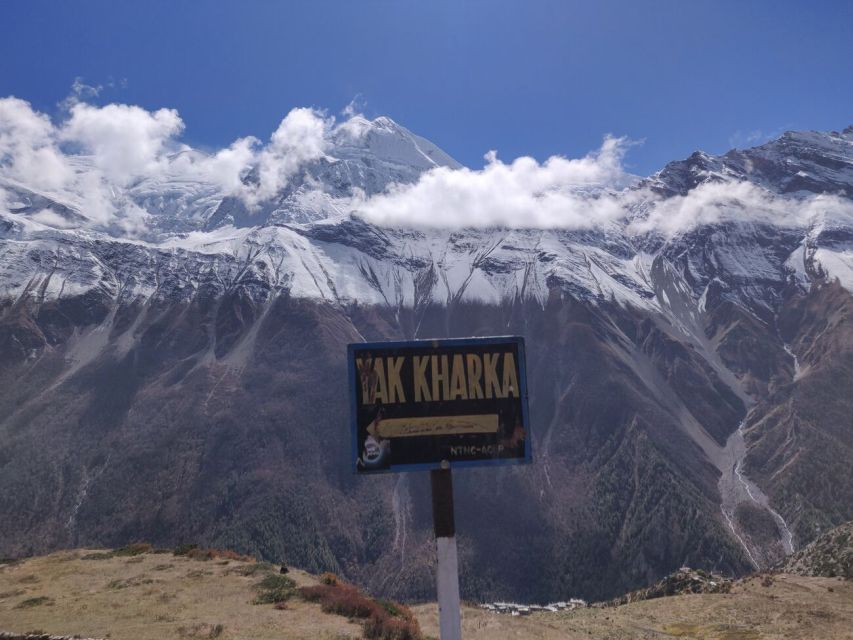
Day 5: Manang to Yak Kharka at 4,110 meters
The route leaves Manang for Yak Kharka, rising to around 4,110 meters. The scenery becomes more open and rugged, with unusual high-altitude plant life and broad mountain views.
At this point, altitude is the main fact of the day. The distance may not tell the whole story. Walking uphill in thin air takes more time and energy than the same effort at low elevation. You should expect a measured pace and allow your guide to set the rhythm.
Yak Kharka is a practical overnight stop before Thorong Phedi. It places you within reach of the pass while giving you another night to adjust. The settlement itself is part of the experience, since the route passes through small mountain communities rather than one large resort area.
The higher you go, the more important your packing becomes. Bring warm layers and keep them easy to reach. The supplied information only requires a passport or ID card, but the altitude and temperatures make proper trekking clothing a common-sense necessity.
Day 6: Yak Kharka to Thorong Phedi at 4,600 meters
The trek from Yak Kharka to Thorong Phedi reaches about 4,600 meters. This is the final staging point before the pass, and it can feel like a waiting room for the hardest day.
The route is now defined by height, rock, and thin air. There is less room for casual wandering, and the next day will ask for an early, sustained effort over Thorong La. Your guide can help you judge your condition and keep the day controlled.
This is where the nine-day schedule shows its demanding side. You have climbed from low country to 4,600 meters in less than a week, with only one acclimatization day. The itinerary does provide sensible stops, but it does not provide much spare time if you need an extra recovery day.
If you are comparing this route with a longer Annapurna Circuit plan, the difference is clear. This trip favors a compact schedule and the major pass crossing. A longer plan would generally offer more time, but that is not included here, so you should book this version only if the pace suits you.
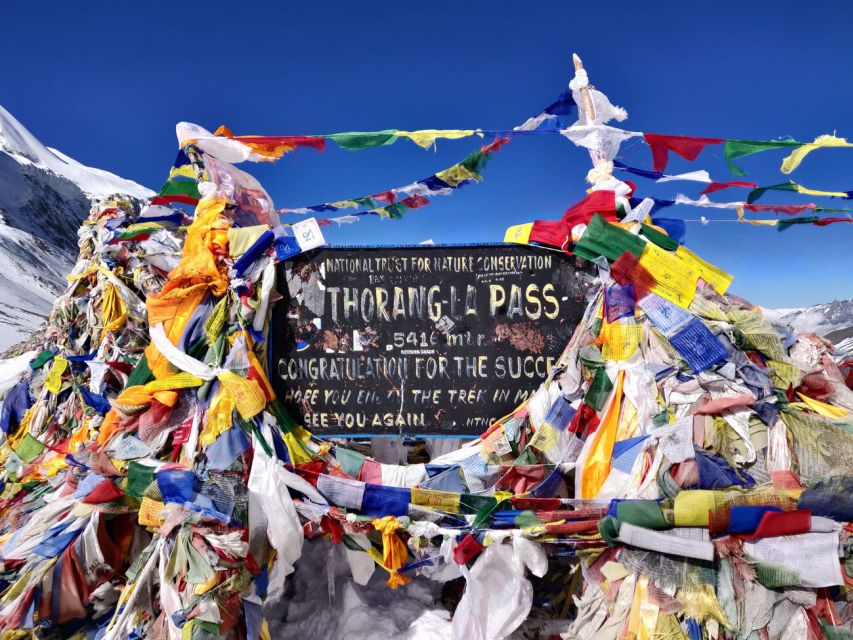
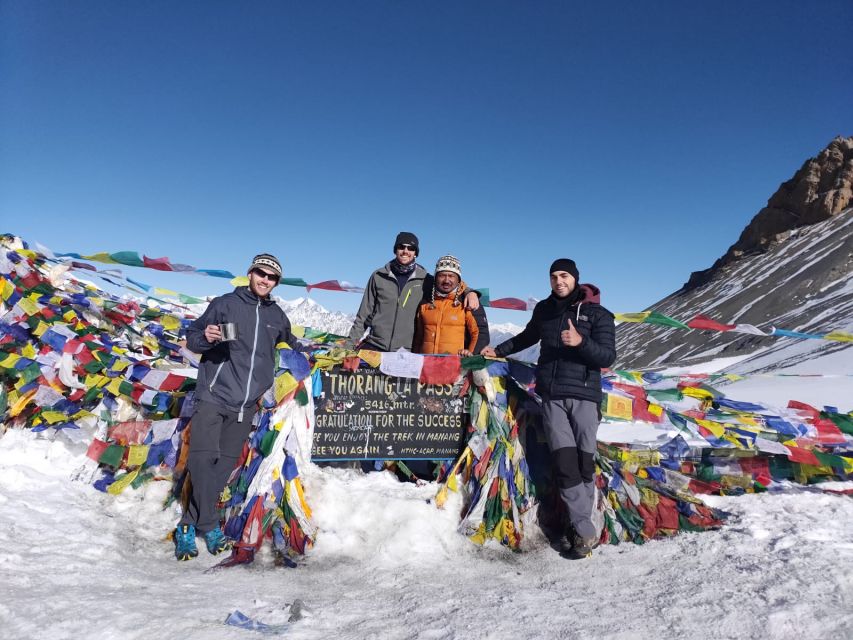
Day 7: Thorong La at 5,416 meters, then down to Muktinath
Day 7 is the centerpiece. You leave Thorong Phedi, cross Thorong La at 5,416 meters, and descend to Muktinath at about 3,800 meters.
The pass is the highest point of the trek and the hardest physical test. The reward is not only the elevation figure. It is the feeling of moving between two very different sides of the Annapurna region, with broad Himalayan views and a powerful sense of distance from the lowlands.
The descent to Muktinath matters just as much as the climb. After the pass, you lose a considerable amount of altitude, and Muktinath provides a spiritually important destination at the end of a major effort. The combination of mountain scenery and religious significance gives the stop more depth than a simple overnight village.
Do not treat reaching the pass as the end of the day. You still have to descend to Muktinath, and tired legs can make downhill walking hard. Save energy, follow the guide’s pace, and keep your warm clothing available for the exposed section.
Day 8: Muktinath to Marpha at 2,670 meters
The route continues downhill from Muktinath to Marpha, a picturesque village at about 2,670 meters. After the high pass, the lower altitude should feel welcome, even though you are still trekking.
Marpha is known for its apple orchards and pleasant village character. It offers a softer ending to the mountain section, with a more settled feel than the high camps around Thorong Phedi and Yak Kharka.
This is also a good reminder of why the circuit is so appealing. Within a few days, you have moved from forested country to dry mountain terrain and then toward a village associated with orchards. The route keeps changing, which makes the long effort feel varied rather than repetitive.
You may find this day easier than the pass crossing, but it is not a free day. Your body has already worked hard at altitude, and the trek still requires steady walking. Marpha is a rewarding place to spend the final trekking night before the return to Pokhara.
Day 9: Marpha to Pokhara by shared bus
The trip ends with a bus drive from Marpha to Pokhara. This is a practical finish rather than another day on foot, and it lets you close the circuit without adding more trekking miles.
The listed package includes the shared bus from Marpha to Pokhara, as well as the shared bus from Kathmandu to Besishahar. Hotel pickup and drop-off are also included in Kathmandu or Pokhara, which can simplify the start or end of your plans.
Transport by shared bus keeps the price down, but it also means you are not paying for private transfers throughout. If you value convenience over complete control of departure times, this setup offers a reasonable balance.
By the time you reach Pokhara, the value of the route is easy to judge: you have crossed the highest point, visited major villages, and seen several climate zones in nine days. You have also accepted a demanding schedule and paid separately for food.
What the $516 price includes, and what it does not
At $516 per person, the package offers solid value for a guided high-altitude trek. The price includes an English-speaking trekking guide, tea house accommodation, trekking permits, the TIMS card, hotel pickup and drop-off in Kathmandu or Pokhara, and the two listed shared bus transfers.
Those inclusions remove several costs that can quickly add up on a mountain trip. Permits and guide support are especially important because they give you a more organized route through a demanding region.
Meals are not included. Food is available to buy, but you need to budget for it separately. Optional gratitude, meaning tips, is also not included. The low headline price should therefore be viewed as the cost of the trekking structure, not the full cost of nine days in Nepal.
The booking terms are flexible: you can cancel up to 24 hours before the experience for a full refund, and you can reserve now and pay later. Starting times depend on availability, so check the date carefully before making plans around flights or other activities.
Who should book this Annapurna Circuit trek?
I would recommend this trip to you if you want the main Annapurna Circuit experience but have only nine days. It suits hikers who are comfortable with steep mountain terrain, basic tea house accommodation, and a fast rise in altitude.
The route is also a good fit if you want a guide without paying for a luxury trekking package. You receive an English-speaking guide, permits, lodging, and key transport, while keeping meals separate so you can handle that cost directly.
I would be cautious if you have little hiking experience or dislike tight schedules. The Ice Lake hike reaches 4,600 meters, Thorong La reaches 5,416 meters, and the first day includes a major transfer followed by arrival at high-elevation Chame.
The five-star rating from Anniken of Norway in October 2023 highlights the exact strengths I would expect you to value here: amazing scenery, a very helpful and friendly guide, nice rooms, and good food. Those details support the package’s appeal, but food still costs extra, and conditions at mountain tea houses can vary.
Should you book it?
Book this trek if your priority is big Himalayan scenery and the Thorong La crossing in a compact nine-day plan. The included guide, tea houses, permits, and transport make $516 a useful starting value.
Skip it if you want slow acclimatization, included meals, private vehicles throughout, or a relaxed walking holiday. For the right person, this is a focused mountain challenge with a strong payoff: forests, high passes, dry country, sacred Muktinath, and the apple orchards of Marpha in one demanding route.
FAQ
How long is the Annapurna Circuit trek?
The experience lasts nine days, beginning with transport from Kathmandu and ending with a bus drive from Marpha to Pokhara.
What is the highest point of the trek?
The highest point is Thorong La Pass, which reaches 5,416 meters.
Is there an acclimatization day?
Yes. Day 4 is an acclimatization day in Manang and includes a challenging hike to Ice Lake at about 4,600 meters.
What accommodation is included?
Tea house accommodation is included throughout the trekking portion of the experience.
Are meals included in the price?
No. Meals are available for purchase, but they are not included in the $516 price.
Is a trekking guide included?
Yes. An English-speaking trekking guide is included.
Are trekking permits included?
Yes. The package includes a trekking permit and a TIMS card.
What transport is included?
Shared bus transport is included from Kathmandu to Besishahar and from Marpha to Pokhara. Hotel pickup and drop-off in Kathmandu or Pokhara are also included.
New treks around Kathmandu
- Kathmandu or Pokhara: 5-Day Annapurna Base Camp (ABC) Trek★ 4.5 · 2 reviews
- Pokhara: 2 Day Ghorepani & Poon Hill Private Trekking★ 4.9 · 8 reviews
- From Kathmandu: 6-Day Langtang Valley Guided Trek★ 5.0 · 2 reviews
- Pokhara: 5-Day Annapurna Base Camp (ABC) Trek★ 5.0 · 9 reviews
- Kathmandu: Langtang Valley 6-Day all inclusive Guided Trek★ 5.0 · 2 reviews
- Kathmandu: 6 Days Langtang Valley Trek with Kyanjin Ri★ 5.0 · 7 reviews
- Kathmandu: 6-Day Limitless Langtang Trek★ 5.0 · 21 reviews
- Sundarijal-Chisapani-Nagarkot Trek with Changunarayan★ 4.8 · 3 reviews
Annapurna Base Camp Treks, side by side.
Trekking in Annapurna/Langtang/Everest/Upper Mustang regions
Read our review →
Kathmandu to Annapurna Base Camp (ABC) 5-Day Trek
Read our review →
Lists this trek appears in