
Review · KATHMANDU
Annapurna Base Camp Trekking
Annapurna Base Camp gives you a rare mix of mountain drama and village life. You walk from Nayapul through Gurung, Magar, and Thakali communities, climb through rhododendron forest, watch the sun rise from Poon Hill, and reach a glacier-ringed amphitheater at 4,130 meters. The scale changes each day, which keeps this trek from feeling like one long march toward a single viewpoint.
I like the strong support package, with a guide, one porter for every two people, tea-house lodging, meals on the trail, and airport transport. I also like the personal feel of a private trip, where the walking pace can suit your group better than a large departure. The main caution is fitness: this is described as moderate, but long uphill and downhill days, stone steps, cold nights, and altitude make it a serious walking holiday.
Key points to know before booking
- Poon Hill adds a superb sunrise stop before the route reaches the high mountain basin.
- Annapurna Base Camp sits at 4,130 meters, so gradual walking and sensible pacing matter.
- The private format requires at least two people and includes one porter for each pair.
- Tea-house nights keep the trip local, but hot showers, heaters, drinks, desserts, and bottled water cost extra.
- The package covers both land transport and a Pokhara to Kathmandu flight, reducing the need to arrange domestic connections yourself.
- Guides and porters receive especially strong praise, with past groups singling out Anuj, Hari, Expansion, Ramesh, and Gyanendra by name.
Why this Annapurna route works so well
The appeal is variety. You start near Pokhara and walk into a region shaped by mountain agriculture, old village paths, Buddhist influence, forest, waterfalls, and high alpine scenery. The route does not simply place you in front of snowy peaks and leave you there. You first pass through inhabited hills, then enter forest, then reach colder high country.
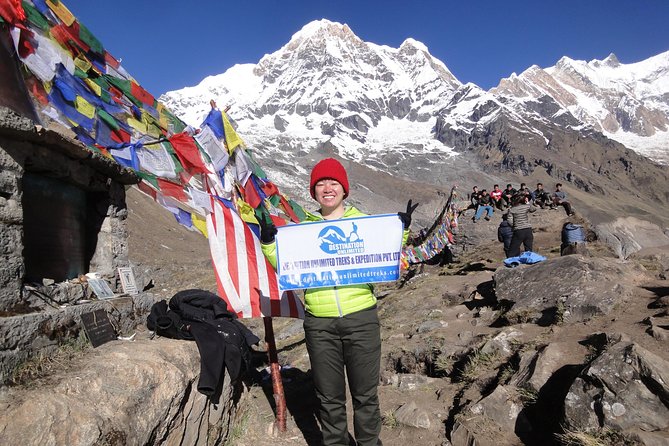
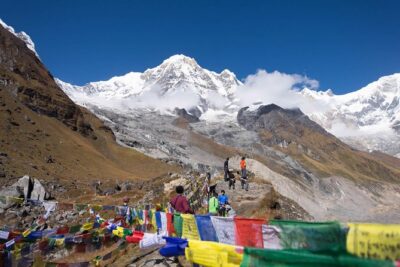
The mountain views are the main prize. From the Annapurna Sanctuary area, you may see Annapurna III, Annapurna South, Hiunchuli, Fang, Gangapurna, and Machhapuchhare, also called Fish Tail. These peaks form a broad circle around the glacier-covered basin, giving the base camp section a sense of enclosure that is different from the open ridges of some Himalayan routes.
I also like the cultural side. Gurung, Magar, and Thakali villages are not decorative stops added for tourists. They are working communities along the route. If you stop for a conversation, you may learn more about daily life in the hills than you would from a hurried sightseeing visit in Kathmandu.
The trip is listed at $1,779 per person. That is a substantial price, but it covers many moving parts: airport transfers, Kathmandu and Pokhara accommodation with breakfast, a guide and porter, tea-house lodging, all trekking meals, ground transport, a domestic flight, permits and government taxes, insurance for the trekking staff, and office service charges. You still need to budget for international flights, a Nepal entry visa, insurance, city meals, drinks, hot showers, heater charges, and tips.
More Annapurna treks around Kathmandu:
- Annapurna Circuit Trek with Tilicho Lake
★ 5.0 · 368 reviews - Annapurna base camp trek 5 Days
★ 5.0 · 252 reviews - 14-Day Private Annapurna Base Camp Trek
★ 5.0 · 180 reviews
Days 1 and 2: Kathmandu welcome, then Phewa Lake
Your trip begins at Tribhuvan International Airport in Kathmandu. Arrival and departure transport are included, which is useful after a long international flight. Accommodation in Kathmandu is included with breakfast, though the schedule leaves the city visit fairly open rather than presenting a long list of sights.
On day two, you travel to Pokhara and have time to walk around Phewa Lake. This is a sensible introduction to the trekking region. Pokhara feels slower than Kathmandu, and the lake gives you a chance to adjust to Nepal, check your equipment, and meet the people who will support you on the trail.
The listed schedule allows up to 12 hours for the day, but that does not mean you will spend 12 hours walking around the lake. The exact timing depends on the drive and the arrival arrangements. Ask your operator how the Kathmandu to Pokhara transfer is handled for your departure date.
Days 3 and 4: Nayapul, Ulleri, and Ghorepani
The walking section starts after a drive to Nayapul, about an hour from Pokhara according to the tour description. From there, you climb toward Ulleri for your first tea-house night.
This is where the trek becomes real. The route has uphill sections and stone steps, and the first day can feel harder than the distance suggests. You are not yet at the highest point, but your legs are learning the daily rhythm: walk, stop, eat, rest, and repeat.
The next stage takes you to Ghorepani. The forest becomes a major part of the experience, with rhododendrons and changing views of the snowy peaks. Tea-house lodging keeps the night simple. You can expect a mountain lodge rather than a city hotel, and the price includes meals during the trekking section, but not every comfort.
Drinks, desserts, juice, mineral water, hot showers, and heater charges are extra. Bring enough Nepali rupees for these purchases and for tips. The included meals cover breakfast, lunch, and dinner on the trail, which is a major convenience when you are walking all day.
Day 5: Poon Hill sunrise before breakfast
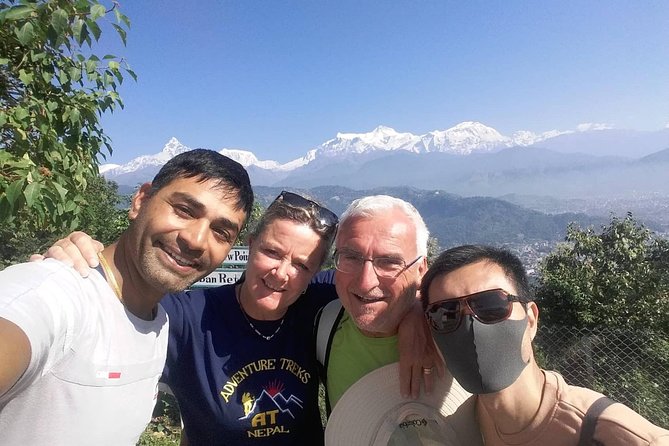
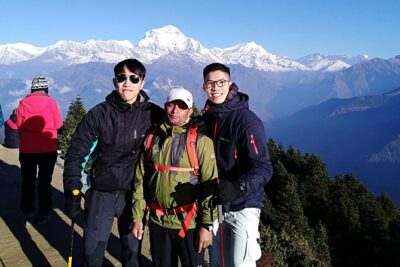
Poon Hill is an early morning stop, listed as a 45-minute visit for the sunrise view. The short duration does not mean it is unimportant. Sunrise on Poon Hill is one of the clearest visual rewards of this route, with the peaks catching the first light while the lower hills remain in shadow.
You will need to prepare for a cold start. The tour description does not give an exact departure time, so your guide will set the schedule around sunrise and local conditions. Afterward, you return to the lodge area and continue the day according to the group plan.
Poon Hill also breaks up the route nicely. You get a major mountain viewpoint before reaching base camp, so the trek offers a satisfying experience even if cloud or weather later limits the highest views.
More treks around Kathmandu:
- Everest Base Camp Trek – 14 Days
★ 5.0 · 1,499 reviews - Everest Base Camp Trek
★ 5.0 · 842 reviews - Everest Base Camp Trekking
★ 5.0 · 485 reviews - Everest Base Camp Trekking – 13 Day
★ 5.0 · 365 reviews
Days 6 and 7: Chhomrong and Deurali
From the Poon Hill area, the route continues to Chhomrong. This is one of the key settlements on the approach to Annapurna Base Camp. The village setting gives you another look at life in the middle hills, while the mountains begin to feel closer and larger.
Chhomrong is also a reminder that this is a route of repeated climbing and descending. You may gain height, lose some of it, and climb again. That can be tiring for anyone who expects a steady uphill path. Your guide’s pacing matters here, and the private setup should help your group take sensible breaks.
The next night is at Deurali. As you move higher, the forest and village scenery gradually give way to cooler mountain surroundings. This is one of the stages where altitude becomes more relevant. You should watch how you feel, drink regularly, and tell your guide about headaches, unusual tiredness, or other concerns rather than trying to hide them.
The guide is not just there to point toward the next village. The strongest part of the service package is the human support. Past groups have singled out guides named Anuj, Hari, Expansion, Ramesh, and Gyanendra, along with porters and support staff. Your assigned guide may be different, but you should expect a guided private trip rather than an independent walk.
Days 8 and 9: Annapurna Base Camp and the mountain amphitheater
The itinerary describes day eight as a 360-degree view of the Annapurna Mountain Range. This is the central mountain day, with the route reaching Annapurna Base Camp at 4,130 meters. The exact walking sequence is not fully spelled out, so ask for the day’s distance, elevation gain, and lodging location before departure.
At base camp, the reward is not one isolated peak. Annapurna South, Annapurna III, Hiunchuli, Fang, Gangapurna, and Machhapuchhare gather around the basin. The glacier-covered center and steep walls give the place a powerful enclosed feeling. It is one of those mountain settings where the view changes as you turn your head.
The next stage takes you back toward Bamboo for a tea-house night. Descending is welcome after the high point, but it is not effortless. Downhill stone steps can be tough on knees, especially after several days of walking. Trekking poles may be useful, though they are not listed as included equipment.
The base camp day is also the reason you should not judge this trip by its moderate label alone. The route is considered moderate compared with harder Himalayan expeditions, but 4,130 meters is high enough to affect your energy and sleep. Physical preparation helps, and a calm pace is more valuable than trying to finish each section quickly.
Day 10: Bamboo to Jhinu Danda and the hot springs
The route continues to Jhinu Danda, known for its hot spring. This is an excellent recovery point after the high section. Warm water can feel especially welcome after cold mornings and long descents.
The hot spring is included in the itinerary, but the description does not give details about changing facilities, towels, or entry arrangements. Pack swimwear and a small towel if you plan to use it, and confirm with your guide what is available locally.
Jhinu Danda also gives the trip a pleasant change of mood. You have moved from high mountain focus back toward greener lower elevations, with village life and warmer conditions returning. It is a good example of why the Annapurna route feels varied rather than repetitive.
Days 11 and 12: Pothana, Pokhara, and a softer landing
After Jhinu Danda, you trek to Pothana for another tea-house night. The route is heading out of the high mountain zone, but you still have walking to do. Do not treat the final trekking days as an easy stroll. Tired legs can make shorter sections feel long.
On day 12, you return to Pokhara and have time around Phewa Tal, another name for Phewa Lake. This is a useful buffer after the trail. You can rest, eat a proper city meal, and enjoy the contrast between a tea house and a Pokhara hotel.
Pokhara accommodation with breakfast is included. Main meals in the cities are not, so allow extra money for lunch and dinner. Drinks and city expenses are also separate.
Days 13 and 14: Kathmandu and departure
The package includes a flight from Pokhara back to Kathmandu, including airport tax. That is a practical advantage over relying on a long road transfer after the trek. Domestic flights can still be affected by local conditions, so keep your final plans flexible enough to handle a delay.
Day 13 includes time in Kathmandu and a free day to look around. Kathmandu accommodation with breakfast is included, while sightseeing costs and city meals are not specified as part of the package.
Day 14 is departure from Kathmandu for your onward journey. Airport transport is included, and the activity ends back at the original meeting point at Tribhuvan International Airport.
What the $1,779 price really covers
The value here comes from coordination. You are not paying only for walking and a bed. The price brings together:
- Airport arrival and departure transfers
- Kathmandu and Pokhara accommodation with breakfast
- Tea-house accommodation during the trek
- Breakfast, lunch, and dinner during the trekking days
- A guide with insurance
- One porter for every two people, with porter insurance
- Trekking duffel bag and regional map
- Ground transport between Kathmandu, Pokhara, Nayapul, Phedi, and Pokhara
- Pokhara to Kathmandu flight and airport tax
- Government taxes and office service charges
That is a useful bundle for a first Himalayan trek. The one-porter-for-two arrangement is worth understanding. You should pack carefully and keep your personal day bag manageable, because the porter is sharing the load between two people rather than carrying everything for one person.
The exclusions can add up. International airfare, Nepal’s visa fee, travel insurance, city meals, drinks, bottled water, hot showers, heater charges, desserts, and tips are all separate. The listed visa rates are $50 for 30 days and $30 for 15 days, obtained on arrival.
Who should book this trek?
I would recommend it to anyone with a moderate level of physical fitness who wants a supported Himalayan route with substantial scenery and cultural contact. Families can also consider it, provided every member can handle long walking days. A previous group included young people aged 14, 16, and 19, but that does not remove the need for preparation.
This is a good fit if you want a private trip, prefer having meals and transport arranged, and like the idea of tea-house nights rather than a fully comfortable resort-style holiday. It also suits someone who wants both Poon Hill and Annapurna Base Camp in one journey.
I would be more cautious if you dislike early starts, basic mountain lodging, repeated steps, or extra charges for hot water and drinks. You also need travel insurance, and the trip is non-refundable. If you cancel or ask to change it, the amount paid is not returned.
Final verdict: a strong choice for a first major Nepal trek
I would book this Annapurna Base Camp trek if you want a well-supported route with a clear mix of mountains, villages, forest, sunrise, and hot springs. The strongest value is the amount of logistics handled for you, plus the private format and the included guide, porter, meals, lodging, and domestic flight.
Before paying, ask for the exact daily walking distances, the planned accommodation at each stop, the names of the assigned guide and porter, and the current arrangements for permits and hot showers. If you accept basic conditions and prepare for altitude, this is a rewarding way to reach one of Nepal’s great mountain viewpoints without arranging every detail yourself.
FAQ
How long is the Annapurna Base Camp trek?
The full experience lasts approximately 14 days, including arrival in Kathmandu, time in Pokhara, the trek, the return flight to Kathmandu, and departure.
What is the highest point of the trek?
Annapurna Base Camp is listed at 4,130 meters.
Where does the walking route begin?
The trek begins at Nayapul, reached by road from Pokhara.
Is this a private tour?
Yes. Only your group participates, and at least two people are required for the trip to operate.
What accommodation is included?
Accommodation in Kathmandu and Pokhara with breakfast is included. During the trek, you stay in tea houses or mountain lodges.
Are meals included?
Breakfast, lunch, and dinner are included during the trekking section. Breakfast is included at the Kathmandu and Pokhara accommodations. Main meals in the cities are not included.
What is not included in the price?
International airfare, travel insurance, Nepal’s entry visa, drinks, desserts, juice, mineral water, heater charges, hot showers during the trek, city meals, and tips for the guide, porter, and driver are not included.
New treks around Kathmandu
- Kathmandu or Pokhara: 5-Day Annapurna Base Camp (ABC) Trek★ 4.5 · 2 reviews
- Pokhara: 2 Day Ghorepani & Poon Hill Private Trekking★ 4.9 · 8 reviews
- From Kathmandu: 6-Day Langtang Valley Guided Trek★ 5.0 · 2 reviews
- Pokhara: 5-Day Annapurna Base Camp (ABC) Trek★ 5.0 · 9 reviews
- Kathmandu: Langtang Valley 6-Day all inclusive Guided Trek★ 5.0 · 2 reviews
- Kathmandu: 6 Days Langtang Valley Trek with Kyanjin Ri★ 5.0 · 7 reviews
- Kathmandu: 9- Day Annapurna Circuit Trek★ 5.0 · 2 reviews
- Kathmandu: 6-Day Limitless Langtang Trek★ 5.0 · 21 reviews
Annapurna Base Camp Treks, side by side.
Trekking in Annapurna/Langtang/Everest/Upper Mustang regions
Read our review →
Kathmandu to Annapurna Base Camp (ABC) 5-Day Trek
Read our review →
Lists this trek appears in