
Review · KATHMANDU
Annapurna Circuit Trek with Tilicho Lake
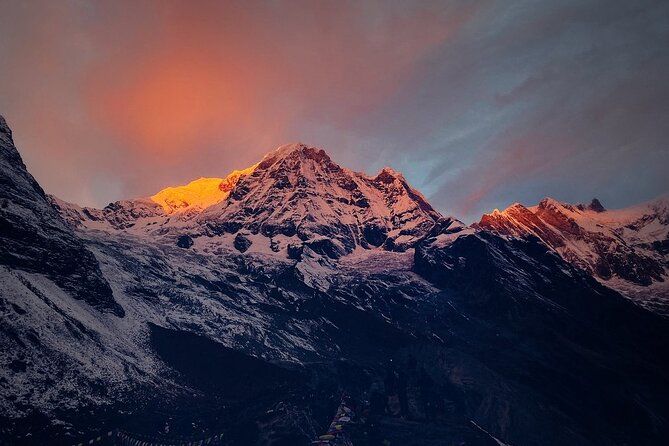
The big draw here is variety. In 16 days, you move from river valleys and pine forests to the cold, dry heights around Tilicho Lake and Thorong La, then finish with hot springs and the sunrise at Poon Hill. I like that the hard logistics are handled for you, including permits, tea-house lodging, meals, porters, and local transport.
I also like the built-in acclimatization day around Manang and the chance to travel in a small group of up to 15 people. The catch is simple: this is a serious mountain trek, not a gentle walk. Long uphill days, thin air, an early Thorong La start, and basic lodge conditions demand good fitness and a flexible attitude.
Key points to know before booking
- Tilicho Lake adds a high-altitude side trip to the classic Annapurna Circuit.
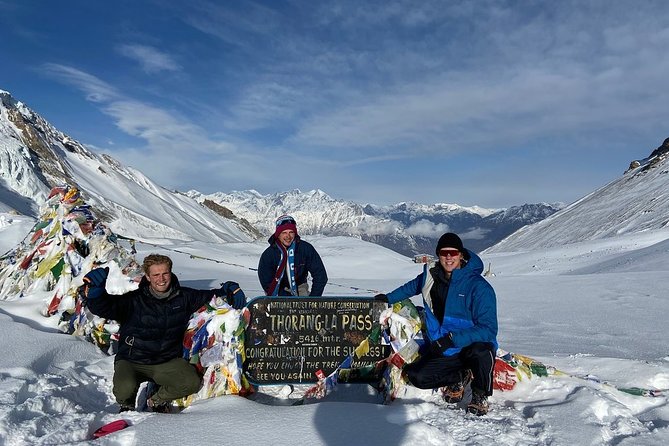
- Thorong La at roughly 5,416 meters is the trek’s toughest test, with a pre-dawn start.
- Manang is used for acclimatization, including a hike toward Gangapurna Lake and Base Camp.
- Meals, tea-house lodging, permits, guides, porters, and much of the transport are included.
- The route ends with Tatopani hot springs and Poon Hill sunrise, not just a pass crossing.
- Guides and porters are a major part of the experience, with names including Hari Gurung, Dev, Suresh, Damar, Sangkar, Asis, and Monis appearing among recent departures.
Why this 16-day route is worth your time
The Annapurna Circuit works because the scenery changes almost every day. You begin with road travel and river valleys, then walk through forests, Tibetan-influenced villages, high mountain country, and the dry side of the range. Tilicho Lake adds another demanding goal before you tackle Thorong La.
At $1,093, the price is not just paying for a guide to lead the way. It covers tea-house or lodge accommodation, breakfast, lunch, and dinner during the trek, permits, guide and porter costs, transport from Kathmandu toward the trailhead, transport from Muktinath to Tatopani, a Pokhara hotel night with breakfast, and the tourist bus back to Kathmandu.
That package can offer good value if you want one company handling the moving parts. You are still responsible for costs not listed in the inclusions, and the flight option from Pokhara to Kathmandu is extra. The plan also uses public transport for part of the route, so do not expect a private vehicle and hotel comfort every day.
The company permits groups of up to 15. That is small enough to keep the group manageable, though larger than a private trek. Guide quality matters greatly here. Recent departures have included guides such as Hari Gurung, Dev, and Suresh, with porters including Damar, Sangkar, Bikesh, Asis, and Monis. The strongest praise centers on their care, mountain information, encouragement, and willingness to help with the daily routine.
More Annapurna treks around Kathmandu:
- Annapurna base camp trek 5 Days
★ 5.0 · 252 reviews - 14-Day Private Annapurna Base Camp Trek
★ 5.0 · 180 reviews - Annapurna Base Camp Trekking
★ 5.0 · 116 reviews
Day 1: Kathmandu to Besishar and the long road into the hills
Your first day is mostly a road day, lasting about six to seven hours over roughly 190 kilometers. The route heads from Kathmandu toward Besishar, with the package also describing the drive to Syange as part of the trailhead transfer.
This is not a scenic train ride or a quick airport transfer. Mountain roads take time, and the day may feel long before you have taken your first proper trekking step. Still, the changing views begin early, with villages, farms, rivers, and distant mountain ranges along the way.
The listed stop is Sandup Choeding Gompa. Its presence adds a cultural note to what might otherwise feel like a simple transfer day. Pack water and a few road snacks, and treat this day as part of the adventure rather than wasted time.
Days 2 and 3: Waterfalls, suspension bridges, and Chame
The walking begins with a suspension bridge and a steep climb toward Tal, where the route enters the Manang region. Tal is known for waterfalls, sandy riverbanks, and a setting shaped by moving water. This first serious walking day gives you a taste of the circuit’s rhythm: climb, cross, follow the river, and settle into a mountain village.
On Day 3, the trail follows a river through pine, fir, oak, and maple forest to Chame, the administrative center of Manang District. This is one of the greener parts of the route, and the forest helps soften the effort of the climb.
You will also begin to notice how quickly the surroundings change with height. The views open toward Lamjung and the Annapurna range, while the forest keeps the trail shaded in places. The main drawback is that the itinerary descriptions do not give exact walking times or elevation gains for every day, so you should ask the operator for the current schedule before departure.
Days 4 and 5: Pisang, Paungda Danda, and the first major mountain views
Day 4 takes you through a narrow valley toward Paungda Danda, a huge curved rock face rising about 1,500 meters above the river. This is the kind of sight that makes the route feel properly Himalayan. Annapurna II and Pisang Peak also come into view.
The route then continues toward Pisang. On Day 5, you take the upper trail through Upper Pisang and Geru toward Manang. This higher route is harder than simply following the lower valley, but the reward is a much better view of Annapurna II, Annapurna III, Annapurna IV, Gangapurna, Tilicho, and Pisang Peak.
As you climb, the air becomes colder, drier, and thinner. That change is important. You may feel strong at lower elevations and notice a clear drop in energy later in the day. Walk at the guide’s pace, drink regularly, and do not treat the first mountain views as permission to push too hard.
More treks around Kathmandu:
- Everest Base Camp Trek – 14 Days
★ 5.0 · 1,499 reviews - Everest Base Camp Trek
★ 5.0 · 842 reviews - Everest Base Camp Trekking
★ 5.0 · 485 reviews - Everest Base Camp Trekking – 13 Day
★ 5.0 · 365 reviews
Day 6: Manang acclimatization and Gangapurna Lake
Manang is the route’s main rest and acclimatization point. The schedule includes a morning hike toward Gangapurna Lake and Base Camp, time to explore Manang Village, and a visit to a monastery.
I like this day because it is not simply a day spent sitting in a lodge. A controlled walk at altitude helps you adjust while keeping the day interesting. You will also have views toward Annapurna III, Tilicho, Pisang, and Chulu peaks.
The word rest can be misleading in the mountains. You still gain height and walk for several hours, but the pace is easier than a full transfer day. This pause is especially valuable before the Tilicho section and the later crossing of Thorong La.
Days 7 to 9: The demanding detour to Tilicho Lake
Day 7 follows an upper route down toward a river, across conifer forest, and onward to the Tibetan-influenced settlement of Khangsar. From there, the trail continues toward Tilicho Base Camp. The day is described as easier than some of the earlier stages, but the altitude and uneven paths still require care.
On Day 8, you walk through an area marked by landslides and unusual rock formations before reaching Tilicho Base Camp. The views include Tilicho Peak and other snow-covered mountains. This is a more exposed and rugged section than the forested lower trail, and conditions can make the route feel much tougher than its short description suggests.
Day 9 begins early to avoid the afternoon wind. The climb to Tilicho Lake takes about two to three hours and is steep and steady. At approximately 4,919 meters, Tilicho Lake is the high point of this side trip and the main reason many people choose this version of the circuit.
The lake itself is the reward, but the return is part of the challenge. At this elevation, weather can change quickly, and the early start is practical rather than decorative. Bring warm layers, protect your water from freezing conditions if needed, and listen closely to your guide’s advice.
One detail to note: some stop names in the schedule are inconsistent, including Hotel New Tilicho and Tilichol Lake. That does not change the route’s main purpose, but you should ask for the current lodge names and daily walking plan before leaving Kathmandu.
Days 10 and 11: From Khangsar to Thorong Phedi
After Tilicho Lake, you descend toward Khangsar and pass Tare Gumba, described as a thousand-year-old monastery. The trail then follows a rock wall, crosses a bridge, and enters the Thorong Khola valley.
This is a useful transition day. You leave the Tilicho side route and rejoin the main Annapurna Circuit heading toward the pass. The surroundings become more open and stark, with fewer trees and more exposed mountain terrain.
The next day takes you uphill to Thorong Phedi, a small and busy settlement below the pass. Views include Mt. Gundang, Mt. Syagang, Thorung Peak, and Mt. Khatungkan. The lodge stop is functional, not luxurious. You are there to eat, rest, and prepare for the hardest morning of the trip.
Day 12: Crossing Thorong La before sunrise
Thorong La is the central challenge of the trek and the highest point of the route, at about 5,416 meters. The plan calls for waking around 3 a.m. so you can start early and cross before wind and weather become more difficult.
The climb is demanding because of the altitude, cold, darkness, and steady uphill effort. You need to push yourself, but the guide should also help you judge when to slow down or stop. This is not a day for racing other people in the group.
The pass crossing is followed by a descent toward Muktinath. That downhill section can be hard on knees and tired legs, even though the main climb is over. The day is a major physical and emotional milestone, so keep your schedule free of expectations beyond reaching Muktinath safely.
Day 13: Muktinath, then the road to Tatopani
You visit Muktinath Temple before continuing by car toward Tatopani. Muktinath is an important religious site, and the stop gives the trip a cultural layer after the mountain effort.
Tatopani is known for natural hot springs. Soaking there is a welcome change after several days of cold, steep walking. It is one of the route’s best moments for simple comfort, though the road transfer also means you are no longer walking every section of the circuit.
The package includes public transportation from Muktinath to Tatopani. Road travel in this region may feel less polished than the sightseeing label suggests, but it is a practical way to connect the high pass with the lower valleys.
Days 14 and 15: Rhododendron forest and Poon Hill sunrise
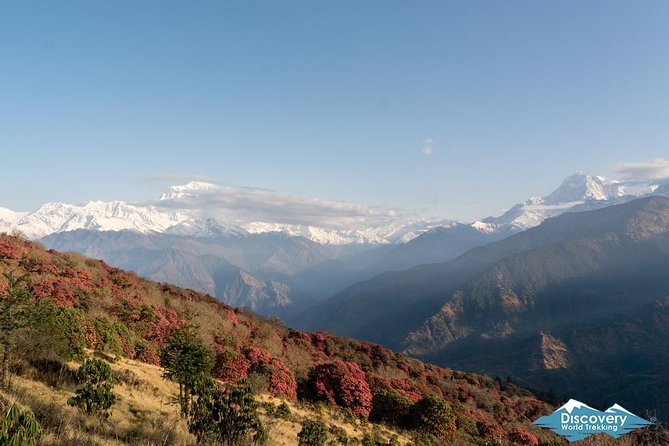
From Tatopani, you climb through Sikha and Chitre toward Ghorepani. These are villages of the Thakali people, surrounded by terraced farmland and mountain views. The trail then enters forests of rhododendron, birch, and magnolia.
This section feels very different from the dry, high country around Thorong La. If the flowers are in season, the forest can be especially appealing, but the route is still uphill and your legs may be tired from the pass crossing.
On Day 15, you rise early for Poon Hill at 3,210 meters. The viewpoint looks toward the Annapurna and Dhaulagiri massifs, Machhapuchhre, Manaslu, and surrounding rice terraces. It is a popular photography stop, and the early start is worthwhile if the weather cooperates.
Poon Hill is a smart finish because it gives you one more major view after the circuit’s hardest section. The weather is never guaranteed, though, so keep your expectations realistic.
Day 16: Returning to Kathmandu
After breakfast, you take a tourist bus back to Kathmandu. The package includes this bus transfer, and the itinerary says the trek ends in Kathmandu.
A 225-minute flight from Pokhara is also offered as an option, but it is not included. That can save time if you prefer to pay extra, while the bus keeps the listed package cost lower.
You also receive one night in a selected Pokhara hotel with breakfast as part of the package. Confirm exactly when that night falls in the current operating schedule, since the day-by-day description moves quickly from Poon Hill to the return transfer.
What the $1,093 price really covers
The strongest value comes from the number of essentials bundled together. You receive:
- Tea-house or lodge lodging during the trek
- Breakfast, lunch, and dinner
- Annapurna Conservation Area Permit
- TIMS card
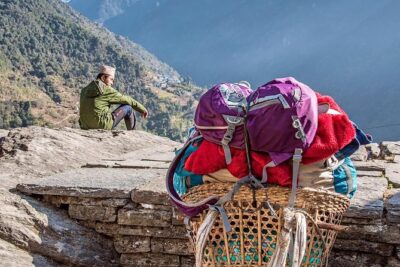
- A licensed guide and porter support
- Guide and porter wages, meals, lodging, insurance, and transport
- Kathmandu trailhead transport
- Muktinath to Tatopani public transport
- Pokhara to Kathmandu tourist bus
- One Pokhara hotel night with breakfast
- Government and local taxes
- Rescue assistance in a complicated health situation
- Farewell dinner and a completion certificate
The package also says extra dietary needs can be catered for. Costs not specifically listed as included remain your responsibility. Since the experience is non-refundable and cannot normally be amended after booking, confirm dates, fitness requirements, the current transport plan, and the exact inclusions before paying.
Who should book this Annapurna trek?
You should consider it if you want the classic Annapurna Circuit with two extra rewards: Tilicho Lake and Poon Hill. It suits fit, active people who enjoy long days, simple accommodation, shared transport, and a guide-led route.
You should think twice if you want a relaxed holiday, private rooms throughout, or a fixed schedule that will not change with mountain conditions. The package is designed for people who accept early starts, basic tea houses, high altitude, and physical discomfort as part of the deal.
The guide and porter team can make a major difference. Recent departures have praised Hari Gurung, Dev, and Suresh for care, encouragement, mountain information, and group support. Porters such as Damar, Sangkar, Bikesh, Asis, and Monis have also been praised for kindness and practical help. Ask who will lead your departure, since staff assignments can change.
Should you book it?
I would book this trek if I wanted a guided Annapurna Circuit with the planning taken care of and enough time to include Tilicho Lake, Thorong La, hot springs, and Poon Hill. The price is strong for the permits, meals, lodging, staff costs, and transport included.
I would not book it casually. You need good fitness, patience with mountain roads, and a serious approach to altitude. If you can accept those limits, this is a well-packed route with a fine balance of mountain views, village life, cultural stops, and hard-earned rewards.
FAQ
How long is the Annapurna Circuit with Tilicho Lake trek?
The experience lasts approximately 16 days, beginning and ending in Kathmandu.
Is Tilicho Lake included in the route?
Yes. The itinerary includes a side trip through Khangsar and Tilicho Base Camp to Tilicho Lake before the route continues toward Thorong Phedi.
What is the highest point of the trek?
Thorong La is the highest point, at approximately 5,416 meters. The crossing is scheduled for Day 12.
Are meals included?
Yes. Breakfast, lunch, and dinner are included during the trek. The package also lists 16 breakfasts, 16 lunches, and 16 dinners.
Is accommodation included?
Yes. Tea-house or lodge accommodation with meals is included during the trek, along with one night in a selected Pokhara hotel with breakfast.
Is transport included?
Transport from Kathmandu toward the trailhead, public transportation from Muktinath to Tatopani, and the tourist bus from Pokhara to Kathmandu are included. A 225-minute flight from Pokhara to Kathmandu is optional and not included.
How large can the group be?
The activity can have a maximum of 15 people. A licensed guide and porter support are included.
New treks around Kathmandu
- Kathmandu or Pokhara: 5-Day Annapurna Base Camp (ABC) Trek★ 4.5 · 2 reviews
- Pokhara: 2 Day Ghorepani & Poon Hill Private Trekking★ 4.9 · 8 reviews
- From Kathmandu: 6-Day Langtang Valley Guided Trek★ 5.0 · 2 reviews
- Pokhara: 5-Day Annapurna Base Camp (ABC) Trek★ 5.0 · 9 reviews
- Kathmandu: Langtang Valley 6-Day all inclusive Guided Trek★ 5.0 · 2 reviews
- Kathmandu: 6 Days Langtang Valley Trek with Kyanjin Ri★ 5.0 · 7 reviews
- Kathmandu: 9- Day Annapurna Circuit Trek★ 5.0 · 2 reviews
- Kathmandu: 6-Day Limitless Langtang Trek★ 5.0 · 21 reviews
Annapurna Base Camp Treks, side by side.
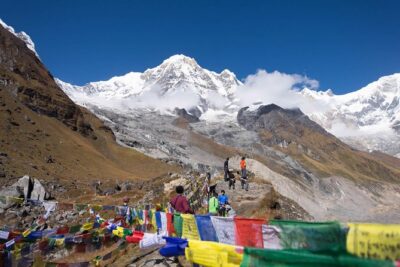
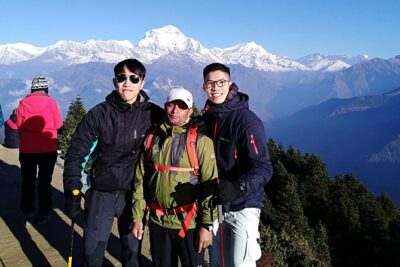
Trekking in Annapurna/Langtang/Everest/Upper Mustang regions
Read our review →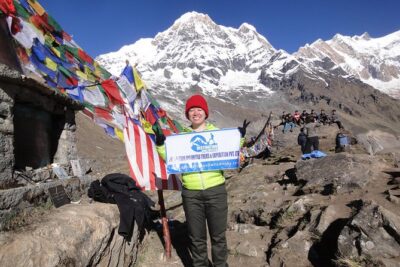
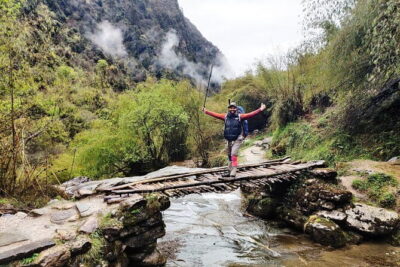
Kathmandu to Annapurna Base Camp (ABC) 5-Day Trek
Read our review →
Lists this trek appears in