
Review · KATHMANDU
Everest Base Camp Trekking
The finest part of this 12-day Everest Base Camp trek is that the hard planning is handled for you. Permits, teahouses, meals, porters, guide services, Lukla flights, and airport transfers are bundled into one trip, leaving you to focus on walking and altitude.
I like the small maximum group of 15, plus the practical porter ratio of one porter for every two trekkers. I also like the route’s full mix of rewards: Sherpa villages, Tengboche Monastery, Namche Bazaar, Khumbu Glacier, Everest Base Camp, and the famous view from Kalapatthar. The main consideration is simple: this is a demanding high-altitude trek, not a casual sightseeing tour, and personal insurance and emergency evacuation are not included.
Key points at a glance
- 12 days on the Everest route: You follow the classic trail from Lukla through Namche Bazaar, Tengboche, and the Khumbu region to Base Camp.
- Lukla flights are included: The package covers domestic flights between Kathmandu, or Ramechhap when required, and Lukla.
- One porter for two trekkers: This gives you useful help with bags while keeping your daily load lighter.
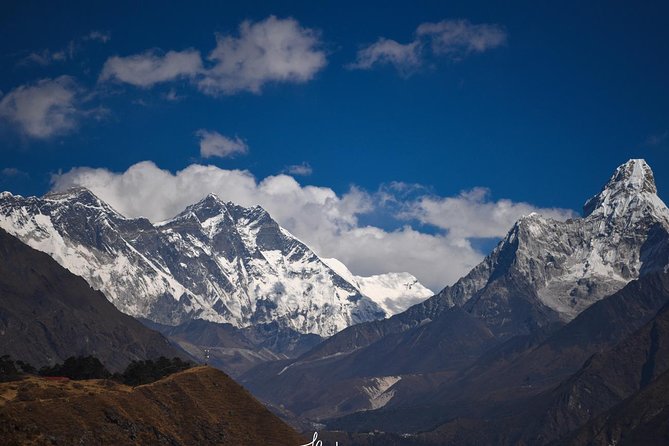
- The classic viewpoints are built in: You visit Everest Base Camp and Kalapatthar, known for close views of Everest and the surrounding peaks.
- Sherpa culture is part of the route: Namche Bazaar, local villages, monasteries, and daily mountain life are not treated as side attractions.
- Personal costs still add up: Showers, Wi-Fi, charging, bottled water, drinks, laundry, tips, Kathmandu lodging, and personal insurance are extra.
What the $1,350 price really covers
At $1,350 per person, this trek offers solid value if you want a handled, guided route rather than arranging each piece yourself. The price includes 11 nights in basic teahouse accommodation, three meals each trekking day, permits, national park fees, VDC and TIMS fees, guide and porter salaries, their food and lodging, and flights between Kathmandu or Ramechhap and Lukla.
That list matters. On a route as busy and logistically demanding as Everest Base Camp, permits and domestic flights are not small details. You also receive airport pickup and drop-off in Nepal, a trekking map for the group, and a trekking certificate at the end.
The accommodation is basic teahouse lodging, so set your expectations accordingly. You are paying for a bed, meals, and a practical base along the route, not hotel comforts. Hot showers, hot water, battery charging, and Wi-Fi cost extra during the trek. Kathmandu accommodation and all meals in Kathmandu are also outside the price.
There is one important insurance distinction. Insurance for the guide and porters is included, but your own medical, accident, rescue, and helicopter evacuation insurance is not. You should arrange personal cover before setting out and check that it specifically applies to high-altitude trekking and emergency evacuation.
More Everest Base Camp treks around Kathmandu:
- Everest Base Camp Trek – 14 Days
★ 5.0 · 1,499 reviews - Everest Base Camp Trek
★ 5.0 · 842 reviews - Everest Base Camp Trekking
★ 5.0 · 485 reviews
Day 1: Kathmandu, the early start, and Lukla
The meeting point is in Thamel, Kathmandu, with a listed start time of 6:15 am. Domestic flight operations can use Kathmandu or Ramechhap, and the package includes the flight to Lukla and the return flight after the trek.
The Lukla flight is part of the adventure, but it is also one of the practical pressure points. The experience description calls it thrilling, and that is fair. It is a key link to the Everest route, not just a transfer. Your guide meets you at the stated meeting point, accompanies you through the trip, and explains the cultural and natural setting along the way.
Because the start is early, keep your bags organized the night before. You will want essential items easy to reach, especially documents, warm layers, medication, and water. Your passport name, number, expiry date, and country are required when booking, so enter those details carefully.
Namche Bazaar and the first taste of altitude
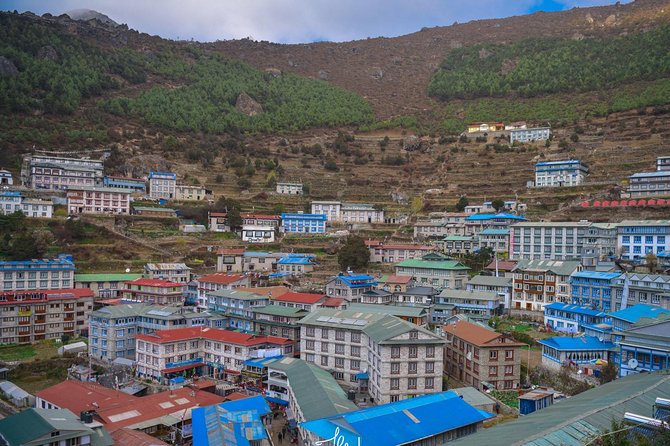
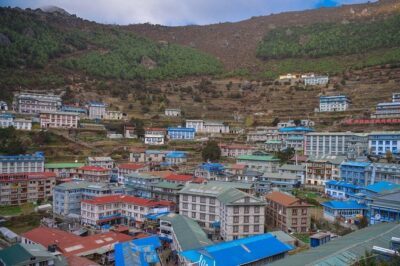
Namche Bazaar is one of the route’s major stops and one of the most interesting places on the trek. It is known as the gateway to Everest and functions as a high-altitude market town. You get your first strong sense of how Sherpa communities live and work in a mountain region shaped by trekking and mountaineering.
The stop is valuable because it is more than a photo break. You begin adjusting to altitude while seeing a working settlement rather than a string of scenic viewpoints. The route also follows the path associated with Sir Edmund Hillary and Tenzing Norgay Sherpa, giving the walk a direct connection to the early history of Everest mountaineering.
You should not judge the trip by how easy the first days feel. Altitude can make ordinary walking tiring, and the itinerary requires a strong level of physical fitness. Walk at a steady pace, listen to your guide, and treat the gradual ascent as part of the experience rather than a delay.
Sherpa culture, monasteries, and Tengboche
One of the best features of this trek is the balance between mountain views and local life. The route gives you time to see Sherpa culture and daily routines, while the guide provides context about the places you pass.
Tengboche Monastery is a major cultural stop. You have the chance to seek blessings from a monk and explore this well-known monastery. That gives the trek a welcome change of pace. You are not simply walking toward a famous mountain. You are passing through a region where Buddhist practice and mountain travel are closely linked.
The cultural stops also help explain why a licensed guide adds value. A guide can do more than point out peaks. The package promises an English-speaking, government-licensed guide throughout the route, with explanations of cultural and natural values. Guides such as Ram Dhakal and Dillip have handled trips for this operator, while Nadin has managed communication for bookings. You may not receive one of those specific people, so treat the names as examples rather than a guarantee.
More treks around Kathmandu:
- Annapurna Circuit Trek with Tilicho Lake
★ 5.0 · 368 reviews - Everest Base Camp Trekking – 13 Day
★ 5.0 · 365 reviews - Everest Base Camp Trek
★ 5.0 · 350 reviews - Everest Base Camp Trek -14 Days
★ 5.0 · 321 reviews
Reaching Everest Base Camp
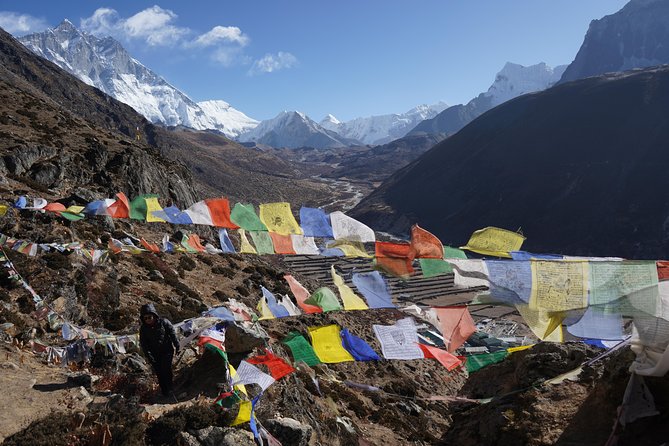
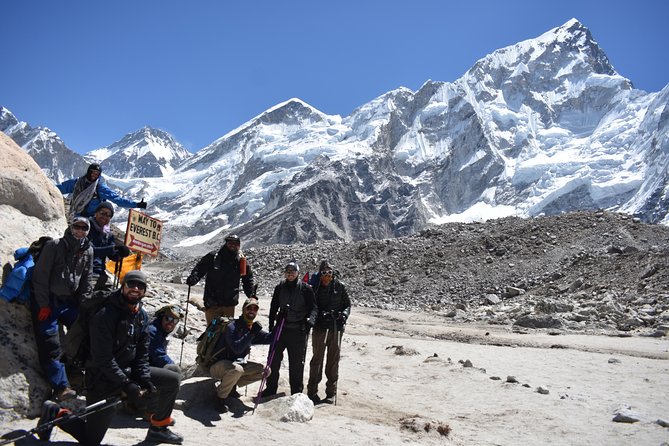
Everest Base Camp is the emotional high point of the route. You set foot at the staging area used by climbers preparing for the mountain, with the Khumbu region around you and the route’s mountaineering history close at hand.
It is worth knowing what this means. You are trekking to Base Camp, not climbing Mount Everest and not reaching the summit. The achievement comes from walking the trail to the camp at high altitude, managing the long days, and staying steady as the surroundings become more severe.
The itinerary also includes a chance to see the memorial hill for climbers who died on Everest. This is a sobering part of the trip. It adds a human dimension to the famous mountain and reminds you that the route is not only about striking photos and personal milestones.
You will also see the Khumbu Glacier. The glacier is one of the route’s most memorable natural features, but it also underlines the demanding setting. Expect an environment where weather, altitude, and walking conditions shape the day.
Kalapatthar and the mountain views
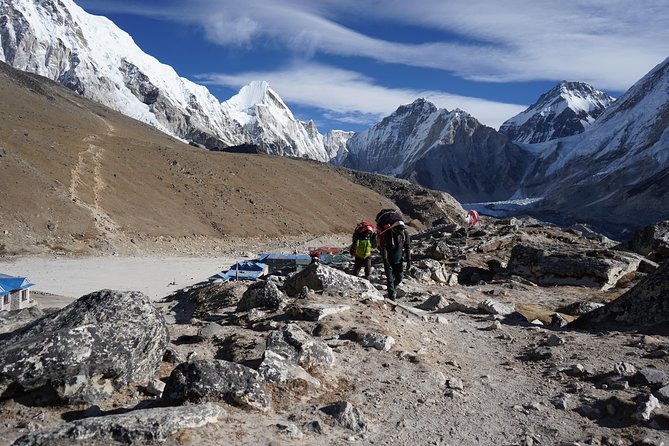
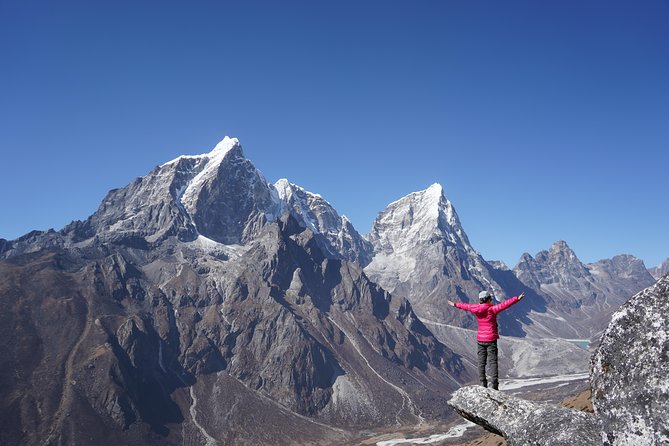
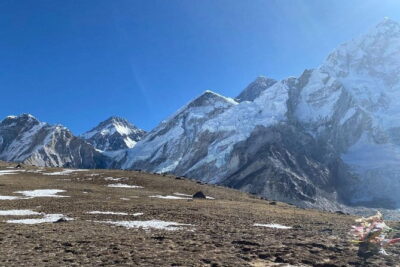
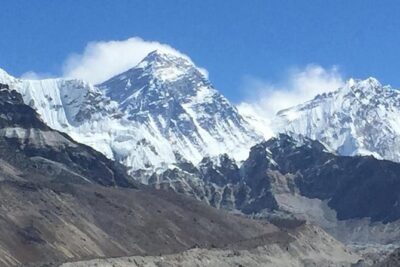
Kalapatthar is included for the close view of Everest. For many people, this viewpoint provides the clearest visual reward of the entire trek. The route promises panoramic mountain views, including peaks above 8,000 meters, and Kalapatthar is where the scale of the region becomes especially clear.
The distinction between Base Camp and Kalapatthar matters. Base Camp gives you the symbolic arrival point and the mountaineering setting. Kalapatthar is the viewpoint stop, where the mountain panorama is the main event. You get both experiences in the same trek, rather than having to choose between a cultural route and a scenic route.
Weather can affect visibility, so keep your expectations sensible. The itinerary includes the viewpoint, but no mountain view can be guaranteed on a particular morning. Your guide can help manage the timing and pace, while you should bring layers and be ready for cold conditions.
Teahouses, meals, and porter support
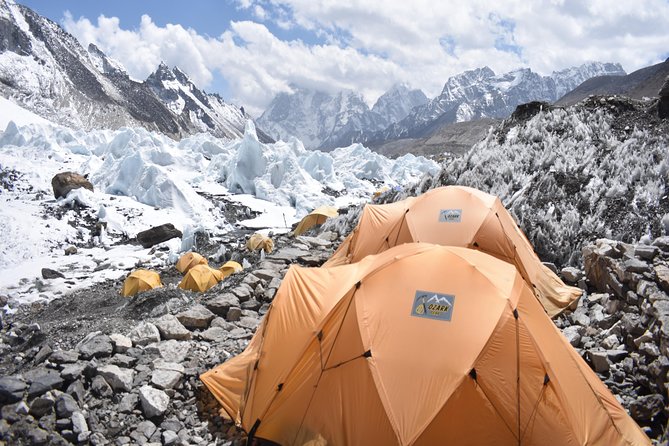
The 11 nights of teahouse accommodation keep the trip practical. Teahouses are an important part of the Everest route because they provide basic lodging and meals along the trail. Here, breakfast, lunch, and dinner during the trek are included.
Food is not included in Kathmandu, and personal drinks during the trek are extra. Bottled or mineral water, alcoholic drinks, laundry, phone calls, charging, Wi-Fi, and hot showers all come from your own budget. These costs can be easy to overlook when comparing the headline price, so set aside money for them.
The porter arrangement is one of the more useful inclusions. One porter is assigned for every two trekkers, and the company covers porter food, accommodation, salary, and insurance. You should still pack sensibly and respect the porter’s load limits. A lighter personal bag makes the route more comfortable for everyone.
Sleeping bags, duffel bags, and down jackets are available on request during the trek. Ask for them when booking or before departure rather than assuming they will appear automatically. Personal trekking equipment remains your responsibility.
Who will get the most from this trek
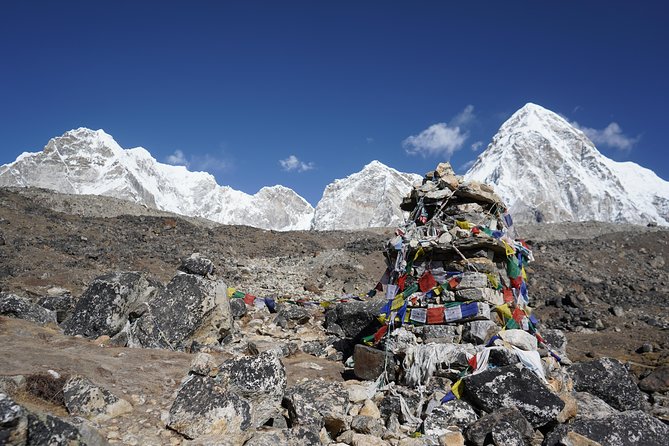
This trip suits you if you want the classic Everest Base Camp route with the main logistics bundled together. It is especially useful if you do not want to arrange permits, flights, lodging, meals, porters, and guide services separately.
It also suits solo bookers. One person used this operator to complete a personal Everest Base Camp goal, with communication handled by Nadin and guiding by Dillip. The group can reach up to 15 people, so a solo booking does not necessarily mean a private trek.
You should be comfortable with a strong fitness requirement and with basic accommodation. If you need luxury lodging, private rooms, included hot showers, or a fully covered rescue plan, this package will need careful comparison with a more expensive option.
Vegetarian food is available if you request it at the time of booking. That is a useful detail for anyone with dietary needs, but you should still state your requirements clearly before departure.
Communication, safety, and service
The strongest praise for this operator centers on communication, planning, flexibility, and care from the guide team. One booking described Ram Dhakal as attentive throughout the trek, while another gave particular credit to Dillip for helping make a solo goal possible. Another account highlighted a well-planned schedule and flexibility based on conditions.
That flexibility matters in the Everest region. A fixed plan is useful, but mountain travel sometimes requires adjustments. The package promises an accompanying guide and a maximum group size of 15, giving you a clear point of contact during the trek.
Still, the safety arrangements are not all-inclusive. Emergency evacuation expenses are excluded, as is your own medical, accident, and rescue insurance. Read the policy details before you go, and make sure high-altitude trekking is covered rather than assuming a standard travel policy will do the job.
The operator has a 99 percent recommendation rate and a five-star average from 146 ratings. Those figures suggest strong satisfaction with the overall service, especially the guides and planning. I would still focus on the exact inclusions and your own fitness, since a good operator cannot remove the physical demands of the route.
Booking, cancellation, and small practical details
Confirmation is provided when you book, and the trip is booked on average 33 days ahead. That is a useful planning guide, though earlier preparation gives you more time to arrange flights, equipment, insurance, and fitness training.
The experience offers free cancellation up to 24 hours before the local start time for a full refund. Cancellations or changes made inside that 24-hour window are not accepted for a refund.
The trip begins and ends at the Thamel meeting point in Kathmandu. Airport pickup and drop-off are included, but Kathmandu accommodation is not. Keep that separate when working out the full cost of your Nepal trip.
Should you book this Everest Base Camp trek?
I would choose this trek if you want a classic Everest Base Camp experience with the major logistics handled and a guide beside you throughout. The price is reasonable for the combination of permits, flights, meals, teahouses, porters, guide services, and transfers.
Book it with clear expectations. You need strong fitness, basic lodging, extra cash for personal services, and your own evacuation and medical insurance. If those conditions suit you, this package gives you the important rewards in one well-organized route: Namche Bazaar, Sherpa culture, Tengboche Monastery, Khumbu Glacier, Everest Base Camp, the climbers’ memorials, and the mountain panorama from Kalapatthar.
FAQ
How long is the Everest Base Camp trek?
The experience lasts approximately 12 days and includes 11 nights of teahouse accommodation during the trek.
Where does the trek start and finish?
The meeting point is in Thamel, Kathmandu, and the activity ends back at the meeting point.
What time does the trek start?
The listed start time is 6:15 am.
Are flights to Lukla included?
Yes. The package includes airfare between Kathmandu or Ramechhap and Lukla in both directions.
Are meals included?
Breakfast, lunch, and dinner are included during the trek. Meals in Kathmandu are not included.
Is accommodation in Kathmandu included?
No. Kathmandu accommodation is not included in the package.
Is a porter included?
Yes. Porter support is included at a ratio of one porter for every two trekkers. The operator covers the porter’s food, salary, accommodation, and insurance.
Is personal rescue and medical insurance included?
No. Your personal medical, accident, rescue, and helicopter evacuation insurance is not included. Insurance for the guide and porters is included.
Can I cancel for a full refund?
Yes. You can cancel at least 24 hours before the local start time for a full refund. Changes or cancellations made less than 24 hours before the start are not accepted for a refund.
New treks around Kathmandu
- Kathmandu or Pokhara: 5-Day Annapurna Base Camp (ABC) Trek★ 4.5 · 2 reviews
- Pokhara: 2 Day Ghorepani & Poon Hill Private Trekking★ 4.9 · 8 reviews
- From Kathmandu: 6-Day Langtang Valley Guided Trek★ 5.0 · 2 reviews
- Pokhara: 5-Day Annapurna Base Camp (ABC) Trek★ 5.0 · 9 reviews
- Kathmandu: Langtang Valley 6-Day all inclusive Guided Trek★ 5.0 · 2 reviews
- Kathmandu: 6 Days Langtang Valley Trek with Kyanjin Ri★ 5.0 · 7 reviews
- Kathmandu: 9- Day Annapurna Circuit Trek★ 5.0 · 2 reviews
- Kathmandu: 6-Day Limitless Langtang Trek★ 5.0 · 21 reviews
Everest Base Camp Treks, side by side.
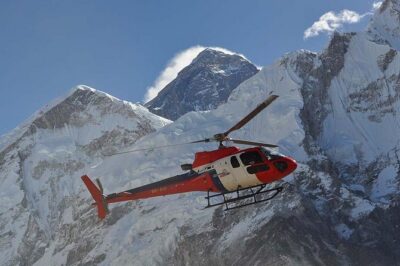
Everest Base Camp Trek with Helicopter Return from Gorakshep to Lukla
Read our review →
Trekking in Annapurna/Langtang/Everest/Upper Mustang regions
Read our review →Lists this trek appears in