
Review · KATHMANDU
Everest Base Camp Trek
Everest Base Camp is the payoff, but the real adventure is the steady climb through Sherpa villages, rhododendron forest, glacier country, and high mountain passes. The route gives you two acclimatization days, a wise feature on a trek that reaches serious altitude.
I like the personal support here: an English-speaking guide leads the walk, and one porter is provided for every two trekkers. I also like the practical Kathmandu arrival service, airport transfers, and farewell dinner. Guides named in past trip accounts include Dilli and Sambhu, while owner Dipak Sapkota is frequently involved in arranging transport and connections.
The main caution is the trip information about meals and accommodation. One section says breakfast, lunch, and dinner are included, while another says food and drinks, including all meals, are not included. Accommodation and national park fees are also listed as extra, so confirm the exact package in writing before paying.
Key points before you book
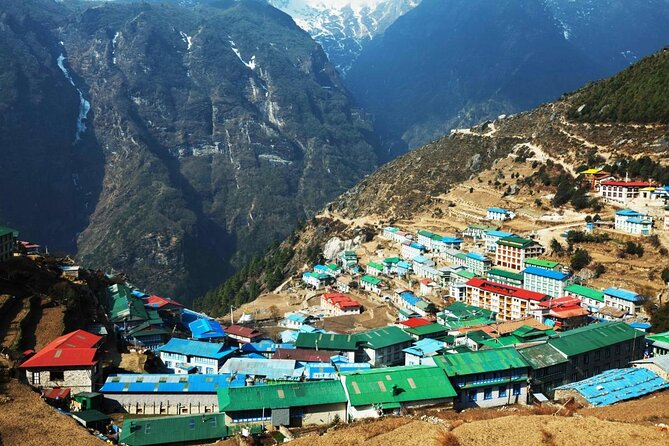
- 13 days from Kathmandu to Everest Base Camp: The route includes Lukla, Phakding, Namche Bazaar, Tengboche, Dingboche, Lobuche, Gorakshep, and the return through Pheriche.
- Two useful acclimatization stops: You spend a rest day in Namche and another in Dingboche, with walks to Sagarmatha National Park and Nagarkshang Hill.
- Lukla flights save days: The roughly 30-minute flights replace a long road journey, though mountain weather can affect departures.
- A guide and porter are included: One English-speaking trekking guide and one porter serve every two trekkers.
- The price needs careful checking: At $1,800 per person, value depends on whether meals, lodging, permits, and all transport costs are truly part of your package.
- This is a private activity: Only your group participates, with a moderate fitness requirement.
Why this Everest route works
This is the classic approach to Everest Base Camp, not a quick high-altitude dash. You start in Kathmandu, fly to Lukla, and gain height in stages. That slower pattern matters because the route reaches Namche Bazaar, Dingboche, Lobuche, and Gorakshep before you reach Base Camp.
You will not spend every day walking at the same pace. Some days are short enough to let your body adjust. Others are long and demanding, particularly the walk from Lobuche to Everest Base Camp and the early climb to Kalapatthar.
The route also gives you more than a mountain viewpoint. You pass through settlements where the trek is part of daily life, cross forests of pine and rhododendron, and enter Sagarmatha National Park near Monjo. At Tengboche, the setting combines forest, hills, and a well-known monastery area, although the schedule allows only a limited amount of time there.
At $1,800, this is not a bare-bones independent trek. You are paying for planning, guides, portering, flights, transfers, and local coordination. The price can be fair if lodging, permits, and meals are included as expected. It becomes less attractive if those costs are added later, so ask for a complete itemized breakdown.
More Everest Base Camp treks around Kathmandu:
- Everest Base Camp Trek – 14 Days
★ 5.0 · 1,499 reviews - Everest Base Camp Trek
★ 5.0 · 842 reviews - Everest Base Camp Trekking
★ 5.0 · 485 reviews
Day 1: Thamel and a gentle start in Kathmandu
Your arrival begins with a representative meeting you and transferring you to a hotel in Thamel. This is useful after a long international flight, especially since the next morning starts early.
If you still have energy, Thamel gives you a simple first taste of Kathmandu. You can walk around, find a small meal or drink, and check any last-minute trekking needs. The schedule allows about three hours here, but it is sensible to keep this first evening easy.
Kathmandu Durbar Square is offered as an optional visit, with about two hours suggested. The admission ticket is not included. I would treat this as a bonus rather than a fixed part of the tour, since arrival delays and tiredness can easily change your plans.
Day 2: The thrilling flight from Kathmandu to Lukla
The day starts at Tribhuvan Domestic Airport. The flight to Lukla takes about 30 minutes, but the short duration does not make it dull. From the air, you can see hills, greenery, lakes, and mountain scenery before landing at the gateway to the trek.
Once you arrive in Lukla, the walking begins toward Phakding. The guide gives you a trip briefing, and your porter joins the group. This first walking day introduces the rhythm of the route without sending you straight into its hardest sections.
The practical issue is weather. The package requires good conditions, and Lukla flights can be delayed or changed when conditions are poor. Build some flexibility into your larger Nepal plans rather than scheduling an important international departure immediately after the trek.
Day 3: Forest paths from Phakding to Namche Bazaar
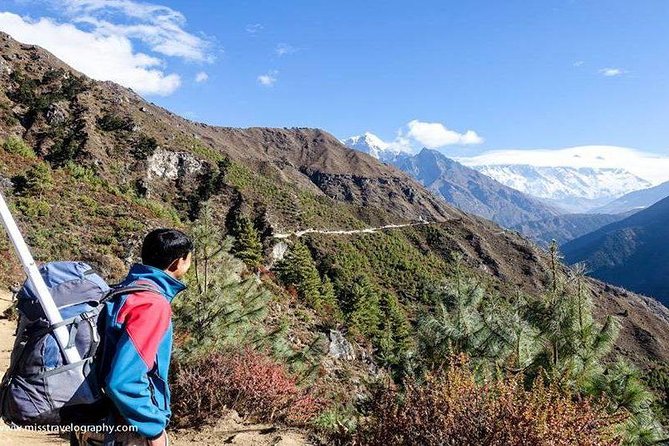
The route follows the Dudh Koshi toward Monjo, passing through pine and rhododendron forest. Monjo marks the entrance to Sagarmatha National Park, so this is where the protected mountain setting becomes a clear part of the journey.
From Monjo, you continue toward Namche Bazaar. The day is a real step up in effort, and the approach to Namche gives you your first sense that this is not a casual countryside walk.
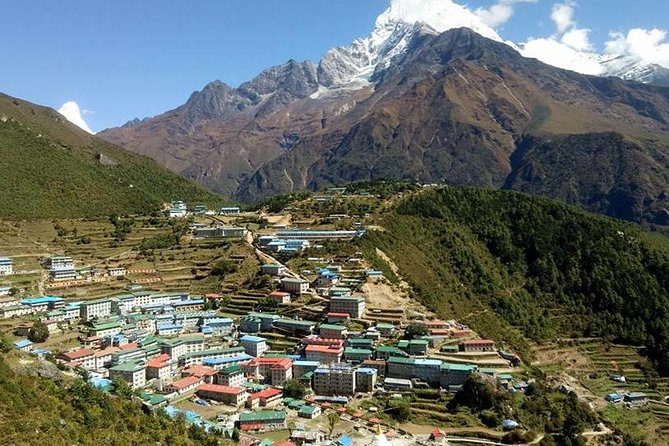
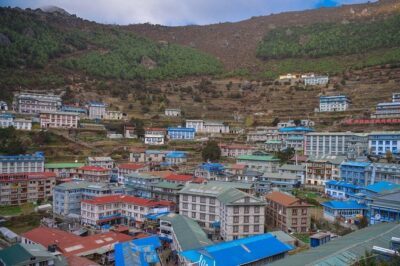
Namche is one of the most important settlements on the route. It is a place to pause, meet local residents, and prepare for the higher sections ahead. The village setting also helps break up the physical challenge with a little human activity.
More treks around Kathmandu:
- Annapurna Circuit Trek with Tilicho Lake
★ 5.0 · 368 reviews - Everest Base Camp Trekking – 13 Day
★ 5.0 · 365 reviews - Everest Base Camp Trek
★ 5.0 · 350 reviews - Everest Base Camp Trek -14 Days
★ 5.0 · 321 reviews
Day 4: Acclimatization in Namche Bazaar
This is a rest day, but not a day of doing nothing. You explore Namche and visit Sagarmatha National Park while giving your body time to adjust to altitude.
That pause is one of the strongest features of the itinerary. A trek to Base Camp is not only about distance. It is about how quickly you gain height, and a planned rest day gives you a better chance of continuing safely.
You should still keep the day measured. The goal is to move enough to help your adjustment, not to turn your rest day into another major hike. The itinerary does not specify a fixed walking distance, so your guide will shape the outing around the group.
Day 5: The demanding climb to Tengboche
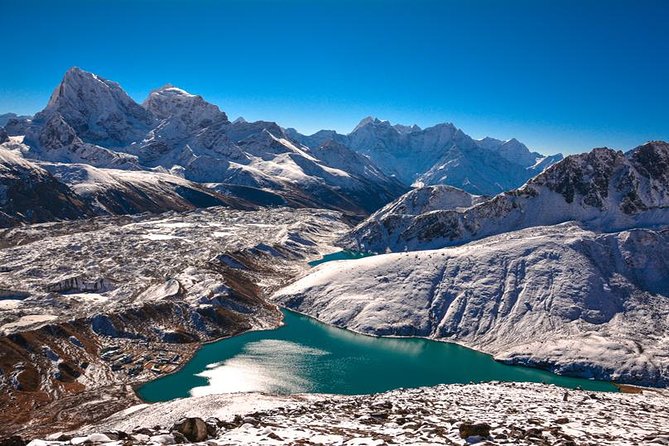
The route rises above the Dudh Koshi and heads toward Tengboche. You pass through forest, encounter mountain views, and may see danfe, Nepal’s national bird, along the way.
The path drops toward Phunkitenga after the section from Trashinga, where you stop for lunch before climbing again through green forest. This up-and-down pattern can be tiring because not every downhill section means the hard work is over.
Tengboche is a rewarding overnight stop. It is surrounded by hills and forest, with high peaks nearby, and the setting feels markedly more remote than Kathmandu or Namche. The schedule includes time to appreciate the area, though you should not expect a long cultural program unless your guide arranges one.
Day 6: White mountains on the way to Dingboche
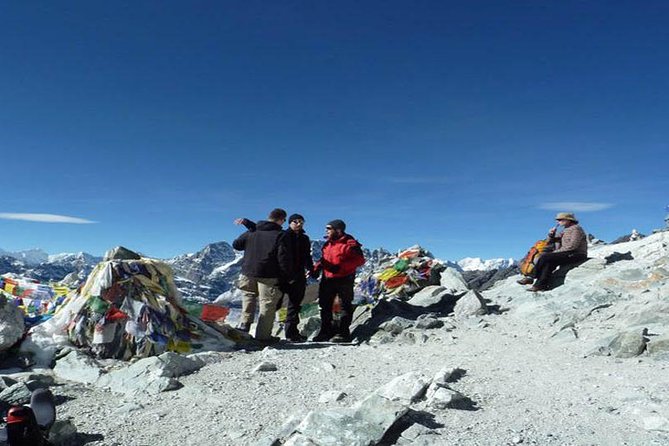
You continue through rhododendron forest toward Dingboche. The forest gradually gives way to colder, more open surroundings, with white mountain scenery becoming a bigger part of the walk.
This is an important transition day. You are now moving into higher country, where the air is thinner and the nights are colder. The pace may feel slower, and that is exactly how it should be.
Dingboche is a practical base for another acclimatization day. It is not simply a place to sleep before the next climb. The schedule gives you time to adjust before heading toward Lobuche and the glacier country beyond.
Day 7: Nagarkshang Hill and a second altitude break
The second acclimatization day includes an outing to Nagarkshang Hill and a return to the hotel in Dingboche. This gives you a higher walk without requiring you to change accommodation.
I like this structure because it avoids a rushed march toward Base Camp. You gain experience walking at altitude, then return to the same room and reduce the strain of packing and unpacking.
Keep your expectations realistic. This is still a serious trek, and an acclimatization day does not remove the risk of altitude sickness. Tell your guide clearly if you feel unwell, unusually tired, or short of breath.
Day 8: Glacier country near Lobuche
The itinerary describes the next stop as Douglas, but the route details clearly lead toward Lobuche and the Khumbu Glacier. You walk with views of Tawache and Cholatse before reaching Lobuche.
Lobuche is cold for geographical reasons, and the overnight stay is likely to feel more basic and exposed than your earlier nights. This is where the trek becomes less about forest walking and more about high-altitude terrain.
The scenery is a major reward, but the cold is not a small detail. Warm layers, gloves, a hat, and suitable trousers are listed as personal equipment, so you need to bring them yourself unless your package says otherwise.
Day 9: Reaching Everest Base Camp
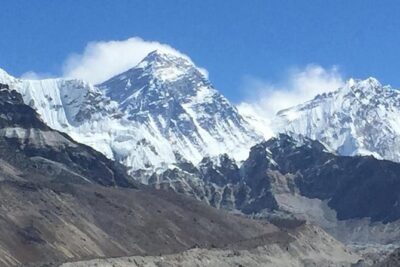
This is the main goal. From Lobuche, you walk toward Everest Base Camp, the staging area used by climbers preparing for Everest.
The route is demanding, and the achievement comes from the full sequence of days rather than one dramatic final step. By this point, you have already handled forest paths, steep climbs, high villages, and cold nights.
After reaching Base Camp, you continue to Gorakshep for the night. The schedule places the Gorakshep stay at midday after the Base Camp visit, which gives you a place to rest before the next morning’s early climb.
Do not expect the same appearance at Base Camp in every season. The information provided does not promise climbing expeditions, fixed tents, or a particular amount of activity. What you can count on is reaching the recognized Base Camp area on foot with your guide.
Day 10: Early Kalapatthar climb and the return to Pheriche
You leave early for Kalapatthar, the high viewpoint on the route. The walk takes several hours, and the setting surrounds you with mountains in every direction.
This is often the toughest morning of the trip because it combines an early start, cold conditions, altitude, and a steep climb. The reward is the broad mountain setting, but you should not treat this as an easy photo stop.
After Kalapatthar, the route descends to Pheriche, where you spend the night. The descent is welcome, but long downhill walking can still tire your legs. Good footwear and careful pacing matter.
Days 11 and 12: Returning through Tengboche, Namche, and Lukla
The return route passes Tengboche again, giving you a second chance to appreciate the setting before continuing toward Namche Bazaar. The mountain views remain a strong part of the walk, but the return is not merely a repeat. Your body is tired, and the long days can feel just as demanding as the ascent.
Day 12 covers a longer distance toward Lukla. The chance to browse Lukla Bazaar adds a small, useful pleasure at the end of the trek. You can look for a souvenir before the final overnight stop.
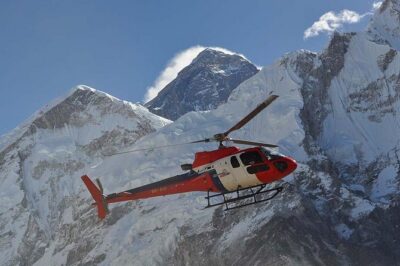
Transport planning matters here. Past trip arrangements have included quick changes involving Lukla and Ramechap, and the operator has also handled helicopter-return versions on other departures. Those options are not part of this stated package, so confirm your actual return plan rather than assuming a helicopter is included.
Day 13: Flying back to Kathmandu
The flight from Lukla to Kathmandu takes about 35 minutes. Back in the capital, you have some time to walk around before a farewell dinner arranged by Adventure White Mountain.
That dinner is a pleasant finish, especially after nearly two weeks of walking. The Kathmandu time is not a full sightseeing day, so do not book this tour expecting extensive city touring at the end.
Guides, porters, and the human side of the trek
The package includes an English-speaking trekking guide and one porter for every two trekkers. That ratio keeps your load manageable while giving the guide room to focus on pace, route decisions, and group welfare.
Several guide names appear in accounts of trips organized by this company, including Dilli and Sambhu. Dipak Sapkota is also closely involved in communication and arrangements, with quick responses highlighted in past trip accounts. These personal links matter on a trek where flight changes, weather, and tiredness can upset a neat schedule.
You should still ask who will lead your specific departure. A company may use different guides, and the named individuals are not guaranteed for every booking.
What the $1,800 price really covers
The stated price is $1,800 per person. Included items are listed as round-trip Lukla flights, shared vehicle transport, a professional English-speaking guide, one porter for two trekkers, and meals described as 11 lunches, 11 dinners, and 12 breakfasts.
However, the same information also lists all food and drinks as excluded. Accommodation and national park permit fees are also listed as extra. That is a significant conflict, not a minor wording issue.
Before booking, request a written list that answers these questions:
- Are all hotel and teahouse nights included?
- Are breakfast, lunch, and dinner included every day?
- Are Sagarmatha National Park fees included?
- Are Kathmandu transfers included both ways?
- Are Lukla flights protected against schedule changes?
- What happens if the flight is delayed by weather?
- Are guide and porter tips separate?
Once those points are clear, the price can offer good value for a private, supported trek. Without that clarification, the final cost is hard to judge.
Personal gear, warm clothing, hot showers, battery charging, Wi-Fi, drinks, tips, accommodation, and permits may require extra payment. Budget for those items rather than treating $1,800 as an all-in figure.
Who should book this trek?
This experience suits you if you want the classic Everest Base Camp route with private group arrangements, local support, and planned acclimatization days. You need moderate physical fitness and a willingness to walk for several hours on many days at increasing altitude.
It is less suitable if you want luxury accommodation, a relaxed walking schedule, or guaranteed flights regardless of weather. It is also not ideal if you dislike cold nights, basic services, or changing plans.
The strongest reasons to choose it are the two acclimatization days, the guide and porter support, the direct Lukla flights, and the company’s hands-on approach to airport transfers and last-minute transport problems. The biggest reason to pause is the unclear list of inclusions.
Should you book the Everest Base Camp Trek?
Book it if you want a structured 13-day route and are comfortable confirming the fine print before departure. The itinerary gives you the right broad shape: gradual height gain, rest days at Namche and Dingboche, Base Camp, Kalapatthar, and a supported return to Lukla.
I would not pay until meals, lodging, permits, and transport are spelled out. Once those costs are settled, this looks like a practical choice for a fit first-time trekker who wants local help without joining a large group.
FAQ
How long is the Everest Base Camp trek?
The experience lasts approximately 13 days, beginning and ending in Kathmandu.
Are flights between Kathmandu and Lukla included?
Yes. The package states that flights to Lukla and back to Kathmandu are included, along with shared vehicle transport.
Are meals included in the price?
The information is inconsistent. One section lists 11 lunches, 11 dinners, and 12 breakfasts as included, while another says food and drinks, including meals, are excluded. Confirm this in writing before booking.
Is accommodation included?
Accommodation is listed among the exclusions. Ask the operator to confirm exactly which Kathmandu and trekking nights are covered.
What fitness level is required?
You should have a moderate level of physical fitness. This is a high-altitude trek with several long walking days and an early climb to Kalapatthar.
What is the cancellation policy?
You can receive a full refund if you cancel at least 24 hours before the start time. Cancellations or changes made within 24 hours are not refunded, while poor weather or failure to meet the minimum group requirement may result in an alternative date or a full refund.
New treks around Kathmandu
- Kathmandu or Pokhara: 5-Day Annapurna Base Camp (ABC) Trek★ 4.5 · 2 reviews
- Pokhara: 2 Day Ghorepani & Poon Hill Private Trekking★ 4.9 · 8 reviews
- From Kathmandu: 6-Day Langtang Valley Guided Trek★ 5.0 · 2 reviews
- Pokhara: 5-Day Annapurna Base Camp (ABC) Trek★ 5.0 · 9 reviews
- Kathmandu: Langtang Valley 6-Day all inclusive Guided Trek★ 5.0 · 2 reviews
- Kathmandu: 6 Days Langtang Valley Trek with Kyanjin Ri★ 5.0 · 7 reviews
- Kathmandu: 9- Day Annapurna Circuit Trek★ 5.0 · 2 reviews
- Kathmandu: 6-Day Limitless Langtang Trek★ 5.0 · 21 reviews
Everest Base Camp Treks, side by side.
Everest Base Camp Trek with Helicopter Return from Gorakshep to Lukla
Read our review →
Trekking in Annapurna/Langtang/Everest/Upper Mustang regions
Read our review →Lists this trek appears in