
Review · KATHMANDU
Everest Base Camp Trek
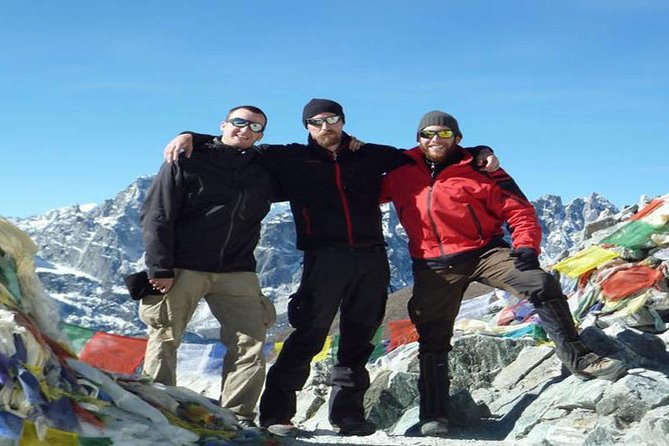
The most thrilling part comes early: a short flight into Lukla, one of the world’s best-known mountain airstrips, followed by days of walking toward Everest Base Camp. You pass Sherpa villages, pine forests, suspension bridges, glaciers, and high viewpoints such as Kala Patthar.
I like the way this trip builds in two acclimatization days, rather than treating Everest as a race. I also like the practical setup: porters carry your main gear, the guide handles permits and daily plans, and a down jacket, sleeping bag, and duffel bag are supplied.
The main caution is altitude. This is not a gentle sightseeing holiday. You need moderate physical fitness, patience with slow progress, and travel insurance that covers medical care and emergency evacuation, neither of which is included in the $1,408 price.
Key points to know before you book
- Lukla flights set the tone: The 30-minute flight from Kathmandu is scenic and weather-sensitive, so the extra Kathmandu day is useful protection against delays.
- Two acclimatization stops matter: Rest days in Namche Bazaar and near Dingboche include optional hikes to higher viewpoints.
- Porters carry the heavy load: Your main duffel is handled by the support team, while you walk with only a day pack.
- Kala Patthar is the big viewpoint: The early morning climb gives you the strongest mountain views of the trip.
- The price covers a lot: Domestic flights, permits, meals, lodging, guides, porters, and trekking equipment are included.
- The route is private: Only your own group participates, with the pace adjusted by your guide and group size.
Why this 15-day route works
The Everest Base Camp trail is famous, but fame does not make it easy. You spend many hours walking at altitude, often on uneven paths, with steep climbs and descents. The smart feature here is the rhythm: walk, gain altitude, pause, then walk again.
The advertised schedule lasts about 15 days. The walking section is described as roughly 11 nights and 12 days, with arrival, departure, and a spare day in Kathmandu added around it. That spare day is not wasted time. Lukla flights can be canceled or delayed by poor weather, so having a buffer is far better than trying to connect directly to an international flight.
This is a private activity, not a large coach tour. Your group travels with an English-speaking, government-licensed guide, and groups of more than six receive an assistant guide. Porters carry supplies and luggage, with their meals, lodging, wages, and insurance included in the package.
More Everest Base Camp treks around Kathmandu:
- Everest Base Camp Trek – 14 Days
★ 5.0 · 1,499 reviews - Everest Base Camp Trek
★ 5.0 · 842 reviews - Everest Base Camp Trekking
★ 5.0 · 485 reviews
Kathmandu arrival and the flight to Lukla
On the first day, an airport representative meets you with a name card and drives you to your Kathmandu hotel. The transfer takes about 30 minutes, and the day is mainly for arrival and getting settled.
Kathmandu is also your safety net at the end. You have a free day before your international departure, giving the operator room to handle a delayed Lukla flight. You can use the time for shopping and sightseeing, though the main value is flexibility.
The next morning brings the famous domestic flight to Lukla. The flight takes about 30 minutes and leads directly into the walking portion of the trek. You are advised to sit on the right side of the aircraft for mountain views on the return to Kathmandu, a small detail that can make the flight more memorable.
Weather is a real part of this experience. If the Lukla flight is delayed, your schedule may shift. The itinerary includes a buffer day, but you should still avoid booking a tight international connection after the trek.
Phakding to Namche Bazaar, forests and suspension bridges
After landing at Lukla, you walk toward Phakding. This first day is relatively short, about four hours in the supplied schedule, and gives you a chance to adjust to the trail without immediately forcing you into the highest elevations.
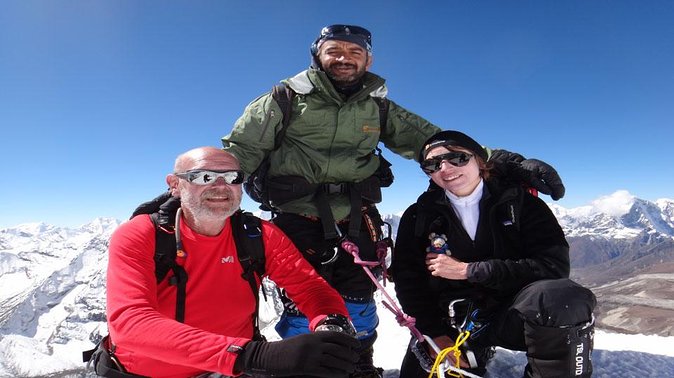
The route then continues through pine forests toward Monjo and Jorsalle. You stop for lunch in Jorsalle before crossing the Hillary Bridge. The trail becomes steeper after the bridge, so the day feels more demanding than the distance alone might suggest.
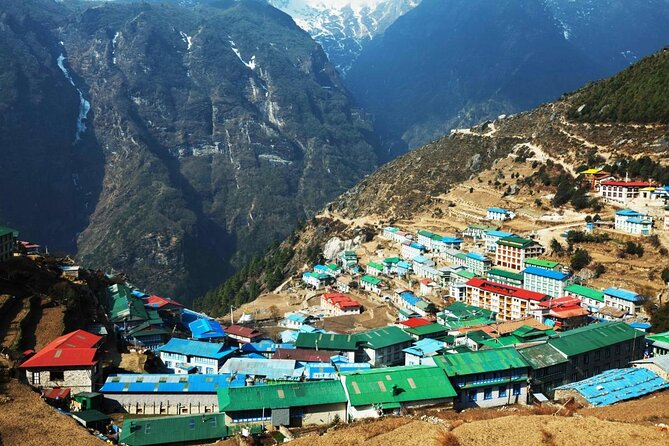
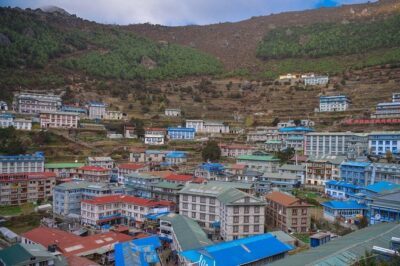
Namche Bazaar is the important early stop. It is one of the main settlements in the Khumbu region and a useful place to rest, eat, and prepare for higher ground. The approach includes forest, bridges, river crossings, and steady climbing, which makes the route feel like a real mountain journey from the start.
Your guide organizes the walking pace and daily details. That matters here because the best pace is usually slower than your first instinct. You want to arrive in Namche tired but able to eat and sleep, not exhausted before the trek has properly begun.
Namche acclimatization and Sherpa culture
The first acclimatization day is not a day of doing nothing. Your guide offers several possible hikes, including Khumjung and Khunde, the Everest View Hotel, Thame, or Sagarmatha National Park.
These options give the day some choice. You can walk higher during the day and return to Namche, helping your body adjust while also seeing more of the Sherpa region. The Everest View Hotel option is especially appealing for a first look at the great peaks, though the itinerary allows the leader to choose among several routes.
This is also one of the better places to appreciate the Sherpa culture that the trip promises. The villages are not simply scenic stops on a route to Everest. They are working mountain communities, and your guide can help give context to the places you pass through.
The quality of your guide matters a great deal here. Past departures have been led by guides named Lok, Khila, Lal, Hari, Ossman, and Namraj. The strongest praise has centered on guides who set a good pace, watch safety closely, and handle the daily details without fuss.
More treks around Kathmandu:
- Annapurna Circuit Trek with Tilicho Lake
★ 5.0 · 368 reviews - Everest Base Camp Trekking – 13 Day
★ 5.0 · 365 reviews - Everest Base Camp Trek
★ 5.0 · 350 reviews - Everest Base Camp Trek -14 Days
★ 5.0 · 321 reviews
Tengboche, Pangboche, and the second acclimatization day
After Namche, the trail rises toward the national park headquarters and continues to Kyanjuma. You may stop for tea before descending to Phungi Thanga for lunch. From there, the route climbs again after crossing the Dudh Koshi River.
This up-and-down pattern is typical of the trek. You do not simply walk uphill all day. You descend to a river, climb out again, and repeat the process. The views improve, but so does the physical demand.
The route continues along the Imja Khola to Pangboche at about 3,930 meters. Pangboche is associated with well-known Everest climbers and is described as home to many brave Sherpas. The village gives you a strong sense of how closely daily life in the region is tied to the mountains.
The second acclimatization day includes a hike toward Nagarkhang Peak at approximately 5,000 meters. From the high point, you can see several Himalayan peaks. This is an ambitious rest day, not a lazy one, so you should follow your guide’s advice and not treat the optional hike as a contest.
The purpose is to gain height during the day and return lower to sleep. That pattern is a key part of preparing for Everest Base Camp.
Dughla, Lobuche, and the final push upward
As the route nears Base Camp, you follow the ridge above Pheriche to Dughla. Lunch comes before the steep climb to Dughla Pass. This section can feel serious because the altitude is now high and the trail is more exposed than the lower forest paths.
The schedule then leads toward the glacier and Everest Base Camp. The first part of the walk may feel manageable, but the glacier crossing becomes harder because of uneven ground and low oxygen. You should expect your pace to slow. At this point, every short climb can require a rest.
Your guide’s role becomes especially important here. The package includes a first-aid medical kit carried by the guide, but you should not mistake that for full medical coverage. Emergency evacuation and medical insurance are excluded, so arrange suitable insurance before departure.
Everest Base Camp is the emotional target, but it is not the only worthwhile part of the trek. The route to reach it gives you villages, rivers, bridges, high passes, and long mountain views. The final arrival means more because of the effort required to get there.
Kala Patthar at sunrise
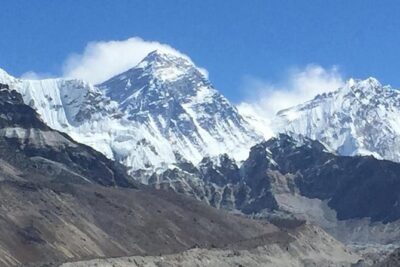
The following morning starts early for Kala Patthar. The climb is difficult, but the reward is the best viewpoint in the itinerary. The plan is to reach the high point before sunrise, when the surrounding peaks catch the first light.
Kala Patthar is known as the premier viewpoint of the Khumbu Valley. You should expect cold, darkness, and slow walking on the way up. Bring the supplied down jacket and sleeping bag, but still pack your own warm layers, gloves, and head protection.
This morning can be harder than reaching Base Camp because of the early start and altitude. It is also the point where the route’s whole purpose becomes clear. You see the high Himalayan peaks from a broad viewpoint, then return to lower ground for the long descent.
The return through Tengboche and Lukla
The return route passes through Debuche and Tengboche before descending steeply to Phungi Tenga for lunch. You then climb again toward Kyanjuma. Do not assume the return is easy. Descending can be tough on knees and legs, and the repeated climbs do not disappear.
The next walking day drops to Jorsalle and continues toward Phakding for lunch before the final stretch to Lukla. Reaching Lukla marks the end of the walking section, but not the end of the travel plan. You still need the return flight, and that flight can face the same weather problems as the outbound journey.
The final flight takes you back to Kathmandu. Sitting on the right side is suggested for mountain views, though the best seat is never guaranteed. Once back in Kathmandu, the spare day protects you against the possibility that the flight schedule has slipped.
What the $1,408 price includes
At $1,408 per person, this is not a bare-bones walking package. The price includes Kathmandu airport transfers before and after the trek, Kathmandu to Lukla flights in both directions, and the guide’s domestic tickets.
It also covers Everest National Park entry, the TIMS registration card, trekking permits and paperwork, government and local taxes, and company service charges. The guide is English-speaking, government licensed, and trained by Nepal’s Ministry of Tourism.
Porter support is a major part of the value. Porters receive food, lodging, salary, and insurance, while you get help with the heavier gear. The package also supplies a down jacket, four-season sleeping bag, and duffel bag, all returned after the trip.
Meals include 14 breakfasts, 11 lunches, and 12 dinners. Personal drinks, bars, hot showers, phone use, laundry, snacks, and other personal purchases are extra. International flights, Nepal visa fees, travel insurance, medical insurance, and emergency evacuation are also extra.
The price makes the most sense if you need the main logistics handled for you. Independent trekkers may spend less in some areas, but they would still need to arrange permits, flights, guides or porters, lodging, meals, and equipment. Here, the package reduces that planning burden.
Who should book this trek?
I would recommend it to someone with moderate physical fitness who wants a structured route to Everest Base Camp without carrying all their equipment. It suits a private group that values a guide and prefers having the route, permits, meals, flights, and gear arranged in advance.
It is also a good match for someone who wants more than a mountain photo. The route includes Sherpa villages, local river valleys, high passes, and time in Namche, Pangboche, Tengboche, and other settlements.
I would hesitate to recommend it to anyone who dislikes basic conditions, long walking days, steep trails, or uncertain flight schedules. It is also a poor fit if you want a luxury holiday or a fixed timetable with no weather risk.
The cancellation terms are generous if you cancel at least six full days before the start, but late changes receive only a partial refund or none at all. If bad weather cancels the experience, you are offered another date or a full refund.
Should you book the Everest Base Camp Trek?
Book this trek if you want a well-supported Everest route with a private group, porters, two acclimatization periods, and most major costs bundled into one price. The guide support is the heart of the experience, and names such as Lok, Khila, Lal, and Hari have been associated with careful pacing, safety, and personal attention.
Before paying, confirm the exact guide, group size, lodging arrangements, flight flexibility, and what happens if weather disrupts the schedule. Also buy travel and medical insurance that covers high-altitude trekking and evacuation.
For the right person, this is a strong value. You still have to earn the views, but you do not have to carry every burden yourself.
FAQ
How long does the Everest Base Camp Trek take?
The experience lasts approximately 15 days, including arrival in Kathmandu, the trek, return travel, and a spare day in Kathmandu before your international flight.
What is the price?
The listed price is $1,408 per person.
Is the tour private?
Yes. Only your own group participates, and the trip is described as a private small-group activity.
Are airport transfers included?
Yes. Private-vehicle airport pickup and drop-off are included before and after the trek.
Are the Lukla flights included?
Yes. Kathmandu to Lukla and Lukla to Kathmandu domestic airline tickets are included for you and the guide.
Are meals included?
Yes. The package includes 14 breakfasts, 11 lunches, and 12 dinners. Personal drinks, snacks, bars, and similar purchases are not included.
Is trekking equipment provided?
A down jacket, four-season sleeping bag, and duffel bag are provided and must be returned after the trip.
Do porters carry the gear?
Yes. Experienced Sherpa porters carry your gear. Their meals, accommodation, salary, and insurance are included.
Is a guide included?
Yes. An English-speaking, government-licensed, Ministry of Tourism-trained trekking guide accompanies the group. An assistant guide is included for groups larger than six.
What happens if bad weather cancels the trip?
If poor weather causes cancellation, you are offered a different date or a full refund. Lukla flights can also be delayed or canceled, which is why the itinerary includes an extra day in Kathmandu.
New treks around Kathmandu
- Kathmandu or Pokhara: 5-Day Annapurna Base Camp (ABC) Trek★ 4.5 · 2 reviews
- Pokhara: 2 Day Ghorepani & Poon Hill Private Trekking★ 4.9 · 8 reviews
- From Kathmandu: 6-Day Langtang Valley Guided Trek★ 5.0 · 2 reviews
- Pokhara: 5-Day Annapurna Base Camp (ABC) Trek★ 5.0 · 9 reviews
- Kathmandu: Langtang Valley 6-Day all inclusive Guided Trek★ 5.0 · 2 reviews
- Kathmandu: 6 Days Langtang Valley Trek with Kyanjin Ri★ 5.0 · 7 reviews
- Kathmandu: 9- Day Annapurna Circuit Trek★ 5.0 · 2 reviews
- Kathmandu: 6-Day Limitless Langtang Trek★ 5.0 · 21 reviews
Everest Base Camp Treks, side by side.
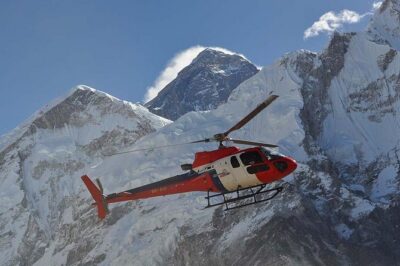
Everest Base Camp Trek with Helicopter Return from Gorakshep to Lukla
Read our review →
Trekking in Annapurna/Langtang/Everest/Upper Mustang regions
Read our review →Lists this trek appears in