
Review · KATHMANDU
Kathmandu: 14-Day Everest Base Camp with Kala Patthar Trek
Flying into Lukla puts you at the start of a serious Himalayan trek almost at once. Over 14 days, you walk from the Sherpa heartland of Namche Bazaar to Everest Base Camp and the 5,545-meter summit of Kala Patthar, with Everest, Lhotse, Nuptse, and Ama Dablam appearing along the way.
I like the sensible acclimatization days at Namche and Dingboche, and I like that domestic flights, permits, lodging, a guide, and some gear are included. The main caution is cost control: meals, drinks, hot showers, travel insurance, and porter service are extra, and weather can cancel the Lukla flight.
Key points to know before you book
- Lukla is part of the adventure: The trip begins with a flight to a high mountain airstrip, followed by a short first trekking day to Phakding.
- Two acclimatization days help: You pause at Namche Bazaar and Dingboche instead of racing straight uphill.
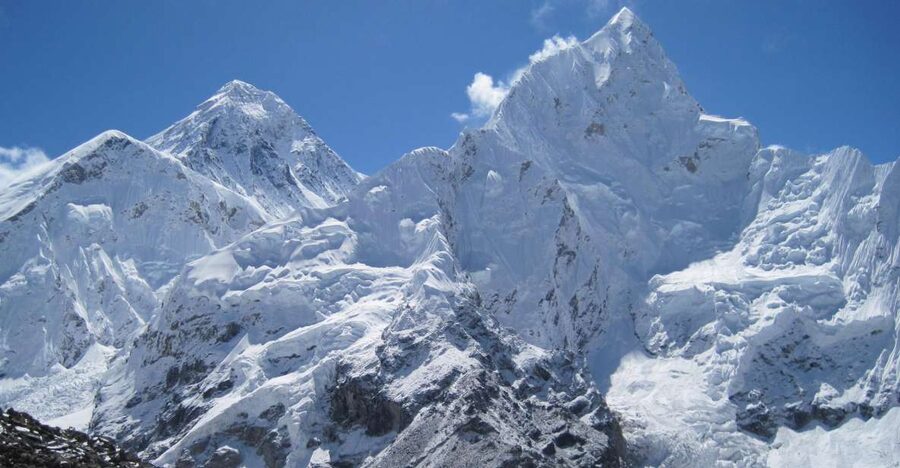
- Kala Patthar is the main viewpoint: At 5,545 meters, it gives you one of the trek’s highest viewpoints over Everest and the surrounding peaks.
- Tea-house lodging keeps the route practical: You sleep in lodges along the trail rather than camping, with food and drinks purchased separately.
- The package covers key trip costs: Flights, permits, Kathmandu lodging, guide expenses, and trekking equipment are included.
- Porters and meals need careful budgeting: One porter is intended for two people, but porter service is listed separately from the included guide costs.
A demanding route with a clear purpose
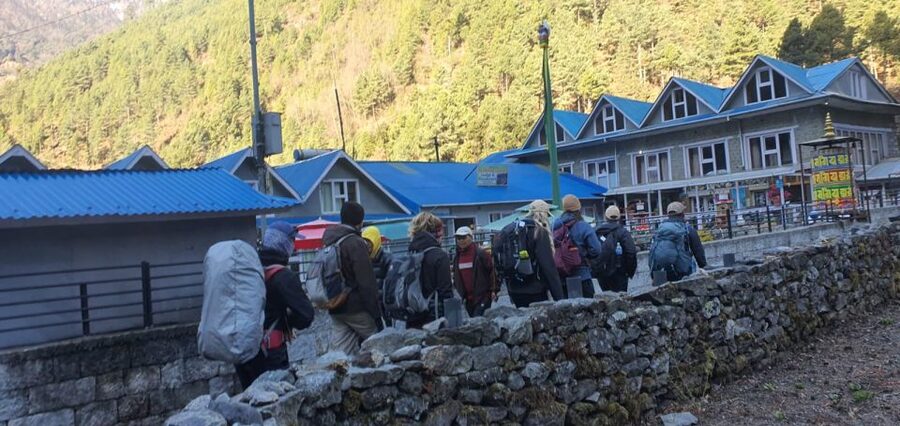
This is not a sightseeing stroll with a mountain backdrop. You’ll spend many days walking at altitude, with trekking days commonly lasting five to seven hours. The highest sections near Gorak Shep and Kala Patthar are demanding even for fit hikers.
The route works because it gains height in stages. You begin at Lukla, sleep lower at Phakding, climb to Namche, pause there, then move through Tengboche and Dingboche before reaching Lobuche and Gorak Shep. That steady rise does not remove altitude risk, but it gives your body time to adjust.
The overall customer score is 4.2 from 21 ratings, with especially strong praise for the guides and trip organization. English-speaking guides named on past departures include Padam and Anjan, while Hari has handled operator communications. Specific staff are not guaranteed, so ask who will lead your departure.
More Everest Base Camp treks around Kathmandu:
- Everest Base Camp Trek – 14 Days
★ 5.0 · 1,499 reviews - Everest Base Camp Trek
★ 5.0 · 842 reviews - Everest Base Camp Trekking
★ 5.0 · 485 reviews
Days 1 and 2: Kathmandu to Lukla and Phakding
Your arrival at Tribhuvan International Airport is met with a private transfer to your Kathmandu hotel. Two nights of standard accommodation in Kathmandu are included, with breakfast provided there.
The next day, you fly to Lukla at 2,850 meters. The flight is short, but it is a major part of the trip because Lukla is the gateway to the Khumbu trekking region. The airport’s mountain setting and compact runway give the journey a memorable start, though weather can disrupt the schedule.
That risk is not just theoretical. A July departure had its Everest Base Camp plan changed after flights to Lukla could not operate. The company tried for several days before arranging another trek with the same guide, Padam. This is useful to remember when planning flights home: avoid making your international connection too tight after the trek.
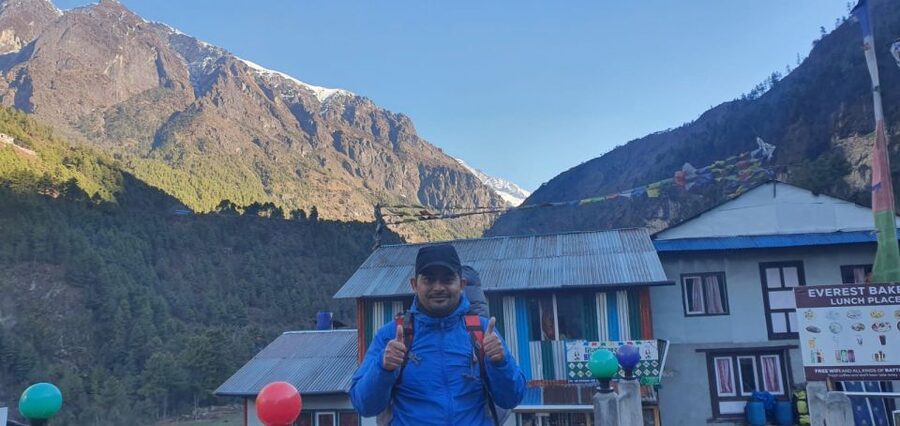
From Lukla, you walk four to five hours to Phakding at 2,640 meters. This is a useful opening day, since you start hiking without immediately tackling the highest parts of the route.
Days 3 and 4: Namche Bazaar and your first altitude pause
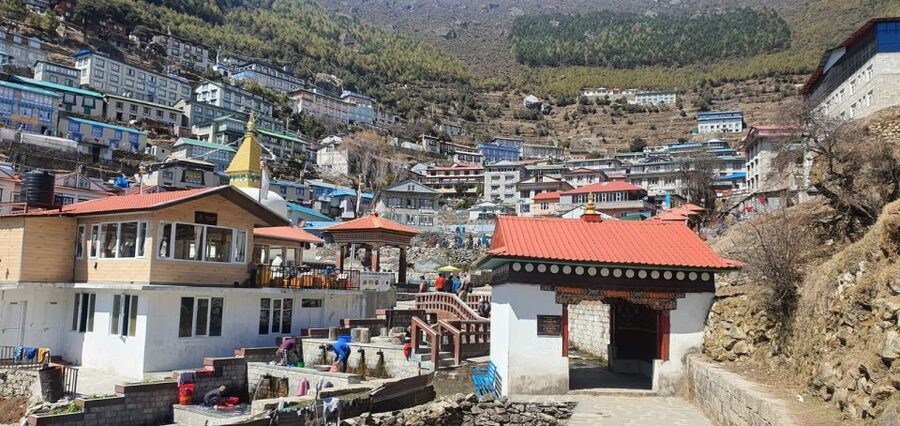
The walk from Phakding to Namche Bazaar takes six to seven hours and reaches 3,440 meters. You’ll notice the change in effort here. The route heads into the Sherpa heartland, and Namche is the main settlement where trekkers pause, resupply, and adjust to the altitude.
Namche is more than a place to sleep. It is one of the cultural centers of the route, and the itinerary gives you a full acclimatization day after arrival. The included two to three-hour excursion is short enough to avoid wasting energy but useful for getting your bearings at height.
I consider this one of the strongest features of the schedule. A faster itinerary might save a day, but it would give you less time to adjust before the much higher villages. You should still listen to your guide and report symptoms such as headache, nausea, or unusual tiredness.
Days 5 and 6: Tengboche, Dingboche, and better mountain views
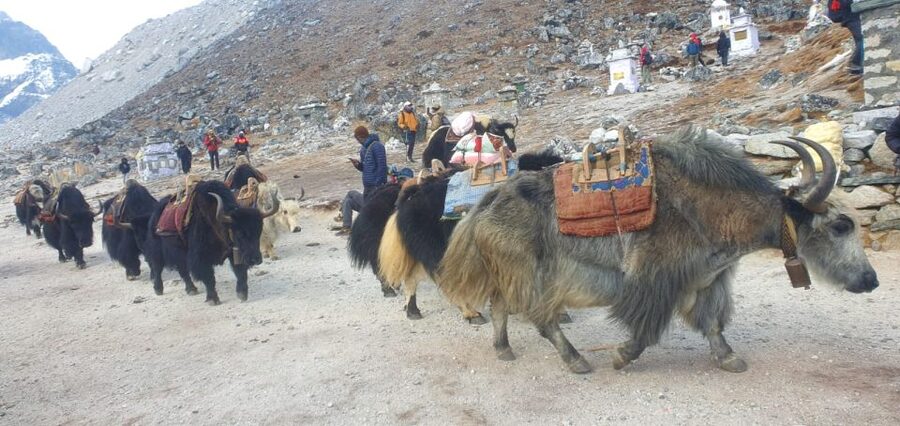
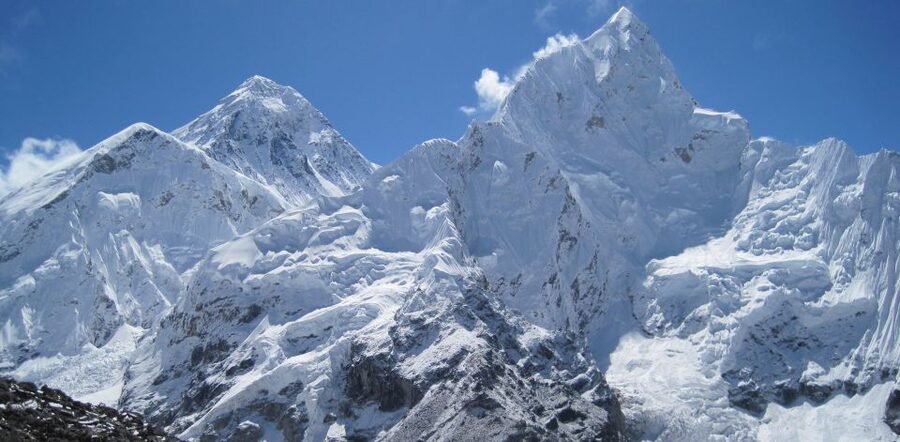
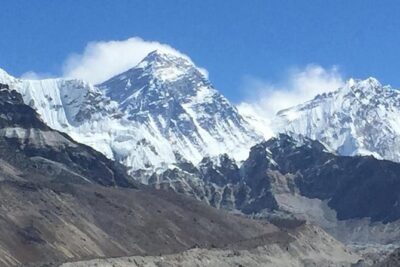
From Namche, you trek five to six hours to Tengboche at 3,870 meters. This section brings you deeper into the Khumbu and closer to the famous high peaks. The views include Everest, Lhotse, Nuptse, and Ama Dablam, though cloud and weather can affect what you see.
Tengboche is a key stop because the village sits in a dramatic mountain setting and gives the route a strong Sherpa character. The information provided does not promise a particular monastery visit or ceremony, so treat the village itself and the surrounding views as the main draw.
The next day, you walk five to six hours to Dingboche at 4,410 meters. The air is thinner here, and the pace matters more than distance. You should expect a slower day and keep your pack light.
More treks around Kathmandu:
- Annapurna Circuit Trek with Tilicho Lake
★ 5.0 · 368 reviews - Everest Base Camp Trekking – 13 Day
★ 5.0 · 365 reviews - Everest Base Camp Trek
★ 5.0 · 350 reviews - Everest Base Camp Trek -14 Days
★ 5.0 · 321 reviews
Day 7: Another acclimatization day at Dingboche
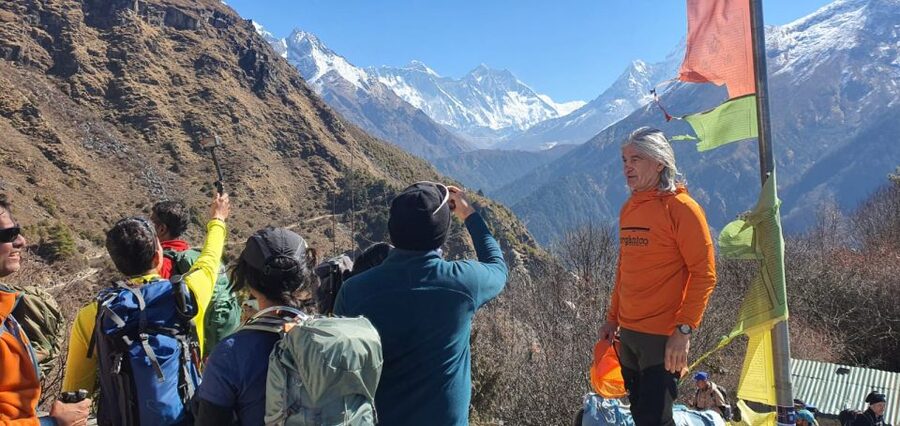
Dingboche provides the second major rest and acclimatization day. It breaks up the climb before Lobuche, Gorak Shep, and Everest Base Camp.
This pause is valuable because the route soon rises above 4,900 meters. The schedule does not give a detailed excursion plan for Dingboche, so your guide will manage the day according to conditions and the group’s needs. You should not treat a rest day as a chance to push hard. Easy movement, hydration, warm layers, and careful attention to how you feel are the sensible approach.
Days 8 and 9: Lobuche, Gorak Shep, and Everest Base Camp
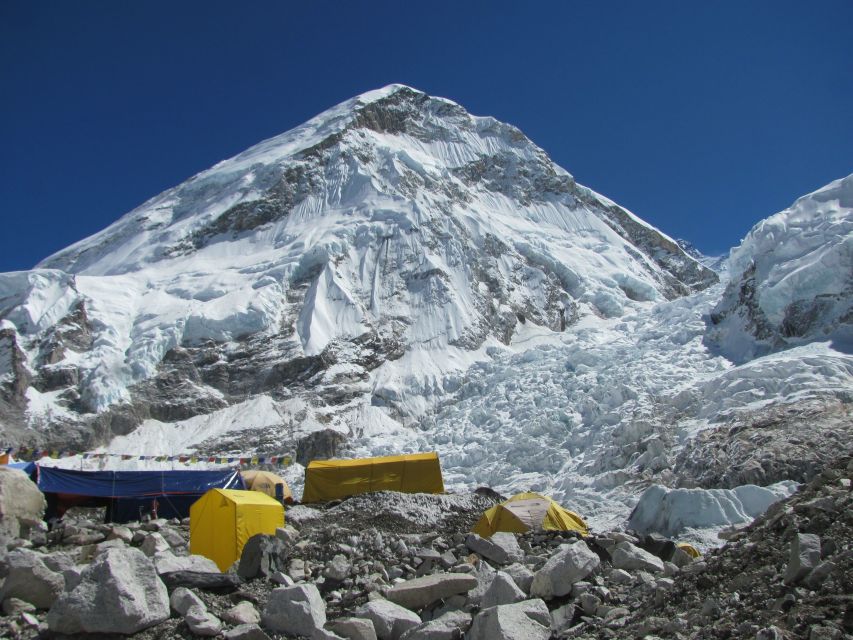
On day eight, you trek from Dingboche to Lobuche at 4,940 meters. The five to six-hour walk brings you into the high section of the route, where the altitude becomes the main challenge.
Day nine is the big push. You walk from Lobuche to Gorak Shep at 5,170 meters, then continue to Everest Base Camp at 5,364 meters before returning to Gorak Shep for the night. This is a long and tiring day, so you should keep your expectations realistic. Reaching Base Camp is a major goal, but it is not the place where you get the classic summit view of Everest. The next morning’s Kala Patthar hike is designed for that wider mountain panorama.
The lodges at this height are basic. Tea-house accommodation is included throughout the trek, but meals, drinks, and hot showers are not. One trip account described the tea houses as comfortable enough and noted that showers could be lukewarm rather than luxurious. Pack with the assumption that warmth and a dry sleeping setup matter more than comfort.
Day 10: Kala Patthar and the descent to Pheriche
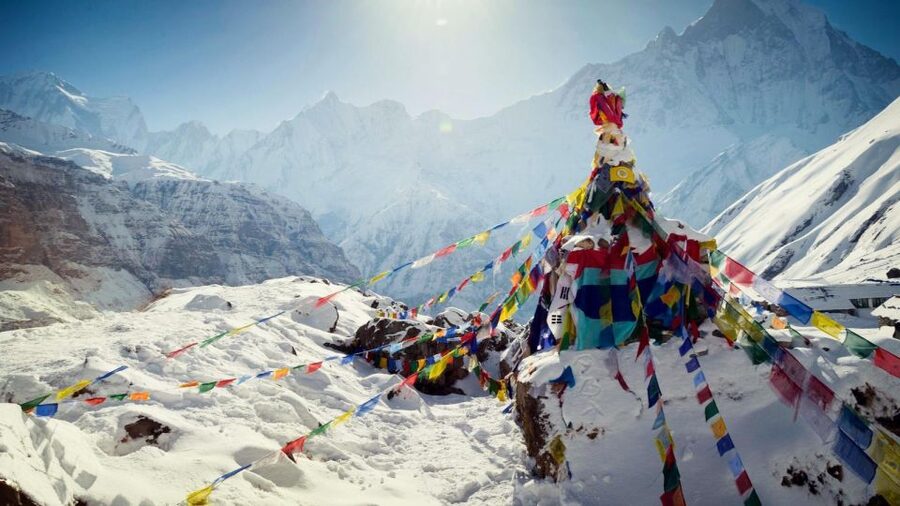
You hike from Gorak Shep to Kala Patthar at 5,545 meters, then descend to Pheriche at 4,371 meters. This is one of the most important days of the trip.
Kala Patthar is prized for its view of the Everest group, including Everest, Lhotse, Nuptse, and Ama Dablam. The climb is short on paper compared with the full trek, but the altitude makes it hard. You’ll want warm clothing, sunglasses, and a hat because the sun can feel strong at high elevation.
The descent to Pheriche is welcome after the viewpoint. Lower altitude usually makes breathing easier, but your legs will have already worked hard. Keep your pace steady and use trekking poles if you normally find them helpful, though poles are not listed among the included equipment.
Days 11 to 13: Walking back to Kathmandu
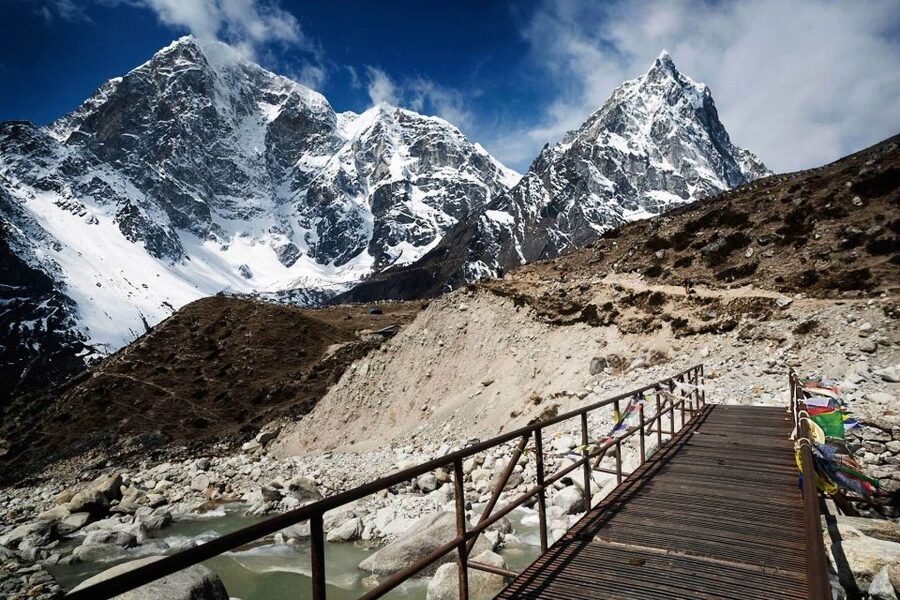
The final three trekking days are spent descending toward Lukla before your flight back to Kathmandu. The supplied schedule does not name every overnight stop, but it makes clear that you continue down for three days and arrive in Kathmandu on day 13.
The return walk gives you a different view of the route. Villages that felt high and remote on the way up become easier to handle, and the lower air should feel more comfortable. You still need to pace yourself because downhill walking can be hard on knees and ankles.
Your Kathmandu hotel and breakfast are included for the final evening. Lunch and dinner in Kathmandu are not included, and the next day is reserved for departure and airport transfer.
What the $1,296 price really covers
At $1,296 per person, this package can offer good value if you want the major logistics handled in advance. The price includes the Kathmandu airport transfers, two Kathmandu hotel nights with breakfast, Kathmandu to Lukla and return flights, national park paperwork, tea-house lodging, an English-speaking guide, and guide-related salary, food, accommodation, transport, and insurance.
A jacket, sleeping bag, and duffle bag can also be provided for use if needed. That reduces the amount of specialist equipment you must bring, though you should confirm availability before departure.
The wording around porters deserves attention. Porter service is not included in the listed inclusions, and the extra information says one porter is used for two people. Ask exactly how porter charges are calculated, what weight limit applies, and whether the porter cost is paid locally or before departure.
You also pay separately for:
- Breakfast, lunch, and dinner during the trek
- Lunch and dinner in Kathmandu
- Alcoholic and non-alcoholic drinks
- Hot showers during the trek
- Travel insurance and emergency medical evacuation
- Porter service
The package is not an all-inclusive trek. You should carry enough spending money for food, drinks, showers, and any porter costs. A guide account from one departure praised the organization of food, lodging, and safety, but those expenses still remain outside the base price.
Food, lodging, and daily comfort
Tea houses make this route more accessible than a fully supported camping trek. You sleep in lodges along the trail, eat meals where you stop, and avoid carrying a tent and full camp kitchen.
Do not confuse tea-house trekking with hotel comfort. Rooms are basic, bathrooms may be shared, and hot showers cost extra. The supplied packing advice includes toilet paper, which is a small but important reminder. Bring your own reliable supply.
Food is purchased separately during the trek. Past descriptions praise the mountain meals, including noodles and other simple dishes, but you should expect practical trekking food rather than a wide restaurant menu. Carry snacks if you rely on certain foods, since no special meal plan is stated.
The included sleeping bag can be useful at higher elevations, while the duffle bag helps organize gear carried by the support team. Bring your own hiking shoes, socks, sunglasses, sunscreen, hat, long pants, shorts, and T-shirts as requested.
Weather, safety, and the Lukla problem
The biggest logistical weakness is the Lukla flight. Weather can delay or cancel flights, and that can affect the entire schedule. The operator has shown flexibility by trying for several days and arranging an alternative trek when a flight could not operate, but you should still allow spare time around your international flights.
Travel insurance with emergency medical evacuation is required but not included. This is essential for a trek reaching 5,545 meters. Check that your policy covers high-altitude trekking and evacuation, not just ordinary medical care.
The route is not suitable for pregnant women, people with heart problems, or people with mobility impairments. You should also be honest about your fitness and any medical conditions before booking. The guide’s role includes keeping the group moving safely, but a guide cannot remove the physical demands of high altitude.
Who will enjoy this trek most
This trip suits you if you want the classic Everest Base Camp route with a guide, tea-house lodging, domestic flights, and permits arranged in one package. It is a good fit for hikers who can manage repeated five to seven-hour days and accept basic conditions.
It is less suitable if you want private rooms, guaranteed flights, included meals, or a relaxed walking schedule. The route has two acclimatization days, but the high section remains strenuous.
You should also be comfortable traveling with an English-speaking guide. The operator has used guides named Padam and Anjan on past departures, and both were associated with attentive support. Still, ask for your guide’s name and experience before you leave Kathmandu.
Should you book the 14-day Everest Base Camp trek?
Book it if you want a structured route with the key transport and permits arranged, and if you value having an English-speaking guide through the high country. The schedule is sensible, the two acclimatization days are important, and the Kala Patthar viewpoint gives you a strong reason to continue beyond Base Camp.
Think twice if your budget is fixed. Meals, drinks, hot showers, insurance, evacuation cover, and porter service can add a noticeable amount. Also leave breathing room after the trek because Lukla weather can interfere with the return flight.
For an organized first visit to the Khumbu, this is a practical package with strong guide support and a clear route. Go in prepared for basic tea houses, thin air, long walking days, and changing weather, and the trek gives you a genuine look at Sherpa country along with the big Himalayan views.
FAQ
How long is the Everest Base Camp and Kala Patthar trek?
The trek lasts 14 days, including arrival and departure arrangements in Kathmandu, the Lukla flights, acclimatization days, the walk to Everest Base Camp, and the Kala Patthar hike.
What altitude does Kala Patthar reach?
Kala Patthar reaches 5,545 meters.
Is the flight from Kathmandu to Lukla included?
Yes. The package includes a Kathmandu to Lukla and Lukla to Kathmandu flight ticket, along with domestic airport transfers.
Are meals included during the trek?
No. Breakfast, lunch, and dinner during the trek are not included. Drinks are also separate.
Is accommodation included?
Yes. Two nights of standard accommodation in Kathmandu with breakfast are included, along with tea-house or lodge accommodation during the trek.
Is a guide included?
Yes. An English-speaking guide is included, along with the guide’s salary, food, drinks, accommodation, transportation, and insurance.
Are porters included?
Porter service is not included in the listed package. The information states one porter for two people, so you should confirm the porter arrangement and cost before booking.
What equipment can be provided?
A jacket, sleeping bag, and duffle bag are available to use if required. You should still bring hiking shoes, socks, sunglasses, a hat, sunscreen, suitable clothing, and toilet paper.
What happens if the Lukla flight is canceled?
Weather can prevent flights to Lukla. The operator may try for several days and can arrange an alternative trek, but the exact solution depends on the conditions and your wishes.
New treks around Kathmandu
- Kathmandu or Pokhara: 5-Day Annapurna Base Camp (ABC) Trek★ 4.5 · 2 reviews
- Pokhara: 2 Day Ghorepani & Poon Hill Private Trekking★ 4.9 · 8 reviews
- From Kathmandu: 6-Day Langtang Valley Guided Trek★ 5.0 · 2 reviews
- Pokhara: 5-Day Annapurna Base Camp (ABC) Trek★ 5.0 · 9 reviews
- Kathmandu: Langtang Valley 6-Day all inclusive Guided Trek★ 5.0 · 2 reviews
- Kathmandu: 6 Days Langtang Valley Trek with Kyanjin Ri★ 5.0 · 7 reviews
- Kathmandu: 9- Day Annapurna Circuit Trek★ 5.0 · 2 reviews
- Kathmandu: 6-Day Limitless Langtang Trek★ 5.0 · 21 reviews
Everest Base Camp Treks, side by side.
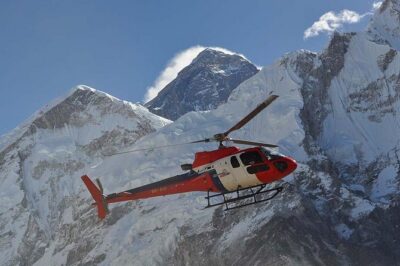
Everest Base Camp Trek with Helicopter Return from Gorakshep to Lukla
Read our review →
Trekking in Annapurna/Langtang/Everest/Upper Mustang regions
Read our review →Lists this trek appears in