
Review · KATHMANDU
From Kathmandu/Lukla: Everest Base Camp (EBC) 10-Day Trek
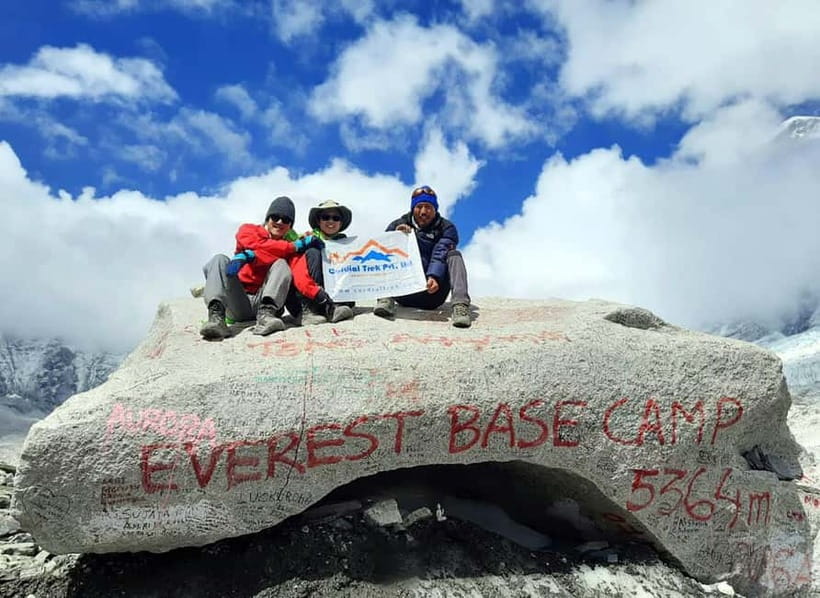
Standing at Everest Base Camp at 5,364 meters is the prize, but the real experience is the steady walk through Sherpa villages, rhododendron forests, stone-walled fields, and high mountain valleys. This 10-day route also gives you time to adjust to the altitude instead of racing uphill.
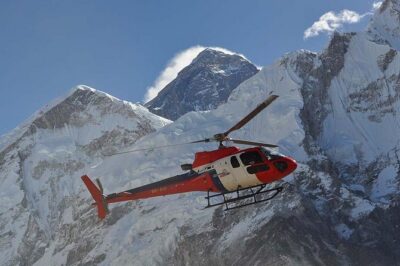
I like the built-in acclimatization day in Namche Bazaar and the early hike to Kala Patthar, which offers the trek’s best Everest views. I also like that the package provides a down jacket, sleeping bag, trekking poles, first aid, permits, and water purification tablets. The main caution is altitude: this is a hard trek, and Sarah from Qatar needed a helicopter transfer down after reaching EBC because exhaustion became too severe.
Key points to know before booking
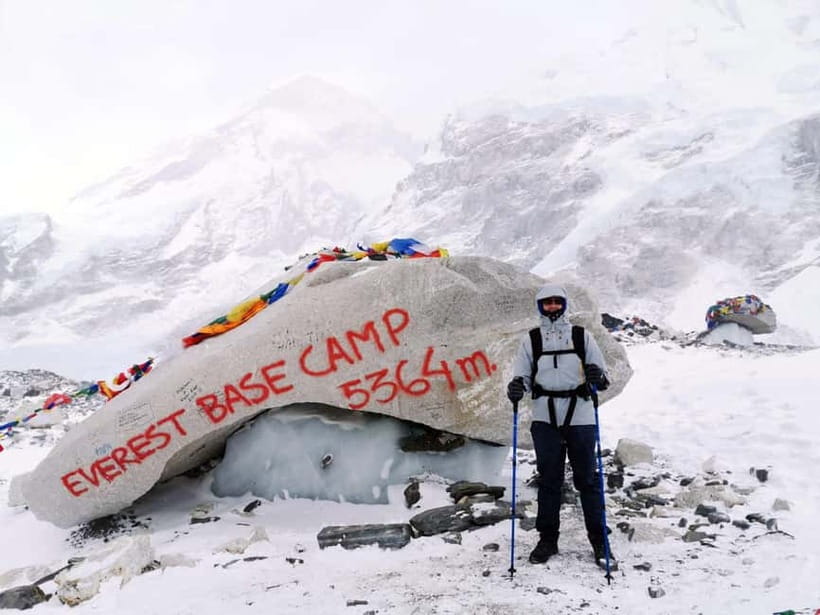
- Everest Base Camp at 5,364 meters: You reach the famous Khumbu Icefall area after walking from Lobuche through Gorak Shep.
- Kala Patthar at 5,545 meters: The pre-sunrise climb is difficult, but it gives you the clearest mountain views on the route.
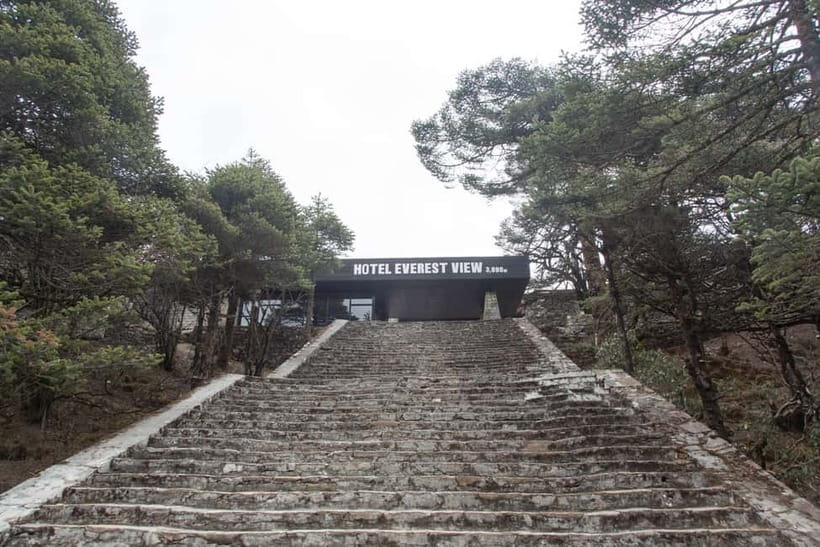
- Namche acclimatization day: You hike to Hotel Everest View at 3,880 meters, then return to Namche to sleep lower.
- Private group with English or Hindi guide: You meet your guide at Lukla airport, where a name card will be waiting outside the terminal.
- $322 starting price: The value is good for permits, guide, guesthouses, equipment, and Kathmandu to Lukla flights on the Kathmandu option, but meals, Wi-Fi, showers, charging, and porters cost extra.
- High-altitude preparation matters: Pack warm clothing, sun protection, medicine, a daypack, and travel insurance. You should also have a contingency plan for delays or evacuation.
The real shape of this Everest trek
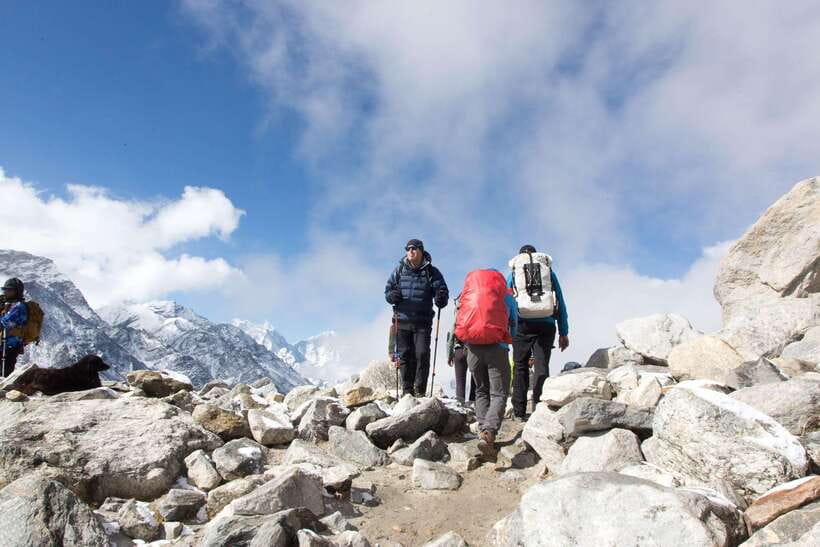
This is a point-to-point mountain trek, not a sightseeing tour with short walks between hotels. You will hike for roughly three to six hours on most days, sleep in simple mountain guesthouses, and spend several nights above 3,000 meters.
The route is designed around altitude gain. You start at Lukla, sleep at Phakding, reach Namche Bazaar, pause there for acclimatization, then continue through Deboche, Dingboche, Lobuche, Gorak Shep, Everest Base Camp, and Kala Patthar. The return route brings you back through Pheriche and Namche to Lukla.
I like this structure because it gives your body time to adjust. Still, no schedule can remove the risks of high altitude. The altitude can make an ordinary uphill walk feel punishing, and you need to be ready to slow down or change plans.
The $322 price is attractive, especially on the Kathmandu option, since it includes flights, airport transfers, a guide, permits, guesthouse accommodation, and several useful pieces of gear. It is not an all-inclusive trek. Meals are an add-on, and you pay separately for hot drinks, snacks, showers, Wi-Fi, charging, and alcohol. A porter is also extra, although a duffle bag is provided if you choose the porter option.
More Everest Base Camp treks around Kathmandu:
- Everest Base Camp Trek – 14 Days
★ 5.0 · 1,499 reviews - Everest Base Camp Trek
★ 5.0 · 842 reviews - Everest Base Camp Trekking
★ 5.0 · 485 reviews
Flying from Kathmandu to Lukla
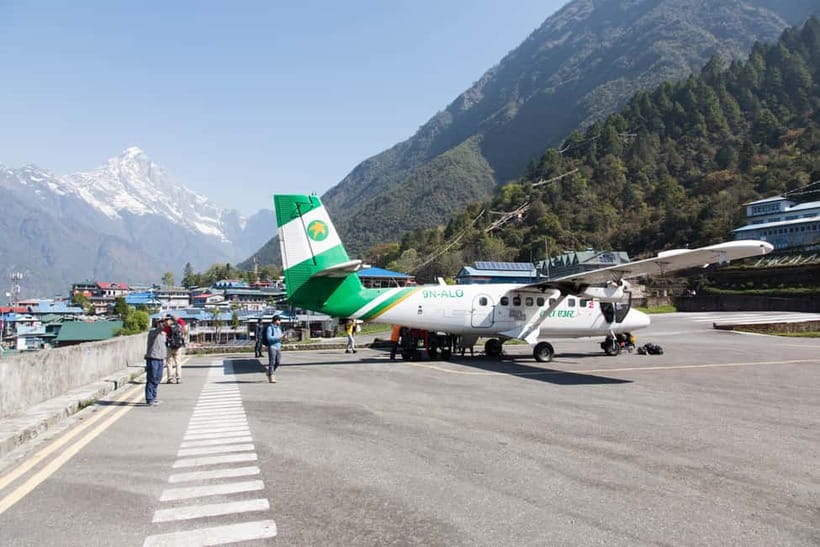
If you choose the Kathmandu departure, you are picked up at your hotel or apartment entrance and driven to the domestic terminal at Tribhuvan International Airport. The flight to Lukla is scheduled for early morning, and the package includes the Kathmandu to Lukla and return flights with airport transfers.
If you are already in Lukla, you can meet the guide there. In that case, the Lukla flights are not included unless you add them to the booking.
Lukla is the practical starting point for this route. After you meet your guide outside the airport terminal, look for the name card and attend the pre-trek briefing. This is the time to confirm the walking plan, equipment, documents, and anything you need to clarify before leaving town.
You must provide a passport copy and a recent passport-sized photo at least one day before the trek. These are needed for the trekking permits. Travel insurance is mandatory, and I would treat evacuation coverage as especially important here. Sarah’s experience is a useful warning: she completed the walk to EBC but needed a helipad transfer afterward because the altitude left her badly exhausted.
Day 1: Lukla to Phakding, 2,800 meters
The first walk takes about three to four hours and ends at Phakding. Compared with the days ahead, this is a gentle introduction, with time to settle into the pace and get used to walking with a daypack.
The route takes you through early Sherpa settlements and along the trail toward the upper Khumbu. You sleep in a mountain guesthouse, where the focus is simple rest rather than comfort or entertainment.
This first night matters because the trek begins its altitude gain right away. Keep your pace easy, drink water, and resist the temptation to treat the first day as a test of speed.
Day 2: Phakding to Namche Bazaar, 3,440 meters
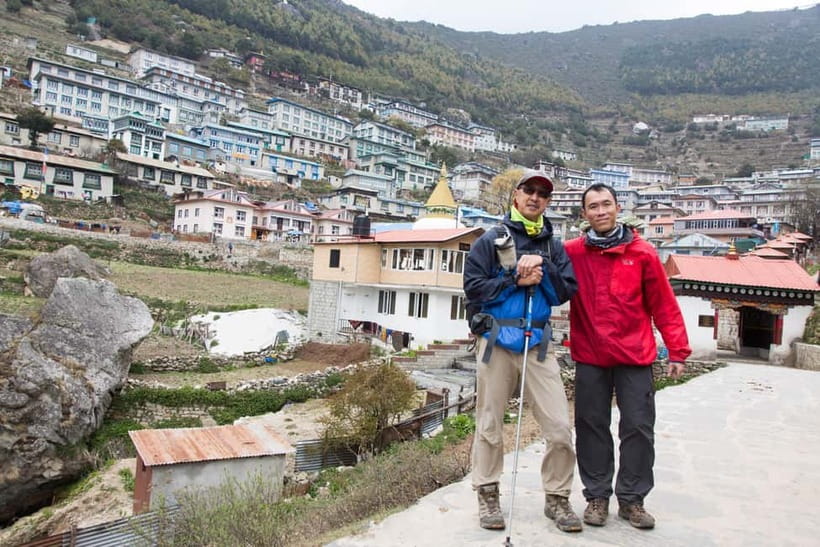
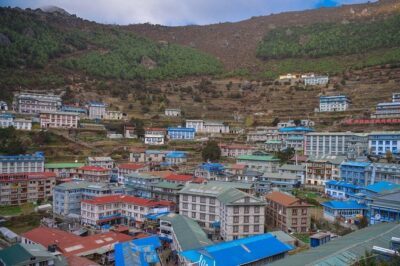
The five to six-hour walk to Namche is the first major step up. Namche Bazaar is known as the Gateway to Everest, and it is one of the most important stops on the route.
You gain altitude through Sherpa villages and mountain scenery before reaching the horseshoe-shaped settlement. Namche is larger and more developed than the villages before it, but it remains a working mountain town serving people along the Everest route.
The climb can feel demanding because the altitude is now noticeable. I would keep your breathing steady and avoid spending energy trying to reach Namche early. The next day is set aside for acclimatization, so arriving tired but comfortable is better than pushing too hard.
More treks around Kathmandu:
- Annapurna Circuit Trek with Tilicho Lake
★ 5.0 · 368 reviews - Everest Base Camp Trekking – 13 Day
★ 5.0 · 365 reviews - Everest Base Camp Trek
★ 5.0 · 350 reviews - Everest Base Camp Trek -14 Days
★ 5.0 · 321 reviews
Day 3: Namche and Hotel Everest View
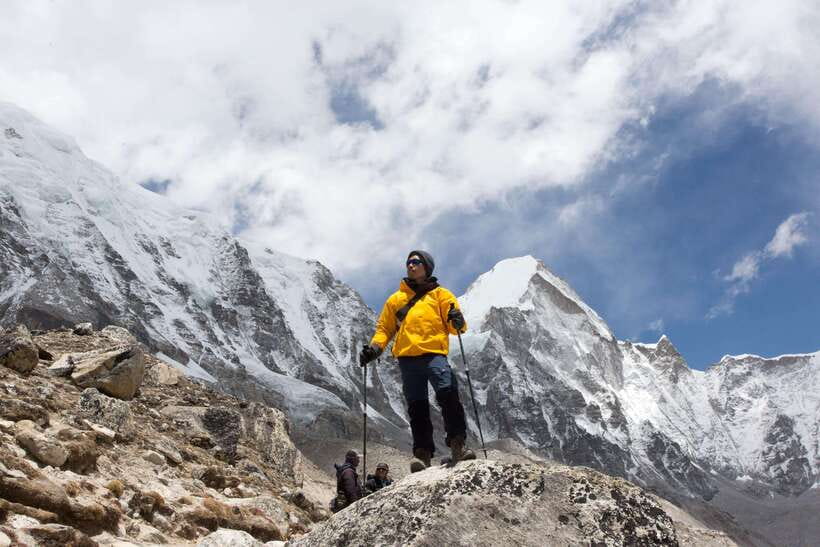
This is the trek’s first acclimatization day. You do not simply sit in the guesthouse. Instead, you take a short hike toward Hotel Everest View at 3,880 meters, enjoy broad views of the central Himalayas, and return to Namche to sleep.
That pattern, climb higher and sleep lower, helps your body adjust. It also gives you a chance to explore Namche without the pressure of covering a long distance.
I especially like this stop because Namche is more than a place to break the route. You can experience the local Sherpa setting, see how the town supports the mountain trade, and get a first strong view of the high peaks. The walk to Hotel Everest View is worthwhile, but the air is already thin. Take it slowly and keep warm.
Day 4: Namche to Deboche, about 3,820 meters
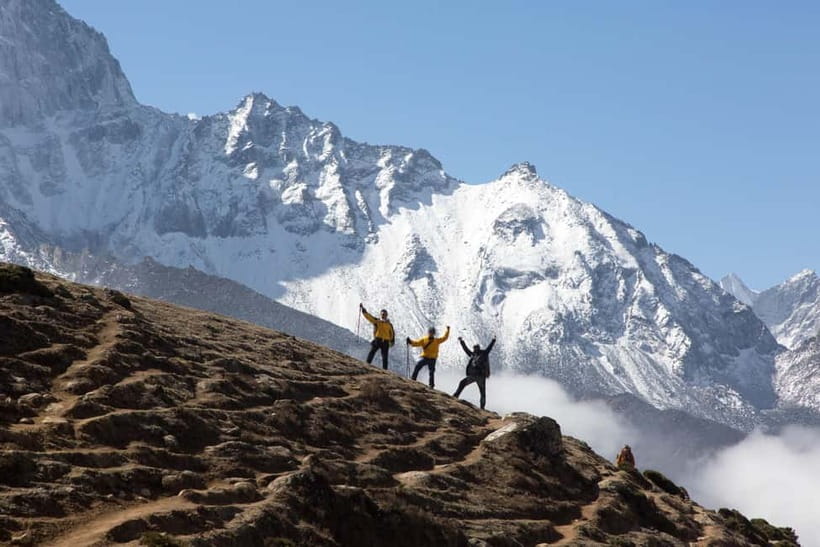
The trail toward Deboche takes five to six hours and passes through rhododendron forests. The route also includes Tengboche Monastery, one of the best-known cultural stops on the trek.
Tengboche gives the day a welcome change of pace. Instead of focusing only on distance and altitude, you have a chance to see an important Sherpa religious site in its mountain setting. From this area, the Himalayan views remain a major part of the walk.
Deboche is quieter than Namche and makes a calm overnight stop. The stated altitude figures for this section can look confusing, but the useful point is that you continue into higher country while following the acclimatization plan.
Day 5: Deboche to Dingboche, 4,410 meters
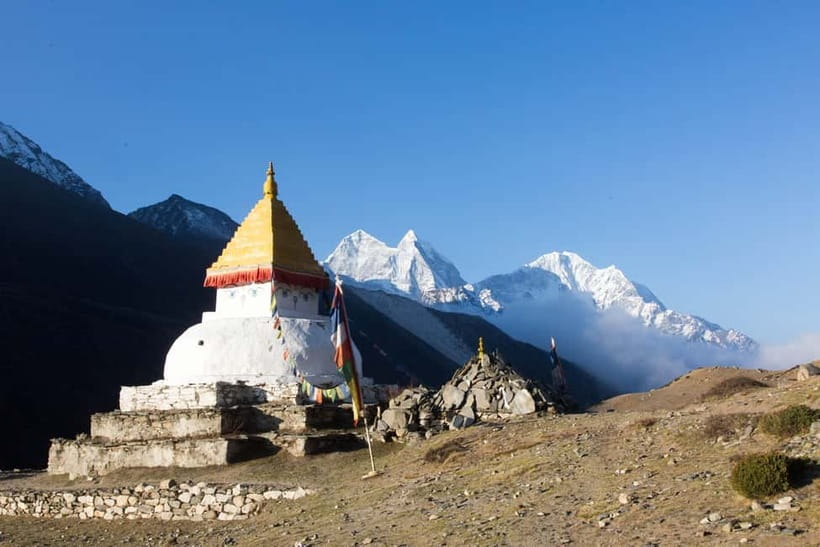
The five to six-hour hike to Dingboche brings you into a more open, high-altitude valley. You will see stone-walled fields, traditional Sherpa settlement patterns, and striking views of Ama Dablam.
Dingboche is an important overnight stop because you are now sleeping above 4,000 meters. The scenery becomes more severe, and the walk can feel harder even when the trail is not especially steep.
This is a day to pay attention to your body. Headache, unusual exhaustion, or other altitude problems should not be ignored. The guide is there to help, but you should speak up early rather than trying to hide symptoms.
Day 6: Dingboche to Lobuche, 4,940 meters
The route to Lobuche takes about five to six hours and feels more serious. You continue upward toward the high valley below the Everest region, with impressive views of Nuptse.
Lobuche is a small settlement, and the limited services here are part of the high-altitude experience. You will want warm layers, a charged headlamp, and enough water for the next day. Hot showers, Wi-Fi, and battery charging are not included, and these services may not be available in the way you are used to at home.
At nearly 5,000 meters, the walking pace should be modest. This is not the place to burn energy for a fast arrival. You need that energy for Gorak Shep and the long walk to Base Camp.
Day 7: Lobuche to Gorak Shep and Everest Base Camp
The morning walk to Gorak Shep takes about four to five hours. After a break, you continue to Everest Base Camp, then return to Gorak Shep for the night. The Base Camp section itself is listed as another three to four hours, so this becomes a long, demanding day at high altitude.
The reward is the Khumbu Icefall and the unmistakable feeling of reaching the foot of the world’s highest peak. The terrain is rugged, and the thin air makes the distance feel longer than it looks on paper.
Gorak Shep is a functional overnight stop, not a place to expect luxury. You will be tired, and the cold and altitude can affect sleep. Keep your expectations practical. The point of staying here is to position you for both EBC and the Kala Patthar sunrise hike.
Day 8: Kala Patthar and the walk to Pheriche
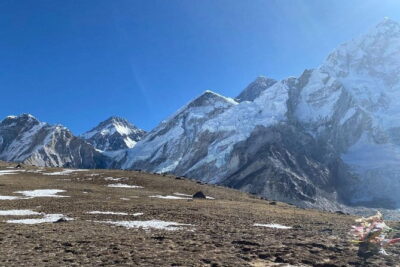
The pre-sunrise hike to Kala Patthar is about two to three hours. At 5,545 meters, it is the highest point on the route and one of the hardest efforts of the trek.
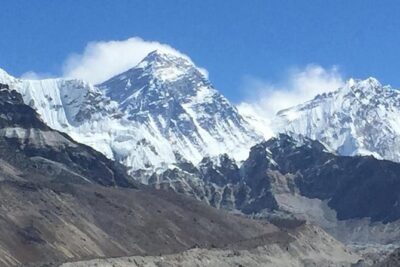
The reason to go early is the view. From Kala Patthar, you get some of the clearest sightlines toward Everest and the surrounding Himalayan peaks. You return to Gorak Shep for breakfast, then walk four to five hours down to Pheriche.
This is a demanding double day, but the descent to Pheriche should feel welcome after the high-altitude night at Gorak Shep. The lower sleeping altitude can make recovery easier. Still, your legs will have done a great deal of work, so use the afternoon to rest.
Days 9 and 10: Returning through Namche to Lukla
Day 9 takes you from Pheriche to Namche Bazaar in five to six hours. This is a long downhill section, and downhill walking can be hard on knees and ankles even when breathing becomes easier.
Returning to Namche gives you a familiar stop and a more comfortable altitude. It also marks a clear change in the trek. You are no longer trying to reach a higher point. You are making your way back to the start.
On Day 10, the five to six-hour walk from Namche to Lukla passes through Phakding. Reaching Lukla gives you a chance to celebrate with the guide and team before the trip ends.
Those flying back to Kathmandu leave the following morning, with airport transfer provided. The schedule can therefore require an extra night around the end of the trip, even though the walking program is described as 10 days.
What the $322 price really covers
At $322 per person, the price offers good value for the core guided trek if you choose the Kathmandu package. You receive:
- Kathmandu to Lukla and return flights on the Kathmandu option
- Airport transfers
- Ten nights in mountain guesthouses
- An experienced Sherpa guide
- Trekking permits
- Down jacket
- Trekking poles
- Sleeping bag
- First aid if needed
- Water purification tablets as required
The cost becomes higher once you add the items you are likely to want. Meals are not included, and neither are snacks, hot or cold drinks, alcohol, showers, Wi-Fi, or battery charging. A porter is an optional extra.
The equipment loan is useful because a down jacket, sleeping bag, and trekking poles can be expensive or awkward to carry from home. You still need warm clothing, proper boots, socks, a hat, gloves, a neck gaiter, trekking pants, sunscreen, sunglasses, a headlamp, toiletries, and a water bottle.
Bring a 20 to 25-liter daypack. If you use the porter option, a duffle bag is provided. Crampons are only needed if snow is expected, so ask about conditions before you leave.
The physical challenge and the right mindset
This trek suits people who can handle repeated days of uphill and downhill walking at altitude. It is not suitable for people with mobility impairments, and the stated age limit excludes people over 95.
You should prepare physically and mentally. Sarah’s experience makes the point clearly: she reached EBC, but altitude-related exhaustion required a helicopter transfer down. Her advice about medication and a contingency plan is practical. Carry any personal medicines you need, but do not treat medication as a guarantee against altitude problems.
The guide can support you, but the safest choice may sometimes be turning around or arranging evacuation. Travel insurance is mandatory, and you should make sure your policy covers trekking at these elevations and emergency evacuation.
Who should book this trek
I would recommend this experience to you if you want a guided private-group trek with a clear route, built-in acclimatization, and basic equipment provided. It is also a good fit if you want both the famous EBC finish and the cultural side of the Khumbu, including Sherpa villages and Tengboche Monastery.
It is less suitable if you want comfortable hotels, included meals, flexible rest days, or a short adventure with little physical effort. The low starting price should not be confused with a low-cost holiday. You need to budget for food, drinks, services, porter support if desired, insurance, and possible changes caused by altitude or transport.
Cordial Trek provides English and Hindi guiding, and the group is private. That gives you a more personal setup than a large shared group, although no guide can remove the risks of weather, altitude, or fatigue.
Should you book the Everest Base Camp trek?
Book it if standing at EBC and seeing Everest from Kala Patthar is a serious goal, and you are ready to prepare properly. The route is well paced on paper, the Namche acclimatization day is valuable, and the package includes several costly basics.
Before paying, confirm three things: exactly what the meal add-on costs, how the Lukla flight arrangement works for your chosen departure, and what emergency evacuation your insurance covers. If you accept the simple guesthouses, extra daily costs, and hard walking, this is a strong-value way to reach Everest Base Camp with a guide and a private group.
FAQ
Is the flight from Kathmandu to Lukla included?
Yes, Kathmandu to Lukla and return flights with airport transfers are included for the Kathmandu option. If you start from Lukla, the flights are not included unless you add them to the booking.
Where do I meet the guide in Lukla?
You should look for your guide outside the exit terminal at Lukla airport. The guide will be holding a name card.
How high is Everest Base Camp?
Everest Base Camp is at 5,364 meters, or 17,599 feet.
How high is Kala Patthar?
Kala Patthar reaches 5,545 meters, or 18,193 feet.
Are meals included?
No. Meals are not included in the stated price, but a meal add-on is available. Snacks and hot, cold, or alcoholic drinks are also extra.
Is a porter included?
No. Porter service is an optional add-on. A duffle bag is provided if you choose the porter option.
What equipment is provided?
The package provides a down jacket, sleeping bag, trekking poles, first aid if needed, and water purification tablets as required. Crampons are only needed if snowfall is expected.
Can I cancel the booking?
You can cancel up to 24 hours in advance for a full refund. The activity also allows you to reserve now and pay later.
New treks around Kathmandu
- Kathmandu or Pokhara: 5-Day Annapurna Base Camp (ABC) Trek★ 4.5 · 2 reviews
- Pokhara: 2 Day Ghorepani & Poon Hill Private Trekking★ 4.9 · 8 reviews
- From Kathmandu: 6-Day Langtang Valley Guided Trek★ 5.0 · 2 reviews
- Pokhara: 5-Day Annapurna Base Camp (ABC) Trek★ 5.0 · 9 reviews
- Kathmandu: Langtang Valley 6-Day all inclusive Guided Trek★ 5.0 · 2 reviews
- Kathmandu: 6 Days Langtang Valley Trek with Kyanjin Ri★ 5.0 · 7 reviews
- Kathmandu: 9- Day Annapurna Circuit Trek★ 5.0 · 2 reviews
- Kathmandu: 6-Day Limitless Langtang Trek★ 5.0 · 21 reviews
Everest Base Camp Treks, side by side.
Everest Base Camp Trek with Helicopter Return from Gorakshep to Lukla
Read our review →
Trekking in Annapurna/Langtang/Everest/Upper Mustang regions
Read our review →Lists this trek appears in