
Review · KATHMANDU
Everest Base Camp Short Trek- 12 Days
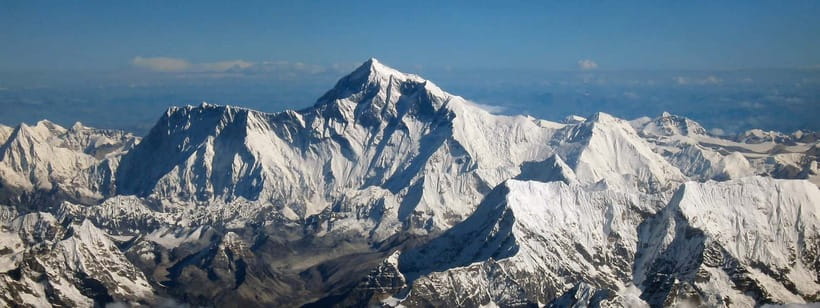
The main attraction here is simple: you walk from Lukla to Everest Base Camp, then climb Kala Patthar for some of the highest views on the route. This is a serious high-altitude trek, not a casual mountain holiday, but the path is nontechnical and the scenery changes daily from farms and Sherpa villages to bare rock and snow.
I like the way the price covers the costly practical pieces: domestic flights, meals, teahouses, permits, guides, and a porter for every two people. I also like the close attention promised by Sabita and Sujan, who coordinate the trip and check in with you throughout. The main drawback is the tight schedule, with long walking days and no separate rest day clearly listed for acclimatization.
Key points to know before you book
- Fly into Lukla and start walking at once: The trek begins with a short domestic flight, followed by a 2 to 3-hour walk to Phakding.
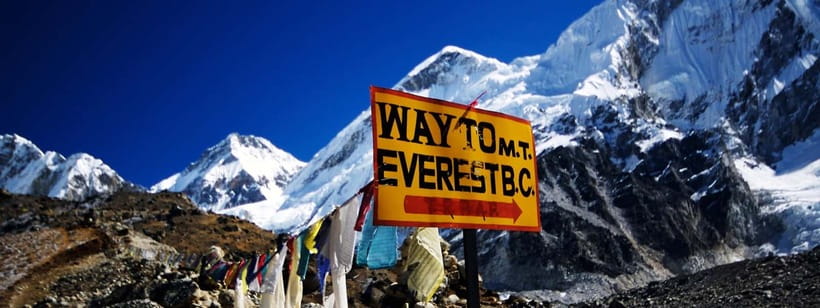
- Reach more than 5,400 meters: Everest Base Camp is listed at about 5,364 to 5,450 meters, while Kala Patthar reaches 5,644 meters.
- Walk 5 to 6 hours most days: The route is nontechnical, but fitness and previous mountain trekking experience are useful.
- Sleep in teahouses: Accommodation is simple and practical, with meals provided during the mountain section.
- Porter and staff support are included: One porter is assigned for every two trekkers, and the company covers staff wages, insurance, food, equipment, and flights.
- Private groups are available: You can ask about a private departure and provide your Kathmandu hotel details for pickup.
What the 12-day Everest route feels like
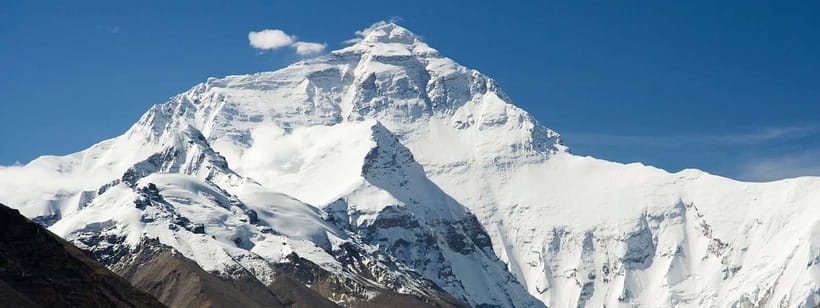
This trek follows the Dudh Koshi valley from the busy mountain gateway of Lukla toward the high camps below Everest. You gain altitude steadily, moving from 2,800 meters at Lukla to the thin air of Gorak Shep, Everest Base Camp, and Kala Patthar.
I would describe the route as tough but straightforward. There is no climbing rope, glacier training, or technical mountaineering. You walk on established mountain paths, cross through villages, and spend nights in teahouses. The challenge comes from altitude, cold, uneven ground, and the number of hours on your feet.
The schedule averages 5 to 6 hours of walking per day, though the days around Everest Base Camp can feel harder because you are already high. You need good general fitness and a willingness to walk slowly. Previous trekking experience is not required, but it helps you understand how your body responds to long uphill days.
More Everest Base Camp treks around Kathmandu:
- Everest Base Camp Trek – 14 Days
★ 5.0 · 1,499 reviews - Everest Base Camp Trek
★ 5.0 · 842 reviews - Everest Base Camp Trekking
★ 5.0 · 485 reviews
Kathmandu gives you one useful night before the mountains
Day one begins in Kathmandu at about 1,400 meters. A representative from Female Guide Holiday PVT. LTD. meets you at the airport, takes you to the hotel, and leaves the rest of the day free.
That open time matters. You can rest after your international flight, check your equipment, and make sure you have cash and personal medication ready. The package includes two nights in a deluxe Kathmandu hotel with breakfast, plus a welcome dinner.
The short city stay is not a sightseeing tour in itself, although monument entrance fees are included for sightseeing listed in the schedule. You should treat this first day as a practical start rather than a major cultural program. The important work is meeting the team, confirming the flight, and getting ready for the mountain.
Lukla to Phakding begins with shrines and Sherpa villages
The flight from Kathmandu to Lukla takes about 30 minutes in a regular Twin Otter aircraft. After landing at roughly 2,860 meters, you begin walking rather than spending the day at the airport town.
The route descends and rises through farmland and Sherpa villages, including Chheplung, Ghat, Sano Gumela, and Thulo Gumela. The walk to upper Phakding takes about 2 to 3 hours, with roughly 200 meters of descent and 50 meters of ascent.
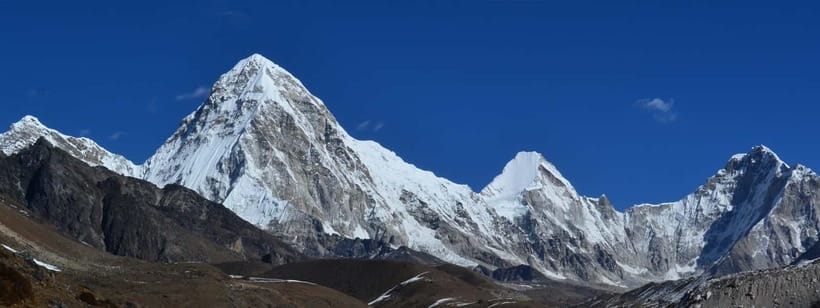
You will pass shrines and monasteries, including Drangdrak Gompa and Pema Choling Gompa. Look back toward Kumbila and the Kusum Kanguru peaks, which provide an early taste of the mountain scenery. Phakding is a sensible first night because the walk is short, allowing you to settle into the rhythm before the bigger climb to Namche.
Namche brings the first demanding climb
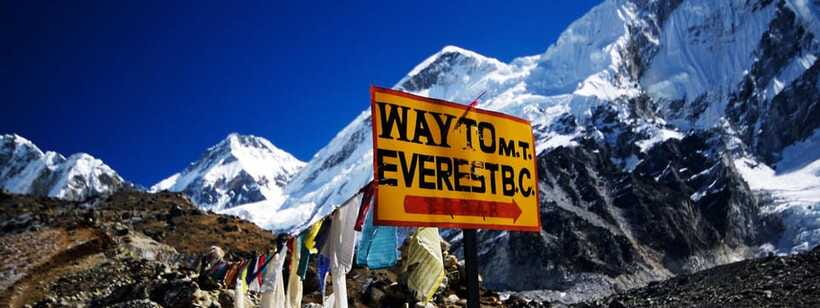
The third day takes you to Namche Bazaar, at about 3,440 meters. The walk lasts 5 to 6 hours and includes around 1,000 meters of ascent, with some descent along the way.
This is the first day when the altitude and uphill work become hard to ignore. You will pass through the Dudh Koshi valley and continue toward the main Sherpa trading center of the Khumbu region. Namche is an important point in the route because it is the last large settlement before the path becomes more remote.
The schedule moves on the next day, so do not assume this is a full acclimatization rest day. If you feel unwell, tell your guide promptly. The trip is organized around a steady ascent, and a guide can help you judge pace and symptoms, but you still need to pay attention to your own condition.
More treks around Kathmandu:
- Annapurna Circuit Trek with Tilicho Lake
★ 5.0 · 368 reviews - Everest Base Camp Trekking – 13 Day
★ 5.0 · 365 reviews - Everest Base Camp Trek
★ 5.0 · 350 reviews - Everest Base Camp Trek -14 Days
★ 5.0 · 321 reviews
Tengboche combines a short walking day with a major monastery
The route to Tengboche reaches about 3,860 meters and takes around four hours. The day includes about 350 meters of descent followed by 750 meters of ascent, so the short duration does not mean it is effortless.
Tengboche is one of the most memorable stops on the route because of its monastery setting and wide mountain views. The path first loses height, then climbs again through the valley. That up and down pattern can be tiring, but it also breaks the journey into manageable stages.
I like this stop because it adds a cultural element to a trek that could otherwise become a long series of altitude numbers. Monasteries, shrines, and local villages give you a stronger sense of the people who live and work in this high mountain region.
Dingboche marks the shift into thin air
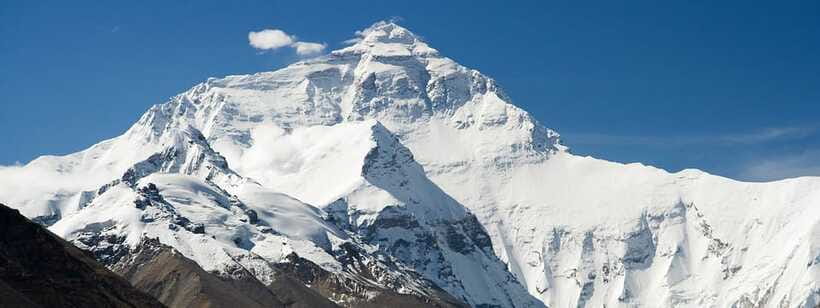
On day five, you walk to Dingboche at roughly 4,410 meters. The walk takes 3 to 5 hours, with about 70 meters of descent and 580 meters of ascent.
The scenery becomes more open and austere as you gain height. You are now high enough that a moderate uphill section can feel surprisingly slow. Your best approach is to keep an even pace, drink regularly, and avoid treating the trek like a race.
Dingboche is an important overnight stop before the route rises above 4,900 meters. The provided schedule does not show a separate rest day here. That makes the trek efficient, but it also makes fitness and careful pacing especially important.
Lobuche and Gorak Shep bring the hardest walking
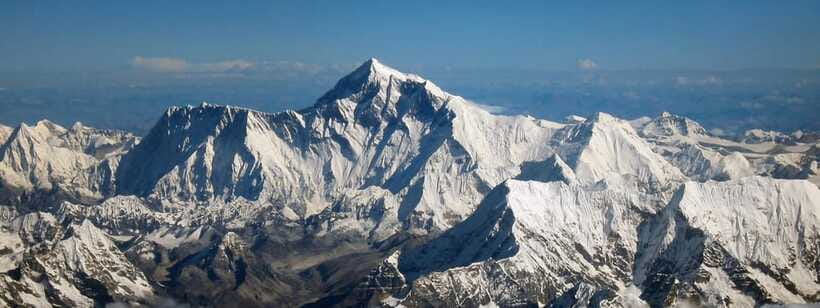
The walk to Lobuche rises to about 4,940 meters and takes 4 to 5 hours. The listed ascent is about 700 meters, so this is a substantial day even before you reach the highest part of the trek.
At this point, the air is thin and the trail can feel slow. You will need warm, comfortable clothing and a sleeping bag, both of which are supplied for use during the trip. The sleeping bag must be returned at the end, while the trekking map and T-shirt are yours to keep.
The following day takes you to Gorak Shep at about 5,164 meters, then onward to Everest Base Camp, listed at approximately 5,364 meters. Another description places Base Camp at 5,450 meters, so you should expect an altitude above 5,300 meters rather than rely on one exact figure.
You then return to Gorak Shep. This is one of the longest and most demanding sections because of the elevation and the out-and-back format. Base Camp itself is a major goal, but the route does not promise a technical climb onto Everest or a summit attempt. You are walking to the famous staging area below the mountain.
Kala Patthar is the high point of the trip
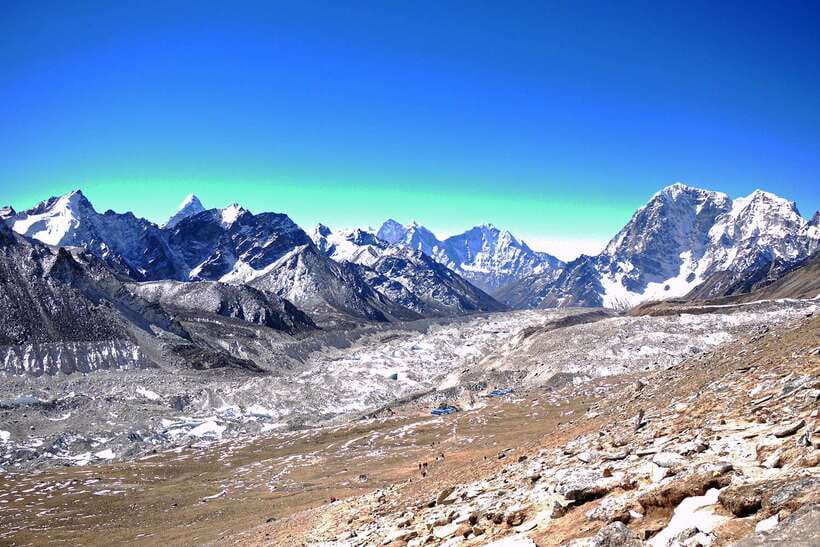
Day eight takes you up Kala Patthar, listed at 5,644 meters, before descending to Pheriche at about 4,371 meters. This is the highest point in the schedule and the place where the altitude will matter most.
The climb is a return walk, so you gain height and then lose it again. That can feel demanding, yet the effort is worthwhile for the elevated views toward Everest and the surrounding peaks. Base Camp gives you the destination, while Kala Patthar gives you the high viewpoint.
I would plan this morning with patience. You do not need to move quickly, and the guide can help set a sensible pace. Bring personal medication, cash, and comfortable clothes as requested, but also make sure your personal packing matches the cold and high altitude. The supplied information does not include bottled or boiled water, showers, battery charging, internet, or laundry, so budget for those as personal expenses.
The return to Namche and Lukla is still real trekking
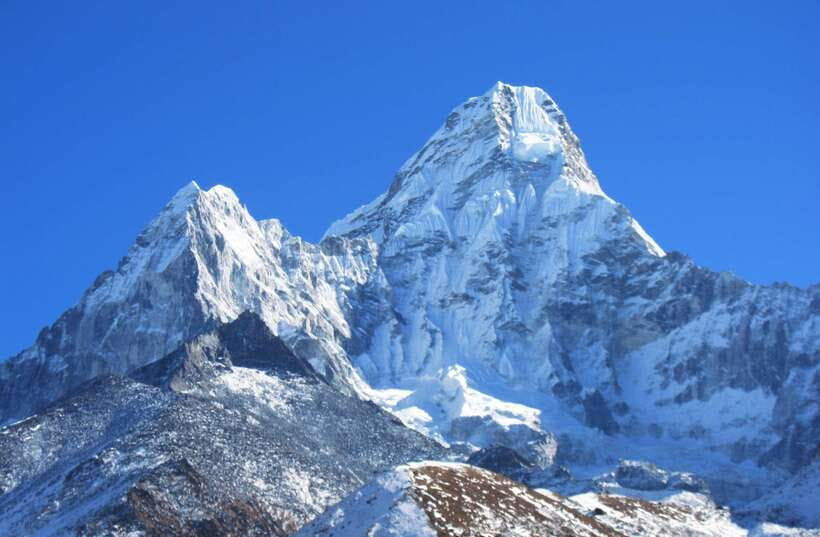
After Kala Patthar, the route descends to Pheriche, then continues back to Namche Bazaar on day nine. Day ten brings you back to Lukla.
The return is not just an administrative trip. Your knees may feel the downhill work, and the total distance can still be tiring after the high point. The lower altitude should help, but you remain on mountain paths and should keep your walking poles, sturdy footwear, and daypack ready.
The schedule does not give walking times or elevation details for days nine and ten. That lack of detail is worth noting if you prefer a fully itemized plan. Your guide will manage the day-to-day movement, but you should ask for the expected walking hours before departure.
Kathmandu, flights, and the value of the package
The package costs $1,599 per person. That is a substantial price, but it includes many items that can otherwise add up quickly: airport transfers, Kathmandu hotel nights, domestic flights, teahouse accommodation, all trek meals, permits, a licensed English-speaking trek leader, an assistant leader, and porter support.
It also includes staff salaries, insurance, equipment, food, accommodation, and domestic airfare. That matters because a low headline price can look less attractive once you add those costs yourself. The included down jacket and sleeping bag also reduce the amount of specialist gear you must purchase, although you need to return both after the trip.
The value is strongest if you want one company to handle the moving parts. The two domestic flights are particularly important because the mountain schedule depends on getting between Kathmandu and Lukla. The package also covers a comfortable private vehicle for ground transport according to the schedule.
You still need to pay for international flights, a Nepalese visa, travel and rescue insurance, extra accommodation caused by delays or an early return, excess baggage, water, showers, internet, laundry, phone calls, drinks, battery charging, and personal expenses. I would not book a high-altitude trek without travel and rescue coverage, even though it is not included.
Day eleven returns you to Kathmandu by another 30-minute domestic flight. The second Kathmandu hotel night is included with breakfast. Day twelve is set aside for your flight home or an extension of your holiday.
What the guide and support system add
The trip includes an experienced, English-speaking, government-licensed trek leader and an assistant trek leader. One porter is provided for every two trekkers. That arrangement lets you carry a lighter daypack, though you should still pack responsibly and respect the porter’s load.
The company’s coordination is one of the strongest practical features. Sabita is identified as a manager who handles communication, while Sabita and Sujan are available during the trip and check on your condition each day. If you are a young woman traveling alone, that level of contact may be especially reassuring, though the group type and guide assignment should be confirmed before booking.
An audio guide in English is also included, alongside the live English-speaking guide. The information does not explain where or how the audio guide is used, so I would treat the live guide as the main source of support on the trail.
Who should book this trek
I would recommend this trek to a fit adult who wants the standard Everest Base Camp route in a compact 12-day format and prefers having meals, permits, flights, accommodation, and porters arranged together.
It is a good match if you can walk 5 to 6 hours most days, accept basic teahouse accommodation, and handle a demanding climb above 5,000 meters. Previous mountain trekking experience is helpful, though the route is not technical.
I would be cautious if you need a slow acclimatization plan, dislike long walking days, or want hotel-level comfort throughout. The trek is not suitable for pregnant women, people with back problems, or people with mobility impairments. Drones, video recording, alcohol, and drugs are not allowed.
The activity allows cancellation up to 24 hours before departure for a full refund, and you can reserve now and pay later. You should still confirm flight times, room arrangements, walking hours for the return days, and the exact altitude figures before paying.
Should you book the Everest Base Camp Short Trek?
Book it if you want a well-supported route that gets you from Lukla to Base Camp and Kala Patthar in less than two weeks. The included flights, meals, teahouses, permits, porters, and staff costs give the $1,599 price solid practical value.
Do not choose it simply because the schedule is short. The altitude is serious, the walking days are long, and the plan does not show a separate rest day. I would book after confirming that you are fit for the pace and that your insurance includes mountain rescue. If that suits you, this is a focused way to reach two of the Khumbu’s biggest goals with a team handling most of the daily details.
FAQ
How long does the Everest Base Camp Short Trek take?
The trek lasts 12 days, including arrival and departure days in Kathmandu, the flights to and from Lukla, and the return journey from the mountains.
How high does the trek go?
Everest Base Camp is listed at about 5,364 to 5,450 meters, while Kala Patthar is listed at 5,644 meters.
How many hours will I walk each day?
You should expect an average of 5 to 6 hours of walking per day. Some individual days are listed as shorter, while the high-altitude days can feel harder.
Is the trek technical?
No. The route does not involve technical climbing, although previous mountain trekking experience is useful.
What accommodation is included?
You receive two nights in a deluxe hotel in Kathmandu with breakfast and the best available teahouse accommodation during the Everest trek.
Are meals included?
Breakfast, lunch, and dinner are included during the trek. A welcome dinner and farewell dinner are also included.
Are flights to Lukla included?
Yes. Domestic flights between Kathmandu and Lukla are included on a regular Twin Otter aircraft.
Is a porter included?
Yes. One porter is provided for every two trekkers. Staff costs, including salary, insurance, equipment, food, accommodation, and domestic airfare, are included.
What should I bring?
Bring your passport, personal medication, cash, and comfortable clothes. You should also provide the company with your Kathmandu accommodation details for pickup.
New treks around Kathmandu
- Kathmandu or Pokhara: 5-Day Annapurna Base Camp (ABC) Trek★ 4.5 · 2 reviews
- Pokhara: 2 Day Ghorepani & Poon Hill Private Trekking★ 4.9 · 8 reviews
- From Kathmandu: 6-Day Langtang Valley Guided Trek★ 5.0 · 2 reviews
- Pokhara: 5-Day Annapurna Base Camp (ABC) Trek★ 5.0 · 9 reviews
- Kathmandu: Langtang Valley 6-Day all inclusive Guided Trek★ 5.0 · 2 reviews
- Kathmandu: 6 Days Langtang Valley Trek with Kyanjin Ri★ 5.0 · 7 reviews
- Kathmandu: 9- Day Annapurna Circuit Trek★ 5.0 · 2 reviews
- Kathmandu: 6-Day Limitless Langtang Trek★ 5.0 · 21 reviews
Everest Base Camp Treks, side by side.
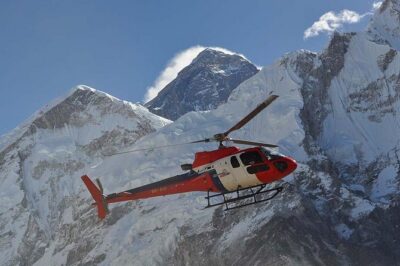
Everest Base Camp Trek with Helicopter Return from Gorakshep to Lukla
Read our review →
Trekking in Annapurna/Langtang/Everest/Upper Mustang regions
Read our review →Lists this trek appears in