
Review · KATHMANDU
Everest Base Camp Trekking
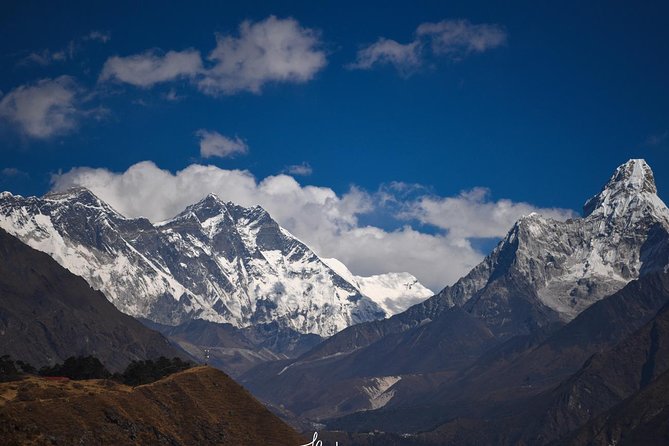
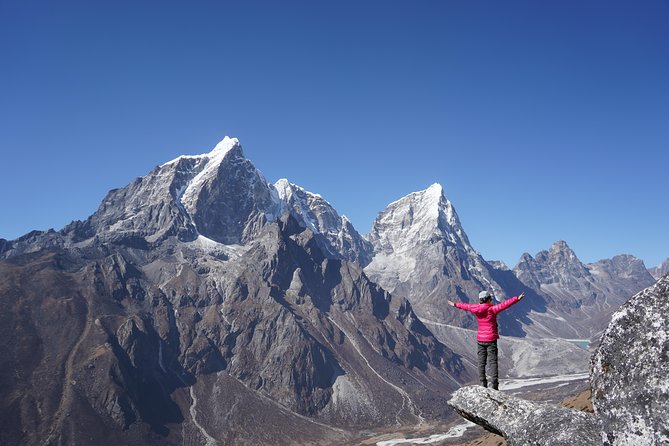
The heart of this 14-day Everest Base Camp trek is not simply reaching the famous sign at base camp. It is the slow approach through pine forests, Sherpa villages, Buddhist monasteries, glacier valleys, and high mountain passes, with Everest and Ama Dablam appearing and disappearing along the way. Your guide handles the route and daily logistics while you concentrate on walking.
I like the small group limit of 10, which should make it easier to ask questions and adjust the pace when needed. I also like the acclimatization plan, especially the rest day in Namche Bazaar and the extra time spent in the high villages before base camp. The main drawback is clear: this is a demanding trek at altitude, not a sightseeing trip with a few scenic walks.
Key points to know before you book
- Lukla begins the real adventure: The short mountain flight from Kathmandu leads directly into the Khumbu trekking region.
- Namche is more than an overnight stop: You get an acclimatization day and a short viewpoint hike before going higher.
- The route includes Phorse and Dingboche: This quieter path adds village scenery and mountain views before the most demanding days.
- Base Camp and Kala Patthar are separate highlights: You reach Everest Base Camp on one day, then rise early for a sunrise view from Kala Patthar.
- The $1,350 price covers the basics that matter: Teahouse accommodation, meals, and local transportation are included.
- You need real stamina: The operator requires strong physical fitness, and weather can affect the mountain flights and walking conditions.
Why this trek works for people who want Everest without planning every step
At $1,350 per person, this is a practical way to approach Everest Base Camp if you do not want to arrange every lodge, meal, transfer, and trail decision yourself. The price includes teahouse accommodation, meals, and local transportation, which removes several of the largest daily chores on a Himalayan trek.
You still need to budget attention, patience, and physical effort. A guide cannot make steep trails flat or low oxygen disappear. What the guide can do is keep you on the right route, explain the region, help with daily decisions, and give you a steady point of contact if you feel unwell.
The maximum group size is 10. That is small enough to feel more personal than a large coach-style tour, while still giving you some company on long walking days. The strongest praise for this experience centers on the guides and porters. Biru is repeatedly singled out for safety, companionship, and practical help. Amabar and porter Kanchar are also praised for looking after a trekker through difficult conditions, while Ramesh receives strong praise from solo trekkers.
That human support matters more here than polished sightseeing commentary. You will spend many hours walking, eating, resting, and dealing with changing weather together.
More Everest Base Camp treks around Kathmandu:
- Everest Base Camp Trek – 14 Days
★ 5.0 · 1,499 reviews - Everest Base Camp Trek
★ 5.0 · 842 reviews - Everest Base Camp Trekking – 13 Day
★ 5.0 · 365 reviews
Kathmandu arrival and the flight to Lukla
Day 1 begins at Tribhuvan International Airport, where an airport representative meets you and takes you to your hotel by private tourist vehicle. You can rest after your flight or visit the company office for more details about the trek.
This first day is useful because it gives you a buffer before the high country. You can meet the local team, confirm the plan, and settle into Kathmandu without rushing straight onto the trail. Your passport must be valid and the booking requires each participant’s passport name, number, expiry date, and country.
On Day 2, you leave early after breakfast for the domestic airport terminal. The flight to Lukla is part of the experience, with early morning views of snow-covered mountains. After landing at Tenzing-Hillary Airport, you begin the trek in the Khumbu region.
The flight is also one of the schedule points most exposed to weather. The experience operates in all weather conditions, but that does not mean flights always run exactly on time. Keep your first and final Kathmandu days flexible in spirit. A tight international connection immediately after the return flight would leave little room for disruption.
Phakding and the first walk through the Khumbu
The first trail day leads through pine forest, alongside the Dudh Koshi River, and toward views of Mount Thamserku. You pass small settlements before reaching a checkpoint at the entrance to Sagarmatha National Park.
This section gives you a gentle introduction to the rhythm of the trek. The path is not simply a march from one hotel to another. You will be walking through a living mountain region, where villages, river crossings, prayer flags, and changing views keep the route interesting.
The early days can feel deceptively easy. You may be excited and full of energy after arriving in the mountains, but the sensible approach is to walk steadily rather than race ahead. Your body needs time to adjust to increasing altitude.
Namche Bazaar and the first acclimatization day
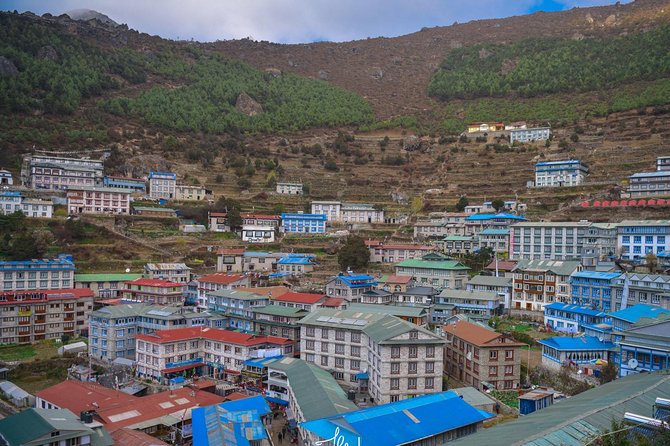
Day 4 brings you to Namche Bazaar, the largest settlement in the Khumbu region. It has ATMs, internet cafes, restaurants, and bakeries, so it feels far more connected than the remote villages ahead.
Namche is an important pause in the itinerary. You do not simply arrive, sleep, and continue uphill. Instead, you take a short hike to a nearby viewpoint, including the area around Thamserku, before returning to rest.
I like this part of the plan because the pause has a purpose. You are still gaining altitude, but the itinerary gives you time to spend a full day adjusting. The bakery and internet access are pleasant extras, but the real value is the chance to walk higher and sleep lower, helping your body adapt.
Do not treat Namche as a chance to overdo sightseeing. You may feel fine during the short hike and feel tired later. Drink water, follow your guide’s advice, and tell the guide promptly if you feel unwell.
More treks around Kathmandu:
- Annapurna Circuit Trek with Tilicho Lake
★ 5.0 · 368 reviews - Everest Base Camp Trek
★ 5.0 · 350 reviews - Everest Base Camp Trek -14 Days
★ 5.0 · 321 reviews - Manaslu Circuit Trek
★ 5.0 · 292 reviews
Phorse adds a quieter side of the route
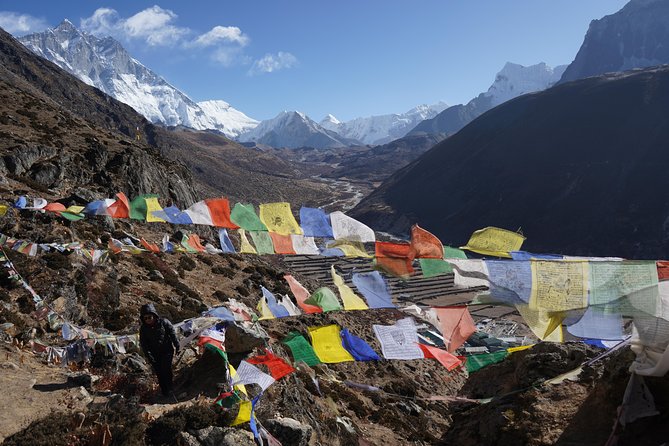
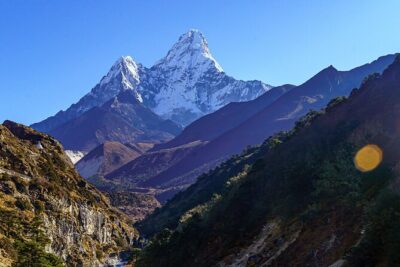
After Namche, the trek continues toward Phorse. The route reaches Mugla Pass, where you can see Ama Dablam, Khumbu, and Thamserku. It then descends toward the Dudh Koshi before continuing to the village.
This day adds variety. Instead of following only the most direct route, you spend time among high villages and open mountain views. Phorse also breaks up the long approach to Dingboche and base camp.
The high route can feel more exposed and physically demanding than the lower forest sections. The scenery is excellent, but you should judge the day by how your body feels, not by how quickly you can cover the distance.
Dingboche, monasteries, and higher country
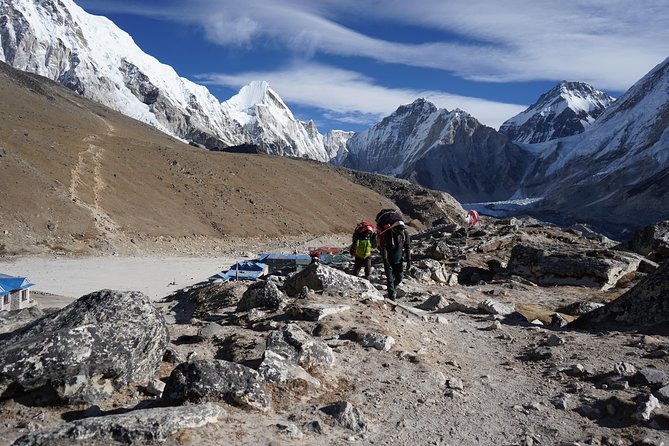
The route from Phorse to Dingboche begins with a visit to the largest Buddhist monastery in the region. The trail then moves through alpine forest toward Pangboche and continues through villages including Shomare.
This is one of the most rewarding cultural sections of the trek. The monastery visit provides context for the prayer flags, carved stones, and Buddhist symbols you see along the route. You also get a better sense of how settlements continue at high elevation.
Dingboche is another key stage before base camp. By now, the trees become less dominant and the mountains feel closer. The walking may seem more serious, especially as the air gets thinner. Your guide’s local knowledge becomes increasingly useful here because the daily pace and rest stops matter.
Duglha, the Khumbu Valley, and memorial stones
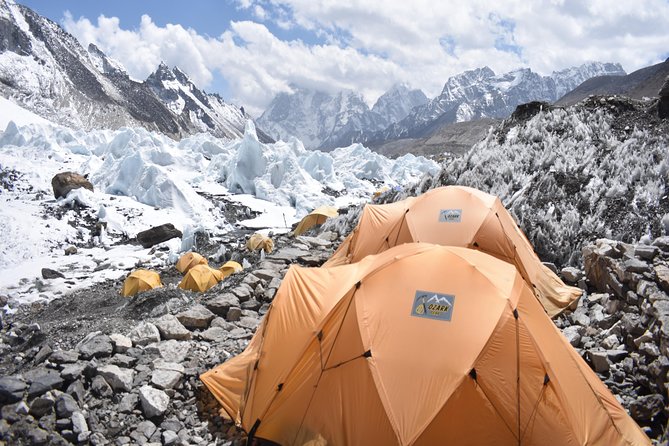
The itinerary then takes you from Duglha up through the Khumbu Khola valley. You pass Dusa, associated with yak herders, and Phulong Karp, identified as the camp of the first successful Everest expedition in 1953. The route also includes views toward Chola Lake.
This part of the trek links the present-day walk with the history of Everest expeditions. It is not a museum visit or a polished attraction. The interest comes from standing in the same high region used by earlier climbers, surrounded by rock, ice, prayer flags, and broad mountain views.
The next section climbs the steep terminal moraine of the Khumbu Glacier toward Chupki Lhara. Boulders and a collection of stones decorated with prayer flags mark the route. These memorial areas can be sobering. Everest trekking is beautiful, but the mountain environment is also serious and unforgiving.
Walk carefully on uneven ground. A controlled pace is more useful than speed, particularly after several days of altitude gain.
Everest Base Camp and the high point of the trek
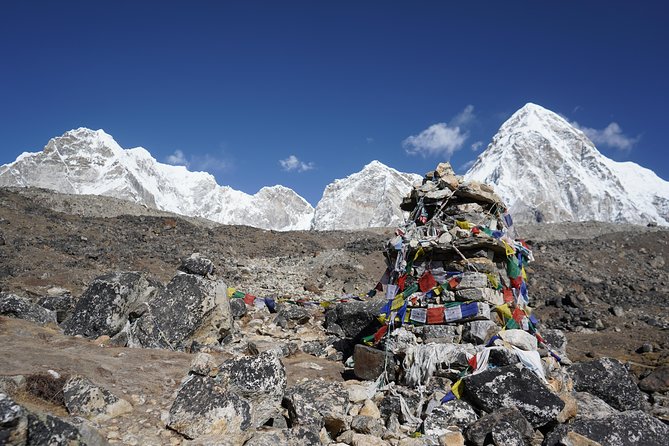
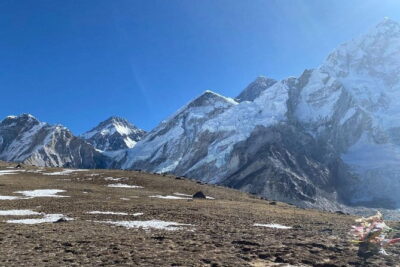
Day 9 is the main approach to Everest Base Camp. At Thangma Riju, you can experience a 360-degree view of snow-covered mountains. One practical detail is easy to miss: Everest itself is not seen from this viewpoint.
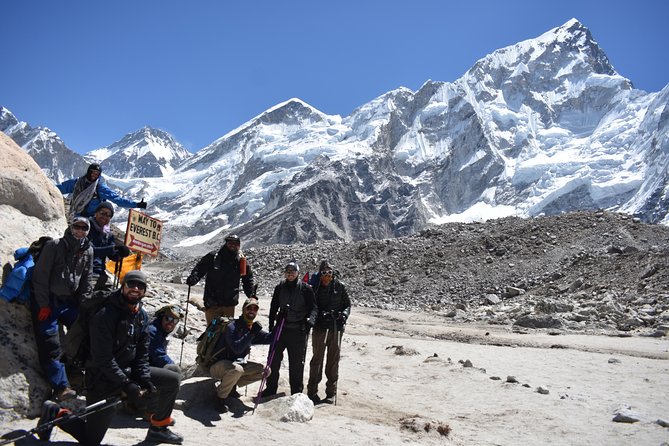
You then continue toward Everest Base Camp, the point that gives the trek its name. The stay at base camp is listed as about 30 minutes, with no admission charge. That may sound brief, but the emotional weight of reaching the site comes from the many days of walking required to get there.
Do not expect a comfortable visitor center or a simple road access point. Base camp is a high mountain destination reached on foot, and the surroundings can be rough, cold, and tiring. The attraction is the setting and the achievement, not a long list of facilities.
This is also where a guide’s judgment matters. Conditions can change quickly, and the group needs to move together. The strongest comments about this experience focus on guides who keep trekkers safe, help when someone feels sick, and manage the day without drama.
Kala Patthar sunrise and the best Everest view
Day 10 starts very early for the climb to Kala Patthar. The aim is to see the mountains in the morning light as darkness gives way to day. This is a separate experience from base camp and, for many people, the more scenic one.
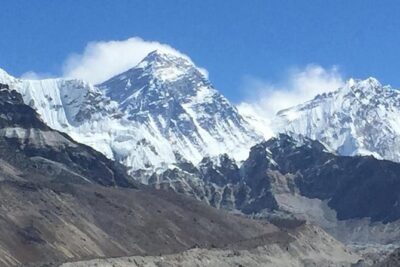
Kala Patthar offers a sunrise viewpoint, with views toward Everest and surrounding peaks including Pumori and Lingtr. The early start is not comfortable, particularly after the effort of reaching base camp, but the timing is the point. Morning light changes the appearance of the snow-covered summits quickly.
You should expect a steep, tiring climb and cold conditions. The itinerary lists the viewpoint stop at about 30 minutes, but the value comes from the view rather than the length of the stop. Keep warm, follow your guide, and save enough energy for the return walk.
The descent through Pheriche and Pangboche
After the high point, the route descends through Duglha, Pheriche, Orsho, and Shomare before reaching Pangboche. The change in elevation can feel welcome, but downhill walking has its own strain.
Steep rocky paths are hard on knees and ankles. Use a controlled pace and watch each step. You are not finished simply because the route now goes down.
At Pangboche, you can explore the old village and its Buddhist monastery. This gives the return journey its own character rather than making it feel like a repeat of the outward route. The lower you go, the more the surroundings shift from stark high valleys toward villages and forest.
The final trail day and return to Kathmandu
The final trekking day follows a steep downward trail toward the suspension bridge over the Dudh Koshi. The rocky surface requires balance and patience. You should walk slowly, especially if your legs are tired from the high sections.
After reaching Lukla, Day 13 brings the mountain flight back to Kathmandu. Once in the city, you have time for shopping and walking around Kathmandu, followed by a celebration of completing the trek.
Day 14 is set aside for more shopping and sightseeing around Kathmandu Valley before your scheduled flight from Tribhuvan International Airport. This extra day is useful after a demanding route, though you should still pay attention to your departure timing and airport transfer.
What the $1,350 price really gives you
The value here lies in removing the basic logistics from a difficult journey. You receive a guided small-group trek, teahouse accommodation, meals, and local transportation. You also get airport pickup at the beginning and support with the Lukla connections.
Teahouse lodging is practical rather than luxurious. You should choose this trip for access to the route and the support of the local team, not for hotel-style comfort. Meals are included, which makes budgeting easier, but the high-altitude environment still requires flexibility.
A private guide and porter arrangement could offer more control, but this small-group format is a reasonable middle ground. You get companionship and shared logistics without joining a large crowd. The 99 percent recommendation rate and five-star rating from 485 submitted ratings suggest a strong overall record, especially for guide support and organization, though no mountain trip can promise perfect weather or an easy route.
The experience is often booked about 56 days ahead. That is a useful planning signal. If your dates matter, do not leave the arrangement until the last week.
Who should book this Everest Base Camp trek?
You should consider this trek if you are active, comfortable walking for multiple days, and ready for basic teahouse accommodation. You do not need to be an expedition climber, but you do need strong physical fitness and a willingness to handle steep trails, cold weather, altitude, and early starts.
This trip suits you especially well if:
- You want a guide to manage the route and daily logistics.
- You prefer a small group of no more than 10 people.
- You want both Everest Base Camp and the Kala Patthar sunrise viewpoint.
- You value local guidance and cultural context.
- You are comfortable with a physically demanding schedule.
Think twice if you want a relaxed holiday, dislike basic lodging, or need a fixed schedule with no room for weather delays. The trek is rewarding because it asks a lot from you, not because it is easy.
You can cancel up to 24 hours before the start time for a full refund. Changes or cancellations inside that period are not accepted for a refund, and the cutoff follows local time.
Should you book it?
I would book this trek if your priority is a well-supported route to Everest Base Camp at a moderate package price. The strongest reasons are the small group, the sensible acclimatization stops, the included meals and teahouses, and the repeated praise for guides such as Biru, Amabar, and Ramesh.
I would not book it expecting comfort, spare time, or guaranteed flight conditions. Go if you want the full mountain journey, from Lukla and Namche to the glacier valley, base camp, and Kala Patthar. If you prepare your fitness, accept basic conditions, and give the guide honest updates about how you feel, this offers a strong way to experience the Khumbu without carrying every logistical decision yourself.
FAQ
How long is the Everest Base Camp trek?
The experience lasts approximately 14 days, including arrival and departure days in Kathmandu, the trek, the Lukla flights, and time for Kathmandu sightseeing.
Where does the experience begin?
It begins at Tribhuvan International Airport in Kathmandu, Nepal. An airport representative meets you and arranges transport to the hotel.
How many people are in the group?
The maximum group size is 10 travelers.
What is included in the price?
The experience includes teahouse accommodation, meals, local transportation, airport pickup, and guided trekking arrangements.
Is a guide included?
Yes. The trek is guided, helping you follow the route and manage the logistics. Guides named in the supplied information include Biru, Amabar, and Ramesh.
Does the trek reach Everest Base Camp?
Yes. The itinerary includes Everest Base Camp, with an estimated 30-minute stop and no admission fee.
Does the trek include Kala Patthar?
Yes. Day 10 includes an early morning climb to Kala Patthar for a sunrise view.
How fit do I need to be?
The experience requires a strong physical fitness level. It is intended for active and moderately fit people who can manage steep, rocky trails at high altitude.
Does the trek operate in bad weather?
Yes, the experience operates in all weather conditions. You should dress appropriately, and mountain flight timing can still be affected by conditions.
What is the cancellation policy?
You can cancel at least 24 hours before the experience start time for a full refund. Cancellations or changes made less than 24 hours before the start time are not accepted for a refund.
New treks around Kathmandu
- Kathmandu or Pokhara: 5-Day Annapurna Base Camp (ABC) Trek★ 4.5 · 2 reviews
- Pokhara: 2 Day Ghorepani & Poon Hill Private Trekking★ 4.9 · 8 reviews
- From Kathmandu: 6-Day Langtang Valley Guided Trek★ 5.0 · 2 reviews
- Pokhara: 5-Day Annapurna Base Camp (ABC) Trek★ 5.0 · 9 reviews
- Kathmandu: Langtang Valley 6-Day all inclusive Guided Trek★ 5.0 · 2 reviews
- Kathmandu: 6 Days Langtang Valley Trek with Kyanjin Ri★ 5.0 · 7 reviews
- Kathmandu: 9- Day Annapurna Circuit Trek★ 5.0 · 2 reviews
- Kathmandu: 6-Day Limitless Langtang Trek★ 5.0 · 21 reviews
Everest Base Camp Treks, side by side.
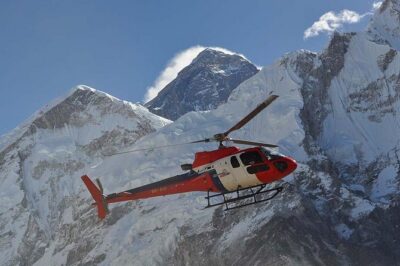
Everest Base Camp Trek with Helicopter Return from Gorakshep to Lukla
Read our review →
Trekking in Annapurna/Langtang/Everest/Upper Mustang regions
Read our review →Lists this trek appears in