
Review · KATHMANDU
Everest Base Camp Trek
The big draw here is not simply reaching Everest Base Camp. It is having nearly two weeks to walk slowly through the Khumbu, sleep in mountain lodges, cross high valleys, and let a private guide adjust the pace when the altitude starts to bite. The route climbs from Lukla to 17,594 feet at Base Camp, with two planned acclimatization days.
I like the private format, since you are not forced to match the speed of a large group. I also like how much is bundled into the $1,790 price: domestic flights, permits, meals, lodges, guide, porter, transfers, and two Kathmandu hotel nights. Guides named in guest accounts include Ram, Shyam, Paban, Vishma, and Ram Saran, though your assigned guide will depend on the departure.
The main caution is simple: this is a demanding high-altitude trek, not a sightseeing holiday with a few walks added. Long days, cold nights, basic lodge rooms, flight delays, and altitude sickness are all part of the decision. You need strong fitness, proper equipment, travel insurance, and patience.
Key points before you book
- 14 days from Kathmandu to Everest and back: The route includes Lukla, Namche Bazaar, Tengboche, Dingboche, Lobuche, Gorakshep, Base Camp, Kala Patthar, and the return to Lukla.
- Private guiding with porter support: One English-speaking certified guide and one porter for every two trekkers are included.
- Acclimatization is built in: You spend extra days near Namche and Dingboche rather than climbing higher every day.
- Most major costs are covered: Flights via Ramechap, permits, full-board meals, lodges, airport transfers, and two Kathmandu hotel nights are included.
- The final approach is strenuous: Day 9 covers Gorakshep, Everest Base Camp, and the return to Gorakshep in about eight hours.
- Pack carefully and lightly: A complimentary waterproof duffel is supplied, and the porter allowance is up to 25 kilograms for two people.
What the $1,790 price really covers
At first glance, $1,790 is a serious sum. For a two-week Himalayan trek, though, the value is tied to how many moving parts the company handles. You receive airport pickup and drop-off, two nights in a three-star Kathmandu hotel, round-trip flights between Ramechap and Lukla, transport between Kathmandu and Ramechap, permits, a certified guide, porter service, accommodation, and three meals a day during the trek.
That matters in the Everest region. You are not just paying for walking directions. Someone must arrange the Lukla flights, permits, lodge rooms, food, staff transport, and connections back to Kathmandu. The private setup also gives you more say over your walking rhythm than a fixed large-group departure.
Still, the price does not cover everything. International flights, Nepal’s entry visa, travel insurance, drinks, snacks, hot showers, personal gear, and tips are extra. A 30-day visa costs $40 on arrival, according to the supplied details.
The word full board means breakfast, lunch, and dinner with tea or coffee during the trek. It does not mean every drink or snack is included. Bring extra money for bottled or treated water, hot drinks, charging, snacks, and personal purchases. The package includes seasonal fruit, which is a useful treat on a long walk, but mountain supply costs can still add up.
More Everest Base Camp treks around Kathmandu:
- Everest Base Camp Trek – 14 Days
★ 5.0 · 1,499 reviews - Everest Base Camp Trekking
★ 5.0 · 485 reviews - Everest Base Camp Trekking – 13 Day
★ 5.0 · 365 reviews
Kathmandu arrival and the early start to Lukla
Day 1 is for arriving in Kathmandu. The included airport pickup removes one small but welcome chore after an international flight. You also have two Kathmandu hotel nights included, although the schedule places the second night around the return from the mountains.
Day 2 begins at 2:15 a.m. with a drive to Ramechap, followed by the flight to Lukla. That early start is one of the less glamorous facts of this trek. It is worth understanding before you book: the adventure begins with a very short night and a long transfer day.
From Lukla, you walk about 8 kilometers to Phakding in roughly three hours. The listed altitude is 8,699 feet. This first section is a useful introduction to the walking rhythm, but do not treat it as a throwaway stroll. You are already above the elevation of most home environments, and the following days become much harder.
The return flight also runs through Ramechap. Weather can affect these flights, and the cancellation policy specifically allows a new date or a full refund if poor weather cancels the experience. That protection is useful, but it cannot create extra holiday time if a delay affects your wider Nepal plans.
Namche Bazaar and the first acclimatization day
Day 3 takes you from Phakding to Namche Bazaar, about 10 to 12 kilometers in six hours. This is the first major test. The path climbs steadily, and the gain in altitude is more important than the distance on paper.
Namche is the main trading and service center in the Khumbu route. It is also where the trek begins to feel truly high mountain. The town gives you a chance to settle into lodge life before the harder upper sections.
Day 4 is an acclimatization day, not a day off. You hike to the Everest View Hotel at 12,995 feet, covering about 3 to 4 kilometers in three to four hours. The purpose is to climb higher and return to sleep lower, giving your body time to adjust.
This is one of the smartest parts of the schedule. I would not be tempted to skip the hike just because your legs feel tired. A private guide can help set a sensible pace, stop for breaks, and watch for signs that you are not adapting well.
The guide’s role matters here. Names appearing in the supplied guest accounts include Ram, Shyam, and Vishma, with repeated praise for careful support, clear communication, and help during difficult moments. You should still confirm who is assigned to your departure rather than assume a particular person will lead your trek.
Tengboche and the route toward Dingboche
Day 5 takes you to Tengboche, about 10 to 11 kilometers in five hours, at a listed altitude of 12,660 feet. The village is known for its monastery setting and broad mountain views. It is one of the route’s most memorable stops because the cultural side of the Khumbu becomes more visible here.
The walk is not simply a march from lodge to lodge. The trail passes through changing Himalayan scenery, and you have time to notice how the villages, prayer features, and mountain paths fit together. Your guide can add local context, though the exact depth of cultural commentary depends on the person assigned to you.
On Day 6, you walk 11 to 12 kilometers to Dingboche in about five hours. The listed altitude is 14,464 feet. At this point, the air is thinner and the daily effort feels more serious. A steady pace is more useful than trying to arrive early.
Dingboche is the next important staging point. The lodge facilities are practical rather than luxurious, and hot showers during the trek are not included. You should expect basic twin-sharing accommodation, with private bathrooms and hot showers specifically noted at Phakding, Namche, and Lukla.
More treks around Kathmandu:
- Annapurna Circuit Trek with Tilicho Lake
★ 5.0 · 368 reviews - Everest Base Camp Trek
★ 5.0 · 350 reviews - Everest Base Camp Trek -14 Days
★ 5.0 · 321 reviews - Manaslu Circuit Trek
★ 5.0 · 292 reviews
Dingboche acclimatization and the high valley
Day 7 is another acclimatization day. The plan calls for a 5 to 6 kilometer hike to Nagarjun Hill and back, taking four to five hours. Again, this is a working rest day. The climb helps your body adjust, while the return to Dingboche avoids pushing higher too quickly.
You will want warm layers here. The equipment guidance recommends a sleeping bag rated to zero degrees Fahrenheit, thermal layers, fleece clothing, a waterproof shell, gloves, and a warm hat. These are not decorative extras. Cold and poor sleep can make the next day feel much harder.
A private guide can make the acclimatization days more useful by helping you walk at a controlled speed. The format also lets you discuss how you feel without worrying about holding up a large group. That does not remove altitude risk, and no guide can guarantee that you will reach Base Camp, but it gives you a better chance to respond sensibly to changing conditions.
Lobuche, Gorakshep, and the long day to Base Camp
Day 8 covers 11 to 12 kilometers to Lobuche in about five hours, reaching a listed altitude of 16,105 feet. This is a high, exposed part of the trek, and your body will likely notice every climb.
Day 9 is the central challenge. You trek from Lobuche to Gorakshep, continue to Everest Base Camp, and return to Gorakshep. The total distance is about 14 to 15 kilometers, with an estimated walking time of eight hours. Everest Base Camp is listed at 5,364 meters, or 17,594 feet.
This is the day to keep your expectations realistic. The base camp itself is not a permanent city or a warm retreat. It is a high-altitude stopping point on a demanding trail, and the achievement comes from the full route, not just a single photograph.
The private format is especially useful here. You can stop for water, food, photographs, or a slower pace without negotiating with a large group. At the same time, you should not mistake flexibility for ease. Eight hours at this altitude requires preparation, and you may find the return to Gorakshep harder than the outward walk.
Kala Patthar and the long descent to Pheriche
Day 10 begins with the Kala Patthar hike before continuing to Pheriche. The plan lists about 13 to 14 kilometers and seven hours of walking, with Pheriche at 4,210 meters, or 13,810 feet.
Kala Patthar is included because it provides a major mountain viewpoint and gives you another high point after Base Camp. The itinerary lists 11,283 feet for Kala Patthar, which appears inconsistent with its place in the route, so I would confirm the exact elevation and timing with the operator before departure.
The descent to Pheriche is welcome, but downhill walking still works your knees and thighs. Trekking poles, good boots, spare laces, and gaiters for winter conditions are sensible parts of the supplied packing guidance.
Returning through Namche and Lukla
Day 11 takes you back to Namche, about 14 to 15 kilometers in seven hours. This is a long return day, though the lower altitude should help your breathing. The trail may feel easier in some sections, but tired legs can make the distance feel substantial.
Day 12 is the longest listed walking day by distance, 18 to 19 kilometers to Lukla in about seven hours. You will be ready for a hot shower and a proper rest. The package specifically includes private bathrooms and hot showers at Lukla, which makes this a useful comfort at the end of the route.
Day 13 brings the flight to Ramechap and the drive back to Kathmandu. Day 14 is departure day, with airport drop-off included.
This schedule leaves little spare time if weather disrupts the flights. I would avoid booking an international departure immediately after a tight domestic connection unless you are comfortable with the risk. The supplied cancellation terms address weather cancellations, but they do not cover every knock-on cost to your wider trip.
Food, rooms, staff, and what to pack
Lodge-to-lodge accommodation is on a twin-sharing basis. Conditions become simpler as you climb, and hot showers are limited. Bring a sleeping bag rated to zero degrees Fahrenheit, a 20 to 22-liter day pack, a waterproof duffel, water bottles, headlamp, trekking poles, toiletries, tissues, hand sanitizer, and plastic bags to keep clothing dry.
The porter arrangement is one porter for every two trekkers, carrying up to 25 kilograms in total. Pack with that limit in mind. You will carry your day pack, so keep essentials such as water, snacks, layers, documents, and medication close at hand.
The company supplies a complimentary waterproof duffel or kit bag. You also need a separate large bag or suitcase for non-trek belongings left at the Kathmandu hotel. Keeping that city luggage separate makes the mountain portion easier.
Vegetarian meals are available if requested at booking. Drinks, snacks, and personal expenses are not included, so budget for them. Travel insurance is also not included, and it is particularly important for a high-altitude trek with domestic flights and weather risk.
Who should choose this Everest Base Camp trek
I would choose this trip if you want a fully arranged route but still value personal attention. It suits fit, active people who can walk for several hours on consecutive days and accept basic accommodation, early starts, thin air, and changing plans.
It is also a sensible choice for a first major Himalayan trek if you want a guide and porter rather than managing permits, flights, lodges, and meals yourself. The private format can work well for couples, friends, or a small family group, with a minimum booking of two and a maximum of 15 people.
I would think twice if you dislike long walking days, have little time for weather delays, or expect hotel-style comfort. The route is challenging even with a strong guide, and the final Base Camp day is not gentle.
The strongest practical advantage is the staff support. Direct accounts highlight guides such as Ram, Ramkrishna, Shyam, Paban, Vishma, and Ram Saran for encouragement, organization, and help when the trail became difficult. That personal connection can make a major difference on a hard day, though the individual guide assigned to you is the detail to confirm.
Should you book it?
Book this Everest Base Camp trek if you want the classic route with the main logistics handled and the freedom of a private guide. The price is reasonable for what it includes, especially the flights, permits, meals, porter, lodges, transfers, and Kathmandu hotels.
Before paying, confirm the assigned guide, exact flight arrangements through Ramechap, accommodation standards, porter weight limit, insurance requirements, and the altitude figures in the itinerary. If you arrive fit, pack properly, and allow room for weather trouble, this is a well-supported way to tackle one of the world’s great mountain walks.
FAQ
How long is the Everest Base Camp trek?
The experience lasts approximately 14 days, including arrival and departure days in Kathmandu, the trek, flights, and road transfers.
What is the price?
The listed price is $1,790 per person.
Is this a private trek?
Yes. Only your group participates in the private activity. A minimum of two people is required, and the maximum booking size is 15.
Is a guide included?
Yes. The package includes one certified, English-speaking professional guide.
Is a porter included?
Yes. One porter is included for every two trekkers, with a maximum carrying allowance of 25 kilograms.
Are meals included?
Breakfast, lunch, and dinner with tea or coffee are included during the trek. Seasonal fruit is also provided. Drinks, snacks, and personal expenses are extra.
Are flights to Lukla included?
Yes. Round-trip flights between Ramechap and Lukla, including transfers, are included.
Are permits included?
Yes. The required trekking permits are included in the package.
What fitness level is needed?
You need a strong physical fitness level. The trek includes walking days of up to 18 to 19 kilometers and reaches Everest Base Camp at 5,364 meters.
Can I cancel for a refund?
You can cancel at least 24 hours before the experience start time for a full refund. Cancellations or changes made less than 24 hours before the start time are not refunded or accepted. Weather or failure to meet the minimum number of participants may result in a different date, another experience, or a full refund.
New treks around Kathmandu
- Kathmandu or Pokhara: 5-Day Annapurna Base Camp (ABC) Trek★ 4.5 · 2 reviews
- Pokhara: 2 Day Ghorepani & Poon Hill Private Trekking★ 4.9 · 8 reviews
- From Kathmandu: 6-Day Langtang Valley Guided Trek★ 5.0 · 2 reviews
- Pokhara: 5-Day Annapurna Base Camp (ABC) Trek★ 5.0 · 9 reviews
- Kathmandu: Langtang Valley 6-Day all inclusive Guided Trek★ 5.0 · 2 reviews
- Kathmandu: 6 Days Langtang Valley Trek with Kyanjin Ri★ 5.0 · 7 reviews
- Kathmandu: 9- Day Annapurna Circuit Trek★ 5.0 · 2 reviews
- Kathmandu: 6-Day Limitless Langtang Trek★ 5.0 · 21 reviews
Everest Base Camp Treks, side by side.
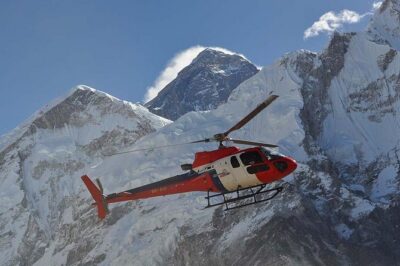
Everest Base Camp Trek with Helicopter Return from Gorakshep to Lukla
Read our review →
Trekking in Annapurna/Langtang/Everest/Upper Mustang regions
Read our review →Lists this trek appears in