
Review · KATHMANDU
Everest Base Camp Trek
The great draw here is simple: you walk from the busy streets of Kathmandu into the high Himalayas, one village and one suspension bridge at a time, until Everest Base Camp and Kala Patthar come into view. I like the two acclimatization days, which give your body time to adjust, and the fact that flights, permits, meals, sleeping gear, and airport transfers are bundled together.
I also like the human side of the trip. Your guide leads you through Sherpa villages, monasteries, and mountain valleys rather than reducing the region to a photo stop. Guides named Buddhi and Pawan have received especially warm praise for their care and steady support. The catch is the physical demand: this is a serious high-altitude trek, not a sightseeing tour with a little walking added.
Key points before you book
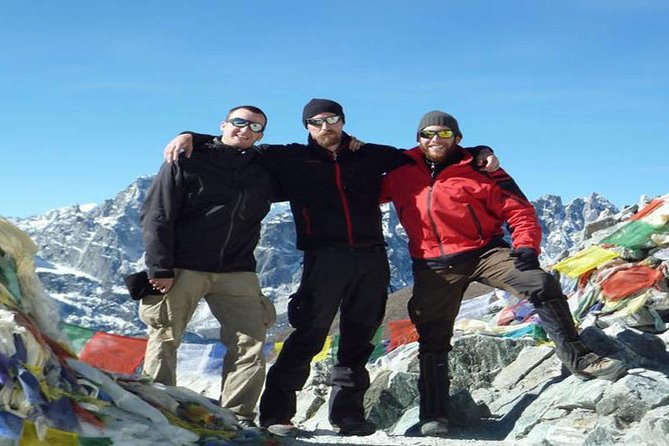
- Fourteen days from Kathmandu to Kathmandu: The route includes the flight to Lukla, the walk to Base Camp, Kala Patthar, and the return journey.
- Two planned acclimatization days: You spend a full day in Namche Bazaar and another in Dingboche.
- A strong package of inclusions: Lukla flights, 11 trekking nights, meals, permits, a sleeping bag, down jacket, duffel bag, and airport transfers are included.
- Private group format: Only your group takes part, with a government-licensed mountain guide from Kathmandu.
- The route reaches both Base Camp and Kala Patthar: Base Camp is the goal, while Kala Patthar offers the major sunrise viewpoint.
- Budget for extras: Insurance, porter service, Kathmandu lodging, drinks, showers, laundry, battery charging, tips, and costs caused by flight delays are separate.
Why this trek is worth the effort
At $1,799.27 per person, this is not a casual weekend outing. You are paying for nearly two weeks of movement through remote mountain country, plus the hard-to-arrange pieces that make the route possible.
The value is strongest in the practical bundle. Your package includes both Kathmandu to Lukla flights, 11 nights of trekking accommodation, 12 breakfasts, 12 lunches, and 11 dinners. It also covers Sagarmatha National Park, Khumbu entrance, and Pasang Lhamu Rural Municipality fees. A sleeping bag, down jacket, duffel bag, medical kit, and three cups of hot tea each day are included as well.
That saves you from arranging every part separately. It does not make the trek easy, though. You still need travel and rescue insurance, and the package does not include a porter. You also pay for bottled water, hot water, showers, laundry, phone calls, battery charging, and tips. Those costs can matter in the mountains, so plan for them instead of treating the advertised price as your full trip budget.
The private format is useful if your group wants a shared pace and direct access to the guide. It may also feel more personal than a large commercial departure. At the same time, the listing does not state the maximum group size, so ask how many people will join your booking before paying.
More Everest Base Camp treks around Kathmandu:
- Everest Base Camp Trek – 14 Days
★ 5.0 · 1,499 reviews - Everest Base Camp Trek
★ 5.0 · 842 reviews - Everest Base Camp Trekking
★ 5.0 · 485 reviews
Kathmandu arrival and the flight to Lukla
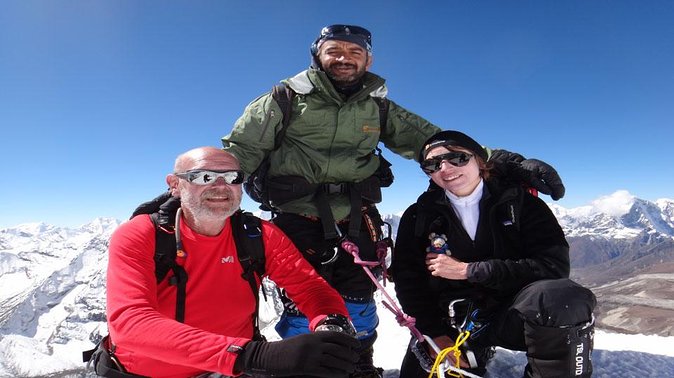
Your trip begins with airport pickup in Kathmandu. A representative from Nepal High Trek and Expedition, identified in the schedule as Anjan, meets you after your flight and takes you to the arranged hotel. A welcome dinner is planned, giving you a first taste of the country before the trek begins.
The next morning, you transfer to Kathmandu’s domestic terminal for the flight to Lukla. This short flight is not just transportation. Lukla is the trailhead for the standard Everest Base Camp route, and arriving by air lets you begin walking high in the Khumbu rather than spending additional days approaching on foot.
The schedule allows about 14 days in all, but mountain flights can be affected by weather. The package says that expenses caused by a strike, delay, or canceled flight are not included. The operator does arrange emergency helicopter service, but your travel insurance company is expected to pay for it. Good rescue and trip-delay coverage is essential here, not optional paperwork.
Lukla to Namche Bazaar, the first hard walking days
From Lukla, the route follows the Dudh Koshi River toward Phakding and then continues uphill to Namche Bazaar. You cross several suspension bridges and gain your first close views of peaks such as Thamserku, which rises to 6,618 meters.
The early miles can fool you. The distance may look manageable on paper, but the trail rises and falls, and the altitude begins to matter. Your guide’s advice to walk slowly is important. A steady pace is more useful than trying to reach the next village quickly.
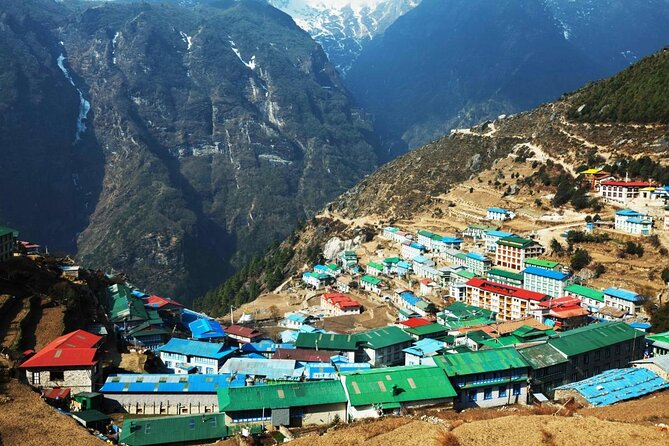
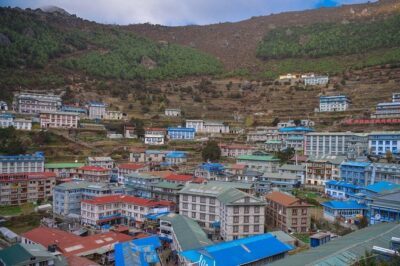
Namche Bazaar is a major stop in the route and a good place to reset. The town has banks, ATMs, internet access, and other services, though the schedule does not promise that every service will work at all times. The listed Irish Pub stop appears to be a waypoint within Namche rather than a separate major attraction.
You spend a full acclimatization day around Namche. This is one of the smartest parts of the plan. Instead of gaining height every day, you can make a shorter outing, see the surrounding peaks, and let your body adjust. Do not treat this as a wasted day. At high altitude, rest and gradual gain are part of the route, not a break from it.
Tengboche and the mountain views
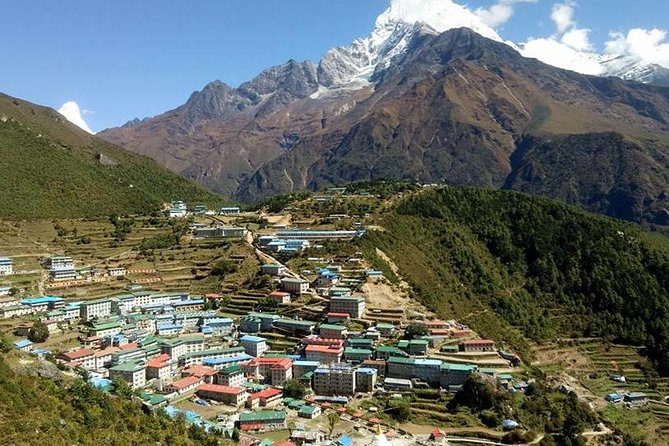
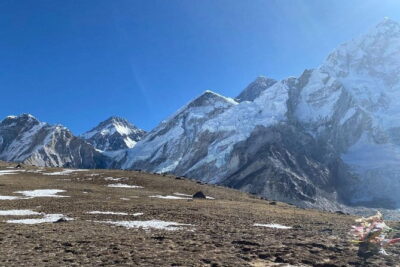
After Namche, the trail continues toward Tengboche. The views open toward Everest, Nuptse, Lhotse, Ama Dablam, and other major peaks. Tengboche Gompa gives the day a cultural focus, not just a scenic one.
A short morning visit to Tengboche and its monastery is included before the route continues toward Dingboche. The setting combines a white mountain backdrop with one of the best-known monasteries in the Everest region. You will have time for photographs, but remember that this is an active religious site. Quiet behavior and respect matter more than getting the perfect picture.
The walk to Dingboche is longer and more exposed than the lower section. The schedule assigns about three hours to the main stop at Dingboche View Point, though daily walking time can vary. The important point is the steady rise in altitude. You should expect the trek to feel harder here even if your legs are still strong.
More treks around Kathmandu:
- Annapurna Circuit Trek with Tilicho Lake
★ 5.0 · 368 reviews - Everest Base Camp Trekking – 13 Day
★ 5.0 · 365 reviews - Everest Base Camp Trek
★ 5.0 · 350 reviews - Everest Base Camp Trek -14 Days
★ 5.0 · 321 reviews
Dingboche acclimatization and the Chhukung valley
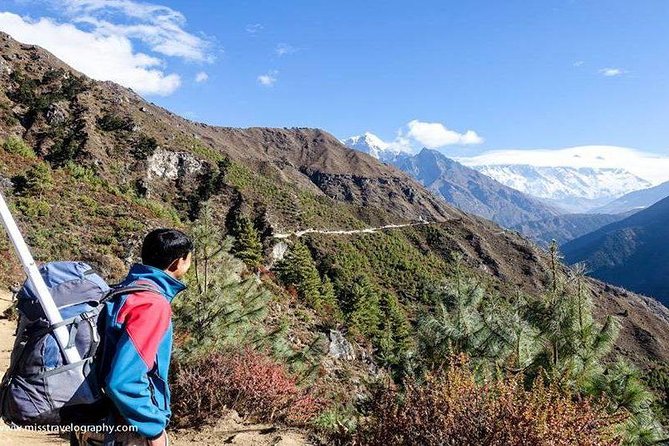
Dingboche gives you another full acclimatization day. The planned outing follows the Imja Khola valley toward Chhukung, with views toward Lhotse and the surrounding peaks. A stop at Dingboche Stupa is also listed.
This day has real practical value. You gain some height during the outing, then return to sleep at Dingboche rather than moving higher immediately. That helps your body adjust before the route reaches the thin air around Lobuche and Gorak Shep.
Your physical condition matters more than speed. The operator says participants should have a strong fitness level. You do not need to be an elite athlete based on the information provided, but you do need to be ready for repeated days of uphill and downhill walking, cold conditions, and limited comfort.
Lobuche, the Khumbu Glacier, and the memorial stones
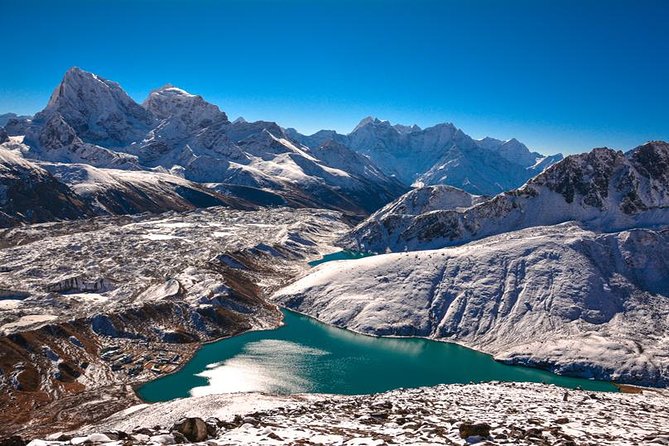
From Dingboche, the route heads toward Lobuche. You walk beside the lateral moraine of the Khumbu Glacier and pass stone memorials dedicated to climbers who died on nearby summits.
This section gives the trek emotional weight. The Everest region is not only a postcard of snow and rock. It is also a place shaped by mountaineering risk, local work, loss, and years of expeditions. The memorials are a quiet reminder to slow down and pay attention.
You will likely notice a sharp change in the feel of the route here. Villages become more basic, the air grows thinner, and the walking day can feel much longer than its distance suggests. The listed stop at the Khumbu Glacier is about two hours, but you should think of the entire day as part of the approach to Base Camp rather than a quick scenic visit.
Gorak Shep and Everest Base Camp
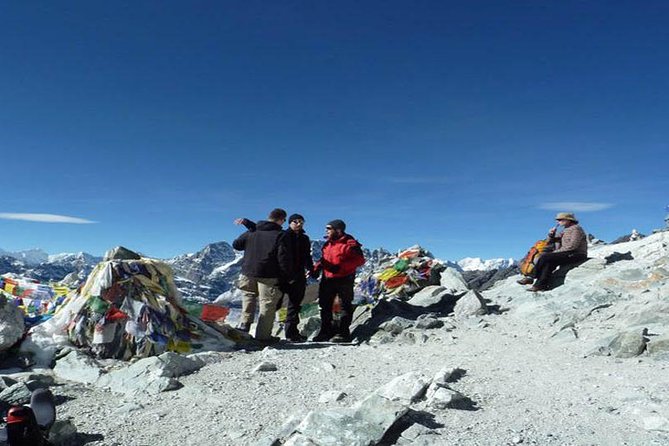
The route reaches Gorak Shep before continuing toward Everest Base Camp. From Gorak Shep, you follow the trail toward the base camp area, with views of high peaks around you. The schedule lists only a few minutes for the named stop at Everest Camp II, but the actual appeal is the walk itself and the sense of reaching the route’s main goal.
Base Camp is a famous destination, but it is not the summit of Everest and is not always a field of climbing tents. Its value is symbolic and geographic. You have walked into the staging area for expeditions on the world’s highest mountain, after days of crossing valleys, bridges, villages, and glacial terrain.
This is a demanding part of the trek. You may be tired by the time you arrive, and the high altitude can make a short walk feel substantial. Follow your guide’s pace, keep drinking as advised, and do not let the excitement of the destination push you into rushing.
Kala Patthar gives you the defining view
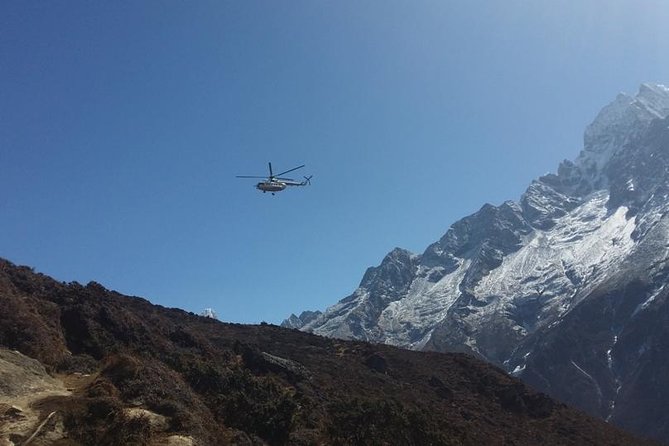
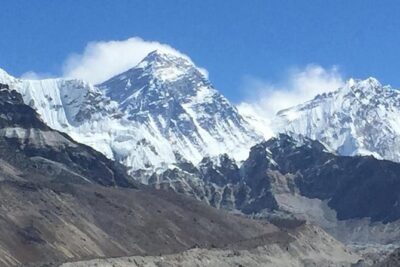
The next morning begins early with a climb to Kala Patthar. This is the visual high point of the trip. The schedule describes sunrise light breaking through the clouds and reflecting on the snow, with views toward Everest and the surrounding peaks.
For many people, Kala Patthar is more satisfying for mountain photography than Base Camp itself. From here, you can take in the high peaks from a broad viewpoint rather than looking at Everest from the trail near the glacier. The climb is short in distance but tough because of altitude and the early start.
The day also includes time around Gorak Shep before the descent. The schedule lists about 30 minutes for the Gorak Shep stop, but you should expect the day to be governed by walking conditions, weather, and your group’s pace. This is not a place for a tight personal timetable.
The return through Pheriche, Pangboche, and Namche
After Kala Patthar, the route descends through Pheriche. One section follows a slightly different path toward Orsho and Pangboche, where you can explore an old monastery. The schedule also refers to a local legend about the monastery containing scalp and bones associated with the yeti.
Treat that story as part of local tradition rather than a proven scientific claim. It adds character to the stop, but the monastery’s importance does not depend on the legend. The walk through Pangboche also gives you another chance to see how religious life fits into daily life in the Khumbu.
The return day through Pheriche is listed at about seven hours, so do not assume that going downhill makes the day easy. Descending can be hard on knees and feet, especially after the long push to Base Camp. Trekking poles may be useful, though they are not listed as part of the package.
From Namche, you continue back to Lukla. The listed schedule allows about three hours for this section, followed by free time in the Lukla valley and an overnight stay at a guesthouse. This final night near the airstrip is practical, since the next step is the flight back to Kathmandu.
What the package includes, and what it does not
The inclusions are broad for the price:
- Airport pickup and drop-off for domestic and international arrivals
- Kathmandu to Lukla and Lukla to Kathmandu flights
- A government-licensed mountain guide from Kathmandu
- Trekking accommodation for 11 nights
- Breakfast, lunch, and dinner during the scheduled trek
- Sleeping bag, down jacket, and duffel bag
- National park, local entrance, and municipal fees
- Three cups of hot tea during the trek
- Medical kit and planned emergency helicopter arrangements
The exclusions deserve equal attention. Your Kathmandu hotel is not included. Porter service is also separate, so ask about the cost and arrangement if you do not want to carry your own main bag.
You pay separately for insurance, drinks, showers, laundry, phone calls, battery charging, and bottled water. Tips for the guide and porter are not included either. A proper travel and rescue policy should cover high-altitude trekking and helicopter evacuation, and you should confirm that before departure.
The guide team and the feel of the trip
The strongest pattern in the feedback is the care provided by the guide team. Buddhi is repeatedly singled out for support, positivity, and attention to the group. Pawan is also named in connection with an excellent trip through the Everest region. That does not guarantee which guide you will receive, but it gives you useful names to ask about when you book.
The feedback also points to well-organized backup plans and attentive support during difficult sections. That matters in the Himalayas, where weather, flight schedules, and altitude can change the day. Still, no operator can remove every risk from a mountain trip, so ask how delays and route changes are handled before departure.
The experience is private, but that does not mean luxurious. You stay in mountain guesthouses, follow a demanding walking schedule, and share the practical limits of high-altitude travel. If you want comfort above all else, this is not the right product. If you want strong logistical support while still walking into the heart of the Everest region, it is a sensible fit.
Who should book this Everest trek
I would recommend this trek to you if you want a classic Everest Base Camp route, can commit to 14 days, and are ready to train for sustained walking. It suits people who value a guide, included logistics, and a private group more than independent travel.
It is also a good choice if you want both major route goals: Everest Base Camp and the Kala Patthar viewpoint. The two acclimatization days make the schedule more responsible than a rushed ascent.
I would pause before booking if you have limited hiking experience, dislike basic accommodation, or need a fixed schedule with no room for flight disruption. You should also ask about the assigned guide, group size, porter options, Kathmandu hotel arrangements, and the exact handling of weather delays.
Should you book it?
Book this trek if reaching Everest Base Camp is a serious personal goal and you want the main transport, meals, permits, gear, and guide support arranged in one package. The price is reasonable for what it covers, but it is not your final trip cost once insurance, tips, porter service, drinks, and possible delays are added.
The best reason to choose it is the balance between structure and contact with the region. You get help with the complicated parts, while the days still belong to your feet, the mountain villages, the monasteries, the glacier, and the changing view of Everest. Just arrive fit, insured, patient, and ready for the altitude.
FAQ
How long is the Everest Base Camp Trek?
The experience lasts approximately 14 days, beginning and ending in Kathmandu.
Are flights between Kathmandu and Lukla included?
Yes. Both the Kathmandu to Lukla and Lukla to Kathmandu flights are included.
Is airport pickup provided?
Yes. Airport pickup and drop-off are provided for domestic and international airports.
Are meals included?
Yes. The package includes breakfast, lunch, and dinner during the scheduled trek. The listed inclusions specify 12 breakfasts, 12 lunches, and 11 dinners, with additional meal counts also shown in the booking details.
Is accommodation in Kathmandu included?
No. Hotel accommodation in Kathmandu is not included. Trekking accommodation for 11 nights is included.
Is a porter included?
No. Porter service is not included, so you need to arrange and pay for it separately if required.
What happens if bad weather cancels the experience?
If poor weather causes the experience to be canceled, you will be offered another date or a full refund. The cancellation policy also allows a full refund when you cancel at least 24 hours before the local start time.
New treks around Kathmandu
- Kathmandu or Pokhara: 5-Day Annapurna Base Camp (ABC) Trek★ 4.5 · 2 reviews
- Pokhara: 2 Day Ghorepani & Poon Hill Private Trekking★ 4.9 · 8 reviews
- From Kathmandu: 6-Day Langtang Valley Guided Trek★ 5.0 · 2 reviews
- Pokhara: 5-Day Annapurna Base Camp (ABC) Trek★ 5.0 · 9 reviews
- Kathmandu: Langtang Valley 6-Day all inclusive Guided Trek★ 5.0 · 2 reviews
- Kathmandu: 6 Days Langtang Valley Trek with Kyanjin Ri★ 5.0 · 7 reviews
- Kathmandu: 9- Day Annapurna Circuit Trek★ 5.0 · 2 reviews
- Kathmandu: 6-Day Limitless Langtang Trek★ 5.0 · 21 reviews
Everest Base Camp Treks, side by side.
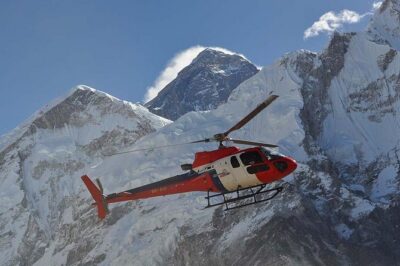
Everest Base Camp Trek with Helicopter Return from Gorakshep to Lukla
Read our review →
Trekking in Annapurna/Langtang/Everest/Upper Mustang regions
Read our review →Lists this trek appears in