
Review · NEPAL
Kathmandu/Pokhara: Annapurna Circuit Trek 10 days
Crossing Thorong La Pass at 5,416 meters is the heart of this 10-day Annapurna Circuit trek. You start beside the Marsyangdi River, pass through villages and forests, then enter a dry, high-altitude world with huge views of Annapurna, Dhaulagiri, and Manaslu. The route ends in Pokhara after a drive from Jomsom.
I like the mix of village life and changing scenery. You are not simply walking through one type of mountain country. I also like the private format, since guides such as Kim, Khim, Nir, and Milan have been praised for adjusting the day’s plan, watching trekkers closely, and keeping spirits up. The main drawback is the tight schedule: the pass day is long, the altitude is serious, and the advertised mentions of Tatopani, Ghorepani, and Poon Hill do not appear in the 10-day day-by-day route provided.
Key points to know before you book
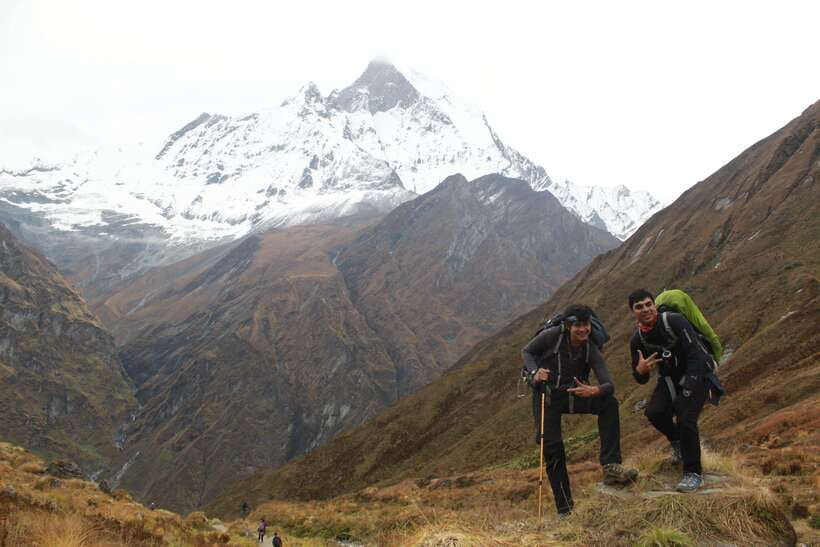
- Thorong La is a serious high-altitude crossing: At 5,416 meters, the pass demands steady pacing and proper acclimatization.
- Manang provides the key rest day: The itinerary includes one acclimatization day at 3,540 meters before the highest walking days.
- The route changes character constantly: Expect subtropical valleys, terraced fields, pine and alpine forest, dry mountain country, and the Kali Gandaki Gorge.
- Guiding is a major strength: Kim, Khim, Nir, and Milan are named guides associated with strong marks for care, support, humor, and practical decisions.
- Meals are not included: The $430 price covers permits, transport, guide, lodging, and several services, but you pay for food during the trek.
- The schedule needs careful checking: Tatopani, Ghorepani, and Poon Hill are described in the wider experience outline, but the supplied itinerary ends in Jomsom before driving to Pokhara.
Why the Annapurna Circuit still feels special
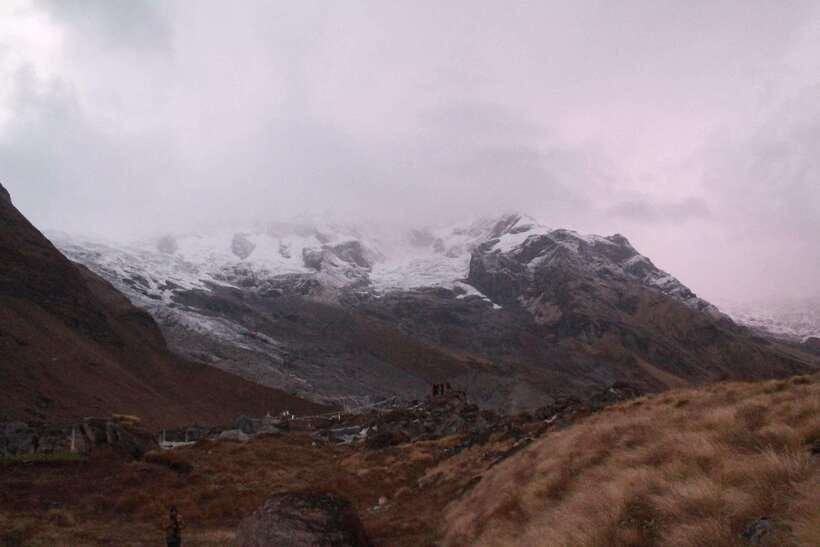
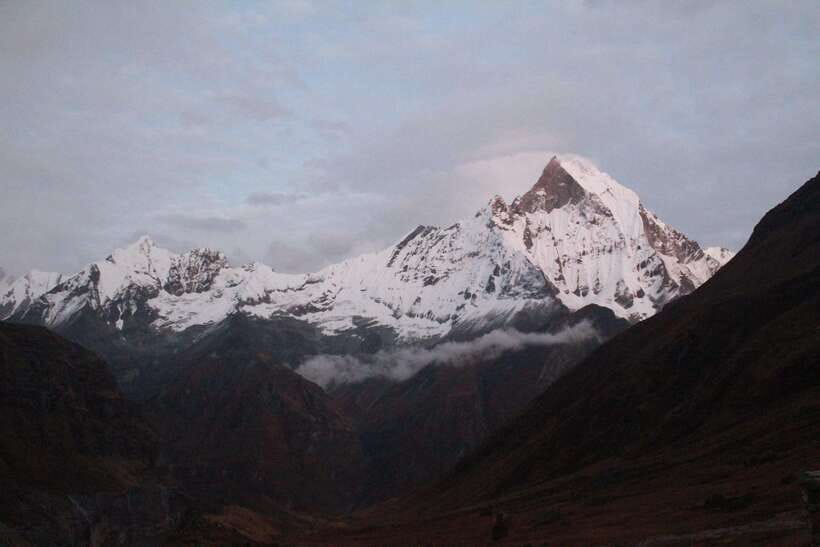
The Annapurna Circuit earns its reputation through variety. You begin in the lower Marsyangdi valley, where fields and villages feel warm and settled. Higher up, trees thin out, the air gets sharper, and the hills turn brown and rocky. By the time you reach Thorong Phedi, the walk feels properly alpine.
That change matters. Some mountain treks give you the same view for days. Here, the scenery keeps shifting, and the villages have distinct cultural character. The route also passes through the Annapurna Conservation Area, known for significant plant and animal variety, while bringing you into communities connected to trekking and mountain trade.
The cultural side is not a decorative extra. You stay in teahouses, pass through ethnic villages, and reach Muktinath, a sacred place with temples and monasteries. Your spending supports local lodging, transport, food service, and guiding, though the supplied price does not include meals.
More Annapurna treks around Nepal:
- Annapurna Circuit Trek with Tilicho Lake
★ 5.0 · 368 reviews - Annapurna base camp trek 5 Days
★ 5.0 · 252 reviews - 14-Day Private Annapurna Base Camp Trek
★ 5.0 · 180 reviews
Days 1 and 2: From Kathmandu to Dharapani and Chame
Day 1 begins with a long drive from Kathmandu to Dharapani. The stated travel time is six to eight hours, and you reach an altitude of 1,860 meters. This is a transport-heavy opening rather than a full walking day, so you should think of it as getting into the mountains, not easing gently into a trek.
Dharapani gives you your first proper mountain base. The next day, you walk to Chame, at 2,670 meters, in roughly four to five hours. The Marsyangdi River, terraced farmland, and village scenery help make this an attractive start, while the gradual rise begins the important work of altitude adjustment.
Chame is the headquarters of Manang District and a useful point in the route, but the key practical issue is the gain in height. You are already sleeping well above the lower valleys. Take the early days seriously, walk at a calm pace, and do not treat them as a race.
Days 3 and 4: Pisang and Manang bring the big mountain views
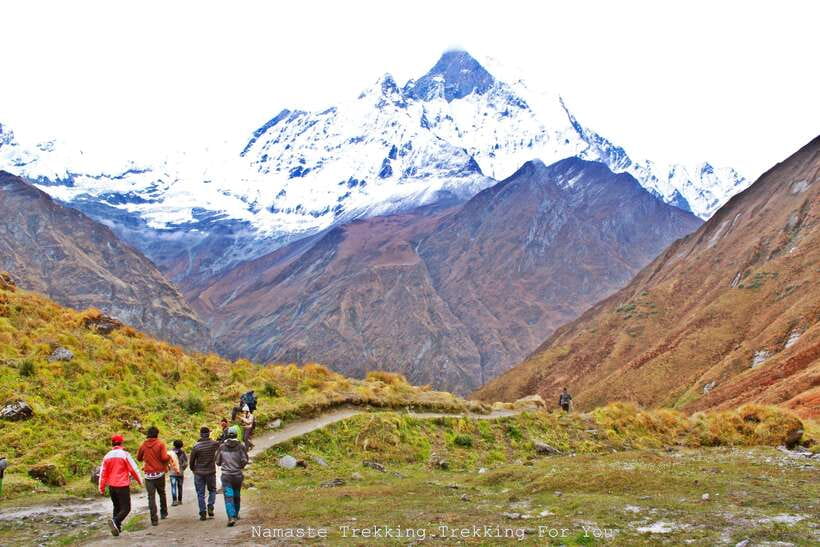
The walk from Chame to Pisang takes about five to six hours and reaches 3,300 meters. The route moves through alpine forest and increasingly open mountain country. This is where the circuit begins to feel less like a valley hike and more like a high Himalayan trek.
Day 4 carries you from Pisang to Manang, at 3,540 meters. Allow five to seven hours. Manang is one of the most important stops on the entire route because it gives you both a larger mountain settlement and time to prepare for the high pass.
The transition from Pisang to Manang is also one of the scenic highlights. The Marsyangdi corridor opens toward the Annapurna range, and the dry side of the mountains begins to appear. You should expect the air to feel thinner here, even if the walking distance seems manageable.
Day 5: Use Manang for acclimatization
The rest day in Manang is not wasted time. It is the main built-in pause before the route climbs above 4,000 meters. The itinerary lists exploration and acclimatization, allowing you to stay at 3,540 meters rather than gaining height too quickly.
Your guide’s role matters most here. The strongest feedback about Kim, Khim, Nir, and Milan centers on support, daily communication, and attention to comfort. A good private guide can discuss how you feel, help shape the day, and decide when caution matters more than speed.
Do not expect this day to feel like a holiday break. You are still at altitude, and the next three walking days are the hardest part of the trip. Rest, keep your plans modest, and use the day to prepare for cold, wind, and a very early effort ahead.
More treks around Nepal:
- Everest Base Camp Trek – 14 Days
★ 5.0 · 1,499 reviews - Everest Base Camp Trek
★ 5.0 · 842 reviews - Everest Base Camp Trekking
★ 5.0 · 485 reviews - Everest Base Camp Trekking – 13 Day
★ 5.0 · 365 reviews
Days 6 and 7: Yak Kharka and Thorong Phedi
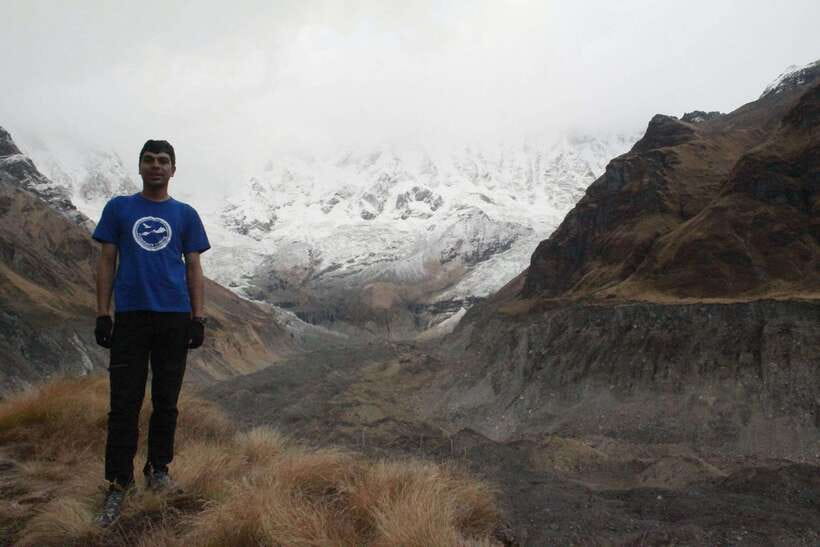
From Manang, you walk to Yak Kharka, at 4,000 meters, in four to five hours. This is a shortish walking day by time, but the altitude changes the effort. The route leaves much of the forest behind and enters open, rugged country with a strong sense of exposure.
The following day takes you to Thorong Phedi, at 4,450 meters, in three to four hours. The distance is not huge, yet you are now close to the highest point of the trek. This is where a private group can be useful. You can discuss your pace and condition directly with the guide instead of being locked into the needs of a large party.
The guide and first aid kit are included, but they do not remove the need for personal responsibility. Travel insurance covering high-altitude trekking is mandatory. Personal gear such as a sleeping bag, warm jacket, and trekking poles is not included, so check your equipment well before departure.
Day 8: Thorong La to Muktinath is the test
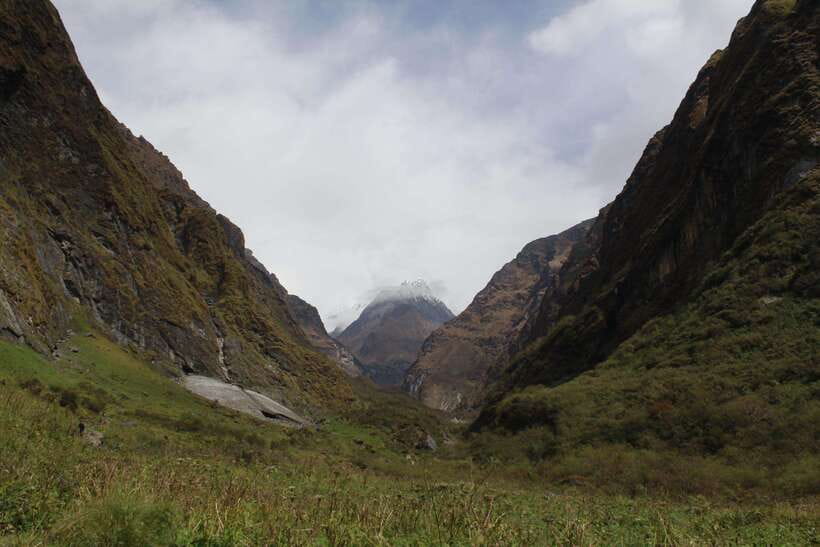
The crossing from Thorong Phedi over Thorong La to Muktinath takes seven to nine hours. You climb to 5,416 meters, then descend to Muktinath at 3,710 meters. This is the trek’s defining day, and you should judge the entire trip by your readiness for it.
The pass gives you wide views toward Annapurna, Dhaulagiri, and Manaslu. The reward is not only the view. It is the sharp change from the Marsyangdi side to the dry, Tibet-influenced country beyond the pass.
Muktinath adds spiritual weight to the day. You can visit ancient temples and monasteries after the crossing, although fatigue may limit how much energy you have for sightseeing. The descent is a relief for altitude, but a long day on tired legs can still be demanding.
This is not the right trip for someone seeking an easy scenic walk. Pregnant women are specifically listed as unsuitable for the activity, and the high pass makes medical advice and insurance important for anyone with health concerns.
Days 9 and 10: Jomsom, the Kali Gandaki, and the ride to Pokhara
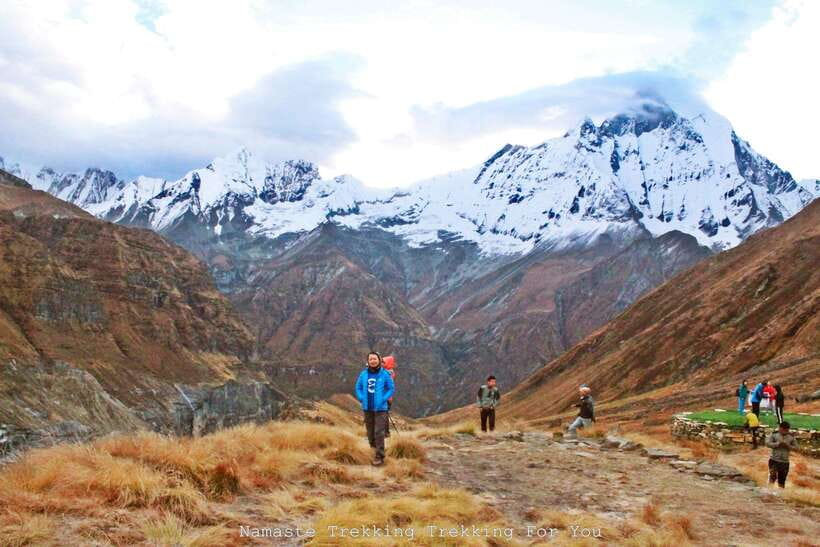
Day 9 takes you from Muktinath to Jomsom, at 2,720 meters, in five to six hours. The route continues through the Kali Gandaki Gorge, described as the world’s deepest gorge, with Annapurna and Dhaulagiri rising on either side. You also pass through Marpha, known for its apple orchards.
Marpha is one of the more appealing cultural stops on paper because it offers a village setting and a local agricultural identity rather than only mountain scenery. After several days above 3,000 meters, the lower altitude around Jomsom should also feel welcome.
Day 10 is a six to eight-hour drive from Jomsom to Pokhara. This closes the listed 10-day schedule, but it is worth checking the exact road and transport plan before booking. The experience description also refers to Tatopani hot springs, Ghorepani’s rhododendron forests, and sunrise at Poon Hill. Those places are not included in the day-by-day route supplied here, so you should ask the operator if they are optional, part of a different version, or simply described as broader Annapurna Circuit highlights.
That point is important. Poon Hill and Ghorepani would normally require additional route planning, and Tatopani is not on the listed path from Muktinath to Jomsom. Do not assume you will visit them unless the company confirms it in writing.
Teahouses, meals, and what the $430 covers
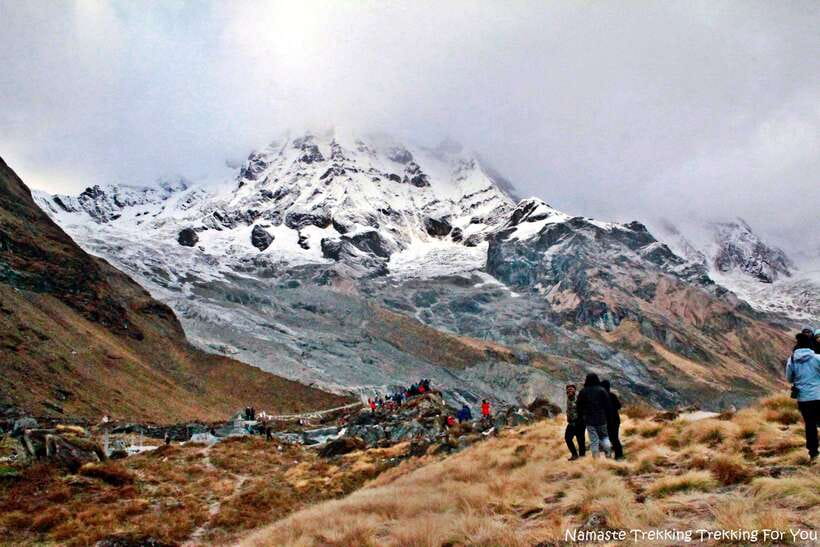
At $430 per person, this is a low headline price for a private 10-day trek with transport, an English-speaking guide, teahouse accommodation, permits, a first aid kit, maps, a farewell dinner, taxes, and service charges. The value is strongest if you already have suitable personal gear and understand that this is not an all-inclusive mountain holiday.
All meals during the trek are extra. You also pay separately for some comforts, including hot showers and charging at certain teahouses. These costs can add up, so keep room in your budget for food, drinks, and occasional facilities.
Teahouse lodging is part of the appeal. It places you in the practical rhythm of the route and supports local businesses. Comfort varies, and the information supplied does not promise a particular room standard. The named guides have been praised for choosing good accommodations and making sensible route decisions, but you should still expect simple mountain lodging rather than hotel service.
The guide can shape the whole experience
The most consistent praise centers on the guides. Kim, also written as Khim in one account, is described as supportive, funny, caring, and professional. Nir is associated with careful planning, comfortable lodging choices, and finding ways to avoid dusty or unpleasant road sections. Milan is praised for exceptional support and for helping a father and adult child reach 5,416 meters safely.
These details tell you what to look for in the guiding service: clear daily discussion, attention to how you feel, and a willingness to adjust within the limits of the route. Since this is a private group, you have a better chance of receiving that personal attention than you would on a large departure.
Guide assignments can change, so do not assume one particular person is guaranteed unless Peak to Peak Treks confirms it. Still, the repeated focus on Kim, Khim, Nir, and Milan is a useful sign that the human side of the trip has been a major strength.
Who should book this trek
I would recommend this trip to you if you want one compact Himalayan route with villages, major peaks, sacred sites, a high pass, and a private guide. It suits fit hikers who can handle several consecutive days of walking and who are prepared for a long pass day at high altitude.
It is less suitable if you want a relaxed holiday, dislike basic lodging, or need every cost included up front. The drive on Day 1 and the drive to Pokhara on Day 10 also mean this is not ten full days of walking.
Before paying, confirm four points: the exact guide assigned, the personal gear you need, the expected meal budget, and whether Tatopani, Ghorepani, and Poon Hill are actually part of your route. The free cancellation window is up to 24 hours before the activity, and you can reserve now and pay later, which helps if your Nepal plans are still shifting.
Should you book the Annapurna Circuit Trek?
Book it if Thorong La is your main goal and you value a private guide who can pay close attention to your pace and condition. The route offers a powerful mix of natural scenery and village life, while the $430 package covers many costly basics.
Skip it, or request a revised itinerary, if you specifically want Tatopani, Ghorepani, and Poon Hill. The listed schedule does not include them. For the right hiker, this is a demanding but rewarding circuit, with the pass as the prize and the changing villages and mountain country as the real reason to keep walking.
FAQ
How long is the Annapurna Circuit Trek?
The activity lasts 10 days. The listed route begins with a drive to Dharapani and ends with a drive from Jomsom to Pokhara.
What is the highest point of the trek?
The highest point is Thorong La Pass at 5,416 meters, or 17,769 feet.
Is there an acclimatization day?
Yes. Day 5 is an acclimatization and exploration day in Manang, at 3,540 meters.
What is included in the $430 price?
The price includes ACAP and TIMS permits, transport from Kathmandu or Pokhara to the trailhead, an English-speaking guide, teahouse accommodation, a first aid kit, trekking maps, a farewell dinner, government taxes, and service charges.
Are meals included?
No. All meals during the trek are excluded from the price.
Is travel insurance required?
Yes. Travel insurance covering high-altitude trekking is mandatory.
Is this a private trek?
Yes. The activity is arranged for a private group with a live English-speaking guide.
Do I need to bring my own trekking gear?
Yes. Personal gear is not included. Examples given are sleeping bags, jackets, and trekking poles.
Are Tatopani, Ghorepani, and Poon Hill included?
They are described among the wider route highlights, but they do not appear in the supplied 10-day itinerary. Confirm with Peak to Peak Treks before booking if visiting these places is important to you.
New treks around Nepal
- Pokhara: Poon Hill Trek★ 5.0 · 3 reviews
- Pokhara: 9-Day Annapurna Base Camp Trek with Poon Hill★ 5.0 · 6 reviews
- Pokhara: 7 Day Annapurna Base Camp Trek★ 4.9 · 38 reviews
- Pokhara: Majestic Mardi Base Camp Guided Trek with HotSpring★ 5.0 · 6 reviews
- Pokhara: 5-Day Trek to Annapurna Base Camp and Hot Springs★ 5.0 · 4 reviews
- Pokhara: Amazing 7-Day ABC Trek with Natural Hot Spring★ 5.0 · 5 reviews
- Pokhara: 5-Day Annapurna Base Camp Trek with Hot Spring★ 5.0 · 3 reviews
- Pokhara: 5-Day Ghorepani and Poon Hill Private Trek★ 5.0 · 4 reviews
Annapurna Base Camp Treks, side by side.
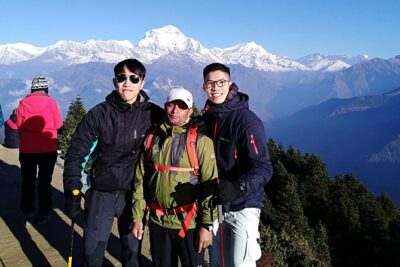
Trekking in Annapurna/Langtang/Everest/Upper Mustang regions
Read our review →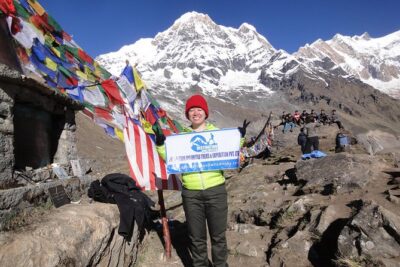
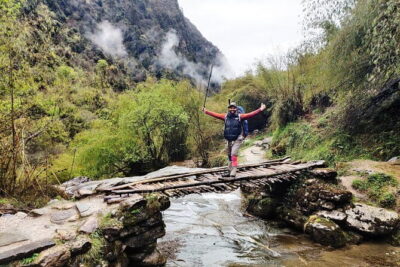
Kathmandu to Annapurna Base Camp (ABC) 5-Day Trek
Read our review →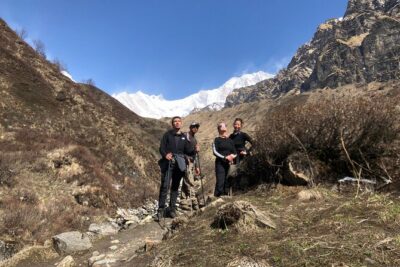
Lists this trek appears in