
Review · NEPAL
Pokhara: Amazing 7-Day ABC Trek with Natural Hot Spring
Annapurna Base Camp is the prize here, but the natural hot spring at Jhinu Dada gives this trek a welcome second act. Over seven days, you move from Pokhara’s lakeside streets through villages, bamboo and rhododendron forests, waterfalls, and high mountain country before returning by jeep.
I like the sensible route: you gain height in stages instead of racing straight upward, and the daily walks are generally manageable. I also like the strong guide support. Guides such as Niraj, Ghanshyam Silwal, Jeet, and Prakash have helped past groups adjust their pace, solve problems, and reach base camp safely.
The main consideration is that this is still a demanding mountain trek. Day four reaches 4,130 meters, some days last six or seven hours, and the accommodation is simple. The $200 price is attractive, but check which package you are booking, since meals and deluxe transport are included only with the full package.
Key points to know before you book
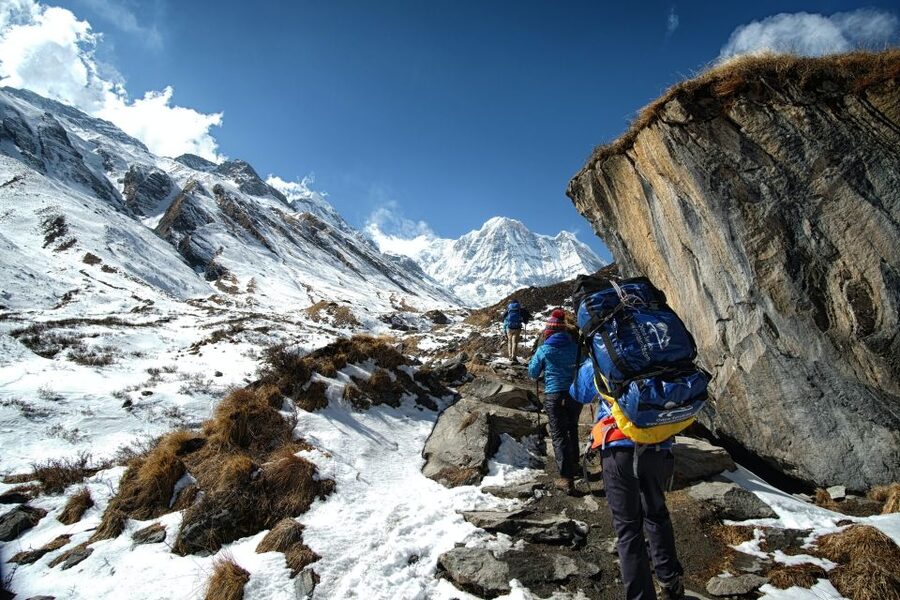
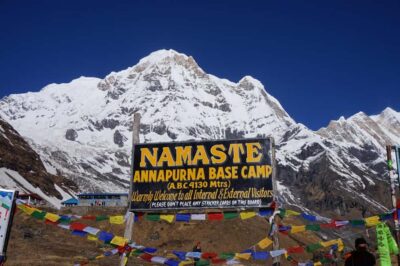
- Annapurna Base Camp at 4,130 meters: The route ends inside a dramatic mountain amphitheater surrounded by snow-covered peaks and glaciers.
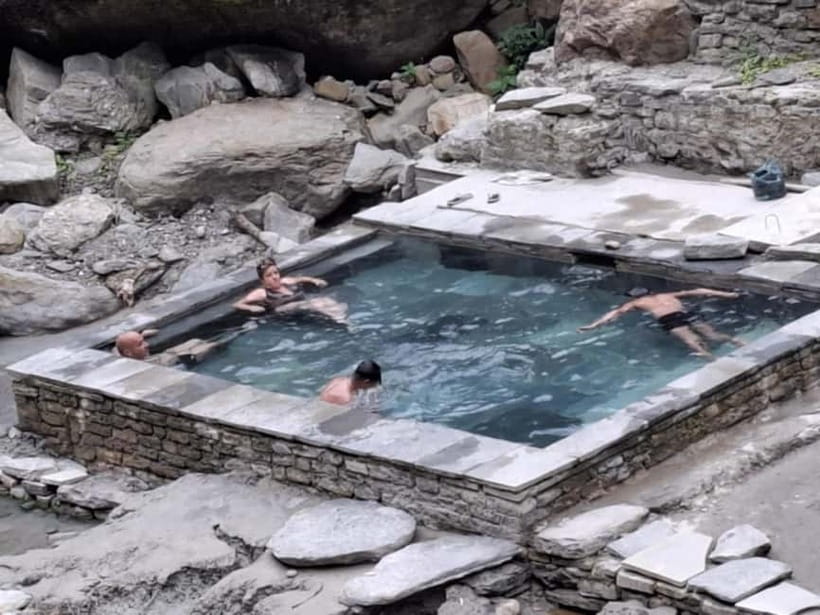
- A hot spring finish: Jhinu Dada gives you a chance to soak tired legs in natural hot water after the main descent.
- Private group format: Your guide can adjust the walking pace and offer direct support rather than following a large fixed group.
- A varied seven-day route: Expect Seti River views, paddy fields, suspension bridges, forests, waterfalls, villages, and high alpine scenery.
- Strong guide involvement: Past guides including Ghanshyam Silwal and Prakash have been praised for patience, safety, local knowledge, and practical help.
- Good value with conditions: Permits, guide expenses, accommodation, and meals are covered on the full package, while drinks, insurance, porters, and personal costs are extra.
What this seven-day ABC trek is really like
This is a compact Annapurna Base Camp itinerary starting and ending in Pokhara. You spend the first three days walking upward, reach base camp on day four, then return by a different rhythm: long descent, hot spring, and road transport back to town.
The route is not just a march to a famous sign. It gives you a gradual change in scenery and altitude. Near Pokhara, you see river valleys and cultivated fields. Higher up, the trail passes through thick forest and small mountain settlements. Above the tree line, the views open toward the Annapurna range and Machhapuchhre.
You will not have a luxury lodge experience. Accommodation is described as available during the trek, with meals included only when you choose the full package. That means simple rooms, basic facilities, and a closer connection to the practical side of Himalayan walking. Bring cash for drinks, hot water, showers, charging, and other small costs.
More Hot Spring Treks in Nepal
- Pokhara: 5 Day Annapurna Base Camp Trek & Natural Hot Spring
★ 4.9 · 44 reviews - From Pokhara: 5-Day Annapurna Basecamp Trek with Hot Springs
★ 4.9 · 26 reviews - Pokhara: 7-Day Annapurna Base Camp Trek & Natural Hot Spring
★ 5.0 · 11 reviews
Day one: Lakeside Pokhara to Chhomrong
Your guide collects you early from Lakeside Pokhara, Pokhara Airport, or another location in the Pokhara Valley. The first part is by road, with about four hours in a jeep before you begin the three-hour walk toward Chhomrong at roughly 2,200 meters.
The drive gives you a useful introduction to the region. You pass views of the Seti River, mountain slopes, and green paddy fields. The vehicle continues to Matqui, about half an hour beyond Ghandruk, and from there the trail takes over.
This first walking section is short compared with later days, but it is not flat. You gain height as you approach Chhomrong, so use it to settle into your boots and walking pace. The village setting also gives you an early look at local life, rather than placing you immediately in a remote high-altitude camp.
I would keep your first day simple. Carry water, sunscreen, and a warm layer in your day bag, even if Pokhara feels hot when you leave. Once the road journey and uphill walk are combined, the day feels fuller than the hour count suggests.
Day two: Chhomrong to Dovan through forest and bridges
The five to six-hour walk from Chhomrong to Dovan follows a more enclosed route through forest. You cross suspension bridges and walk beside the Modi River, with views toward Annapurna and Machhapuchhre appearing through the trees.
This is a good day for people who enjoy changing trail conditions. You are not simply walking a road or following one open ridge. The forest, bridges, river, and mountain views give the route a steady sense of movement.
Dovan sits at around 2,400 meters, only a modest increase from Chhomrong, but the walking time matters. The trail includes repeated ups and downs, so save some energy for the afternoon. Your guide can help keep the pace comfortable, a point that matters more in a private group than a fixed public departure.
The accommodation remains basic, and facilities may be limited compared with Pokhara. That is part of the trade-off for reaching the quieter upper sections of the route. Plan to pay separately for personal drinks, charging, showers, and bottled or boiled water.
Day three: Dovan to Deurali and the higher forests
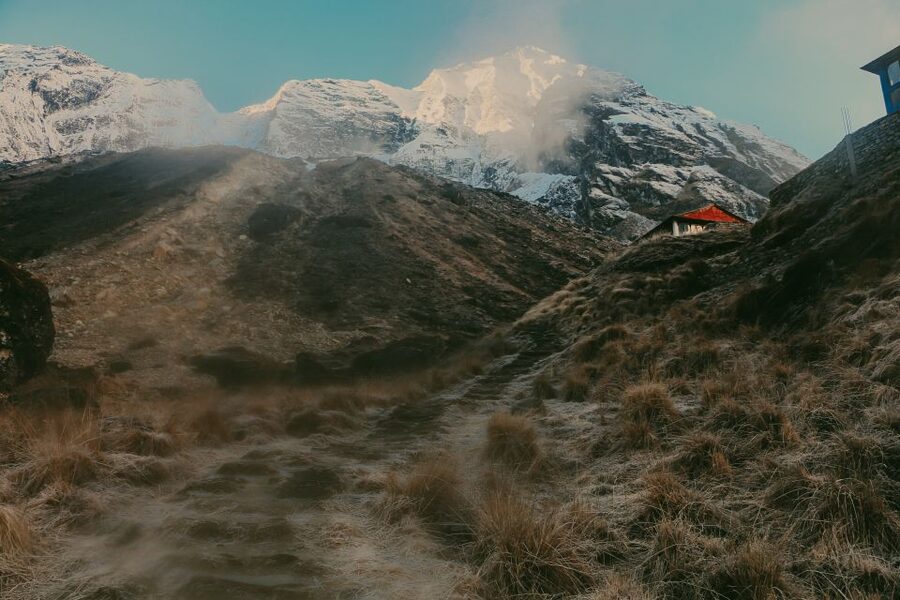
The six-hour walk from Dovan to Deurali reaches about 3,200 meters. You continue through bamboo and rhododendron forest, with waterfalls and mountain views adding interest to the climb.
This is the day when the trek begins to feel properly high mountain. The air may feel thinner, and your body has less room for a rushed pace. Walk steadily, eat even if your appetite is smaller, and tell your guide if you feel unwell.
Deurali’s setting is quiet and surrounded by large peaks. It is also an important overnight stop because it breaks the climb before base camp. Trying to treat this as an easy travel day would be a mistake. Six hours on an uphill trail, after two previous walking days, requires reasonable fitness.
A medical kit is included, but personal travel and rescue insurance are not. That distinction matters. The kit is useful for ordinary trail needs, but it is not a substitute for insurance that covers mountain emergencies.
Same mountains, a different route up:
- Everest Base Camp Trek – 14 Days
★ 5.0 · 1,499 reviews - Everest Base Camp Trek
★ 5.0 · 842 reviews - Everest Base Camp Trekking
★ 5.0 · 485 reviews - Annapurna Circuit Trek with Tilicho Lake
★ 5.0 · 368 reviews
Day four: The climb to Annapurna Base Camp
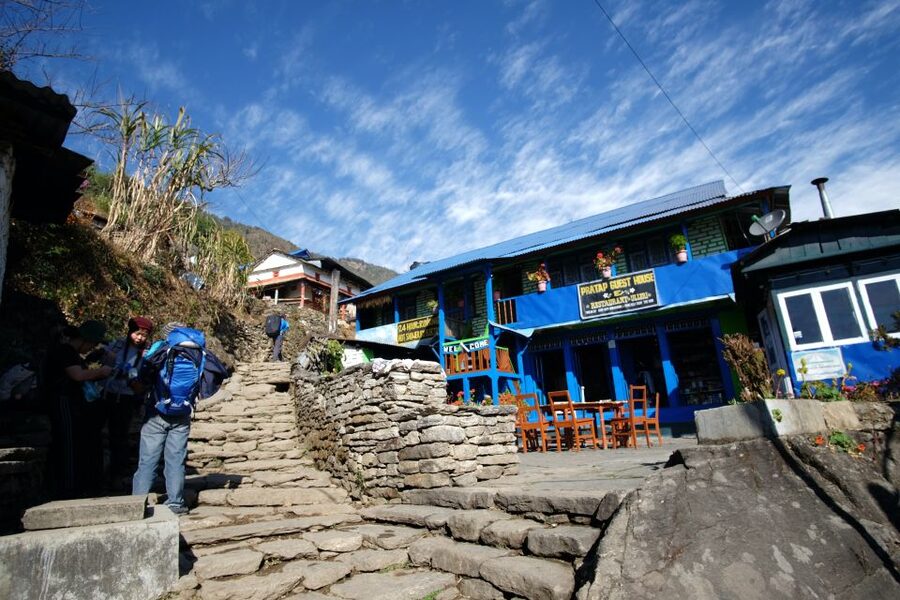
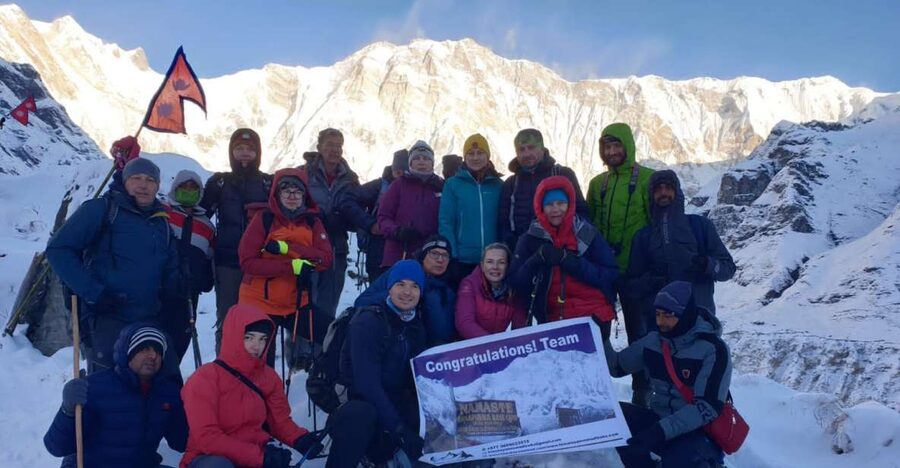
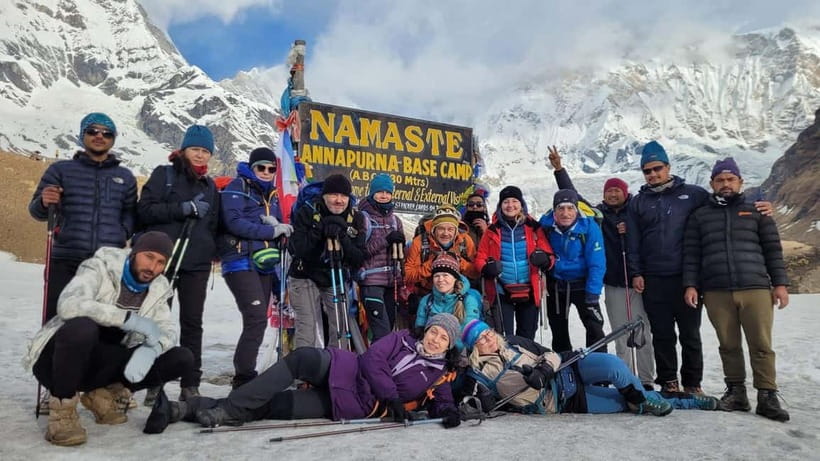
The central day takes you from Deurali to Annapurna Base Camp at 4,130 meters. The walk is listed at about six hours, and the reward is a huge mountain setting with snow-covered summits and glaciers surrounding the base camp.
The route feels different from the lower forest sections. Trees become less dominant, and the views become the main event. You are moving toward an enclosed mountain basin rather than a single viewpoint, so keep looking around as the trail rises.
This is also the most important day to respect altitude. The itinerary gives you a staged ascent, but no schedule can remove the physical challenge of reaching 4,130 meters. Keep your pace controlled, drink regularly, and speak up early if you feel ill. Your guide is there to monitor the group and adjust the pace, not just to point the way.
Base camp itself may not offer comfort in the usual sense. You are high in the mountains, with simple accommodation and a colder setting than Pokhara. The value comes from the setting and the achievement of reaching it. Give yourself time to look at the peaks, take photographs, and absorb the scale of the place before the next day’s descent.
Day five: A long descent from base camp to Sinuwa
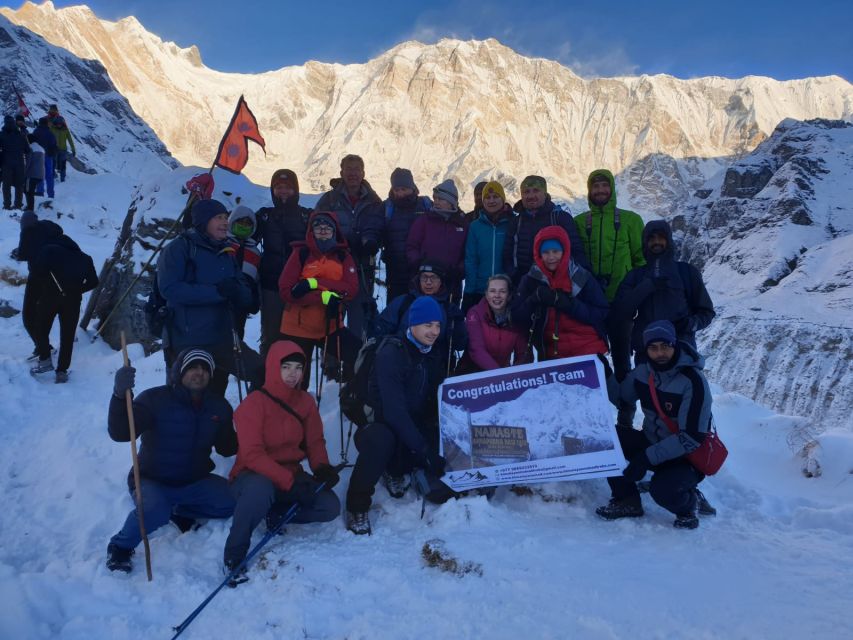
After the base camp morning, you retrace the route toward Sinuwa at about 2,200 meters. The walk is listed at seven hours, making it one of the longest days even though you are losing altitude.
Descending can be harder on knees and ankles than climbing. Trekking poles, good footwear, and careful steps will help. Do not assume the downhill direction makes this an easy day. You are also carrying the fatigue of the ascent and a night at high altitude.
The return route gives you a second chance to notice details missed on the way up. The same forests, bridges, and river sections look different when you are moving downhill and know that the main objective has been reached.
Sinuwa is a practical overnight stop. It breaks the descent into manageable sections and brings you back toward a lower, more comfortable altitude. If you are using a porter, arrange that before departure if possible. Porter service is available for an additional cost and can make a real difference on the long uphill and downhill sections.
Day six: Sinuwa to Jhinu Dada’s hot spring
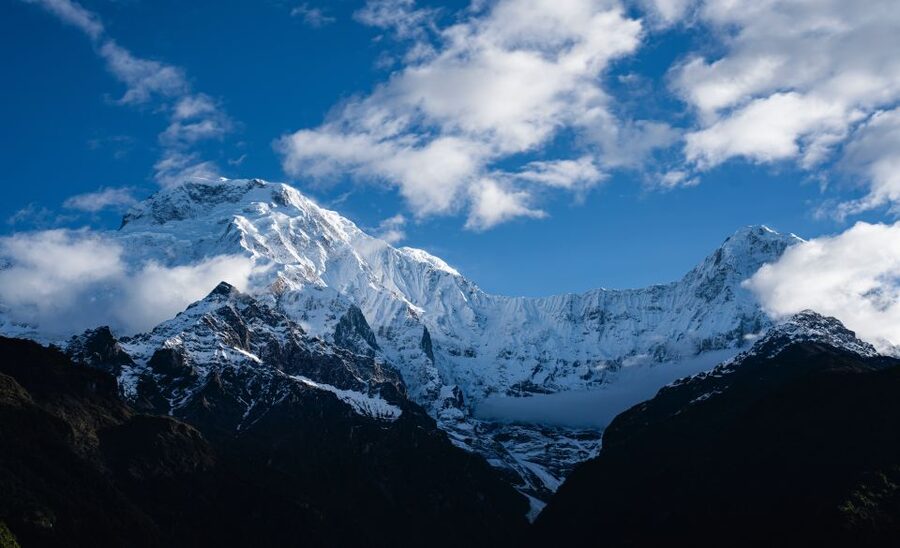
The five-hour descent from Sinuwa to Jhinu Dada at about 1,600 meters is one of the smartest features of the route. After several days of walking, you get both a lower overnight stop and time at a natural hot spring.
The hot water is not a small side note. It changes the feel of the trip. You have spent days climbing, descending, and sleeping in simple mountain accommodation, so a soak offers a genuine pause before the final return to Pokhara.
Do not treat the hot spring as a replacement for recovery basics. You still need to eat, drink water, dry your clothes, and rest. Carry a towel, which is specifically recommended, along with a change of clothing suitable for the soak.
Jhinu Dada also gives the trek a more satisfying ending than simply walking back to a road. You can finish the hard mountain section, relax your muscles, and enjoy the setting before the final morning transfer.
Day seven: Jhinu Dada to Pokhara
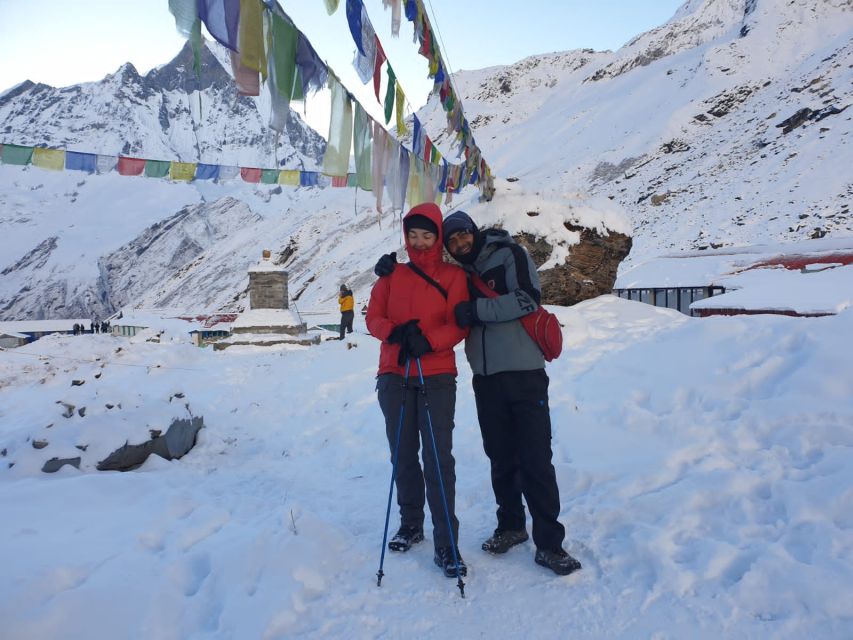
After breakfast, you walk for about two hours before taking a jeep back to Lakeside Pokhara. This is a short final trail section, followed by a road journey that lets you shift from mountain time back to town life.
The return is a useful moment to think about the full route. In one week, you have gone from an elevation of about 800 meters in Pokhara to 4,130 meters at base camp, then descended through forests and villages to the hot spring.
The activity includes pickup and drop-off, but extra nights in Pokhara are not covered if you arrive early, depart late, or return sooner for a reason outside the scheduled plan. If you have a flight or another fixed booking, leave some flexibility rather than scheduling it too tightly against the trek.
Guides, pace, and the private group advantage
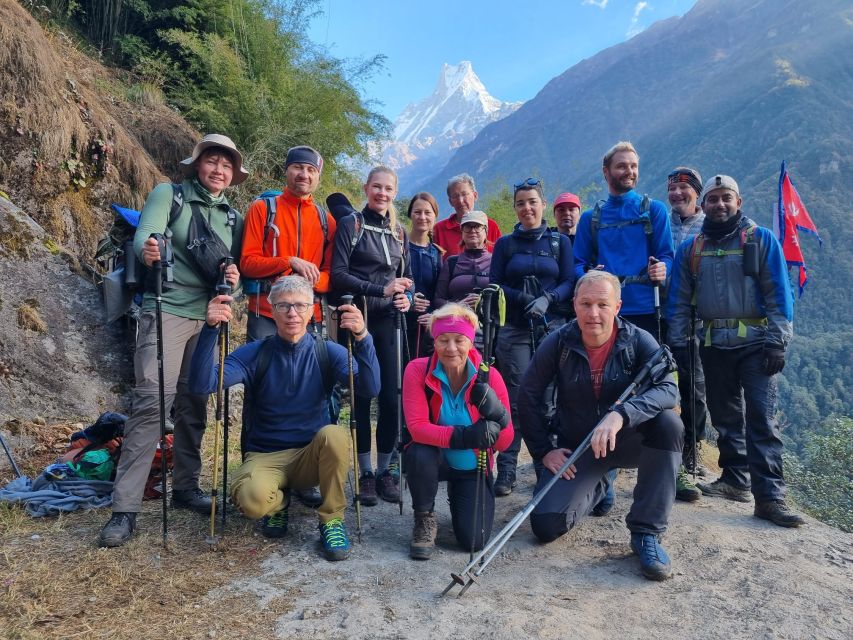
Guide quality matters greatly on this route. The named guides associated with past departures include Niraj, Ghanshyam Silwal, Jeet, and Prakash. Their reported strengths include careful pacing, safety, patience, encouragement, and help with practical problems.
Ghanshyam Silwal is noted for adjusting the day’s pace to suit the group and keeping morale high with conversation, games, and dancing during the trek. Prakash is described as helping with food and accommodation, explaining Nepal’s geography and culture, and giving steady support at difficult moments. Jeet is presented as an experienced guide familiar with the area.
You should still ask who your assigned guide will be when you book. The activity offers English, Hindi, and Nepali, so confirm that the language you need is available for your departure.
A private group is especially useful here because the walking pace does not need to suit strangers. If one person needs more time on the climb to Deurali or base camp, the guide can respond directly. That flexibility is one of the strongest reasons to choose this format.
What the $200 price covers, and what it does not
At $200 per person, this is a strong price if you select the full package and make use of the included services. The full package covers trekking permits, required paperwork, the Trekkers’ Information Management System fee, accommodation during the trek, all trek meals, guide costs, guide insurance, and deluxe transport according to the group size and itinerary.
That list matters because permits, transport, guide wages, meals, and accommodation can quickly add up on a Himalayan trek. The guide’s meals, lodging, equipment, insurance, and transport are also covered, so you are not expected to pay those costs separately.
The package needs careful reading. Full-package travelers receive breakfast, lunch, and dinner during the trek, while the non-full-package option uses shared bus transport. Drinks, bottled or boiled water, showers, phone calls, laundry, bar bills, battery charging, and personal purchases are extra.
Porters are not included, but you can purchase the service. Travel and rescue insurance is also your responsibility. Lunch and evening meals in Pokhara are excluded, as are international flights, the Nepal visa fee, sightseeing entrance fees, and extra Pokhara nights outside the planned schedule.
Who should choose this trek
You should consider this trek if you want a direct route to Annapurna Base Camp without arranging permits, transport, accommodation, meals, and a guide on your own. It suits people who enjoy several hours of walking each day and are comfortable with simple mountain lodging.
It is also a good match if you want more than a high-altitude viewpoint. The route includes villages, river crossings, forest, waterfalls, mountain scenery, and a hot spring. That variety gives you a better sense of the Annapurna region than a quick in-and-out transfer.
You should think twice if you dislike long walking days, basic accommodation, or altitude. The itinerary includes six and seven-hour days, with the highest overnight stop at 4,130 meters. A private group helps with pacing, but it cannot remove the physical demands.
Bring your passport or ID, hiking shoes, long pants, a jacket, sunscreen, sunglasses, a camera, cash, a sleeping bag, and trekking clothing. A towel is particularly useful for Jhinu Dada. Personal insurance should be arranged before you leave.
Should you book this ABC trek?
I would book this trek if your priority is reaching Annapurna Base Camp on a clear seven-day plan while keeping the organization simple. The route has a good shape: gradual ascent, a major base camp day, a long descent, and a hot spring before returning to Pokhara.
The strongest value comes from the included guide expenses, permits, accommodation, and full-package meals. Before paying, confirm that you are receiving the full package and ask about the assigned guide, porter arrangements, and transport type.
Choose it if you want mountain scenery with local villages and forests along the way, not just a quick photo at base camp. Skip it if you need hotel comfort, a very short walking schedule, or complete certainty that altitude will not affect you.
FAQ
How long is the Annapurna Base Camp trek?
The trek lasts seven days, starting and ending in Lakeside Pokhara.
What is the highest point on the route?
Annapurna Base Camp is the highest point, at approximately 4,130 meters.
Is transportation from Pokhara included?
Pickup and drop-off are included from Lakeside, Pokhara Airport, and the Pokhara Valley. Full-package bookings include deluxe transportation according to the itinerary and group size. Non-full-package bookings use shared bus transport.
Are meals included during the trek?
Breakfast, lunch, and dinner during the trek are included with the full package. Lunch and evening meals in Pokhara are not included.
Is a porter included?
A porter is not included in the listed package, but porter service is available to purchase separately.
What languages can the guide speak?
The available guide languages are English, Hindi, and Nepali.
More week-long treks around Nepal
- Pokhara: 7 Day Annapurna Base Camp Trek
★ 4.9 · 38 reviews - Pokhara: 7-Day Annapurna Base Camp Trek & Hot Spring
★ 4.0 · 3 reviews - Kathmandu: 7 Day Langtang Valley Trek
★ 4.2 · 3 reviews - From Pokhara: 7 Days Budget backpackers group ABC Trek
★ 5.0 · 2 reviews
New treks around Nepal
- Pokhara: Poon Hill Trek★ 5.0 · 3 reviews
- Pokhara: 9-Day Annapurna Base Camp Trek with Poon Hill★ 5.0 · 6 reviews
- Pokhara: 7 Day Annapurna Base Camp Trek★ 4.9 · 38 reviews
- Pokhara: 5-Day Trek to Annapurna Base Camp and Hot Springs★ 5.0 · 4 reviews
- Pokhara: Majestic Mardi Base Camp Guided Trek with HotSpring★ 5.0 · 6 reviews
- Pokhara: 7-Day Annapurna Base Camp Trek & Hot Spring★ 4.0 · 3 reviews
- Pokhara: 5-Day Annapurna Base Camp Trek with Hot Spring★ 5.0 · 3 reviews
- Pokhara: 5-Day Ghorepani and Poon Hill Private Trek★ 5.0 · 4 reviews
Hot Spring Treks, side by side.
Private Tour Mount Batur Sunrise Trekking and Natural Hot Spring
Read our review →
Mount Batur Sunrise Trek & Natural Hot Spring Experience
Read our review →
3D/2N Rinjani trekking summit,lake and hot springs.
Read our review →
Mount Batur Sunrise Trekking & Natural Hot Spring – All Inclusive
Read our review →
Pokhara: 5 Day Annapurna Base Camp Trek & Natural Hot Spring
Read our review →
All inclusive Mount Batur Trekking with Hot Spring tour
Read our review →Lists this trek appears in