
Review · NEPAL
From Pokhara: 7 Days Budget backpackers group ABC Trek
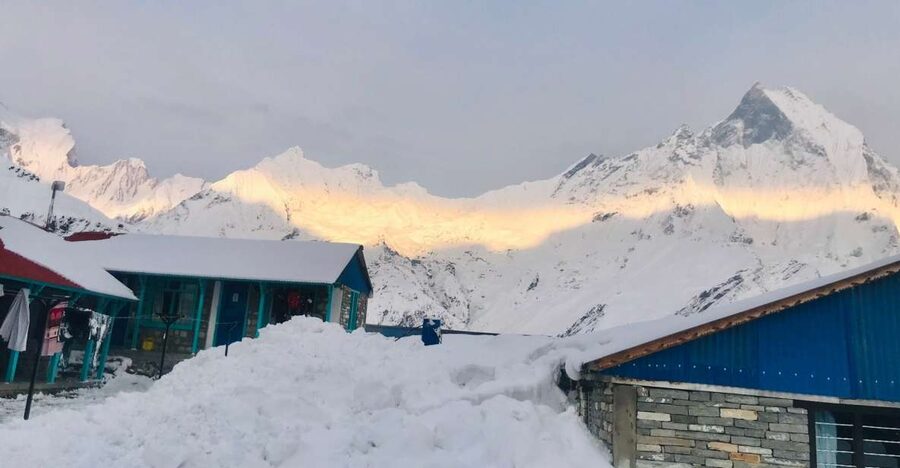
Annapurna Base Camp gives you a rare Himalayan payoff in only seven days: terraced hills and Gurung villages at the start, then rhododendron forest, rocky high country, and a great bowl of snowy peaks at 4,130 meters. I like the steady change in scenery and the chance to stay in Ghandruk, Chhomrong, and smaller mountain settlements rather than simply rushing to the base camp.
I also like that the $213 price covers the guide, permits, shared transport, guesthouse beds, and hotel pickup in Pokhara’s Lakeside area. The main consideration is cost control: food, drinks, insurance, and emergency rescue are not included, and the long walking days can feel demanding, especially on the climb from Deurali to ABC.
Key things to know before you book
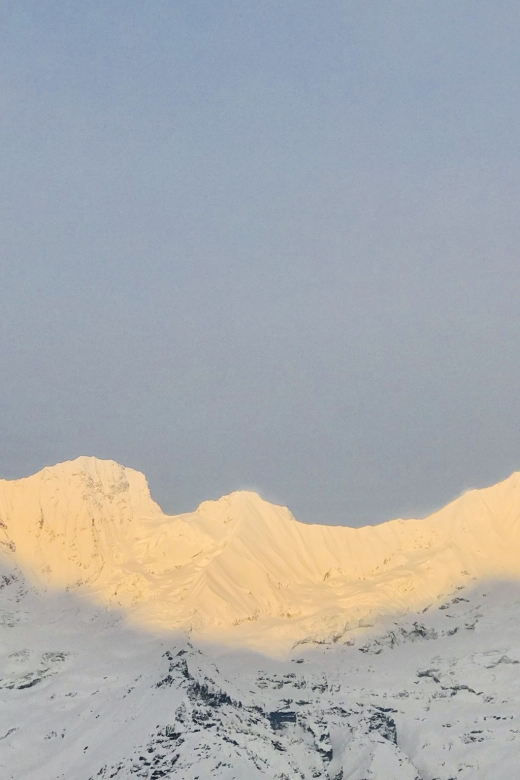
- ABC reaches 4,130 meters: The high point is serious mountain country, even though the route is suitable for beginners with reasonable fitness.
- The scenery changes every day: Expect terraced fields, Gurung villages, bamboo and rhododendron forest, river valleys, moraines, and snowy summits.
- Ghandruk adds cultural interest: Traditional stone houses, the Gurung Museum, and views of Annapurna South and Machhapuchhre make the first night memorable.
- Jhinu offers a hot spring stop: Day six includes time for a warm soak after several days on the trail.
- Meals are paid separately: Budget for food and drinks at the lodges, along with travel insurance and any rescue costs.
- This is a shared, budget-style trek: You travel by shared bus and sleep in guesthouses with shared beds, keeping the price low but the comfort basic.
What the $213 price really covers
At $213 per person, this is a strong value if you want the main practical pieces arranged without paying for a private luxury trek. You receive pickup and drop-off within the Lakeside area of Pokhara, transport between Pokhara and Nayapul by shared bus, an English-speaking guide, trekking permits, official documents, guesthouse accommodation, and a basic emergency first aid kit.
That list matters. Permits and route paperwork can be a nuisance to arrange on your own, and having a guide is particularly useful when trail conditions or daily pacing change. The guide speaks English, Nepali, and Hindi, and the guide style is described as friendly, supportive, and fun, a useful combination on a week when tired legs can affect everyone’s mood.
The low price does not mean the trek is all-inclusive. You buy your own meals, snacks, tea, bottled drinks, and other refreshments. Emergency rescue is also your responsibility through travel insurance, so do not treat the low booking price as your full trip budget.
Guesthouse accommodation means simple mountain lodging rather than private hotel rooms. You should be comfortable sharing a bed arrangement and keeping your packing compact. The reward is a lower overall cost and a more direct connection with the small settlements along the route.
More week-long treks around Nepal
- Pokhara: 7 Day Annapurna Base Camp Trek
★ 4.9 · 38 reviews - Pokhara: 7-Day Annapurna Base Camp Trek & Natural Hot Spring
★ 5.0 · 11 reviews - Pokhara: Amazing 7-Day ABC Trek with Natural Hot Spring
★ 5.0 · 5 reviews
Day one: Pokhara to Nayapul and Ghandruk
The trek begins with a drive from Pokhara to Nayapul, a small town near the Modi River. The stated driving time is about one and a half hours, though the wider description allows up to two hours, so keep the morning flexible.
From Nayapul, you walk through green hills, terraced fields, villages, and forest. Rhododendron, oak, and bamboo shade parts of the route, with birdsong and occasional wildlife adding interest. This is a good opening day because you start among farms and homes before the mountain views become more dramatic.
After roughly six hours of walking and 12 to 14 kilometers on foot, you reach Ghandruk at about 2,020 meters. The village is known for stone houses, Gurung culture, and broad views toward Annapurna South, Hiunchuli, Annapurna III, and Machhapuchhre.
The Gurung Museum gives the stop a little more context, while the village itself offers one of the best chances to see daily mountain life up close. Suspension bridges add a bit of fun to the route, though the day is not effortless. Six hours on foot after a drive is a full introduction, even with the easy rating.
Day two: Ghandruk, Chhomrong, and Sinuwa
Day two covers about 12 kilometers in six to seven hours. You leave Ghandruk through forest and terraced country, heading toward Chhomrong at 2,340 meters.
Chhomrong sits on a ridge, so the village feels different from Ghandruk. The views open out, and the route begins to feel more like a high mountain trek. After a rest, you descend and then climb toward Sinuwa, a pattern that can be harder on your legs than a steady uphill walk.
The trail crosses the Chhomrong Khola by suspension bridge and then enters bamboo forest. You may see langurs or macaques among the trees, though wildlife is never guaranteed. The combination of forest, waterfalls, green valleys, and snow-capped peaks makes this one of the prettiest walking days.
Sinuwa is a small forest settlement at the end of the day. The rating is easy to moderate, but the repeated descent and ascent deserves respect. Keep your pace steady, drink regularly, and do not spend your energy racing the group early in the day.
Day three: Bamboo to Deurali at 3,200 meters
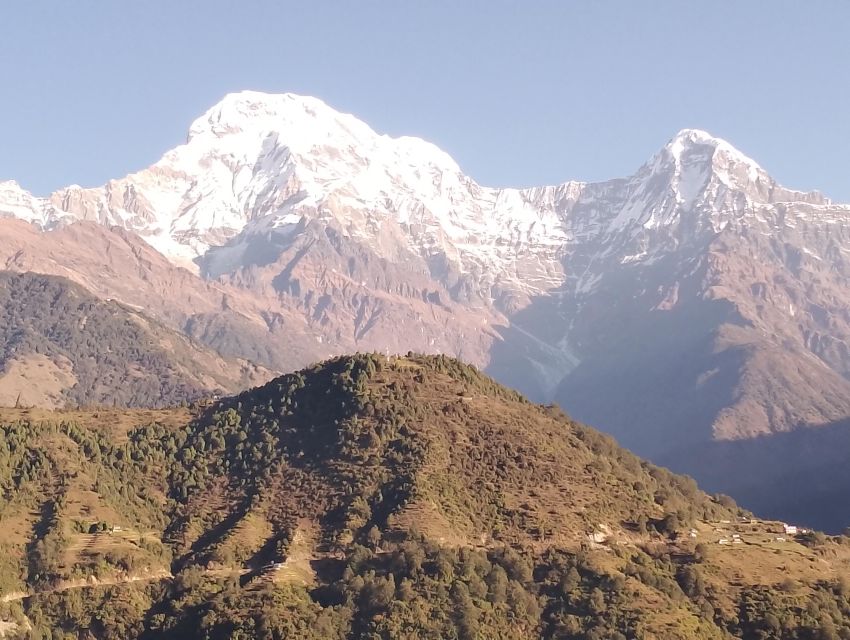
The route from Sinuwa passes Bamboo, Dovan, and Himalaya before reaching Deurali. Walking takes six to seven hours over about 10 to 12 kilometers, with the difficulty rising to moderate.
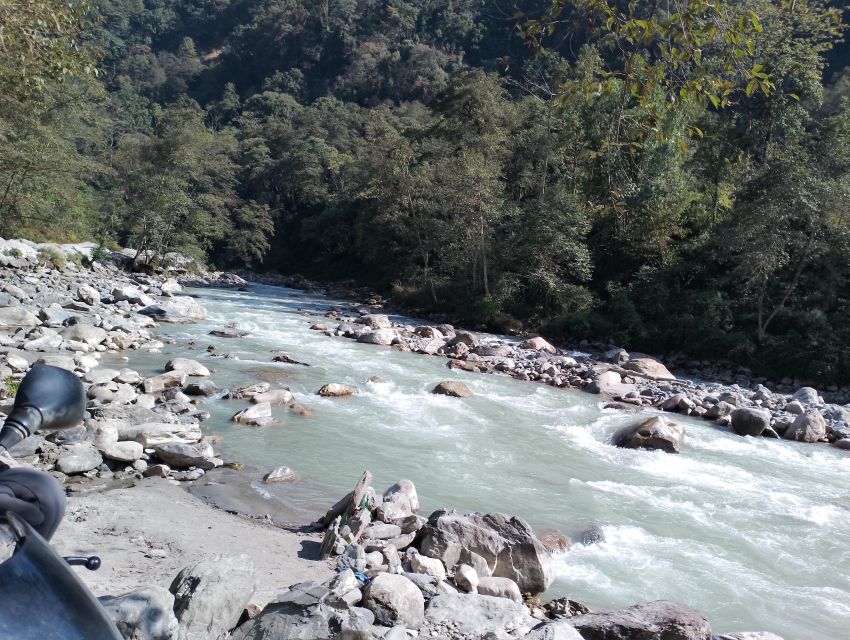
Bamboo is a natural break point in the forest. From there, the trail follows the Modi Khola, with the river providing a constant sound as you gain height. Dovan is surrounded by rhododendron and oak, while the terrain becomes rougher beyond it.
By Himalaya and Deurali, trees begin to thin. The open views toward Annapurna South and Hiunchuli signal that you are leaving the lower forest zone. Deurali, at 3,200 meters, is an important night because your body now has less oxygen to work with.
This is where the trek changes from a comfortable village walk to a high-altitude route. Keep the evening quiet, eat enough, and tell your guide if you feel unwell. The lodges are described as comfortable, but do not expect city-style facilities at this height.
More treks around Nepal:
- Everest Base Camp Trek – 14 Days
★ 5.0 · 1,499 reviews - Everest Base Camp Trek
★ 5.0 · 842 reviews - Everest Base Camp Trekking
★ 5.0 · 485 reviews - Annapurna Circuit Trek with Tilicho Lake
★ 5.0 · 368 reviews
Day four: Deurali to Machhapuchhre Base Camp and ABC
This is the central day of the trek. From Deurali, you climb toward Machhapuchhre Base Camp, then continue to Annapurna Base Camp at 4,130 meters.
The five to six hour walk covers about 10 kilometers and is rated moderate, but the altitude makes it harder than the distance suggests. The forest gives way to rocky ground, moraine, and open mountain terrain. The air becomes thinner, and you may notice the difference with every uphill step.
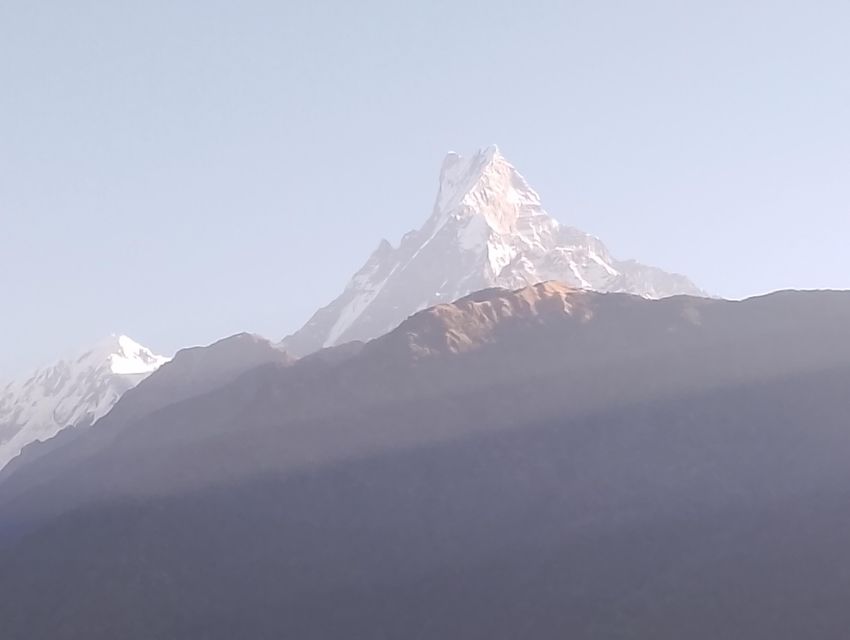
At Machhapuchhre Base Camp, the route opens into a great mountain bowl. Machhapuchhre, also called Fishtail Mountain, reaches 6,997 meters and dominates the view. From there, the trail follows glacial moraine toward ABC.
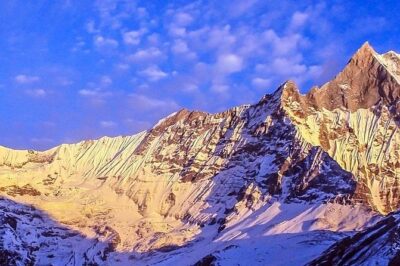
Annapurna Base Camp rewards the effort with a 360-degree view. Annapurna I rises to 8,091 meters, with Annapurna South, Hiunchuli, and neighboring peaks filling the horizon. The named peaks and formations include Glacier Dom, Gangapurna, and Gandharva Chuli.
You sleep at the base camp area, surrounded by the mountains. The overnight altitude is the day’s main challenge, so do not treat the arrival as a finish line. Take photographs, enjoy the view, and follow your guide’s advice about rest and hydration.
Day five: Sunrise at ABC and the long return to Bamboo
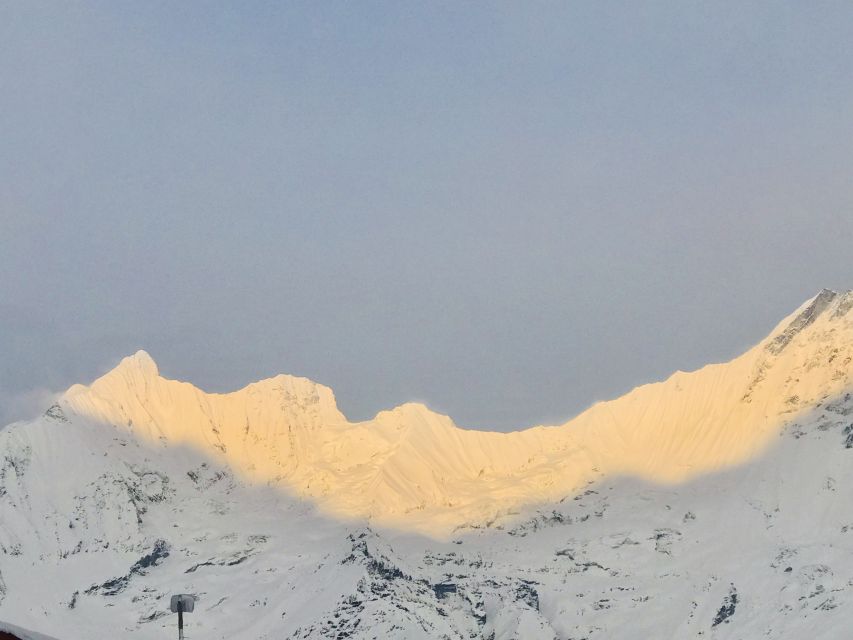
An early start at ABC gives you a chance to see sunrise over the peaks before beginning the descent. The route passes back through Machhapuchhre Base Camp, Deurali, Himalaya, Dovan, and Bamboo.
The walking time is six to seven hours, and the day is rated moderate to difficult. Descending from 4,130 meters helps, but the distance and uneven ground still test your knees and feet. The route passes waterfalls, streams, rocky sections, narrow gorges, and glacial riverbeds.
The mountain views remain strong on the way down. You may see Annapurna I, Barahi Shikhar, Tent Peak, Annapurna South, Hiunchuli, and Gandharva Chuli. The change from open high country back into bamboo and rhododendron forest feels dramatic.
Bamboo is at about 2,340 meters, where the air is warmer and breathing is easier. A hearty meal and an early night make sense here. This is one of the days when a supportive guide matters, since the group may spread out as tiredness builds.
Day six: Bamboo, Sinuwa, Chhomrong, Jhinu, and Kyumi
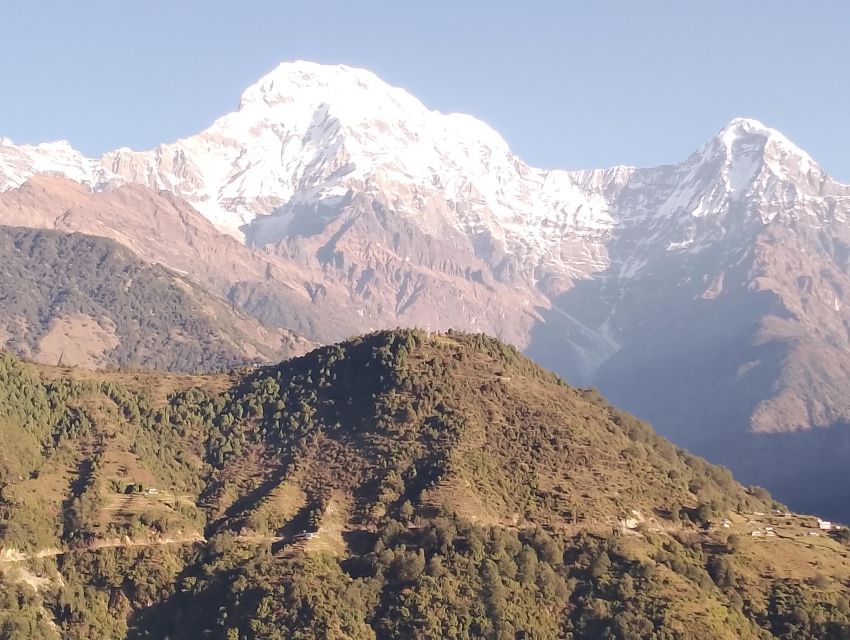
Day six combines a forest walk, a village stop, a hot spring, and more descent. The stated walking time is four to five hours, with a distance of about 14 to 15 kilometers and an altitude of 1,690 meters at Kyumi.
You first retrace the trail through bamboo and rhododendron forest to Sinuwa, then continue toward Chhomrong. From Chhomrong, the route descends to Jhinu. This is a welcome change after the high camp and long return day.
Jhinu is known for its natural hot springs. Soaking there can ease tired muscles, but remember that the visit adds time to the day. If you prefer a shorter final section, you can stop at Jhinu for the night instead of continuing to Kyumi.
Beyond Jhinu, the trail passes terraced fields, forests, and traditional villages. This section gives you another look at rural life in the Annapurna area, away from the high mountain drama. Kyumi provides the overnight stop, with the lower altitude bringing warmer air and easier breathing.
Day seven: Kyumi to Siwai, Nayapul, and Pokhara
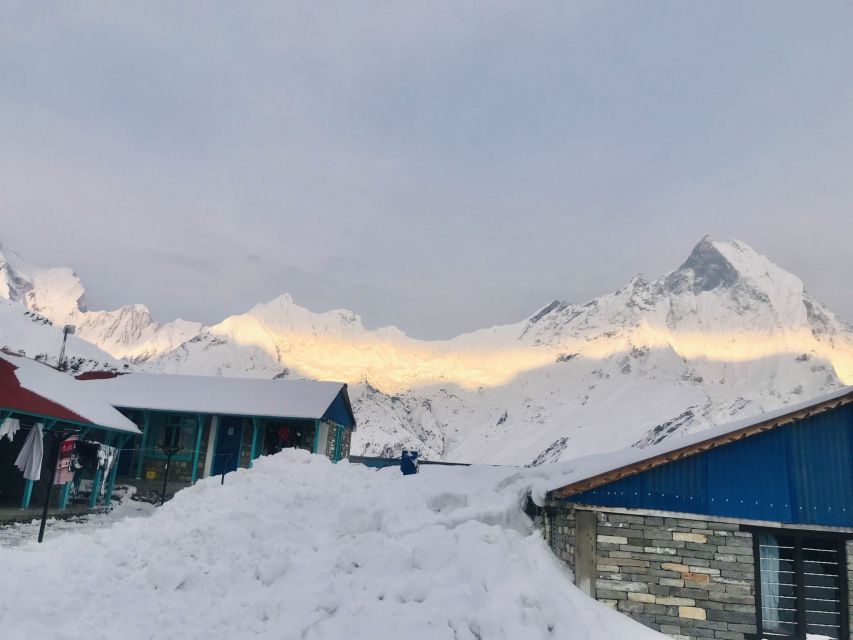
The final day begins with a descent through fields, forests, and villages. The walk takes three to four hours and covers roughly 12 to 15 kilometers before reaching Nayapul.
At Siwai and along the approach to Nayapul, you see farm work and village life more clearly. The trail gradually leaves the forested hills behind, and you may pass people heading in the opposite direction toward the mountains.
From Nayapul, the shared transport returns you to Pokhara. The stated driving time is about three hours, so expect this to be a long travel day even though the walking is shorter. The tour ends with an overnight stay at a Pokhara hotel, giving you a chance to rest or arrange another activity.
The provider also offers extra activities such as paragliding, rafting, kayaking, and bungee experiences, though these are not part of the $213 trek.
Fitness, altitude, and the best season
The route is described as suitable for novice and experienced trekkers, but beginner-friendly does not mean effortless. You need to manage six to seven hours of walking on several days, uneven ground, repeated climbs and descents, and a high point above 4,000 meters.
The biggest physical test is day four, when the air thins between Deurali, Machhapuchhre Base Camp, and ABC. Day five is hard in a different way because of its long descent. Your guide can help with pace, but you still need basic fitness and proper hiking shoes.
Warm clothing is essential, along with a passport or accepted copy and a passport-sized photograph. The packing guidance is short, so plan carefully for changing temperatures between Pokhara, the forests, and ABC.
March through May and September through December are given as the best seasons. These months are the sensible choice for clearer mountain views and more settled trekking conditions. The tour is not suitable for pregnant women or wheelchair users, and pets are not allowed.
Who should choose this ABC trek?
I would choose this trip if you want a reasonably priced introduction to the Annapurna region and do not need private transport or premium lodging. The route gives you culture, forest, high mountain scenery, a base camp achievement, and a hot spring without stretching to a much longer expedition.
It suits solo visitors who want the structure of a group and the support of a guide. It also suits first-time Himalayan trekkers who are ready for real walking and understand that a low-cost trip comes with shared transport, simple accommodation, and separately paid meals.
I would think twice if you want a relaxed holiday with short walks, private rooms, or all costs settled in advance. I would also avoid booking without insurance, since rescue expenses are excluded and high altitude can bring unexpected problems.
Should you book it?
Book this seven-day ABC trek if you want the essential Annapurna route at a low price and can handle basic guesthouses, shared transport, and long walking days. The strongest features are the steady change from villages to high peaks, the excellent views at ABC, and a guide described as friendly, supportive, and fun.
Before paying, set aside money for every meal and drink, buy suitable insurance that covers trekking and emergency rescue, and pack for cold conditions at 4,130 meters. If you want a practical mountain adventure from Pokhara rather than a polished resort-style tour, this is a sensible choice.
FAQ
How long is the Annapurna Base Camp trek?
The trek lasts seven days, including transport from Pokhara to Nayapul and the return journey from Nayapul to Pokhara.
What is the highest altitude on the trek?
Annapurna Base Camp is at about 4,130 meters, or 13,550 feet.
What is included in the price?
The price includes Lakeside-area hotel pickup and drop-off, shared bus transport between Pokhara and Nayapul, a professional English-speaking guide, trekking permits, official documents, guesthouse accommodation with shared beds, and a basic emergency first aid kit.
Are meals included?
No. Food and drinks are available for purchase but are not included in the price.
Is travel insurance included?
No. You need to arrange your own travel insurance. Emergency rescue costs are also not included.
What languages can the guide speak?
The guide service is available in English, Nepali, and Hindi.
Where does the trek start?
The walking section starts at Nayapul, reached by shared transport from Pokhara.
What should I bring?
Bring warm clothing, hiking shoes, a passport or accepted copy, and a passport-sized photograph.
When is the best time to go?
The recommended seasons are March through May and September through December.
Can I stop at Jhinu instead of continuing to Kyumi?
Yes. You can stay overnight at Jhinu, enjoy the natural hot spring, and continue the trek the next day.
New treks around Nepal
- Pokhara: Poon Hill Trek★ 5.0 · 3 reviews
- Pokhara: 9-Day Annapurna Base Camp Trek with Poon Hill★ 5.0 · 6 reviews
- Pokhara: 7 Day Annapurna Base Camp Trek★ 4.9 · 38 reviews
- Pokhara: 5-Day Trek to Annapurna Base Camp and Hot Springs★ 5.0 · 4 reviews
- Pokhara: Amazing 7-Day ABC Trek with Natural Hot Spring★ 5.0 · 5 reviews
- Pokhara: Majestic Mardi Base Camp Guided Trek with HotSpring★ 5.0 · 6 reviews
- Pokhara: 5-Day Annapurna Base Camp Trek with Hot Spring★ 5.0 · 3 reviews
- Pokhara: 5-Day Ghorepani and Poon Hill Private Trek★ 5.0 · 4 reviews
Nepal Trekking Tours, side by side.
Lists this trek appears in