
Review · KATHMANDU
Kathmandu: 10-Day Adventurous Annapurna Circuit Trek
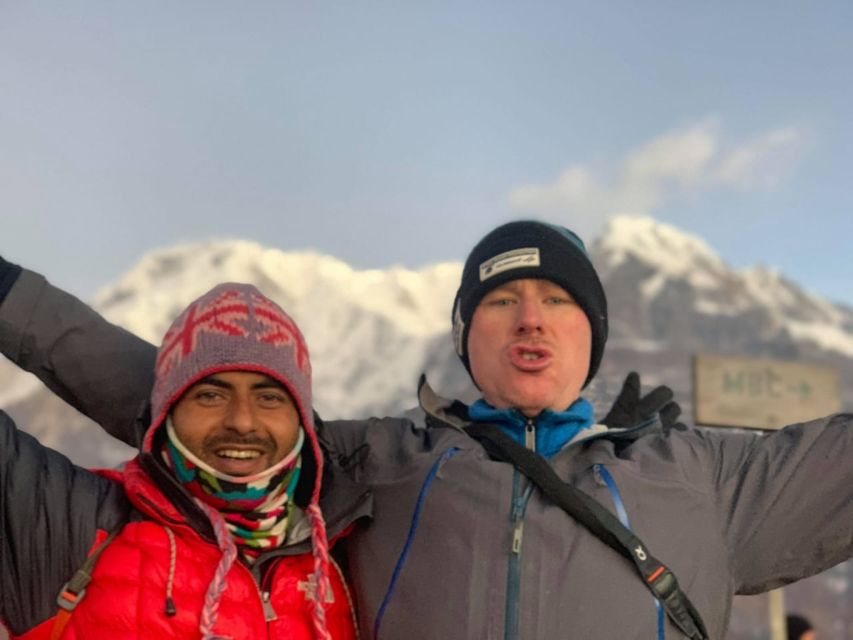
Crossing Thorong La Pass at 5,416 meters is the heart of this Annapurna Circuit trek. You begin with a long drive from Kathmandu, then walk through pine forests, high grazing country, dry Mustang scenery, and traditional mountain villages before descending to Muktinath and Jomsom.
I like the sensible acclimatization day in Manang and the strong guide support, especially for first-time Himalayan trekkers. Guides such as Keshab, Prakash, Mahesh, and Suresh have been praised for pacing, route advice, meal arrangements, and quick changes when conditions shift. The main drawback is the schedule: the 12-hour Thorong La to Muktinath day is a serious test, and the first and last transport days are long.
Key points to know before booking
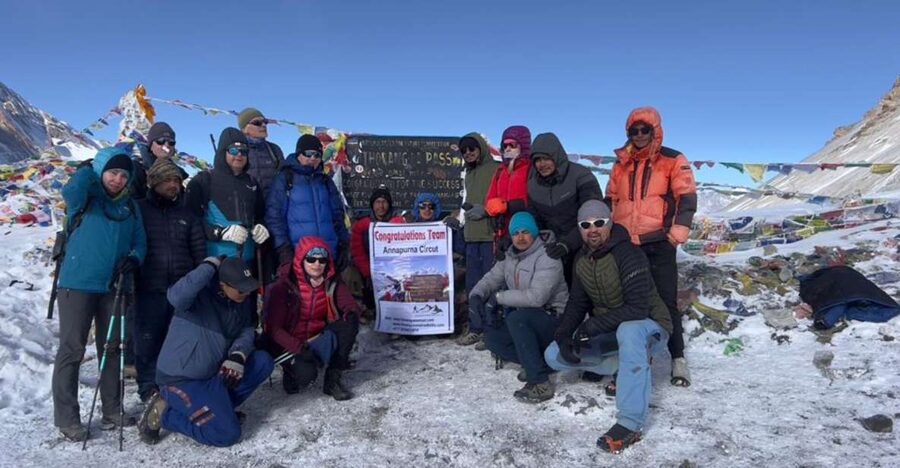
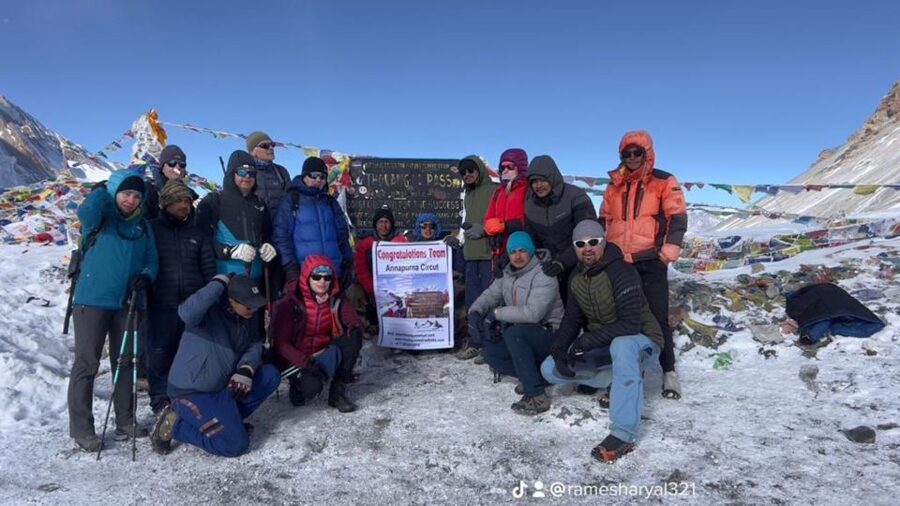
- Thorong La is the big challenge: You reach 5,416 meters on a demanding 12-hour walking day.
- The scenery changes fast: Expect forests near Dharapani, high alpine country around Manang, and dry Mustang terrain near Jomsom.
- Manang gives you a needed rest day: You can explore the village while your body adjusts to altitude.
- Guide care is a major strength: The team handles permits, tea houses, meals, transport, and route decisions.
- The $467 price covers a lot: Trek accommodation, permits, guide services, transport, meals on the full package, and a Pokhara hotel are included.
- You need to bring your own safety margin: Travel insurance with high-altitude rescue cover, warm layers, water, and a sleeping bag are not optional extras in spirit, even when some gear can be rented.
Why this Annapurna Circuit still feels like an adventure
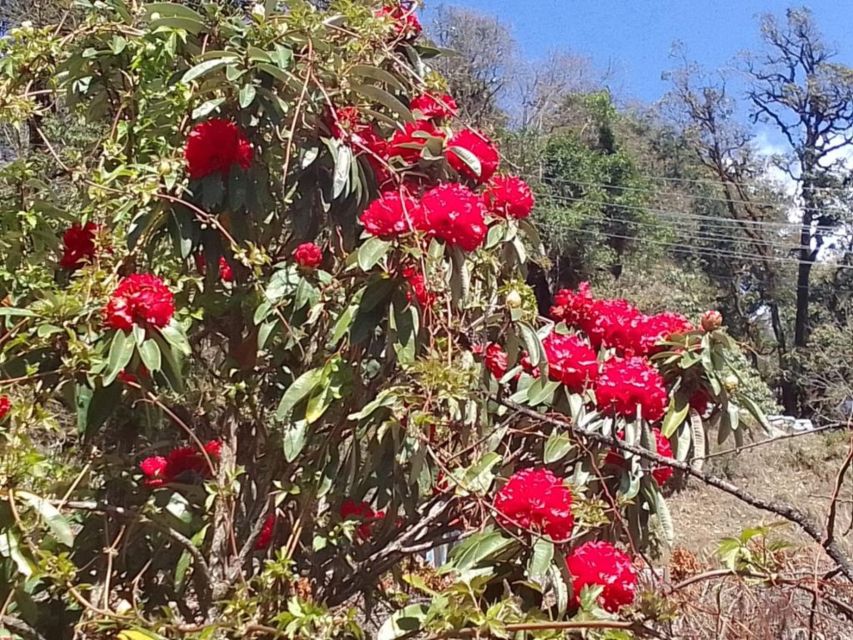
This is not a gentle mountain walk with a few scenic stops. It is a compact, demanding route through one of Nepal’s best-known trekking areas, with steep climbs, thin air, basic tea houses, and a high pass that can make or break the trip.
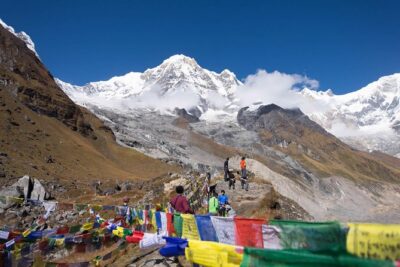
The reward is variety. In ten days, you move from the road and villages around Besisahar to forests near Chame, broad mountain views around Manang, barren high country near Thorong Phedi, and the dry, wind-swept Mustang region. That change in scenery gives the trip real momentum. You are not looking at the same view for a week.
I also like the human side of the route. You stay in local tea houses and pass through villages with their own customs and daily rhythms. The accommodation is basic, not polished. That is part of the point, but it means you should enjoy simple rooms, shared facilities, dal bhat, and a quieter style of travel.
The price is appealing at $467 per person, particularly for a private group. It includes an English-speaking guide, permits, paperwork, nine nights of trek accommodation, transport described in the program, staff expenses, and a night at Hotel Orchid in Pokhara. Full-package bookings also include breakfast, lunch, and dinner during the trek.
Check the package details carefully before paying. Drinks, bottled or boiled water, showers, laundry, phone use, battery charging, extra porters, insurance, international flights, and Nepal visa fees are not included. The listed price is good value, but it is not an all-in budget for every cost you will face in Nepal.
More Annapurna treks around Kathmandu:
- Annapurna Circuit Trek with Tilicho Lake
★ 5.0 · 368 reviews - Annapurna base camp trek 5 Days
★ 5.0 · 252 reviews - 14-Day Private Annapurna Base Camp Trek
★ 5.0 · 180 reviews
Day 1: Kathmandu to Dharapani by road
The first day is mostly about reaching the trail. You take a bus from Kathmandu to Besisahar, then continue by shared Jeep to Dharapani. The total journey takes about ten hours.
This is a long day before the walking begins, and road travel in the hills can be tiring. Still, it gives you an early look at the changing countryside and gets you to the proper trekking route without spending extra days on foot.
Dharapani sits at about 1,800 meters. Your overnight stay here gives you a useful starting point for the gradual climb ahead. Keep your daypack close, with water, a jacket, snacks, medication, and any documents you need. Your larger luggage can be handled according to the arrangements made with the guide.
Day 2: Dharapani to Chame through forest and river valleys
The six-hour walk to Chame is your first real trekking day. The route climbs through forest, crosses suspension bridges, and begins to show the scale of the Annapurna region.
At 2,670 meters, Chame is high enough for you to notice the thinner air, but this is still a manageable stage compared with what comes later. The changing vegetation is one of the pleasures of this day. The route does not begin with a single huge climb, so you can settle into the rhythm of walking.
Your guide matters here. A good guide will watch the group’s pace instead of treating the timetable as a race. The strongest feedback about this company centers on guides who answer questions, explain trail conditions, and let quiet parts of the walk remain quiet.
Day 3: Chame to Upper Pisang and the first big views
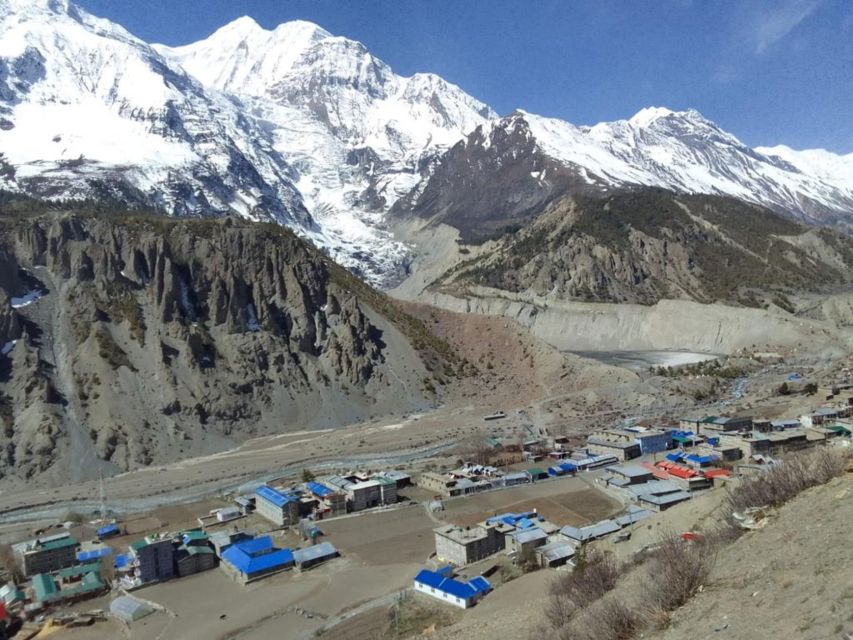
The six-hour walk from Chame to Upper Pisang takes you to 3,300 meters. Mountain views become more prominent, and the village itself gives you a chance to see local life at close range.
Upper Pisang is a fine overnight stop because it feels like more than a place to sleep. You can walk through the village, look at the surrounding peaks, and get a sense of how the route changes as it gains height.
This is also where the cold can become more noticeable. Pack layers in your daypack rather than burying warm clothes in a larger bag. A hat, gloves, jacket, and sleeping bag are sensible items for the higher nights.
More treks around Kathmandu:
- Everest Base Camp Trek – 14 Days
★ 5.0 · 1,499 reviews - Everest Base Camp Trek
★ 5.0 · 842 reviews - Everest Base Camp Trekking
★ 5.0 · 485 reviews - Everest Base Camp Trekking – 13 Day
★ 5.0 · 365 reviews
Day 4: Upper Pisang to Manang beneath Annapurna peaks
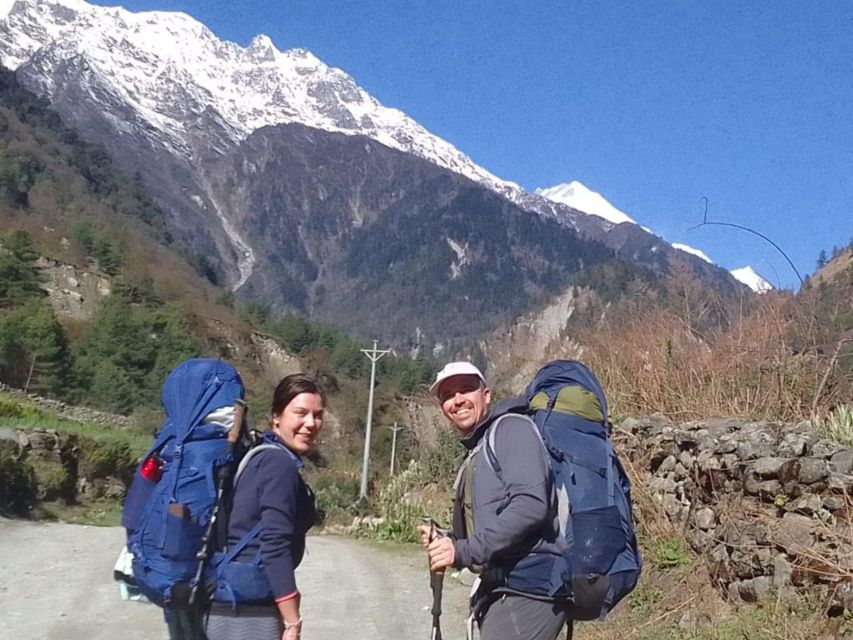
You walk for roughly six hours to Manang, at 3,540 meters. The broad valley and views toward Annapurna II, Annapurna III, and Gangapurna make this one of the visual highlights of the trip.
Manang is more than a convenient stopping point. It is the place where the trek begins to feel properly high-altitude. You have gained a lot of height since Dharapani, and the following rest day is one of the most important parts of the schedule.
The walk can feel demanding even if the distance looks reasonable on paper. At altitude, a steady pace is more useful than speed. I would follow your guide’s advice, drink regularly, eat even if your appetite drops, and report headaches, nausea, unusual tiredness, or other symptoms promptly.
Day 5: A practical acclimatization day in Manang
The rest day in Manang is not wasted time. It gives your body a chance to adjust before the route climbs above 4,000 meters.
You can explore the village, rest, and enjoy the mountain views. The program does not specify a fixed side hike, so do not assume you will have a particular excursion included. The value of the day is flexibility and recovery.
This is one of the reasons the itinerary works for people new to Himalayan trekking. The day breaks up the ascent and reduces the temptation to push too quickly. Several guides connected with this trip, including Keshab and Milani, have been praised for paying close attention to altitude and adjusting plans when needed.
Day 6: Manang to Yak Kharka at 4,050 meters
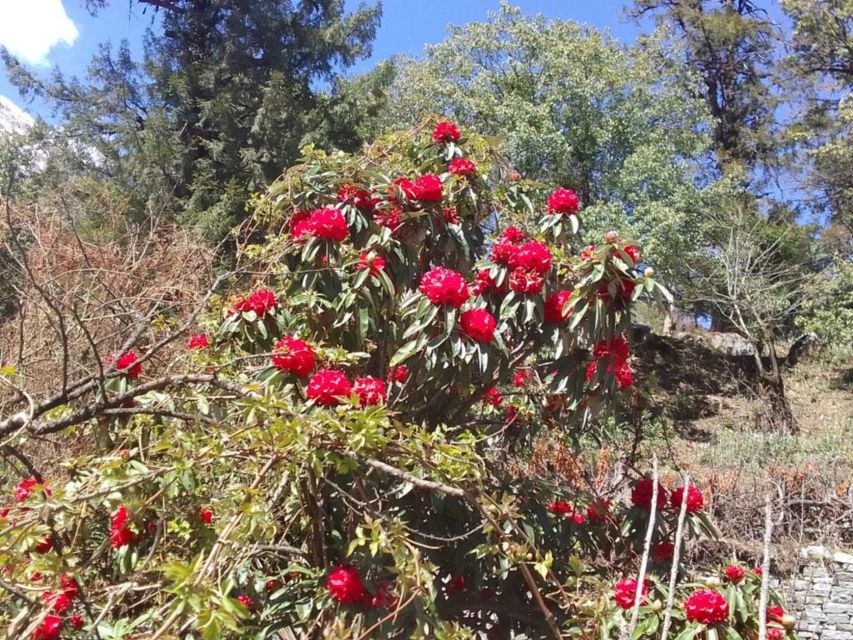
The six-hour trek to Yak Kharka takes you into alpine country. At 4,050 meters, this is a clear step up from Manang, and your breathing will likely feel the difference.
Yak Kharka is described as a high grazing area surrounded by mountains. The atmosphere is quieter and more open than in the lower villages. You are now walking through a harsher part of the route, where warmth, hydration, and a measured pace matter more than covering ground quickly.
The accommodation remains tea-house style. It is useful to think of these places as mountain shelters with basic comforts, not hotels. You may find simple rooms, shared facilities, and a limited food selection. Dal bhat is a reliable meal, and other food options are available during the trek.
Day 7: Yak Kharka to Thorong Phedi
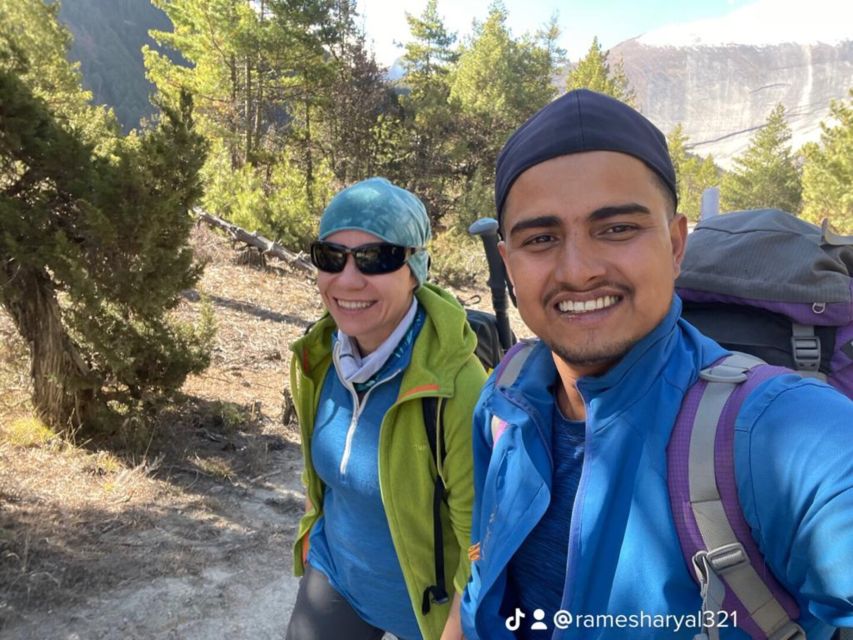
The route to Thorong Phedi takes about six hours and reaches 4,450 meters. This is the final preparation stage before the pass.
Thorong Phedi is the base area for the crossing. You will want an early night, a charged headlamp, warm clothing ready beside your sleeping bag, and a small pack arranged before sunrise. Ask your guide about the next day’s timing and conditions rather than relying only on the printed schedule.
This night can be mentally important. The pass is close, but the hard work is still ahead. Do not use the arrival at Thorong Phedi as a reason to prove your fitness. Save your energy for the crossing.
Day 8: Thorong La Pass to Muktinath
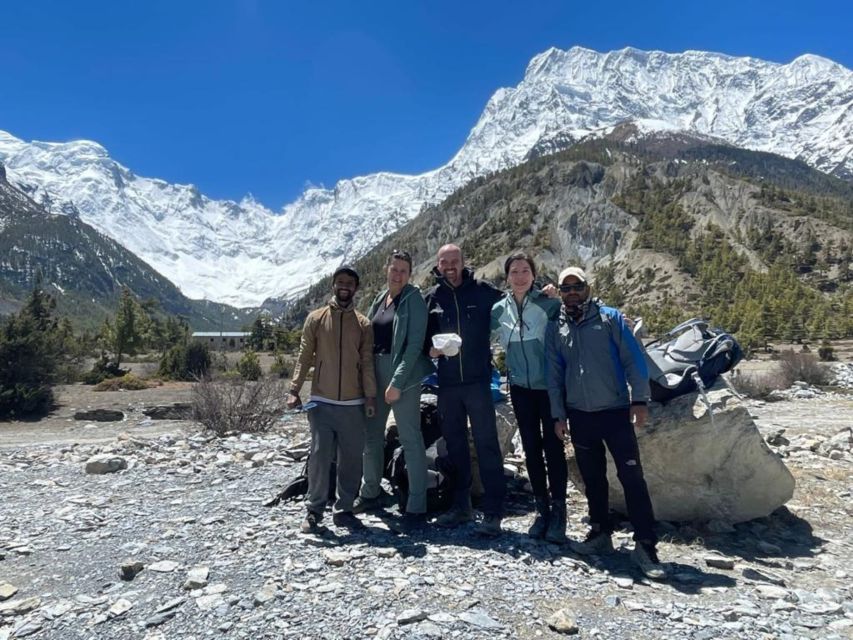
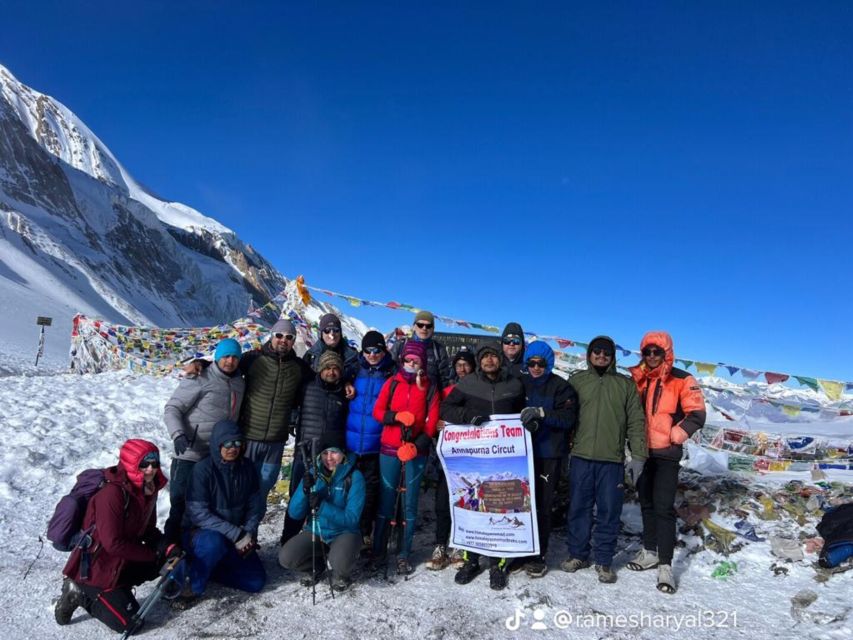
This is the defining day: about 12 hours from Thorong Phedi to Muktinath, including the ascent to Thorong La at 5,416 meters.
The climb is difficult because of the altitude, cold, early start, and length of the day. The crossing itself brings wide mountain views, but you should not treat it as a quick photo stop. The descent afterward is long and can be hard on tired knees.
Muktinath, at 3,800 meters, is a major Hindu and Buddhist pilgrimage site. Arriving here gives the day a cultural finish as well as a physical one. You can explore the village and temple area after the pass, although your first priority may simply be food, warmth, and sleep.
This is the point where a private group can help. The guide can adjust the pace to the group, check your condition, and help with practical decisions. The itinerary does not remove the risk of altitude problems, and no guide can guarantee a successful crossing, but close support is valuable on a day this long.
Day 9: Muktinath to Jomsom and the dry Mustang region
The five-hour descent to Jomsom drops you to 2,720 meters. The scenery changes sharply as you enter the drier Mustang region.
Jomsom is known here as a windy town, so keep your hat and sunglasses handy. The arid, desert-like surroundings feel very different from the forests near Dharapani. That contrast is one of the best reasons to choose the full circuit rather than a short out-and-back walk in one valley.
You spend the night in Jomsom. After Thorong La, this shorter day gives you time to take in the change in scenery without facing another huge ascent.
Day 10: Jomsom to Pokhara by bus
The final transfer to Pokhara takes about eight hours by bus. It is not a quick finish, but it allows you to reach the lakeside city without adding another mountain night.
The program includes one night at Hotel Orchid in Pokhara and a Nepalese farewell dinner in Lakeside Pokhara. That is a welcome change after tea houses and long walking days. The package also lists a luxury sofa-seat tourist air-conditioned bus from Pokhara to Kathmandu, so confirm how that transfer fits your exact departure plan.
Transport conditions and road times can vary. The provider also lists a private vehicle as an extra-cost option, which may suit you if you value comfort and control over the shared arrangements.
What the $467 package really covers
At this price, the strongest value comes from having the complicated pieces organized. You receive hotel pickup and drop-off, a licensed English-speaking guide, trekking permits, required paperwork, TIMS fees, government taxes, transport listed in the route, trek accommodation, luggage storage, and staff costs.
The guide’s insurance, meals, accommodation, salary, equipment, and transportation are also covered. That matters because it supports the people doing the daily practical work, rather than leaving every arrangement to you.
Porter service costs extra. If you do not want to carry everything yourself, ask about porter pricing before departure. A sleeping bag is also on the suggested packing list, and some visitors have rented sleeping bags in Kathmandu, with the company helping return them afterward. That kind of luggage coordination can be useful if you are continuing to Pokhara or another destination.
The full meal plan applies to the Full Package option. Confirm which booking option you are selecting, since drinks, water, showers, charging, laundry, and personal purchases remain your responsibility.
The guide service and private-group advantage
The most consistently praised part of this experience is the care taken by the guides and coordinators. Keshab has been described as calm, attentive, and good at balancing conversation with quiet time. Bipin has been praised for explaining route conditions and making timely arrangements. Prakash, Mahesh, Suresh, Jeet, Milani, and Silwal are also named as guides who helped with pacing, accommodation, meals, and safety.
That does not mean every departure will feel identical. Your guide may depend on availability, and the supplied information does not promise a specific person. Still, the operating style is clear: the guide is expected to manage more than navigation.
The private-group format is useful for a route with such different fitness levels and altitude demands. It allows more room for questions, pacing, and small itinerary changes than a large fixed group. The company has also helped coordinate luggage between Kathmandu and Pokhara and assisted with later travel planning.
Who should book this trek
I would recommend it to a fit first-time Himalayan trekker who wants the classic Annapurna route without arranging every permit, tea house, meal, and transfer alone. It also suits you if you want a private group and appreciate having an English-speaking guide nearby throughout the route.
You need to be comfortable with long walking days, basic accommodation, uncertain mountain weather, and a demanding pass crossing. Pregnancy is specifically listed as unsuitable. You should also have travel insurance that covers high-altitude trekking and rescue.
Pack for quick changes in weather. Bring hiking shoes, trekking poles, a headlamp, water bottle, sunscreen, sunglasses, hat, warm layers, socks, a first aid kit, cash, and a daypack. A camera is welcome, but your phone and battery may be less useful if charging costs extra or is not always convenient.
Should you book the 10-day Annapurna Circuit?
Book this trek if Thorong La is your main goal and you want a guide-led route with transport and permits arranged. The price is strong for what is included, and the rest day in Manang gives the schedule a sensible shape.
Think twice if you want leisurely walking, private hotel rooms every night, or a short daily program. The 12-hour pass day and long road transfers are real demands, not fine print.
For a fit person prepared for altitude and simple mountain living, this is a practical way to experience forests, high valleys, pilgrimage sites, and Mustang scenery in one trip. Choose the Full Package if you want meals included, budget separately for insurance and personal costs, and ask about porters and exact transport arrangements before setting out.
FAQ
How long is the Annapurna Circuit trek?
The experience lasts 10 days, beginning with transport from Kathmandu and ending with the bus journey from Jomsom to Pokhara.
What is the highest point of the trek?
The highest point is Thorong La Pass, at 5,416 meters or 17,769 feet.
Is there an acclimatization day?
Yes. Day 5 is a rest and acclimatization day in Manang, at about 3,540 meters.
Are meals included?
Breakfast, lunch, and dinner during the trek are included with the Full Package option. Soft drinks, hard drinks, bottled or boiled water, and personal purchases are not included.
Is accommodation included?
Yes. The package includes nine nights of accommodation during the trek and one night at Hotel Orchid, a tourist-standard luxury hotel in Pokhara.
Is a porter included?
No. The authorized English-speaking guide is included, but porter service costs extra.
What transport is included?
The route includes a bus from Kathmandu to Besisahar, a shared Jeep from Besisahar to Dharapani, and a bus from Jomsom to Pokhara. A luxury sofa-seat tourist air-conditioned bus from Pokhara to Kathmandu is also listed, while a private vehicle costs extra.
Can the itinerary be changed?
Yes. The trek duration and itinerary can be customized based on your preferences and walking pace. Any changes should be arranged with the provider before or during the trek.
New treks around Kathmandu
- Kathmandu or Pokhara: 5-Day Annapurna Base Camp (ABC) Trek★ 4.5 · 2 reviews
- Pokhara: 2 Day Ghorepani & Poon Hill Private Trekking★ 4.9 · 8 reviews
- From Kathmandu: 6-Day Langtang Valley Guided Trek★ 5.0 · 2 reviews
- Pokhara: 5-Day Annapurna Base Camp (ABC) Trek★ 5.0 · 9 reviews
- Kathmandu: Langtang Valley 6-Day all inclusive Guided Trek★ 5.0 · 2 reviews
- Kathmandu: 6 Days Langtang Valley Trek with Kyanjin Ri★ 5.0 · 7 reviews
- Kathmandu: 9- Day Annapurna Circuit Trek★ 5.0 · 2 reviews
- Kathmandu: 6-Day Limitless Langtang Trek★ 5.0 · 21 reviews
Annapurna Base Camp Treks, side by side.
Trekking in Annapurna/Langtang/Everest/Upper Mustang regions
Read our review →
Kathmandu to Annapurna Base Camp (ABC) 5-Day Trek
Read our review →
Lists this trek appears in