
Review · POKHARA
From Pokhara: 4-Day Annapurna and Poon Hill Himalayan Trek
Poon Hill gives you the main event before breakfast: a sunrise view across the Annapurna Range, earned by an early uphill walk from Ghorepani. You’ll also pass through forest trails, Gurung villages, and Jhinu’s natural hot springs on a compact four-day route from Pokhara.
I like the mix of mountain scenery and village life, rather than a trek made only of viewpoints. I also like that transport, permits, tea house stays, and a private English-speaking guide are included. The main caution is that mountain roads and weather can change plans. One booking lost a scheduled stop after a landslide damaged the road, and the change was not explained early enough.
Key points at a glance
- Sunrise at Poon Hill: An early one-hour climb from Ghorepani leads to the trek’s headline view of the Annapurna Range.
- Jhinu hot springs: You get time for a bath in natural hot water said to have therapeutic qualities.
- Four distinct stops: Ghorepani, Tadapani, Jhinu, and Ghandruk each give the route a different character.
- Gurung culture: Ghandruk offers a close look at traditional Gurung village design and mountain living.
- Included basics: Private transfers, permits, tea house accommodation, and an English-speaking guide are covered.
- Plan for change: A damaged mountain road caused a route adjustment for one booking, so confirm the starting point before departure.
Why Poon Hill works in only four days
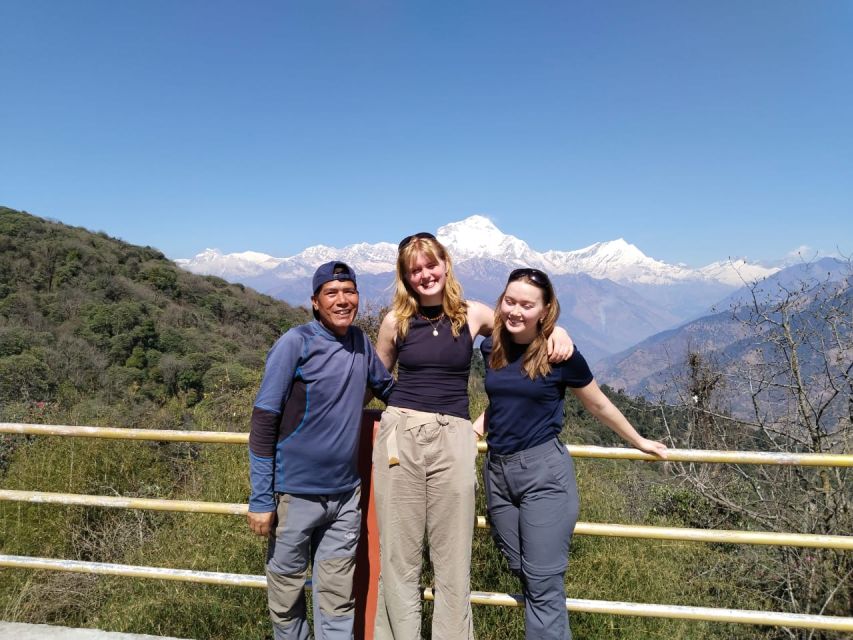
This trek packs a lot into a short time. You begin near Pokhara, climb through the lower Himalayan forests, reach Ghorepani, rise before dawn for Poon Hill, then continue through Tadapani, Jhinu, and Ghandruk before driving back.
That makes the route a good introduction to trekking in Nepal if you have limited time. You get mountain views, local villages, basic tea house accommodation, and a hot spring stop without committing to a much longer expedition.
The tradeoff is a busy schedule. The listed walking days range from about five to seven hours, and the route includes uphill and downhill sections. You should be comfortable walking for much of the day, even though this is not presented as a technical climbing trip.
The price is $287 per person. That is useful value if you want the main arrangements handled, since the cost includes hotel pickup and drop-off by private car or jeep, necessary permits, accommodation, and guide expenses. Food and drinks are extra, so leave room in your budget for meals and beverages along the way.
More Annapurna treks around Pokhara:
- Trekking in Annapurna/Langtang/Everest/Upper Mustang regions
★ 5.0 · 161 reviews - Kathmandu/Pokhara: 5-Day Annapurna Base Camp (ABC) Trek
★ 4.9 · 72 reviews - Pokhara: 5 Day Annapurna Base Camp Trek & Natural Hot Spring
★ 4.9 · 44 reviews
Day 1: Pokhara to Ulleri and uphill to Ghorepani
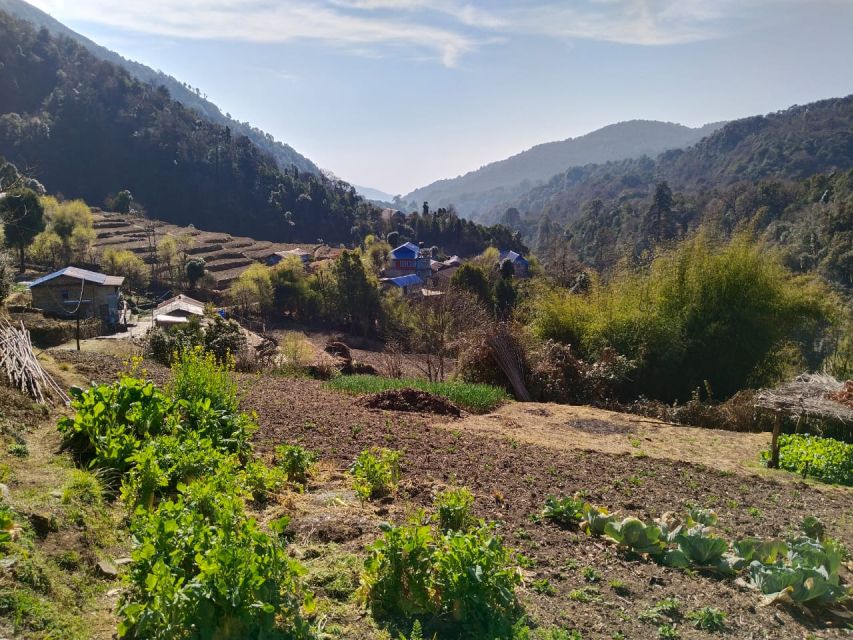
Your guide collects you from your hotel early in the morning, after breakfast, and you drive toward Ulleri. The road is part of the practical reality of trekking in this region. The starting point can change if road conditions shift, so confirm the exact pickup and trailhead with the provider the day before.
From Ulleri, you hike uphill toward Ghorepani. The stated walking time is about five hours, followed by an overnight stay in a tea house. This first day is less about collecting grand viewpoints and more about getting into the rhythm of the route.
The forest is the attraction here. You walk through the lower Himalayan woodland, with the trail giving you a quieter setting than the road. The route also makes clear why you need sturdy shoes and a reasonable level of fitness: the first day is not a gentle stroll from the vehicle to the lodge.
Ghorepani is important because it positions you for the early start at Poon Hill. Tea house accommodation is basic, but it places you close to the next morning’s climb. Since food is not included, you purchase meals and drinks as needed during the trek.
A practical tip: do not treat the first day as a warm-up you can ignore. You have a sunrise walk the next morning, so use the evening in Ghorepani to prepare your clothing, water, and small items before turning in.
Day 2: The one-hour climb to Poon Hill
The second day begins early, with a hike of about an hour to the top of Poon Hill. The reason for the pre-dawn start is simple: sunrise is the prize.
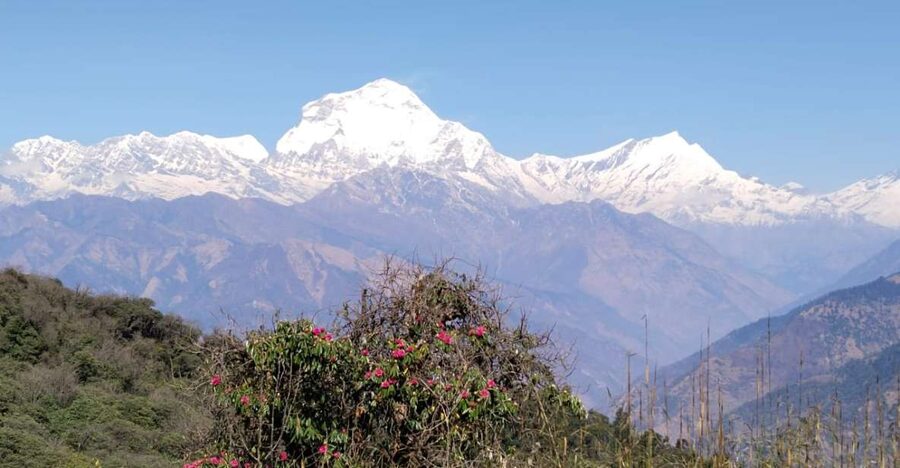
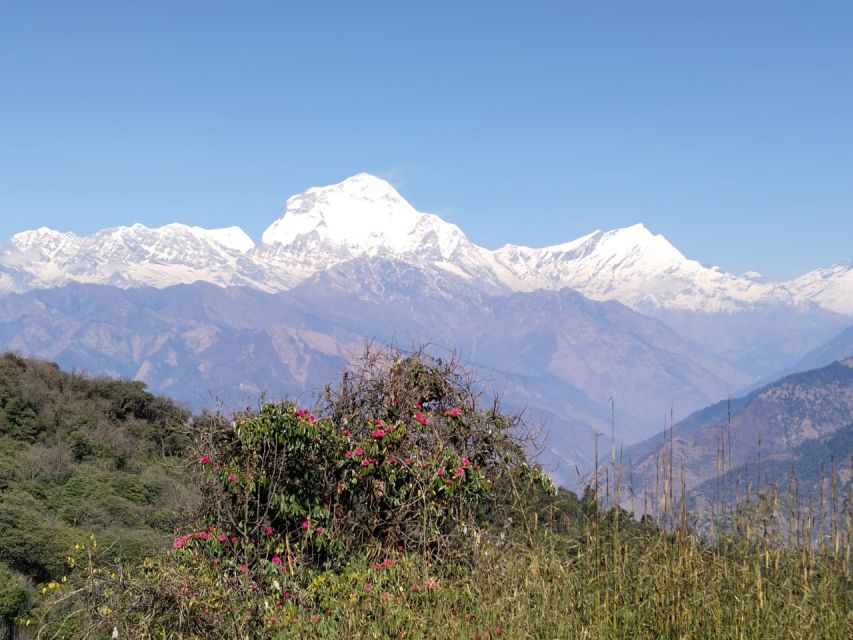
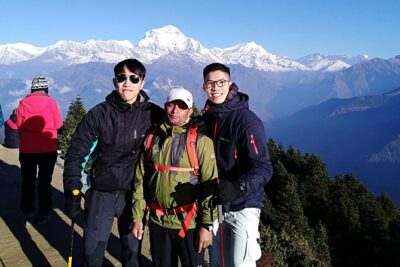
From the viewpoint, you can see the Annapurna Range spread across the horizon. The sunrise was the most highly praised part of the experience, and one booking specifically described it as the main reason for making the climb. That tells you where the route earns its keep.
You should expect the climb to feel worthwhile but not effortless. It comes after a full day of walking, and the early hour means you need warm layers. The information provided does not specify temperatures or equipment rental, so bring clothing suitable for a cold mountain morning rather than counting on supplies at the viewpoint.
After returning to Ghorepani, you have breakfast and continue toward Tadapani. The full walking time is listed at about six hours, including the morning viewpoint walk and the onward route.
Tadapani gives the day a second purpose. You are not simply walking up to Poon Hill and returning to the same place. You continue through the forest toward another overnight stop, which keeps the trek moving through changing sections of the Annapurna area.
The guide matters most on a day like this. Guide Gobinda was praised for kindness and practical help, while guide Muku received a positive overall comment but was criticized for relying too much on luck instead of checking weather forecasts closely. Those details point to a useful question before booking: ask how your guide handles weather updates and route changes.
Day 3: Tadapani, Jhinu, and Ghandruk
Day three is the longest and most varied day, with about six to seven hours of walking. You move toward Jhinu first, where you can bathe in the natural hot springs.
The hot spring stop breaks up the walking in a memorable way. The water is described as therapeutic, although you should view that as a local belief rather than a medical promise. You get a chance to relax in naturally heated water before continuing along the route.
After Jhinu, you head to Ghandruk. This is one of the most culturally interesting stops because it is a native Gurung village. The village is noted for its traditional architecture and for showing how Gurung communities have adapted to life in the Himalayan region.
I like this part of the route because it gives the trek a human scale. Mountain views are wonderful, but a village tells you more about daily life than a lookout point does. Ghandruk makes the experience about homes, settlement, and local identity as well as walking.
You spend the night in Ghandruk. Again, accommodation is in a tea house or guest house, and meals are purchased separately. The route description does not promise a particular room type or private facilities, so book this with the understanding that lodging is simple mountain accommodation.
The order of the day also means you should pace yourself. Jhinu is not the finish, and the walk to Ghandruk still follows. Take the hot spring stop as a rest, not as a signal that the day’s effort is over.
More Poon Hill treks around Pokhara:
- Poon hill Trek 3 days
★ 5.0 · 176 reviews - Pokhara: 4-Day Ghorepani, Poonhill & Ghandruk Mountain Trek
★ 5.0 · 132 reviews - Ghorepani – Poon Hill Trek 3N-4D
★ 5.0 · 125 reviews - From Pokhara: 3-Day Ghorepani Poon Hill Trek with Guide
★ 4.9 · 68 reviews
Day 4: Down to Nayapul and back to Pokhara
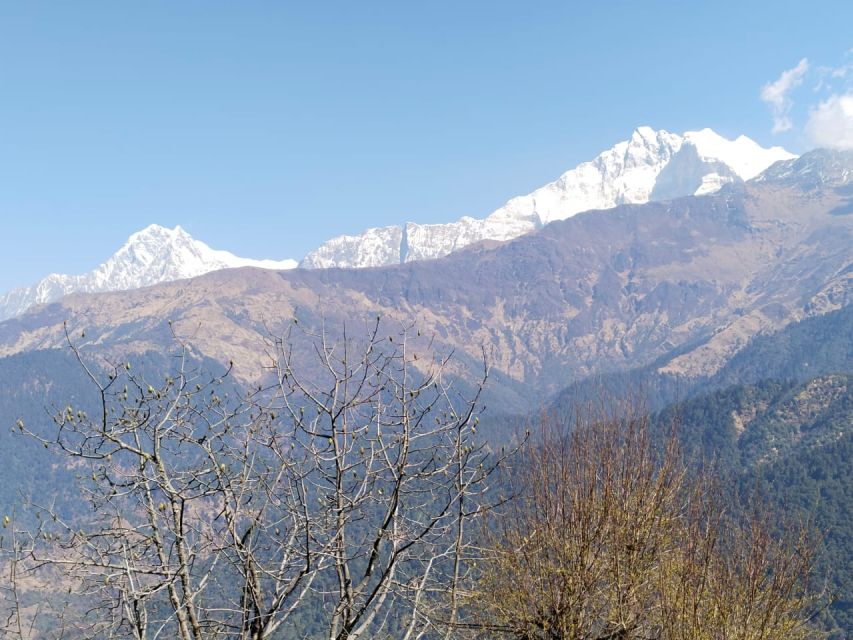
The final day heads downhill to Nayapul. From there, a vehicle takes you back to Pokhara and drops you at your hotel.
This is a useful ending for a short trek. You do not need to arrange a separate return transfer from the trail, and the private car or jeep is included. The route closes with a clear handoff from walking to road travel.
The final descent may be easier for some people than the uphill sections, but downhill walking can still be tiring. Your knees and feet may notice it, especially after three days on the trail. Keep your footwear secure and avoid treating the last day as an automatic breeze.
The entire experience lasts four days, but the exact road conditions can affect how much walking you complete from the planned starting point. A landslide damaged a mountain road for one booking, forcing the start farther down the mountain and removing one planned point of interest. Natural road problems are unavoidable in the mountains, but communication is not. Ask for an update before leaving Pokhara.
The views are strongest at sunrise
Poon Hill is the clear visual centerpiece. You climb for about an hour from Ghorepani, then watch the Annapurna Range catch the morning light. The early start is a small hardship for a major payoff.
The rest of the trek gives you a slower view of the region. Forest paths soften the route between settlements, while Ghandruk shows how Gurung communities live in the mountain environment. You are not only moving between photo stops. You are passing through a sequence of natural and inhabited places.
Weather remains a real factor. Mountain visibility can change, and the guide’s attention to forecasts matters. Muku was described as good overall, but one booking raised concern that weather checks could have been better. I would ask your guide about the morning forecast before the Poon Hill climb, while accepting that no forecast can guarantee clear skies.
Tea houses, meals, and what the price really covers
At $287 per person, the cost makes sense for someone who wants a package with the main logistics in place. You receive hotel pickup and return, transport by private car or jeep, permits, tea house or guest house accommodation, an English-speaking licensed guide, and guide expenses.
Food and drinks are not included. That matters because you will be walking for five to seven hours on the main days. Your total spending will be higher than the advertised price once meals and drinks are added.
Tea house accommodation is part of the character of the trek, but it is also a reason to keep expectations practical. You are choosing a simple overnight stay in mountain villages, not a resort. The information does not specify room arrangements, bathroom facilities, or heating, so ask if those details affect your decision.
The private guide format is another strength. You have a person responsible for permits, route support, and the day’s progress rather than handling the trail alone. The quality of that help depends on the individual guide, so the names Gobinda and Muku are useful reference points, but they do not guarantee who will lead your departure.
Who should book this Poon Hill trek
This trip suits you if you want a short Himalayan walking experience with a famous sunrise, but you do not have time for a longer trek. It also works well if you prefer having transport, permits, accommodation, and a guide organized in advance.
You should be ready for long walking days and uphill sections. The activity is not suitable for pregnant women or people with mobility impairments. The route is also a poor match if you want a relaxed sightseeing schedule with late mornings.
It may appeal to first-time trekkers because the route is guided and the transfers are arranged. Still, you need to take the physical demands seriously. The word four-day can sound easy, but the daily walking times tell the more useful story.
The experience is also a good fit if you want more than mountain photographs. Jhinu’s hot springs and Ghandruk’s Gurung architecture give the trip variety, while the forest sections keep the walking connected to the setting.
Practical details before you leave Pokhara
You need to provide passport details at least 24 hours before the trip so the permits and other arrangements can be prepared. Bring your passport, or a copy if accepted.
The live guiding language is English. Pickup is included, and the provider contacts you a day before the trip. I would use that contact to confirm the pickup time, vehicle, trailhead, road condition, guide name, and whether the planned route has changed.
You can cancel up to 24 hours in advance for a full refund. You can also reserve now and pay later, which helps if your Pokhara plans are still moving around.
The activity offers free cancellation up to that 24-hour point, but flexibility does not remove the need to prepare. Pack for walking, cold mornings, and changing conditions. Bring money for food and drinks, since those are excluded.
Should you book it?
Book this trek if your priority is Poon Hill sunrise and you want a compact route that adds forest walking, a hot spring bath, and Ghandruk village. At $287, the included transfers, permits, lodging, and guide make it a reasonable package, though you must budget separately for meals.
Think twice if you need a fixed route with no surprises. Road damage has already caused a major adjustment for one departure, and communication about that change was not strong enough. Ask clear questions before setting out, and treat mountain plans as flexible.
My call: this is a sensible four-day introduction to the Annapurna area for a reasonably fit walker who values convenience and variety. Choose it for the sunrise and the route’s mix of nature and village life, but book only after confirming current road conditions and the guide assigned to you.
FAQ
How long is the trek?
The activity lasts four days. Walking times are listed as about five hours on day one, six hours on day two, six to seven hours on day three, and a descent to Nayapul on day four.
What is the price?
The price is $287 per person.
Is hotel pickup included?
Yes. Hotel pickup and drop-off in Pokhara by private car or jeep are included.
Is a guide included?
Yes. A licensed English-speaking guide and guide expenses are included. Guides named in past bookings include Muku and Gobinda, but the assigned guide can depend on your departure.
Is accommodation included?
Yes. Accommodation in tea houses or guest houses is included.
Are food and drinks included?
No. Food and drinks are available for purchase but are not included in the price.
Do I need to provide passport details?
Yes. You need to provide passport details at least 24 hours before the tour so permits and arrangements can be prepared. A passport copy is accepted as something to bring.
Can I cancel for a refund?
Yes. You can cancel up to 24 hours in advance for a full refund.
Is the trek suitable for everyone?
No. It is not suitable for pregnant women or people with mobility impairments. You should also be prepared for several hours of uphill and downhill walking each day.
More four-day treks around Pokhara
- Pokhara: 4-Day Mardi Himal Trek
★ 4.9 · 59 reviews - Pokhara: 4-Day Private Trek Tour
★ 4.9 · 43 reviews - From Pokhara: 4-Day Mardi Himal Base Camp Trek
★ 4.9 · 31 reviews - Pokhara: 4-Day Beautiful Ghorepani Poon Hill & Ghandruk Trek
★ 4.8 · 21 reviews
New treks around Pokhara
- Pokhara: 9-Day Annapurna Base Camp Trek with Poon Hill★ 5.0 · 6 reviews
- Pokhara: 5-Day Trek to Annapurna Base Camp and Hot Springs★ 5.0 · 4 reviews
- Pokhara: Majestic Mardi Base Camp Guided Trek with HotSpring★ 5.0 · 6 reviews
- Pokhara: 5-Day Ghorepani and Poon Hill Private Trek★ 5.0 · 4 reviews
- Pokhara: 7-Day Annapurna Base Camp Trek & Hot Spring★ 4.0 · 3 reviews
- Pokhara:4-Day Ghorepani Poon Hill Guided Trek via Ghandruk★ 5.0 · 3 reviews
- Pokhara: 4-Day Poon Hill and Ghandruk Guided Trek★ 5.0 · 14 reviews
- Pokhara: 4-Day Private Trek Tour★ 4.9 · 43 reviews
Annapurna Base Camp Treks, side by side.
Trekking in Annapurna/Langtang/Everest/Upper Mustang regions
Read our review →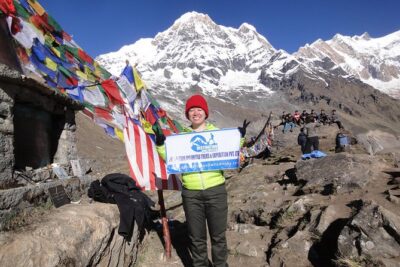
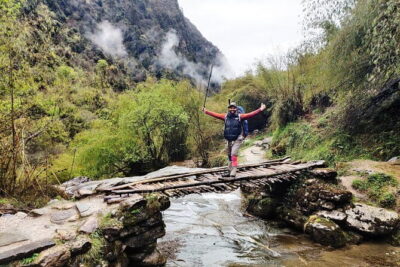
Kathmandu to Annapurna Base Camp (ABC) 5-Day Trek
Read our review →
Lists this trek appears in