
Review · NEPAL
From Pokhara: 10-Day Poon Hill and Annapurna Base Camp Trek
The real prize here is the two-part mountain experience: Poon Hill gives you a wide sunrise panorama, while Annapurna Base Camp puts you inside a bowl of enormous peaks. You move from terraced hills and villages to high valleys, snow, and thin air in ten days.
I like the steady pace, usually about three to six hours of walking per day, and the private format, which lets the guide adjust speed when your legs or lungs need a break. I also like the final soak at Jhinu Danda’s hot springs, a welcome reward after the long descent.
The main catch is cost on the trail. Food and drinks are extra, and one useful estimate puts daily spending at about $30 to $40 if you want hot showers, Wi-Fi, charging, and heater use at higher elevations. Mountain weather can also hide the peaks for days, even in a generally good month.
Key points to know before you book
- Poon Hill and Annapurna Base Camp in one route: You get both a famous sunrise viewpoint and a close-up stay beneath Annapurna I.
- Private guiding: Your pace can be adjusted, which matters on steep stone steps and at altitude.
- The Ulleri climb is serious: Day two brings a long ascent through stone steps before the trail eases into forest.
- Guesthouse nights are included: Accommodation is covered, but meals, drinks, charging, Wi-Fi, hot showers, and heaters cost extra.
- Jhinu Danda adds a practical finish: The natural hot springs help tired muscles after several days of descending.
- Weather can change the experience: Spring and autumn offer the best odds of clear views, but no season guarantees them.
Why this 10-day route works so well
At $310 per person, this is a strong value if you want a private trek with the basic logistics handled. The price includes pickup and drop-off within Pokhara’s Lakeside area, private transport to Nayapul and back, an English-speaking trekking guide, permits, official documents, guesthouse accommodation, a first-aid kit, and entry to Poon Hill.
That leaves you paying for food, drinks, insurance, and personal comforts. I would not mistake the low headline price for an all-inclusive trip. At mountain guesthouses, a meal is only one expense. Hot showers, Wi-Fi, device charging, and heaters can add up, especially above the lower villages.
The private format is the real value. You are not tied to a large group’s pace, and the guide can make sensible changes if you are slow, tired, or having trouble with altitude. One guide, Arjun, extended a trek by three days for a person dealing with altitude sickness. That is the sort of flexibility I want in the Himalayas, where sticking rigidly to a schedule is not always smart.
Guides named in the trip feedback include Biru, Arjun, and Bikram. Their strengths were patience, route planning, help with accommodation, and adjusting speed. Your assigned guide may be different, so consider those names examples of the service style rather than a guaranteed guide list.
More Annapurna treks around Nepal:
- Annapurna Circuit Trek with Tilicho Lake
★ 5.0 · 368 reviews - Annapurna base camp trek 5 Days
★ 5.0 · 252 reviews - 14-Day Private Annapurna Base Camp Trek
★ 5.0 · 180 reviews
Day 1: Pokhara to Tikhedhunga through village country
Your morning starts with a private drive from Pokhara to Nayapul, taking about an hour and a half. From there, you begin on foot, following the Modi Khola and passing small settlements, terraced fields, and farm paths before reaching Tikhedhunga at 1,577 meters.
This is a good opening day because it introduces rural Nepal without immediately throwing you into high altitude. The route still has plenty of uphill and downhill walking, but the lower elevation makes it easier to settle into the daily rhythm.
Tikhedhunga is a practical overnight stop, not the grand visual climax of the trip. Think of it as your first lesson in how the trek works: simple accommodation, mountain meals available for purchase, and an early night before the first major climb.
Day 2: Ulleri’s stone steps and Ghorepani’s high views
The climb from Tikhedhunga toward Ghorepani is one of the most demanding sections early in the route. You ascend the famous stone steps toward Ulleri, then continue through rhododendron and marigold forests, with village scenery breaking up the climb.
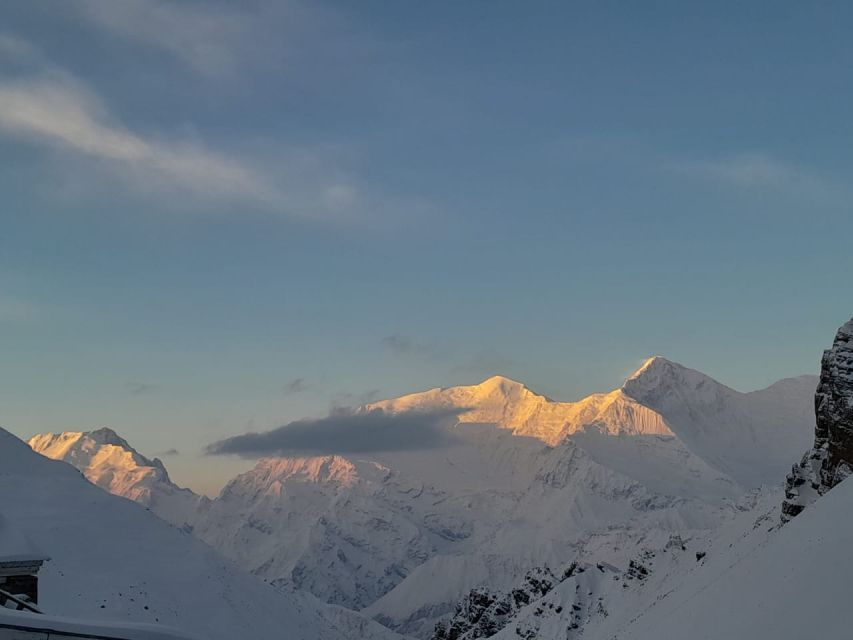
Ghorepani sits at 2,874 meters. The arrival matters because you begin to feel the altitude and gain much broader views toward the Annapurna and Dhaulagiri ranges. It is also the point where the trek shifts from a lower-hill walk into a proper high mountain route.
I would treat this day as a pacing test. Do not race the steps just because the distance looks manageable. Your guide can help set a slower rhythm, and that is one reason a private trek is useful. Comfortable shoes are essential, and trekking poles would be sensible even though they are not listed among the required items.
Day 3: Poon Hill sunrise, then on to Tadapani
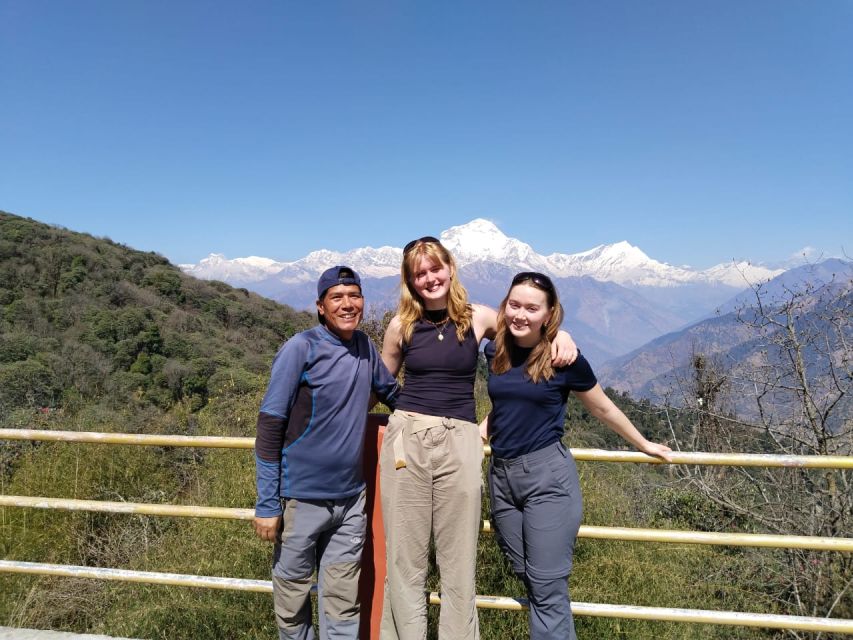
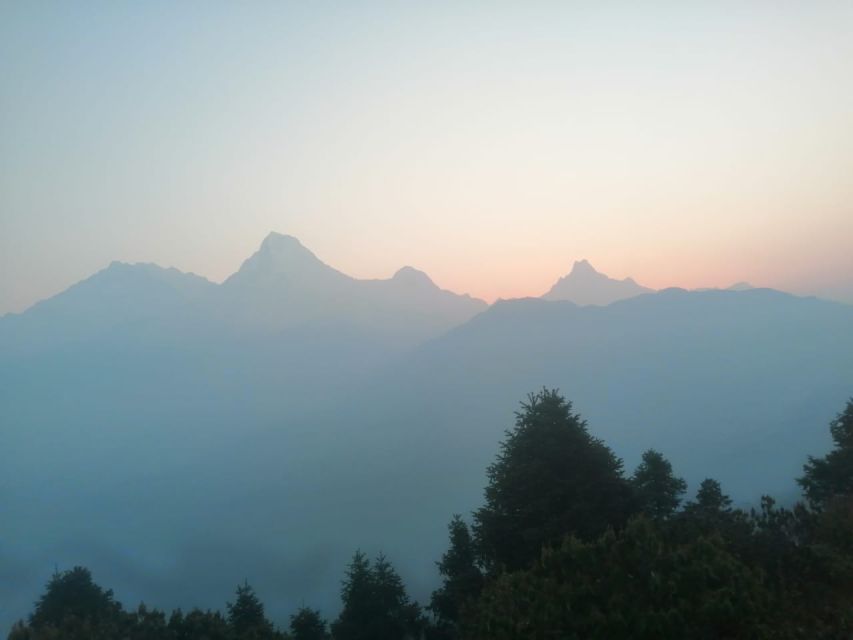
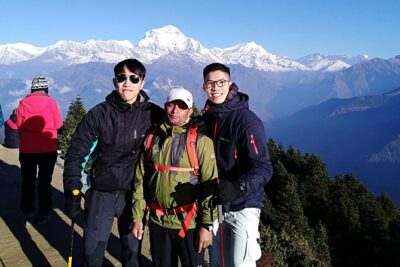
The early start is worth it. From Ghorepani, you walk up to Poon Hill at 3,210 meters for sunrise. The viewpoint gives you a wide view of Annapurna, Dhaulagiri, and other Himalayan peaks, and it is one of the clearest chances on the route to see several ranges at once.
The timing can be cold and dark, so pack a warm layer where you can reach it quickly. Sunrise depends on clouds, of course, but even a partial opening can reveal dramatic sections of the mountains.
After descending to Ghorepani for breakfast, you continue through forest and rhododendron-filled valleys to Tadapani at 2,630 meters. This makes for a full day, but the route has a nice change of mood: first the busy anticipation of Poon Hill, then quieter woodland walking.
Poon Hill is also the one attraction specifically covered by an entrance fee in the trip price. The combination of this viewpoint and the later base camp makes the route more varied than a trek that focuses on only one destination.
More Poon Hill treks around Nepal:
- Poon hill Trek 3 days
★ 5.0 · 176 reviews - Pokhara: 4-Day Ghorepani, Poonhill & Ghandruk Mountain Trek
★ 5.0 · 132 reviews - Ghorepani – Poon Hill Trek 3N-4D
★ 5.0 · 125 reviews - 4 Days Poon Hill Trek
★ 5.0 · 94 reviews
Day 4: Down to the river, up to Chhomrong
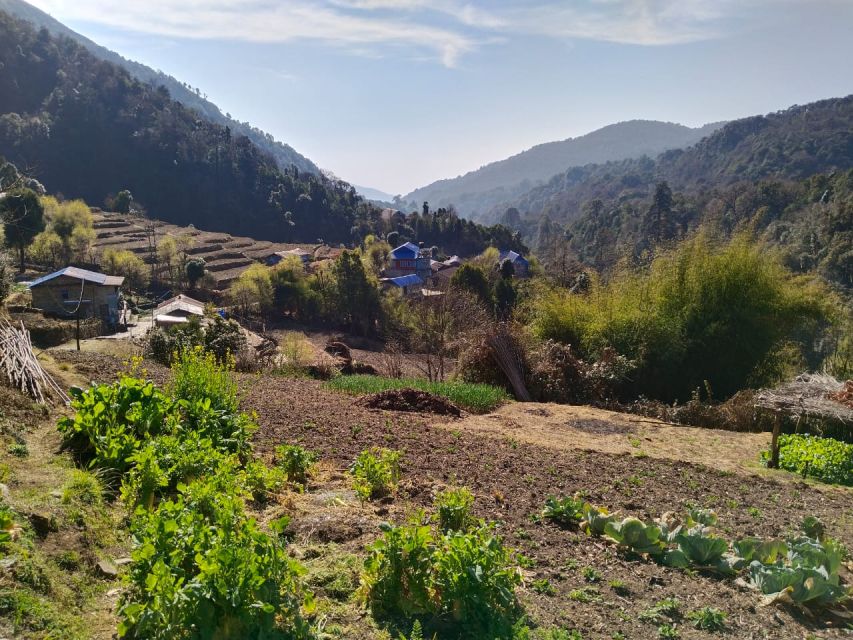
From Tadapani, the trail gradually descends through thick forest toward Gurjung village and the Kimrong Khola. The route then turns upward again, finishing at Chhomrong at 2,170 meters.
This up-and-down pattern is typical of the Annapurna foothills. You may lose elevation in the morning, only to gain it again later. That can be harder on your knees than a steady climb, so take the descents seriously.
Chhomrong is one of the larger villages on the route and has fine views toward Annapurna South and Machhapuchhre, the distinctive Fishtail peak. It is an important overnight stop before the trail enters the narrower valley toward the sanctuary.
I like Chhomrong because it feels like a real mountain settlement rather than just a place to sleep. It is also a good point to check your supplies, charge devices if available, and ask your guide about the next day’s climb.
Day 5: Crossing the Chhomrong Khola to Bamboo
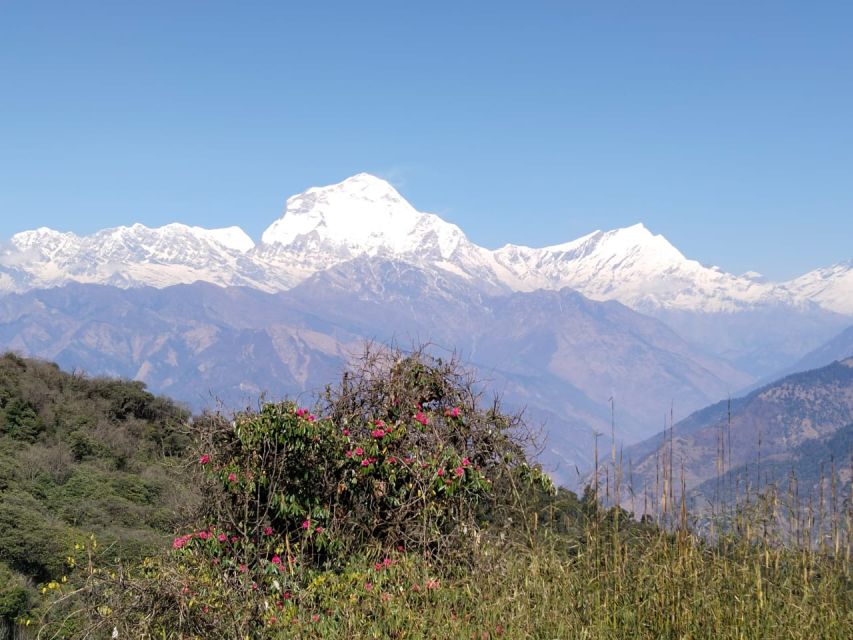
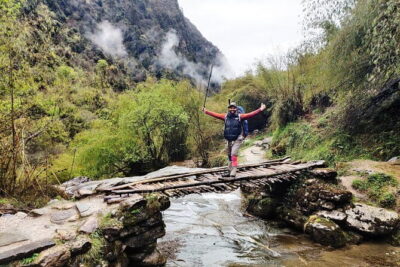
You descend to the Chhomrong Khola, cross a suspension bridge, and climb toward Sinuwa. From there, the path continues through bamboo and rhododendron forest to Bamboo at 2,310 meters.
The day has a lot of forest walking, so mountain views are less constant than at Poon Hill or the base camp. That is not a flaw. The shaded trail provides a different kind of interest, and the dense vegetation shows how quickly the environment changes as you move through the valley.
Bamboo is a basic overnight stop, and you should expect the extra costs of mountain accommodation to become more noticeable here and above. If you want Wi-Fi, charging, hot water, or heating, keep cash ready. The package does not cover these personal expenses.
Day 6: Bamboo to Deurali through the Modi Khola valley
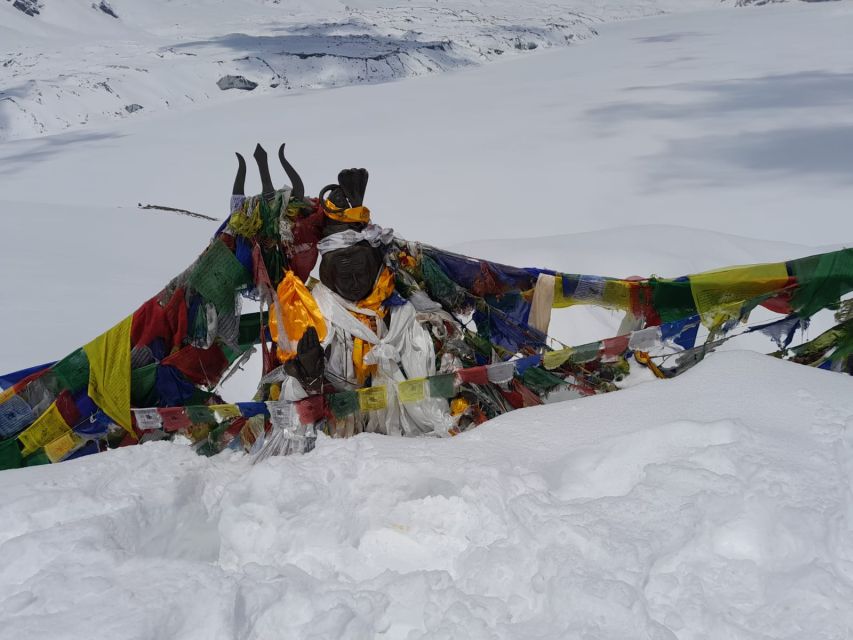
The trail continues through bamboo forest and along the Modi Khola valley. You pass the Himalayan Hotel and Hinku Cave before climbing steadily to Deurali at 3,230 meters.
This is where altitude becomes a more serious consideration. The distance may not sound extreme, but the steady ascent and thinner air can make a normal walking pace feel slow. Drink regularly, eat even if your appetite drops, and tell your guide about headaches, nausea, unusual tiredness, or breathing problems.
Deurali is the last overnight stop before Annapurna Base Camp. It is not the place to prove anything. Resting well here is more useful than pushing too hard, because the next morning brings the highest point of the trek.
Day 7: Machhapuchhre Base Camp to Annapurna Base Camp
The route from Deurali follows a narrow valley that opens into the Annapurna Sanctuary. You pass Machhapuchhre Base Camp at 3,700 meters, then continue to Annapurna Base Camp at 4,130 meters.
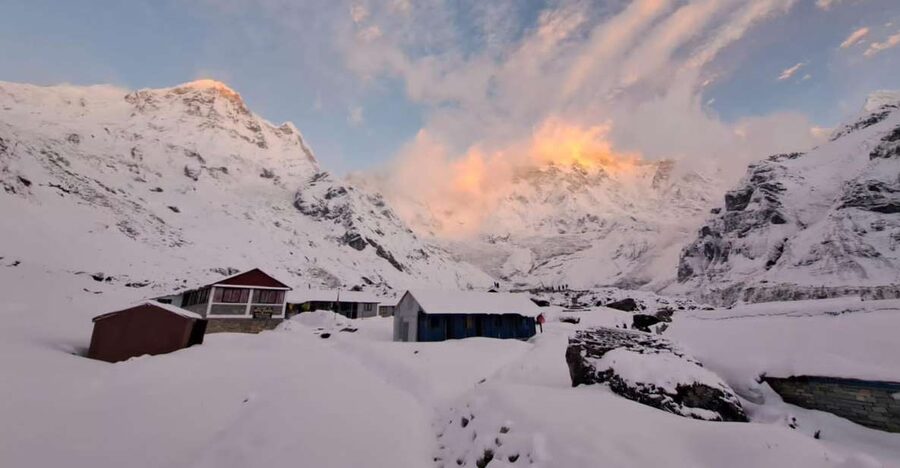
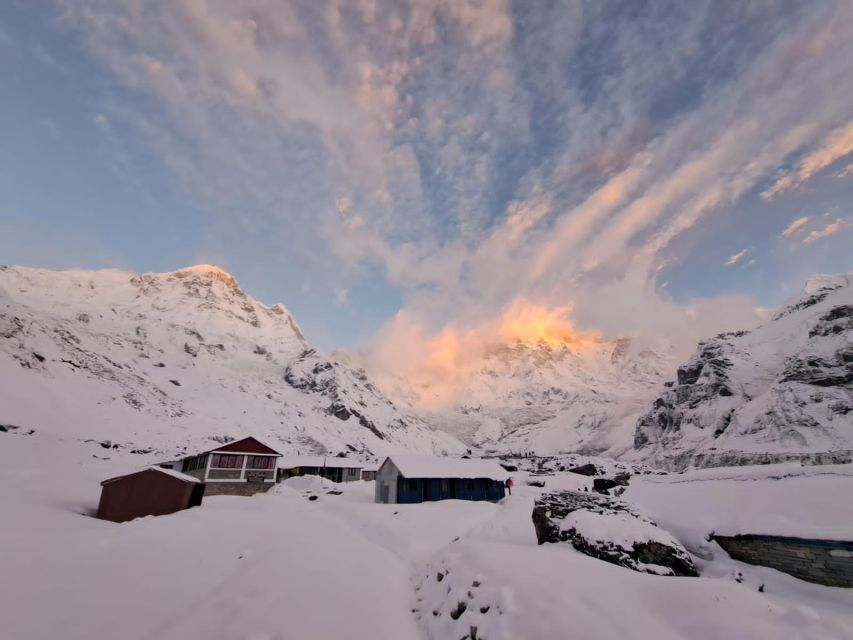
This is the emotional center of the trek. Annapurna I rises to 8,091 meters, and the surrounding peaks include Annapurna South, Hiunchuli, Machhapuchhre, and other high summits. The sense of enclosure is different from Poon Hill. Instead of looking across a broad range, you are surrounded by steep mountain walls.
The route is demanding because of altitude, not just distance. Move slowly and let the guide set a sensible pace. A private group can stop when needed for water, photos, or a rest without worrying about holding up a larger party.
The overnight stay at base camp is a major reason to choose this ten-day plan. You are not simply walking to a viewpoint and turning around. You get time at 4,130 meters, with an early morning chance to see the peaks in changing light.
Day 8: Returning from base camp to Bamboo
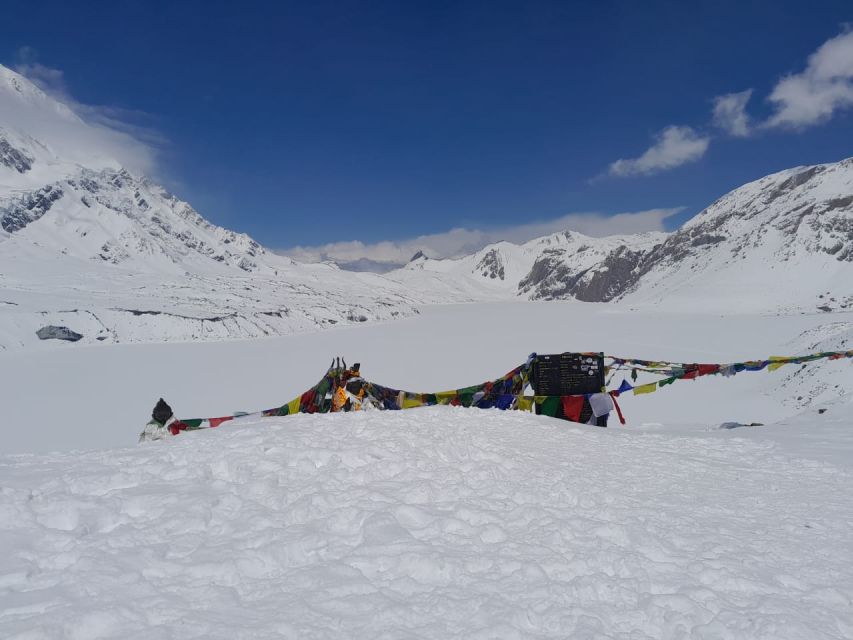
An early start gives you another chance to see sunrise over the mountains before the descent begins. You retrace the route through Deurali and continue to Bamboo for the night.
Descending is quicker in some places, but it still demands care. Tired legs and loose or uneven trail sections can cause trouble, especially after the base camp day. Keep your footwear secure and avoid treating the downhill as a free ride.
This day also shows the benefit of the ten-day schedule. You are not forcing the entire return to the lower valley at once. Bamboo breaks the descent into a manageable section, leaving you with a more comfortable final approach to Jhinu Danda.
Day 9: Chhomrong and the hot springs at Jhinu Danda
The trail continues down through forest to Chhomrong, where you stop for lunch, then descends farther to Jhinu Danda at 1,780 meters.
Jhinu Danda is a welcome change after the high, cold sections of the route. The natural hot springs offer a chance to soak tired muscles, and this is one of the most practical pleasures built into the itinerary. Bring a swimsuit or clothing suitable for the springs, although the official packing list only specifically calls for comfortable shoes, identification, insurance, and a passport photo.
The descent to Jhinu can still be hard on your knees. It is tempting to think the trek is over once you leave base camp, but long downhill sections can be just as tiring as climbing. Take your time and use the stop at Chhomrong to refuel.
Day 10: Jhinu Danda to Nayapul and back to Pokhara
Your final walking section takes you from Jhinu Danda to Nayapul. A private car then returns you to Pokhara, closing the ten-day route.
The final day is less about new mountain views and more about completing the route without rushing. After several days on foot, the road transfer feels like a luxury. Pickup and drop-off within the Lakeside area are included, which makes the return simple if you are staying there.
Weather, altitude, and the best season
Spring, from March to May, and autumn, from September to November, generally offer the best conditions for clearer mountain views and more stable weather. March and April can be especially attractive when rhododendrons are in bloom, adding color to the forest sections.
Still, do not book this trek expecting perfect skies. One September departure had three rainy days and only one sunny day, with cloud covering much of the mountain scenery. The guide helped by pointing out views whenever the clouds opened, but no guide can control the weather.
The route can operate throughout the year, but winter brings colder conditions at base camp, while the monsoon months can bring rain and cloud. You need travel insurance that covers trekking and emergency rescue. Rescue costs are not included, and the package does not include travel insurance.
Plastic bottles are not allowed, so plan to carry a reusable bottle or another suitable container. Pets are also not permitted, and the trek is not suitable for pregnant women or wheelchair users.
What you should budget beyond the $310 price
The included services cover the core structure of the trek, but you should plan for daily spending in the mountains. Food and drinks are not included, and prices tend to rise as supplies travel farther up the route.
A practical extra budget is around $30 to $40 per day if you want paid comforts such as:
- Hot showers
- Wi-Fi
- Battery charging
- Heater use
- Meals and drinks
You should also carry a passport or ID card and a passport-sized photo. Comfortable shoes are required, and insurance is not optional in practical terms. Gratitude for the guide and other support staff is optional, but many people choose to budget for it.
At $310, the package offers good value for the transport, permits, guide, accommodation, and private organization. It is less suitable if you want every meal, drink, shower, and comfort included in one price.
Who will enjoy this trek most
You should choose this route if you want a serious mountain walk with a clear structure and daily support. It suits people who can manage several hours of walking, steep steps, repeated descents, and a high overnight stay at 4,130 meters.
It is also a good choice for slower hikers. The pace can be adjusted, and one person specifically appreciated never being rushed. The guide’s role matters here. Biru was praised for patience and care, while Bikram was valued for explaining local people and nature and for helping with an unexpected cash shortage.
You should think twice if you dislike basic guesthouses, changing weather, or paying extra for mountain comforts. You also need to accept that impressive peaks may be hidden by cloud. The route is rewarding because of its variety, not because every hour delivers a clear view.
Should you book it?
I would book this trek if I wanted Poon Hill and Annapurna Base Camp in one well-paced private itinerary from Pokhara. The route gives you a sunrise viewpoint, village life, forest, high valleys, a night at base camp, and hot springs at the end.
I would book it with a realistic extra budget and good insurance. Ask who your guide will be, confirm what porter support is arranged, and be ready to adjust the plan if altitude or weather demands it.
For a private ten-day route at $310, the strongest reasons to choose it are the flexible pace, included transport and permits, and the chance to sleep at Annapurna Base Camp rather than simply visit and leave. The main reasons to hesitate are the physical effort, separate food and comfort costs, and the possibility of rainy or cloudy days.
FAQ
How long is the Poon Hill and Annapurna Base Camp trek?
The trek lasts 10 days, beginning and ending in Pokhara. Walking sections run from Nayapul through Poon Hill and Annapurna Base Camp, with a private road transfer at the start and finish.
What is included in the $310 price?
The price includes hotel pickup and drop-off within the Lakeside area, a professional English-speaking trekking guide, trekking permits and official documents, private transport between Pokhara and Nayapul, guesthouse accommodation, a first-aid kit, a private group, and Poon Hill entrance.
Are food and drinks included?
No. Food and drinks are available for purchase during the trek and are paid for separately.
What languages can the guide speak?
Guiding is available in Nepali, English, and Hindi. The activity information specifically lists an English-speaking trekking guide.
What is the highest point on the route?
Annapurna Base Camp is the highest overnight destination, at 4,130 meters. Poon Hill reaches 3,210 meters, and Machhapuchhre Base Camp is at 3,700 meters.
What should I bring?
Bring a passport or ID card, comfortable shoes, travel insurance, and a passport-sized photo. You should also be prepared for changing mountain weather and temperature.
New treks around Nepal
- Pokhara: Poon Hill Trek★ 5.0 · 3 reviews
- Pokhara: 9-Day Annapurna Base Camp Trek with Poon Hill★ 5.0 · 6 reviews
- Pokhara: 7 Day Annapurna Base Camp Trek★ 4.9 · 38 reviews
- Pokhara: 5-Day Trek to Annapurna Base Camp and Hot Springs★ 5.0 · 4 reviews
- Pokhara: Amazing 7-Day ABC Trek with Natural Hot Spring★ 5.0 · 5 reviews
- Pokhara: Majestic Mardi Base Camp Guided Trek with HotSpring★ 5.0 · 6 reviews
- Pokhara: 5-Day Annapurna Base Camp Trek with Hot Spring★ 5.0 · 3 reviews
- Pokhara: 5-Day Ghorepani and Poon Hill Private Trek★ 5.0 · 4 reviews
Annapurna Base Camp Treks, side by side.
Trekking in Annapurna/Langtang/Everest/Upper Mustang regions
Read our review →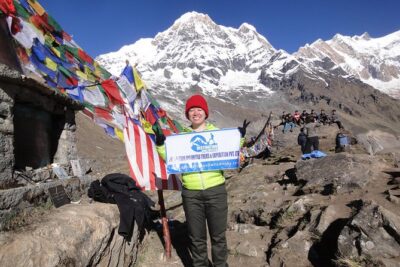
Kathmandu to Annapurna Base Camp (ABC) 5-Day Trek
Read our review →
Lists this trek appears in