
Review · KATHMANDU
Annapurna Base Camp Trek 12 Days
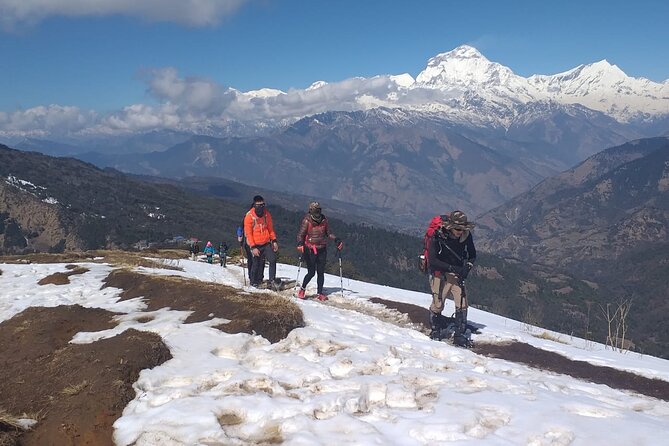
Annapurna Base Camp is a fine choice if you want a serious Himalayan trek without committing to a month in the mountains. In 12 days, you travel from Kathmandu to Pokhara, climb through villages and forests, watch sunrise from Poon Hill, and reach a high mountain basin surrounded by Annapurna peaks.
I like the Poon Hill sunrise stop and the fact that permits, meals, teahouse lodging, guide services, and ground transport are bundled into the $800 price. I also like the personal care built into the guiding: Bhairas Tamang is repeatedly singled out for setting a steady pace and stopping when people tire, while Prajil is praised for practical help, humor, and snacks at teahouses.
The main drawback is the schedule. You spend long hours on buses before and after the trek, and the walking days include steep stone trails at altitude. Travel insurance covering emergency rescue and evacuation is not included, so you must arrange that yourself.
Key points before you book
- Poon Hill adds a superb sunrise viewpoint before you enter the Annapurna Sanctuary.
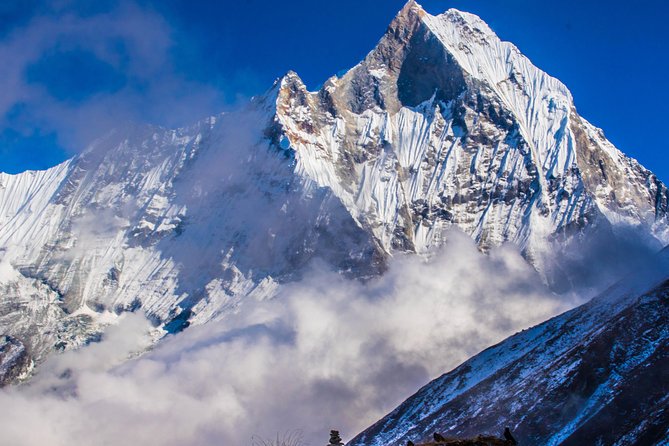
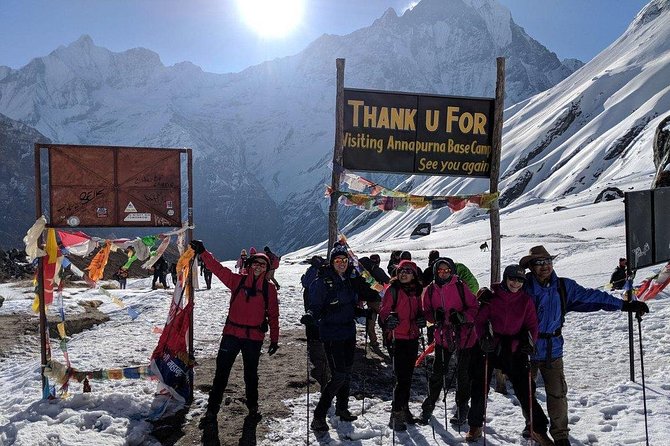
- Annapurna Base Camp is the high point, reached after passing Machhapuchhre Base Camp.
- The $800 package includes a lot, including permits, 11 nights of accommodation, meals on trek days, guides, and transport.
- Guide quality matters here, and named guides such as Bhairas Tamang and Prajil have been praised for patience and care.
- You need moderate fitness, since the route includes uphill and downhill walking on rugged mountain trails.
- Rescue insurance is your responsibility, and personal expenses such as bottled drinks, Wi-Fi, snacks, and porter service cost extra.
What the 12-day Annapurna route really gives you
This is not simply a walk to one viewpoint. The route links several distinct parts of Nepal: Kathmandu’s airport and city streets, the lakeside setting of Pokhara, hill villages, Poon Hill, the Modi and Chhomrong valleys, and the high mountain bowl around Annapurna Base Camp.
The trip costs $800 per person. That is a useful price when you consider what is covered. Airport transfers, Kathmandu to Pokhara transport, Pokhara to the trailhead, the return ride, 11 nights of accommodation, trekking meals, tea and coffee, an experienced guide, permits, local fees, a map, water-purification tablets or drops, and government taxes are all included.
You still need to budget for international flights, your Nepal visa, insurance, meals in Kathmandu and Pokhara, drinks, snacks, Wi-Fi, personal purchases, tips, and a porter if you want one. The package is strongest for someone who wants one clear price and does not want to arrange permits or mountain transport independently.
This is a private trip for your own group, not a large scheduled departure. That matters on a trek. Your guide can pay attention to your pace and comfort instead of managing a crowd, though the exact flexibility of the schedule should be confirmed before departure.
More Annapurna treks around Kathmandu:
- Annapurna Circuit Trek with Tilicho Lake
★ 5.0 · 368 reviews - Annapurna base camp trek 5 Days
★ 5.0 · 252 reviews - 14-Day Private Annapurna Base Camp Trek
★ 5.0 · 180 reviews
Day 1: Arriving in Kathmandu
Your trip begins at Tribhuvan International Airport, where the company provides an arrival transfer to your hotel. This first day is intentionally light, which is sensible after an international flight and before an early start toward Pokhara.
You are advised to use part of the day for trek preparation and rest. That is good advice. Kathmandu can be noisy and tiring, and you will appreciate having time to organize your bag, check clothing, and meet your guide before the mountain section begins.
The airport transfer is included, as is the departure transfer at the end. The stated meeting arrangements refer to Kathmandu, with an early start around 6:15 or 6:30 a.m., so confirm the exact pickup time and location with the operator before setting your alarm.
Day 2: The long road from Kathmandu to Pokhara
The guide meets you at your hotel or hostel at 6:30 a.m. You walk to the Sorakhutte tourist bus station and board the 7 a.m. bus. The route passes through Malekhu before continuing toward Pokhara.
This is a practical travel day, not a sightseeing day. The bus saves you the cost of a private vehicle and connects the two main bases of the trip, but road travel in Nepal can feel slow. If you prefer privacy and a faster journey, ask about transport upgrades before booking.
The benefit is that your guide manages the transfer and helps keep the journey organized. You do not need to find a separate bus, arrange a second hotel booking, or work out how to link Kathmandu with the trekking route.
Day 3: Pokhara, Nayapul, and the trailhead
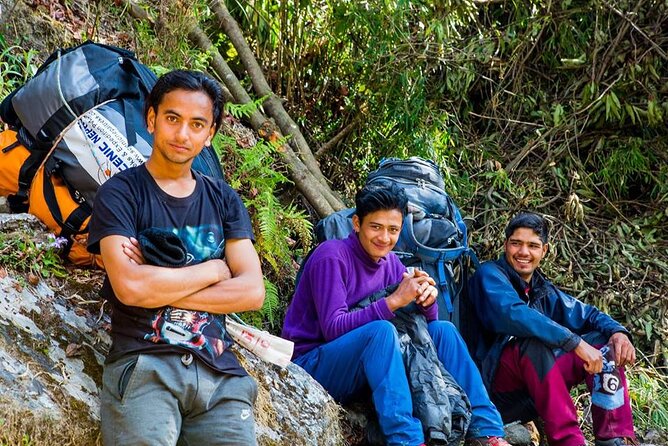
You have breakfast in Pokhara before taking a car or taxi to the bus park. From there, you use a shared local bus or jeep for the roughly one-and-a-half-hour drive to Nayapul, the starting point described for the trek.
This day shifts the mood quickly. Pokhara is a city of lakes and a major base for mountain journeys, while Nayapul brings you to the road and trail network leading into the hills. The private vehicle between Pokhara and the trek start point is included, which makes this connection easier than arranging each ride alone.
The exact overnight village and walking distance for this day are not fully specified in the supplied schedule. That is worth clarifying, especially if you want to know how much walking begins immediately after the road journey.
More treks around Kathmandu:
- Everest Base Camp Trek – 14 Days
★ 5.0 · 1,499 reviews - Everest Base Camp Trek
★ 5.0 · 842 reviews - Everest Base Camp Trekking
★ 5.0 · 485 reviews - Everest Base Camp Trekking – 13 Day
★ 5.0 · 365 reviews
Day 4: Mountain villages and the first Annapurna views
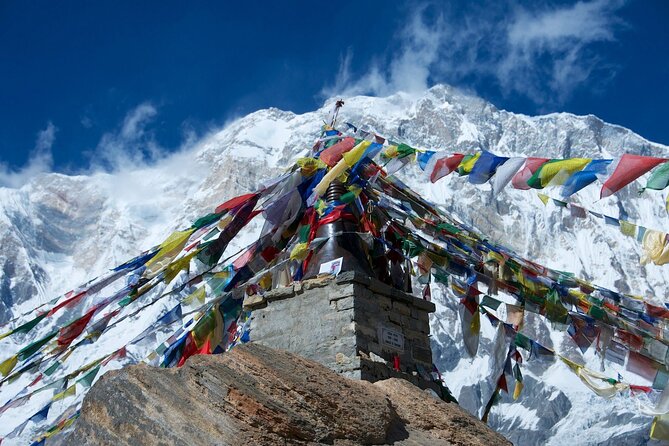
Your first full morning on the mountain begins with local sounds, including donkeys, goats, hens, and dogs. That detail tells you something useful about the setting: this is a working rural route, not a polished resort corridor.
Breakfast comes with mountain views, including Annapurna scenery. The appeal here is the gradual change in pace. You leave buses and city traffic behind and begin moving through villages where animals and footpaths remain part of daily life.
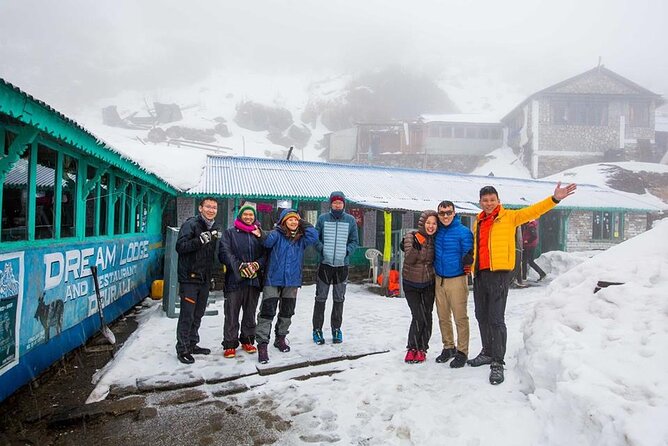
Expect simple accommodation and early mornings. The package includes teahouse-style lodging for the trekking portion, but it does not promise luxury. Bring patience for shared mountain facilities and keep a small personal kit handy for the basics.
Day 5: Poon Hill before breakfast
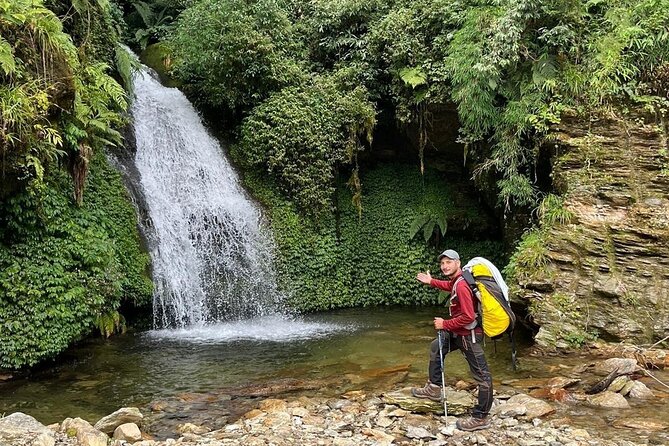
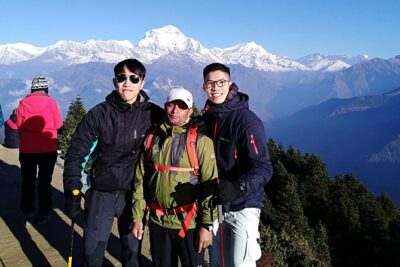
You wake early for the 45-minute to one-hour climb to Ghorepani Poon Hill Viewpoint. The reward is sunrise over the Himalayas, with up to 18 peaks visible in clear conditions.
This is one of the smartest features of the route. Poon Hill gives you a major mountain view early in the trek, before you make the longer push toward Annapurna Base Camp. It also offers a clear reason to accept the pre-dawn start, even if getting out of a warm bed feels like a bad idea at the time.
Weather controls the quality of the view. The schedule promises the viewpoint, not cloudless skies. Pack warm layers for the early climb, and keep your camera ready, but do not judge the entire trek by one sunrise.
Day 6: Tadapani, Chhomrong, and the descent to Sinuwa
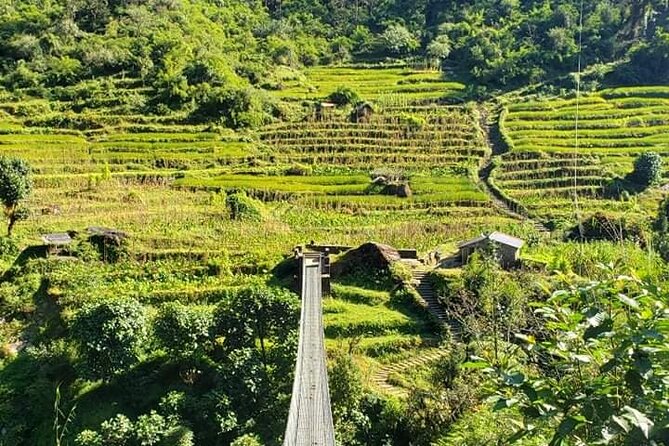
The route from Tadapani toward Sinuwa is described as enjoyable and mostly downhill. You pass through Chhomrong, a substantial village with views toward Modi and Chhomrong Khola, then continue toward Sinuwa.
Downhill sounds easy, but long descents can be hard on knees. Trekking poles may help, and you should not rush simply because the route loses altitude. The guide’s role becomes useful here. Bhairas Tamang has been praised for keeping a comfortable pace, stopping when someone is tired, and checking that everyone is all right.
Chhomrong also marks an important change in the route. You are moving toward the narrower mountain corridors leading to the Annapurna Sanctuary. From here, the walking feels more focused on reaching the high interior of the range.
Day 7: Sinuwa to Bamboo and Deurali
Sinuwa offers a sunrise view before breakfast, followed by the climb toward Deurali. The route takes about an hour and a half to Bamboo, then continues toward the higher settlements.
This is a more demanding day than the previous descent. The trail gains height through forested sections, and the approach to Deurali brings cooler air and a stronger sense of altitude. You should keep your pace steady and tell the guide early if you feel unwell.
Meals on trekking days include breakfast, lunch, dinner, tea, and coffee. That is valuable in a remote area, where finding food independently would add both time and uncertainty. Bottled water, soft drinks, beer, juice, snacks, and Wi-Fi are personal expenses, while water-purification drops or tablets are supplied.
Day 8: Machhapuchhre Base Camp to Annapurna Base Camp
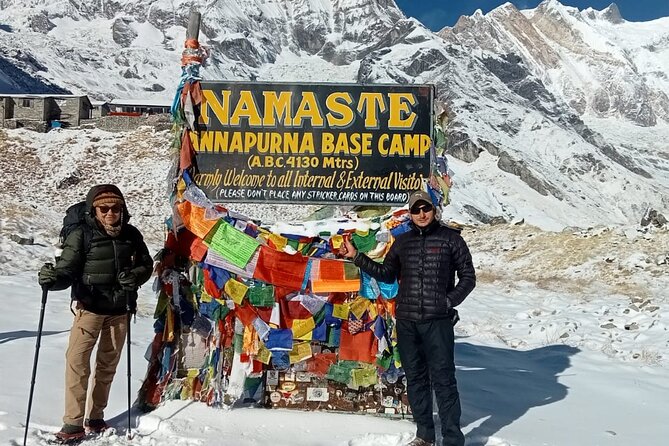
This is the central day of the trek. You continue toward Machhapuchhre Base Camp, then walk on to Annapurna Base Camp, surrounded by high Himalayan peaks.
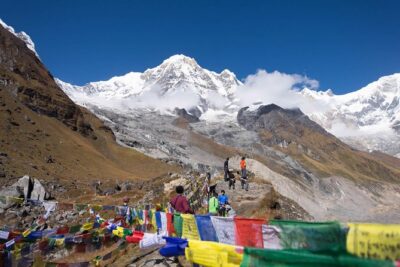
The destination is not just a sign or a quick photo stop. It is a mountain basin encircled by dramatic summits, and the changing scale of the route is part of the reward. Villages and farm paths give way to a colder, more exposed high-altitude setting.
Conditions can be tough. The schedule does not give an exact walking time or altitude profile for this day, so you should ask for those details before departure. You should also understand how the company handles weather delays, illness, and changes in the route.
Your guide’s experience is particularly important here. Nepal Nirvana Trails describes more than two decades of Himalayan guiding, and the guides named in the feedback include Prajil, Deepak, Somnath Tripathi, Bhairas Tamang, Uttar, and Buddha. Prajil is praised for helping with practical needs and bringing snacks for tea stops, while Somnath is praised for handling problems and organizing the day.
Day 9: Sunrise at Annapurna Base Camp and the return
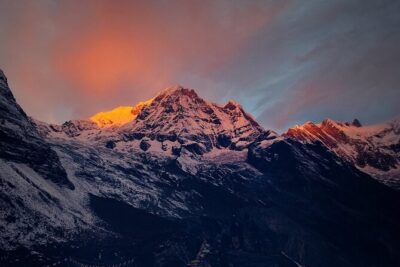
If the weather is clear, you watch sunrise from Annapurna Base Camp. After breakfast, you retrace the route toward Sinuwa, passing over rugged trails and through lightly forested areas.
The return is not an afterthought. You are still walking for hours, and tired legs can make rough ground more difficult than it felt on the way up. Keep your boots tied securely, use the support of your guide, and avoid spending all your energy at the viewpoint.
The return route also lets you see the valley from a different angle. You gain a better sense of how far the base camp sits from the lower villages, and the change from high mountain scenery to forest and farmland happens gradually.
Day 10: Sinuwa to Siwai and back toward Pokhara
The final trekking day takes about two hours to reach Siwai from Sinuwa. The route climbs to Chhomrong and passes views of mountains, waterfalls, and farmland before the road connection back toward Pokhara.
This is a satisfying finish because it combines a last stretch of walking with the practical end of the mountain section. You are no longer pushing toward a high pass or base camp. Instead, you are making your way back to transport, hot showers, and city comforts.
A private vehicle between the trek ending point and Pokhara is included. That removes one of the more annoying parts of independent trekking, namely trying to arrange a ride after several days on foot.
Day 11: Pokhara to Kathmandu
After breakfast, you leave Pokhara for Kathmandu by tourist bus. The rest of the day in Kathmandu is free for rest or shopping, followed by a farewell dinner in the evening.
The return bus is another long ground-transfer day, so do not plan a packed sightseeing schedule after arrival. The free time is better used for a shower, laundry, a quiet meal, or a last walk around the city.
Meals in Kathmandu and Pokhara are not included except where breakfast is specified. This gives you freedom to choose your own restaurants, but you should set aside extra money for those meals.
Day 12: Airport transfer and departure
The final day is simple. The company takes you to the airport for your onward flight and ends its service there.
Because mountain schedules can shift, avoid arranging a tight same-day connection unless you have checked the timing carefully. The provided schedule does not describe a buffer for delays, so build some practical caution into your international plans.
How good is the $800 value?
At $800, this package offers strong value for a guided 12-day Himalayan journey. The price includes the items that can quietly become expensive when arranged separately: airport transfers, long-distance buses, private transfers near Pokhara, permits, local fees, guide service, accommodation, and most meals.
The important limits are clear. You pay separately for international flights, the visa, insurance, Kathmandu and Pokhara lunches and dinners, personal drinks, Wi-Fi, snacks, and a porter. Tips for the guide are expected, so include them in your planning rather than treating them as a surprise.
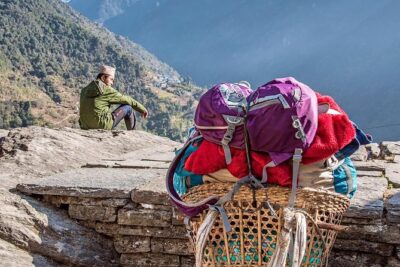
The lack of included porter service is not automatically a problem. Some people prefer carrying their own bags, while others will want help with luggage on steep trails. If you need a porter, arrange it before the trek and ask about the cost, luggage limits, and working arrangements.
Who will enjoy this trek most?
You should consider this trek if you have moderate physical fitness and want a private guided route with a clear structure. It suits someone who enjoys village walking, early starts, simple mountain accommodation, and big scenery more than someone seeking a relaxed holiday.
You should be comfortable with steep uphill and downhill trails, cold mornings, basic facilities, and long bus rides. The itinerary includes rugged sections and altitude, but it does not provide enough detail to judge the route for a medical condition. Speak with a doctor and arrange rescue insurance if that is relevant to you.
The strongest reason to choose this company is the guiding attention. The most praised qualities are safety, organization, patience, humor, and the ability to adjust the pace. Bhairas Tamang is especially noted for checking on tired walkers, while Prajil is described as helpful, responsive, and good company.
Should you book Nepal Nirvana Trails for Annapurna Base Camp?
Book this trek if you want Annapurna Base Camp plus Poon Hill, and you value having transport, permits, meals, and a guide handled in one package. The private format and repeated praise for guides such as Bhairas Tamang and Prajil add real value.
Think twice if you dislike early mornings, shared teahouse accommodation, rough trails, or long bus journeys. Before paying, confirm the exact daily walking hours, overnight villages, group size, porter cost, emergency procedures, and pickup time.
The cancellation terms are generous up to 24 hours before the start, with a full refund. After that cutoff, refunds and changes are not accepted. If you are ready for a physical but manageable mountain trip and you arrange proper insurance, this is a well-priced way to reach one of Nepal’s classic Himalayan destinations.
FAQ
Is airport pickup included?
Yes. Arrival and departure airport transfers in Kathmandu are included.
What transportation is included?
The package includes tourist bus transport between Kathmandu and Pokhara, plus private vehicle service from Pokhara to the trekking start point and from the trek ending point back to Pokhara.
Are meals included during the trek?
Yes. Breakfast, lunch, dinner, tea, and coffee are included during the trekking portion. Meals in Kathmandu and Pokhara are not included, apart from the breakfasts specified in the package.
Are permits included?
Yes. The package includes the Annapurna Conservation Area Permit, TIMS, local permits, applicable fees, government tax, and VAT.
Is a porter included?
No. Porter service is not included, but you can request one for an additional cost.
What fitness level is required?
The activity states that you should have a moderate level of physical fitness. The route includes uphill and downhill walking, rugged trails, early morning starts, and high-altitude sections.
New treks around Kathmandu
- Kathmandu or Pokhara: 5-Day Annapurna Base Camp (ABC) Trek★ 4.5 · 2 reviews
- Pokhara: 2 Day Ghorepani & Poon Hill Private Trekking★ 4.9 · 8 reviews
- From Kathmandu: 6-Day Langtang Valley Guided Trek★ 5.0 · 2 reviews
- Pokhara: 5-Day Annapurna Base Camp (ABC) Trek★ 5.0 · 9 reviews
- Kathmandu: Langtang Valley 6-Day all inclusive Guided Trek★ 5.0 · 2 reviews
- Kathmandu: 6 Days Langtang Valley Trek with Kyanjin Ri★ 5.0 · 7 reviews
- Kathmandu: 6-Day Limitless Langtang Trek★ 5.0 · 21 reviews
- Kathmandu: 9- Day Annapurna Circuit Trek★ 5.0 · 2 reviews
Annapurna Base Camp Treks, side by side.
Trekking in Annapurna/Langtang/Everest/Upper Mustang regions
Read our review →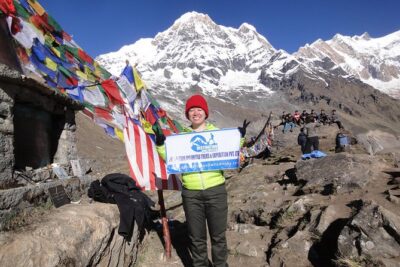
Kathmandu to Annapurna Base Camp (ABC) 5-Day Trek
Read our review →
Lists this trek appears in