
Review · NEPAL
Kathmandu: 7 Day Langtang Valley Trek
The finest part of this seven-day trek is the steady approach to Kyanjin Gompa, where the valley narrows beneath Langtang Lirung and other snowy peaks. I like the private guide setup, since you can walk at a pace suited to your legs, and I like the mix of forest, Buddhist culture, suspension bridges, and high mountain scenery. The catch is simple: this is not a gentle walking holiday. Some days can involve roughly 15 kilometers, about eight hours on foot, and major climbing.
I also like that the route gives you a full acclimatization day at 3,870 meters, with optional walks to Kyanjin Ri or Tserko Ri. Still, you should check exactly what the operator means by included porter service, Kathmandu hotel nights, and meals before paying. At $450, the package can be sensible if those inclusions are delivered well, but one recent booking raised serious concerns about poor lodging, inaccurate preparation advice, and a shortened trek.
Key points to know before booking
- Kyanjin Gompa is the high point: You spend a full day here, with mountain walks and time to visit the local cheese factory.
- The walking is demanding: Expect steep steps, long days, and high altitude, not simply scenic village strolling.
- You get a private English-speaking guide: This allows more flexibility than a fixed group, though guide quality can vary.
- Culture is part of the route: You pass through Tamang communities and meet the Himalayan Buddhist character of the Langtang region.
- Meals cost extra: The stated estimate is about NPR 2,500 per person per day, so budget for food separately.
- The $450 price needs checking: Permits, transport, teahouses, a guide, porter service, and some Kathmandu lodging are included, but confirm the exact package in writing.
Why Langtang works well in seven days
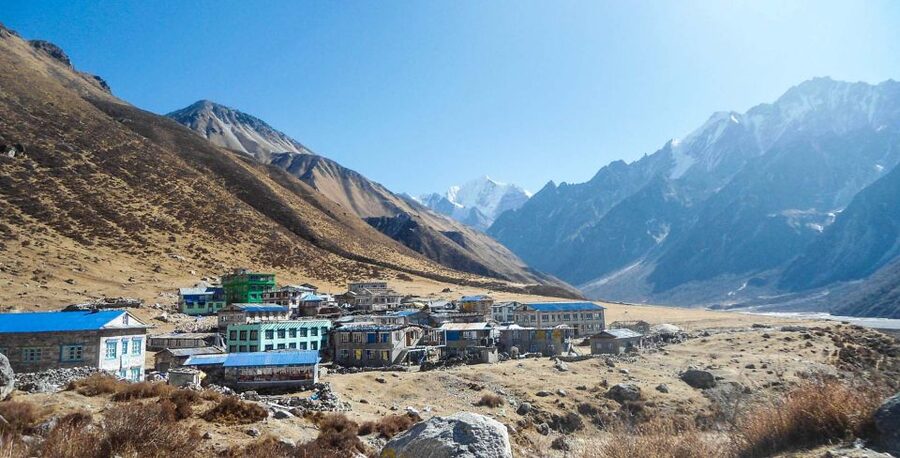
Langtang is a strong choice if you want a serious Himalayan trek without committing to a much longer expedition. The route starts with a road journey from Kathmandu, then follows the valley upward from Syabrubesi to Kyanjin Gompa. You see the scenery change in a compact week: village farmland gives way to thick forest, then open high country and snow-covered summits.
The route also has a human side. Tamang villages shape much of the lower valley, while the higher section reflects Tibetan Buddhist culture, yak grazing, monasteries, and mountain cheese production. This makes the walk feel like more than a climb from point A to point B.
I would not choose this trip only because the price looks low. The value depends on how well the operator handles transport, accommodation, food arrangements, and support at altitude. The package includes many of the large costs, but meals are extra and the wording around porter service is not perfectly clear.
More Langtang treks around Nepal:
- Trekking in Annapurna/Langtang/Everest/Upper Mustang regions
★ 5.0 · 161 reviews - Langtang Valley Trek
★ 5.0 · 140 reviews - Langtang Valley Trek
★ 5.0 · 61 reviews
Day 1: Kathmandu to Syabrubesi at 1,550 meters
The first day is spent on the road. You are collected in Kathmandu and driven toward Syabrubesi, passing villages and rural scenery on the way. Syabrubesi is the starting point for the trek and your overnight stop.
This transfer matters because it gets you directly to the trailhead rather than spending a night in another city. It is also a long travel day in spirit, even before the walking begins, so do not expect to arrive ready for a demanding hike.
The package includes transportation from Kathmandu to the trek start and back again. Pickup and drop-off are also included, along with one or two Kathmandu hotel nights in the usual arrangement. Ask the operator to confirm the exact number of nights and where they fall in your schedule.
Syabrubesi gives you a final lower-altitude base before the trail rises. Use the evening to organize your daypack, check your water, and make sure your passport or identification copy and passport-sized photo are ready. Those documents are specifically required for the trip.
Day 2: Forest trails and the Langtang River
The walk from Syabrubesi to Lama Hotel reaches about 2,380 meters. You follow the Langtang River through thick forest, cross suspension bridges, and climb gradually through a setting that feels far removed from Kathmandu.
This is where the trek becomes a real physical commitment. The ascent is not just a single steep wall, but the trail still demands steady effort. Forest cover gives some protection from the sun, while the river and bridges add variety to the day.
Lama Hotel is a simple mountain stop surrounded by greenery. Accommodation is in a teahouse lodge, which means practical shelter rather than hotel comfort. You should expect basic rooms and shared facilities, with the quality depending on the particular lodge used.
Your guide is important here. A licensed guide should help with route decisions, accommodation arrangements, and basic safety. Since this is a private group, you do not have to match the speed of a large mixed party. That is useful on a route where fitness levels can differ sharply.
Day 3: Climbing toward Langtang Village
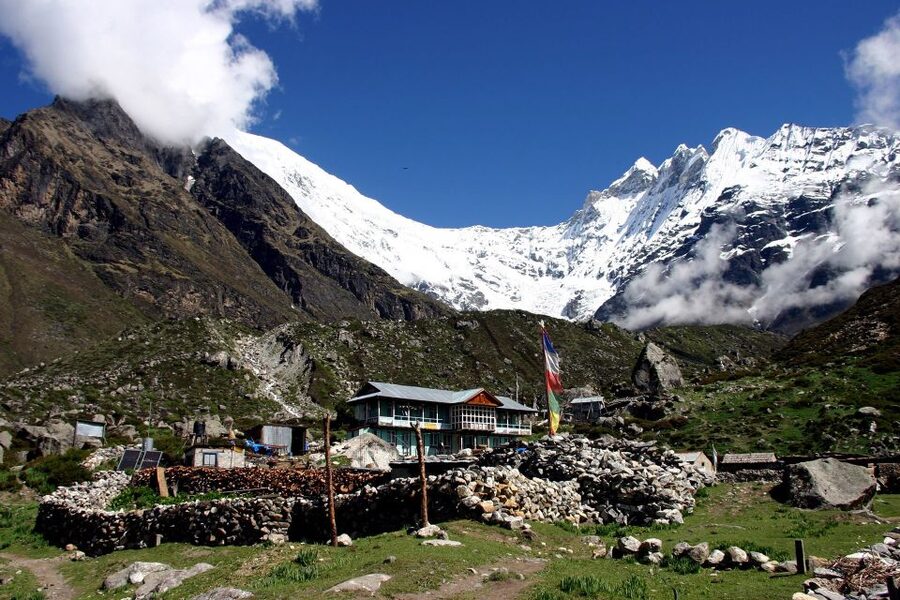
From Lama Hotel, the route continues upward to Langtang Village at about 3,430 meters. You walk through rhododendron and oak forest, with mountain views opening as the valley rises.
The altitude gain is significant, so this is a day to slow down rather than chase a fast arrival. A recent participant described the wider trek as reaching about 1,200 meters of climbing in a day, over roughly 15 kilometers and eight hours. Treat that as a warning about the possible workload, not a fixed promise for every day.
Langtang Village brings a stronger sense of local culture. The route passes through Tamang communities, and your guide can help you understand the local setting as you walk. The trip description promises contact with both Tamang and Sherpa communities, though it does not identify particular villages or explain how long you stop in each one.
At this altitude, the mountain views become more immediate. You are no longer simply walking through wooded hills. The valley begins pointing you toward the white peaks ahead, and each section of trail feels like progress into a more severe mountain environment.
More week-long treks around Nepal
- Pokhara: 7 Day Annapurna Base Camp Trek
★ 4.9 · 38 reviews - Pokhara: 7-Day Annapurna Base Camp Trek & Natural Hot Spring
★ 5.0 · 11 reviews - Pokhara: Amazing 7-Day ABC Trek with Natural Hot Spring
★ 5.0 · 5 reviews - Pokhara: 7-Day Annapurna Base Camp Trek & Hot Spring
★ 4.0 · 3 reviews
Day 4: Kyanjin Gompa at 3,870 meters
The walk from Langtang Village to Kyanjin Gompa is one of the most rewarding sections. The route passes yak pastures and glacial streams before reaching the Buddhist monastery at 3,870 meters.
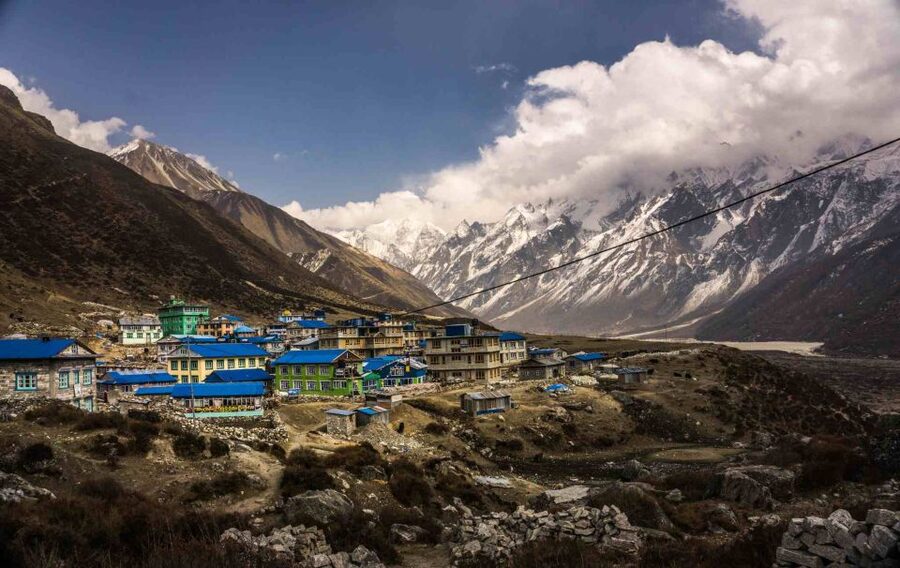
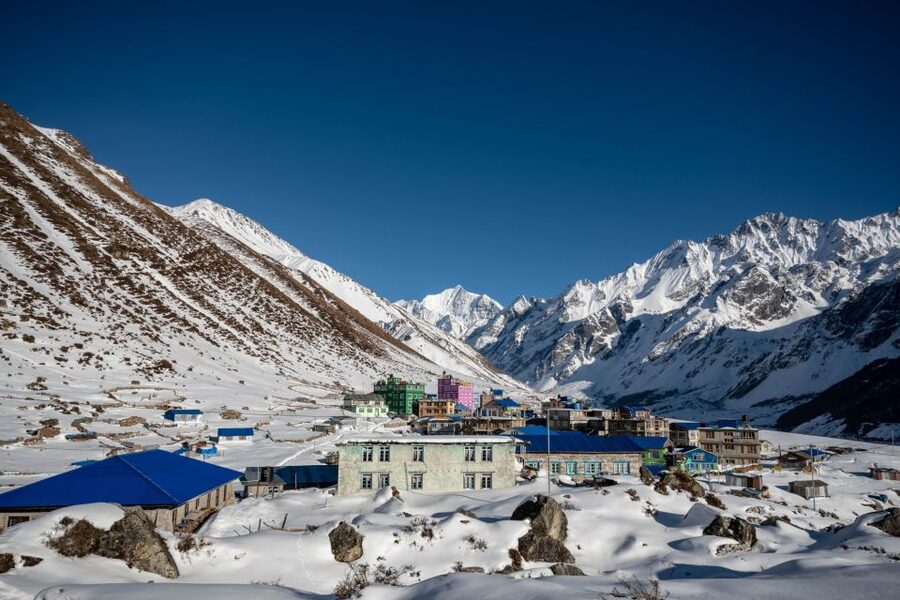
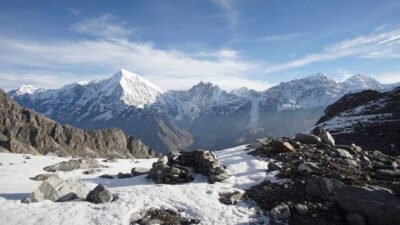
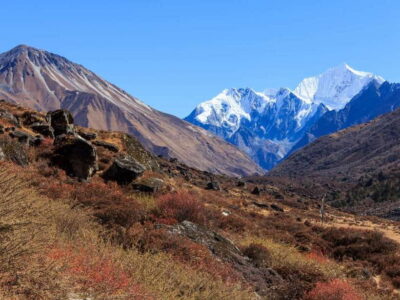
Kyanjin Gompa is the destination that gives the trek its shape. You are deep in the upper valley, with views toward Langtang Lirung and other high peaks. Snowy summits appear close enough to dominate the entire setting, though weather can affect how much you see.
The elevation also makes this a serious day. You are gaining nearly 450 meters from Langtang Village, but the accumulated climbing from Syabrubesi matters just as much. Walk slowly, drink regularly, and tell your guide if you feel unwell. A private guide cannot remove altitude risk, but a good one can notice changes and help you make sensible choices.
The overnight stay at Kyanjin Gompa is in a teahouse. Bring realistic expectations. This is a remote mountain stop, not a polished lodge, and the supplied price does not include meals.
Day 5: Acclimatization around Kyanjin Gompa
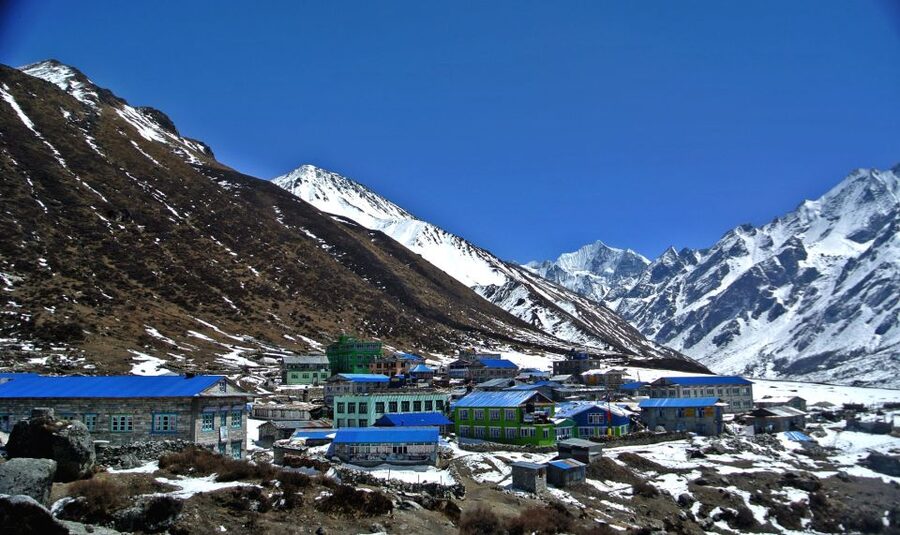
The extra day at Kyanjin Gompa is one of the smartest features of the schedule. Instead of reaching high altitude and immediately turning around, you have time to adjust and see more of the upper valley.
You can take a shorter walk to Kyanjin Ri or attempt the longer, more demanding climb toward Tserko Ri. The information supplied does not state exact walking times, difficulty grades, or whether either option has an extra charge, so ask your guide what is sensible for your fitness and conditions.
You can also visit the local cheese factory. That is a useful change of pace after several long days, and it gives you a closer look at how mountain communities use local resources. The Buddhist monastery adds another quiet point of interest.
This day is not automatically a rest day. If you climb one of the nearby ridges, it can become one of the hardest days of the trip. The value is that you can choose a shorter outing, spend time around the village, or make a higher attempt with your guide.
Day 6: Retracing the route to Lama Hotel
The return to Lama Hotel follows the same broad route through the valley. You descend from Kyanjin Gompa, pass the high pastures and streams again, and continue through forest.
Descending is easier on the lungs, but it can be tough on knees and thighs. Rocky steps and uneven trail surfaces require attention, especially after several days of walking. The warning that you will climb hundreds of steps should be taken seriously, even though downhill sections can feel just as tiring.
Retracing the route has a benefit: you see familiar places from a different direction and can appreciate how much altitude you gained. It also means the scenery is not entirely new on the return. If you prefer a route with different views every day, that repetition may disappoint.
Lama Hotel provides a useful final mountain night before the trailhead. This is a good time to check your transport plan with the guide, particularly if you have a flight soon after returning to Kathmandu.
Day 7: Syabrubesi, then back to Kathmandu
The last morning begins with the walk from Lama Hotel down to Syabrubesi. From there, you board the vehicle back to Kathmandu and finish the trip.
This schedule compresses walking and road travel into one day, so your return may feel long rather than celebratory. Keep essentials in your daypack and do not pack anything you might need during the drive into a checked or porter-carried bag.
The route description says the trek ends in Kathmandu after the drive. Because road conditions and timing can affect the return, I would avoid booking a flight too close to the expected arrival unless the operator gives you firm advice. The package includes transportation back to Kathmandu, but it does not provide a guaranteed arrival time.
One serious point deserves attention. A participant reported that the trek was shortened by a day because of a flight schedule and that the change was made at their expense. That complaint conflicts with the advertised seven-day plan. If you have a flight after the trek, get the walking days, return day, and responsibility for any changes clearly confirmed before departure.
What the $450 price really covers
At $450 per person, the package includes a useful collection of major services:
- Pickup and drop-off
- Transport between Kathmandu and Syabrubesi
- Langtang National Park permits
- A TIMS card
- Teahouse accommodation during the trek
- An experienced, licensed guide
- Porter service as an available option
- One or two Kathmandu hotel nights, depending on the arrangement
- A basic first aid kit
That can be fair value for a private trek, especially if the guide, transport, permits, and accommodation are handled properly. A private group is also more adaptable than a large shared departure.
Meals are not included. The supplied estimate is about NPR 2,500 per person per day. Across seven days, that adds roughly NPR 17,500 per person, before any drinks or extras. Since food prices rise with altitude, I would treat the estimate as a planning figure rather than a firm total.
The package description also uses cautious wording around the porter. It says you have the option to hire a porter, so confirm whether porter service is included in the $450 or offered for an additional payment. Ask the same question about Kathmandu accommodation, since the wording says it is usually provided for one or two nights.
Guide support and private group advantages
The English-speaking guide is the main reason to consider this as an organized trek rather than arranging every detail yourself. Your guide handles the route and can assist with permits, lodges, pacing, and basic first aid needs.
A private group also makes practical sense on a physically demanding route. One participant described the guide as handling everything and becoming more like a trusted companion during the week. That is the best version of this arrangement, but it should not be treated as a guarantee for every departure.
The feedback is mixed. One booking reported a guide who kept to himself and did not add much support. Another reported excellent care. That wide gap tells you to ask for the guide’s name, experience on Langtang, emergency procedures, and what happens if you need to stop or turn back.
Who should book this trek
I would recommend this route to you if you are comfortable with several full days of mountain walking, uneven paths, steep steps, and basic teahouse lodging. You do not need expedition experience, but you do need a reasonable fitness base and the patience to walk slowly at altitude.
It suits people who want mountain scenery and local culture in one week. The Tamang villages, Buddhist setting, yak pastures, monastery, and cheese factory give the route more character than a simple peak-viewing trip.
This is not suitable for wheelchair users, people with mobility impairments, pregnant women, or people with back problems, according to the supplied safety information. Oversize luggage and drones are not allowed. Pack light, and bring a passport-sized photo plus a passport or accepted copy.
Should you book the Langtang Valley Trek?
Book it if you want a compact but strenuous Himalayan trek with a private English-speaking guide, teahouse nights, permits, transport, and a full acclimatization day at Kyanjin Gompa. The scenery and cultural setting are the strongest reasons to go, and the guide can make the week much easier to manage.
Pause before booking if your flight schedule is tight, if you expect comfortable lodging, or if you want meals included. Ask for a written breakdown of porter costs, Kathmandu hotel nights, food expectations, lodge standards, and the exact return plan.
For a fit hiker who accepts simple conditions and checks the details first, $450 can be good value. For someone seeking a relaxed holiday, it is the wrong trip. The mountains are spectacular, but they ask you to earn the views one steep step at a time.
FAQ
How long is the Langtang Valley Trek?
The trek lasts seven days, including transport from Kathmandu to Syabrubesi, the walking route, and the return drive to Kathmandu.
Where does the trek start?
The walking section starts in Syabrubesi, which is reached by vehicle from Kathmandu on the first day.
What is the highest overnight point?
Kyanjin Gompa is the highest stated overnight stop, at approximately 3,870 meters.
Is there an acclimatization day?
Yes. Day five is set aside for acclimatization at Kyanjin Gompa, with optional walks to Kyanjin Ri or Tserko Ri.
Is a guide included?
An experienced, licensed English-speaking trekking guide is included for the private group.
Is porter service included?
Porter service is listed as an option, so you should confirm whether it is included in the $450 or costs extra.
Are meals included?
No. Meals are not included. The stated estimate is approximately NPR 2,500 per person per day.
What accommodation is provided?
You stay in teahouse lodges during the trek. One or two nights of hotel accommodation in Kathmandu are usually included, but confirm the exact arrangement.
What documents should I bring?
Bring a passport-sized photo and a passport or identification card. A copy is accepted.
Is the trek suitable for people with mobility problems?
No. It is not suitable for wheelchair users, people with mobility impairments, pregnant women, or people with back problems. The route also includes hundreds of steps.
New treks around Nepal
- Pokhara: Poon Hill Trek★ 5.0 · 3 reviews
- Pokhara: 9-Day Annapurna Base Camp Trek with Poon Hill★ 5.0 · 6 reviews
- Pokhara: 7 Day Annapurna Base Camp Trek★ 4.9 · 38 reviews
- Pokhara: Majestic Mardi Base Camp Guided Trek with HotSpring★ 5.0 · 6 reviews
- Pokhara: 5-Day Trek to Annapurna Base Camp and Hot Springs★ 5.0 · 4 reviews
- Pokhara: Amazing 7-Day ABC Trek with Natural Hot Spring★ 5.0 · 5 reviews
- Pokhara: 5-Day Annapurna Base Camp Trek with Hot Spring★ 5.0 · 3 reviews
- Pokhara: 5-Day Ghorepani and Poon Hill Private Trek★ 5.0 · 4 reviews
Langtang Valley Treks, side by side.
Trekking in Annapurna/Langtang/Everest/Upper Mustang regions
Read our review →
Kathmandu: 6 Days Langtang Valley Trek with Kyanjin Ri
Read our review →
Kathmandu: Langtang Valley 6-Day all inclusive Guided Trek
Read our review →Lists this trek appears in