Review · POKHARA
From Pokhara: 5-Day Annapurna Basecamp Trek with Hot Springs
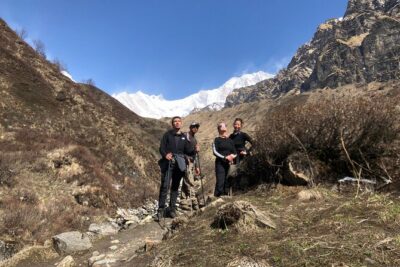
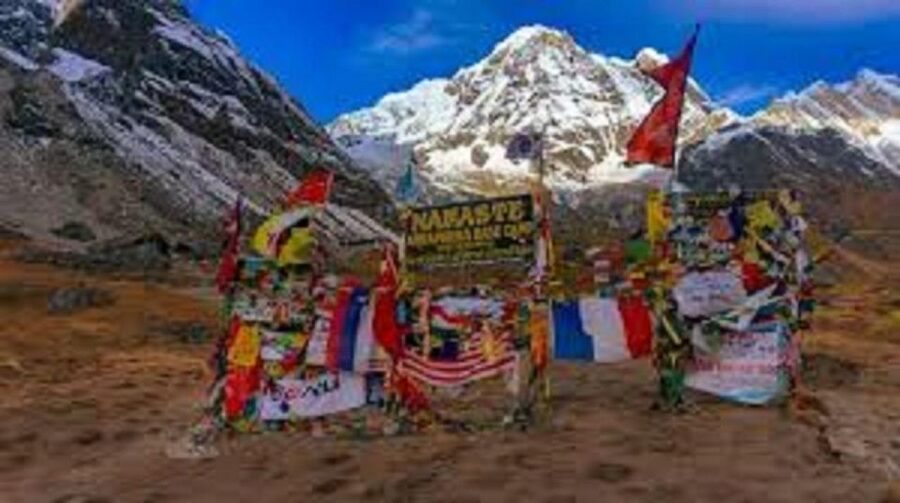
The best part of this five-day Annapurna Base Camp trek is how quickly it moves from Pokhara’s roads into serious Himalayan scenery. You pass through forest, stone villages, terraced hillsides, and high mountain country before reaching the snowy bowl at 4,130 meters. Then you walk back down to Jhinu Danda for a soak in the natural hot springs.
I like the private format, since your guide can adjust the pace when the trail gets hard. I also like the human side of the trip: guides such as Anil, Uttam, Santosh, and Bishnu are repeatedly praised for patience, humor, safety checks, and local insight. The tradeoff is simple: five days is a brisk schedule, with long walking days and limited time to adjust to altitude.
Key points before you book
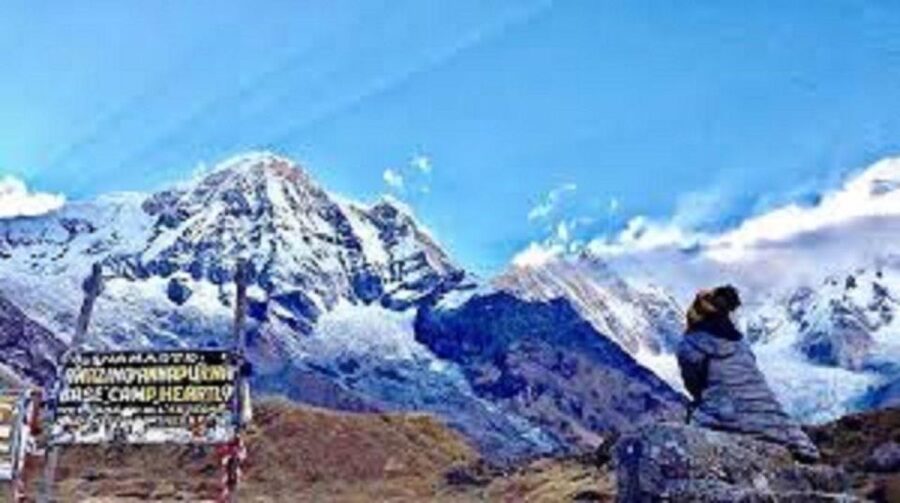
- 4,130-meter destination: The trek reaches Annapurna Base Camp, passing Machhapuchhre Base Camp on the way.
- A private group: You walk with your own guide rather than joining a large public group.
- Hot springs at Jhinu Danda: The final walking day ends near the natural hot springs before the drive back to Pokhara.
- Basic tea-house nights: Accommodation is practical and local, not a mountain resort.
- Long and steep days: The hardest sections include the climb from Chomrong toward Deurali and the push from Deurali to Base Camp.
- Good guide support: English, Hindi, and Nepali are available, with guides assigned by the company.
What this five-day trek is really like
This is a compact version of the Annapurna Base Camp route. You are not taking the slowest possible approach, so the trek suits you best if you already walk regularly and can handle several hours on uneven ground each day.
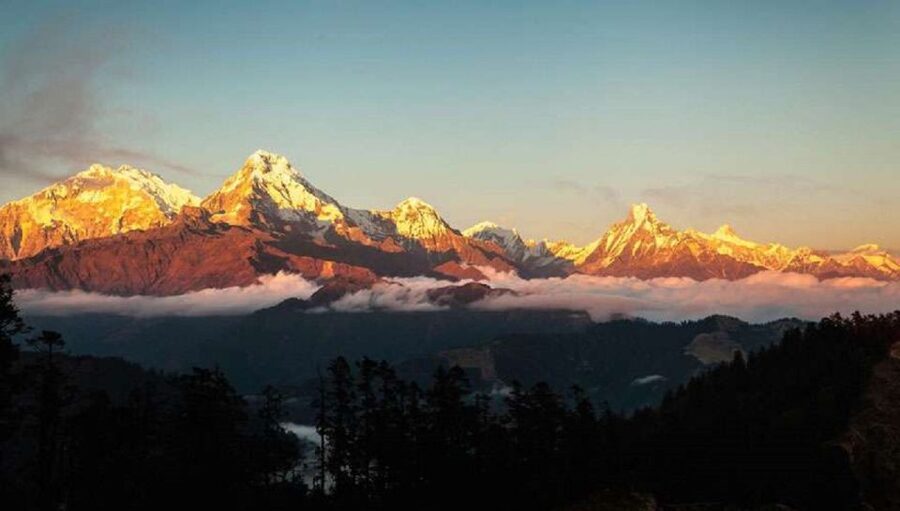
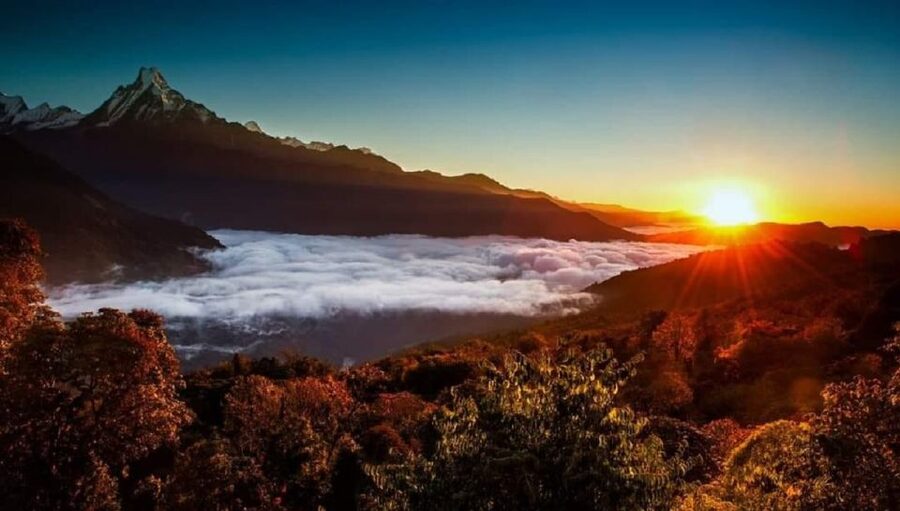
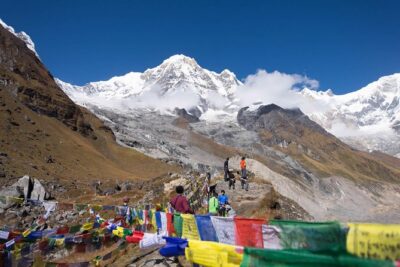
The reward is a remarkable range of scenery in a short time. Lower sections bring forests of rhododendron, oak, and bamboo. Higher up, trees thin out and the mountains take over. Annapurna South, Annapurna I, Hiunchuli, and Machhapuchhre are the main names to watch for, but the changing views are just as important as any single peak.
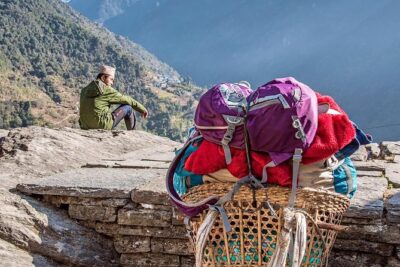
The cultural side is also part of the appeal. The route passes through traditional Nepali villages and communities connected with Gurung, Magar, and Tibetan cultures. You sleep in tea houses, eat meals along the trail, and see how mountain communities support life along a demanding route.
The $155 price is strong value if your selected option includes the listed meals. It covers transport from Pokhara, the conservation-area permit, tea-house accommodation, guide costs, luggage storage in Pokhara, hot-spring entry, and a first-aid kit. Check the exact meal option before paying, since meals are included depending on the package selected.
More Hot Spring Treks in Nepal
- Pokhara: 5 Day Annapurna Base Camp Trek & Natural Hot Spring
★ 4.9 · 44 reviews - Pokhara: 7-Day Annapurna Base Camp Trek & Natural Hot Spring
★ 5.0 · 11 reviews - Pokhara: 5-Day Trek to Annapurna Base Camp and Hot Springs
★ 5.0 · 4 reviews
Day 1: Pokhara to Jhinu Danda, then Sinuwa
Your day begins with pickup from a Pokhara hotel, the Lakeside area, Sarangkot, Pokhara International Airport, or one of several listed resorts. The company says the guide and vehicle arrive five minutes early with a sign showing your name, which is useful for an early departure.
The road journey uses a jeep or SUV and a bus or coach, with the transport portions listed at about three hours each. The exact road arrangement should be confirmed when you book, since the itinerary presents both transport types separately. Roads in this part of Nepal can make the transfer feel longer than the clock suggests.
From Jhinu Danda, you begin walking. The village is known here as the place where you finish near the hot springs, but on this version of the route it also serves as an early trail point. The first walking section takes roughly five hours to Sinuwa.
This is not a gentle warm-up. The route includes steep sections and uneven steps, and the day can feel demanding after the road transfer. Sinuwa is your overnight stop, with time for the mountain air to replace the traffic and noise of Pokhara.
Day 2: Sinuwa and Chomrong country to Deurali
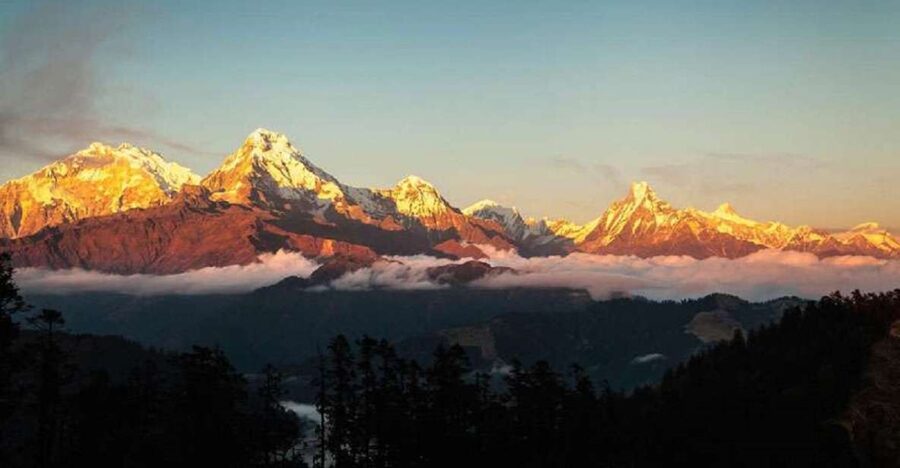
The second day is one of the most varied. You walk through dense stands of bamboo, oak, and rhododendron, with repeated climbs and descents. The vegetation gives the route a cool, enclosed feel, though the steep steps still require steady effort.
The itinerary describes the walk from Chomrong toward Deurali as about six to seven hours, with an overnight stop at Deurali. The route details also refer to Himalaya at roughly 2,900 meters, so your guide may describe the intermediate section by different stop names depending on the exact lodge used.
This is where a calm guide matters. Anil has been praised for patience and encouragement, while Santosh and Santos have been described as careful about rest and safety. That is useful on a day when you may be fit enough to continue but still need to manage your energy for the high point ahead.
At Deurali, temperatures are more serious than in Pokhara. The supplied information warns that higher places can be very cold, so keep a warm layer, dry clothes, and rain gear easy to reach rather than buried in your bag.
Day 3: Deurali to Machhapuchhre Base Camp and ABC
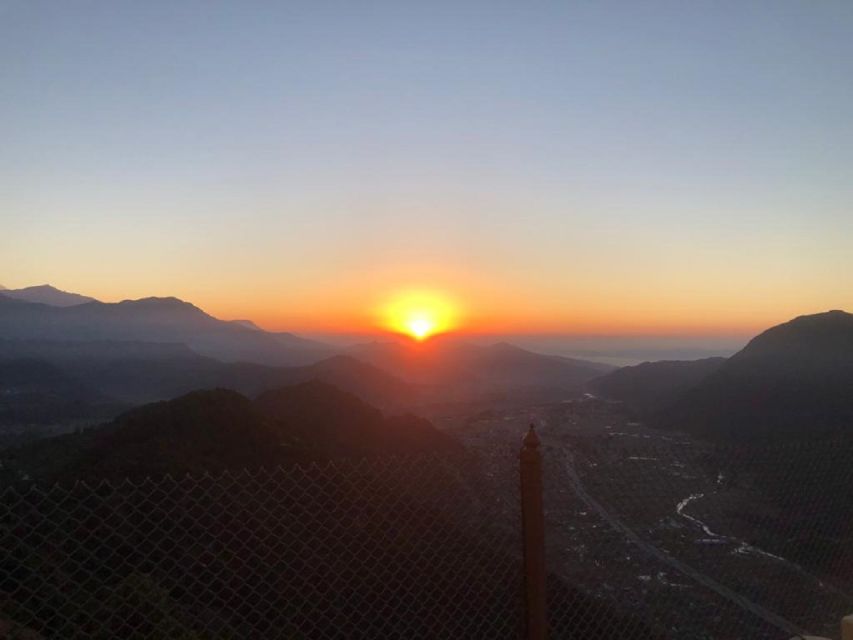
This is the big day. From Deurali, you climb toward Machhapuchhre Base Camp before continuing to Annapurna Base Camp. The walking time is listed at about four to six hours, but the difficulty comes from altitude, steep climbing, and the need to move carefully.
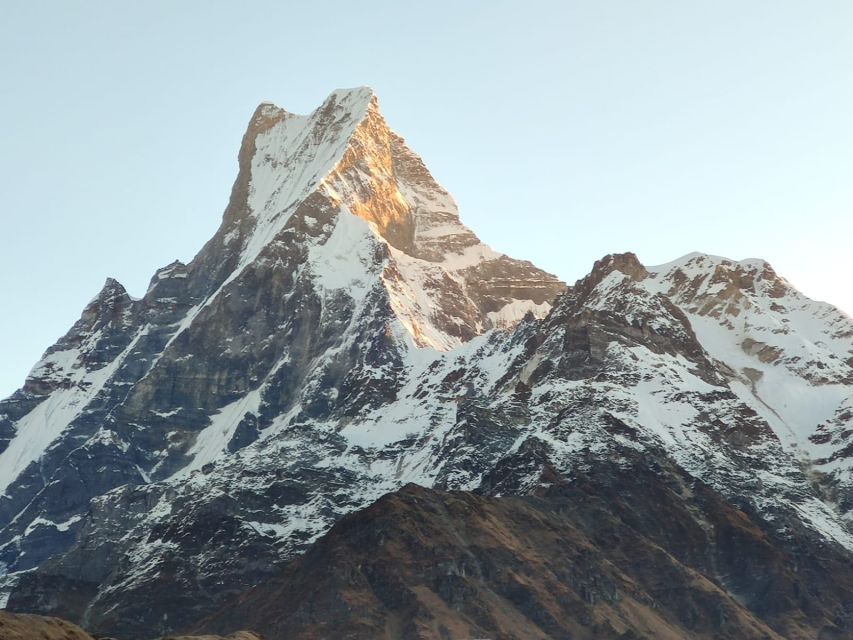
Machhapuchhre, or Fishtail, is one of Nepal’s most recognizable peaks. The trail gives you a close look at the mountain environment around its base before the route continues into the Annapurna sanctuary area. From there, the scenery opens toward Annapurna South, Annapurna I, and Hiunchuli.
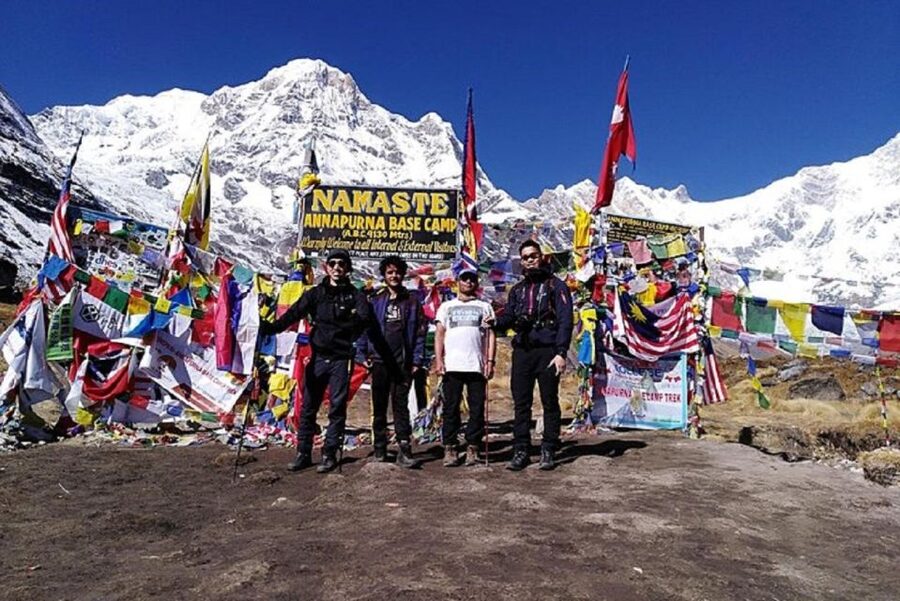
Annapurna Base Camp sits at 4,130 meters, or 13,550 feet. That figure matters. Even a fit person can feel slower, colder, or short of breath at this height, and this itinerary gives you only a short schedule to reach it. Walk at a measured pace, drink regularly, and tell your guide early if you feel unwell.
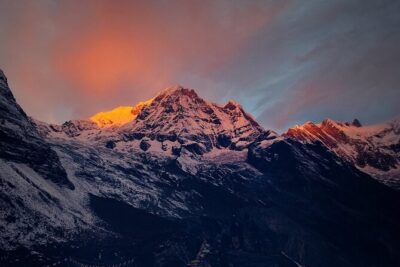
The payoff is a broad mountain setting with peaks rising around the base camp. The program includes free time, sunset, sunrise, and an overnight stay, so you may get more than one chance to see the mountains in changing light. Do not count on clear skies, though. Weather can force a schedule change, as happened for one group that needed its plans adjusted quickly.
Night temperatures are likely to be the toughest part of the trek. Your packing list should include warm clothing for high altitude, along with comfortable hiking shoes, trekking pants, a hat, and rain protection.
More Annapurna treks around Pokhara:
- Trekking in Annapurna/Langtang/Everest/Upper Mustang regions
★ 5.0 · 161 reviews - Kathmandu/Pokhara: 5-Day Annapurna Base Camp (ABC) Trek
★ 4.9 · 72 reviews - Kathmandu: 9-Day Annapurna Circuit Trek via Thorong La Pass
★ 5.0 · 17 reviews - Kathmandu: 10-Day Annapurna Circuit Trek via Thorong La Pass
★ 5.0 · 10 reviews
Day 4: Annapurna Base Camp to Bamboo
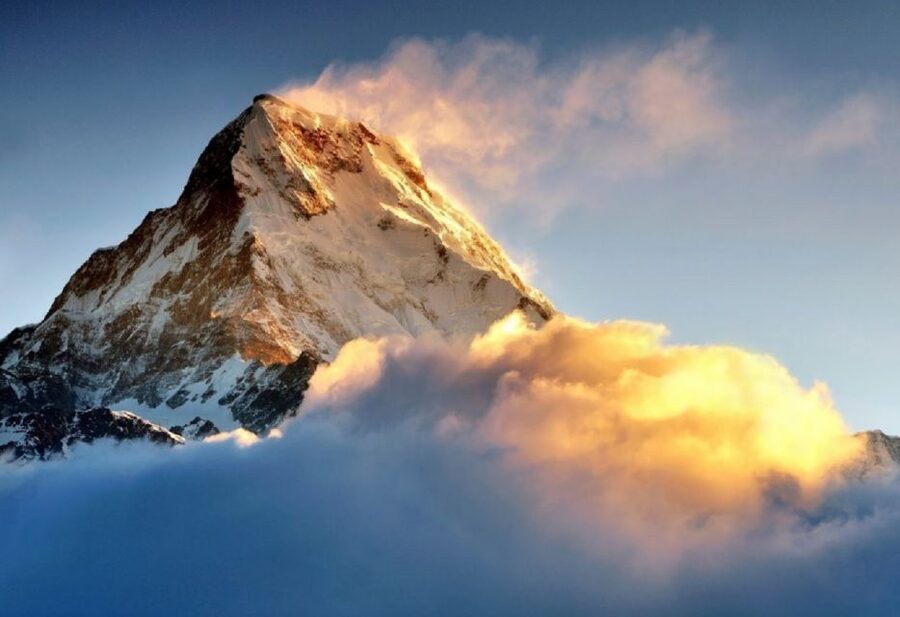
You retrace the route from Base Camp toward Bamboo, with about six to seven hours of walking. Most of the day is downhill, but that does not make it easy. Long descents can punish knees and toes, and steep sections require care when the trail is wet.
The benefit of returning on the same path is that you may notice details missed during the climb. Forest edges, river sections, mountain walls, and changing views become easier to appreciate when you are no longer focused on gaining altitude.
Bamboo, at about 2,340 meters, feels lower and generally less severe than Base Camp. Still, this is a full day on your feet. A trekking pole can be useful, and one is listed among the equipment that can be provided if required.
The tea-house accommodation is basic. That is part of the route rather than a flaw, but you should book this trip expecting simple lodges, practical meals, and mountain conditions. The value comes from location and access to the trail, not luxury.
Day 5: Bamboo to Jhinu Danda and back to Pokhara
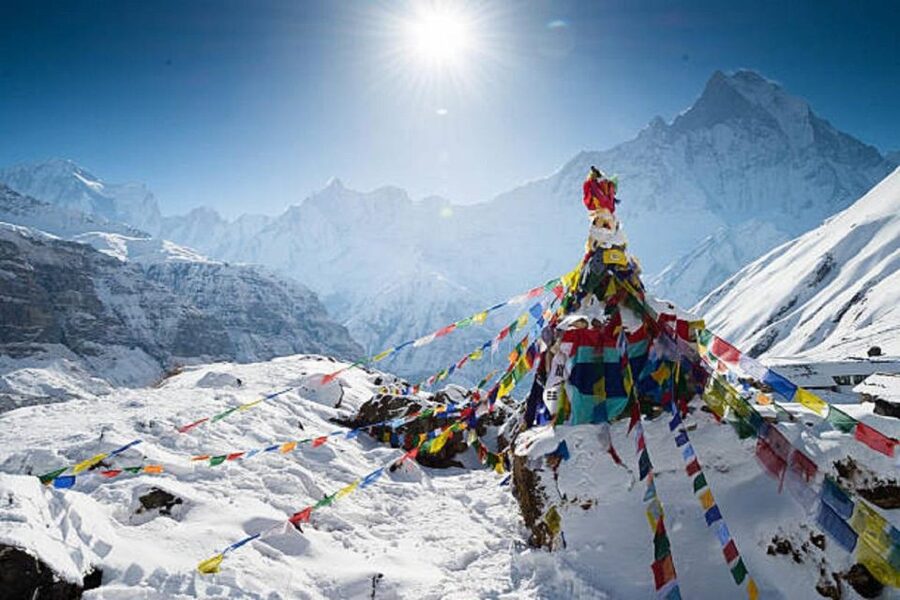
The final walking section takes about five to seven hours, depending on the exact description of the route and pace. You descend from Bamboo to Jhinu Danda, with forest, village views, and more steep steps along the way.
Jhinu Danda is the most welcome stop of the day. The hot springs give you a chance to rest your legs before the road journey back to Pokhara. The entry fee is included, so you do not need to budget separately for that part.
After the soak, you return by jeep or bus, with the road transfer listed at about two to three hours. The trip ends with drop-off at Pokhara, Lakeside, Sarangkot, the airport, or the listed resorts.
This final combination of walking, hot water, and road travel makes the schedule feel well designed. You finish with a real mountain experience rather than simply turning around at Base Camp and rushing straight to town.
Guides, pace, and the human side of the trek
The guide can make or break a short trek. In this case, the strongest pattern is not flashy guiding but steady care. Anil has been described as funny, patient, and encouraging, particularly for first-time trekkers. Uttam is praised for checking accommodation, food, service, and general comfort.
Bishnu is another guide worth noting. He has been described as friendly and understanding, with a calm approach that helped a couple enjoy the route. Santosh has also been praised for telling trekkers to take their time, checking their condition, and handling guest-house arrivals smoothly.
Guide assignments are not guaranteed, so do not book on the assumption that you will receive one particular person. The company has also used guides named Santos, Sun Bahadur, Candra, Sanik, and Milo. The useful point is that you receive a government-registered English-speaking guide, with Hindi and Nepali also available.
The group format is private. That gives you more say over rest stops and pace, though the five-day schedule still limits how much the route can be slowed. Ask about adding time if you are unsure of your fitness, rather than assuming every part can be shortened.
What is included, and where costs can rise
The package includes the Annapurna Conservation Area permit, guide expenses, accommodation in basic tea houses, transport, Pokhara luggage storage, hot-spring entry, and a first-aid kit. It also lists a duffel bag, trekking pole, or trekking bag if required.
Meals are included only according to the option selected. Personal snacks and drinks are not included, so carry cash for those purchases. A porter is optional and costs $20 per day, which can be a sensible extra if you want to walk with a lighter daypack.
Travel insurance is mandatory. Emergency rescue services are available if needed, but emergency rescue is not included in the base price. That is not a minor detail at 4,130 meters. Arrange suitable insurance before setting out and check that it covers trekking and emergency evacuation.
At $155 per person, the trip offers good value for a private five-day route if your package includes meals and you do not need a porter. The price is less attractive if you add many extras, but transport, permits, guide services, lodging, luggage storage, and hot springs give it a solid base.
Packing for changing temperatures
You need clothing for Pokhara’s milder conditions and the cold at Base Camp. Pack layers rather than one bulky item, and keep rain gear accessible because weather can change during the walk.
The required list includes comfortable and hiking shoes, hiking pants, comfortable clothing, a hat, spare clothes, cash, a camera, and trekking equipment. A passport copy is accepted for the permit process, but you must submit your passport copy at least one day before the trek.
A trekking pole can help on steep descents. Tie back long hair, bring dry clothing for the night, and keep snacks close for the longer walking sections. You can store luggage safely in Pokhara, so there is no reason to carry your full travel bag into the mountains.
Who should choose this Annapurna Base Camp trip
I would choose this trek if you have five days available, want a private guide, and prefer a direct route from Pokhara to the high mountains. It is especially suitable if you value local villages, forest walking, simple tea houses, and a hot spring at the finish.
It can work for a first long trek if you are reasonably fit and willing to walk patiently. The experience of first-time trekkers shows why a supportive guide matters, but no guide can remove the steep climbs or altitude.
I would think twice if you dislike basic accommodation, long descents, cold nights, or tight schedules. A five-day ABC trek is efficient, but it leaves less spare time than a slower version. If weather changes or your body needs more rest, the guide and company may need to adjust the plan.
Free cancellation up to 24 hours before departure and reserve-now, pay-later terms give you some booking flexibility. Still, use that flexibility to check your fitness, insurance, clothing, and meal option before committing.
Should you book it?
Book this Annapurna Base Camp trek if you want a compact, good-value Himalayan route with private guiding and a proper hot-spring finish. The best reasons are the access from Pokhara, the strong guide support, the mix of Gurung, Magar, and Tibetan cultural settings, and the chance to see Machhapuchhre and the Annapurna peaks in five days.
Do not book it simply because the price is low. You must be ready for steep trails, cold altitude, basic tea houses, and several long walking days. If that sounds manageable, this is a practical way to reach one of Nepal’s great mountain viewpoints without arranging every permit, transfer, and lodge yourself.
FAQ
How long is the Annapurna Base Camp trek?
The trek lasts five days, including transport from Pokhara, walking to Annapurna Base Camp, the return walk to Jhinu Danda, and the drive back to Pokhara.
How high is Annapurna Base Camp?
Annapurna Base Camp is at 4,130 meters, or about 13,550 feet.
Is transportation from Pokhara included?
Yes. Round-trip transportation between listed Pokhara pickup points, the trek starting point, and the return destination is included.
Where can pickup take place?
Pickup is available from Pokhara, Pokhara Lakeside, Sarangkot, Pokhara International Airport, and several listed hotels and resorts.
What type of accommodation is provided?
You stay in basic tea houses or lodges during the trek.
Are meals included?
Meals are included depending on the option selected when booking. Personal snacks and drinks are not included.
Is a guide provided?
Yes. The trek includes an English-speaking government-registered trekking guide. Guides also speak Hindi and Nepali.
Is a porter included?
No. A porter is optional and costs $20 per day.
Is the hot-spring entry fee included?
Yes. The hot-spring entry fee is included, with the hot springs visited at Jhinu Danda.
What documents are needed for the trek?
You must provide a copy of your passport at least one day before departure so the required Nepal government permits can be arranged. A passport copy is accepted.
More five-day treks around Pokhara
- From Pokhara: 5-Day Mardi Himal Base Camp Trek
★ 5.0 · 10 reviews - Pokhara: 5-Day Ghorepani and Poon Hill Private Trek
★ 5.0 · 4 reviews - Annapurna base camp trek 5 Days
★ 5.0 · 252 reviews - Kathmandu to Annapurna Base Camp (ABC) 5-Day Trek
★ 5.0 · 102 reviews
More Hot Spring Treks in Pokhara
- Pokhara: 7-Day Annapurna Base Camp Trek & Hot Spring
★ 4.0 · 3 reviews - Private Tour Mount Batur Sunrise Trekking and Natural Hot Spring
★ 5.0 · 431 reviews - Mount Batur Sunrise Trek & Natural Hot Spring Experience
★ 5.0 · 95 reviews - 3D/2N Rinjani trekking summit,lake and hot springs.
★ 5.0 · 85 reviews
New treks around Pokhara
- Pokhara: 9-Day Annapurna Base Camp Trek with Poon Hill★ 5.0 · 6 reviews
- Pokhara: 5-Day Trek to Annapurna Base Camp and Hot Springs★ 5.0 · 4 reviews
- Pokhara: Majestic Mardi Base Camp Guided Trek with HotSpring★ 5.0 · 6 reviews
- Pokhara: 5-Day Ghorepani and Poon Hill Private Trek★ 5.0 · 4 reviews
- Pokhara: 7-Day Annapurna Base Camp Trek & Hot Spring★ 4.0 · 3 reviews
- Pokhara:4-Day Ghorepani Poon Hill Guided Trek via Ghandruk★ 5.0 · 3 reviews
- Pokhara: 4-Day Poon Hill and Ghandruk Guided Trek★ 5.0 · 14 reviews
- Pokhara: 4-Day Private Trek Tour★ 4.9 · 43 reviews
Annapurna Base Camp Treks, side by side.
Trekking in Annapurna/Langtang/Everest/Upper Mustang regions
Read our review →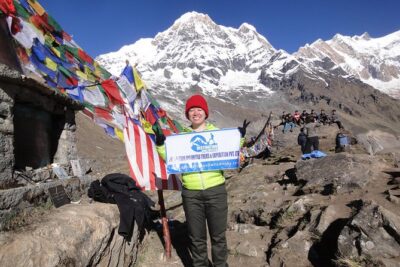
Kathmandu to Annapurna Base Camp (ABC) 5-Day Trek
Read our review →