
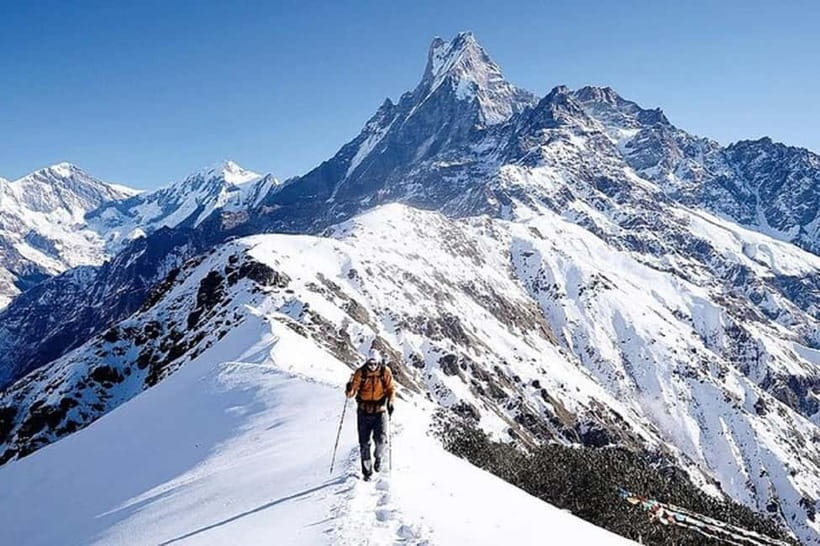
Review · POKHARA
From Pokhara: 5-Day Mardi Himal Base Camp Trek
Mardi Himal gives you a close look at Machapuchre and the Annapurna range without the crowds and longer schedule of some famous Nepal treks. The route moves from Pokhara by vehicle, through rhododendron forest and small villages, to High Camp and the base camp viewpoint.
I like the personal guiding, especially if you are new to multi-day trekking. Guides such as Santosh and Sun-Bahadur Nepali have helped with pacing, food, route choices, and day packs. I also like the simple five-day plan, with time to rest after the harder climbs and a chance to meet local people along the way.
The main catch is that the first two days are the toughest, and the meal details are not fully clear unless you choose the correct booking option. You will also need cash for food and snacks if meals are not included, plus warm clothing for the high sections.
Key points to know before you book
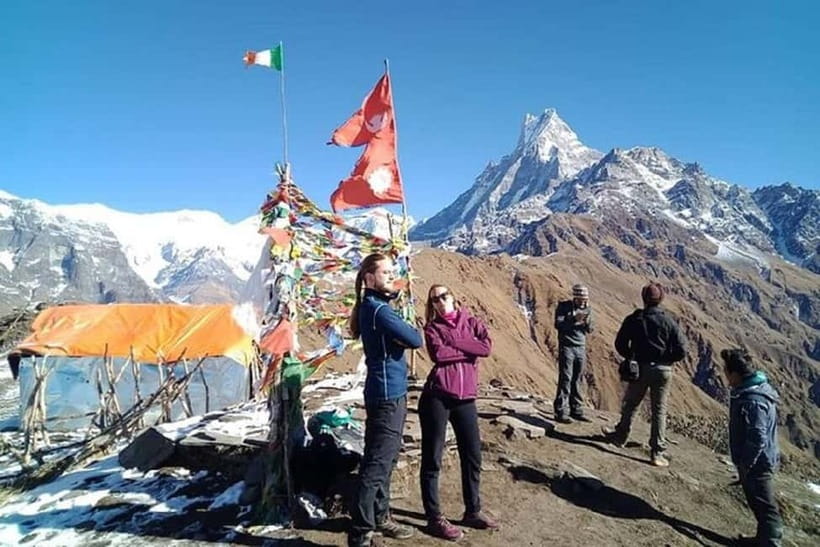
- Close views of Machapuchre: High Camp and the base camp route bring you near the distinctive Fishtail peak and the Annapurna mountains.
- A real village-to-mountain trek: You walk through rhododendron forest, small settlements, Pitam Deurali, Sidding, and Lumre rather than simply visiting a viewpoint.
- Five days with moderate daily stages: The listed hiking times range from three to six hours, though uphill and downhill effort matters more than the clock.
- Private guiding: You receive an English, Hindi, or Nepali-speaking government-certified guide, with guides such as Santosh frequently assigned to this route.
- Basic mountain accommodation: Nights are spent in simple tea houses or lodges, so expect function and warmth rather than comfort-tourism polish.
- Good value at $181: Permits, transport, guide costs, tea house stays, luggage storage, trekking equipment, and taxes are covered, but check the meal option carefully.
Why Mardi Himal feels different from a standard Nepal trek
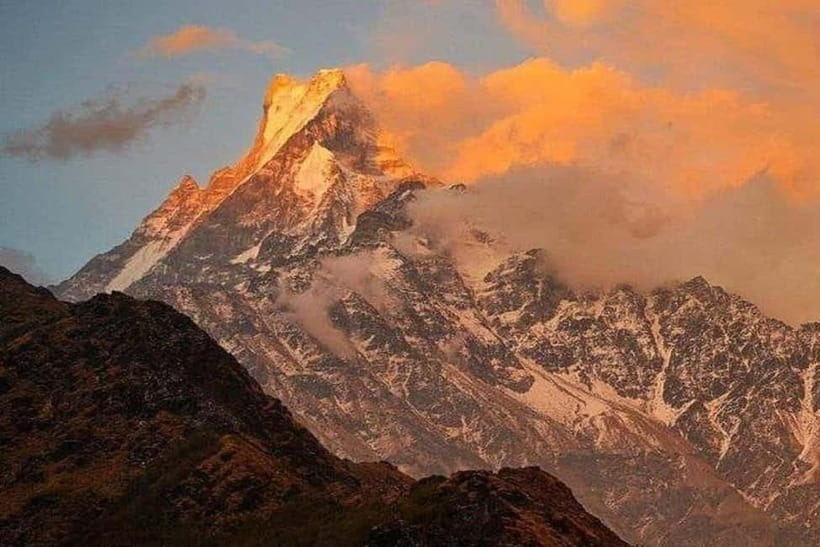
Mardi Himal is a good choice if you want serious mountain scenery in a compact trip from Pokhara. The route reaches high country quickly, but it still gives you forest, village life, and quiet walking before the big views arrive.
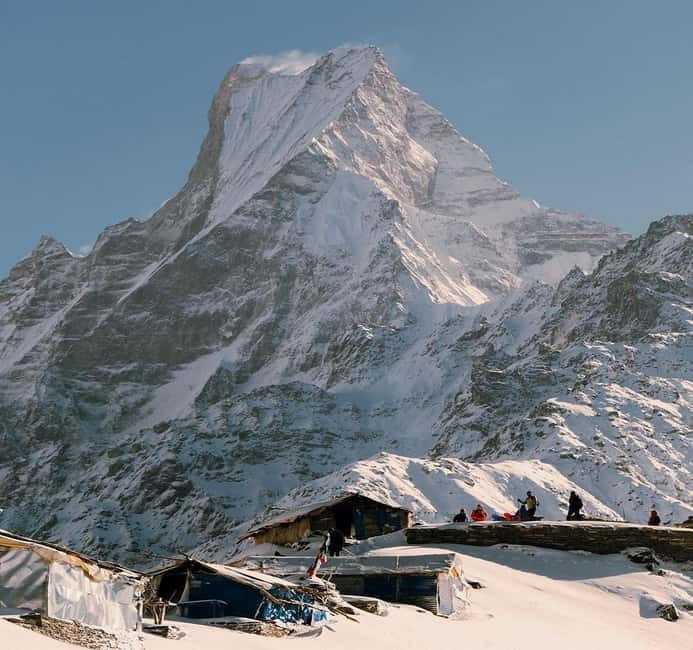
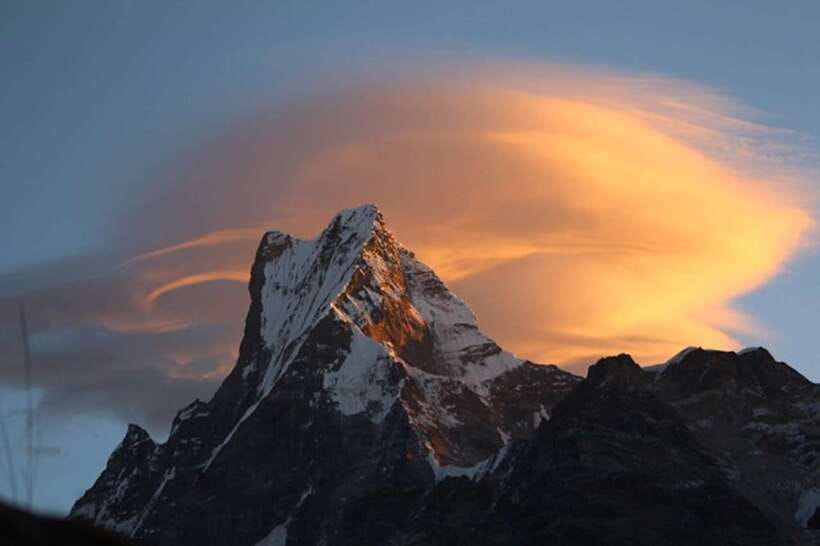
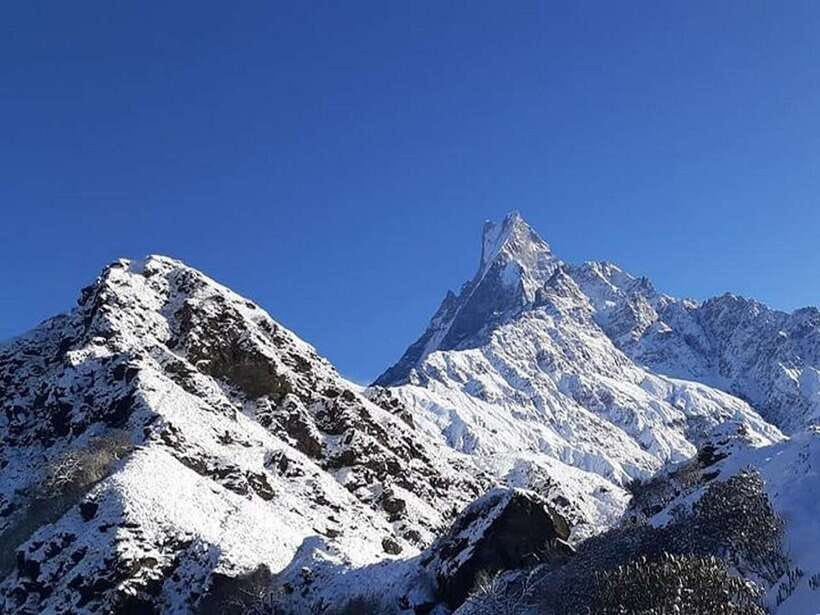
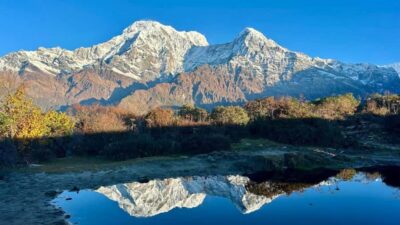
The star of the route is Machapuchre, also called Fishtail Mountain. Its sharp, twin-peaked shape appears from several points along the trail, while the Annapurna range opens out around it. At the upper camps, the mountains feel close rather than distant blue shapes on the horizon.
This is not a luxury trek. You sleep in simple tea houses, eat along the route, and adjust to changing temperatures. That basic setup is part of the appeal, but it also means you should pack with care and keep your expectations practical.
The group is private, which is useful for setting a pace that suits your party. You are not tied to strangers who want to walk faster or stop less often. Guides have helped slower walkers, carried day packs on descents, and suggested alternate trail choices when useful.
More Mardi Himal treks around Pokhara:
- Pokhara: 4-Day Mardi Himal Trek
★ 4.9 · 59 reviews - Private Mardi Himal Trek
★ 5.0 · 42 reviews - From Pokhara: 4-Day Mardi Himal Base Camp Trek
★ 4.9 · 31 reviews
Day 1: Kande to Pitam Deurali through Australian Camp
Your first day starts with transport from Pokhara, Pokhara International Airport, or Lakeside Road 6. The drive takes you to Kande, where the walking begins.
The route passes through Australian Camp and Pothana before continuing to Pitam Deurali. You get an early taste of the region here: forest paths, mountain air, and small settlements rather than a long stretch of empty high-altitude trail.
The listed walking time is about four hours. That sounds manageable, but this is one of the more demanding opening days because your body is still adjusting to carrying a pack and walking uphill. Take the first morning slowly. You do not gain anything by racing away from Kande.
Lunch comes along the route, with rhododendron forest providing much of the atmosphere. In the right season, these forests add color to the trail, but the walk is worthwhile even when the trees are not in bloom. Pothana and Pitam Deurali also give you a useful transition from the road-based part of your Pokhara stay to the quieter rhythm of mountain villages.
Your overnight accommodation is a simple tea house or lodge. Ask your guide about the next day’s start and the meal arrangements before settling in. It is easier to plan cash and snacks early than to discover later that your chosen package does not include food.
Day 2: Rhododendron forest and the climb to Low Camp

The second day takes you toward Low Camp, with about six hours of hiking listed. This is the longest scheduled walking day, and many people will find it one of the hardest.
You continue through forest and small settlements, with the trail gradually gaining height. The woodland gives the day a sheltered feel, but the constant uphill walking can test your legs. One useful feature of a private guide is the ability to stop for water, adjust the pace, and take a longer lunch break without worrying about a large group.
Low Camp is an important point on the route because the character of the views begins to change as you rise above much of the forest. You are not yet at the final viewpoint, but the mountain setting becomes more open and dramatic.
A guide can also help you decide how much food to carry during the day. Some hikers have preferred to buy meals as they go because the full meal package may cost more than needed. Others like the ease of having meals arranged. At $181, the trip can be good value, but you should confirm exactly what is included in your selected option.
Day 3: High Camp, the final settlement
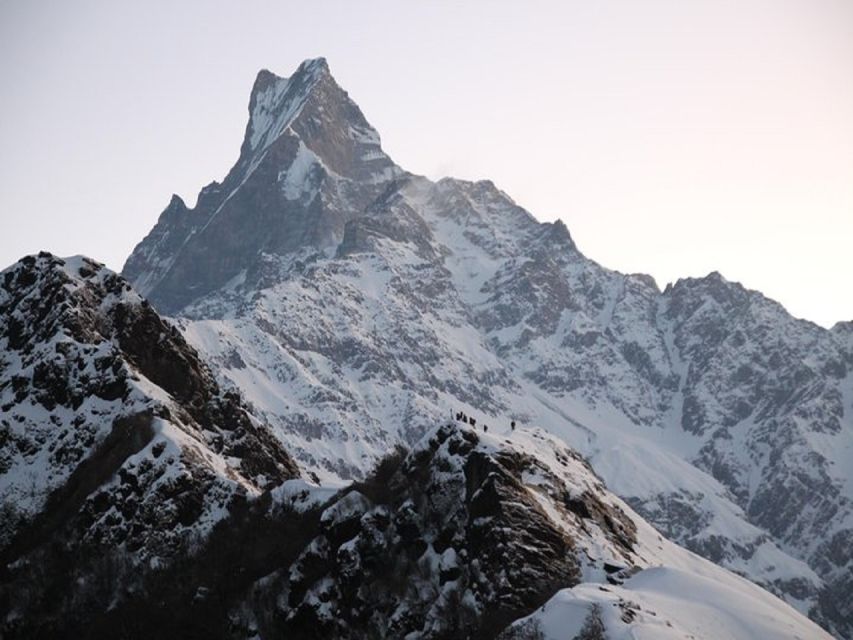
The walk from Low Camp to High Camp is listed at about four hours. Compared with the previous day, the distance is shorter, but the climb and altitude can make it feel more serious.
High Camp is described as the final settlement area on this trail. That matters because it is your last base before the walk to Mardi Himal Base Camp. From here, you are in a more exposed mountain setting, with fewer buildings and less cover than in the forest.
This is the point where warm clothing becomes essential. The information for the trip warns that temperatures can change sharply and that higher areas are often very cold. Bring a proper jacket, hat, and clothing for both warmer lower sections and cold mountain mornings.
The tea house stay is basic. You should think of it as a place to sleep, eat if your package includes meals, and prepare for the next day, not as a hotel. A sleeping bag is available as trekking gear when needed, and trekking poles can also be provided. Hiking poles are especially useful if your knees are not fully reliable.
The mountain views from High Camp are the main reward for the climb. Clear weather is never guaranteed, but good visibility can reveal Machapuchre and broad views toward the Annapurna range. Keep your camera handy, but do not let photography make you forget to watch the trail underfoot.
More five-day treks around Pokhara
- Kathmandu/Pokhara: 5-Day Annapurna Base Camp (ABC) Trek
★ 4.9 · 72 reviews - Pokhara: 5 Day Annapurna Base Camp Trek & Natural Hot Spring
★ 4.9 · 44 reviews - From Pokhara: 5-Day Annapurna Basecamp Trek with Hot Springs
★ 4.9 · 26 reviews - Pokhara: 5-Day Trek to Annapurna Base Camp and Hot Springs
★ 5.0 · 4 reviews
Day 4: Mardi Himal Base Camp and back to Low Camp
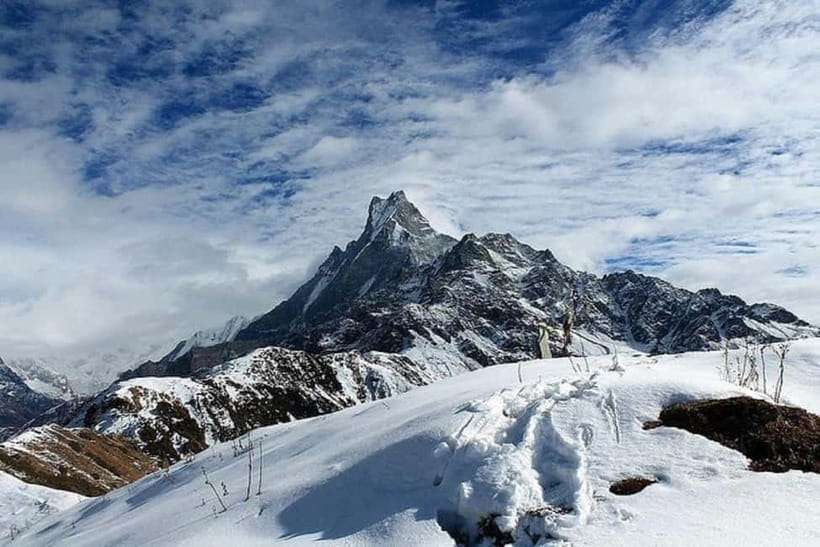
Day four is the visual high point. You trek toward Mardi Himal Base Camp, with roughly three hours of hiking listed for the base camp section, then return to Low Camp for the night.
The route offers close views of Mardi Himal, Machapuchre, and the Annapurna range. The scenery feels more open here, and the lack of large development helps preserve the sense that you are walking into the mountains rather than visiting a built-up attraction.
The schedule highlights sunrise over the mountains. Confirm the exact start time with your guide, because a sunrise visit normally requires an early departure rather than simply leaving after breakfast. The supplied plan describes breakfast before the trek, so the practical timing should be clarified in advance.
You should also expect the return to Low Camp to require real effort. The distance back may be familiar, but downhill walking can be hard on knees and thighs. One participant with a knee problem still completed the trek, and hiking poles were recommended. That does not mean the route is easy for everyone. It means careful pacing and suitable support can make a real difference.
The benefit of returning to Low Camp is that you do not need to carry on to a new high settlement after the base camp visit. Once back, you have time to rest. Several accounts of the trip describe the later days as shorter, with more time after lunch to recover.
Day 5: Sidding, Lumre, and the ride back to Pokhara
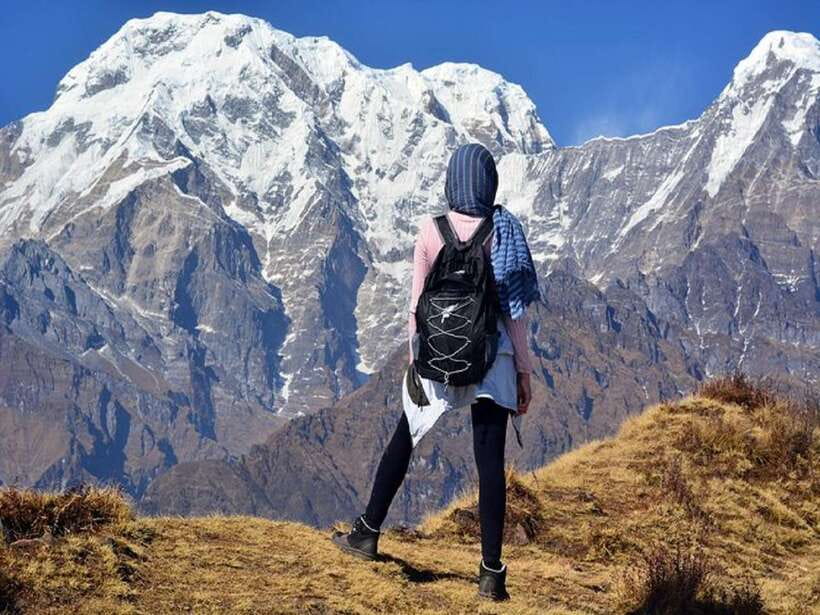
The final day takes you downhill toward Sidding, then onward to Lumre. The itinerary gives about five hours for the hiking section before your vehicle returns you to Pokhara.
Sidding is a useful lunch stop and a change from the high trail. The walk through this lower section brings you back toward village life and warmer conditions. From Lumre, the route includes the Lumre canyons and Lwang Ghalel area before transport takes you back to your hotel.
The road at the end can be rough. A jeep was recommended by one participant for the bumpy final stretch, so ask what vehicle is planned and prepare for a less polished ride. This is a small but useful detail, particularly after several days of walking.
There may also be time for local contact on the return. One guide, Santosh, used extra time to visit Lwang village, where the group watched a volleyball tournament and shared a barbecue with local people. That sort of unscripted stop depends on timing and local events, so do not treat it as guaranteed, but it shows how a private guide can add more than route-finding.
What the guide adds to the trip
The guide is not just there to point at the trail. A good guide manages pace, checks the route, helps with food and accommodation, and gives context about local life and the natural setting.
Santosh is named repeatedly in the supplied information and is described as friendly, helpful, and fluent in English. He has bought fruit for the walking days, helped visitors on the trail, and even invited one group for dal bhat after the trek. Sun-Bahadur Nepali and his daughter Niva are also praised for helping with food, backpacks, trail choices, and day packs on downhill sections.
The company provides a government-certified English-speaking guide, with Hindi and Nepali also available. A private group gives you more control over the pace, but guide quality can still vary from person to person. If you have a named guide before departure, use the chance to discuss your fitness, knee concerns, meal plan, and sunrise timing.
Porters are optional at $20 per day. If you are not used to multi-day trekking, hiring one can make the uphill sections more manageable. You still need your day bag with water, layers, snacks, and personal items, but you can keep the main load lighter.
Accommodation, meals, and what your $181 covers
At $181 per person, this trek offers solid value if you use the included services. The package covers round-trip transport, permits, TIMS fees, paperwork, tea house or lodge accommodation, guide expenses, government and local taxes, a first aid kit, luggage storage in Pokhara, and trekking gear such as a sleeping bag or trekking stick when needed.
The guide’s meals, accommodation, insurance, salary, transport, and equipment are also covered. That matters because guide costs can otherwise appear later as separate charges.
The meal policy needs attention. The details say meals are included depending on the option selected, but also state that meals may need to be purchased along the route. Confirm this before paying. One careful budget estimate put self-paid meals at about £16 per day, though prices and appetite vary.
Carry cash either way. It is useful for meals, tea, snacks, and personal expenses. If you pay for meals as you go, you may spend less, but you need enough Nepalese currency for the whole route. The simple tea houses are part of the mountain experience, yet they are not designed for elaborate dining or a wide menu.
Fitness, gear, and practical preparation
You need reasonable fitness and good general health. The route includes several hours of walking each day, uphill sections, a high camp, and a long descent. The trip can suit a first multi-day trek, but it should not be treated as a casual stroll from Pokhara.
Bring comfortable walking shoes, a jacket, a hat, comfortable clothes, cash, a camera, and suitable trekking gear. Add warm layers for High Camp and the base camp morning. The supplied guidance also suggests a hair tie, a small item, but a useful one if you have long hair in windy conditions.
Hiking poles are worth considering, especially if you have knee trouble. Diamox was recommended by one participant, but medication decisions should be discussed with a qualified medical professional rather than made casually for a trek.
Travel insurance is mandatory, and emergency rescue services are available if needed. Submit a passport copy at least one day before departure so the necessary permits can be arranged. Keep your personal items organized, since you can store luggage in Pokhara during the trek.
Who should book this Mardi Himal trek?
I would choose this trip if you want a private, guided route with strong mountain views but do not want to commit to a much longer Himalayan walk. It is also a good fit for a first multi-day trek if you are reasonably fit and prefer having transport, permits, lodging, and guide costs arranged together.
It suits people who value scenery and local contact over polished accommodation. The route gives you rhododendron forest, village stops, tea houses, high mountain views, and the chance for a guide to add local visits when time allows.
I would think twice if you dislike basic lodging, steep walking, cold mornings, or uncertain meal arrangements. The five-day format is efficient, but some people may find the route manageable in four days, while others will need the full schedule and steady pace. The private format helps, but it does not remove the physical demands.
Should you book it?
Book this Mardi Himal trek if you want close views of Machapuchre, a supportive guide, and a compact five-day route from Pokhara. The strongest parts are the personal service, the base camp visit, the forest and village sections, and the value of having permits, transport, and guide expenses handled.
Before confirming, ask three direct questions: Are meals included in my chosen option? What time will we leave for the sunrise walk? Will the return vehicle be a jeep suitable for the rough road? If the answers work for you, this is a sensible way to reach the Mardi Himal region without arranging every piece yourself.
FAQ
How long is the Mardi Himal Base Camp trek?
The activity lasts five days, beginning and ending in Pokhara. Listed hiking times range from about three to six hours per day.
Where can I be picked up in Pokhara?
Pickup is available from Pokhara Lakeside, Pokhara International Airport, and Lakeside Road 6. Hotel-lobby pickup can be arranged before the scheduled time.
What languages does the guide speak?
Guides are available in English, Hindi, and Nepali. The trek includes a professional English-speaking guide certified by the Nepal Government.
Is this a private trek?
Yes. The activity is arranged for a private group rather than a shared public group.
Are meals included?
Meals depend on the option selected. The activity information also says meals may need to be purchased along the route, so confirm the exact meal arrangement before booking and carry cash for food and snacks.
Is accommodation included?
Yes. Accommodation is provided in simple tea houses or lodges along the trekking route.
What should I bring?
Bring comfortable walking shoes, a hat, camera, jacket, comfortable clothing, cash, trekking gear, and clothing for cold conditions at higher altitude. A trekking stick and sleeping bag can be provided when needed.
New treks around Pokhara
- Pokhara: 9-Day Annapurna Base Camp Trek with Poon Hill★ 5.0 · 6 reviews
- Pokhara: 5-Day Trek to Annapurna Base Camp and Hot Springs★ 5.0 · 4 reviews
- Pokhara: Majestic Mardi Base Camp Guided Trek with HotSpring★ 5.0 · 6 reviews
- Pokhara: 5-Day Ghorepani and Poon Hill Private Trek★ 5.0 · 4 reviews
- Pokhara: 7-Day Annapurna Base Camp Trek & Hot Spring★ 4.0 · 3 reviews
- Pokhara:4-Day Ghorepani Poon Hill Guided Trek via Ghandruk★ 5.0 · 3 reviews
- Pokhara: 4-Day Poon Hill and Ghandruk Guided Trek★ 5.0 · 14 reviews
- Pokhara: 4-Day Private Trek Tour★ 4.9 · 43 reviews
Mardi Himal Treks, side by side.
Pokhara: 4-Day Mesmerizing Mardi Himal Guided Trek
Read our review →
Pokhara: Majestic Mardi Base Camp Guided Trek with HotSpring
Read our review →
Pkr. Backpacker Group Dep.: 4 Day Mardi Himal Base Camp Trek
Read our review →Lists this trek appears in