
Review · KATHMANDU
From Kathmandu: 11-Day Annapurna Base Camp Trek
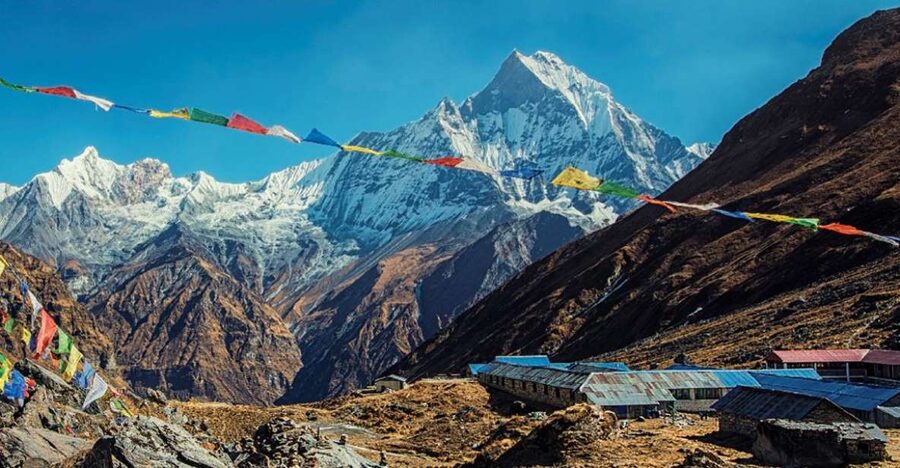
Annapurna Base Camp gives you a rare mountain payoff without asking for three weeks on the trail. In 11 days, you move from Pokhara’s lakeside setting through Gurung villages, terraced farms, and rhododendron forest to a high bowl surrounded by Himalayan peaks. I like the smart route planning, especially the domestic flights and included porter support, and I like that the trek includes time in Ghandruk and the hot-spring area at Jhinu Danda. The main drawback is the pace: several days involve five to eight hours of walking, with a steep climb to 4,130 meters.
This is a strong choice if you want a fully arranged Nepal trek with meals, permits, teahouse rooms, a guide, and mountain equipment included. The price is high compared with arranging a basic trek yourself, but it covers many costly and fiddly pieces. You should still budget for Nepal’s visa, insurance, personal spending, lunches in Kathmandu and Pokhara, and possible extra hotel nights.
Key points at a glance
- Annapurna Base Camp at 4,130 meters: Reach the central mountain sanctuary after passing Machhapuchhre Base Camp.
- A short but serious 11-day route: Walking days range from three to eight hours, with altitude becoming a real concern above Deurali.
- Pokhara flights included: The 30-minute flights save road time and may offer fine Himalayan views from the right side of the aircraft.
- Gurung culture in Ghandruk: Stay in one of the route’s most appealing villages and visit the Gurung museum if time allows.
- Practical support included: A licensed English-speaking guide, porters, permits, meals, a sleeping bag, down jacket, and medical kit are part of the package.
- Best in spring or autumn: March to May and September to November generally offer the clearest conditions, while winter is colder and monsoon brings rain.
Why the 11-day Annapurna route works
Annapurna I rises to 8,091 meters, making it the world’s tenth-highest mountain. The wider Annapurna massif contains many other major peaks, including thirteen above 7,000 meters and sixteen above 6,000 meters.
You do not need technical climbing skills to reach Annapurna Base Camp, but you do need reasonable fitness and a willingness to walk uphill for several days. The route follows established mountain paths through villages and forest before entering a high, exposed basin. It is a proper trek, not a sightseeing walk with a little mountain air added on.
The great appeal is the changing scenery. At first, you see farmland, village homes, and waterfalls. Higher up, the forest becomes thicker and more alpine, then gives way to bare slopes and giant peaks. This steady change keeps the walk interesting, even on the tougher days.
The route is also shorter than a 14-day Annapurna Sanctuary version. That saves time, but it leaves less room for slow acclimatization, weather delays, or recovery. I would choose this version if your Nepal trip is tightly planned. If you have extra days and prefer a gentler schedule, the longer option may suit you better.
More Annapurna treks around Kathmandu:
- Annapurna Circuit Trek with Tilicho Lake
★ 5.0 · 368 reviews - Annapurna base camp trek 5 Days
★ 5.0 · 252 reviews - 14-Day Private Annapurna Base Camp Trek
★ 5.0 · 180 reviews
Kathmandu to Pokhara: a quick start
Your first day is spent in Kathmandu, at about 1,300 meters. It includes a welcome dinner, giving you a chance to meet the trekking team and get settled before the mountains begin.
On day two, you fly to Pokhara. The flight takes about 30 minutes, and sitting on the right side of the plane may improve your chance of seeing Himalayan peaks. Flights can be a much better use of time than a long road transfer, especially on a short trip.
Pokhara sits at about 823 meters and is known as the Lake City. It offers views toward Dhaulagiri, Manaslu, Machhapuchhare, and Annapurna. You do not spend a full sightseeing day here on this schedule, but the city provides a lower, warmer starting point before the climb.
From Pokhara, a private vehicle takes you for about one hour and 20 minutes to Nayapul, near Birethanti. From there, you begin walking toward Ghandruk. The combination of flight, road transfer, and a five to six-hour hike makes this a full day, so pack your day bag carefully and keep water and essentials close.
Ghandruk and the Gurung villages
Ghandruk is one of the most appealing early stops. It is largely home to the Gurung community and gives you a first look at village life in the Annapurna region. If time allows, you can visit the Gurung museum.
I like this stop because it adds a human side to the trek. The mountains are the headline, but villages such as Ghandruk explain how people live along these steep slopes. Terraced farmland, stone paths, and local homes make the first walking days feel more like a journey through a working region than a simple route to a viewpoint.
The next day takes you from Ghandruk to Chhomrong, at about 2,170 meters. Expect another five to six hours on foot. Chhomrong is an important point on the route and marks your continued move into higher country.
The walking is not simply uphill. You will gain and lose height as the path follows the contours, so the distance can feel harder than the numbers suggest. This is a good place to settle into a steady pace rather than trying to keep up with a faster group.
Chhomrong to Bamboo through forest
From Chhomrong, you continue to Bamboo, at about 2,310 meters. This day takes four to five hours, with the path passing through forest and mountain terrain.
The rhododendron forests are one of the route’s best features. In spring, the trees can add color to the walk, while the shade is welcome during uphill sections. The route also includes cascading waterfalls and changing views of the surrounding peaks.
Bamboo is more than a place to sleep. It is a useful altitude step between the lower villages and the higher stops ahead. You are now high enough that cold nights and fatigue become more noticeable, even if the walking day is shorter.
The included teahouse accommodation keeps the trip practical. You sleep in simple mountain lodgings rather than expecting hotel comfort. All breakfast, lunch, and dinner during the trek are included, which makes daily planning easier and keeps the focus on walking.
More treks around Kathmandu:
- Everest Base Camp Trek – 14 Days
★ 5.0 · 1,499 reviews - Everest Base Camp Trek
★ 5.0 · 842 reviews - Everest Base Camp Trekking
★ 5.0 · 485 reviews - Everest Base Camp Trekking – 13 Day
★ 5.0 · 365 reviews
Deurali and the altitude transition
The walk from Bamboo to Deurali takes about three to four hours and reaches 3,230 meters. It is the shortest walking day by time, but altitude changes the way you experience it.
At this stage, do not judge a day only by its distance. Move slowly, drink regularly, and tell your guide if you feel unwell. The guide carries a medical kit, and the package includes staff insurance, equipment, food, and accommodation, but no organized trek can remove the risks of high altitude.
The forest begins to thin as you climb. The surroundings feel more open and rugged, with waterfalls and mountain walls becoming more prominent. Deurali is a useful overnight stop before the main push to Base Camp because it breaks up the climb.
This is also where the short schedule demands discipline. You have not been given many spare days. If weather or health affects your progress, extra accommodation in Kathmandu or Pokhara is not included, and rescue insurance is your responsibility.
The climb to Annapurna Base Camp
Day six is the central event: Deurali to Annapurna Base Camp, via Machhapuchhre Base Camp. The walk takes five to six hours and reaches 4,130 meters. Machhapuchhre Base Camp sits at about 3,700 meters.
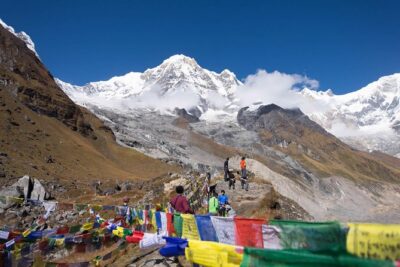
The route leads into the Annapurna Sanctuary, a high mountain basin surrounded by huge peaks. The final approach is rewarding because the scenery becomes less about distant views and more about being enclosed by the range.
Annapurna Base Camp is the point where the trip’s many smaller sights come together. The waterfalls, fields, forests, and villages have led you toward a high place framed by the Annapurna massif. You get time to take in the mountain setting before returning down the same general route.
The altitude is the serious part. At 4,130 meters, you may feel the thin air even if you are fit at home. The schedule includes a night at Base Camp, but it does not provide a separate acclimatization day at that height. That is one reason to take the pace seriously and listen to the guide.
The long return through Jhinu Danda
The descent from Annapurna Base Camp to Bamboo takes seven to eight hours. This is the longest day of the trip, and downhill walking can be hard on knees and ankles. Trekking poles would be a sensible personal item, though they are not listed among the provided equipment.
From Bamboo, you walk to Jhinu Danda, at about 1,760 meters, in five to six hours. This lower elevation brings warmer air and a welcome change after the high basin. Jhinu Danda is associated with natural hot springs, although the supplied schedule does not specifically promise a bathing stop, so treat that as a possible feature rather than a guaranteed inclusion.
The descent is scenic, but do not assume it is easy. Long downhill sections can be more tiring than the climb, especially after the Base Camp night. Your porter arrangement is one porter for every two trekkers, so pack with that limit in mind and keep your own day bag light.
Naya Pul and the return to Pokhara
On day nine, you trek toward Naya Pul for about six hours, followed by a one-hour drive to Pokhara. This is your final full walking day.
The route gives you one last stretch of villages, farmland, forest, and mountain views before the road takes over. After several nights in teahouses, returning to a hotel in Pokhara can feel like a small luxury, even though no special hotel facilities are promised beyond the included three-star accommodation.
Lunch in Pokhara is not included. You should plan for that expense, along with any personal purchases, drinks, snacks, laundry, or extra services. The same applies to lunch in Kathmandu.
On day ten, you fly back to Kathmandu. The final night gives you a buffer before departure, which is useful after a demanding trek. Day eleven is airport transfer and departure, with breakfast included.
What the $1,699 price really covers
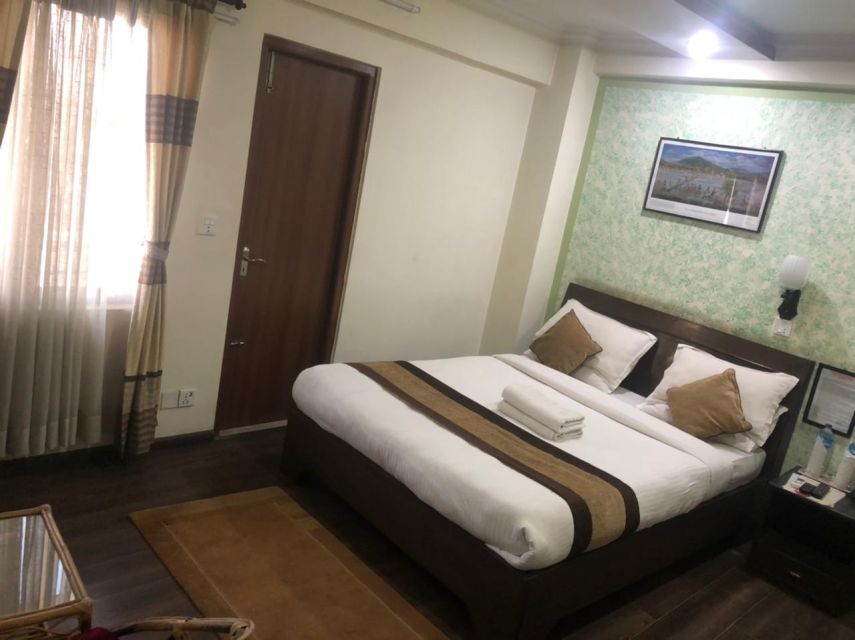
At $1,699 per person, this is not a bare-bones walking package. The price includes three nights in three-star hotels in Kathmandu and Pokhara, seven nights in teahouses or guesthouses, all trek meals, domestic flights, private ground transport, permits, taxes, and staff costs.
You also receive an English-speaking, government-licensed trek leader, porter support, a down jacket, sleeping bag, duffel bag, T-shirt, trekking map, and a medical kit carried by the guide. The Annapurna Conservation Area Permit and TIMS paperwork are included as well.
That bundle has real value. Organizing permits, flights, vehicles, porters, meals, and accommodation separately would take time and create more chances for a problem. The included gear also helps if you do not already own a warm sleeping bag or down jacket.
Still, the price does not cover everything. You must pay for your Nepalese visa, international flights, excess baggage, travel and rescue insurance, lunches in Kathmandu and Pokhara, personal costs, and any extra hotel nights caused by an early arrival, late departure, or early return from the mountains.
The provider allows cancellation up to 24 hours before departure for a full refund, and you can reserve now and pay later. Those terms are useful when flights, weather, or work plans are still shifting.
Guides, porters, and the feel of the support
The trek uses an English-speaking guide with a government license. That matters most on the higher days, when route decisions, pacing, and health checks are more important than simply knowing the way.
The strongest practical praise for this experience centers on organization and the guide team’s helpful manner. You should expect guides who can answer questions about both the trek and local subjects, which adds value during long walking days. No individual guide names are provided, so you should not book this expecting a particular person.
The porter system is one porter for every two trekkers. That reduces the load you carry, but it does not mean you can bring unlimited luggage. A duffel bag is supplied, and you should confirm the expected weight limit before packing.
Who should book this trek
I would recommend this trip to you if you have 11 days, want a major Himalayan goal, and prefer a package that handles the main logistics. It suits people who value a guide, porter, included meals, and organized transport more than complete independence.
You should be comfortable walking for up to eight hours and handling steep, uneven mountain paths. The trip is not a good fit if you want leisurely days, guaranteed hotel comfort, or plenty of spare time for weather delays.
Spring and autumn are the safest choices for good views and warmer conditions. Winter can bring clearer, quieter trails, but temperatures may be harsh. From June through August, monsoon rain can affect the route and visibility.
Final verdict: is Annapurna Base Camp worth booking?
Book this trek if you want the Annapurna Base Camp experience in a compact package and appreciate having permits, meals, flights, porters, and gear arranged together. The combination of cultural stops, forest walking, mountain views, and a high base camp gives you a lot in 11 days.
Think twice if you need a slow acclimatization plan or a flexible schedule with several spare days. The route is demanding, and the climb to 4,130 meters comes quickly. For a fit person with limited time, though, Alpine Club of Himalaya’s package offers a practical way to reach one of Nepal’s great mountain destinations without managing every detail yourself.
FAQ
How long is the Annapurna Base Camp trek?
The full experience lasts 11 days, including time in Kathmandu and Pokhara, domestic flights, trekking, and airport transfers.
What is the highest point on the trek?
Annapurna Base Camp is the highest listed point, at 4,130 meters or 13,545 feet. The route also passes Machhapuchhre Base Camp at 3,700 meters.
Are meals included?
Breakfast, lunch, and dinner are included during the trek. Breakfast is included at the Kathmandu and Pokhara hotels. Lunch in Kathmandu and Pokhara is not included.
Is accommodation included?
Yes. The package includes three nights in three-star hotels in Kathmandu and Pokhara, plus seven nights in teahouses or guesthouses during the trek.
Are flights between Kathmandu and Pokhara included?
Yes. Domestic flights from Kathmandu to Pokhara and back to Kathmandu are included.
What is the best time of year for this trek?
September through November and March through May are described as the best seasons, with generally warm weather and good mountain views. December through February is colder, while June through August can bring monsoon rain.
New treks around Kathmandu
- Kathmandu or Pokhara: 5-Day Annapurna Base Camp (ABC) Trek★ 4.5 · 2 reviews
- Pokhara: 2 Day Ghorepani & Poon Hill Private Trekking★ 4.9 · 8 reviews
- From Kathmandu: 6-Day Langtang Valley Guided Trek★ 5.0 · 2 reviews
- Pokhara: 5-Day Annapurna Base Camp (ABC) Trek★ 5.0 · 9 reviews
- Kathmandu: Langtang Valley 6-Day all inclusive Guided Trek★ 5.0 · 2 reviews
- Kathmandu: 6 Days Langtang Valley Trek with Kyanjin Ri★ 5.0 · 7 reviews
- Kathmandu: 6-Day Limitless Langtang Trek★ 5.0 · 21 reviews
- Kathmandu: 9- Day Annapurna Circuit Trek★ 5.0 · 2 reviews
Annapurna Base Camp Treks, side by side.
Trekking in Annapurna/Langtang/Everest/Upper Mustang regions
Read our review →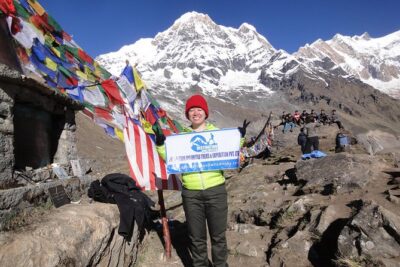
Kathmandu to Annapurna Base Camp (ABC) 5-Day Trek
Read our review →
Lists this trek appears in