
Review · KATHMANDU
From Kathmandu: 12-Day Everest Base Camp Guided Trekking
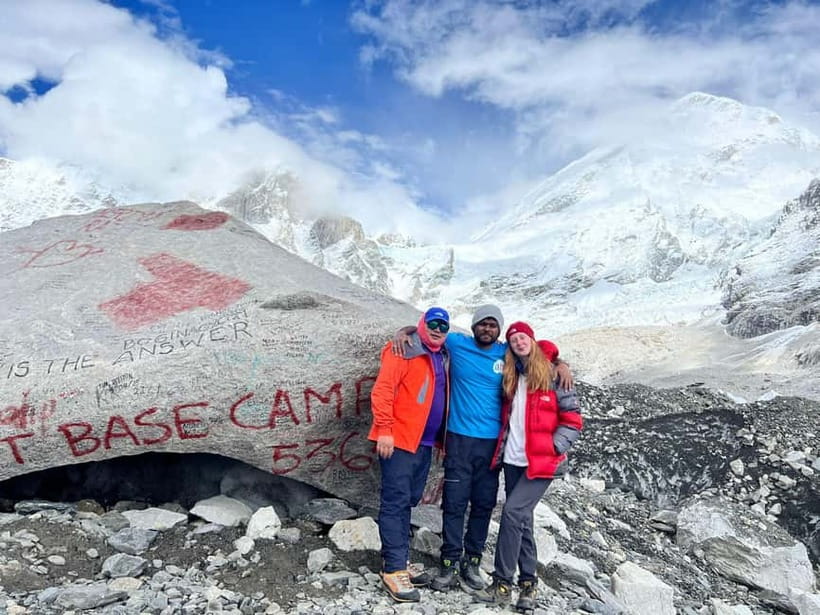
Everest Base Camp is the headline, but the real reward comes from the slow climb through Sherpa country, suspension bridges, rhododendron woods, and the high valleys beneath Ama Dablam, Nuptse, and Lhotse. This 12-day route gives you two acclimatization days, which is exactly what you want before reaching 5,364 meters.
I like the small groups of up to 15 and the strong guide support. Padam, Nishan, Rohan, and Adhish are named in recent feedback, and the service sounds personal rather than mechanical. I also like that the price includes Lukla flights, permits, tea-house lodging, guide costs, and useful gear. The catch is that meals, porter service, drinks, showers, internet, and travel insurance cost extra, while the final high-altitude days demand real stamina.
Key points before you book
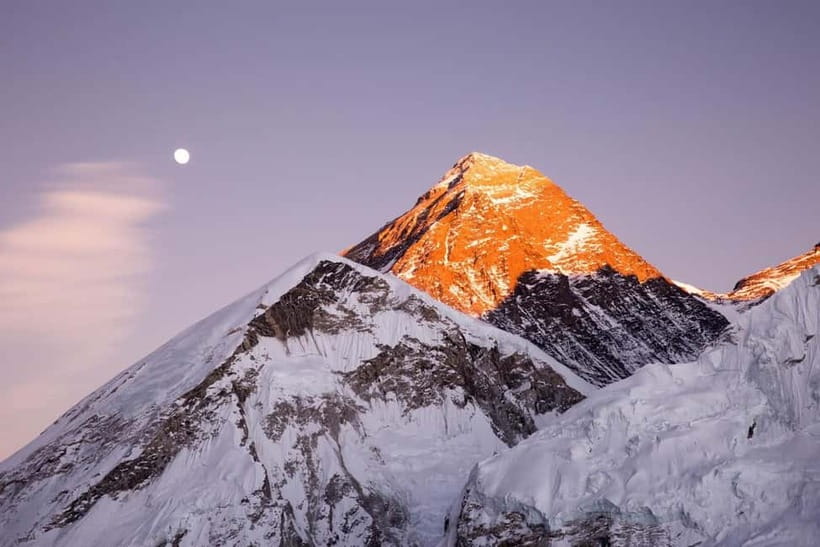
- Everest Base Camp at 5,364 meters: Reach the famous camp after hiking from Lobuche through Gorakshep beside the Khumbu glacier.
- Kala Patthar at 5,545 meters: The highest point on the route gives you a serious altitude test on day nine.
- Two acclimatization days: Spend one rest day in Namche Bazaar and another in Dingboche.
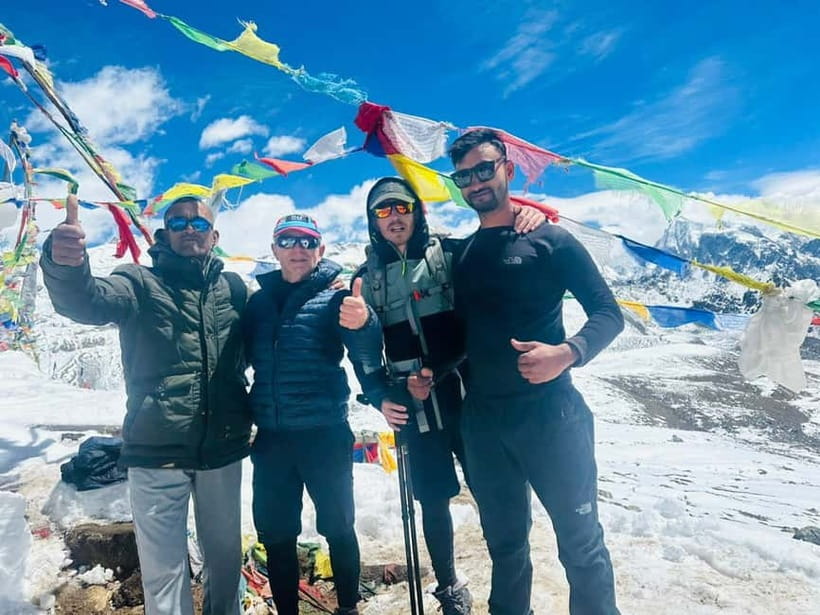
- Guides with strong praise: Padam, Nishan, Rohan, and Adhish are specifically named as helpful, safe, funny, and attentive.
- A bundled package: Flights, permits, tea-house stays, guide expenses, taxes, and selected gear are included in the $1,002 price.
- Meals are not included: Budget separately for breakfast, lunch, dinner, drinks, showers, internet, and possible porter support.
The $1,002 price and what it really covers
At $1,002 per person, this is not a bare-bones hiking package. The cost includes airport pickup in Kathmandu, domestic transfers, the return Kathmandu to Lukla flight, all tea-house or lodge accommodation, national park entry, the TIMS card, government charges, taxes, and an English-speaking guide.
It also covers the guide’s salary, food, drinks, accommodation, transport, and insurance. That matters because guide costs can otherwise appear later as separate charges. A jacket, sleeping bag, and duffle bag are available if you request them, which can save you from buying or carrying bulky gear.
The main omission is food. You pay separately for breakfast, lunch, and dinner throughout the trek, along with alcoholic and non-alcoholic drinks. Hot showers and internet also cost extra, and a porter is not included. One porter can carry up to 25 kilograms for two people, at an additional cost.
I see this as a fair package for someone who wants the key arrangements handled in advance but still wants control over daily food spending. Before booking, ask for current meal prices, porter rates, and the exact gear available. The package is good value, but the final amount will be higher than $1,002.
More Everest Base Camp treks around Kathmandu:
- Everest Base Camp Trek – 14 Days
★ 5.0 · 1,499 reviews - Everest Base Camp Trek
★ 5.0 · 842 reviews - Everest Base Camp Trekking
★ 5.0 · 485 reviews
Kathmandu to Lukla, then the first walk to Phakding
Your trip begins with hotel pickup in Kathmandu, Bhaktapur, or Lalitpur. You head to Tribhuvan International Airport for an early flight to Lukla, one of the most memorable parts of the route because the mountain journey begins almost at once.
After landing, you transfer to the trailhead and walk toward Phakding. This first day is deliberately short compared with the later stages, giving you a chance to adjust to the walking rhythm. You sleep in a tea-house lodge.
The early flight also means you need to be ready before most of the day has started. Keep your passport accessible, and do not pack large luggage for the trek. A duffle bag is provided if requested, and luggage restrictions mean you should bring only the items you need on the trail.
Phakding to Namche Bazaar at 3,440 meters
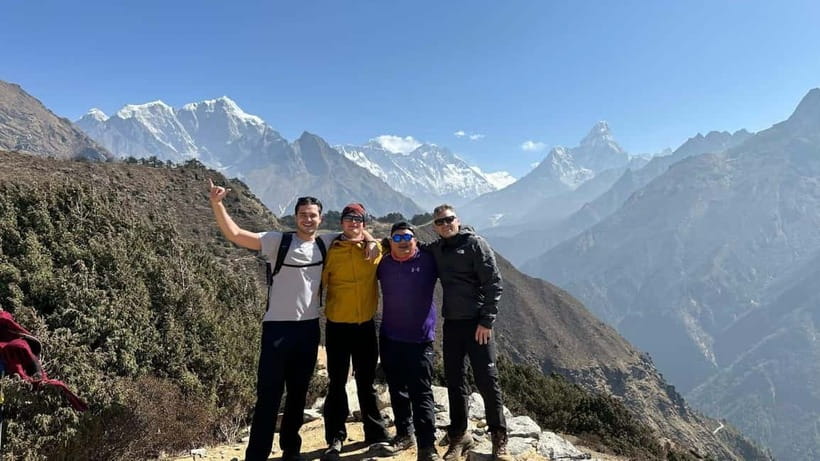
Day two takes you from Phakding to Namche Bazaar, the main town of the Khumbu region. The increase in altitude is significant, and this is where the trek starts to feel more demanding rather than simply scenic.
Namche is more than an overnight stop. It is the place where the route begins to turn upward in a serious way, so the scheduled second night there is useful. You can rest, eat, and prepare for the higher villages ahead.
The program gives you a full acclimatization day in Namche on day three. That is one of the strongest features of the schedule. You are not being pushed higher every day, and the extra night gives your body time to respond to the altitude.
Namche to Tyangboche through mountain country
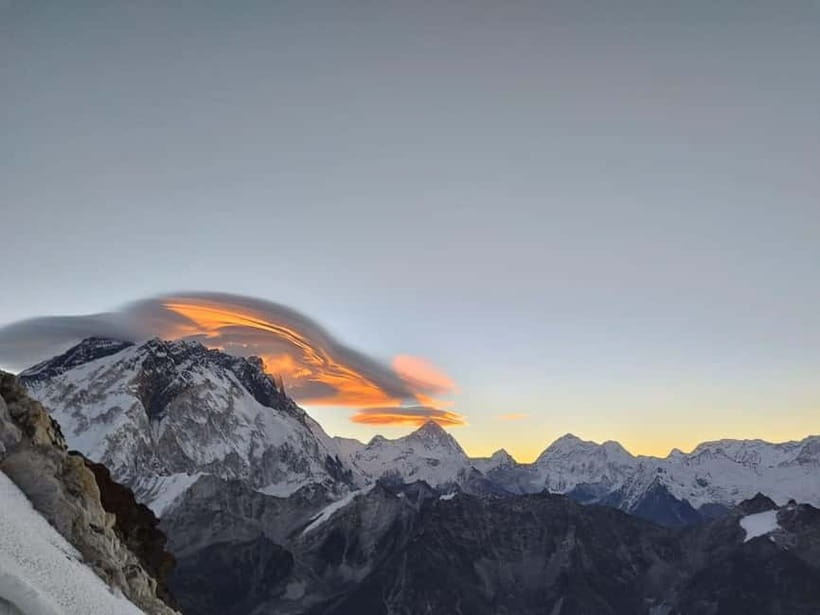
On day four, you leave Namche and hike to Tyangboche at 3,867 meters. The route takes you into a more open mountain setting, with large Himalayan peaks becoming a constant part of the view.
Tyangboche is a memorable overnight stop because the elevation is already high, yet you are still below the most severe section of the trek. The next day leads through rhododendron forest and across a suspension bridge over the Imja Khola.
You then continue toward Minlinggo and enter the Imjatse Valley. The valley sits beneath Ama Dablam, Nuptse, and Lhotse, so this is one of the best stretches for mountain scenery. I would keep your camera easy to reach here, but protect batteries and electronics from cold and moisture.
More guided trips around Kathmandu
- Kathmandu: 15-Day Everest Base Camp Trek with Guide
★ 4.3 · 12 reviews - From Kathmandu: Guided Everest Base Camp Trek
★ 5.0 · 6 reviews - From Kathmandu: 6-Day Langtang Valley Guided Trek
★ 5.0 · 2 reviews - Kathmandu: Langtang Valley 6-Day all inclusive Guided Trek
★ 5.0 · 2 reviews
Dingboche at 4,260 meters and the second rest day
The route reaches Dingboche on day five, at 4,260 meters. This is a major altitude jump from Namche and a clear sign that the trek is moving into thin-air territory.
The walk through the forest, over the suspension bridge, and into the Imjatse Valley gives the day plenty of visual variety. Still, the high elevation matters more than the scenery. You should expect a slower pace, more frequent breaks, and a greater need to drink water.
Day six is another acclimatization day in Dingboche. I like the structure of this trip because the rest days are placed before the most demanding section, not added as an afterthought. You stay another night in a tea house and prepare for Lobuche, Gorakshep, and Base Camp.
The schedule does not promise a particular activity for the rest day, so treat it as recovery time rather than a sightseeing excursion. You may choose to rest and enjoy the village at an easy pace.
Dingboche to Lobuche at 4,930 meters
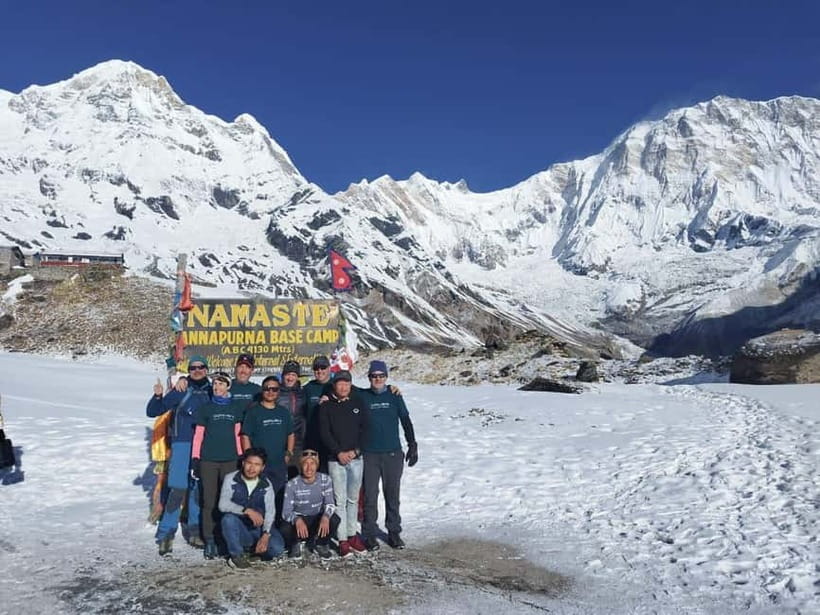
Day seven takes about 5.5 hours, according to the itinerary, as you hike from Dingboche to Lobuche. Lunch is planned in Dugla before the route continues to the overnight stop.
At 4,930 meters, Lobuche is high enough that even a routine walk can feel slow. The short distance on a map does not tell the whole story. Cold, altitude, rocky ground, and tired legs all affect your pace.
This is the point where good guide support becomes especially important. Recent feedback singles out Padam for keeping morale high, Nishan for adjusting the trek to individual needs, and Rohan for experienced support. Those details matter more here than a polished sales pitch. At altitude, a guide who pays attention can help you manage the day sensibly.
Lobuche to Everest Base Camp via Gorakshep
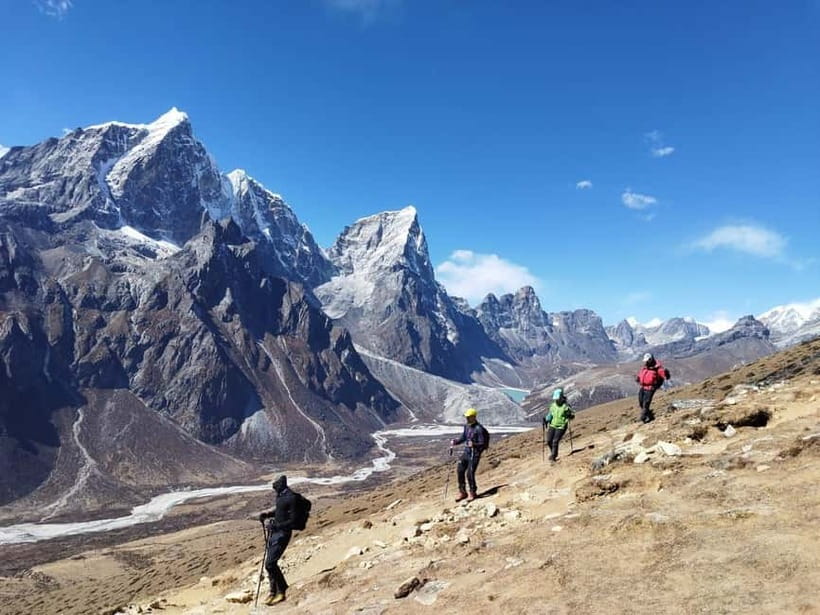
Day eight is the central day of the trip. After breakfast in Lobuche, you walk toward Gorakshep and then continue to Everest Base Camp at 5,364 meters.
The route follows rocky ground with views of the Khumbu glacier. It is not a casual walk, and the altitude makes every rise more noticeable. You need to keep your pace steady rather than race toward the destination.
Reaching Base Camp is rewarding because the place carries such a strong name in mountaineering. Keep your expectations realistic, though. The attraction is the setting, the glacier, and the feeling of reaching the route’s famous endpoint. The summit of Everest is not promised from Base Camp, and the view depends on conditions and position along the trail.
After visiting Base Camp, you return to Gorakshep for the night. That return is important. You do not finish the Base Camp walk and immediately descend to a lower village, so the day remains long and physically demanding.
Kala Patthar at 5,545 meters
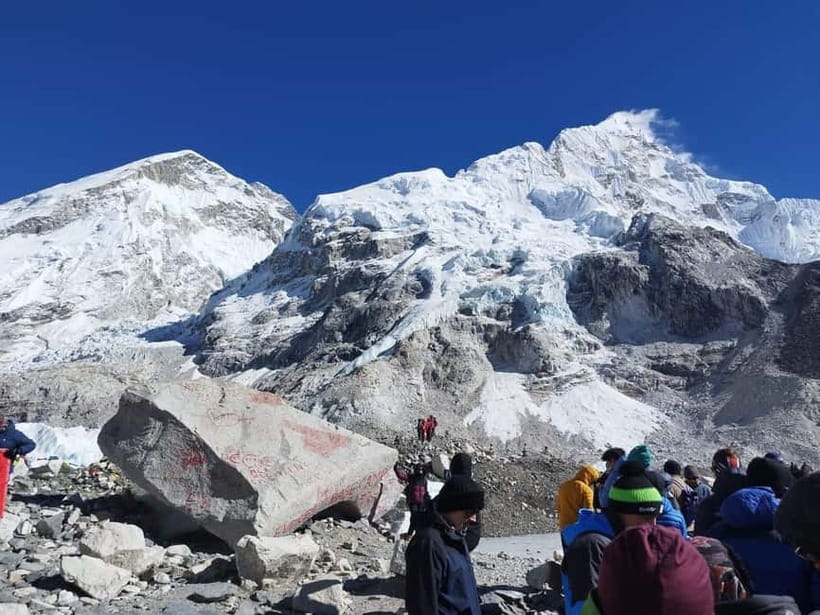
Day nine begins with a hike from Gorakshep to Kala Patthar, listed at 5,545 meters. This is higher than Everest Base Camp and may be the hardest morning of the trek.
The climb gives you another major mountain viewpoint, then you descend to Pheriche at 4,243 meters for the night. The descent is welcome, but do not assume it will feel easy. After the Base Camp day, your legs may be tired, and the high point comes early in the day.
I consider Kala Patthar a strong addition to this trip. Base Camp is the famous name, but Kala Patthar offers the higher viewpoint and adds a second clear goal after the main destination. If altitude affects you strongly, tell your guide early and follow the guide’s advice about pace and rest.
The descent, and one itinerary detail to confirm
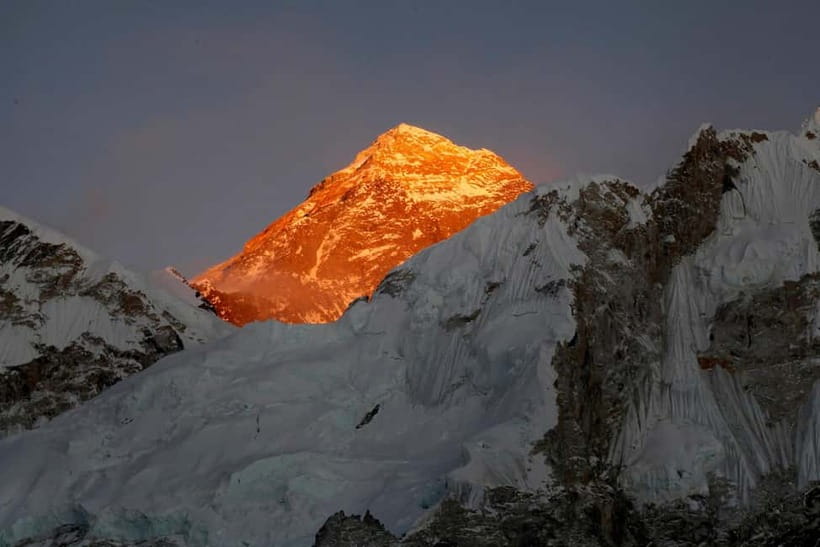
Day ten is described as a descent from Pheriche to Tyangboche, followed by travel toward Namche Bazaar. The information also lists Pheriche to Namche on that day, with Namche at 3,440 meters. That is a long and potentially tiring section, so I would confirm the exact overnight plan with Welcome Nepal Treks before departure.
The route later returns to Namche, then continues to Lukla on day eleven. That sequence makes sense as a broad descent, but the day ten wording needs clarification. Ask specifically whether Tyangboche is a stopping point, a route point, or part of the same long walking day.
This is not a reason to reject the trip. It is a reason to get the daily schedule in writing. A clear plan helps you judge your fitness, prepare for the longest days, and know where your bag will be each night.
Namche to Lukla and the flight back
Day eleven takes you from Namche Bazaar back to Lukla for the final night in the mountain region. By this stage, the route is familiar in reverse, but the descent can still be tiring after the high-altitude section.
The next morning, you take an early flight back to Kathmandu. A tour representative transfers you to your hotel, and the itinerary includes an overnight stay in Kathmandu.
Flight timing in the Himalayas can be affected by weather. One recent account describes a flight change to a helicopter being handled professionally when conditions required it. That is useful context, but you should not assume a helicopter transfer is included or guaranteed. Ask what happens if a flight is delayed and what extra charges could apply.
Tea houses, food, gear, and comfort
Tea-house accommodation is part of the mountain experience and keeps the package practical. You sleep in lodges rather than carrying camping equipment, while your guide’s accommodation, food, transport, salary, and insurance are covered.
Comfort is basic. Hot showers and internet are not included, and both may cost extra. Alcoholic and non-alcoholic drinks also come out of your pocket. The nights can be especially tough in colder months, so use the available sleeping bag and jacket if needed, and confirm their condition and availability before leaving Kathmandu.
Meals are another daily expense. Since breakfast, lunch, and dinner are excluded, keep money available for the full trek rather than assuming the $1,002 price covers everything.
Porter service is optional. One porter can assist two people with up to 25 kilograms of luggage, but you should arrange this at an additional cost if you do not want to carry your own load. Pack light and keep essential personal items with you.
Guide quality and group size
The group is limited to 15 people, which is a useful middle ground. You get more support than on a fully independent trek, but you are not necessarily tied to a large coach-style group.
The named guides receive especially strong personal praise. Padam is described as funny, helpful, positive, and reassuring in difficult conditions. Nishan is noted for paying attention and adjusting the trek to individual needs. Rohan is paired with a highly praised porter, while Adhish is credited with making the trip fun.
These details suggest that the guide can shape the experience as much as the route itself. You should still explain your pace, health concerns, and previous hiking experience at the start. The tour is guided, but no guide can remove the physical demands of walking above 4,000 meters.
Who should book this trek?
This trip suits you if you want the classic Everest Base Camp route without arranging flights, permits, lodging, and guide support yourself. It is also a good fit if you prefer a small group and want two built-in acclimatization days.
You need to be comfortable with long walks, steep and rocky paths, cold nights, basic lodging, and high altitude. The activity is not suitable for pregnant women, people with heart problems, or wheelchair users.
You should also be prepared to pay extra for food, drinks, showers, internet, insurance, and a porter. Bring your passport, avoid large bags, and arrange travel insurance before you go.
Should you book the Everest Base Camp trek?
I would book this trek if you want a well-supported route with a sensible acclimatization structure and a price that includes the major logistics. The included Lukla flights, permits, tea-house accommodation, guide expenses, and optional gear make the package easier to manage than planning every part alone.
I would pause before booking if you need comfortable accommodation, included meals, a short walking day, or a fully fixed itinerary with no long descent. Confirm the day ten route and ask about weather-related flight changes, porter fees, and current meal costs.
For an active hiker who wants Everest Base Camp, Kala Patthar, strong guide support, and a small group, this is a solid choice. Go in knowing that the $1,002 price is the starting package cost, not the final spend.
FAQ
How long is the Everest Base Camp trek?
The activity lasts 12 days, including the flights between Kathmandu and Lukla, the trek to Everest Base Camp, the return to Lukla, and the flight back to Kathmandu.
Is hotel pickup included?
Yes. Pickup is available from hotels within Kathmandu, Bhaktapur, and Lalitpur. Airport drop-off and hotel transfer after returning to Kathmandu are also included.
Are flights between Kathmandu and Lukla included?
Yes. The package includes the return domestic flight between Kathmandu and Lukla, as well as domestic airport pickup and drop-off.
Is accommodation included?
Yes. Accommodation in lodges or tea houses during the trek is included. The final night in Kathmandu is also listed in the schedule, but confirm the exact hotel arrangement when booking.
Are meals included?
No. Breakfast, lunch, and dinner during the trek are not included. Alcoholic and non-alcoholic drinks are also excluded.
Is a porter included?
No. Porter service costs extra. One porter can assist up to 25 kilograms for two people.
Are permits included?
Yes. The package includes the Sagarmatha National Park entrance permit, TIMS card fees, and the necessary paperwork and government charges.
Is travel insurance included?
No. Travel insurance is not included, so you need to arrange it separately.
What language does the guide speak?
The live tour guide speaks English.
What should I bring?
Bring your passport. Large luggage or large bags are not allowed. A jacket, sleeping bag, and duffle bag can be provided if requested.
New treks around Kathmandu
- Kathmandu or Pokhara: 5-Day Annapurna Base Camp (ABC) Trek★ 4.5 · 2 reviews
- Pokhara: 2 Day Ghorepani & Poon Hill Private Trekking★ 4.9 · 8 reviews
- From Kathmandu: 6-Day Langtang Valley Guided Trek★ 5.0 · 2 reviews
- Pokhara: 5-Day Annapurna Base Camp (ABC) Trek★ 5.0 · 9 reviews
- Kathmandu: Langtang Valley 6-Day all inclusive Guided Trek★ 5.0 · 2 reviews
- Kathmandu: 6 Days Langtang Valley Trek with Kyanjin Ri★ 5.0 · 7 reviews
- Kathmandu: 9- Day Annapurna Circuit Trek★ 5.0 · 2 reviews
- Kathmandu: 6-Day Limitless Langtang Trek★ 5.0 · 21 reviews
Everest Base Camp Treks, side by side.
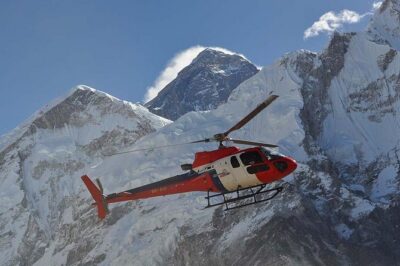
Everest Base Camp Trek with Helicopter Return from Gorakshep to Lukla
Read our review →
Trekking in Annapurna/Langtang/Everest/Upper Mustang regions
Read our review →Lists this trek appears in