
Review · TANZANIA
#1. Best 7 days kilimanjaro trek Machame route join group
The big draw here is the seven-day climb to Uhuru Peak, Africa’s highest point, using the scenic Machame Route. You move through rainforest, moorland, alpine desert, and the icy summit zone, rather than walking through one unchanging environment.
I like the built-in acclimatization day through Lava Tower and the practical route design, which takes you high and then brings you down to Barranco Camp. I also like the short Karanga day before Barafu Camp, since you get time to rest before the hardest night. The main caution is the real price: the advertised $900 does not include national park fees, and the final cost may be far higher.
Key points to know before climbing
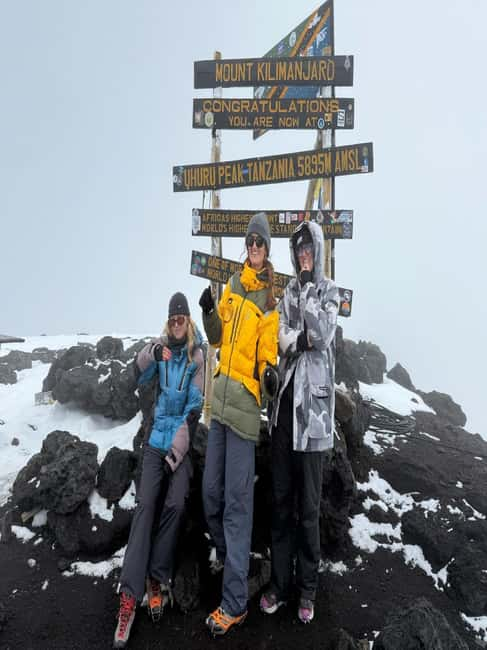
- Seven days on Machame Route: You pass through five major climate zones before reaching Uhuru Peak at 5,895 meters.
- Lava Tower acclimatization: Day three takes you up to 4,600 meters, then down to Barranco Camp for better altitude adjustment.
- A serious summit day: The Barafu to Uhuru Peak section and descent to Mweka Camp can take 10 to 14 hours.
- Barranco Wall included: Expect a hands-on scramble rather than a simple uphill walk.
- Meals, water, transport, and equipment: The package includes food, drinking water, a mattress, camping equipment, and transfer from your Moshi hotel to the gate.
- Check the bill carefully: National park fees are excluded, and one seven-day cost estimate reaches about $2,150 after fees and tips.
Why the Machame Route earns its reputation
Machame is often chosen for its changing scenery and strong sense of progress. You begin in thick montane rainforest, where colobus monkeys and colorful birds may appear, then climb into open moorland with wide views toward Kibo Peak.
The route becomes rougher and more exposed as you go. By the time you reach the alpine desert, trees have disappeared and the mountain feels much more remote. At the summit, the setting changes again to an arctic zone of cold, thin air and little plant life.
I like that the seven-day schedule does not rush straight upward. You gain height on several days, but the route also includes a descent after Lava Tower. That pattern gives your body a better chance to adjust than a very short climb.
Still, this is a demanding trek. The final ascent begins around midnight, and the whole summit day can last up to 14 hours. You need to be comfortable hiking for long periods, sleeping at altitude, and managing cold conditions with limited comfort.
More Kilimanjaro climbs around the world:
- 8-Day Small-group Lemosho Kilimanjaro Summit Trekking
★ 5.0 · 186 reviews - Best Kilimanjaro Adventure 7 days Machame route Trekking
★ 5.0 · 42 reviews - Kilimanjaro 7 Day Private Trekking Experience
★ 5.0 · 40 reviews
Day 1: Machame Gate to Machame Camp
The trek begins at Machame Gate after park registration. The published distance is given as 1 kilometer, or 7 miles, which is clearly inconsistent, so ask the operator to confirm the actual trail distance before departure. The hiking time is listed as five to seven hours.
You start at about 1,800 meters and finish near 2,835 meters in the montane rainforest. This is a steady introduction rather than a summit test, but the humidity, roots, mud, and rising trail can make the day feel longer than the numbers suggest.
The forest is one of the most enjoyable parts of the early route. Look for unusual plants, colobus monkeys, and colorful birds. The thick vegetation also gives you a strong contrast with the bare summit zone still several days ahead.
You spend the night at Machame Camp. The schedule says you will rest and eat dinner there, but the accommodation details need clarification. The highlights describe hut accommodation, while the itinerary refers to camps and the inclusions list camping equipment and a sleeping mattress. Ask exactly where you sleep each night and whether a tent is supplied.
Day 2: Machame Camp to Shira Camp
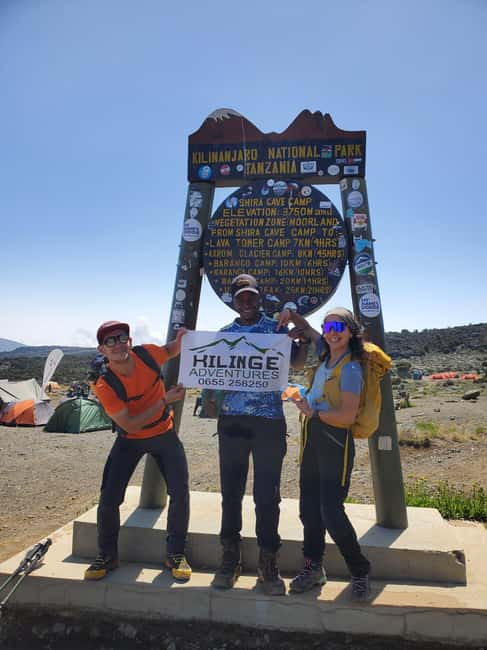
Day two leaves the rainforest and enters moorland. You climb from about 2,835 meters to 3,750 meters, with four to six hours of hiking over a listed distance of 5 kilometers, or 3 miles.
The trail becomes steeper and rockier. In return, you get broader views of the Shira Plateau and Kibo Peak. This is an important visual change: the forest no longer surrounds you, and the mountain begins to feel open and expansive.
Shira Camp is useful for more than its scenery. It gives you a night at a higher elevation before the long Lava Tower day. Drink regularly, eat even if your appetite drops, and tell your guide early if you develop a headache, nausea, or unusual fatigue.
The short distance listed for this day may not fully convey the effort. At altitude, a few kilometers can take time, especially on uneven ground. Keep your pace slow and steady rather than trying to match the speed of a fitter group member.
Day 3: Shira Camp to Lava Tower and Barranco
This is one of the most valuable days in the schedule. You climb from Shira Camp at 3,750 meters to Lava Tower at about 4,600 meters, then descend to Barranco Camp at 3,900 meters.
The full day is listed at 10 kilometers and seven to eight hours. The high point at Lava Tower gives your body a useful altitude test, while the lower overnight camp gives you some relief afterward. This is the classic idea of climbing high and sleeping lower, and it is one reason the seven-day plan is more appealing than a rushed itinerary.
The scenery is now alpine desert. Plants become sparse, and the route feels dry, rocky, and exposed. After Lava Tower, you descend toward the Barranco Valley, where giant senecio plants create one of the route’s most memorable natural scenes.
You should not treat this as an easy day simply because the distance is moderate. The high point can bring altitude symptoms, and the descent can be tiring after several hours of climbing. Follow the guide’s pace and use the break at Lava Tower to drink, eat, and check your layers.
More week-long treks around the world
- Pokhara: 7 Day Annapurna Base Camp Trek
★ 4.9 · 38 reviews - 7 Days Kilimanjaro trek via Machame route
★ 5.0 · 13 reviews - Pokhara: 7-Day Annapurna Base Camp Trek & Natural Hot Spring
★ 5.0 · 11 reviews - Pokhara: Amazing 7-Day ABC Trek with Natural Hot Spring
★ 5.0 · 5 reviews
Day 4: The Barranco Wall and Karanga Camp
Day four covers about 5 kilometers in four to five hours, rising from 3,900 meters to roughly 4,035 meters. The main feature is the Barranco Wall.
The wall is not described as technical climbing, but it does involve an energetic scramble over rock. You will use your hands in places and may need to pay attention to foot placement. This section adds variety and a little excitement to what would otherwise be another high-altitude walking day.
After the wall, the route crosses ridges and valleys before reaching Karanga Camp. The camp sits only slightly higher than Barranco, which is deliberate. You get a shorter day and a chance to recover before the push to Barafu.
I like this part of the plan because it breaks up the hardest section of the trek. You are not asked to go directly from Barranco to Barafu in one long effort. The tradeoff is that the terrain can still feel tiring, and the short distance does not mean the day is effortless.
Day 5: Karanga Camp to Barafu Camp
The walk to Barafu Camp is about 4 kilometers and takes four to five hours. You climb from 4,035 meters to approximately 4,640 meters through alpine desert.
Barafu is your launch point for the summit attempt. Once you arrive, the job is less about sightseeing and more about preparation. Eat, drink, organize your clothing, check your flashlight, and keep your daypack ready for the midnight start.
The schedule allows a rest period before the summit night, but do not expect deep, comfortable sleep. You are high, the air is cold, and the knowledge that you must wake around midnight can make rest difficult.
This is where your packing choices matter. Keep your warm jacket, gloves, socks, headlamp or flashlight, snacks, and water system close by. A power bank is also useful because cold conditions and a long summit day can drain a phone quickly.
Day 6: Barafu Camp to Uhuru Peak and Mweka Camp
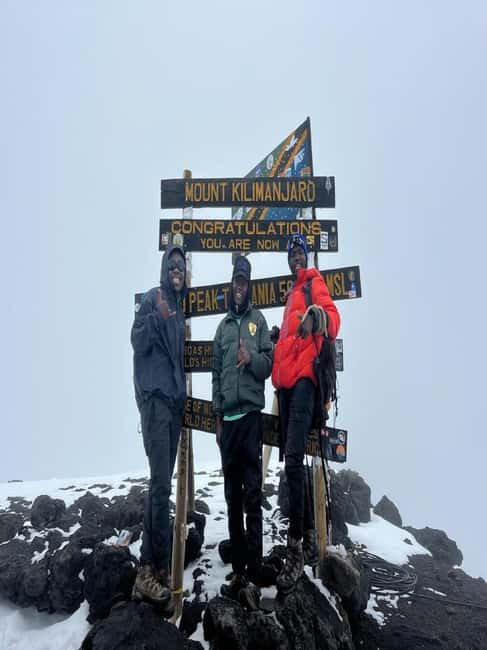
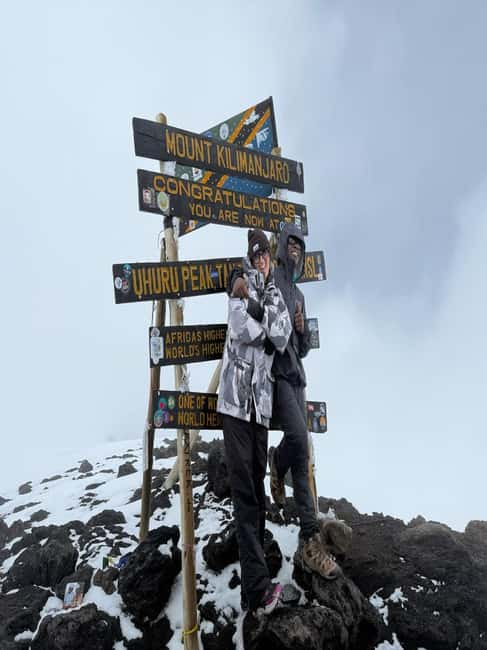
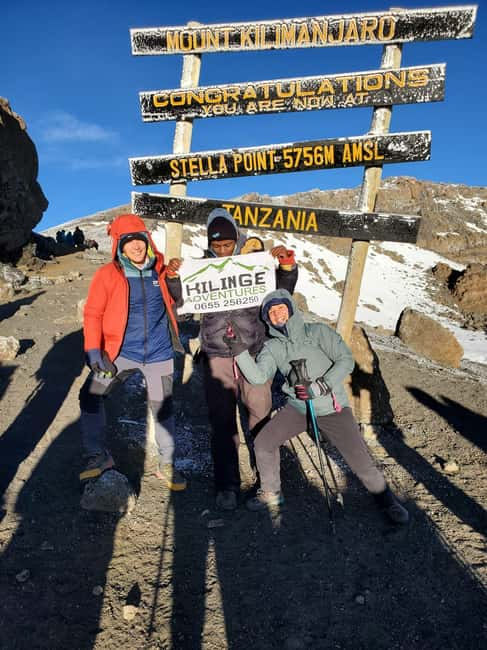
This is the defining day. You leave Barafu Camp around midnight and climb toward Stella Point before continuing to Uhuru Peak at 5,895 meters.
The full distance is listed as 17 kilometers, with 10 to 14 hours of hiking. That figure includes the summit climb and the long descent to Mweka Camp. You finish near 3,110 meters, a major drop from the summit and welcome relief for your breathing.
The route to the top is cold, dark, and slow. Your goal is not speed. A measured pace helps conserve energy for the final section from Stella Point to Uhuru Peak. At the summit, you can celebrate briefly, take photographs, and then begin the descent.
The way down is not a free ride. Loose ground, tired legs, and the effects of altitude can make descending surprisingly hard. You then continue to Mweka Camp, where you spend the night in the rainforest zone.
This day is the clearest reason to choose seven days rather than a shorter schedule. You still face a very hard summit push, but the earlier stages give you more time to adjust and prepare.
Day 7: Mweka Camp to the gate and Moshi
The final descent covers about 10 kilometers in three to four hours. You drop from 3,110 meters to around 1,640 meters through rainforest before reaching Mweka Gate.
After signing out, you collect your certificate of achievement. Transportation then returns you to Moshi or Arusha, where you can rest or continue to another part of your Tanzania trip.
This final day is straightforward compared with the summit push, but your knees and feet may be sore. Trekking poles, comfortable socks, and a careful pace remain useful until the very end.
What the $900 price really means
At first glance, $900 per person looks like a strong price for seven days with guides, meals, water, transfers, equipment, and a summit attempt. It could be good value if the listed inclusions are complete and the park charges are handled separately in a clear way.
They are not included. That matters because Kilimanjaro park fees are a major part of the cost, not a small extra charge. A seven-day breakdown associated with this trip places entrance fees for the climber, porters, and guide at about $950.
Tips also need a place in your budget. The same breakdown estimates about $50 per accompanying person, with seven guides producing a suggested $350 total. Added to the $900 starting price, those figures bring the estimated total to about $2,150.
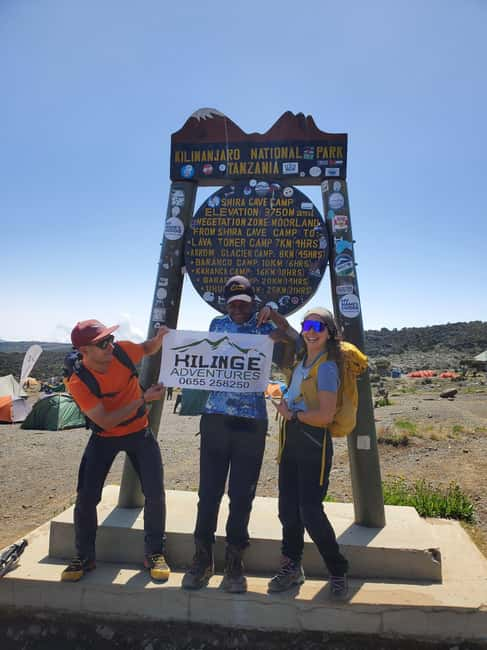
I would not book until Kilinge Adventures gives you a written, itemized price. Ask these questions:
- What exact national park fees are payable?
- Are guide and porter entrance charges included?
- How many guides and porters will accompany the group?
- Is the suggested tip per person or for the whole team?
- Are tents supplied, or are huts actually provided?
- Does the $900 include airport transfers, or only the hotel-to-gate transfer?
- Are sleeping bags excluded while mattresses are supplied?
The low headline price may still be useful for comparison, but it should not be treated as the final amount.
Meals, water, and what to pack
Meals and drinking water are included, which removes two daily worries. You should still carry snacks. Long hours at altitude can make regular eating difficult, and familiar high-energy food is useful when a full meal does not appeal.
The required packing list is sensible:
- Warm jacket
- Gloves
- Sleeping bag
- Hiking pants
- Trekking socks
- Flashlight
- Daypack
- Climbing and trekking gear
- Snacks
- Power bank
The trip also includes camping equipment and a sleeping mattress, but the sleeping bag is listed as something you must bring. Confirm this before arrival, since sleeping bags are essential on the coldest nights.
A daypack should hold water, snacks, extra layers, gloves, your flashlight, and personal items. Keep heavier luggage off your back when possible. The information provided does not explain baggage transfer, so ask how your main bags are handled during the trek.
Who this trek suits best
This route suits you if you want Kilimanjaro’s most varied scenery and can commit to a full week on the mountain. It is a good match for someone who prefers a gradual schedule with a dedicated acclimatization day and a shorter rest-oriented day before Barafu.
It also suits hikers who enjoy a little roughness. The Barranco Wall requires a scramble, and the summit day demands stamina, patience, and careful pacing.
I would be cautious about booking it if you want a simple, low-cost holiday with no extra planning. The fee confusion needs sorting out, and the hut-versus-camping description is not clear enough. You should also be ready for a 10 to 14-hour summit day, cold conditions, and basic mountain accommodation.
Kilinge Adventures is identified as the provider, and English is the listed operating language. No individual guide names are supplied, so you should request the lead guide’s name, the group size, and the guide-to-climber ratio before paying.
Should you book this Machame Route trek?
Book it if the operator confirms the full cost in writing and you want a scenic seven-day climb with solid altitude planning. The Lava Tower ascent, Barranco Wall, varied climate zones, and final Uhuru Peak attempt give the route real character.
Do not book based on the $900 figure alone. Add the park fees and likely tips, then compare the complete figure with other seven-day Kilimanjaro trips. If the accommodation, staffing, and charges are clearly explained, this can be a practical route to the summit. If the answers remain vague, choose a provider with a more transparent price.
Flexible booking is available, with payment later and cancellation up to 24 hours before departure for a full refund. Those terms help, but they do not replace a clear cost breakdown.
FAQ
How long is the Kilimanjaro trek?
The trek lasts seven days, beginning at Machame Gate and ending at Mweka Gate, followed by transport to Moshi or Arusha.
What route does this experience use?
It uses the Machame Route on Mount Kilimanjaro.
Does the trek reach Uhuru Peak?
Yes. The summit day continues from Stella Point to Uhuru Peak, which is listed at 5,895 meters.
Are national park fees included in the $900 price?
No. National park fees are not included in the stated price.
What does the package include?
It includes accommodation, professional guides, transport from a hotel in Moshi to the gate, transportation, meals, drinking water, camping equipment, and a sleeping mattress.
What should I bring?
Bring snacks, a jacket, gloves, a sleeping bag, climbing and trekking gear, socks, a flashlight, daypack, hiking pants, and a power bank.
Is accommodation in huts or tents?
The trip information refers to hut accommodation but also mentions camps, camping equipment, and a sleeping mattress. Ask Kilinge Adventures to confirm the sleeping arrangements before booking.
New treks around the world
- Sapa: 2-Day Local Guided Valley Trek with Night Homestay★ 5.0 · 27 reviews
- SAPA: 1-DAY TREKKING TOUR WITH LOCALS, LUNCH & RICE FIELDS★ 4.7 · 18 reviews
- Sapa: 2-Day Local Guided Valley Trek with Night Homestay★ 4.8 · 5 reviews
- Santa Marta: Trekking in Minca Complete Waterfall Circuit★ 4.4 · 28 reviews
- Santiago: Longueira, Pico de Antónia & Monte Tchota Trek★ 4.8 · 10 reviews
- Santiago: Trek from Serra Malagueta to Rabelados Community★ 5.0 · 16 reviews
- Santiago Island: Serra Malagueta & Tarrafal Beach Trek Tour★ 4.8 · 61 reviews
- Santa Marta: Multi-Day Trek to The Lost City★ 4.8 · 40 reviews
Kilimanjaro Climbs, side by side.
8-Day Small-group Lemosho Kilimanjaro Summit Trekking
Read our review →
Best Kilimanjaro Adventure 7 days Machame route Trekking
Read our review →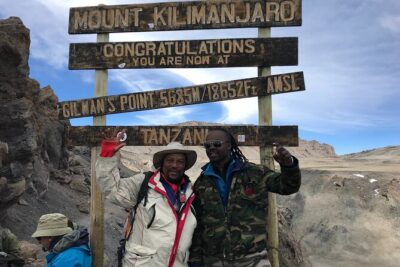
Kilimanjaro 7 Day Private Trekking Experience
Read our review →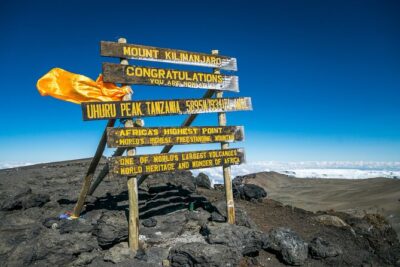
Lists this trek appears in