
Review · COLOMBIA
Santa Marta: Multi-Day Trek to The Lost City
The remarkable part of this trek is not just reaching Ciudad Perdida. It is the slow approach through the Sierra Nevada, where stone paths, jungle rivers, and natural pools lead you toward 169 ancient terraces hidden in the forest. The site is believed to date to around 800 CE, making it roughly 650 years older than Machu Picchu.
I like the chance to meet the Wiwa and Kogui communities in a respectful, community-supported setting, and I like that meals, water, jungle lodging, transport, and the archaeological entrance are included. The catch is simple: this is a hard trek, not an ordinary hike. Humidity, mud, steep climbs, river crossings, and long walking days will test you.
Key points to know before you go
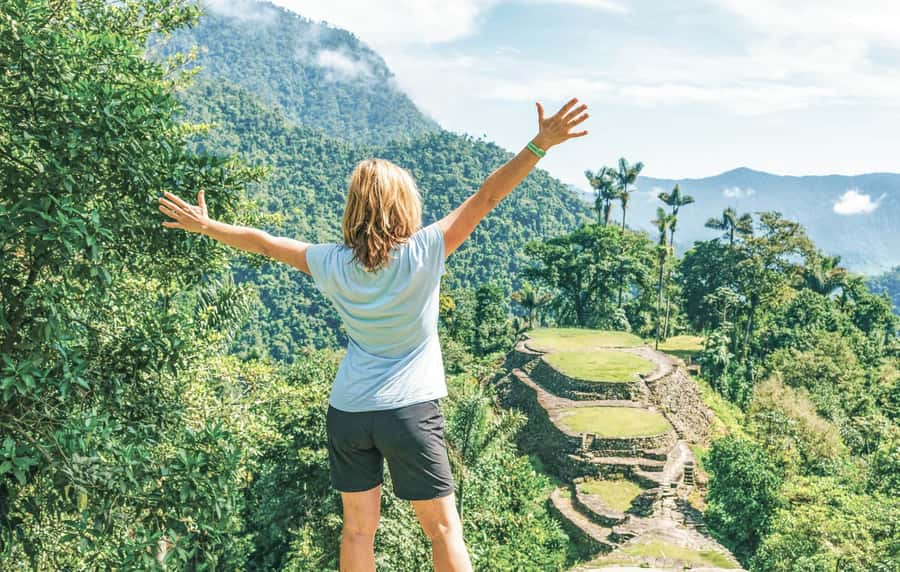
- The Lost City sits beyond 1,200 stone steps: Reaching the terraces requires a steep final climb through dense jungle.
- You can choose 4, 5, or 6 days: The longer versions slow the pace and allow more time for cultural visits and river stops.
- Expect serious physical effort: The longest days run about seven hours, with sustained uphill and downhill walking.
- Jungle camps are basic but practical: You sleep in hammocks or beds with mosquito nets, with electricity, toilets, and showers available.
- Guides add real value: English and Spanish service is available, with guides such as Arghenith, Francisco, Miguel, and Coco praised for encouragement and cultural explanation.
- The $713 price needs careful thought: Food, water, transport, insurance, storage, lodging, and entrance fees are included, but some extra drinks and optional costs are not.
Why the Lost City trek is worth the effort
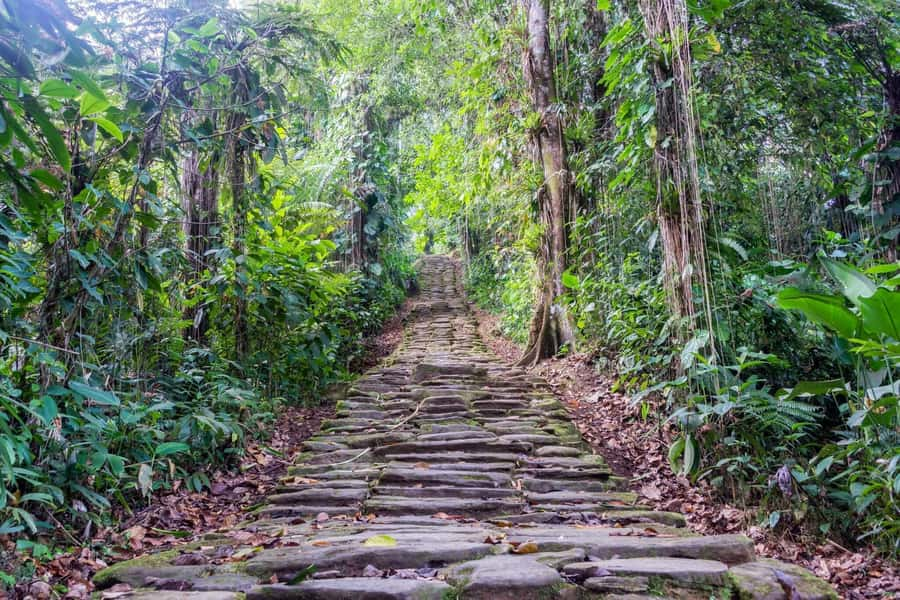
The Lost City is not a site you can reach by road, cable car, or short walk. You travel deep into the Sierra Nevada on foot, following trails used through thick jungle and along the Buritaca River. The setting gives the archaeological site its power. The terraces appear gradually, surrounded by trees, steep slopes, and misty mountain air.
At the top, your guide can explain the Tayrona connection to the site, the purpose of the terraces, and the stories linked to the area. You will see 169 stone terraces, tiled roads, and small circular plazas. The remains are less monumental than Machu Picchu, but that is part of the appeal. Here, the jungle remains a major part of the experience.
I also like that the trek supports indigenous communities in the area. Accommodation and food services are run by communities living along the route, and part of the cost goes toward their development. Service can vary because these are independent local operations, but the arrangement gives your money a more direct connection to the people who live in the region.
The trip is offered through Baquianos Travel, with a small group capped at 15 people. That is large enough to create a social atmosphere, but small enough for a guide to keep track of the group on a wet, uneven trail.
More treks around the world:
- Mount Etna: Trek to 3000m with cable car and 4×4
★ 4.6 · 3,823 reviews - Bali: Mount Batur Sunrise Trek With Guide and Breakfast
★ 4.8 · 3,461 reviews - From Chania: Full-Day Samaria Gorge Trek Excursion & Guide
★ 4.6 · 3,191 reviews
Day 1: From Santa Marta to Las Tres Cruces
The journey begins around 9:30 in the morning with a roughly three-hour ride in a 4WD vehicle to El Mamey. The ride is part of the adventure, though it is not likely to be the most comfortable section. One passenger reported that the vehicle felt too full, especially on the return trip, so do not expect luxury transport.
At El Mamey, you eat lunch before setting off. The first walking day covers about 7.6 kilometers and takes around four hours. Compared with the days ahead, this is a fairly gentle introduction, but the heat and humidity still make the route feel substantial.
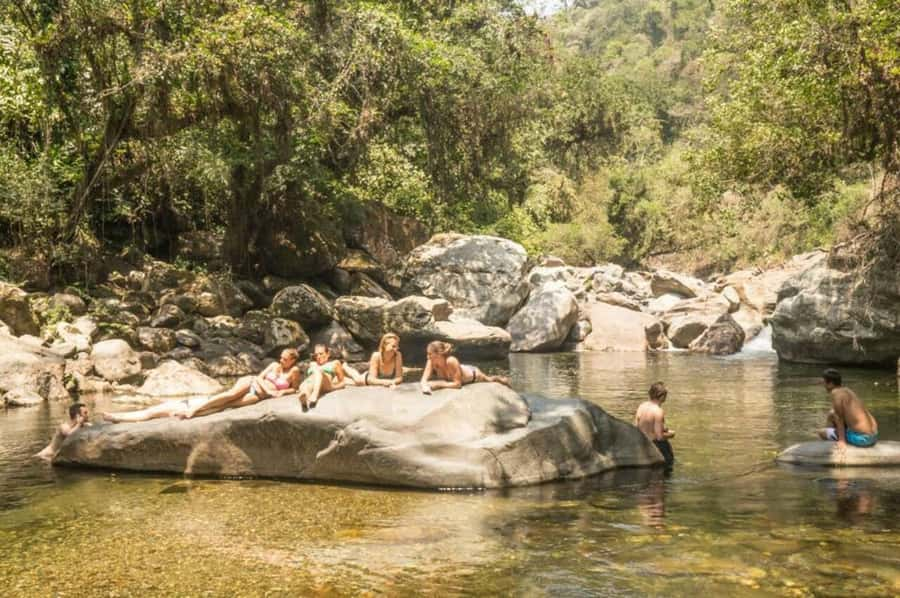
A stop at Las Tres Cruces lookout gives you a chance to catch your breath and eat fruit. The route then reaches natural pools and waterfalls, useful places to cool down before you continue to the first camp. Bring swimwear and a quick-dry towel. These water stops are not just pretty pauses. They are welcome relief when your clothes are already damp from sweat.
The first night is spent at a simple jungle camp, in either a hammock or a bed protected by a mosquito net. Electricity, toilets, and showers are available, but this is still basic accommodation. Pack flip-flops for the wet areas and do not expect a private hotel room.
Day 2: Rivers, villages, and a longer climb
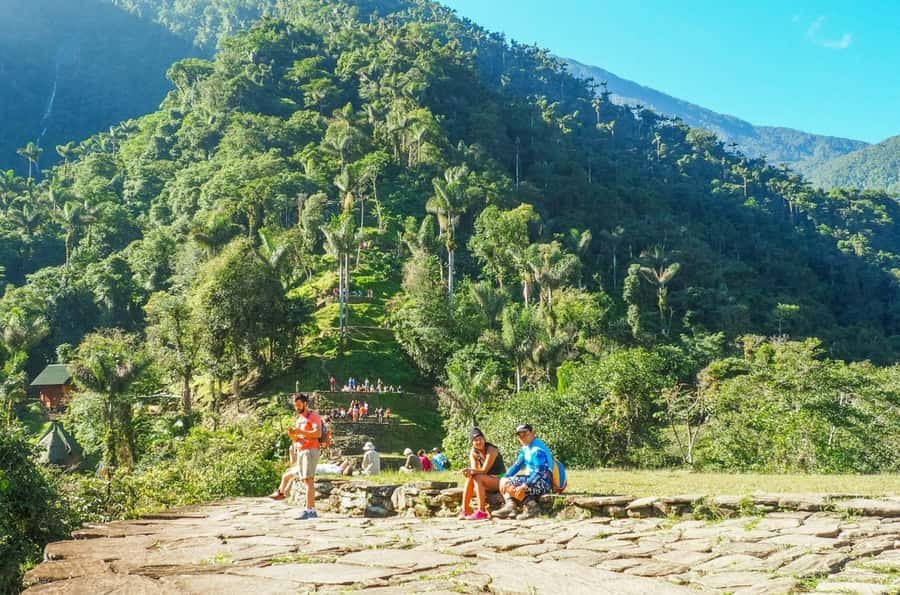
On the second day of the standard 4 or 5-day route, you start after breakfast and walk toward Wiwa camp beside the Buritaca River. You can swim or bathe in the river, eat lunch, and rest before the more demanding part of the day.
The full route is around 14.7 kilometers and takes about seven hours. Most of it is uphill, with some downhill sections. This is where the trip changes from a scenic jungle walk into a genuine endurance trek. If you are only moderately fit, you may find that the day uses most of your energy.
The trail passes Mutanyi, a Kogui indigenous village made up of several homes. Your guide can help explain the local cultures and the importance of the region. Keep your attention on the trail and follow guidance about photography and respectful behavior. The point is not to treat the village as a performance for visitors. It is part of a living community.
The 6-day route spreads this experience over more time. On its second day, you walk only about three hours on relatively smooth ground to an indigenous reserve. You have more time for cultural exchange, river swimming, and rest. This is the main reason to choose six days if your schedule and budget allow it: you gain breathing room instead of simply pushing from camp to camp.
Day 3: The approach to Ciudad Perdida
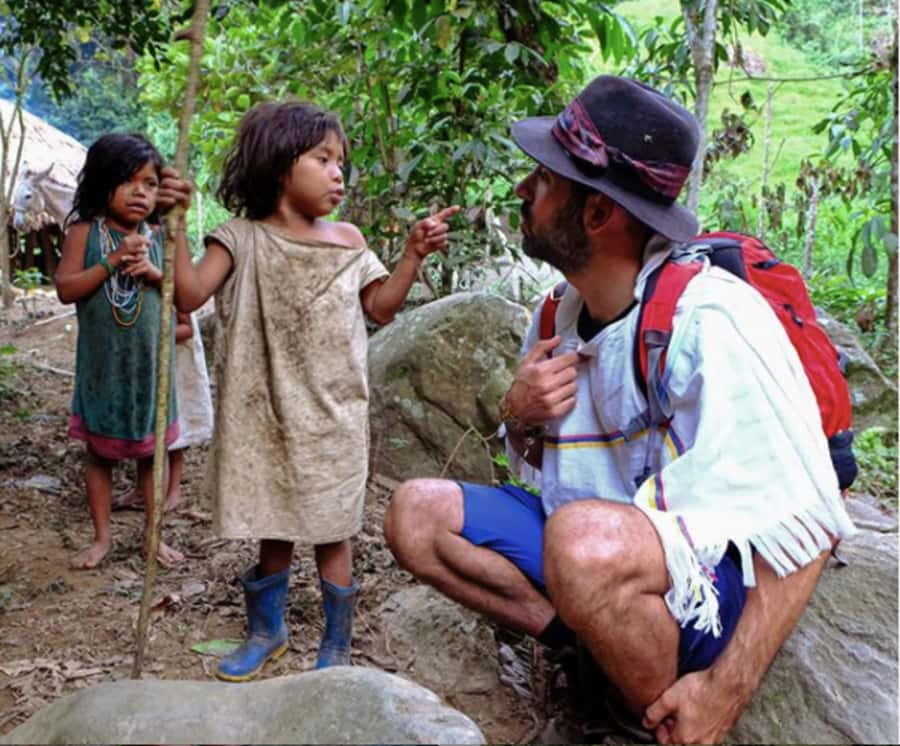
On the 4 or 5-day trek, day three brings the main event. You leave very early, eat breakfast, and begin the climb toward the Lost City. The final approach includes about 1,200 stone steps built by the Tayrona people.
The steps are steep, uneven, and often slippery after rain. Take your time. A steady pace is more useful than trying to keep up with the fastest walkers. This is also the point where proper hiking shoes matter. Flip-flops belong in camp, not on this climb.
At the terraces, you have time to look around, take photographs, and listen to stories about the site and its ancestral meaning. The remains include the famous series of terraces, stone roads, and circular plazas. Because the site is surrounded by jungle rather than modern infrastructure, the setting feels remote and fragile.
You return to the same camp for lunch before continuing toward Wiwa camp. It is another roughly seven-hour day, though the stated walking distance is about six kilometers of uphill and downhill tracks. That combination tells you something important: the route is steep and slow, not a flat distance challenge.
On the 6-day itinerary, the visit to the Lost City comes on day four. The earlier days divide the approach into shorter sections, which can make a real difference if you dislike rushing or have less hiking experience. You still face the same 1,200 steps, but you arrive with more time to recover.
Same mountains, a different route up:
- Mount Etna: Summit Crater Trek with Cable Car
★ 4.8 · 1,875 reviews - La Palma: Tajogaite Volcano Guided Trek
★ 4.8 · 1,810 reviews - Etna: summit craters trekking with volcano guide 3350mt
★ 4.7 · 1,712 reviews - From Rethymno: Samaria Gorge Full-Day Trek, Pickup & Guide
★ 4.5 · 1,610 reviews
Day 4: The return begins
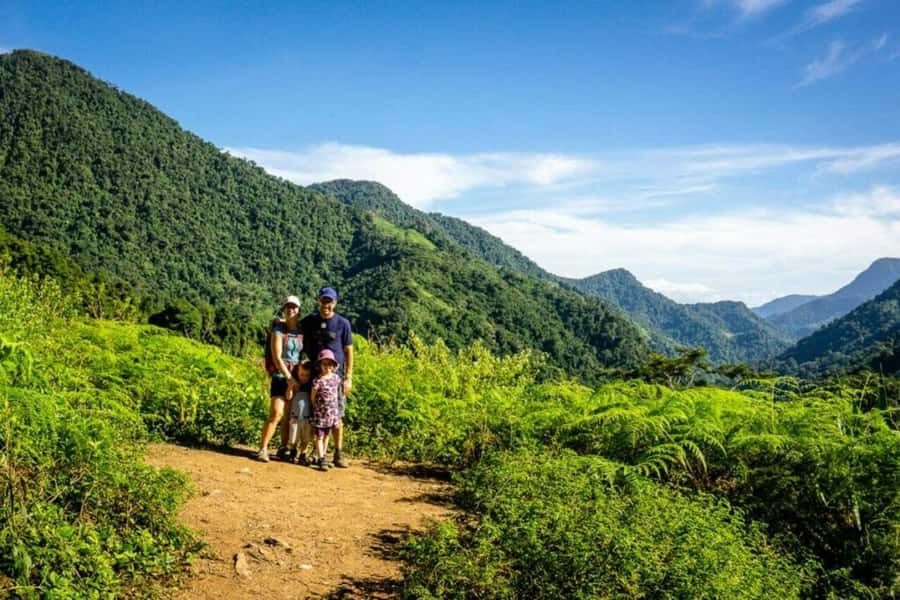
After seeing the Lost City, the 4-day group begins the return journey. The day starts with breakfast and a two-hour walk to the camp used on the first night. From there, you rest briefly, eat fruit, drink water, and continue for another four hours to El Mamey.
Lunch at El Mamey comes before the 4WD journey back to Santa Marta. This is a long day, and your legs may feel the combination of stairs, mud, heat, and downhill walking. Keep some clean, dry clothes accessible for the ride back.
If you choose the 5-day version, you stop at the first camp and spend the rest of day four resting. You can enjoy the views, talk with other people in the group, and sleep at the camp before walking to El Mamey the following day.
The 6-day schedule gives you even more time after the archaeological visit. Its fifth day includes a two-hour trek to a camp, lunch, and a quiet afternoon before the final walk. This slower pattern is useful if you want the cultural and natural parts of the route to matter as much as the ruins.
Day 5 and Day 6: Getting back to Santa Marta
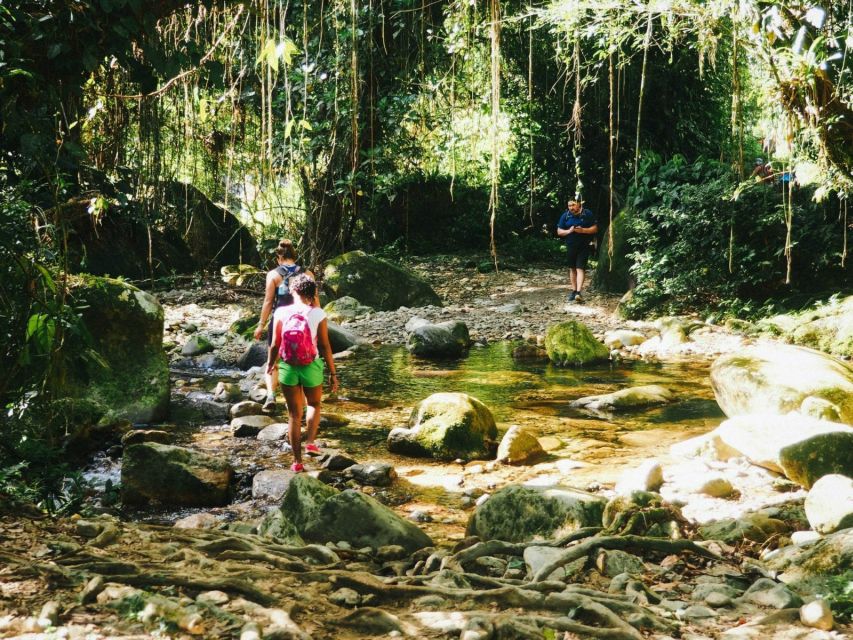
The 5-day trek finishes with breakfast, a walk to El Mamey, lunch, and the 4WD ride back to Santa Marta. The 6-day option follows the same basic ending on its sixth day.
Do not treat the final day as a throwaway. The return walk still requires effort, and rain can make the trail muddy. You will likely appreciate having your main suitcase stored in Santa Marta while you carry only a daypack. The operator also provides purified water, fruit, and snacks during the walking days.
Pickup is available within Santa Marta’s urban area, Rodadero, and Taganga. It does not include Bonda, Minca, Palomino, or places outside the urban perimeter, so check your accommodation location before booking.
What the camps and food are really like
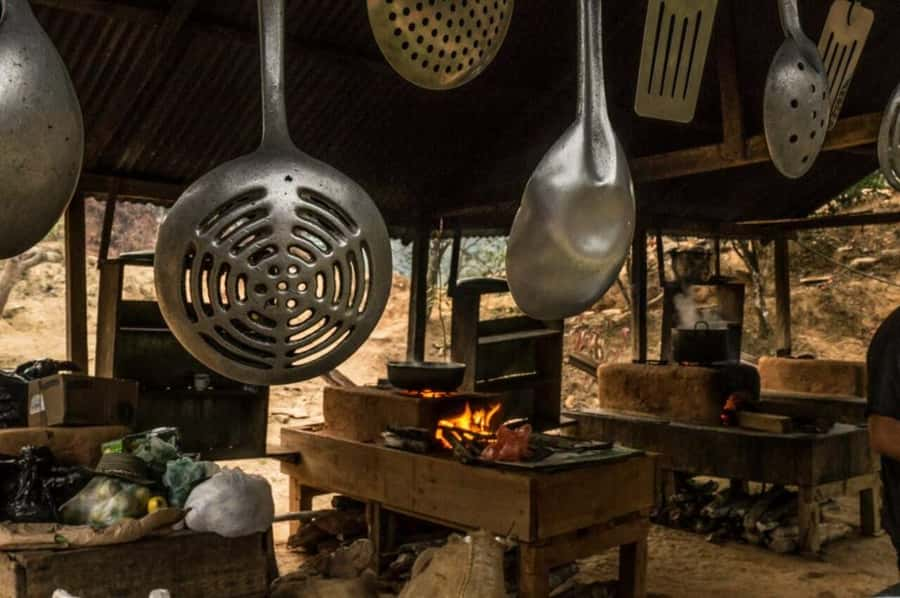
The camps provide hammocks or beds with mosquito nets, electricity, toilets, and showers. That is enough to clean up and sleep, but the setting remains rustic. Warm clothing is still useful because nights can cool to around 18 C, even though daytime temperatures are usually between 26 C and 32 C.
Food is included three times a day, and the meals are designed to keep you walking. One especially positive account praised the food as filling and delicious. Still, expectations should be realistic. This is jungle camp cooking, not restaurant dining, and portions or service may vary between camps.
Water is included in purified form, along with fruit and snacks. Drinks besides water are not included. Bring cash for extras such as soft drinks or other purchases. One less positive account also raised concerns about additional charges for items such as sports drinks, motorbike transport, or mule support. Ask your operator what is optional before you set out.
The physical challenge, honestly explained
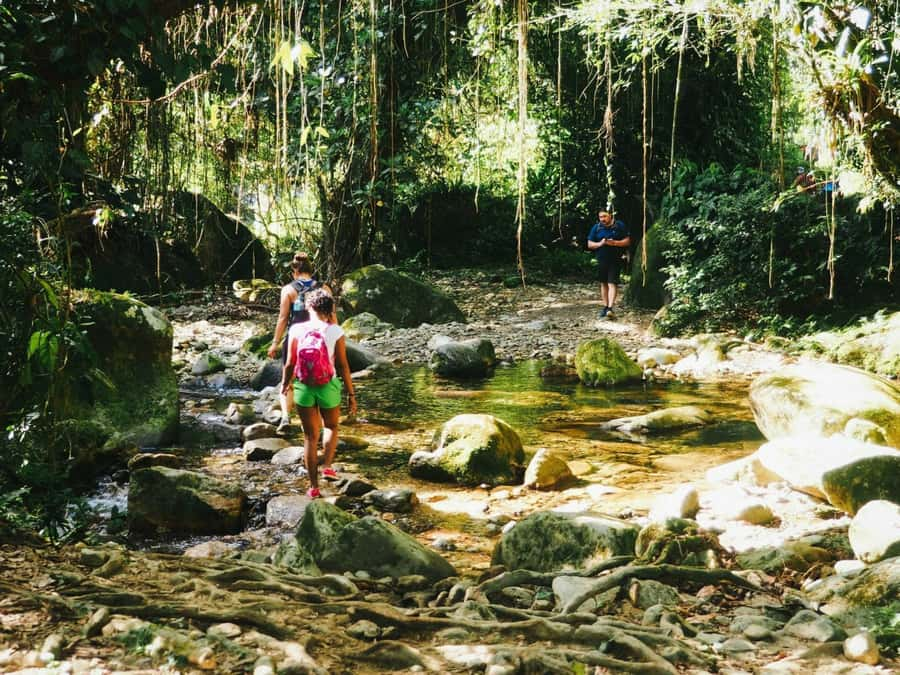
You should be comfortable walking for several hours on consecutive days before choosing this trek. The hardest day can last about seven hours, and the route includes steep uphill sections, downhill tracks, mud, river crossings, and stone steps.
Humidity is a major factor. Your clothes may stay damp, and mosquitoes are present in the jungle. Pack insect repellent, sunscreen, spare socks, quick-dry clothing, rain gear, and personal medication. A small flashlight and charged phone are useful at camp.
You cannot bring a drone. Pregnant women and wheelchair users should not book this experience. The operator provides accident insurance, but that does not make the trail easy or remove the need for sensible preparation.
The 6-day route is the best choice if you want a less compressed pace. The 4-day route suits people who want the shortest possible schedule and can handle long walking days. The 5-day version offers a middle ground, with one extra night to rest after visiting the site.
Guides, group atmosphere, and cultural context
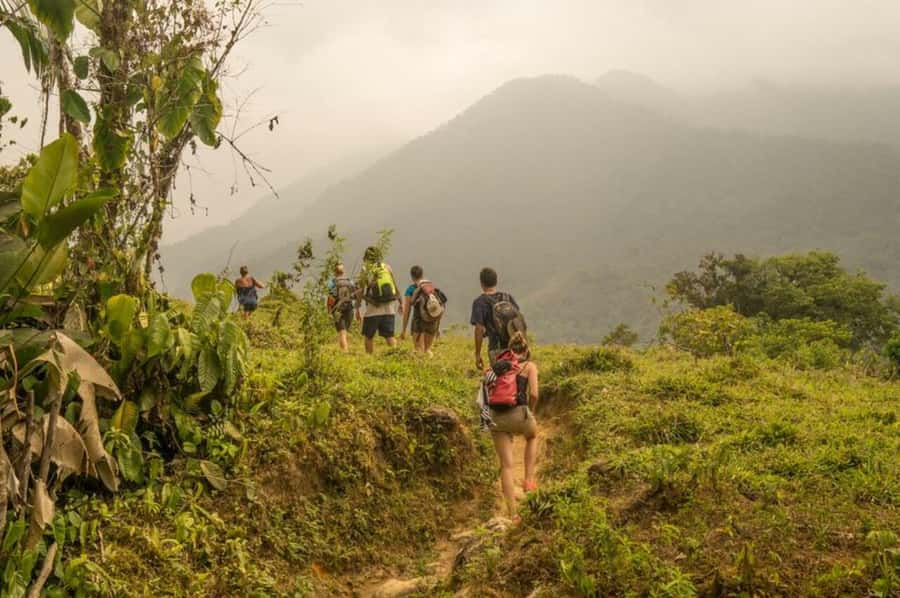
The guide can make or break a trek like this. You have an English or Spanish-speaking guide throughout, and the strongest praise has gone to guides and interpreters who encouraged tired walkers while explaining local traditions.
Specific names connected with this operation include Arghenith, Francisco, Miguel, Coco, Victor, Bridgette, and Emilie. Francisco was praised for explaining indigenous traditions and the history connected with the Lost City. Emilie was singled out for her patience and encouragement during difficult sections, while Arghenith, Victor, and Bridgette were credited with making one trip especially well organized.
Guiding quality can vary by departure, so treat those names as useful examples rather than a guarantee that one particular person will lead your group. What matters is that cultural explanation is part of the trip, not an optional extra.
With a maximum of 15 people, you will share the trail, meals, and camps with a small group. That can be enjoyable after a tiring day, though sleeping areas and transport may feel crowded at busy times.
Is the $713 price fair?
At $713 per person, this is a major expense for a four-day trip, especially by Colombian budget travel standards. The price includes accommodation, all three daily meals, purified water, fruit and snacks, the archaeological entrance, 4WD transport between Santa Marta and El Mamey, a guide, accident insurance, indigenous community contributions, and suitcase storage.
Those inclusions matter. You are not paying only for a guide and a ruin entrance. You are also paying for food and support in a remote area where transport and supplies must be organized along the route.
Still, value depends on your expectations. Some people have found the cost high compared with the level of camp accommodation and the amount of food. Booking channels may also show different prices, so compare carefully before committing. Ask about every extra charge, including drinks, motorbike transfers, mule assistance, and other optional services.
Free cancellation up to 24 hours before departure and reserve-now, pay-later terms give you some flexibility. The price is easier to justify if you value the cultural component, local economic support, and a guided route through difficult terrain. It is harder to justify if you want polished lodging, private transport, or a bargain trek.
Who should book this trek?
Book it if you want a demanding, memorable route to an archaeological site that cannot be reached by ordinary sightseeing. You should enjoy long days outdoors, tolerate simple accommodation, and be ready for heat, mud, insects, and wet clothes.
Choose six days if your priority is a slower pace, cultural visits, and more time by the rivers. Choose four days if you are fit and want the shortest route. The five-day plan works well if you want one rest period without adding two full days.
I would not choose this for a relaxed holiday, a first-ever walking trip, or a schedule with no room for tired legs and delays. But if you prepare properly, carry a light daypack, and accept the rough edges, the combination of ancient terraces, jungle trails, indigenous culture, and river crossings makes this one of Santa Marta’s most distinctive experiences.
FAQ
How many days can I choose for the Lost City trek?
You can choose a 4-day, 5-day, or 6-day trek. The longer routes divide the walking into shorter sections and allow more time for rest and cultural visits.
What is included in the price?
The price includes breakfast, lunch, dinner, purified water, fruit, snacks, jungle accommodation, the Lost City entrance ticket, 4WD transport between Santa Marta and El Mamey, guide service in English or Spanish, accident insurance, indigenous community contributions, and suitcase storage during the trek.
Where does pickup take place?
Pickup is included within Santa Marta’s urban perimeter, Rodadero, and Taganga. Pickup is not included from Bonda, Minca, Palomino, or areas outside the urban perimeter.
How hard is the trek?
It is physically demanding. Walking days can last about seven hours and include uphill and downhill sections, mud, river crossings, slippery trail sections, and 1,200 stone steps to the Lost City.
Where will I sleep?
You will sleep in jungle camps in a hammock or bed with a mosquito net. Camps have electricity, toilets, and showers.
What temperatures should I expect?
Daytime temperatures are usually around 26 C to 32 C. At night, temperatures can fall to about 18 C. Rain may occur around sunset.
What should I bring?
Bring warm clothing, swimwear, a towel, hiking shoes, sunscreen, rain gear, flip-flops, insect repellent, toiletries, socks, cash, a flashlight, a charged smartphone, personal medication, quick-dry clothing, and a daypack.
Are drinks included?
Purified water, fruit, and snacks are included. Other drinks are not included, so bring cash for additional purchases.
Can I cancel the booking?
You can cancel up to 24 hours in advance for a full refund. The reserve-now, pay-later option lets you hold a place without paying immediately.
New treks around the world
- Sapa: 2-Day Local Guided Valley Trek with Night Homestay★ 5.0 · 27 reviews
- SAPA: 1-DAY TREKKING TOUR WITH LOCALS, LUNCH & RICE FIELDS★ 4.7 · 18 reviews
- Sapa: 2-Day Local Guided Valley Trek with Night Homestay★ 4.8 · 5 reviews
- Santa Marta: Trekking in Minca Complete Waterfall Circuit★ 4.4 · 28 reviews
- Santiago: Longueira, Pico de Antónia & Monte Tchota Trek★ 4.8 · 10 reviews
- Santiago: Trek from Serra Malagueta to Rabelados Community★ 5.0 · 16 reviews
- Santiago Island: Serra Malagueta & Tarrafal Beach Trek Tour★ 4.8 · 61 reviews
- San Pedro de Atacama: Desert Tour with Canyoning & Trekking★ 5.0 · 13 reviews