
Review · ITALY
Mount Etna: Summit Crater Trek with Cable Car
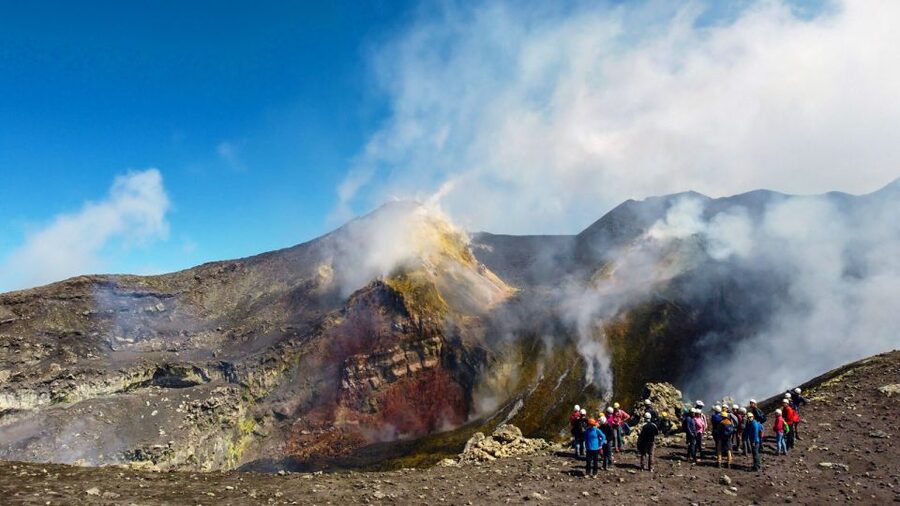
Standing near Mount Etna’s summit craters is the main event here. You walk across black volcanic sand and rough lava terrain toward Bocca Nuova, then look into a crater that opened in 1968. If the sky is clear, the view reaches across much of northern Sicily and sometimes to the Aeolian Islands.
I like the small groups, limited to eight people, and the way the guide sets the pace for the slowest person. I also like that the experience includes proper equipment: boots, walking poles, a wind jacket, helmet, and insurance. The main catch is cost. The advertised price is $77, but the required cable car and 4×4 ride cost an additional €65 in cash.
- Bocca Nuova at 3,300 meters: Walk toward one of Etna’s most impressive summit craters, subject to volcanic and weather conditions.
- Cable car plus 4×4 access: Save energy on the steep lower section before starting the serious hike.
- Volcanic sand descent: Come down through loose black scree toward the Barbagallo Crater and Valle del Bove.
- Guides who teach as they lead: Guides including Simone, Alessandro, Basilio, Vincenzo, and Marco combine safety advice with geology and eruption stories.
- Equipment supplied: Hiking boots, poles, helmet, and a wind jacket are available, useful when conditions turn cold or windy.
- A flexible route: Volcanic activity, wind, snow, and cloud can change the route, and some departures move to Etna’s north side.
Reaching Etna’s upper world from Etna South
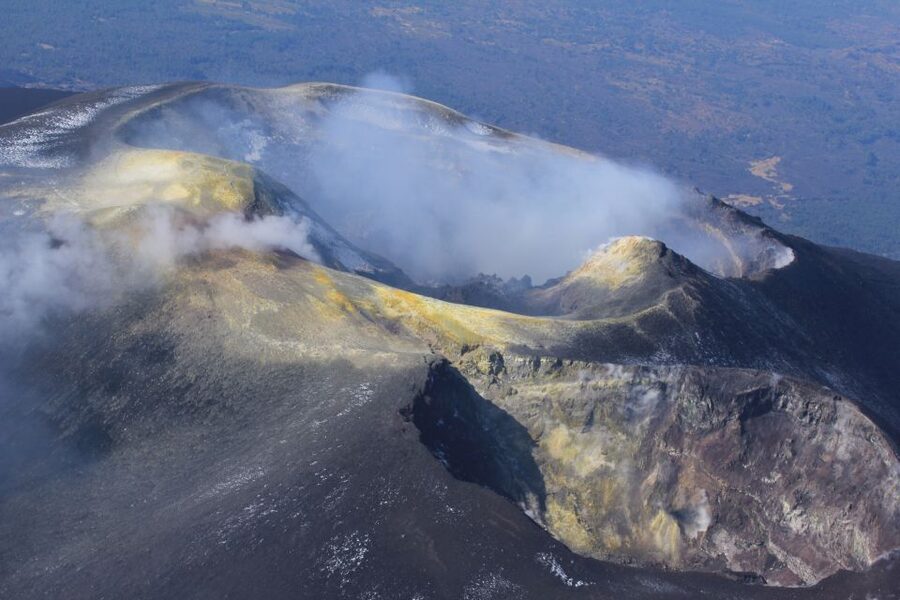
This five-hour outing begins at AITNE Med Etna Excursions, beside La Terrazza dell’Etna and opposite the cable car station at Etna South. The starting point is easy to identify, but allow time to sort out equipment and group assignments before departure. Free parking is available until the spaces run out.
You first receive a safety briefing and collect any gear you need. The supplied equipment is a real benefit, not just a nice extra. Etna’s upper slopes can be cold, windy, dusty, and uneven even when Sicily below is warm and sunny. A jacket, helmet, poles, and proper boots make the walk safer and more comfortable.
The group is limited to eight participants, which gives the guide room to check on everyone. That matters on a route where loose volcanic sand can make one person move much more slowly than another. The pace is generally set by the least fit person in the group, so you should expect a steady outing rather than a race to the top.
The 15-minute cable car ride
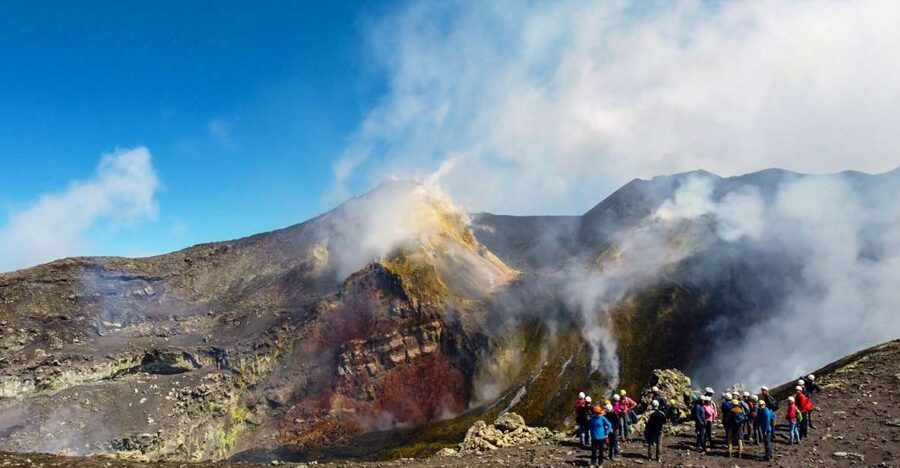
The cable car takes about 15 minutes and lifts you above the lower volcanic slopes. It is a practical part of the route, but it also gives you a quick change of scenery. You leave the developed base area and reach the stark upper zone where lava, ash, and craters shape the view.
The cable car is not included in the advertised $77 price. You pay €65 per adult in cash for the round-trip cable car and the one-way 4×4 ride, or €50 for children under 11. If conditions prevent the 4×4 from reaching the higher point, the cable car-only fare is €52 per person.
This extra charge is the biggest value issue. The total price is notably higher than the headline figure, so calculate the full cost before booking. Still, the cable car and vehicle save considerable energy and allow the guide to devote more of the five-hour outing to the upper craters.
More volcano treks around Italy:
- Mount Etna: Trek to 3000m with cable car and 4×4
★ 4.6 · 3,823 reviews - Etna: summit craters trekking with volcano guide 3350mt
★ 4.7 · 1,712 reviews - Catania: Mount Etna Trekking Tour Beyond the Tourist Trails
★ 4.9 · 1,596 reviews
The 4×4 ride to Torre del Filosofo
At the top of the cable car, you continue by 4×4 across black volcanic terrain to about 2,850 meters, near the Torre del Filosofo area. The ride lasts roughly 15 minutes.
This is not a sightseeing drive in the usual sense. It is transport over high, exposed ground, and the vehicle puts you close to the point where the hike begins. That makes the experience more accessible than starting from the lower station, though the walking portion remains demanding.
Conditions can change quickly at this altitude. Several departures have faced high wind, cold, cloud, snow, or active volcanic conditions. The staff may shorten the route, use another part of Etna, or shift the excursion to the north side. That is not a flaw in the operation. An active volcano must take priority over a fixed route.
Walking toward Bocca Nuova at 3,300 meters
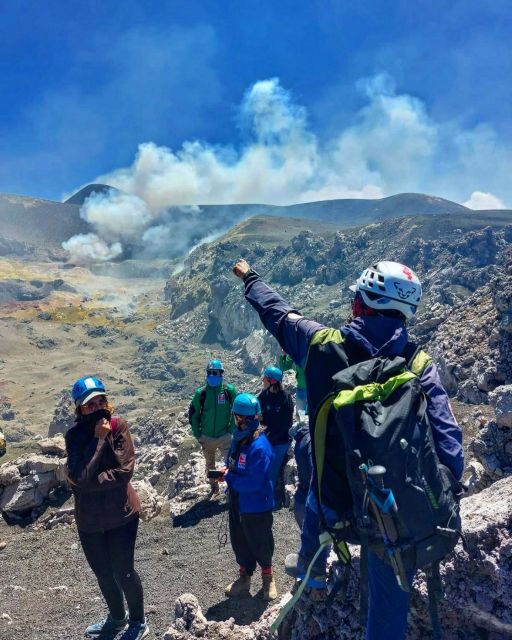
From Torre del Filosofo, the serious walking begins. The route heads toward Bocca Nuova, a crater that opened in 1968. You walk over rough volcanic ground, with loose sand and scree making uphill progress more tiring than the distance alone suggests.
The final approach is the part that requires the most effort. You are not taking a smooth mountain path. You are stepping carefully over unstable volcanic material while dealing with altitude, wind, and sometimes sulfur fumes. One guide advises covering your mouth and nose if the sulfur bothers you, and face coverings can be purchased at the check-in point.
The guide’s role is especially important here. Simone, Alessandro, Vincenzo, Basilio, Marco, Giuseppe, and others have been praised for explaining where to place your feet, watching the slower members of the group, and taking regular pauses. The better guides turn a difficult climb into a lesson in how volcanoes work rather than simply marching you uphill.
At the edge of Bocca Nuova, the scale of Etna becomes clear. This is not a decorative viewpoint with a railing and a souvenir shop. You are near an active crater, with steam, smoke, and volcanic sounds possible depending on conditions. That raw setting is thrilling, but it may unsettle anyone who dislikes heights, exposed ground, smoke, or the noise of an active volcano.
The Central Crater and the summit views
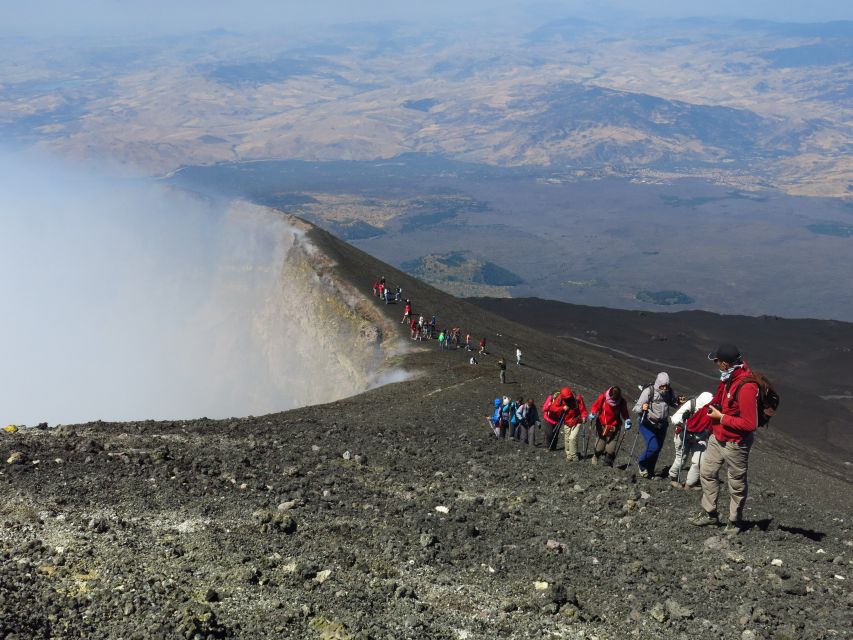
The route continues toward the Central Crater, with about 30 minutes listed for a guided walk in this area. The exact summit access depends on volcanic risk and weather, so reaching the highest permitted point is never guaranteed.
On a clear day, the payoff is a broad 360-degree view. You may see across northern Sicily and, in especially favorable conditions, toward the Aeolian Islands. Cloud can erase the view completely, but the upper slopes still offer an unusual experience: black ash, old lava, smoking vents, and a horizon that feels far removed from the towns and vineyards below.
The summit section is best suited to people with a decent fitness level. The climb has been completed by a wide range of ages, but this does not make it an easy walk. Several conditions can make it harder: cold air, strong wind, loose scree, reduced visibility, and sulfur near the active areas.
You should also understand that the summit is not a guaranteed target. Activity can close the upper route at short notice. On some outings, the group has been redirected to a lower crater or a different side of Etna. A good guide explains the change and still builds a worthwhile route around what the volcano allows that day.
More treks around Italy:
- Mount Etna: Guided Trek 3,000 Meters to the Summit
★ 4.8 · 1,407 reviews - Stromboli: Sunset Trekking at Sciara del Fuoco
★ 4.6 · 1,372 reviews - Etna Sunset Tour: Volcano trek, Cave & tasting from Catania
★ 4.8 · 1,290 reviews - From Catania: trek on Mount Etna, Lava Cave & tasting Tour
★ 4.8 · 563 reviews
Barbagallo Crater and the loose volcanic descent
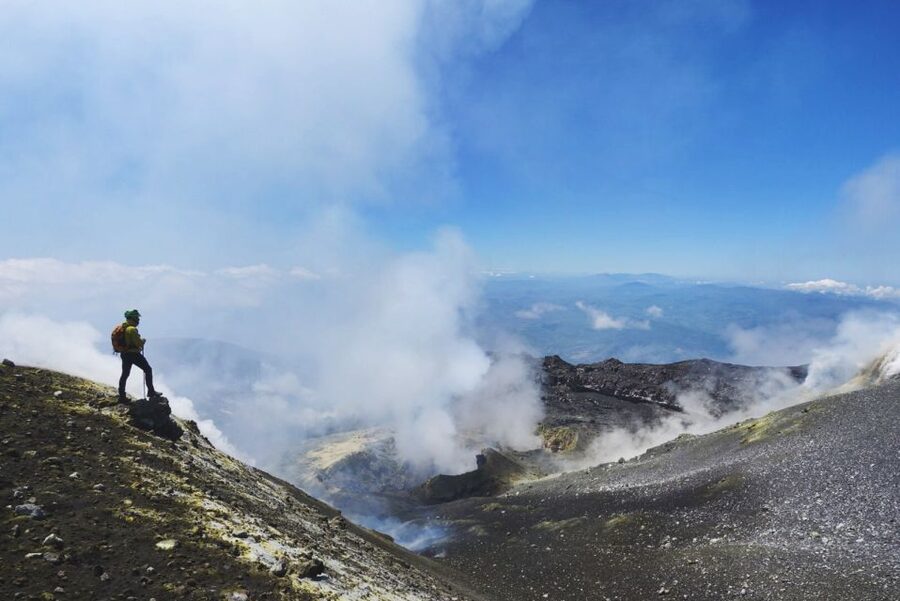
After the summit area, you descend past the craters formed during the 2002 eruption. The route then reaches the Barbagallo Crater, with about an hour set aside for walking and explanation.
The descent is often more fun than the climb, but it is not necessarily easier. Loose volcanic sand lets you slide and ski downhill in your boots, though you need to control your balance and protect your knees. Poles are useful here, especially if you are not used to scree.
The 2002 eruption craters show how quickly Etna can reshape itself. Instead of seeing only one famous summit, you move through a series of newer and older volcanic forms. This gives the guide plenty to explain about lava flows, eruption patterns, ash, and the way the mountain changes over time.
The Valle del Bove is one of the most striking sections. This huge volcanic amphitheater measures about eight kilometers long and four kilometers wide. From above, its broad basin gives you a strong sense of Etna’s size and its long volcanic story.
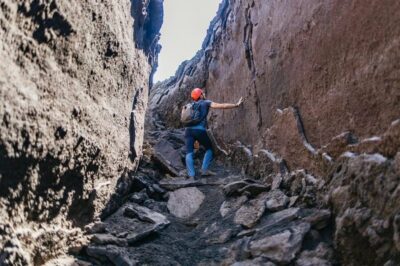
You may also enter a lava tunnel during the outing, depending on the route and current conditions. A helmet is supplied for this part. The tunnel adds another useful piece to the geology lesson because you see where molten rock once moved beneath the surface.
Why the guide makes such a difference
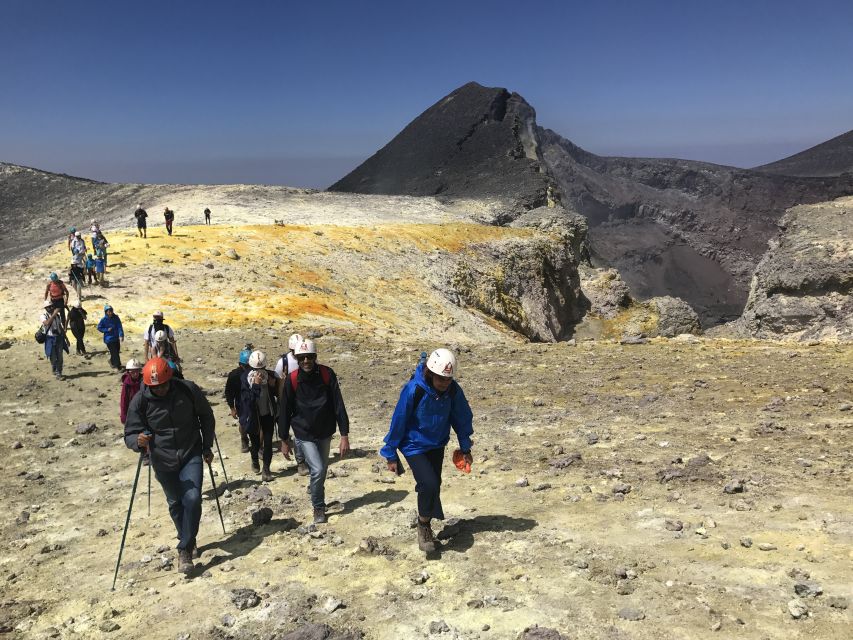
The scenery is dramatic on its own, but the guide determines how much you understand. Guides such as Giuseppe, Simone, Alessandro, Basilio, Vincenzo, Marco, Julia, and Nino have been singled out for clear explanations, humor, patience, and close attention to safety.
I value the guide’s practical job as much as the geology. A good leader watches for fatigue, helps with difficult ground, explains where to step, and keeps the group together without making the walk feel rushed. One guide even carried an older participant downhill when the terrain became too difficult.
The small group helps. With no more than eight people, you can ask questions and hear the answers. You also avoid the feeling of being one person in a large procession, although busier conditions can still put several groups near the same craters.
The pace may feel slow if you are very fit. That is the trade-off for a safer, more inclusive outing. The guide cannot simply leave less confident walkers behind, and you should book this with the expectation of a group hike, not a private athletic challenge.
Weather, eruptions, and route changes
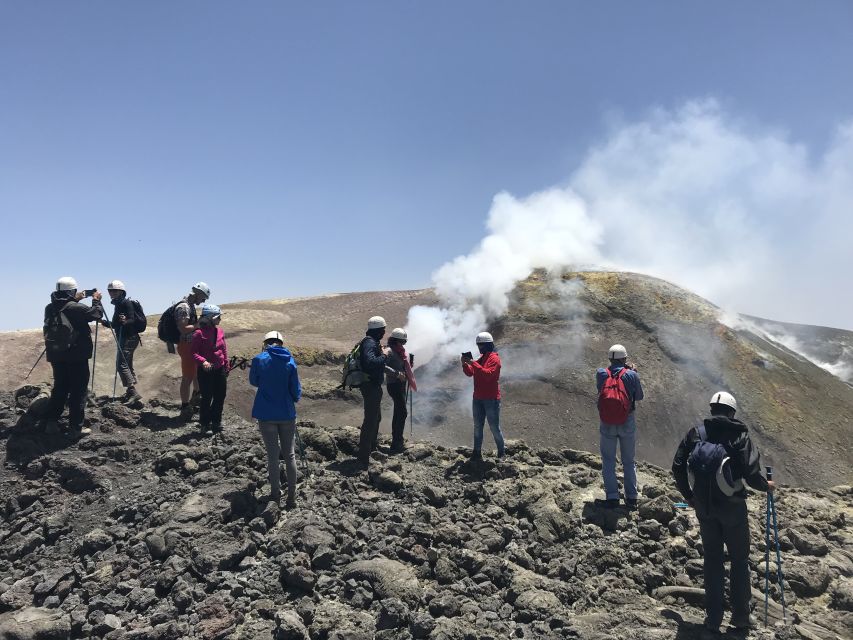
Mount Etna is active, and this fact shapes the entire experience. Weather and volcanic risk can change the route, limit access to the summit, close the cable car, or move the outing to another side of the mountain.
One departure faced high winds that stopped the cable car from operating for the outbound journey. The group used a 4×4 to reach about 2,500 meters, then walked to a viewpoint above the Valle del Bove and on to Barbagallo Crater at roughly 3,000 meters.
Other groups were moved from the south side to the north side because the southern paths were unsafe or unsuitable. That northern route can bring fresh snow, different craters, and a quieter feel, though it does not follow the advertised summit path exactly.
You should judge success by the quality of the volcanic experience, not only by whether you reach 3,300 meters. In some cases, a lower route offers better visibility or a closer look at a lava flow. The staff may notify you in advance when a major change is known, but conditions can also shift during the day.
What to wear and bring
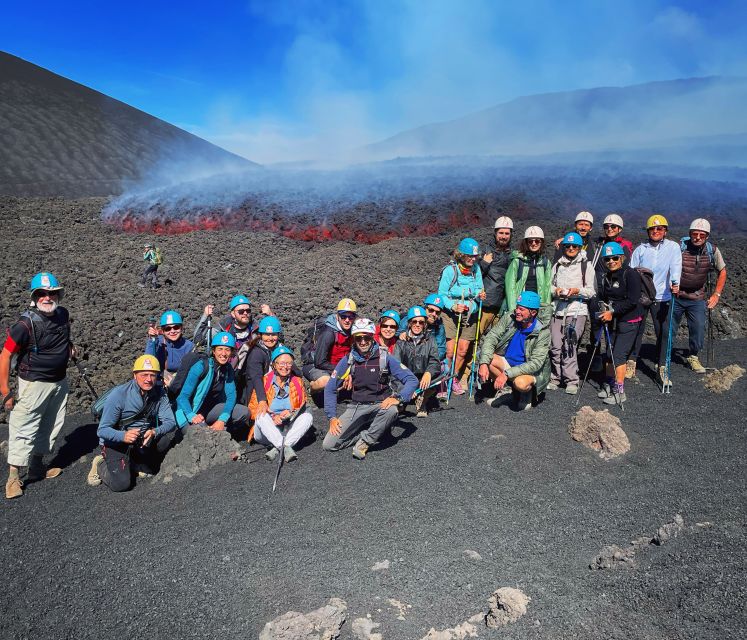
The operator provides boots, walking poles, a wind jacket, and a helmet. You should still bring long trousers, layers, sun protection, water, and a snack. A face covering is useful if sulfur fumes affect you.
A café at La Terrazza dell’Etna can provide breakfast and water before departure. Do not count on the base restaurants for a memorable meal, and remember that food and drinks are not included in the tour.
Wear clothing you can move in and do not rely on the temperature at sea level. Etna’s upper slopes can be cold and windy in summer, while autumn and spring may bring especially sharp conditions. In winter, snow and poor visibility can alter the route.
The outing is not suitable for children under six, pregnant people, wheelchair users, people with heart, respiratory, or mobility problems, people with a low fitness level, or anyone with recent surgery. You should also avoid it if you have been scuba diving within the previous 24 hours.
Is the €65 supplement worth paying?
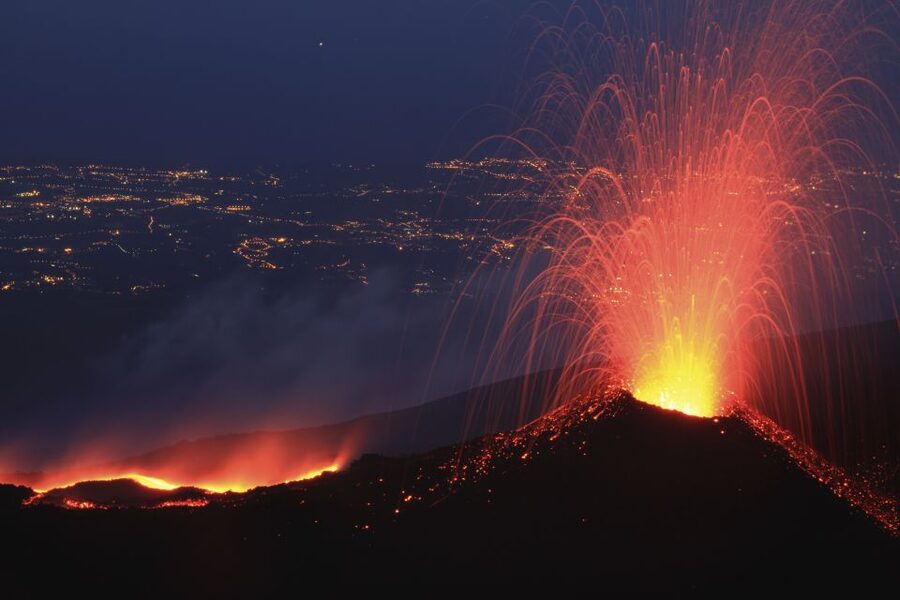
The additional €65 is reasonable if you want to reach Etna’s upper zone without spending the entire day climbing from below. The cable car and 4×4 transfer get you to 2,850 meters, leaving time for the guided craters, volcanic sand descent, and Valle del Bove.
The value is less clear if the summit is closed and you are expecting the full route. In that case, you may pay €52 for the cable car only and receive a modified walk. The operator cannot control eruptions or high winds, but you should accept this uncertainty before you book.
The advertised base price also leaves out food, drinks, hotel transport, and the cable car and 4×4. There is free parking at the meeting point while spaces last, but parking on the north side costs €3 per day if the route changes.
Free cancellation up to 24 hours before departure and reserve-now, pay-later booking add useful flexibility. Still, the main decision is not the cancellation policy. It is whether you are comfortable paying the full transport cost for an active-volcano outing whose route may change.
Who should book this Etna trek?
I would choose this for a reasonably fit adult or older child who wants more than a cable car viewpoint. You get close to craters, walk on loose volcanic ground, and spend real time learning about Etna rather than simply taking photographs from the base.
It is a strong choice if you value a guide’s explanations. The geology, eruption history, safety decisions, and changing route all make more sense with someone who knows the mountain well.
I would not choose it for a relaxed family outing, a gentle scenic walk, or a fixed summit guarantee. The climb can be strenuous, the surface is uneven, and the summit may close. People who dislike smoke, strong wind, exposed terrain, or volcanic noise should think carefully before booking.
Should you book it?
Book this Mount Etna trek if you want the closest permitted approach to the summit and are happy to accept nature’s terms. The best parts are the small group, careful pacing, supplied equipment, and guides who make the volcanic terrain understandable.
Before paying, add the €65 cash transport charge to the advertised price and prepare for cold, wind, loose scree, and a possible route change. If you arrive fit, dressed in layers, and willing to treat the summit as a possibility rather than a promise, this can be one of the most memorable ways to experience Etna.
FAQ
How long does the Mount Etna trek last?
The activity lasts about five hours, including the cable car, 4×4 transfer, guided crater walks, hiking, and return cable car.
Where do I meet the guide?
Meet at AITNE Med Etna Excursions near La Terrazza dell’Etna, opposite the Etna South cable car station.
Is the cable car included in the $77 price?
No. The round-trip cable car and one-way 4×4 ticket cost €65 per adult and must be paid in cash. For children under 11, the cost is €50.
What happens if the summit cannot be reached?
If weather or volcanic activity prevents the summit route, the excursion may use another route or move to Etna’s north side. If the 4×4 cannot reach the summit area, the cable car-only round trip costs €52 per person.
What equipment does the operator provide?
The tour includes hiking boots, walking sticks, a wind jacket, a helmet, and insurance. Food and drinks are not included.
Who should not take this activity?
The trek is not suitable for children under six, pregnant people, wheelchair users, people with mobility, heart, or respiratory problems, people with a low fitness level, people with recent surgery, people over 95, or anyone who has been scuba diving within 24 hours.
New treks around Italy
- Motta Camastra: River Trekking Tour in the Alcantara Gorges★ 4.4 · 15 reviews
- River Trekking Gole Alcantara★ 5.0 · 11 reviews
- Portofino Park Trekking- Discover San Fruttuoso Bay★ 5.0 · 3 reviews
- Private Cinque Terre Trekking Tour★ 5.0 · 3 reviews
- Piano Provenzana: Guided Mt. Etna Snowshoeing Trek★ 5.0 · 3 reviews
- Palermo: Monte Gallo Trekking Tour with Picnic★ 5.0 · 2 reviews
- Etna Southern Slope Guided Easy Trek★ 4.8 · 36 reviews
- Mount Etna: Private Trek on the North Slope Craters★ 5.0 · 4 reviews
Volcano Treks, side by side.
Mount Etna: Trek to 3000m with cable car and 4×4
Read our review →
Etna: summit craters trekking with volcano guide 3350mt
Read our review →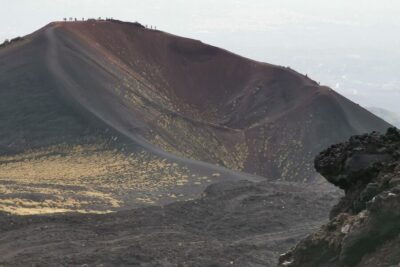
Catania: Mount Etna Trekking Tour Beyond the Tourist Trails
Read our review →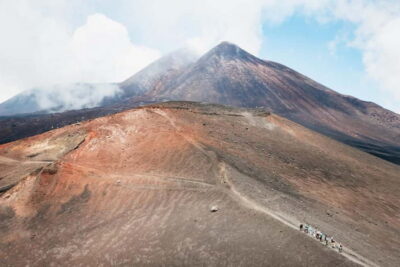
Mount Etna: Guided Trek 3,000 Meters to the Summit
Read our review →
Etna Sunset Tour: Volcano trek, Cave & tasting from Catania
Read our review →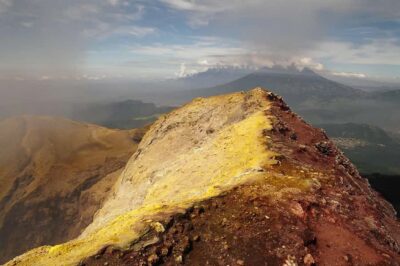
From Catania: trek on Mount Etna, Lava Cave & tasting Tour
Read our review →Lists this trek appears in