
Review · TANZANIA
Kilimanjaro 7 Day Private Trekking Experience
Kilimanjaro’s Machame Route gives you seven days to move from tropical rainforest to ice and rock at Uhuru Peak. The route includes the tough Barranco Wall, a useful acclimatization climb to Lava Tower, and a summit night that begins around midnight.
I like the private format, since your group gets its own guides and support crew rather than being folded into a large departure. I also like the practical camp routine: hot drinks in the tent, cooked meals, boiled drinking water, porters carrying camp supplies, and a final hotel shower in Moshi.
The main caution is the price, $3,120 per person, before tips, insurance, personal gear, laundry, and phone costs. You also need strong physical fitness, and the summit day is long, cold, tiring, and not something to treat as a casual holiday walk.
Key points before you book
- Seven days on the Machame Route: You climb through rainforest, moorland, semi-desert, stone scree, and glacier country before descending by Mweka.
- Private group service: Only your party takes part, with guides, porters, cooks, and a camping crew assigned to your climb.
- Acclimatization is built in: The climb to Lava Tower at 4,600 meters, followed by a descent to Barranco Camp, follows the useful climb high, sleep low pattern.
- Summit night starts at midnight: Expect six to eight hours to Uhuru Peak, followed by seven to eight hours of descent.
- Moshi comforts are included: Pickup is offered, and the trip includes pre and post climb accommodation, a hot shower, lunch, and a certificate ceremony.
- Strong customer satisfaction: The experience carries a 5 out of 5 rating from 40 ratings, with particular praise for Oscar’s communication and the support from guides, porters, and cooks.
Why the Machame Route works well in seven days
This trek follows a classic south side route up Mount Kilimanjaro. You begin at Machame Gate, cross several climate zones, reach the summit from Barafu Camp, and descend through Mweka.
The route has a good rhythm for a seven day climb. You gain height steadily, then spend Day 3 climbing to Lava Tower before sleeping lower at Barranco. That matters because altitude, not just steepness, is often the main challenge on Kilimanjaro.
The private setup also changes the feel of the trip. You are not simply buying a permit and a path to the top. You are relying on a guide team to set the walking pace, organize camp, manage meals, and watch how you handle the altitude.
Names connected with previous trips include Oscar, who handles trip arrangements, and guides such as Saul, Mvungi, Jonas, Jackie, Emmanuel, and Gaudence. The exact team can vary, so ask who will lead your group before you arrive. Past experiences place strong emphasis on prompt replies, airport help, friendly porters, and guides who keep morale up when the trail becomes hard.
More Kilimanjaro climbs around the world:
- 8-Day Small-group Lemosho Kilimanjaro Summit Trekking
★ 5.0 · 186 reviews - Best Kilimanjaro Adventure 7 days Machame route Trekking
★ 5.0 · 42 reviews - 7 Days Kilimanjaro trek via Machame route
★ 5.0 · 13 reviews
Day 1: Machame Gate and the rainforest
Your day begins around 9am, when the guides and porters meet you for a final check of equipment and supplies. Items you do not want on the mountain can be left in a locked hotel storage area, which is useful if you arrive with luggage for a longer Tanzania trip.
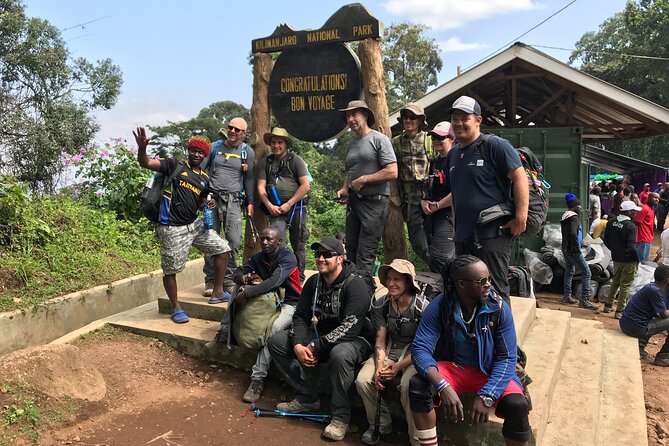
The drive continues to Machame Gate. There, you register with the Kilimanjaro Park office, collect a packed lunch, and begin walking at roughly 1,800 meters. The day ends at Machame Camp, around 3,000 meters, after about 11 kilometers and six hours of trekking.
The first section passes through rainforest. This is a pleasant opening to a demanding week, with thicker vegetation and a softer trail than the upper mountain. Do not let the greenery fool you. The steady uphill walk is your first test, and wet conditions can make the path slower.
You reach camp in the late afternoon, then settle into the tent and eat dinner prepared by the cook. Camping means less personal space and fewer comforts than a hotel, but it also keeps you close to the route and lets the crew handle much of the daily work.
Day 2: Moorland and the Shira Plateau
A hot drink arrives at about 6:30am, followed by breakfast and camp packing. The route leaves the forest and enters open moorland, where small shrubs replace the dense trees.
You climb toward a rocky ridge, pause, then continue beside a river gorge toward Shira Camp One. The day covers about nine kilometers in six hours, moving from 3,000 to 3,850 meters.
This is the first point where the scale of Kilimanjaro begins to show. From the Shira Plateau, you may see the Western Breach and its glaciers. The vegetation becomes sparse, the air thinner, and the views wider.
At camp, the crew provides boiled drinking water and hot washing water. These are modest services, but they matter after several hours outside. You should still expect basic camping rather than a full washroom setup or private cabin.
Day 3: Lava Tower and the climb high, sleep low plan
Day 3 is the hardest day before the summit push. You leave Shira Camp and walk toward Lava Tower at 4,600 meters, covering about 12 kilometers over roughly seven hours.
The climb to Lava Tower is useful for acclimatization. You gain height during the day, stop for lunch and a rest, then descend about 650 meters to Barranco Camp at roughly 3,950 meters. This is the climb high, sleep low method, and it gives your body time to adjust before the summit attempt.
The trail moves through semi-desert terrain. You will see less plant life and more rock, with broad views toward Kilimanjaro’s upper slopes. The descent to Barranco is not simply wasted effort. It is one of the most important parts of the plan.
If you develop a headache, nausea, unusual tiredness, or trouble walking, tell the guide early. The itinerary includes an acclimatization strategy, but no schedule can remove the risks of altitude. Listen to the crew rather than trying to impress your companions.
More week-long treks around the world
- Pokhara: 7 Day Annapurna Base Camp Trek
★ 4.9 · 38 reviews - Pokhara: 7-Day Annapurna Base Camp Trek & Natural Hot Spring
★ 5.0 · 11 reviews - Pokhara: Amazing 7-Day ABC Trek with Natural Hot Spring
★ 5.0 · 5 reviews - Pokhara: 7-Day Annapurna Base Camp Trek & Hot Spring
★ 4.0 · 3 reviews
Day 4: The Barranco Wall and Karanga Valley
After breakfast, you tackle the Barranco Wall. The scramble takes about an hour and a half, and you will use your hands in places to pull yourself upward.
This is the most technical-feeling section of the route, although it is not described as a climbing route requiring ropes. The wall can look intimidating from camp, but the guide sets the pace and helps you choose your footing. Keep your hands free and pack carefully, since you may need them.
At the top, the route drops into the greener Karanga Valley. You then gain about 250 meters over seven kilometers, with camping generally on the ridge above the valley. The shorter distance is welcome after Day 3, but the wall makes the morning feel active.
I like this day because it breaks up the long climb with a clear physical objective. The drawback is that the scramble may unsettle anyone who dislikes exposed or uneven ground. If you have knee, balance, or confidence concerns, discuss them before booking.
Day 5: Barafu Camp and the final preparation
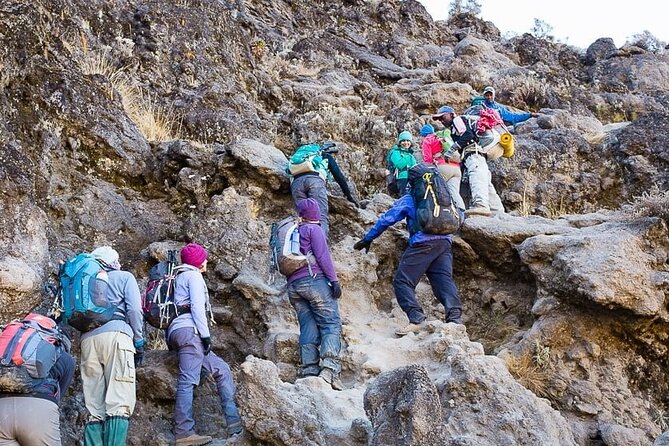
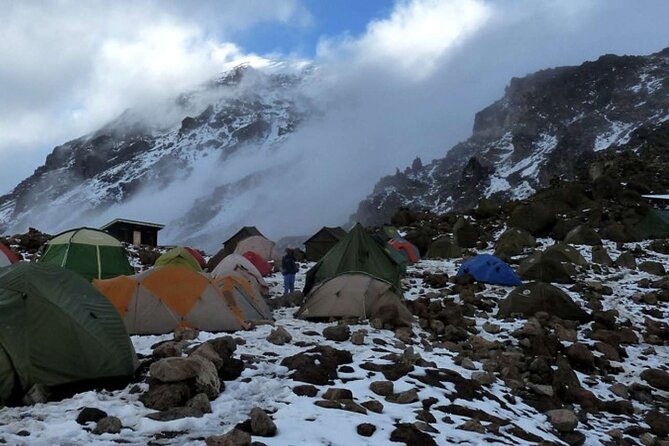
The walk to Barafu Camp covers about six kilometers and gains around 400 meters. You pass viewpoints toward Kibo’s glaciers and reach the junction where the Mweka descent route meets the Machame trail.
By this point, you have completed the South Circuit, seeing the summit from different angles. The terrain becomes more barren, and the approach to Barafu feels serious. You are no longer simply walking between camps. You are preparing for the highest point in Africa.
The crew serves food and hot drinks, but your main task is rest. Organize your summit clothing, headlamp, water, snacks, gloves, and camera before bedtime. The schedule calls for wake-up tea at 11:30pm and departure around midnight, so this is not a normal evening at camp.
The provided trip details do not specify the exact personal gear supplied, and climbing gear is not included. You can hire needed equipment locally, but confirm what is available and what condition it is in before relying on local rental arrangements.
Day 6: Uhuru Peak, sunrise, and a long descent
Summit day begins in darkness. The initial climb takes about six hours, using headlamps along stone scree and winding paths near the Ratzel and Rebmann Glaciers.
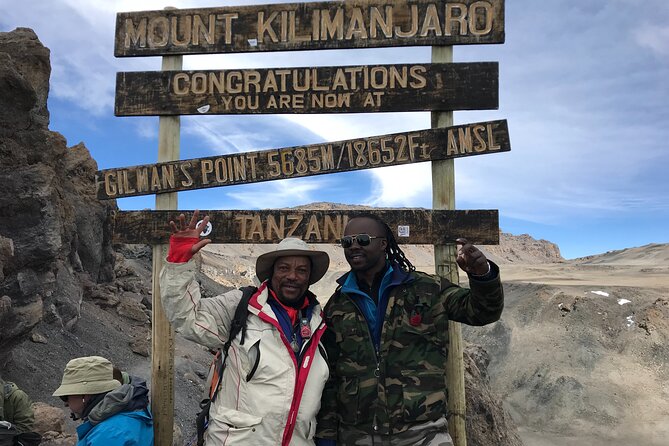
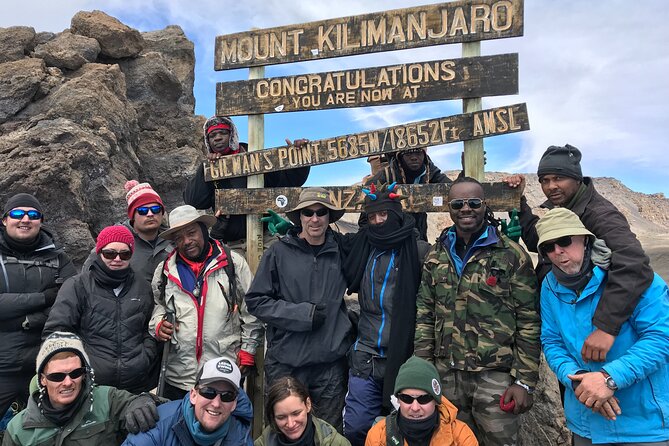
You first aim for Stella Point, then continue toward Uhuru Peak at about 5,895 meters. The published elevation figures contain a small inconsistency, but the summit target is clear: Uhuru Peak, the highest point on Kilimanjaro.
The reward is sunrise above the clouds, followed by time for photographs if conditions and energy allow. Do not expect a quick summit visit. The ascent alone takes six to eight hours, and then you descend for another seven to eight hours.
The full day includes roughly seven kilometers of ascent and 23 kilometers of descent, ending near 3,100 meters. That descent is where tired legs can become a problem. Trekking poles, properly fitted boots, and a slow pace are valuable. You need enough energy left for the way down, not just the final push upward.
The guides are especially important here. Saul and Mvungi are among the names associated with earlier climbs, while other groups have praised guides including Jonas and Jackie. Ask in advance about the guide-to-climber arrangement and how the team handles a participant who needs to turn back.
Day 7: Mweka Gate and the return to Moshi
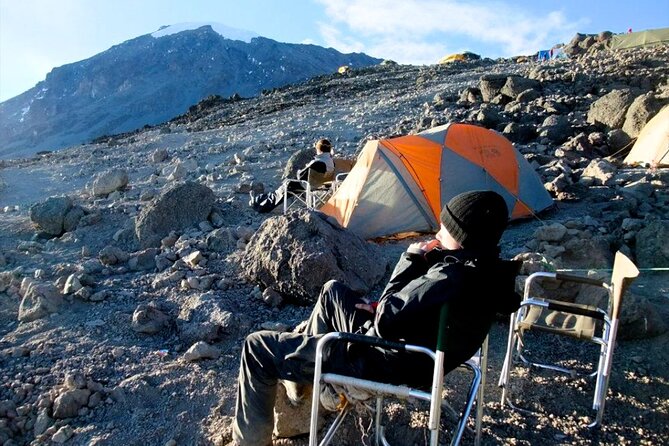
The final morning starts with a celebratory breakfast and a thank-you moment with the crew. Tips are not included, so prepare to show appreciation to the guides, porters, cooks, and support staff. Ask the operator for current tipping guidance, since the crew is larger than the visible guide team.
You then descend from about 3,100 meters to Mweka Gate at 1,800 meters. The walk covers around ten kilometers and takes three to four hours through rainforest.
At the gate, there is time for a celebratory beer or champagne while the equipment is loaded into the vehicle. You then return to Kilimanjaro Wonders Hotel in Moshi for a hot shower and lunch, followed by dinner and a certificate presentation.
That hotel stop is more than a nice extra. After a midnight start, a summit climb, and a long descent, a shower and real bed can feel like the best attraction in Tanzania.
What the $3,120 price covers
At $3,120 per person, this is a substantial purchase. The value depends on how much you want handled for you and how much support you need on a high-altitude trek.
The price includes food, tents, guides, transfers as specified, mountain crew salaries, and pre and post climb accommodation. It also lists seven lunches, six dinners, and six breakfasts. The crew includes guides, porters, chefs, and camping staff, so you are paying for a full mountain operation rather than guide-only service.
Pickup is offered, and several past trips included airport transfers and help getting settled at the hotel. The arrangement can be useful if Kilimanjaro is part of a larger Tanzania holiday. Oscar has also organized add-ons such as safari days and a half-day visit to Kikuletwa Hot Springs for some customers, but those extras are not included in this seven day trek.
Budget separately for personal climbing gear, guide and porter tips, travel and baggage insurance, telephone charges, and laundry. Travel insurance is especially important for a costly international trip and a high-altitude activity, even though it is not part of the package.
Who should choose this private climb
This trek suits a fit adult who wants a structured, supported route and prefers a private group. You should be comfortable walking for several hours on consecutive days, sleeping in tents, handling cold conditions, and making a midnight summit start.
It can also work well for couples, families of older teenagers, or a small group of friends who want their own pace. Children below 15 require special arrangements before trekking, so do not assume a child can simply join the standard schedule.
I would choose this experience if you value a responsive organizer, a dedicated crew, cooked meals, and a clear seven day route. I would compare other options if you want a shorter budget climb, more private facilities, or a gentler schedule with extra acclimatization days.
The 5 out of 5 score from 40 ratings is encouraging, especially because praise repeatedly centers on organization, Oscar’s communication, helpful porters, and guides such as Saul. Still, satisfaction depends heavily on the actual crew assigned to your departure, so get the names and duties confirmed in writing.
Practical points to settle before departure
Ask for a written packing list and clarify which personal gear can be hired in Moshi. Confirm the hotel nights included, airport or hotel pickup details, the exact guide team, meal arrangements, and the recommended tipping system.
The experience is non-refundable and cannot be changed after booking. If poor weather forces cancellation, you are offered another date or a full refund, but ordinary cancellation does not produce a refund.
The booking confirmation is provided at the time of reservation. Operating hours are listed as every day, from midnight to 11:30pm, across the stated operating dates. Since the activity requires good weather and strong fitness, plan a little flexibility around the climb if your wider trip allows it.
Should you book this Kilimanjaro trek?
Book it if you want the full Machame Route experience in seven days, with a private crew, planned acclimatization, camping support, meals, and a Moshi hotel finish. The Barranco Wall, Lava Tower, glacier views, and sunrise summit make this a varied route rather than a simple uphill march.
Think twice if you are not prepared for a long summit day, basic camp life, extra costs, and a strict cancellation policy. The best reason to choose it is the combination of a private format and a well-supported route, not the promise of an easy climb.
Before paying, confirm the equipment list, crew names, accommodation nights, transfer details, and tipping expectations. If those answers suit your budget and fitness, this is a strong choice for a serious Kilimanjaro goal.
FAQ
How long is the Kilimanjaro trekking experience?
The climb lasts approximately seven days. It begins at Machame Gate and ends at Mweka Gate, followed by transport to Moshi.
Which route does the trek use?
The itinerary follows the Machame Route on the ascent and joins the Mweka Route for the descent.
Is this a private tour?
Yes. Only your group participates in the activity, with guides, porters, chefs, and camping crew supporting the trek.
What meals are included?
The package lists food, including seven lunches, six dinners, and six breakfasts. Hot drinks, cooked meals, boiled drinking water, and hot washing water are described during the climb.
Is personal climbing equipment included?
No. Personal climbing gear is not included, although equipment can be hired locally if required.
Is the tour refundable if I cancel?
No. The experience is non-refundable and cannot be changed for any reason. If poor weather causes the operator to cancel it, you are offered a different date or a full refund.
New treks around the world
- Sapa: 2-Day Local Guided Valley Trek with Night Homestay★ 5.0 · 27 reviews
- SAPA: 1-DAY TREKKING TOUR WITH LOCALS, LUNCH & RICE FIELDS★ 4.7 · 18 reviews
- Sapa: 2-Day Local Guided Valley Trek with Night Homestay★ 4.8 · 5 reviews
- Santa Marta: Trekking in Minca Complete Waterfall Circuit★ 4.4 · 28 reviews
- Santiago: Longueira, Pico de Antónia & Monte Tchota Trek★ 4.8 · 10 reviews
- Santiago: Trek from Serra Malagueta to Rabelados Community★ 5.0 · 16 reviews
- Santiago Island: Serra Malagueta & Tarrafal Beach Trek Tour★ 4.8 · 61 reviews
- Santa Marta: Multi-Day Trek to The Lost City★ 4.8 · 40 reviews
Kilimanjaro Climbs, side by side.
8-Day Small-group Lemosho Kilimanjaro Summit Trekking
Read our review →
Best Kilimanjaro Adventure 7 days Machame route Trekking
Read our review →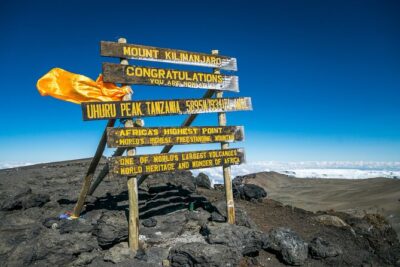
#1. Best 7 days kilimanjaro trek Machame route join group
Read our review →Lists this trek appears in