Review · POKHARA
Pokhara: 5-Day Trek to Annapurna Base Camp and Hot Springs
Annapurna Base Camp is one of Nepal’s best short treks: long enough to feel like a real Himalayan journey, but compact enough to fit into a busy Pokhara visit. You’ll follow the Modi Khola River, climb through forest and mountain villages, then reach Annapurna Base Camp at 4,120 meters for a dramatic high-altitude finish.
I like the clear practical value here: permits, hotel pickup, transport, a registered guide, and lodge accommodation are included. I also like the return through Jhinu Dada, where hot springs give your tired legs a proper reward. The main caution is the itinerary wording, which contains conflicting references to five, six, and seven days. Confirm the exact schedule before paying.
Key points to know before you book
- The advertised route reaches 4,120 meters: You climb from Sinuwa to Deurali, then continue to Annapurna Base Camp.
- Jhinu hot springs come on the return: The soak is a welcome break after the hardest downhill section.
- Pokhara transport is included: A shared Jeep takes you toward the roadhead and back to Lakeside.
- A registered English-speaking guide leads the trek: Guides named in the supplied information include Amir and Tanka.
- Porter service costs extra on the budget option: Pack carefully if you plan to carry your own gear.
- Check the five-day wording carefully: The detailed schedule is five days, but other descriptions mention a longer trip.
What the five-day Annapurna Base Camp trek is really like
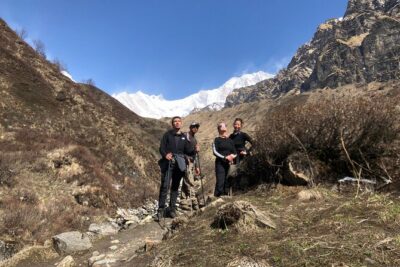
This is a serious mountain walk, not a casual day trip with a few pretty views. You’ll spend four nights on the trail, sleep in simple tourist-standard lodges, and climb from the lower Modi Khola valley to the Annapurna Sanctuary.
At $206 per person, the price is attractive for a guided Nepal trek. You get hotel pickup and drop-off in Pokhara, shared Jeep transport, accommodation, conservation permits, a TIMS permit, a registered guide, and guide wages, meals, and lodging. On the all-inclusive option, meals and a porter are included too.
The cheaper price comes with a few limits. Transport is shared, drinks are extra, and the budget option does not include meals or a porter. You should also carry money for showers, laundry, phone calls, battery charging, bottled or boiled water, and personal purchases.
I see this as a good fit if you want the structure of a guided trek without paying for a private luxury trip. You get the key paperwork and route support, but you still need to accept basic mountain accommodation and long walking days.
More Hot Spring Treks in Nepal
- Pokhara: 5 Day Annapurna Base Camp Trek & Natural Hot Spring
★ 4.9 · 44 reviews - From Pokhara: 5-Day Annapurna Basecamp Trek with Hot Springs
★ 4.9 · 26 reviews - Pokhara: 7-Day Annapurna Base Camp Trek & Natural Hot Spring
★ 5.0 · 11 reviews
Day 1: Pokhara to Samrung, then Sinuwa at 2,200 meters
Your guide collects you from a hotel in Lakeside Pokhara or from the airport. You should wait in the lobby or at the entrance of your apartment five to ten minutes before pickup.
The first transfer takes about three hours by shared Jeep. The road reaches Samrung, described as the last road access for this route, and from there you begin walking. The trek to Sinuwa takes about four hours.
The opening section follows the Modi Khola River and passes small villages, farmland, and forest. You also cross the river on the way toward the Jhinu area. This first day is useful because it eases you into the route, but it is not effortless. Four hours of trekking after a three-hour road journey makes for a full day.
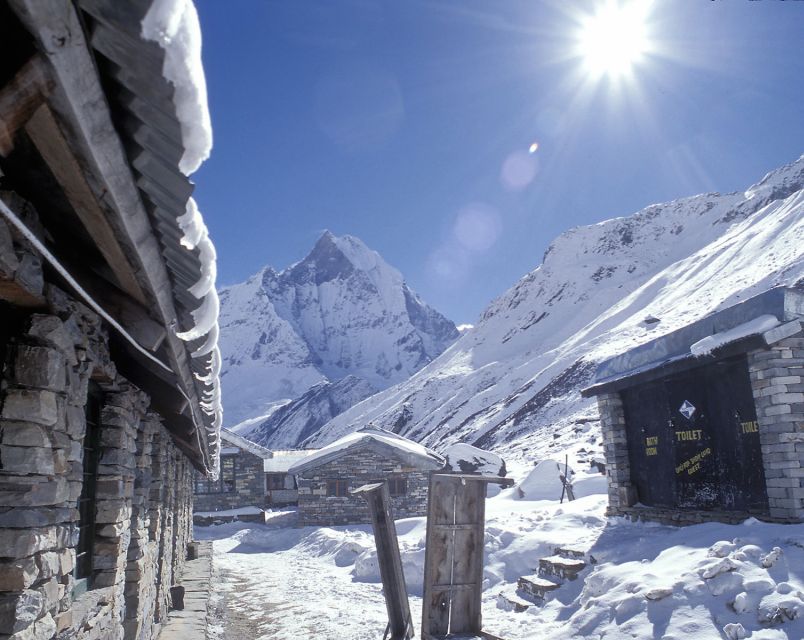
Sinuwa is a practical overnight stop rather than a grand attraction. The point is to gain height steadily and position yourself for the long climb toward Deurali. Your accommodation is a simple tea lodge, so bring toiletries, a change of clothes, and realistic expectations about comfort.
The exact first-night stop deserves special attention because the general description mentions Jhinu Danda, while the five-day itinerary lists Sinuwa. Those places are not presented consistently in the supplied schedule. Ask the operator to confirm the actual overnight stop and Jeep route.
Day 2: Upper Sinuwa to Deurali at 3,230 meters
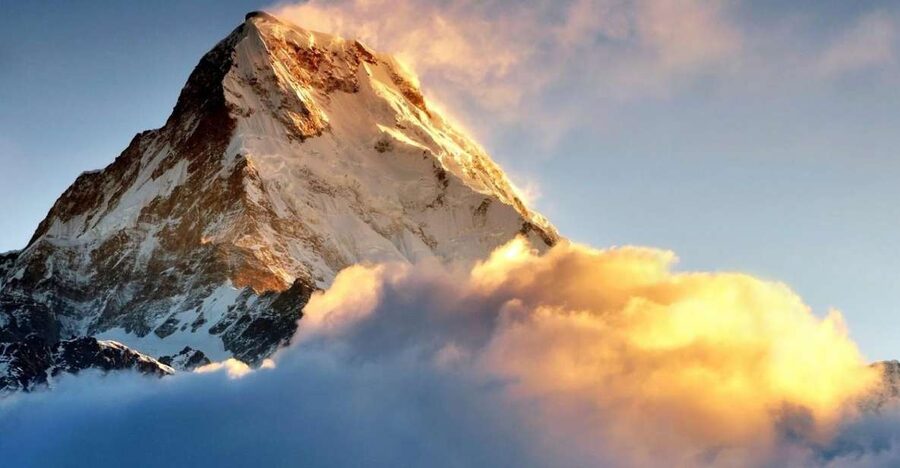
Day two takes you from Upper Sinuwa to Deurali, with six to seven hours on foot. This is where the trek begins to feel like a proper Himalayan route.
You climb through dense forest, with changes in altitude and terrain making the day more demanding than the distance alone suggests. The route passes through Chhomrong, one of the larger villages in the area. Chhomrong is an important settlement on the trail and a useful point to pause, eat, and check your pace.
From there, you continue toward Deurali. The forest gives way to more open mountain scenery, with waterfalls, streams, and views toward the high peaks. The supplied route description highlights lunch with the Himalayas behind you, so this is a good day to slow down and enjoy the setting rather than race toward the lodge.
At 3,230 meters, Deurali is high enough for altitude to become a real concern. You should tell your guide if you develop a headache, nausea, dizziness, unusual tiredness, or trouble sleeping. The guide is there to adjust the pace and watch your health, not simply to get you from one lodge to the next.
A useful strength of this trip is the guide-led format. Tanka is described as paying close attention to safety, adjusting the walking pace to the group, and answering questions about animals, nature, and local culture. That is exactly the sort of practical support you want as the route gets higher.
Day 3: Deurali to Machhapuchhare Base Camp and Annapurna Base Camp
The third day is the high point of the trek, in every sense. You walk from Deurali to Annapurna Base Camp, a five to six-hour day according to the detailed schedule.
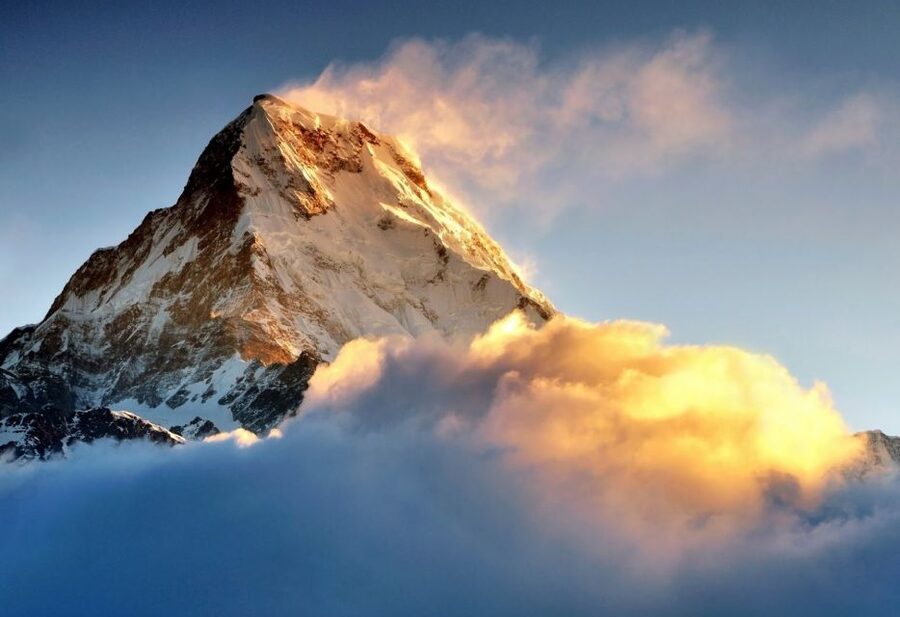
The route crosses streams and continues toward Machhapuchhare Base Camp. Machhapuchhare, also known as Fishtail, is one of the most recognizable mountains in the region. The base camp is not the final destination, but it marks your entry into the higher section of the route.
From there, the trail enters what the description calls Ablation Valley, a narrow hollow corridor between the glacier and the mountain. This is a striking section of the walk, with the route enclosed by rock, ice, and high peaks. You then cross the hills toward Annapurna Base Camp.
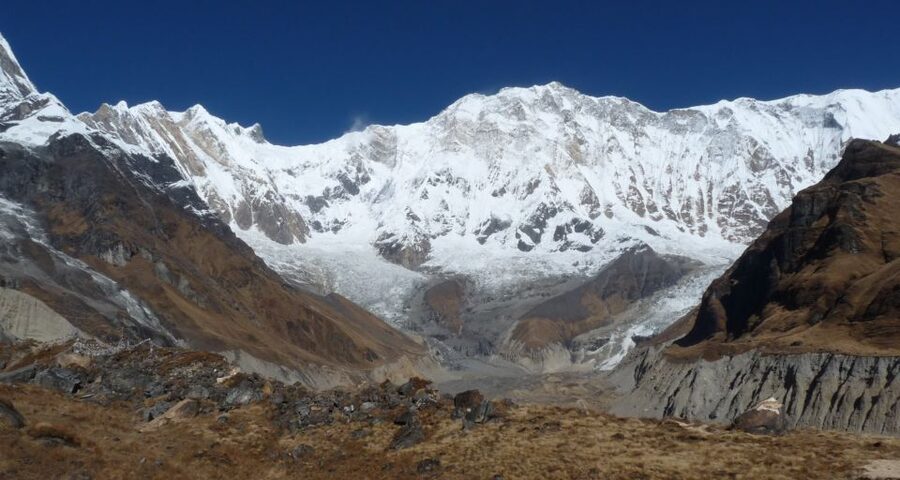
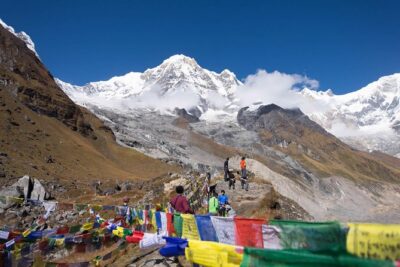
The final approach is the moment many people picture when they book this trek. At 4,120 meters, Annapurna Base Camp gives you an amphitheater of Himalayan peaks and glacial scenery. You can expect cold conditions, especially around sunrise and after sunset, so your warm layer should be easy to reach in your daypack.
The short schedule makes this day demanding. You gain height, spend time at the highest point of the trip, and sleep there the same night. The guide’s pacing matters here. Keep your own pace steady, drink regularly, and do not treat the final climb as a race.
The itinerary says you spend the night at Annapurna Base Camp. Lodge accommodation at this height is basic. The reward is not comfort. It is waking up surrounded by some of the most dramatic mountain scenery in the trek.
More Annapurna treks around Pokhara:
- Trekking in Annapurna/Langtang/Everest/Upper Mustang regions
★ 5.0 · 161 reviews - Kathmandu/Pokhara: 5-Day Annapurna Base Camp (ABC) Trek
★ 4.9 · 72 reviews - Kathmandu: 9-Day Annapurna Circuit Trek via Thorong La Pass
★ 5.0 · 17 reviews - Kathmandu: 10-Day Annapurna Circuit Trek via Thorong La Pass
★ 5.0 · 10 reviews
Day 4: Annapurna Base Camp to Sinuwa
The fourth day is listed as a seven to eight-hour descent from Annapurna Base Camp to Sinuwa at about 2,350 meters. It is a long day, and the downhill work can be harder on your knees than the uphill climb.
The longer description says the trail leaves the Annapurna Sanctuary and drops toward Bamboo before continuing to Sinuwa. Bamboo sits about 1,600 meters below Annapurna Base Camp, so you should expect a substantial loss of height in one day.
This is where trekking poles, good footwear, and controlled steps become valuable. Downhill walking can feel easy for the first hour, then punish your knees and toes later in the day. Keep your pack light, especially if you choose not to hire a porter.
The route gives you another view of the same valleys from a different height. You’ll pass streams, forest, and mountain scenery as you retrace part of the approach. The descent is less about new sights than about noticing how quickly the climate and vegetation change as you lose altitude.
Sinuwa is a sensible place to stop because it breaks the return journey before the final walk and Jeep transfer. You’ll have earned a proper meal and an early night.
Day 5: Sinuwa to Jhinu Dada, then back to Pokhara
The final day combines four hours of trekking with about three hours by Jeep. You walk through the lower valley and farmland, then continue toward Jhinu Dada and its hot springs.
Jhinu is the trip’s best recovery stop. The hot spring baths offer a chance to loosen stiff legs before you return to Pokhara. The timing matters: this is not a spa visit at the start of the trip, but a well-earned pause after several days of climbing and descending.
You should bring a swimsuit or suitable change of clothes if you plan to bathe, along with a dry layer for afterward. The supplied packing advice also includes sunscreen, insect repellent, sunglasses, a sun hat, toiletries, comfortable shoes, and a daypack.
After the hot springs, you continue through farmland near the river before reaching the road and taking the shared Jeep back to Pokhara. The route description says the final drop-off is in Pokhara, though one section misspells the city as Pakhora.
The longer narrative also mentions a seven-day version with extra time around Bamboo and Jhinu. That does not match the five-day timetable. If you want the slower seven-day trip, ask for that version specifically. If you have only five days, confirm that the booked service follows the Sinuwa to Deurali to Annapurna Base Camp schedule.
Guides, porters, and the value of local support
A registered English-speaking guide is included. The supplied names include Amir and Tanka. Amir is described as friendly and attentive, while Tanka is noted for careful pacing, health checks, safety awareness, and answers about nature and local culture.
You may also encounter porter support, but this depends on the booking option. The all-inclusive option includes a porter, while the budget option charges extra. Chhabi is named as a porter on one departure and is praised for his physical strength and calm manner.
For a short trek, a porter is not essential for everyone. If you are comfortable carrying a daypack with warm clothing, water, toiletries, and personal items, you may prefer to travel light on cost. If you struggle with a heavy pack or want more energy for the high sections, the extra fee can be worthwhile.
The most important guide quality here is not entertainment. It is judgment. A guide who adjusts the pace and pays attention to your health can make the difference between a hard but enjoyable trek and a miserable one.
Food, drinks, lodges, and daily expenses
Meals are included only if you select the all-inclusive option. On the budget option, you pay for food yourself. Drinks are not included, including hot, cold, and alcoholic drinks.
You should carry extra funds for water, showers, laundry, phone calls, bar bills, battery charging, and other personal costs. The information also mentions bottled or boiled water, which means hydration needs to be part of your daily budget.
Lodges are described as tourist standard. That means you get a place to sleep along the route, but you should not expect hotel facilities. Pack toiletries, a change of clothes, and layers you can use in a cold room or at a high camp.
At altitude, simple planning helps. Keep your passport or ID card, sunscreen, sunglasses, hat, and essential medication in your daypack. Do not bury your warm layer in a large bag that you cannot reach during a rest stop.
Fitness, safety, and who should skip it
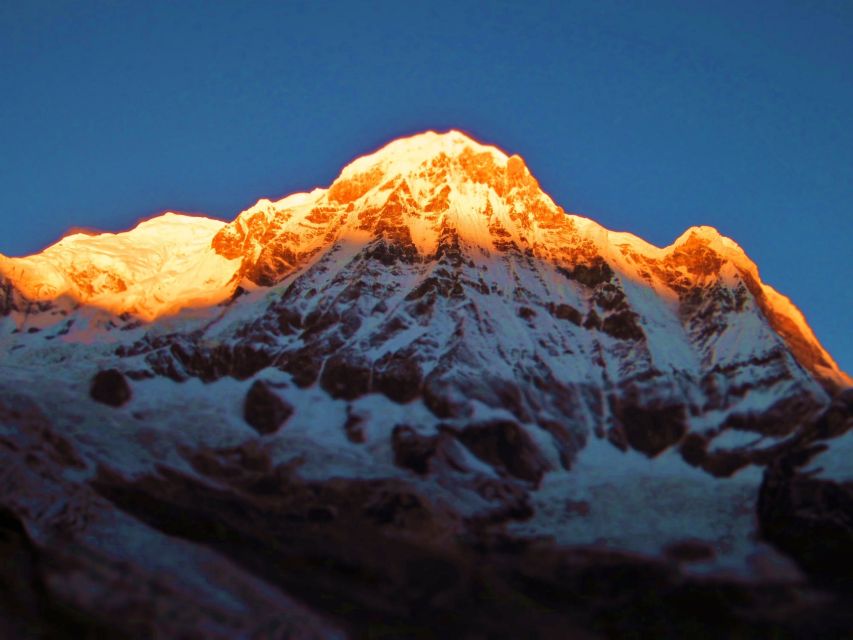
You do not need to be a technical climber for this trek, but you do need to handle long walking days, steep climbs, and a major downhill section. The schedule includes six to eight-hour days, with the longest descent after Annapurna Base Camp.
This trip is not suitable for pregnant women or people with heart problems. The operator recommends travel and rescue insurance, and I strongly agree. High-altitude trekking brings risks that ordinary holiday insurance may not cover.
The guide can adjust the pace, but the guide cannot remove the physical demands. Start the trek rested, use comfortable hiking shoes, and avoid carrying more than you need.
Pets, weapons, and sharp objects are not allowed. Your passport or ID card is required, and you should arrive ready to walk rather than treating the first day as a sightseeing transfer.
Is $206 a good price?
At $206 per person, this is good value if you choose the option that matches your needs. Included permits and transport remove several costs that can otherwise catch you by surprise. Hotel pickup, a registered guide, lodge accommodation, and return transport add real convenience.
The price is less complete on the budget option. You need to pay for meals, drinks, and possibly a porter. Add those costs before comparing it with another trek. The cheaper headline price may not be the final amount you spend.
I like the reserve-now-and-pay-later policy and cancellation up to 24 hours before departure for a full refund, but the most important booking step is still confirming the itinerary. The five-day route is clear in the day-by-day schedule, yet other sections describe a seven-day trip.
Should you book this Annapurna Base Camp trek?
Book it if you want a compact, guided route from Pokhara with the major Annapurna Base Camp experience, basic lodge accommodation, included permits, and a hot spring stop at the end. It is especially suitable if you value a guide who watches the group’s pace and health.
Think twice if you dislike long walking days, shared transport, simple lodges, or extra costs for meals and drinks. You should also contact the operator before booking to confirm the five-day schedule, the first overnight stop, the exact meal plan, and the porter fee.
For an active visitor with limited time in Nepal, this is a sensible route. Just treat the $206 price as a starting point, pack light, insure yourself properly, and get the conflicting day counts cleared up in writing.
FAQ
How long is the Annapurna Base Camp trek?
The detailed day-by-day schedule describes a five-day trek. Other supplied descriptions refer to six or seven days, so you should confirm the exact duration and route before booking.
What is the highest point of the trek?
Annapurna Base Camp is the highest point listed, at 4,120 meters.
Is hotel pickup included?
Yes. Pickup and drop-off are included from any hotel in Lakeside Pokhara or from the airport by car.
Are meals included?
Meals are included only if you choose the all-inclusive option. They are not included with the budget option, and drinks are extra.
Is a porter included?
A porter is included with the all-inclusive option. The budget option requires an additional porter fee if you want porter support.
What should I bring?
Bring your passport or ID card, hiking shoes, comfortable shoes, sunglasses, a sun hat, sunscreen, insect repellent, toiletries, a change of clothes, and a daypack.
More five-day treks around Pokhara
- From Pokhara: 5-Day Mardi Himal Base Camp Trek
★ 5.0 · 10 reviews - Pokhara: 5-Day Ghorepani and Poon Hill Private Trek
★ 5.0 · 4 reviews - Annapurna base camp trek 5 Days
★ 5.0 · 252 reviews - Kathmandu to Annapurna Base Camp (ABC) 5-Day Trek
★ 5.0 · 102 reviews
More Hot Spring Treks in Pokhara
- Pokhara: 7-Day Annapurna Base Camp Trek & Hot Spring
★ 4.0 · 3 reviews - Private Tour Mount Batur Sunrise Trekking and Natural Hot Spring
★ 5.0 · 431 reviews - Mount Batur Sunrise Trek & Natural Hot Spring Experience
★ 5.0 · 95 reviews - 3D/2N Rinjani trekking summit,lake and hot springs.
★ 5.0 · 85 reviews
New treks around Pokhara
- Pokhara: 9-Day Annapurna Base Camp Trek with Poon Hill★ 5.0 · 6 reviews
- Pokhara: Majestic Mardi Base Camp Guided Trek with HotSpring★ 5.0 · 6 reviews
- Pokhara: 5-Day Ghorepani and Poon Hill Private Trek★ 5.0 · 4 reviews
- Pokhara: 7-Day Annapurna Base Camp Trek & Hot Spring★ 4.0 · 3 reviews
- Pokhara:4-Day Ghorepani Poon Hill Guided Trek via Ghandruk★ 5.0 · 3 reviews
- Pokhara: 4-Day Poon Hill and Ghandruk Guided Trek★ 5.0 · 14 reviews
- Pokhara: 4-Day Private Trek Tour★ 4.9 · 43 reviews
- Pokhara: 4-Day Beautiful Ghorepani Poon Hill & Ghandruk Trek★ 4.8 · 21 reviews
Annapurna Base Camp Treks, side by side.
Trekking in Annapurna/Langtang/Everest/Upper Mustang regions
Read our review →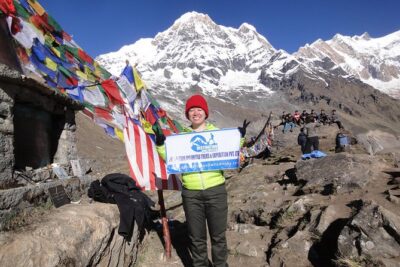
Kathmandu to Annapurna Base Camp (ABC) 5-Day Trek
Read our review →