
Review · SAPA
Sa Pa: Muong Hoa Valley Trek and Local Ethnic Villages
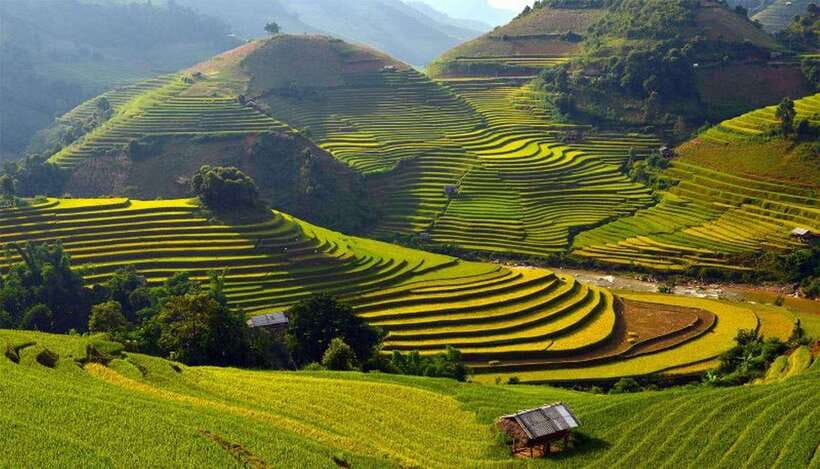
Muong Hoa Valley is best seen on foot, where the route slips between rice terraces, rivers, bamboo, and homes in Black Hmong and Red Dao villages. I like the small groups of up to 11 and the way guides such as Su, Khu, Chai, and Sunny explain local customs while keeping an eye on tricky ground.
I also like the local-home lunch and the ancient rock carvings near Ta Van Giay. The catch is simple: this is a real trek, not a gentle village stroll. Rain can turn the path into a muddy obstacle course, so good hiking shoes are not optional.
Key points to know before booking
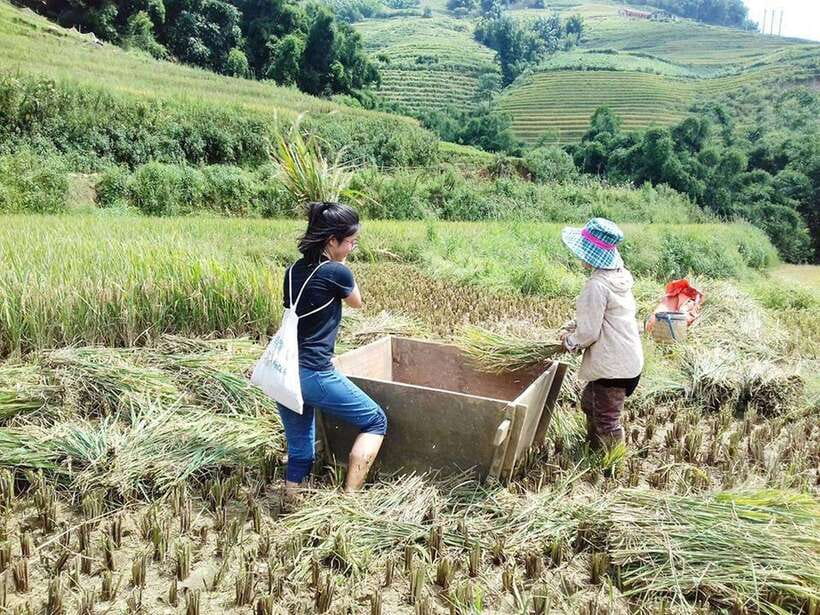
- A 10-kilometer route through three village areas: Walk from Lao Chai to Ta Van Giay and on to Giang Ta Chai, with rice fields, river crossings, and village paths along the way.
- Excellent local guides: Guides including Su, Khu, Chai, Sunny, Minh, and Nhu are praised for explaining culture, helping with footing, and adjusting the pace.
- Mud is part of the deal: Wet-season conditions can mean slippery descents, rough tracks, wet rocks, and bamboo-forest paths that require care.
- Lunch in a local home: Expect a shared meal with rice, vegetables, tofu, eggs, and spring rolls, with vegetarian food accommodated when arranged.
- Extra cash is useful: Local women may help you over muddy sections and later invite you to buy their handmade goods.
- Strong value at $23: The price includes transport, entry fees, an English-speaking guide, lunch, and water, making this one of Sa Pa’s more affordable full-day outings.
Why this Sa Pa trek feels different
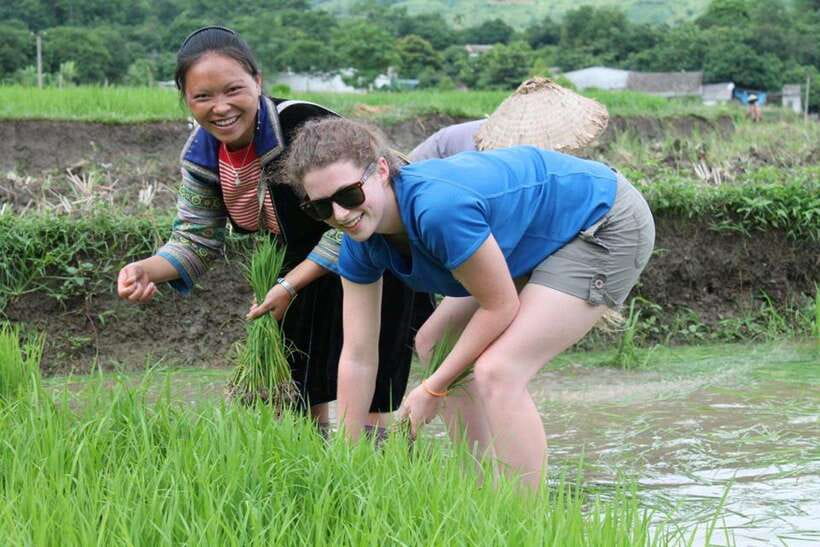
Sa Pa is surrounded by dramatic mountain scenery, but a road viewpoint only gives you part of the story. This walk puts you down among the terraces and village paths, where the view changes every few minutes.
You start with hotel pickup in central Sa Pa, then head toward Muong Hoa Valley. The trek is planned for about six hours and ends around 3:30 PM. That timing makes it easy to fit into a short stay, though you should not plan a demanding evening activity afterward if the trail is wet.
The group size matters. With no more than 11 people, your guide can usually speak with you directly and help when the path narrows. The experience is still a group outing, not a private walk, but it avoids the feel of a large bus tour.
The strongest part is the connection between scenery and daily life. You are not just looking at terraces from a distance. You pass fields that local families tend, see village homes, cross small bridges, and hear about Black Hmong and Red Dao traditions from someone who knows the area personally.
More Rice Terrace Treks in Sa Pa:
- Explore Sapa by TrekkingAdventures, Mountain,Rice fields
★ 4.9 · 229 reviews - Sa Pa: 6-Hours Muong Hoa Valley Trek with Local Ethnic guide
★ 4.5 · 178 reviews - Sapa Muong Hoa Valley & Ta Van Eco Village Scenic Tour (No Trek)
★ 5.0 · 144 reviews
From Sa Pa to the misty Muong Hoa terraces
After pickup, the walking begins on a small trail leading toward the Muong Hoa River. Morning mist often hangs over the valley, partly hiding the rice terraces and then lifting to reveal more of the hillsides.
The terraces are the visual star of the day. Their curved lines follow the shape of the slopes, and the views change with the season. In wetter months, the ground can be saturated and the tracks slick. In clearer weather, the terraces and distant hills are easier to see, but Sa Pa weather can shift quickly.
Your first major section passes through well-tended rice fields toward Lao Chai, home to the Black Hmong community. This is a good point to pay attention to your guide rather than simply hurry along. Guides such as Chai and Sunny are praised for explaining local life, clothing, customs, and the way village communities use the valley.
The path is not always polished. It can be narrow, uneven, and rough underfoot. After rain, runners may lose grip on steep muddy slopes, and several people have found themselves slipping or getting soaked. Hiking boots with deep tread are the safest choice. Some local helpers wear high-grip rubber boots, which tells you something about the conditions.
Lao Chai and the Black Hmong valley
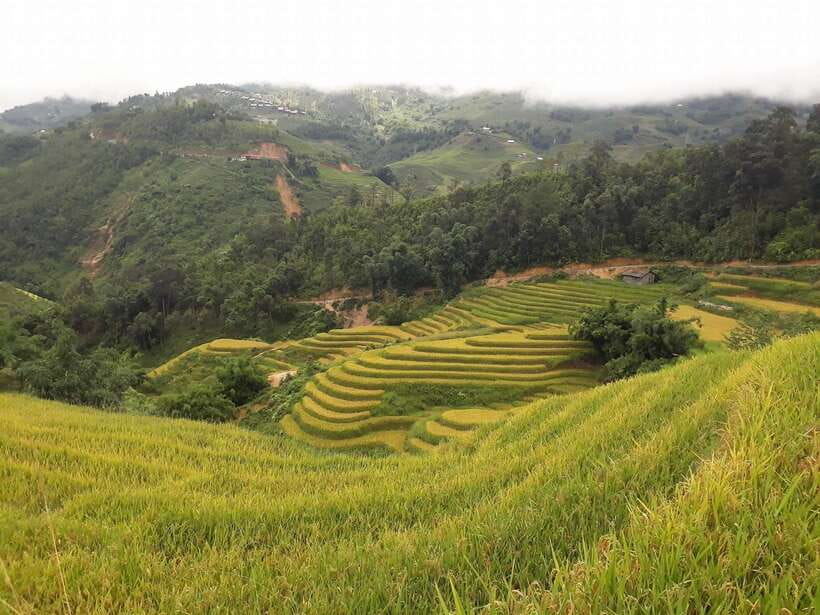
Lao Chai gives the walk its first strong cultural focus. You pass through a Black Hmong settlement rather than simply stopping at a viewpoint, so you get a closer sense of how homes and farm areas fit into the valley.
Your guide is an important part of this section. Su, Khu, Chai, and several other guides have been praised for answering questions clearly and sharing details about their own communities. That personal connection makes a difference. You can ask about customs and daily routines as you walk, rather than receiving a short prepared talk at one official stop.
Local women may join parts of the route, especially on slippery sections. They often know exactly where to place a foot and may offer an arm or hand on steep ground. Their help can be genuinely useful, but you should understand the social side of this arrangement. They may later expect you to buy a small item from their goods as a thank you.
That is worth planning for, not complaining about after the fact. Bring some cash if you are comfortable making a small purchase. If you do not want to buy anything, be polite and clear, but do not assume the extra assistance is simply part of the $23 tour price.
Ta Van Giay, the river, and ancient stone carvings
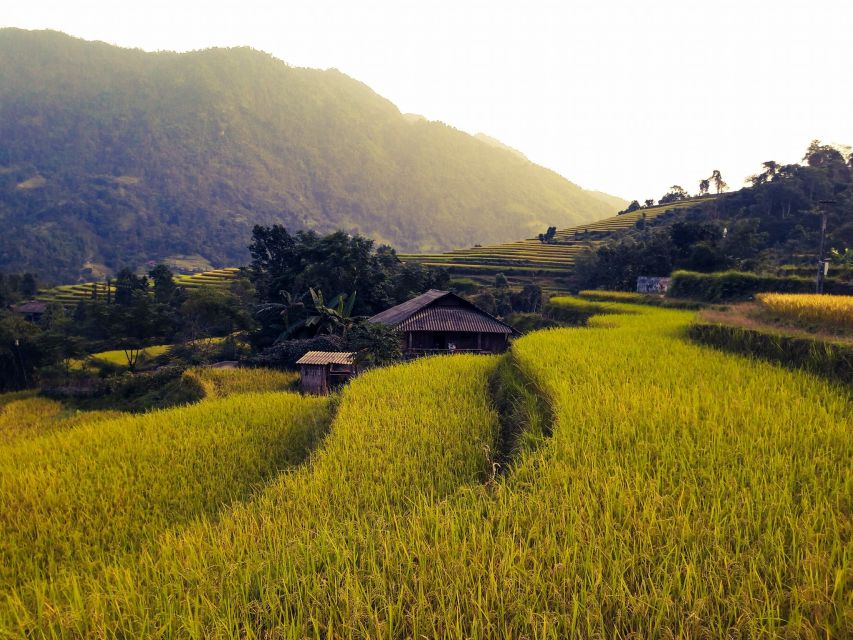
The route continues to Ta Van Giay, following the Muong Hoa River. You cross a small suspension bridge about two kilometers from the settlement, adding a little height and movement to the walk.
This section combines natural scenery with one of the valley’s more unusual sights: ancient rock carvings. The markings show figures, stilt houses, and decorative patterns. They are not presented as a huge museum display. You encounter them along the route, which makes the stop feel connected to the place rather than separated from it.
The river crossing and uneven tracks also make this a section where you need to watch your feet. A guide may offer a choice between a more natural, harder route and an easier option, depending on conditions and the group. That flexibility is valuable, especially when rain has changed the surface.
Do not expect every path to be pristine. One person noted rubbish in parts of the river and along the tracks. The scenery can be beautiful while still showing the pressures that come with tourism and everyday village life. I prefer knowing that before I arrive, since it gives you a more honest view of the valley.
More treks around Sa Pa:
- Sapa: Eco Adventure Terrace Fields and Local Villages Trek
★ 4.9 · 636 reviews - Number one top rated ethical cultural trekking and homestay by ETHOS
★ 5.0 · 456 reviews - From Sapa: 1-Day Guided Trek to Lao Chai & Ta Van with Lunch
★ 4.9 · 416 reviews - Sa Pa Full Day Trekking Tour
★ 5.0 · 414 reviews
Lunch in a local home
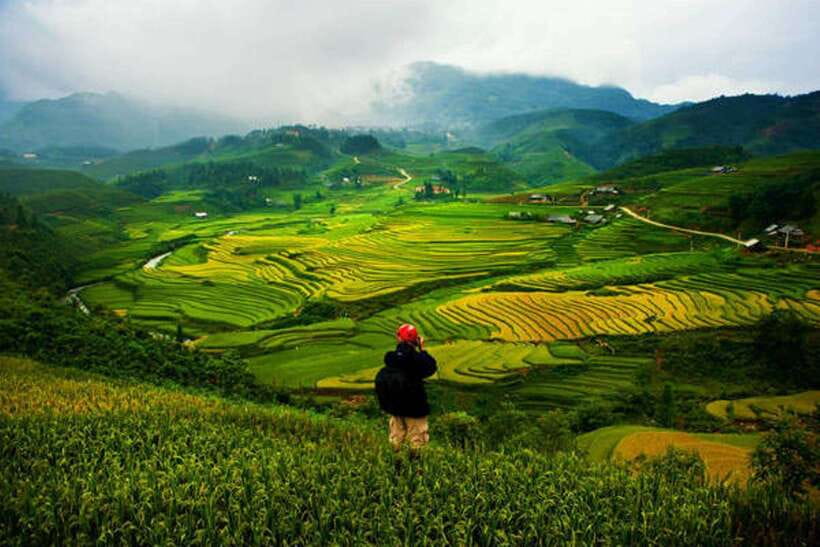
Lunch comes at a local house in one of the villages. It breaks up the long walk at the right time and gives you a chance to sit down, dry off, and eat somewhere tied to the community you have just walked through.
Meals have included rice, vegetables, tofu, eggs, and vegetarian spring rolls. Vegetarian and vegan needs can be accommodated, but tell the operator in advance rather than relying on a last-minute request.
The value here is not fine dining. It is the setting and the pause. After several hours on uneven ground, a simple shared meal tastes especially good. It also gives your guide a natural chance to explain more about local homes and customs.
If you visit during Tet, the Vietnamese Lunar New Year, the meal may take on a more personal feel. One guide invited a group into her family home during the holiday. At the same time, a $30 per-person Lunar New Year surcharge applies from February 14 to 21, 2026, payable at departure.
Bamboo forest, Giang Ta Chai, and the waterfall
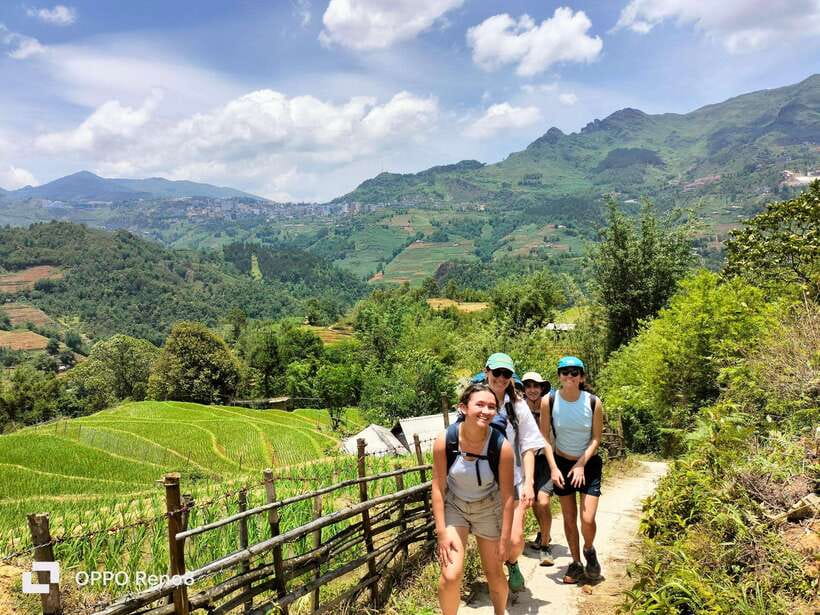
After lunch, the route enters a bamboo forest before reaching Giang Ta Chai, a Red Dao ethnic minority village. The bamboo section is one of the most memorable parts of the walk, but it is also one of the places where wet conditions cause trouble.
The path can become slick and muddy, with uneven rocks and short climbs. Local helpers may again offer support. In heavy rain, people have slipped into bushes or toward the river, so take your time and let the guide choose the safest line.
Giang Ta Chai adds another cultural layer to the day. You have already walked through Black Hmong areas, and now you see a Red Dao community. The point is not to collect village names like stamps. It is to notice that the valley contains different groups with their own traditions and ways of life.
A short rest near a waterfall gives you a breather before the final climb. This is useful because the last part is uphill, leading to the main road where your driver waits. By then, the six-hour schedule can feel full, particularly if the trail has been muddy or the route has stretched beyond the advertised 10 kilometers.
Some phones have recorded about 12.5 kilometers and more than 21,000 steps. Treat 10 kilometers as a guide, not a guarantee of a perfectly measured route.
What the $23 price really covers
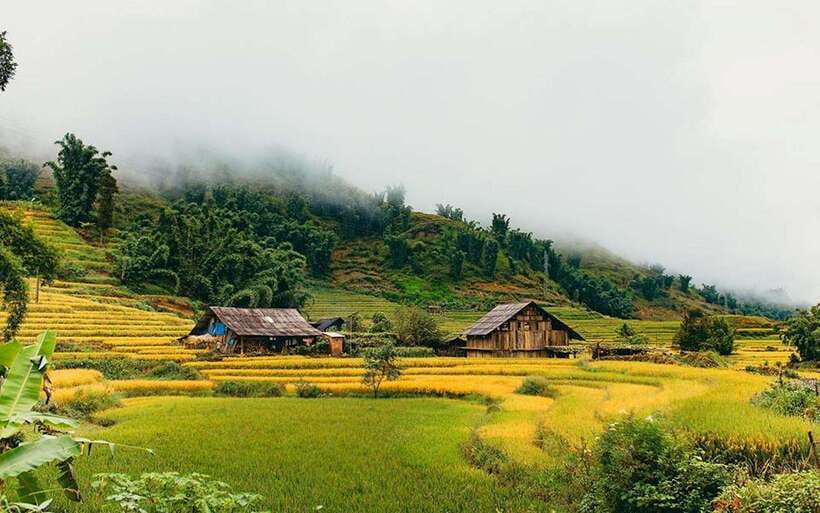
At $23 per person, this is strong value for Sa Pa. The price includes pickup from a hotel in central Sa Pa or from the Vietnam Nomadtrails office, an English-speaking guide, entry tickets, lunch, 500 milliliters of mineral water, and the return transport.
You are also paying for the guide’s local knowledge and for a route that connects several places in one day. Arranging individual village walks may offer a more personal experience, and some people may prefer hiring a local woman directly. But this tour gives you a set plan, transport, food, and a small-group structure at a low price.
There are limits. Drinks beyond the included water cost extra, as do personal purchases. A French-speaking guide costs an additional $19 per person. Pickup from outside the Sa Pa area is not available.
The included transport matters most at the end. You do not have to work out how to get back after the final uphill section. The driver collects the group at the main road and returns you to Sa Pa.
Who should book this walk
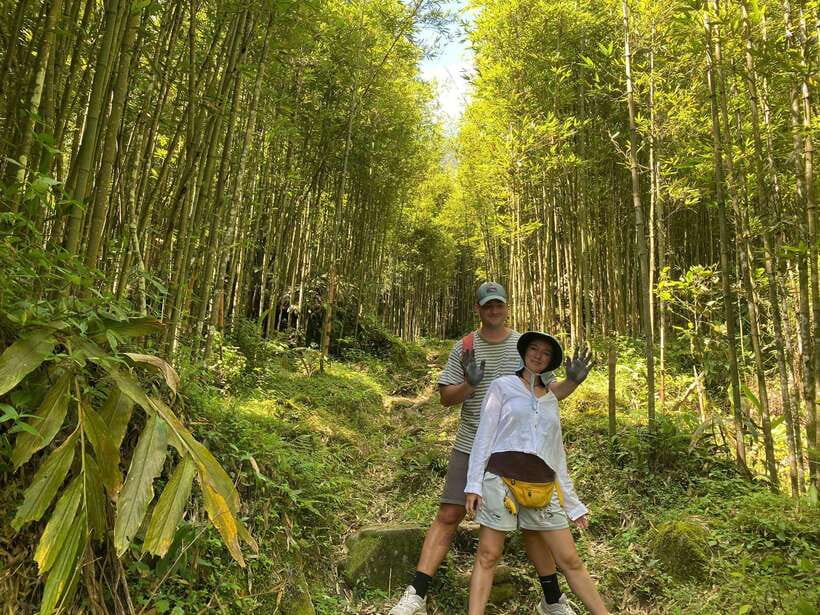
I would recommend it to anyone who wants village life and mountain scenery in the same outing, and who is comfortable walking for several hours on uneven ground.
It suits:
- People with a reasonable level of fitness
- Hikers who enjoy changing terrain
- Visitors with only one free day in Sa Pa
- Anyone interested in Black Hmong and Red Dao culture
- People who value a local lunch over a restaurant stop
- Small groups and solo visitors who want a guide and transport
I would not choose it for someone with mobility impairments, very young children, or anyone expecting a smooth, easy path. Children under six are not suitable for this activity, and the route can be demanding even for adults when wet.
The guide makes a real difference. Su, Khu, Chai, Sunny, Minh, Nhu, and others have been praised for being friendly, careful, and good at explaining local life. Still, no guide can make wet terraces behave like a paved footpath.
How to prepare for the 10-kilometer route

Bring proper hiking shoes with strong grip. Several people wore trainers and ended up slipping, soaking their shoes, or ruining them in the mud. Do not wear new white sneakers.
From October to March, pack warm clothing. At any time of year, bring sunglasses, sunscreen, insect repellent, and extra cash for drinks or village goods. Oversize luggage is not allowed, so leave large bags at your hotel.
Rain changes the character of the route. In dry weather, the walk may feel manageable for an average hiker. After heavy rain, expect mud, wet rocks, slippery descents, and more help needed from local women. The walk can still be rewarding in fog and rain, but the valley views may be less open.
Free cancellation is available up to 24 hours before departure, and you can reserve now and pay later. The English-language tour has a rating of 4.6 from 864 reviews, a useful sign that the basic operation is well established, though the quality of your day will still depend partly on weather and guide.
Should you book it?
Book this trek if you want Sa Pa beyond the main streets and viewpoints. The mix of terraces, rivers, village paths, ancient carvings, bamboo, a local lunch, and two ethnic communities gives you a lot for six hours and $23.
Skip it if you dislike mud, steep ground, or sales pressure from local vendors. For the best chance of an enjoyable day, choose sturdy footwear, carry cash, keep your schedule flexible, and accept that the valley is a working home rather than a polished outdoor attraction.
FAQ
How long is the Muong Hoa Valley trek?
The advertised trek is 10 kilometers and lasts about six hours. Some participants have recorded routes closer to 12.5 kilometers, so allow for a full and active day.
Where does the tour begin and end?
Pickup is available from hotels in central Sa Pa or from the Vietnam Nomadtrails office. The walk ends at the main road near Giang Ta Chai, where a driver takes you back to Sa Pa.
What villages does the trek visit?
The route passes through Lao Chai, associated with the Black Hmong community, Ta Van Giay, and Giang Ta Chai, a Red Dao village.
Is lunch included?
Yes. Lunch at a local home is included. Meals may include rice, vegetables, tofu, eggs, and vegetarian spring rolls. Vegan needs can be accommodated.
Is the trek difficult?
It can be challenging, especially after rain. The route includes muddy and slippery sections, uneven ground, river crossings, bamboo forest paths, and an uphill finish. A suitable level of fitness is required.
What should I bring?
Bring hiking shoes, sunglasses, sunscreen, insect repellent, and warm clothes from October to March. Extra cash is useful for drinks and purchases from local vendors. Oversize luggage is not allowed.
Can I cancel or pay later?
You can cancel up to 24 hours before the activity for a full refund. Reserve now and pay later is also available.
New treks around Sa Pa
- Sapa: 2-Day Local Guided Valley Trek with Night Homestay★ 5.0 · 27 reviews
- SAPA: 1-DAY TREKKING TOUR WITH LOCALS, LUNCH & RICE FIELDS★ 4.7 · 18 reviews
- Sapa: 2-Day Local Guided Valley Trek with Night Homestay★ 4.8 · 5 reviews
- Sa Pa: Fansipan Peak One Day Trek with Local Guide★ 5.0 · 7 reviews
- Red Dao Village Trek and Herbal Bath★ 4.7 · 3 reviews
- Private Hoang Lien National Park & Tribal Village Trek★ 4.7 · 30 reviews
- Sapa: Private Muong Hoa Valley and Homestay Trekking 2-Day★ 4.8 · 4 reviews
- From Sapa: Muong Hoa Valley View & Village Trek 1-Day★ 5.0 · 21 reviews
Rice Terrace Treks, side by side.
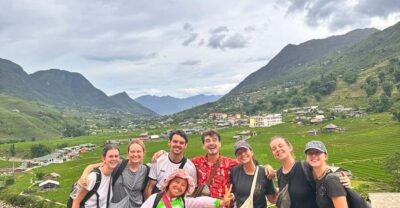
Explore Sapa by TrekkingAdventures, Mountain,Rice fields
Read our review →
Selogriyo Temple and Trekking Java Rice Terraces, hidden waterfall -Nature Java
Read our review →
Sa Pa: 6-Hours Muong Hoa Valley Trek with Local Ethnic guide
Read our review →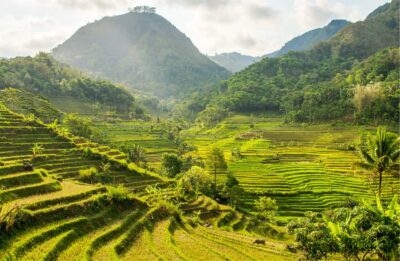
Yogyakarta: Selogriyo Temple Tour & Java Rice Terrace Trek
Read our review →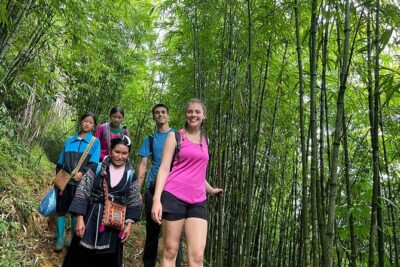
Daily Tour: Sapa Trekking in Muong Hoa valley, Bamboo forest
Read our review →
Ubud: Rice Terrace, Holy Water Temple & Waterfalls Trek Tour
Read our review →
Mount Batur Sunrise Trekking and Rice Terrace Adventure
Read our review →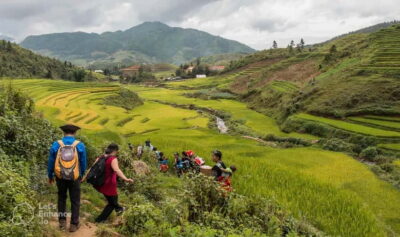
1-Day Sapa Long Trek – Rice Field Terrace, Ethnic Culture
Read our review →Lists this trek appears in