
Review · SAPA
1-Day Sapa Long Trek – Rice Field Terrace, Ethnic Culture
Sapa’s best day walks are not about checking off viewpoints. They are about following a narrow trail through Muong Hoa Valley, past Hmong farmers, streams, and rice terraces that fold down the mountainside. This seven-hour trek leads from Sapa to Lao Chai and Ta Van, with a home-cooked lunch and a local Hmong guide who can explain daily life along the way.
I like two things here. First, the local guides make the walk personal. Guides such as Mao, Sung, Giang, Chai, and Thao are praised for clear English, humor, and a willingness to adjust the pace. Second, $24 covers a lot: hotel pickup in Sapa town, village fees, lunch, a small bottle of water, rain protection, and transport back to town.
The catch is the trail. It can stretch beyond 12 kilometers, with steep slopes, loose ground, and serious mud after rain. Some visitors found it manageable, while others needed rubber boots and a slower pace. This is a mountain hike, not a paved village stroll.
Key points to know before you book
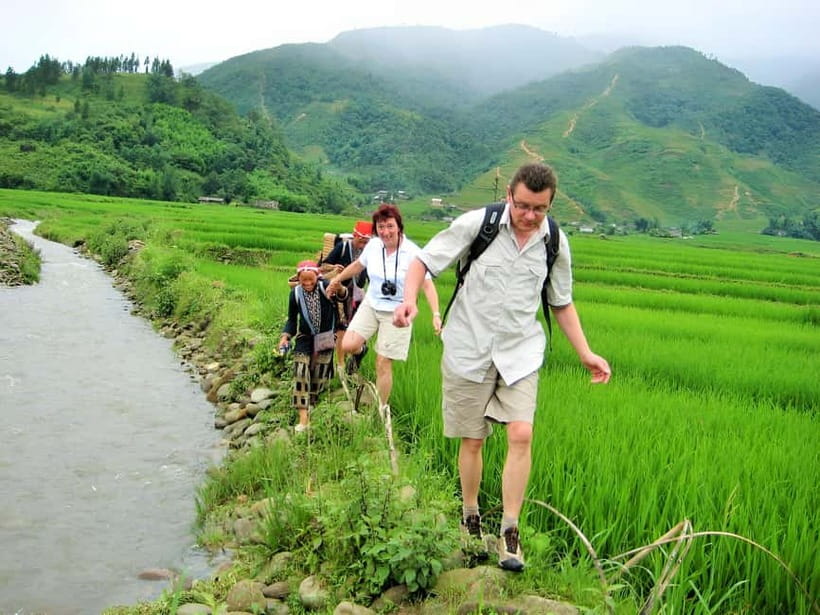
- The route drops from Sapa into Muong Hoa Valley, passing Y Linh Ho, Lao Chai Sang, and Ta Van.
- Lunch is served in a local home, with family-style dishes and more food available if needed.
- Hmong and Giay culture is part of the walk, not a separate museum stop.
- The small group limit is 10 people, and many departures have been smaller.
- Rain changes the hike, turning parts of the trail slippery and muddy.
- Local women may walk beside you and offer handmade goods, which adds a human element but can feel pushy.
Starting above Sapa with Fansipan in view
The day begins at 9:00 AM in Sapa town, either with a hotel pickup or at one of the stated meeting points. From there, you head toward a quieter ridge with a view toward Fansipan, the highest mountain in Indochina.
The view depends on the weather. On a clear morning, Fansipan rises above the Hoang Lien Son range. On a cloudy day, mist may cover the peak, and your guide may suggest staying lower rather than climbing for a view that never appears. That flexibility is useful in Sapa, where weather can shift quickly.
This first part helps you get your bearings. Sapa itself is busy and built up, but the trail soon feels more rural. You begin descending toward the valley, so remember that the easy downhill at the start means you will have some uphill work later.
More Rice Terrace Treks in Sa Pa:
- Sa Pa: Muong Hoa Valley Trek and Local Ethnic Villages
★ 4.6 · 864 reviews - Explore Sapa by TrekkingAdventures, Mountain,Rice fields
★ 4.9 · 229 reviews - Sa Pa: 6-Hours Muong Hoa Valley Trek with Local Ethnic guide
★ 4.5 · 178 reviews
Muong Hoa Valley and the terraces
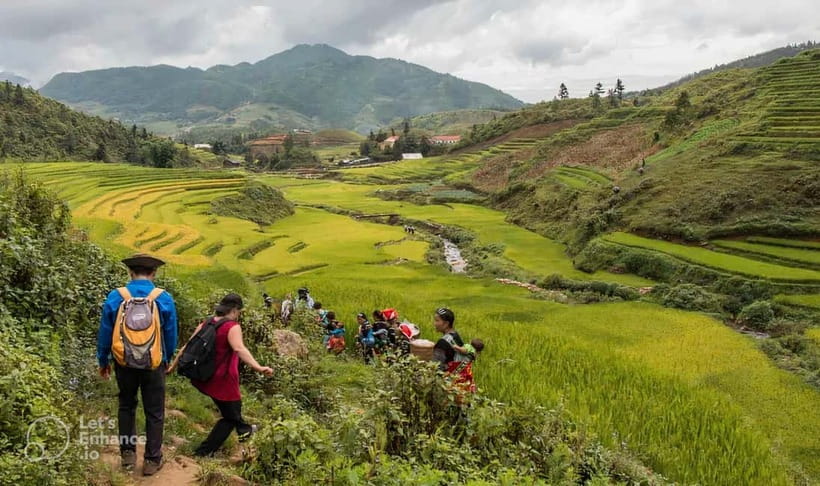
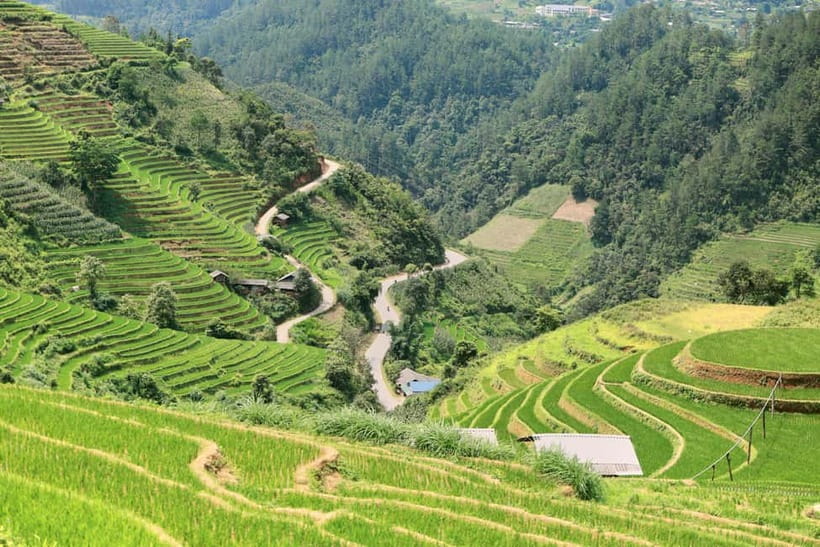
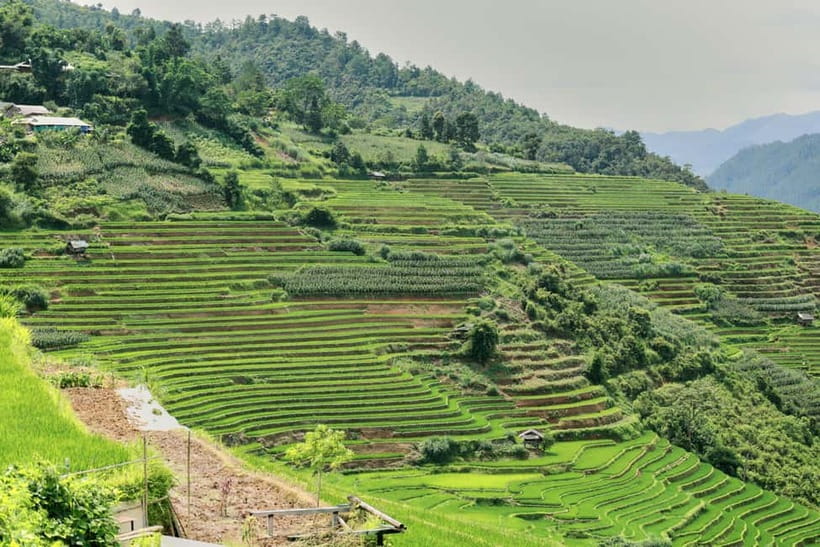
The walk into Muong Hoa Valley is the visual heart of the trip. Rice terraces curve across the hills in broad steps, with streams, mountain ridges, and working fields filling the spaces between villages.
The terraces are not simply scenic decoration. They show how Hmong communities have made use of steep ground for generations. Depending on the season, the fields may be green, newly planted, golden, or partly bare. Do not expect one fixed view. Sapa’s appearance changes with farming cycles and weather.
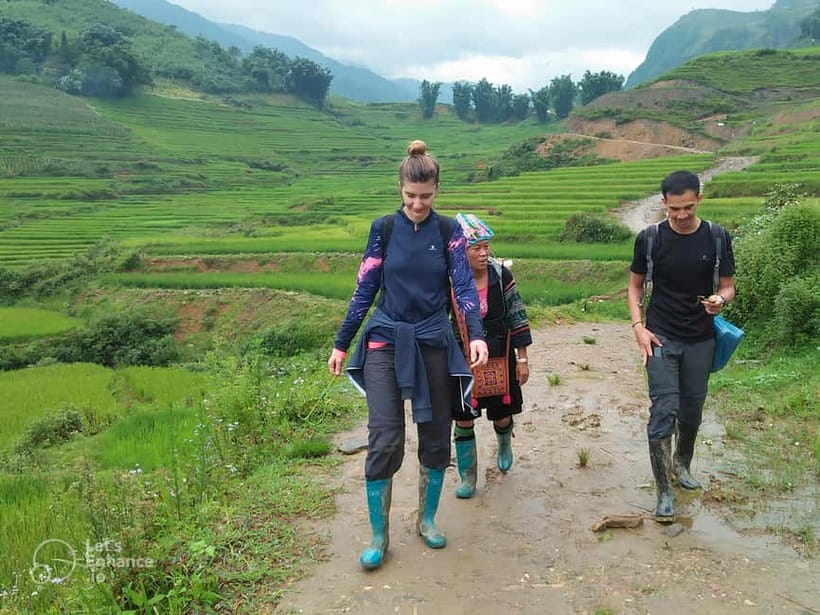
You will walk on paths that can be narrow and uneven. In dry conditions, the route is a solid rural hike. After rain, mud covers parts of the trail and slopes can become slippery. Several people found rented rubber boots helpful, while others managed in hiking shoes with strong grip. Ordinary fashion sneakers are a poor choice.
The group limit of 10 matters here. A smaller party can stop for photos without blocking the path, and the guide can react to different walking speeds. If you know you are slower on hills, ask about a private option or a smaller group before setting out.
Y Linh Ho at around 11:00 AM
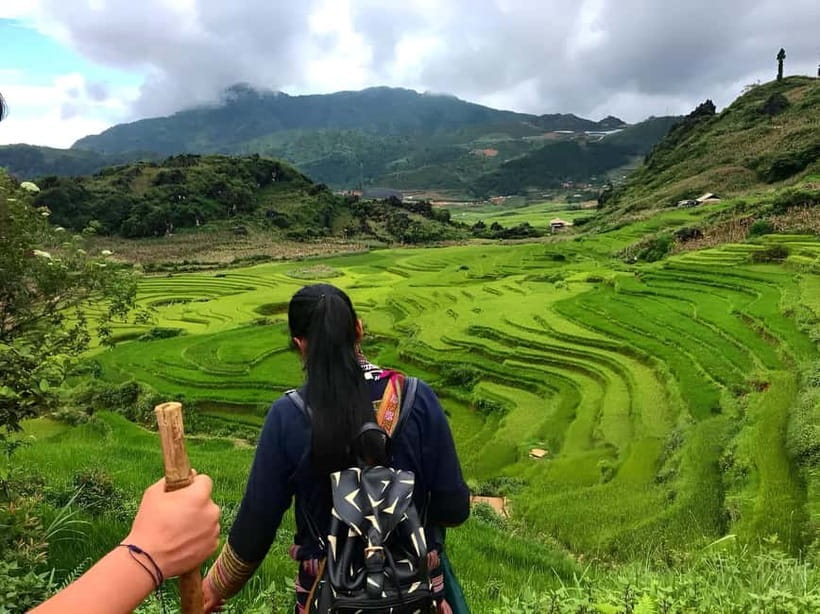
At about 11:00 AM, you reach Y Linh Ho, a quiet Hmong village beside a clear river. The route crosses a wooden bridge, then continues through open fields with steep mountains on both sides.
This is a good point to slow down. The river, bridge, and terraces give you the sort of setting that makes Sapa special, but the value is not only in taking pictures. Your Hmong guide can explain village life, farming, family traditions, and the way the communities use the valley.
Guides are a major part of the experience. Mao is known for giving guests choices between easier and steeper paths. Sung and Giang are praised for their easy conversation and cultural explanations. Chai, Thao, Soso, and Pao are also noted for taking care of the group and stopping for photos. Your assigned guide will vary, so treat these names as examples of the local guiding team rather than a guarantee.
Do not expect a polished performance at every stop. The appeal is the ordinary rhythm of people working, walking, and living in the valley. That also means the route can feel less controlled than a standard sightseeing tour.
Lunch with a Hmong family in Lao Chai Sang
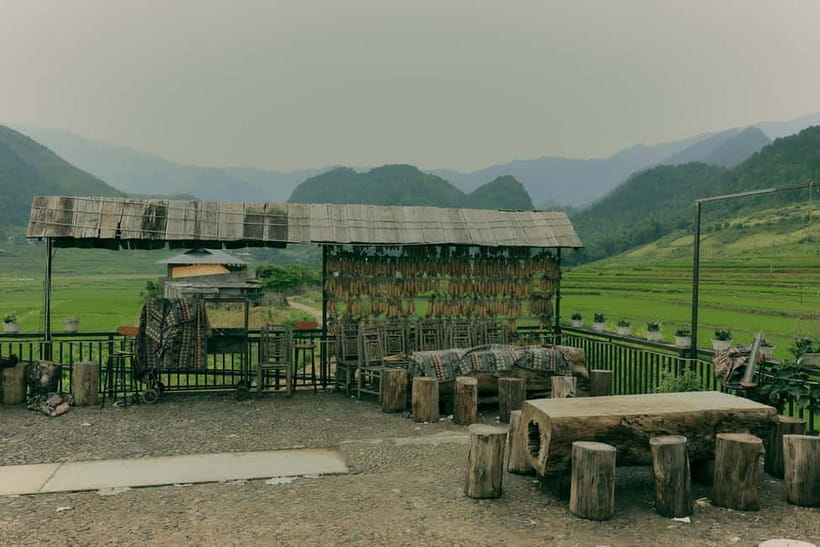
Around 12:30 PM, the group reaches Lao Chai Sang for lunch. The meal is prepared by a local family and served in a simple home, with family-style dishes and portions that are generally described as generous.
This is one of the better parts of the day because it gives you time to sit still. After several hours on the trail, a shared meal feels more welcome than another quick roadside stop. You can ask for more food if needed, and dietary restrictions can be catered for if you tell the operator in advance.
The exact menu is not fixed, so you should expect traditional home cooking rather than a chosen restaurant dish. That is part of the point. The meal connects the walk to the people who live in the valley, instead of treating the villages as scenery outside the window.
Lunch is also a practical value. At $24, the cost already includes food, village entrance fees, pickup in Sapa town, and the ride back from Ta Van. You are not paying separately at every point of the route. Bring extra cash only if you may want handmade goods, drinks, or an optional drop-off outside the included area.
More one-day treks around Sa Pa
- From Sapa: 1-Day Guided Trek to Lao Chai & Ta Van with Lunch
★ 4.9 · 416 reviews - Sapa 1 Day Long Trek: Trek to Hau Thao and Sa Seng Villages
★ 4.6 · 344 reviews - 1-day Authentik trek & Panorama valley views
★ 5.0 · 189 reviews - 1 day Fansipan Trekking
★ 5.0 · 180 reviews
Clothing, indigo dye, and local craft
Around 2:00 PM, the route includes a stop focused on traditional Hmong clothing. You can learn how handwoven fabric and natural dyes are used to make garments, and the cultural program also includes traditional incense making in Ta Van.
The indigo work is especially useful for understanding what you see in the villages. Traditional clothing is not just a costume for visitors. It reflects time, labor, skill, and local identity. Seeing the dyeing process gives the craft more meaning than buying a scarf from a market stall.
You may also meet women selling scarves or other handmade products along the way. Buying something can support local makers, but you should not feel forced to purchase. A polite no is enough. Some people enjoyed the conversations and bought beautiful items; others found the repeated sales approach tiring. Both reactions are fair.
This is where the cultural focus feels strongest, but keep your expectations in check. It is a short introduction rather than a full workshop. You will learn about the process and meet local people, but the seven-hour route is still mainly a trek.
Finishing in Ta Van around 3:00 PM
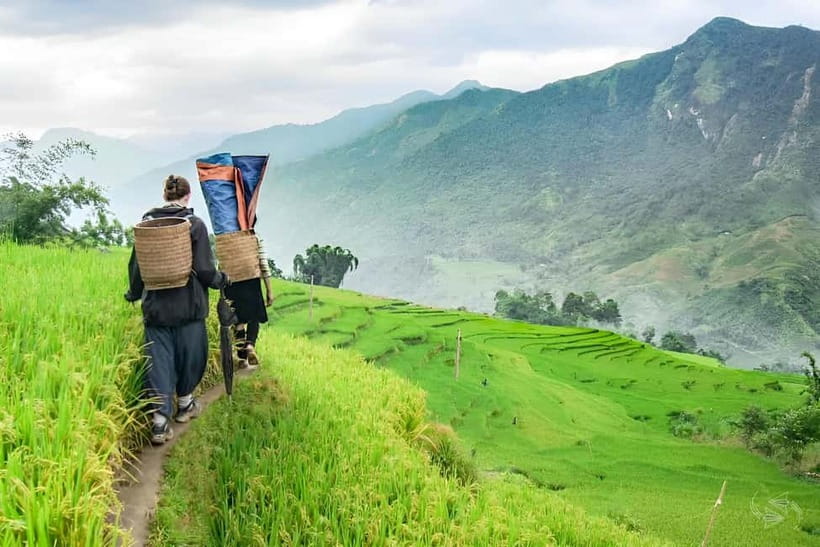
The final village is Ta Van, home to the Giay people. You arrive around 3:00 PM, after walking through fields, forest sections, and mountain paths. A driver waits here to take you back to Sapa.
Ta Van provides a useful contrast with the Hmong villages earlier in the day. You see another local community in the same valley, with its own traditions and daily routines. The guide can help you understand the differences without turning the visit into a lecture.
The ride back is important. You finish the trek away from Sapa, so you are not expected to retrace the whole route. Depending on your final drop-off point, returning transport may be free or may cost extra. Confirm this if you are staying outside central Sapa or at a homestay beyond town.
The schedule says Ta Van is reached around 3:00 PM, but the pace can change. Mud, photo stops, weather, and group fitness all affect timing. Guides have allowed extra time for views and photos, but you should avoid booking a tight onward connection immediately after the stated finish.
How hard is the 12 to 15 kilometer trek?
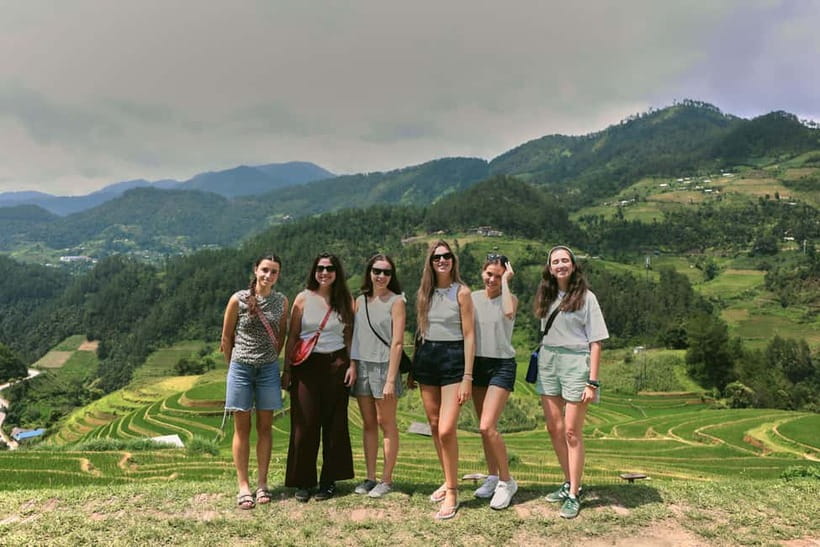
The distance varies in the descriptions and personal accounts, with some walks closer to 12 or 13 kilometers and others reaching about 15 kilometers. The route includes slopes, uneven ground, rice-field paths, and slippery sections.
I would rate it as moderate to challenging for a casual walker. You do not need technical climbing skills, but you do need steady legs and a reasonable level of fitness. Several people with short legs or tired knees found the hills demanding, while active walkers called it manageable.
Your shoes matter more than almost anything else. Bring hiking shoes with good grip, not smooth-soled trainers. In wet weather, ask about renting rubber boots. Also carry water, sunscreen, sunglasses, a hat, insect repellent, and a light raincoat. Rain ponchos or raincoats are supplied, but your own waterproof layer may fit better.
The tour is not suitable for wheelchair users or people with mobility, heart, back, or serious medical problems. It is also not recommended for people afraid of heights, people with visual impairments, or anyone with a condition that makes long uneven walks unsafe.
What the $24 price really gets you
At $24 per person, this is strong value if you want a full day of walking and local contact without arranging several pieces yourself. The price includes a Hmong guide, hotel pickup in Sapa town, village entrance fees, a home-cooked lunch, a small bottle of water, rain protection, and transport from Ta Van back to Sapa.
The small group can contain up to 10 people, though some departures have had only four. A small party makes it easier to keep one pace and ask questions. It also gives you more room to stop at viewpoints or adjust the route.
There are limits. Pickup outside Sapa town may cost extra, and drop-off at some locations may also involve a fee. Drinks, crafts, and anything not listed are extra. If you are staying outside town, you can pay for a pickup or reach one of the town meeting points at Sapa TT Homestay on Dien Bien Phu Street or Sapa View Spring Garden Hotel on Muong Hoa Street.
Free cancellation is available up to 24 hours before departure, and you can reserve now and pay later. Those terms help if mountain weather is uncertain, though they do not remove the need to check the forecast and prepare for rain.
Best time to take this walk
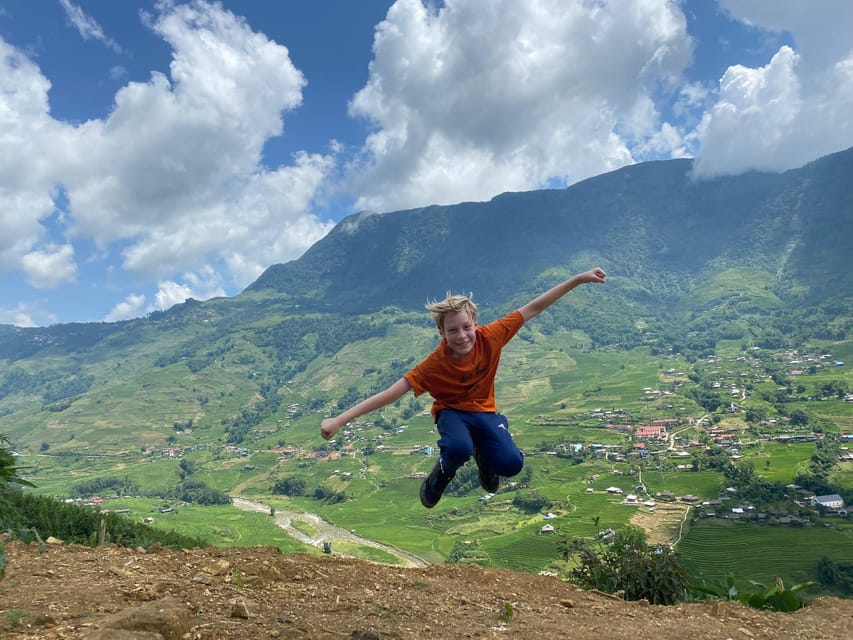
Weather shapes the day more than the calendar. Sunshine gives you wider views and firmer paths. Clouds and mist can hide Fansipan and the distant peaks, but they also give the valley a quiet mood. Rain makes the route harder, especially around forest and field paths.
The trek runs rain or shine. That is practical information, not a slogan. Bring rain gear in the wet season, and do not assume a cloudy morning will clear before lunch.
Rice fields also change through the year. If you want bright green terraces, ask about current field conditions before booking. If you care more about village life and mountain walking, the view is still worthwhile when the summit is hidden.
Who should book this Sapa trek?
I would choose this trip if you have one day in Sapa and want more than a viewpoint reached by vehicle. It suits active couples, solo visitors, and small groups who enjoy walking, local food, and conversation with a guide.
It is also a good first look at the area if you are staying only one night. The route gives you mountain views, two ethnic communities, farming terraces, a family meal, and a ride back, all in one day.
I would hesitate if you dislike mud, steep paths, uneven ground, or contact with people selling crafts. A shorter village walk may be better for you. I would also avoid it if a long hike could worsen a medical condition.
Should you book the Lao Chai and Ta Van trek?
Book it if you want Sapa’s scenery tied to real village life. The strongest parts are the local Hmong guide, the walk through Muong Hoa Valley, the generous family lunch, and the chance to learn about Hmong and Giay traditions without spending a large sum.
Skip it if you want a gentle stroll or guaranteed clear views. The route can be wet, tiring, and muddy, and the mountain weather may cover Fansipan. With proper shoes, water, and a flexible attitude, this is a very good-value introduction to Sapa.
FAQ
How long does the Sapa trek last?
The activity lasts about seven hours, beginning at 9:00 AM and reaching Ta Van around 3:00 PM before transport returns to Sapa.
How far do you walk?
The route is generally described as about 12 to 15 kilometers, with some accounts covering more than 13 kilometers.
Is lunch included?
Yes. A home-cooked lunch with a local family is included. Dietary restrictions and allergies should be shared in advance.
Where does the trek start?
It starts in Sapa town, with pickup available from hotels or other locations within Sapa town. Two listed meeting points are Sapa TT Homestay and Sapa View Spring Garden Hotel.
Where does the trek finish?
The walking route finishes in Ta Van, where a driver takes you back to Sapa.
Are village entrance fees included?
Yes. Village entrance fees are included in the activity price.
What language does the guide speak?
Guides speak English and Vietnamese. The trek is led by local Hmong guides from nearby villages.
What should I wear and bring?
Wear hiking shoes with good grip and bring water, sunscreen, a hat, sunglasses, insect repellent, and toiletries. A raincoat is important in wet weather, and rubber boots may help when trails are muddy.
Can I cancel the booking?
You can cancel up to 24 hours in advance for a full refund. You can also reserve the activity and pay later.
New treks around Sa Pa
- Sapa: 2-Day Local Guided Valley Trek with Night Homestay★ 5.0 · 27 reviews
- SAPA: 1-DAY TREKKING TOUR WITH LOCALS, LUNCH & RICE FIELDS★ 4.7 · 18 reviews
- Sapa: 2-Day Local Guided Valley Trek with Night Homestay★ 4.8 · 5 reviews
- Sa Pa: Fansipan Peak One Day Trek with Local Guide★ 5.0 · 7 reviews
- Red Dao Village Trek and Herbal Bath★ 4.7 · 3 reviews
- Private Hoang Lien National Park & Tribal Village Trek★ 4.7 · 30 reviews
- Sapa: Private Muong Hoa Valley and Homestay Trekking 2-Day★ 4.8 · 4 reviews
- From Sapa: Muong Hoa Valley View & Village Trek 1-Day★ 5.0 · 21 reviews
Rice Terrace Treks, side by side.
Sa Pa: Muong Hoa Valley Trek and Local Ethnic Villages
Read our review →
Explore Sapa by TrekkingAdventures, Mountain,Rice fields
Read our review →
Selogriyo Temple and Trekking Java Rice Terraces, hidden waterfall -Nature Java
Read our review →
Sa Pa: 6-Hours Muong Hoa Valley Trek with Local Ethnic guide
Read our review →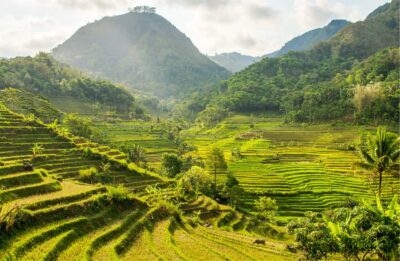
Yogyakarta: Selogriyo Temple Tour & Java Rice Terrace Trek
Read our review →
Daily Tour: Sapa Trekking in Muong Hoa valley, Bamboo forest
Read our review →
Ubud: Rice Terrace, Holy Water Temple & Waterfalls Trek Tour
Read our review →
Mount Batur Sunrise Trekking and Rice Terrace Adventure
Read our review →Lists this trek appears in