
Review · POKHARA
Nepal: Time For Easy Annapurna Base Camp Trek
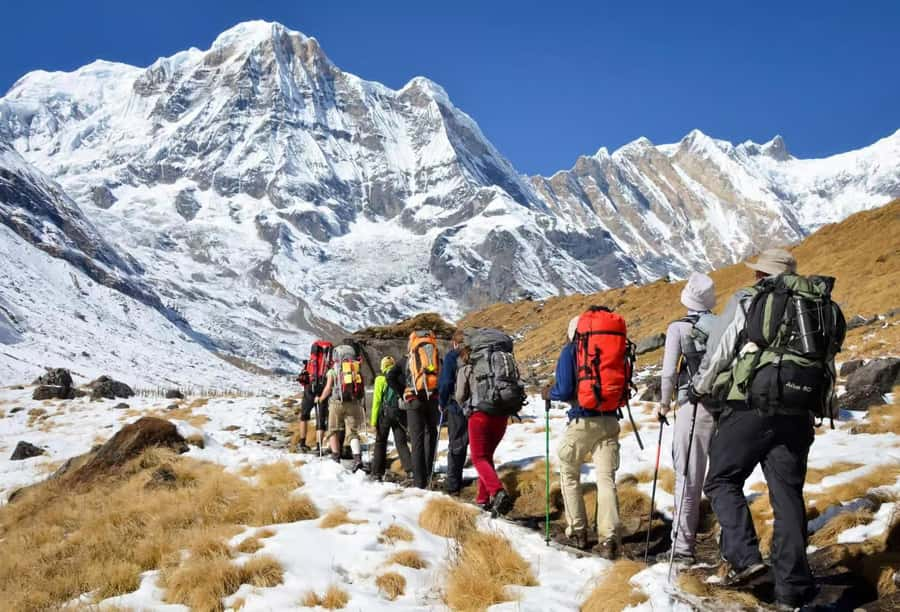
Annapurna Base Camp gives you a rare mountain finish: after days of forest paths, stone steps, villages, and thin air, you arrive in a vast bowl ringed by Himalayan peaks. The Annapurna I and Machhapuchhre views are the main prize, but the changing scenery makes the route feel like much more than a walk to one viewpoint.
I like the personal support here. Guides such as Sagar and Arjun have helped with careful pacing, route explanations, health checks, and weather decisions, while porter Ganesh has carried heavy bags for hikers who needed help. I also like the hot-spring stop near Jhinu on the way back.
The catch is the word easy. This five-day version is demanding, with long walking days, steep descents, and real altitude. One day can involve 18 kilometers and more than 2,000 meters of descent, so you need good fitness, strong legs, and a sensible attitude toward altitude sickness.
Key points to know before you book
- Five days is a fast schedule: You reach 4,130 meters at Annapurna Base Camp and return to Pokhara in only four nights.
- The mountain views keep changing: Look for Annapurna I, Annapurna South, Hiunchuli, Machhapuchhre, and Dhaulagiri.
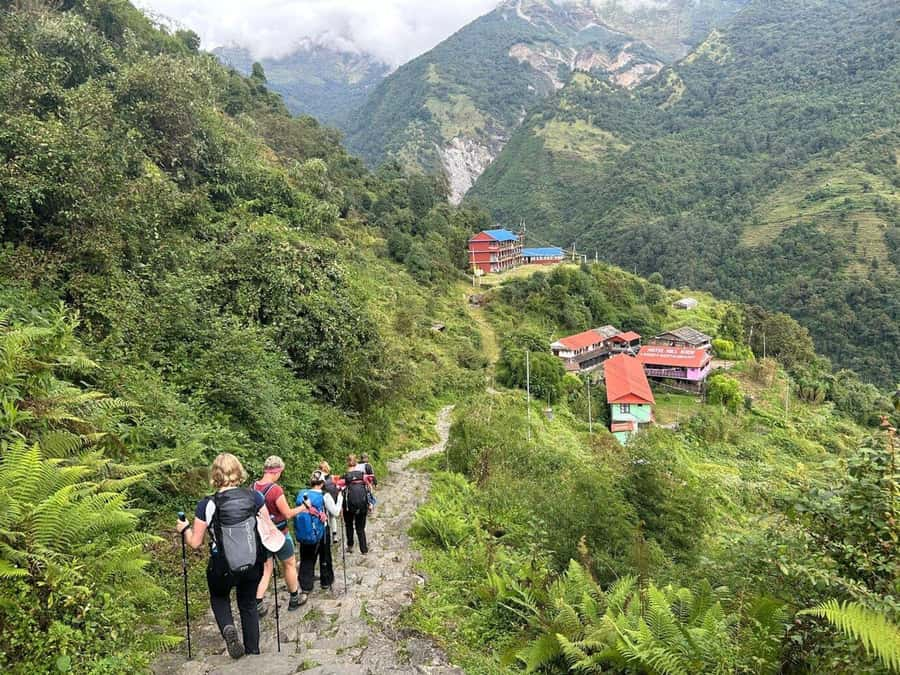
- The route mixes nature and village life: You walk through rhododendron forests, terraced fields, rocky paths, and traditional settlements.
- Guiding is a real strength: Sagar and Arjun have been praised for steady pacing, health checks, clear briefings, and friendly support.
- Meals cost extra: Dal bhat, noodles, rice dishes, and soups are available to buy along the way.
- A porter costs $25 per day: This can make a major difference on a short, steep trek.
Why the Annapurna Base Camp route is worth your time
The Annapurna region offers a useful mix of scenery. You begin in the greener lower hills, where forests and villages set the pace. Higher up, trees thin out and the route becomes rockier, colder, and more exposed. At the end, the trail enters the high mountain basin around Annapurna Base Camp.
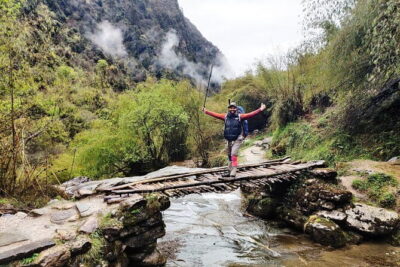
I like this gradual change because you do not spend five days staring at the same type of view. You pass through rhododendron forests, traditional terraced fields, and settlements where local culture remains part of daily life. The walk also gives you time to notice small details, from the shape of village houses to the way food and supplies support mountain communities.
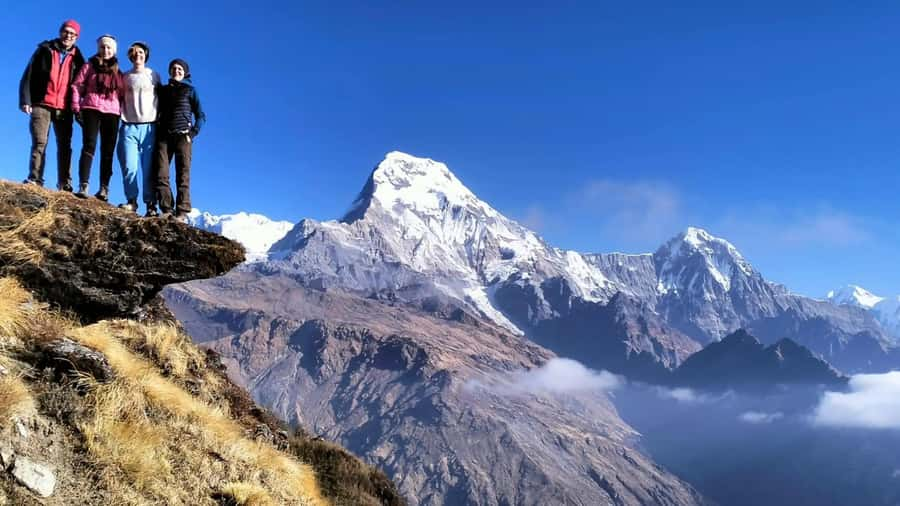
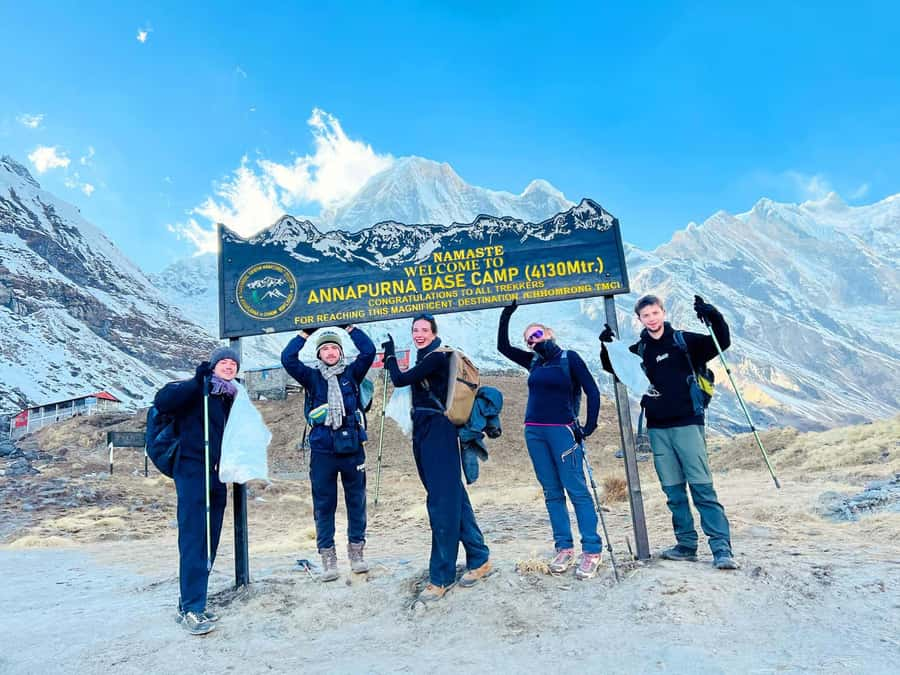
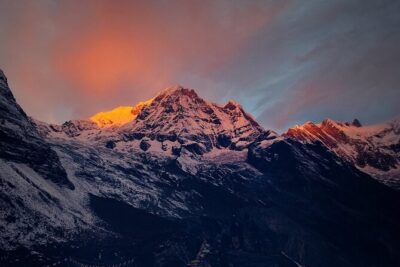
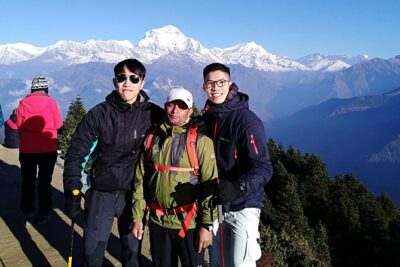
The final setting is the big reward. Annapurna Base Camp reaches 4,130 meters, with snow-capped peaks rising around you. Annapurna I, Annapurna South, Hiunchuli, and Machhapuchhre are the major names to watch for, while Dhaulagiri adds to the wide Himalayan view.
The route is also a test. The itinerary compresses a trek that is often offered over seven to ten days into five days. That saves time and may suit you if your Nepal schedule is tight, but it leaves less room for slow acclimatization or an easy recovery day.
More Annapurna treks around Pokhara:
- Trekking in Annapurna/Langtang/Everest/Upper Mustang regions
★ 5.0 · 161 reviews - Kathmandu/Pokhara: 5-Day Annapurna Base Camp (ABC) Trek
★ 4.9 · 72 reviews - Pokhara: 5 Day Annapurna Base Camp Trek & Natural Hot Spring
★ 4.9 · 44 reviews
Day 1: Pokhara to Jhinu and Lower Sinuwa
The first day begins with a shared vehicle from Pokhara to Jhinu, followed by roughly five hours of walking toward Lower Sinuwa. The stated altitude for the day is 2,300 meters.
This opening section introduces the shape of the trek. You move from Pokhara’s road network into footpaths, forest, villages, and mountain terrain. The route is not simply a warm-up stroll. You begin gaining height while your body adjusts to walking for several hours with a pack.
Jhinu is important later in the trip because of its hot spring, but on the outward journey the focus is getting onto the trail and reaching Lower Sinuwa. You should arrive with comfortable clothing, a jacket, a hat, and enough cash for food and personal needs.
Your guide should set the pace from the start. Arjun, one guide associated with this experience, has been praised for using regular breaks and keeping a steady speed rather than pushing people too hard. That matters on a short schedule. A fast first morning can make the next few days much harder.
Day 2: Lower Sinuwa to Deurali
Day two covers about six hours and reaches Deurali at 3,200 meters. This is where the trek begins to feel more serious.
You continue through forest and rocky sections, with the route changing as you gain height. The trees and village scenery remain part of the experience, but the air becomes cooler and the walking can feel heavier. At this point, your legs are carrying the effects of day one, so a controlled pace is more useful than speed.
This is also an important day for acclimatization. The schedule gains altitude quickly, and you need to watch for headache, nausea, unusual tiredness, or other signs that your body is not coping well. Stay hydrated, tell your guide how you feel, and do not treat discomfort as a contest.
The sleeping arrangements are described as hotel rooms during the trek, but the exact standard can vary. Do not expect city-hotel comfort in the mountain sections. The practical goal is a clean place to rest, a meal, and enough sleep for the next stage.
Meals are not included in the $180 price. You can buy dal bhat, noodles, rice dishes, and soups along the route. Carry cash in Nepalese rupees, since personal expenses are separate and exchange is available in Kathmandu or Pokhara.
Day 3: Deurali to Annapurna Base Camp through Machhapuchhre Base Camp
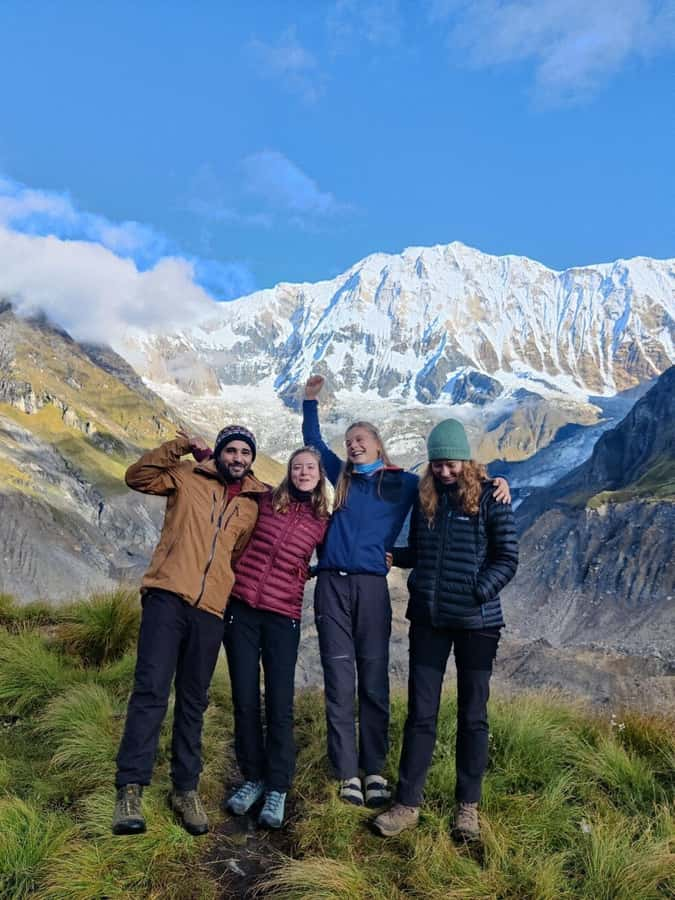
Day three is the emotional high point of the trek. You walk about four hours from Deurali to Annapurna Base Camp by way of Machhapuchhre Base Camp, reaching 4,130 meters.
The shorter walking time does not mean an easy day. Altitude changes the effort. A path that might feel modest near Pokhara can become tiring above 3,000 meters, especially when the trail is rocky or the weather turns cold.
Machhapuchhre, also called Fishtail, is one of the region’s most recognizable mountains. Passing its base camp gives you a strong sense that you have entered a much higher mountain world. From there, the route continues toward the Annapurna sanctuary and the base camp itself.
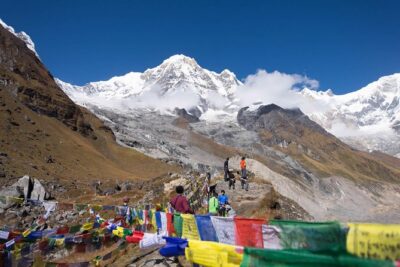
At Annapurna Base Camp, you are surrounded by towering peaks rather than looking at them from a distant valley. The scale is hard to take in at first. Give yourself time to look around, take photographs, and simply sit with the achievement.
You should also keep expectations realistic. Cloud, wind, snow, or poor visibility can affect the views. Even in good conditions, cold temperatures are possible, so bring warm layers and a jacket. Comfortable clothes are not enough for every part of this route.
The best guiding here is quiet and practical. Sagar has been especially attentive to health, accommodation, questions, and photographs, while Arjun has focused on pace and safety. Those details matter more at altitude than a guide who only points out peaks.
More treks around Pokhara:
- Poon hill Trek 3 days
★ 5.0 · 176 reviews - Pokhara: 4-Day Ghorepani, Poonhill & Ghandruk Mountain Trek
★ 5.0 · 132 reviews - Ghorepani – Poon Hill Trek 3N-4D
★ 5.0 · 125 reviews - From Pokhara: 3-Day Ghorepani Poon Hill Trek with Guide
★ 4.9 · 68 reviews
Day 4: Annapurna Base Camp to Bamboo
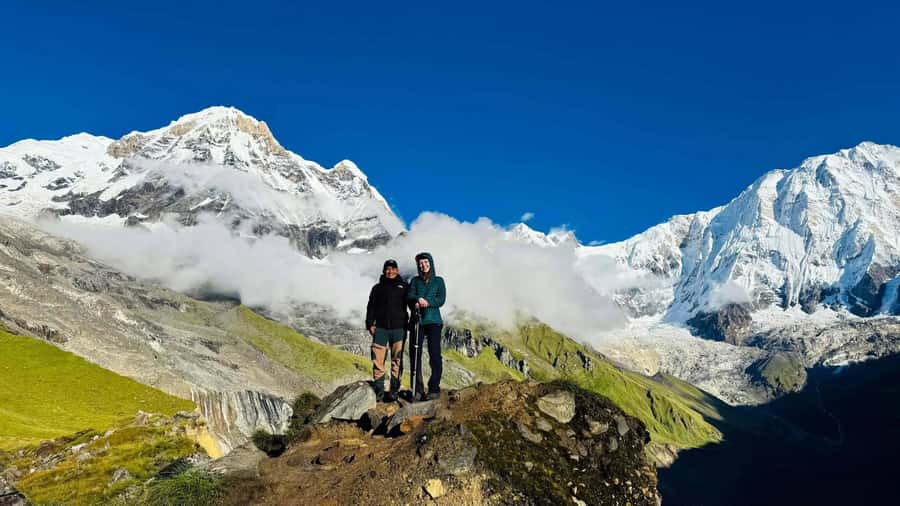
Day four takes you away from the high basin and down to Bamboo, at about 2,400 meters. The stated walking time is six hours.
The descent can be harder than the climb. Your knees and thighs absorb repeated impact, and steep sections demand focus even when you are physically tired. One account of this trek describes a day involving 18 kilometers and more than 2,000 meters of descent. That is a useful warning: downhill does not mean effortless.
This is where trekking poles, if you use them, can help, though they are not listed among the included items. At minimum, wear footwear you trust and keep your pack light. An optional porter costs $25 per day, and that fee may be worthwhile if you are carrying a sleeping bag or a heavy backpack.
The move from the high mountain basin back toward Bamboo also brings a change in temperature and scenery. As you lose height, forest returns and the air should feel less severe. You may be tired enough to appreciate the simple pleasure of a warm meal and a bed more than another grand view.
Day 5: Bamboo to Jhinu and back to Pokhara
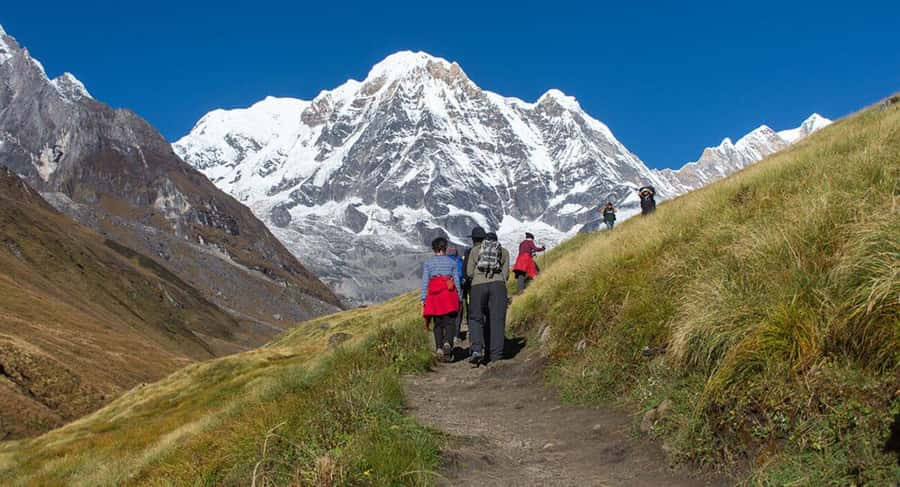
The final day includes around six hours of trekking from Bamboo to Jhinu, followed by a shared drive to Pokhara. The stated altitude is 822 meters.
The hot spring stop near Jhinu is a welcome finish. It gives you a chance to rest after the descent before the road journey back. The exact timing can depend on the walking pace, road conditions, and how long you spend at the spring, so do not plan an important evening commitment in Pokhara without a time cushion.
The return drive completes a very full five days. You begin and end with road transport, but most of the experience is on foot. The shared vehicle keeps the package affordable, though it is less flexible than a private car.
What the $180 price really covers
At $180 per person, this is a low-cost way to arrange the main framework of the trek. The price includes an English-speaking guide, permits and fees, first aid, trekking accommodation, and shared transport for the drop-off and return.
That is useful because permits and transport can be awkward to arrange separately. You also get someone responsible for route decisions and basic support, rather than walking into the mountains without local help.
The price does not include meals, personal expenses, or a porter. The porter supplement is $25 per day, which can add up over five days, but it may be the best use of extra money if you are not used to carrying weight uphill and downhill.
The private-group format is another point in the package’s favor. You are not automatically placed in a large public group, and the guide can pay closer attention to your pace and condition. The vehicle, however, is shared, so the experience is not fully private from door to door.
You can book with reserve-and-pay-later terms and cancel up to 24 hours in advance for a full refund. Those terms are useful when weather, health, or Nepal travel plans are still uncertain.
Guides, porters, and the human side of the trek
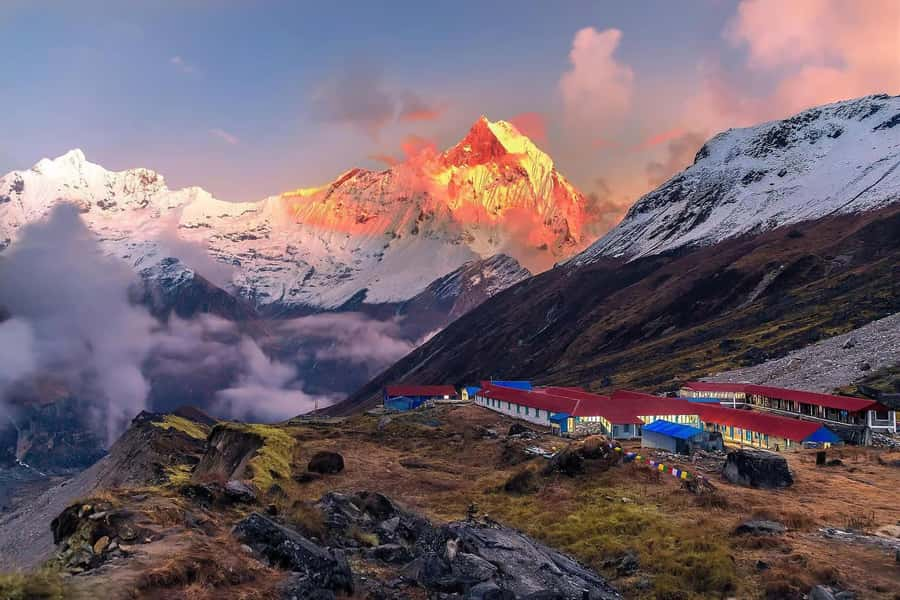
The quality of a short high-altitude trek depends heavily on the guide. With five days available, you need someone who can explain the route, monitor your condition, and make sensible decisions without turning the trip into a race.
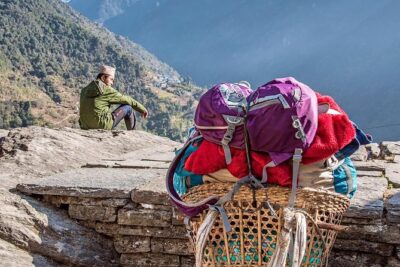
Sagar has provided thoughtful support, arranged suitable accommodation, checked on health, answered questions, and taken photographs. His good English and cheerful manner can make a tiring route feel more manageable. Porter Ganesh has also helped by carrying a heavy backpack and sleeping bag while keeping a friendly attitude.
Arjun has offered detailed pre-trek briefings, clear communication through WhatsApp, steady pacing, and well-timed breaks. He and the support team have also paid attention to weather and trail conditions.
You can request support in English, Japanese, or Chinese. If you need a porter, confirm the arrangement before departure and remember that the cost is extra.
Fitness, altitude, and what to pack
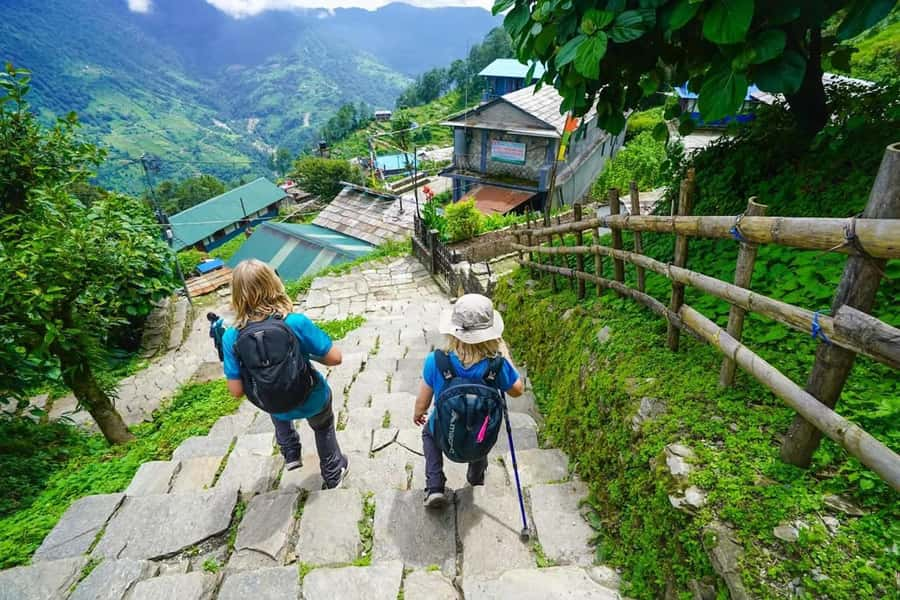
Do not book this as a casual nature walk. You should prepare with regular cardio and strength training, especially for long climbs and repeated descents. Strong legs matter, but so do patience and the ability to keep moving at a moderate pace.
The route reaches 4,130 meters, and altitude sickness is a serious concern. The activity is not suitable for people with altitude sickness. Acclimatization, hydration, and honest communication with your guide are essential.
Pack for changing conditions. Temperatures can vary widely between the lower trail and Annapurna Base Camp. You need a jacket, breathable clothing, comfortable clothes, a hat, and a headscarf if useful for sun, dust, or warmth.
Bring your passport or ID card, cash, and a credit card. Food and other personal expenses are not included, so Nepalese rupees are useful. Avoid oversize luggage, weapons or sharp objects, alcohol, drugs, and explosive substances.
Who should book this five-day trek
I would recommend this trip to a fit hiker who has limited time in Nepal and wants the major Annapurna Base Camp experience without arranging every permit, transfer, and guide independently.
It suits you if you are comfortable with basic mountain accommodation, buying meals as you go, and walking for several hours on uneven ground. It also suits someone who values personal guiding and is willing to follow advice about pace and altitude.
I would be cautious if you have no recent walking or fitness routine, dislike steep descents, suffer from vertigo, or want a relaxed schedule. A five-day plan gives you less breathing room than the more typical seven to ten-day approach.
FAQ
How long does the Annapurna Base Camp trek last?
The trek lasts five days and includes four nights.
Where does the trek begin?
The experience begins with pickup in Pokhara and transport to Jhinu.
How high does the trek go?
The highest point is Annapurna Base Camp at 4,130 meters.
Is the trek suitable for beginners?
It may suit people with different levels of trekking experience, but the five-day schedule is strenuous. You should prepare with cardio and strength training and not treat the word easy as a promise.
Are meals included?
No. Meals are available to buy, with common options including dal bhat, noodles, rice dishes, and soups.
Is a porter included?
No. A porter is optional and costs $25 per day.
What transport is included?
A shared vehicle is included for the drop-off and pickup between Pokhara and the trail.
What languages can the guide speak?
Guiding is available in English, Japanese, and Chinese.
Is the tour private?
The trek is arranged for a private group, though the included transport is shared.
Can I cancel the booking?
You can cancel up to 24 hours in advance for a full refund. Reserve-and-pay-later booking is also available.
Should you book it?
Book this trek if you want maximum mountain scenery in minimum time and you are fit enough to handle a quick ascent and long descent. The guides, permits, basic accommodation, and transport make the $180 price useful, especially if you want support rather than a fully independent trek.
Do not book it because the description calls it easy. Book it because you understand that five days to Annapurna Base Camp is a compact, demanding route. Bring proper layers, budget for meals and perhaps a porter, respect the altitude, and give your guide honest information about how you feel. Done with that mindset, this can be a powerful first look at Nepal’s high mountains.
New treks around Pokhara
- Pokhara: 9-Day Annapurna Base Camp Trek with Poon Hill★ 5.0 · 6 reviews
- Pokhara: 5-Day Trek to Annapurna Base Camp and Hot Springs★ 5.0 · 4 reviews
- Pokhara: Majestic Mardi Base Camp Guided Trek with HotSpring★ 5.0 · 6 reviews
- Pokhara: 5-Day Ghorepani and Poon Hill Private Trek★ 5.0 · 4 reviews
- Pokhara: 7-Day Annapurna Base Camp Trek & Hot Spring★ 4.0 · 3 reviews
- Pokhara:4-Day Ghorepani Poon Hill Guided Trek via Ghandruk★ 5.0 · 3 reviews
- Pokhara: 4-Day Poon Hill and Ghandruk Guided Trek★ 5.0 · 14 reviews
- Pokhara: 4-Day Private Trek Tour★ 4.9 · 43 reviews
Annapurna Base Camp Treks, side by side.
Trekking in Annapurna/Langtang/Everest/Upper Mustang regions
Read our review →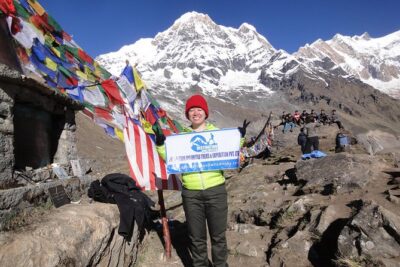
Kathmandu to Annapurna Base Camp (ABC) 5-Day Trek
Read our review →
Lists this trek appears in