
Review · SAPA
Sapa Trekking Bargains With Local Guide
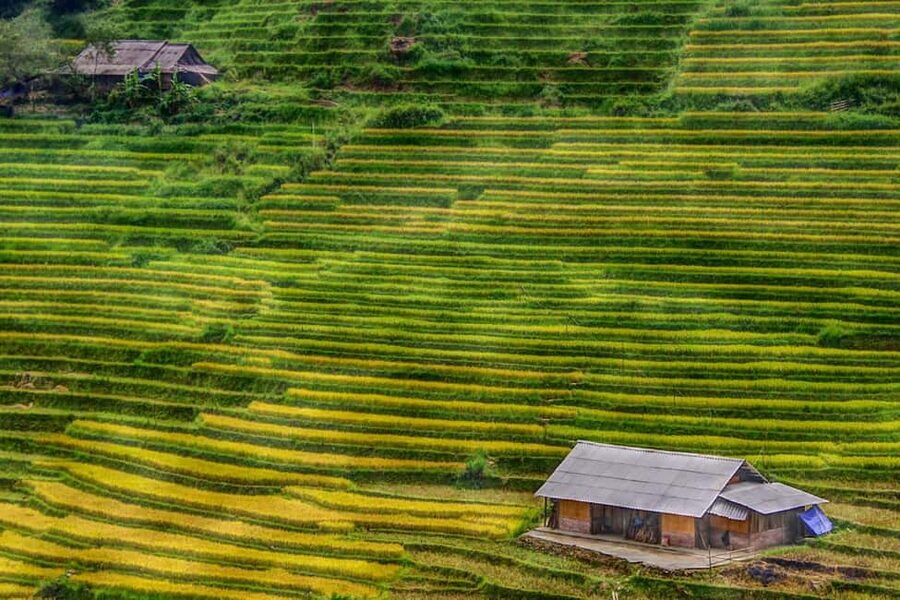
This trek’s best feature is its flexible route. Instead of marching every group along one fixed path, your guide can adjust the distance, pace, and difficulty, with routes ranging from about 5 to 11 kilometers. You’ll walk through Y Linh Ho, Lao Chai, and Ta Van, with rice fields, village paths, and plenty of time to ask about Hmong and Dzay customs.
I like the chance to spend more time walking and less time in a vehicle, and I like the practical help from local guides such as Chan and Sung. They explain daily life, farming, family traditions, and village history in clear English. The main drawback is that this is still a real mountain trek. Mud, slippery slopes, and steep sections can appear, so good shoes are not optional in wet weather.
Key points at a glance
- Flexible 5 to 11 km routes: Your guide can choose an easier, medium, or more demanding path based on your ability and the weather.
- Three northern villages: Walk through Y Linh Ho, Lao Chai, and Ta Van, meeting Hmong and Dzay culture along the way.
- Local guides with strong English: Chan, Sung, and their family members are praised for clear explanations, humor, and personal stories.
- Lunch with a valley view: Stop at a local Hmong family restaurant in Lao Chai for a filling meal, including vegetarian options.
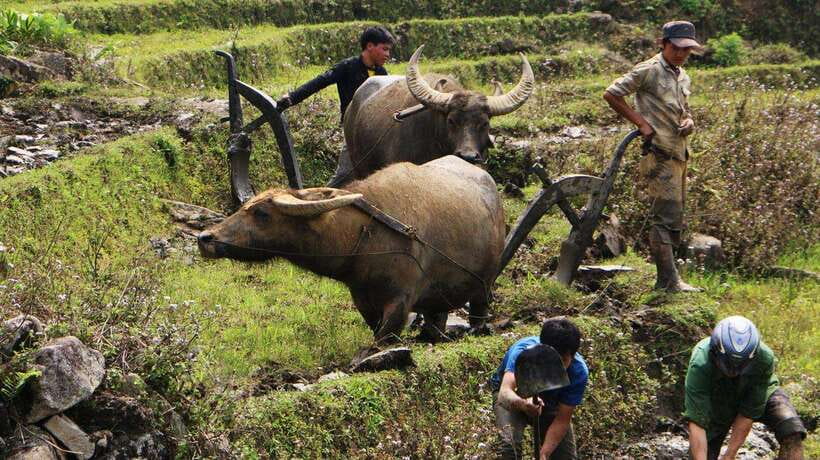
- Less time on crowded routes: Small paths may take you past buffalo, farms, waterfalls, bamboo bridges, and working rice fields.
- Useful Sapa extras: Leave luggage at the office and use a shower before or after the trek.
A village-to-village walk through Sapa’s valley
This is a full half-day outing, lasting about 330 minutes from the 9 AM start to the return transport from Ta Van at roughly 3 PM. The meeting point is Sapa Stone Church, though hotel pickup in Sapa can be arranged. That matters if you are staying outside the center, since one guest had a hotel about a 30-minute walk away and still received a pickup.
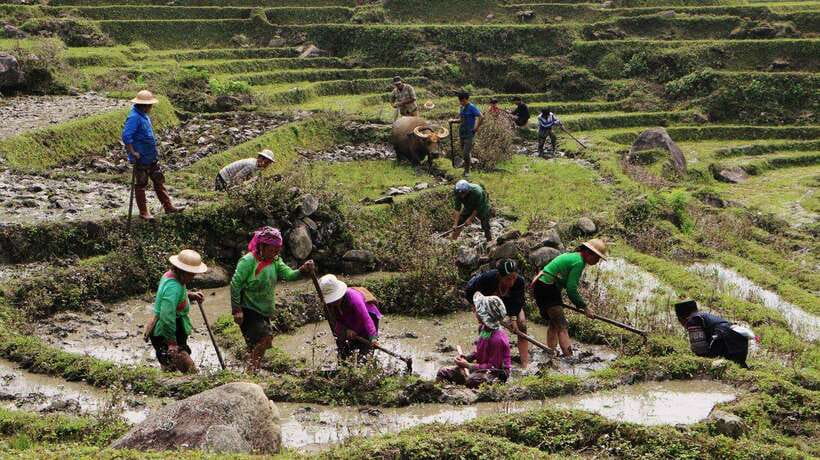
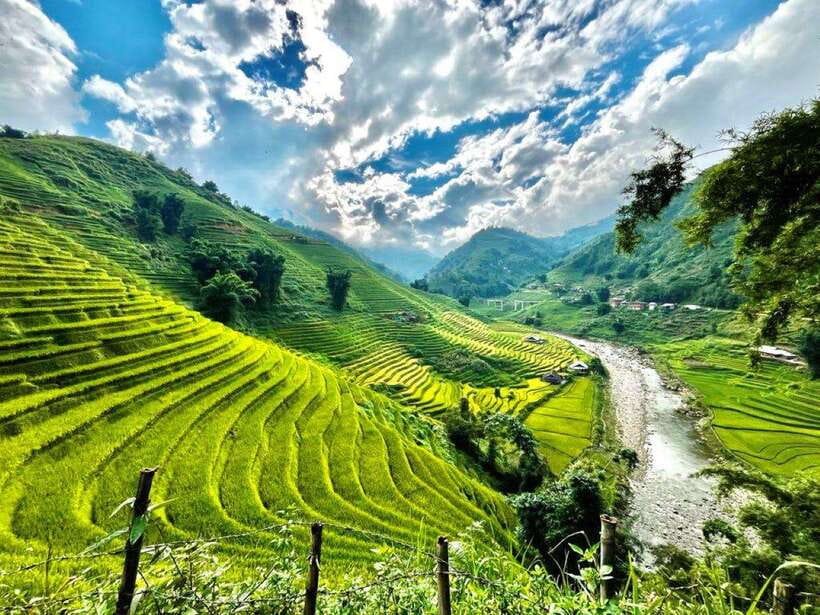
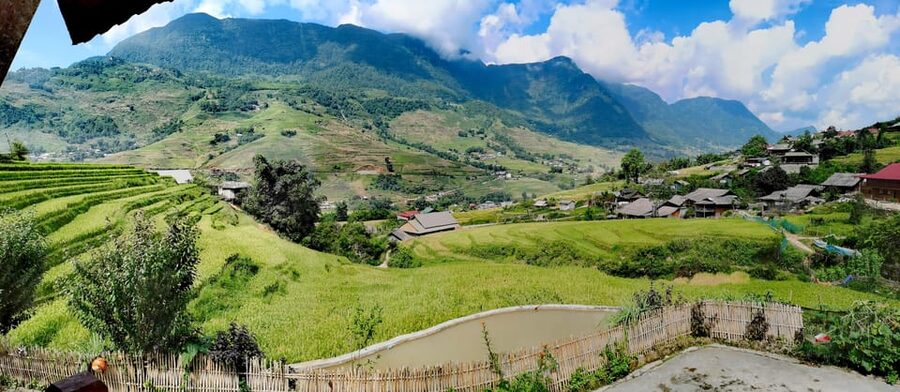
The route links three well-known villages, but the day is not simply a photo stop at each one. You spend much of the time on foot, crossing paths through rice fields and hills while your guide explains what you are seeing. At harvest time, you may see rice planting or harvesting in progress, which gives the scenery a useful human context.
I would choose this trip if you want to understand Sapa beyond its town center. You will see the farms and homes that support village life, and you can ask direct questions instead of simply passing through in a vehicle. The pace also gives you time to stop for photographs without turning the whole day into a rushed checklist.
More guided trips around Sa Pa
- From Sapa: 1-Day Guided Trek to Lao Chai & Ta Van with Lunch
★ 4.9 · 416 reviews - Sa Pa: 6-Hours Muong Hoa Valley Trek with Local Ethnic guide
★ 4.5 · 178 reviews - Sapa 1 day trek with local guide to the village by Comlam
★ 5.0 · 148 reviews
Starting at Y Linh Ho
The first main section takes about two and a half hours and leads toward Y Linh Ho. Expect a mix of guided walking, scenic stops, village paths, and hiking. The exact route can change depending on rain, fitness, and how much challenge you want.
Y Linh Ho is a good place to begin because the valley opens up around the walking route. You may see rice terraces, hillside farms, and local people going about ordinary work. The appeal is not one single monument. It is the gradual change from Sapa’s town streets to a quieter rural setting.
This is also where the guide’s local knowledge earns its keep. Chan has been guiding for more than 15 years and is from the Hmong community. Sung, Chan’s husband, has also received praise for adjusting routes to suit different confidence levels and for finding quieter paths. Chan’s sister Vu sometimes guides as well, sharing stories about growing up in the area.
If you want the least demanding option, say so at the start. The guides can use wider roads in places where narrow paths become too steep or slippery. If you want more adventure, smaller paths may lead through fields and past local walkers. The tradeoff is simple: the quieter trail is usually more interesting, but it can require scrambling and careful footing.
Lunch in Lao Chai after the morning trek
Lao Chai is the lunch stop and an important part of the day. Plan on about an hour here. The meal is served at a local Hmong family restaurant, often with a broad view over the valley.
The food is included in the $19 price, and it is described as filling and enjoyable. Vegetarian meals are available, which is useful if you mention your needs in advance. The dining stop also gives you a proper break after the morning walking, rather than asking you to push through without rest.
Lao Chai is one of the oldest and largest Hmong communities in the area. That makes it more than a convenient lunch location. Your guide can explain local customs, farming, crops, family life, and how different ethnic communities live in the same region.
You should keep expectations sensible. This is a local meal during a walking tour, not a formal restaurant outing. The appeal is the setting, the food, and the conversation. If you are lactose intolerant, note that the booking information lists lactose intolerance among conditions the activity is not suitable for, so ask before reserving.
Walking onward to Ta Van and the Dzay community
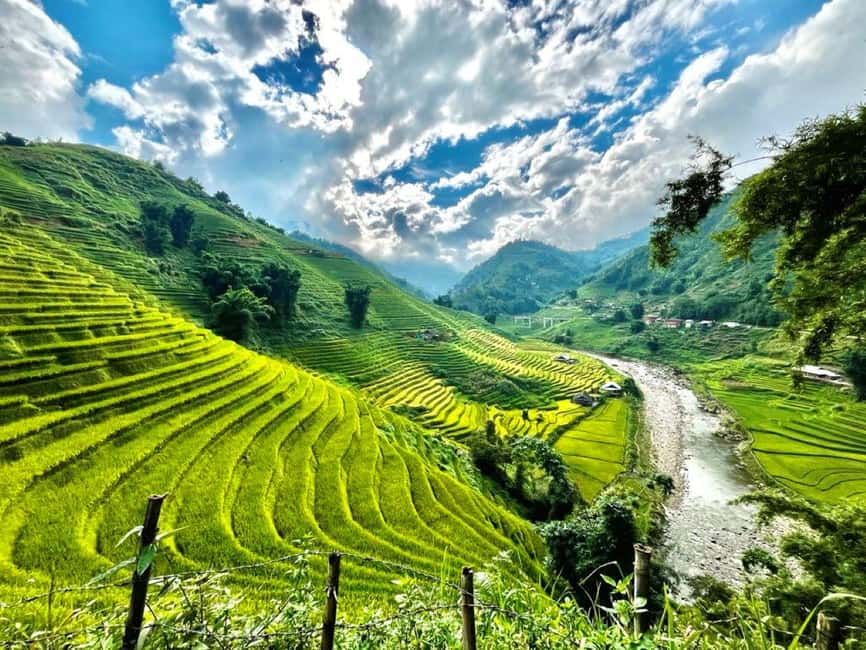
After lunch, you continue for about an hour and a half toward Ta Van. This section includes more village walking, scenic viewpoints, and time to learn about the Dzay people, who live in the area.
Ta Van gives the day a useful contrast. You begin among Hmong communities and then learn about another local ethnic group, including differences in customs and daily life. The guide helps connect the villages, so the walk becomes a lesson in how several communities share the valley rather than a simple sequence of pretty views.
Some route options may take you near waterfalls, across a bamboo bridge, or directly through rice fields. These details are not guaranteed on every route, since the guide changes the path according to conditions and ability. Still, they show why it is worth discussing your preferred route before setting out.
One especially useful feature is the guide’s attention to pace. Chan is described as checking that people can keep up and are enjoying themselves. Sung has adjusted routes for visitors with different hiking confidence. That makes the trek suitable for a mixed group, though it does not turn a mountain path into a flat walk.
More treks around Sa Pa:
- Sa Pa: Muong Hoa Valley Trek and Local Ethnic Villages
★ 4.6 · 864 reviews - Sapa: Eco Adventure Terrace Fields and Local Villages Trek
★ 4.9 · 636 reviews - Number one top rated ethical cultural trekking and homestay by ETHOS
★ 5.0 · 456 reviews - Sa Pa Full Day Trekking Tour
★ 5.0 · 414 reviews
What the trail is really like
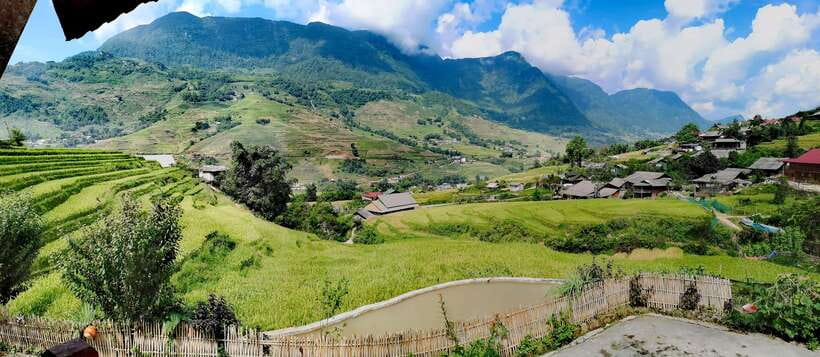
Do not book this expecting a gentle stroll on paved paths. The distance can be as short as 5 kilometers or as long as 11 kilometers, and one route described by a guest reached 12 kilometers. Some visitors found the medium route manageable, while others found the longer trek challenging but worthwhile.
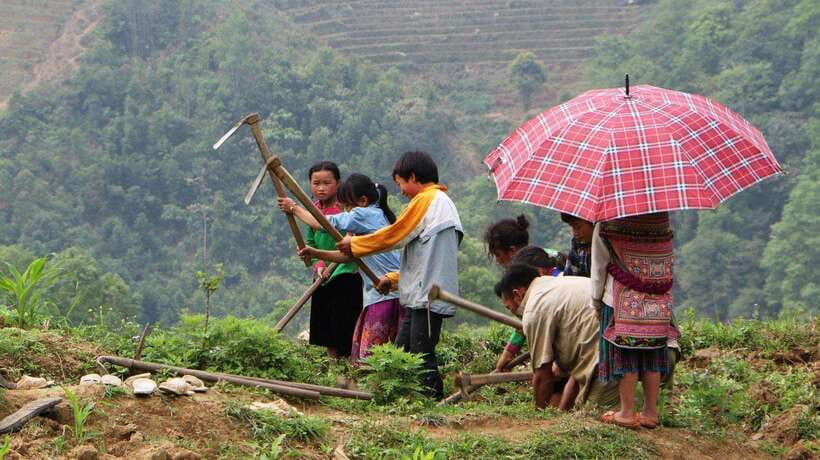
Rain changes the character of the outing quickly. Mud and slippery ground are common concerns, especially in spring or after wet weather. On steep sections, local Hmong women and children may offer a hand. Some may also sell small handmade items later. It is wise to understand this as part of the local visitor economy, not as a reason to treat the interaction as an annoyance.
Wear hiking shoes with a solid grip. Long trousers or clothing that covers your legs can be helpful on rough paths, and rain gear belongs in your day bag even when the morning looks clear. Bring water, sun protection, sunglasses, a hat, a charged phone, and a camera.
The booking notes advise against the activity for people with heart problems, high blood pressure, haemophilia, or a low level of fitness. Wheelchair users cannot take part because of the terrain. The list also includes non-swimmers and people who have dived within the previous 24 hours, although swimming is not part of the described trek. If any of these points applies to you, clarify your suitability before paying.
The guides are a major part of the value
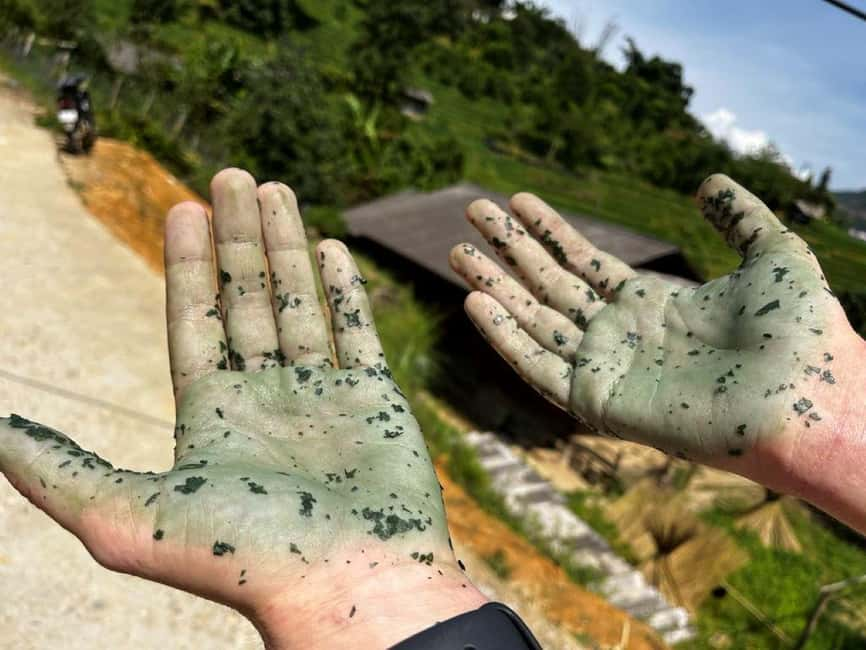
The scenery gets you outside, but the guide determines how much you understand. Chan is repeatedly praised for her English, humor, warmth, and ability to answer questions about Hmong life. She also explains the plants, crops, customs, and work you see along the paths.
Sung offers a similar style, with a reputation for thoughtful route choices and clear explanations. His willingness to meet people at hotels and choose a quieter route is useful if you want a more personal day. Chan’s sister Vu has also guided the walk and shared stories about her childhood in Sapa.
I would ask questions throughout the day. The guides are happy to talk, and the experience improves when you treat the walk as a conversation rather than waiting for a speech at each stop. Ask about farming, village life, local clothing, family traditions, and the difference between Hmong and Dzay communities.
The cultural exchange deserves a respectful approach. You are walking through working villages, not an outdoor museum. Ask before photographing people, listen when the guide explains local customs, and remember that small purchases from local sellers can be meaningful income. You do not need to buy anything, but courtesy matters.
Why the $19 price is strong value
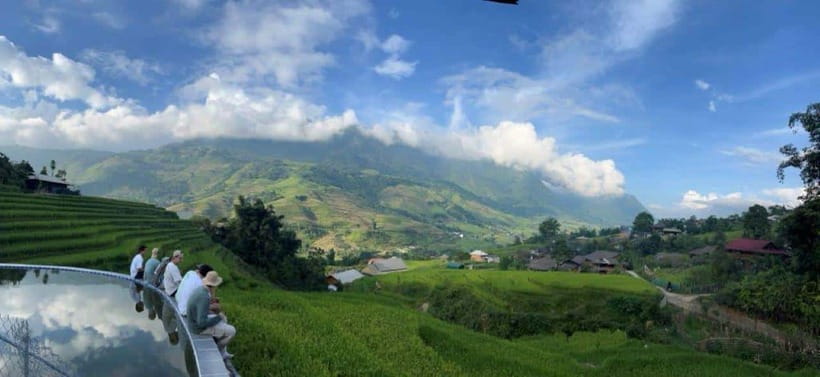
At $19 per person, the tour includes a guide, lunch, and transport back to Sapa. You also get a route through several villages rather than a short viewpoint visit. For a full day of guided walking, that is a low price.
The value is strongest if you want a practical introduction to Sapa and do not want to organize several parts yourself. The guide handles the route, the cultural explanation, the meal stop, and the return ride. You can also leave luggage at the office and use a shower before or after, a useful perk if you are catching a bus or train later.
The price does not remove every cost. Drinks, personal purchases, and suitable hiking gear are your responsibility. You should also be comfortable with the possibility that weather changes the route. The low price is not a promise of polished infrastructure. It pays for local guiding and a full outing, not a private luxury tour.
Timing, pickup, and the ride back to Sapa
The stated start is 9 AM, with meeting at Sapa Stone Church or pickup in Sapa town. The walk finishes in Ta Van around 3 PM, followed by transport back to Sapa.
That schedule works well for people catching an onward bus to Hanoi, since you return with time left in the afternoon. Still, tell the guide about your departure plans when you meet. Mountain routes can slow down in rain, and a photo stop or difficult section may take longer than expected.
The ride back is included, which saves you from arranging transport from Ta Van. It also means you can finish in the valley rather than retracing the entire route on foot. The day is therefore built as a one-way village walk, not a loop.
You can also ask about extended overnight trips with the guide’s family. Those tours are separate from this one-day outing, but they may suit you if you want more time with the local community and a slower look at Sapa life.
Who should book this Sapa trek
I would recommend it to you if you want:
- A local English-speaking guide rather than a large organized group
- A flexible route matched to your hiking ability
- Hmong and Dzay culture explained during the walk
- Rice fields, village paths, and rural scenery
- A substantial half-day trek with lunch and return transport
- A reasonable way to see Sapa without spending most of the day in a vehicle
It is less suitable if you want a flat, easy walk, guaranteed dry paths, or a tightly fixed schedule. The route can be muddy and steep, and the longer options require reasonable fitness. The activity is also not suitable for wheelchair users or people with the listed medical conditions.
Free cancellation is available up to 24 hours before the start, and the booking system allows you to reserve before paying. After the tour is booked and paid, the operator asks you to change to another day rather than request a refund.
Should you book it?
Book this trek if your priority is local contact, flexible hiking, and good value. Chan, Sung, and Vu bring personal knowledge of Hmong life, and the route gives you time to see farms and villages rather than only taking photographs from a roadside viewpoint.
Choose the easier route if you are unsure about your fitness, and be honest about your limits before walking. Pack proper shoes and rain gear. If you can accept mud, uneven trails, and a little uncertainty in the route, this is a strong choice for seeing Sapa on foot and learning from people who live there.
FAQ
Where does the Sapa trek begin?
The meeting point is Sapa Stone Church. Pickup from a hotel in Sapa may also be arranged.
How long does the activity last?
The listed duration is 330 minutes. The day begins at 9 AM and finishes in Ta Van around 3 PM before transport returns you to Sapa.
How far do you walk?
Routes range from about 5 to 11 kilometers, with the guide adjusting the distance and difficulty. One route described during the activity reached 12 kilometers.
Which villages does the trek visit?
The route includes Y Linh Ho, Lao Chai, and Ta Van. Y Linh Ho and Lao Chai are associated with the Hmong community, while Ta Van is home to the Dzay people.
Is lunch included?
Yes. Lunch is included at a local Hmong family restaurant in Lao Chai. Vegetarian food is available.
Who guides the trek?
The experience is led by Chan Giang and may also be guided by Sung or Chan’s sister Vu. The guides speak English and explain local culture and daily life.
What should I bring?
Bring comfortable hiking shoes, sunglasses, a sun hat, a camera, drinks, rain gear, a charged smartphone, and trekking equipment. Hiking shoes with good grip are especially useful in muddy conditions.
Can I leave my luggage somewhere?
Yes. You can leave your luggage at the office and use a shower before or after the trek.
Is the tour suitable for everyone?
No. It is not suitable for wheelchair users, people with heart problems, high blood pressure, haemophilia, low fitness, or lactose intolerance. The booking information also lists non-swimmers and people who have dived within the previous 24 hours among those who should not take part.
New treks around Sa Pa
- Sapa: 2-Day Local Guided Valley Trek with Night Homestay★ 5.0 · 27 reviews
- SAPA: 1-DAY TREKKING TOUR WITH LOCALS, LUNCH & RICE FIELDS★ 4.7 · 18 reviews
- Sapa: 2-Day Local Guided Valley Trek with Night Homestay★ 4.8 · 5 reviews
- Sa Pa: Fansipan Peak One Day Trek with Local Guide★ 5.0 · 7 reviews
- Red Dao Village Trek and Herbal Bath★ 4.7 · 3 reviews
- Private Hoang Lien National Park & Tribal Village Trek★ 4.7 · 30 reviews
- Sapa: Private Muong Hoa Valley and Homestay Trekking 2-Day★ 4.8 · 4 reviews
- From Sapa: Muong Hoa Valley View & Village Trek 1-Day★ 5.0 · 21 reviews
Sapa Trekking Tours, side by side.
Sa Pa: Muong Hoa Valley Trek and Local Ethnic Villages
Read our review →
Sapa: Eco Adventure Terrace Fields and Local Villages Trek
Read our review →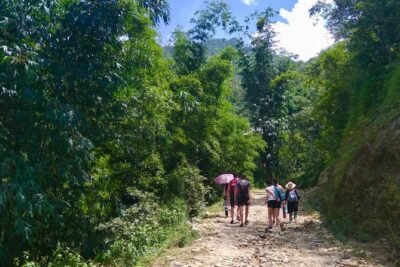
Number one top rated ethical cultural trekking and homestay by ETHOS
Read our review →
From Sapa: 1-Day Guided Trek to Lao Chai & Ta Van with Lunch
Read our review →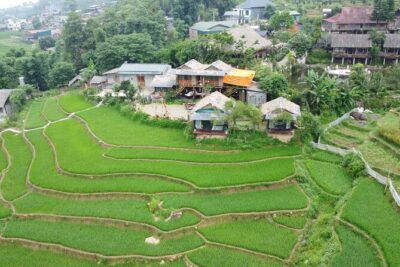
Sapa 1 Day Long Trek: Trek to Hau Thao and Sa Seng Villages
Read our review →
Explore Sapa by TrekkingAdventures, Mountain,Rice fields
Read our review →
EXPLORE SAPA: 2D1N TREKKING & HMONG CULTURE WITH DINH
Read our review →Lists this trek appears in