
Review · POKHARA
Pokhara: 2-Day Ghorephani and Poon Hill Private Trek
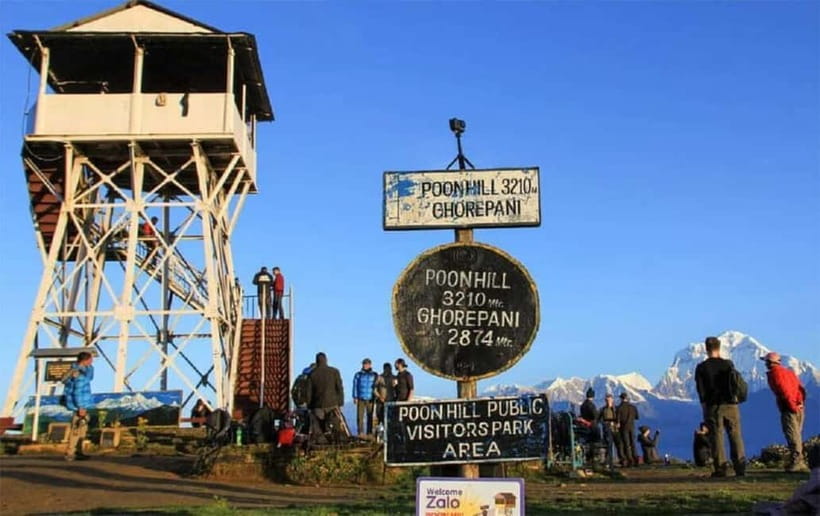
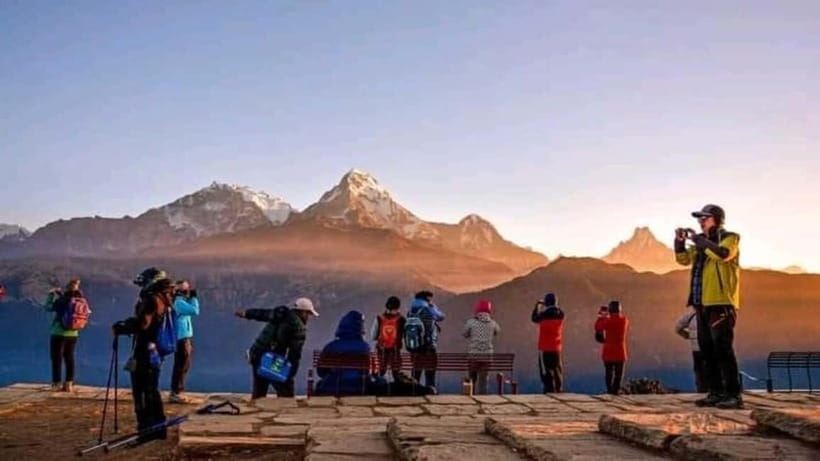
Poon Hill gives you one of Nepal’s finest mountain views on a tight schedule. The prize is an early climb to 3,210-meter Poon Hill, where sunrise lights up Dhaulagiri, Annapurna, Nilgiri, Machhapuchare, Lamjung, and Manaslu. You get a real Himalayan trek without giving up a full week.
I like two things here: the private guide can slow the pace for a first-time hiker, and the route passes through rhododendron forest, terraced fields, and Gurung and Magar villages rather than rushing straight to a viewpoint. The $104 price also covers permits, transport, a lodge night, breakfast, and a guide.
The catch is the schedule. This is not a gentle weekend stroll. The drive can take hours on rough roads, the first day includes a long uphill climb, and landslides can add walking time. If you want a relaxed trek, choose a longer Poon Hill itinerary.
Key points to know before you book
- Poon Hill sunrise is the main event: An hour-long pre-dawn climb leads to broad views of Annapurna and Dhaulagiri.
- The short route is physically direct: You drive high to Ulleri, then walk about four to five hours to Ghorepani on day one.
- Road conditions can change the plan: Landslides have forced buses to stop below Ulleri, adding roughly 500 meters of walking in some cases.
- Guides receive the strongest praise: Rajesh, Sagar, Shiva, Arjun, Dinesh, and others are described as patient, caring, and good at adjusting the pace.
- Expect basic mountain lodging: Rooms can be comfortable, but they may be unheated, and a hot shower may cost extra.
- The return road is part of the adventure: Local buses are useful but very bumpy. A shared jeep is more comfortable when available, so confirm the transport plan.
What this two-day Poon Hill trek is really like
This is the compressed version of the classic Ghorepani and Poon Hill route. Instead of walking from lower villages over several days, you drive up to Ulleri and save your legs for the forest trail and sunrise climb.
That makes the trip useful if you have only two days in Pokhara. It also makes the outing more intense. You are trading leisurely village time for a fast gain in height, a long road journey, and a demanding first afternoon.
The advertised price is $104 per person. For a private group, that is strong value if you use the included guide, permits, accommodation, breakfast, trekking pole, and shared road transport. Food and drinks are extra, as are personal purchases. You should also budget for snacks, water, and possibly a paid warm shower.
The tour has a 4.6 rating from 50 ratings, with especially strong praise for the guides and the sunrise. The main complaints are not about the mountain view. They concern the rough road, basic room heating, and the hard pace created by squeezing the route into two days.
More Poon Hill treks around Pokhara:
- Poon hill Trek 3 days
★ 5.0 · 176 reviews - Pokhara: 4-Day Ghorepani, Poonhill & Ghandruk Mountain Trek
★ 5.0 · 132 reviews - Ghorepani – Poon Hill Trek 3N-4D
★ 5.0 · 125 reviews
Day one: Pokhara to Ulleri, then up to Ghorepani
Your guide collects you from a hotel in the Pokhara Lakeside area. The morning drive goes toward Nayapul and Bhirethati, then continues through Hile and Tikhedhunga before reaching Ulleri.
On paper, the drive takes about three hours. In practice, road conditions and the chosen bus or shared jeep matter. Several hours on a local bus are possible, and the final road section is famously rough. Think of it as useful transport rather than a scenic coach ride. The bumpy trip is part of the cost of reaching the trailhead quickly.
Landslides can change the starting point. In one case, a bus could not reach Ulleri and the walking began about 500 meters lower. That added effort made an already full day tougher, though a patient guide helped the group reach Ghorepani before dark.
Once you begin walking from Ulleri, the trail climbs steadily. Expect plenty of stone steps. One person described the route simply as a place where you should like steps, which is fair advice.
The path passes Bhanthati and enters forest filled with rhododendron, magnolia, oak, pine, and fir trees. In season, rhododendron flowers add color, but the forest is worthwhile even without blooms. You get shade, bird sounds, and a sharp change from the road below.
The climb is not technical. You do not need mountaineering skills, but you do need a reasonable level of fitness. A walking pole is included, and I would use it. It helps with the steady uphill work and the next day’s descent.
Your destination is Ghorepani, a high village associated with the Poon people of the Magar community. It sits below the viewpoint and is more than a place to sleep. The position gives you a first taste of the high mountain air and prepares you for the dawn climb.
The guide matters most on this first day. Rajesh, Sagar, Shiva, and Dinesh are among the guides praised for giving regular breaks, checking the route, and changing plans when trail conditions shift. Dinesh was also noted for checking current conditions with local people and other guides. That sort of local contact is useful when a landslide or road closure changes the plan.
Ghorepani lodging: simple, warm-hearted, and not a hotel
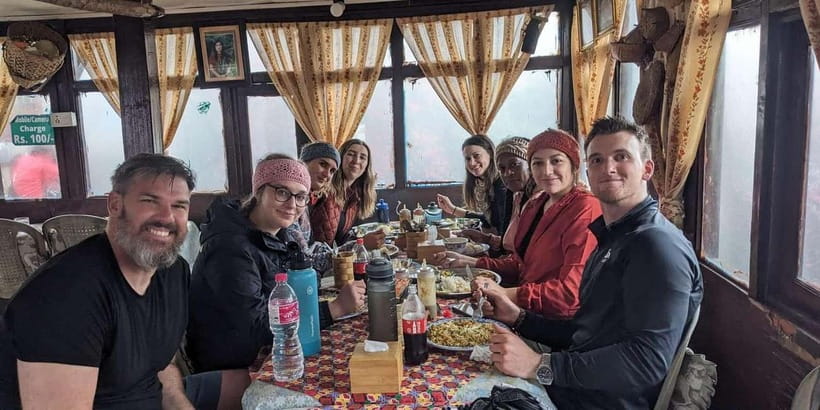
The overnight stay is in a lodge described as comfortable, with an attached bathroom and hot shower listed as part of the accommodation. You should still keep expectations practical. A warm shower may cost extra, rooms are not heated in some lodges, and mountain electricity and hot water can be limited.
One lodge had electric blankets, which made a real difference in cold weather. That is a useful detail, but it should not be treated as a guarantee for every departure. Bring warm clothing for the room, not just the trail.
Breakfast is included. Other meals and drinks are available to buy along the route and at the lodge. Dal bhat is a sensible choice because it is filling and familiar throughout Nepal, though continental food may also be available.
This overnight stop is where the short itinerary earns its place. You get a night in a mountain village rather than returning to Pokhara after a viewpoint visit. You also share the evening setting with local lodge staff and people walking longer routes.
Day two: the Poon Hill sunrise climb
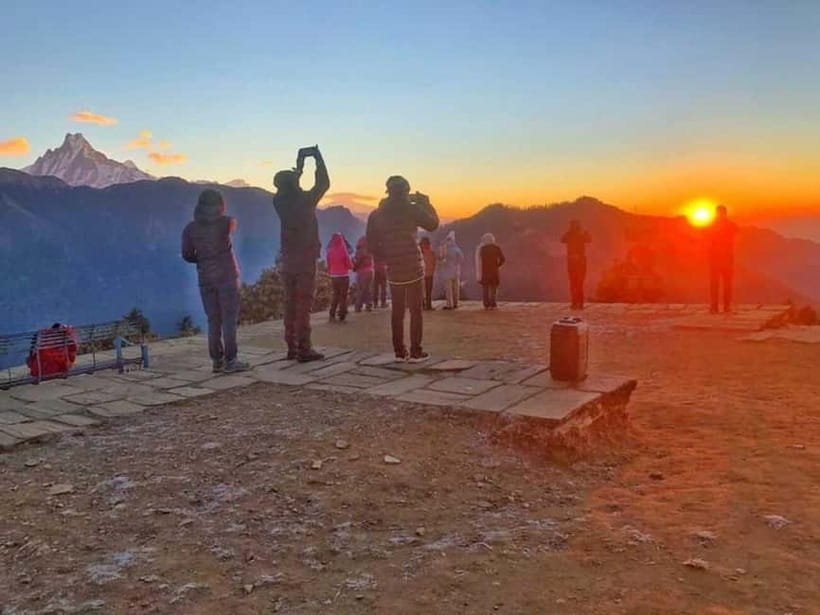
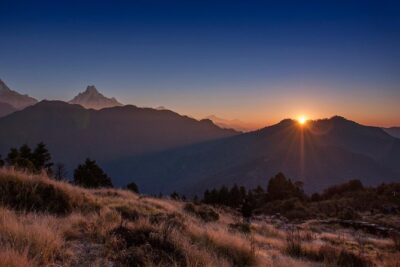
The alarm comes early. From Ghorepani, the climb to Poon Hill takes about an hour, though your time will depend on your pace and how often you stop.
Leave enough margin to reach the viewpoint before sunrise. The path is dark, cold, and uphill, so keep your warm layer and headlamp arrangements in mind. A camera is worth carrying, but do not let it distract you from the first light over the peaks.
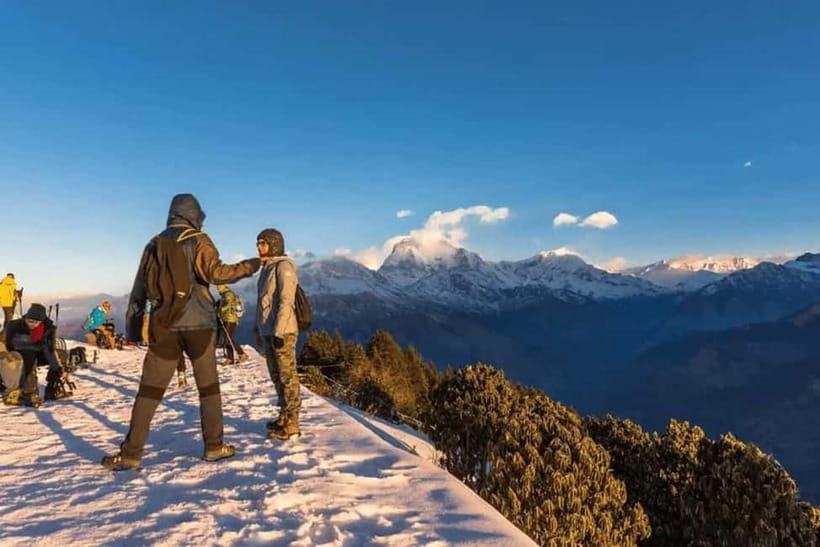
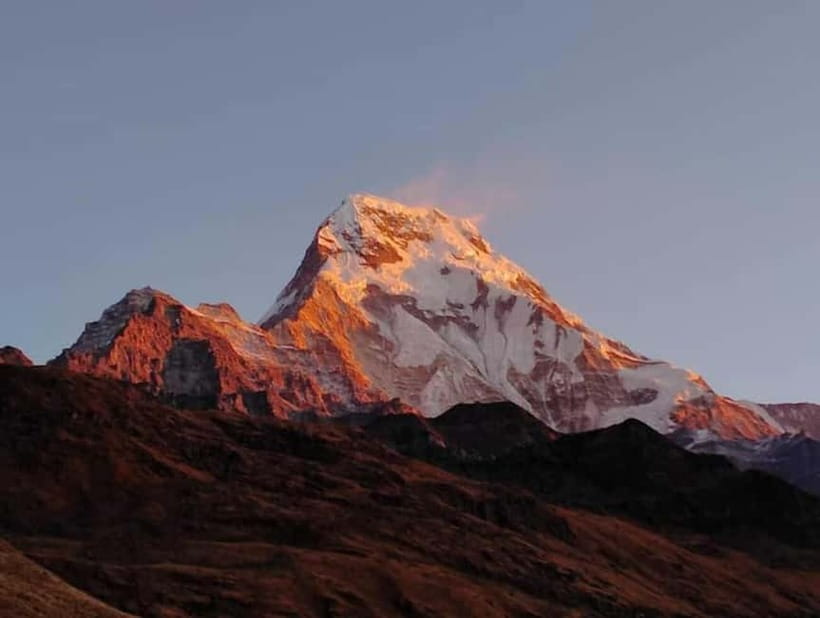
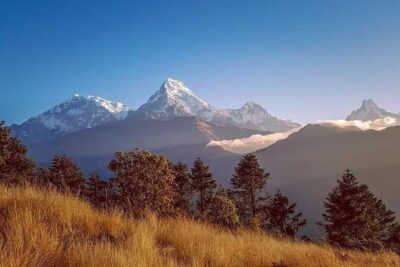
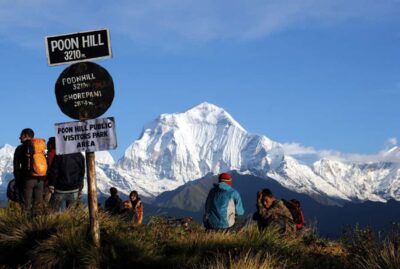
At 3,210 meters, Poon Hill gives you a wide mountain view. Dhaulagiri, Mustang Himal, Nilgiri, Annapurna, Machhapuchare, Lamjung, and Manaslu may all appear when the weather is clear. The sunrise is the reason people accept the early start and the previous day’s climb.
Weather controls the view. Clear autumn and winter mornings offer the best chance, while monsoon conditions can bring fog, rain, and cloud. One July departure reached the top in fog but still found the walk worthwhile. Another September trip had clear Himalayan views. You can choose a favorable season, but no guide can promise a clear sunrise.
After time at the viewpoint, you return to Ghorepani for breakfast. Then you descend through the forest toward Bhanthati and Ulleri. The downhill route is less tiring for your lungs but can be hard on knees, especially after the early start.
At Ulleri, transport takes you back toward Pokhara. The return trip may use a shared jeep or bus, depending on the arrangement. The journey is long, and the final road can be rough enough to feel like a Nepali massage. That is funny once, less so after two days of walking.
More two-day treks around Pokhara
- From Pokhara: 2 Day 1 Night Ulleri,Ghorepani Poon Hill Trek
★ 4.9 · 33 reviews - Pokhara: 2-Day Ullerai, Ghorepani & Poon Hill – Sunrise Trek
★ 5.0 · 21 reviews - 1 N 2 Days easy Dhampus,Australian camp trek from Pokhara
★ 4.9 · 10 reviews - From Pokhara: Australian Camp & Dhampus 1, or 2-Day Trek
★ 5.0 · 5 reviews
The guides are the strongest part of the experience
A private group gives you a major advantage on a short trek. Your guide does not need to hold a fixed pace for a large party. You can stop for water, photos, and rest without feeling that you are delaying a crowd.
Rajesh is repeatedly praised for patience, local information, careful pacing, and good organization. Sagar receives similar praise for encouraging first-time hikers and allowing frequent breaks. Shiva is described as friendly, humorous, and attentive to safety. Arjun Acharya is praised for explaining the route and caring for the group, while Dinesh is noted for adapting routes after checking current conditions.
Guide quality can make or break this itinerary. The schedule leaves little spare time, especially if the vehicle is delayed. A guide who watches your pace and makes sensible route decisions is far more valuable than one who simply walks ahead.
If you are traveling alone, the private format is also reassuring. One solo woman found the guide useful for route finding, pacing, and learning about Nepal along the way. You should still tell the operator your walking level before departure.
Villages, forests, and local culture along the way
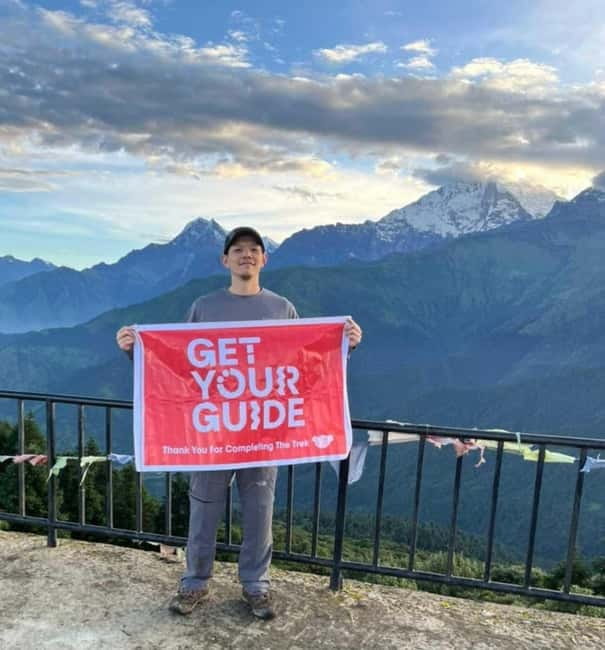
The route’s appeal is not only the final mountain view. You pass terraced fields and villages linked to Gurung and Magar communities. The short schedule means you will not have long cultural visits, but you will see daily life along the road and trail.
Ghorepani is tied to the Poon people of the Magar group. That detail gives the overnight stop a stronger sense of place than a generic mountain lodge. You are not simply sleeping at a high point on a map.
The forest is another highlight. Rhododendron, magnolia, oak, pine, and fir create a changing trail surface and a cooler walking environment. You may find teahouses along the way where you can buy tea, food, and drinks, so you do not need to carry every calorie for two days.
Please carry your rubbish to a bin. The route has teahouses and trash bins, and keeping plastic out of the forest is an easy way to respect the communities that maintain the trail.
Fitness, altitude, and what to pack
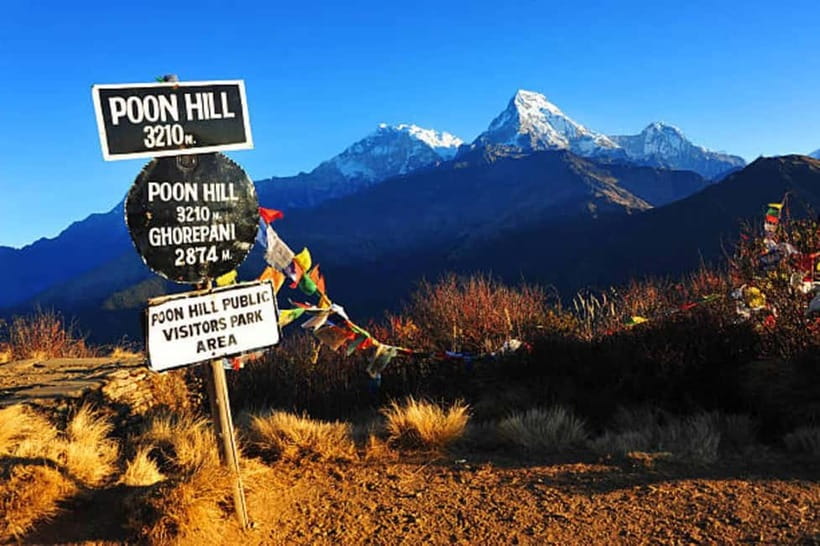
The tour is often described as suitable for a moderately fit beginner, but easy can be misleading. The trail is not technical, yet the steps and uphill distance are real. The height of Ghorepani and Poon Hill can also make the effort feel harder than the distance suggests.
You should be comfortable walking for several hours and climbing steadily. Children under eight, pregnant women, and people with back or heart problems are listed as unsuitable for this activity.
Acclimatize properly before the trek and pay attention to how you feel. The guide carries a normal first aid kit, but you need adequate travel insurance and should discuss any health concern before booking.
Pack light, but include:
- Comfortable shoes with good grip
- Warm clothing for the early start and unheated rooms
- Water and snacks
- A camera
- Personal money in Nepalese rupees
- A rain layer if conditions may be wet
ATMs are scarce along the route, so do not rely on finding one in the hills. Smoking is not allowed on the activity.
Transport is the main compromise
The short trek works because the vehicle takes you high into the hills. It is also the part most likely to test your patience.
The road from Pokhara toward Ulleri passes through farm villages and waterfalls, but the later section is rough and winding. Local buses serve residents as well as trek groups, so they are practical rather than polished. A shared jeep may be more comfortable, though you should confirm exactly what is included before you go.
One account described a five to six-hour transport period to the trekking start, while the formal plan gives a three-hour drive to Ulleri. The difference reflects traffic, road conditions, shared transport, and the point where the vehicle can stop. Ask about the current road situation at your pre-trip briefing.
The operator may meet you the day before to explain the plan. Use that chance to ask about the pickup time, vehicle type, luggage, shower charges, and the likely walking start. A few direct questions can prevent surprises.
Who should book this two-day trek?
I would choose this trip if you have limited time in Pokhara and want a genuine mountain walk rather than a road trip to a viewpoint. It suits first-time hikers who are reasonably fit and happy to start early, climb steps, sleep simply, and accept rough transport.
It also suits solo visitors who want a private guide, couples who prefer their own pace, and people testing out a longer Nepal trek. The two days give you a useful sample of teahouse life, mountain roads, forest trails, local villages, and high viewpoints.
I would not choose it if you want slow mornings, soft beds, or a flexible schedule. I would also avoid it if a long bumpy ride is likely to ruin the trip for you. A longer Poon Hill trek would spread the walking more evenly and give you more time in the villages.
Should you book it?
Book it if the sunrise matters more than comfort and your schedule is tight. At $104, the package offers good value for a private guide, permits, transport, lodge night, breakfast, and basic trekking support.
Before paying, confirm the vehicle, ask if a shared jeep is available, and understand that food, drinks, personal costs, and possibly hot showers are extra. Bring warm layers, use the walking pole, and prepare for steps.
The best reason to book is simple: in two demanding days, you can reach Poon Hill and see some of Nepal’s great peaks without committing to a long trek. The best reason to hesitate is also simple: the road and pace are tough. Know which side of that bargain suits you.
FAQ
How long is the Poon Hill trek?
The activity lasts two days. Day one includes about three hours of driving from Pokhara to Ulleri and four to five hours of walking to Ghorepani. Day two includes the early hike to Poon Hill, the descent to Ulleri, and the return drive to Pokhara.
What mountain views can I see from Poon Hill?
In clear weather, you may see Dhaulagiri, Mustang Himal, Nilgiri, Annapurna, Machhapuchare, Lamjung, and Manaslu. The sunrise view depends on weather conditions.
Is transport from Pokhara included?
Yes. The package includes round-trip transport by shared jeep or bus according to the itinerary. Road conditions can affect the starting point and journey time, so confirm the vehicle details before departure.
What accommodation is provided?
You stay one night in a Ghorepani lodge. The accommodation is described as having an attached bathroom and hot shower, but some showers may cost extra and rooms may not be heated. Breakfast is included.
Are meals included?
Breakfast is included. Other food and drinks are available to buy and are not included in the price.
Who should not take this trek?
The activity is not suitable for children under eight, pregnant women, or people with back or heart problems. You should also have enough fitness for several hours of uphill walking and many steps.
New treks around Pokhara
- Pokhara: 9-Day Annapurna Base Camp Trek with Poon Hill★ 5.0 · 6 reviews
- Pokhara: 5-Day Trek to Annapurna Base Camp and Hot Springs★ 5.0 · 4 reviews
- Pokhara: Majestic Mardi Base Camp Guided Trek with HotSpring★ 5.0 · 6 reviews
- Pokhara: 5-Day Ghorepani and Poon Hill Private Trek★ 5.0 · 4 reviews
- Pokhara: 7-Day Annapurna Base Camp Trek & Hot Spring★ 4.0 · 3 reviews
- Pokhara:4-Day Ghorepani Poon Hill Guided Trek via Ghandruk★ 5.0 · 3 reviews
- Pokhara: 4-Day Private Trek Tour★ 4.9 · 43 reviews
- Pokhara: 4-Day Poon Hill and Ghandruk Guided Trek★ 5.0 · 14 reviews
Poon Hill Treks, side by side.
Pokhara: 4-Day Ghorepani, Poonhill & Ghandruk Mountain Trek
Read our review →
From Pokhara: 3-Day Ghorepani Poon Hill Trek with Guide
Read our review →
Pokhara: 3-Day Ghorephani and Poon Hill Private Trek
Read our review →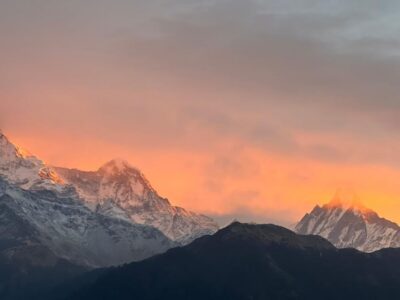
From Pokhara: 2 Day 1 Night Ulleri,Ghorepani Poon Hill Trek
Read our review →Lists this trek appears in