
Review · USA
Orlando Tree Trek Adventure Park
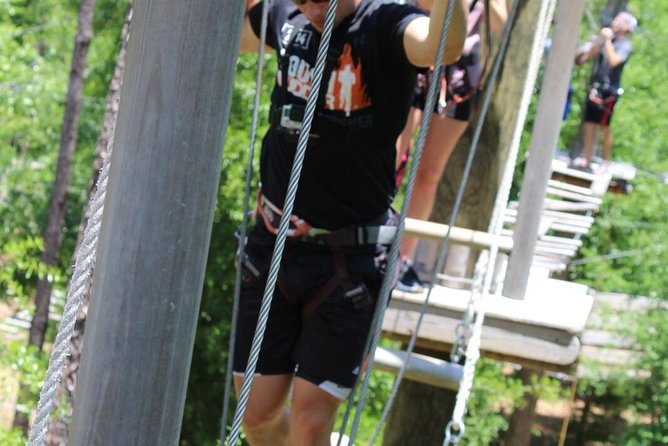
The best part of Orlando Tree Trek is that the zipline is not the whole show. You earn it by working through a forest of 97 aerial obstacles, from cargo nets and swinging logs to bridges, trapeze swings, and skateboards suspended as high as 50 feet above the ground.
I like the gradual rise in difficulty and the useful safety setup. You begin with a required demonstration course, then choose your pace through the challenges. I also like the family appeal: children age 7 and up can take part, while people who prefer to stay on the ground can use the walking trails below. The main catch is simple: this is a physical workout, not a gentle sightseeing ride.
Key points to know before you book
- Six courses climb from 10 to 50 feet: You work through obstacles at changing heights, with harder sections waiting farther along.
- The zipline is a reward, not the main event: Expect climbing, balancing, pulling, and careful use of your safety clips.
- A mandatory demo comes first: You learn the equipment and practice the basic movements before entering the main courses.
- Children need both age and reach: The minimum age is 7, with stated reach requirements for children, youth, and adults.
- Plan for two to three hours: Add time before the start for the waiver, harness fitting, and orientation.
- Heat matters in central Florida: An early departure, water, gloves, and bug spray can make the outing much more comfortable.
What Orlando Tree Trek actually feels like
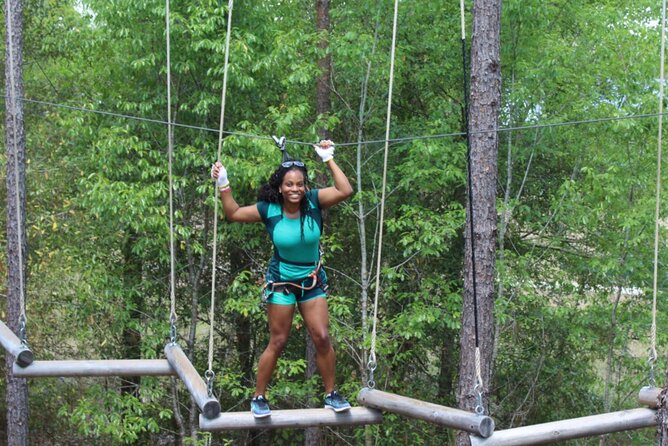
Orlando Tree Trek Adventure Park is near the Walt Disney World Resort area, but the experience has little to do with theme-park rides. You spend your time in a pine forest, attached to purpose-built poles and aerial equipment rather than moving from one passive attraction to another.
The course system includes more than 97 games spread across six courses. Obstacles can include swinging logs, bridges, cargo nets, skateboards, zip lines, and trapeze swings. Some sit about 10 feet above the ground. Others climb to roughly 50 feet, which is high enough to make a simple crossing feel like a real personal challenge.
I would describe the park as a climbing obstacle course with ziplines, not as a zipline tour. That distinction matters. If you mainly want to glide from platform to platform, you may find the balance of the activity surprising. If you enjoy testing your strength, coordination, and nerve, the setup gives you much more to do.
The pace is mostly your own. A guide gets you started and remains available for instruction and safety help, but you are not led step by step through every obstacle. This self-guided format gives you room to stop, gather yourself, and try a difficult section again. It can also create pauses if people in your group move at different speeds.
More treks around the world:
- Mount Etna: Trek to 3000m with cable car and 4×4
★ 4.6 · 3,823 reviews - Bali: Mount Batur Sunrise Trek With Guide and Breakfast
★ 4.8 · 3,461 reviews - From Chania: Full-Day Samaria Gorge Trek Excursion & Guide
★ 4.6 · 3,191 reviews
Arrival, waivers, and the first safety lesson
Your activity starts at Orlando Tree Trek Adventure Park Zip Line, at 7625 Sinclair Road in Kissimmee. The exact departure time matters, since you must arrive for your scheduled slot. Start times begin at 8:30 in the morning and usually run every 30 minutes through the day, though seasonal hours can change.
At the park, you complete a required waiver, receive your climbing equipment, and get fitted with a harness. You then take part in the mandatory demo course. This is not a formality to rush through. It shows you how to use the safety clips and lets you practice the basic system while your feet are still close to the ground.
Pay attention here, especially if you are nervous about heights. Once you are in the trees, the equipment becomes second nature only if you understand it first. Guides have been praised for making the instructions clear and for helping people feel at ease. Ryan has been described as thorough and funny, while Josiah has been noted for clear, well-spoken instruction. Nick has also been singled out for making first-time climbers comfortable asking questions.
After the demonstration, staff direct you toward the first course. From that point, the activity becomes more independent. You use the equipment you learned during orientation and move through the course at your own pace.
Six courses, rising difficulty, and a real workout
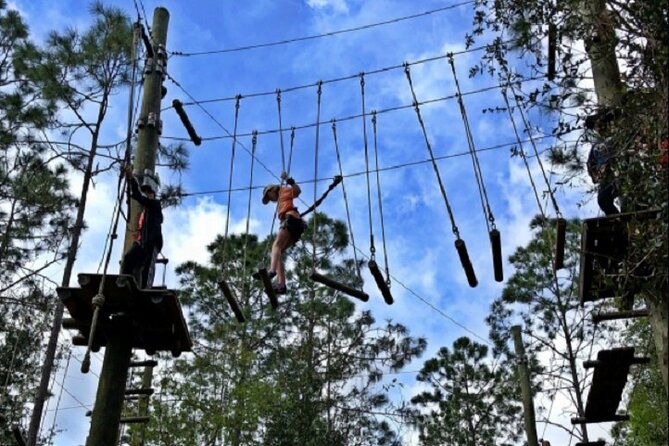
The courses are arranged to build in difficulty. That progression is one of the park’s strongest features because it gives you time to learn before the more demanding sections arrive. A younger climber can gain confidence on the easier obstacles, while a fit adult can keep pushing toward the harder levels.
Do not expect every course to feel equally difficult. Some people find the adult courses a solid challenge, especially the red course. Others who have tried several ropes parks may find parts of Orlando Tree Trek less demanding than expected. Your height, reach, balance, and upper-body strength will shape the experience as much as your age.
The obstacles ask for different kinds of effort:
- Cargo nets and climbing sections test your arms and legs.
- Swinging logs and bridges demand balance and controlled movement.
- Trapeze swings and suspended elements can feel intimidating if you dislike heights.
- Skateboard-style obstacles require timing and steady footing.
- Ziplines provide a faster finish after the slower, more deliberate work.
Your arms may tire before you expect. A 12-year-old who is tall enough to reach the safety lines may still find the overhead sections hard on the shoulders. Adults who are not used to climbing can also feel the strain. I would not schedule this as a casual stop between several other active plans.
The park describes the full experience as taking two to three hours. Your actual time can change with your pace, the number of people in your group, and how long you spend on each course. A small maximum group size of 15 helps keep the activity manageable, though the self-guided format means your group may not remain perfectly together.
The zipline finish is worth working for
The long zipline is one of the most anticipated parts of the course. It comes after the climbing and obstacle work, which makes it feel like a reward rather than a quick ride that begins and ends the activity.
Access to the final zipline may involve a short wait while a guide handles the release and safety process. That pause is a good time to catch your breath and watch other climbers finish. Do not assume you can simply step onto the line whenever you are ready. Follow the staff instructions and wait until the course is cleared.
Several course levels may lead to a zipline or include shorter zipline elements, but the long final run gets the most attention. Some people wish they could ride it more than once. Since the park experience centers on completing the courses, plan around the full challenge rather than expecting repeated zipline rides.
Same mountains, a different route up:
- Mount Etna: Summit Crater Trek with Cable Car
★ 4.8 · 1,875 reviews - La Palma: Tajogaite Volcano Guided Trek
★ 4.8 · 1,810 reviews - Etna: summit craters trekking with volcano guide 3350mt
★ 4.7 · 1,712 reviews - From Rethymno: Samaria Gorge Full-Day Trek, Pickup & Guide
★ 4.5 · 1,610 reviews
How hard is it for a family?
This can be a memorable family activity, especially for families with teenagers or young adults who want something active to do together. The design lets people encourage one another without requiring everyone to move at exactly the same speed. Watching a child work out how to cross a difficult obstacle can be as rewarding as completing it yourself.
The minimum age is 7, but age alone does not determine readiness. The listed reach requirements are:
- Children: 4 feet 7 inches
- Youth: 5 feet 9 inches
- Adults and seniors: 5 feet 11 inches
The wording of these requirements makes it important to check before booking, particularly if a child is close to the limit. You also need a waist measurement of 44 inches or smaller to participate.
A parent or companion who does not want to climb can follow along the walking trails below. That is a useful option for mixed groups, though the non-climber will be watching from the ground rather than sharing the activity itself.
Some families finish four adult courses and want to return. Others stop after two because the physical work becomes enough. Both approaches are reasonable. You do not need to treat the final course as a test of worth. Set a pace that lets you enjoy the time together.
Heat, water, gloves, and what to wear
Central Florida heat can change the experience quickly. An early morning start is a smart choice, especially during warmer months. You will be working with your arms and legs for much of the session, and shade in a pine forest does not remove the heat or humidity.
Water is not included. Bring what you need or plan to purchase water at the park if available. A water pass has been considered worthwhile by people who completed the courses, and the practical lesson is clear: do not wait until the end to drink.
Gloves are also not included. You can buy them separately, and they may make the ropes and equipment more comfortable on your hands. If you have a pair suitable for ropes-course use, check the park’s current rules before bringing them.
Wear closed-toe athletic shoes. The park does not allow open-toed shoes, loose clothing, or jewelry. Tie back long hair, and avoid anything that can snag on the equipment. Bug spray is another sensible addition for a forest activity, particularly if you start early or spend time on the lower walking paths.
The physical demands are serious enough that you should arrive fed and hydrated. One useful approach is to eat a proper meal before coming, while avoiding anything that leaves you uncomfortable in a harness. You will be bending, pulling, reaching, and climbing repeatedly.
Safety and help on the course
Safety begins with the demonstration course and continues with the staff on the ground. The harness and clipping system are meant to keep you connected while you move between platforms and obstacles, but the equipment only helps if you use it correctly.
The strongest praise for the staff centers on their calm instruction and willingness to help. That matters when someone freezes on a high platform or cannot work out how to approach a swinging obstacle. Guides are available to explain the equipment and assist when needed, even though the main course is self-led.
You should still take responsibility for your own pace. Do not rush because another person is waiting behind you, and do not let a faster member of your group pressure a slower one. A careful, steady approach is safer and usually more enjoyable.
The course can also test your nerves. People afraid of heights have completed the full experience, but that does not mean you should force yourself into a section that feels beyond your comfort level. The staff can help you understand the equipment and next move, but the physical and emotional decision remains yours.
Who gets the best value from this experience?
No price was provided here, so I cannot judge the exact cost against other Orlando attractions. I can still assess the value of the time. You receive roughly two to three hours of active use, equipment, and a guided safety orientation, rather than a short ride followed by a long wait.
The value is strongest if you want:
- A family activity away from the usual theme-park routine
- A physical challenge with several difficulty levels
- A team activity for birthdays or group celebrations
- Time outdoors near the Disney resort area
- A course where you can stop after a few levels or continue farther
The value is weaker if you want a relaxed outing, a simple scenic zipline, or an activity that requires very little strength. The course may also disappoint experienced ropes-course climbers looking for extreme difficulty. Some adult climbers find the higher levels challenging, while others wish the obstacles pushed them harder.
The high overall rating, 4.9 from 845 ratings, and 98 percent recommendation figure suggest that the park performs well for its main audience: families and active groups looking for a fun test rather than a specialist climbing competition. I would treat those numbers as a useful signal, not a guarantee that every course will be open or that every participant will enjoy the physical effort.
Booking, timing, and weather rules
Reservations are strongly recommended, and you should verify the current departure times because the schedule changes by season. Since start times are assigned, arriving late is a poor gamble. Allow time to reach the Kissimmee location, complete the waiver, and get fitted before the scheduled start.
The activity requires good weather. If poor weather cancels it, you can receive a different date or a full refund. You can also cancel for a full refund if you do so at least 24 hours before the start time. Cancellations or changes made within 24 hours are not refunded or accepted.
The experience ends back at the same meeting point. It is near public transportation, but the supplied information does not specify routes or journey times, so check your own transport plan carefully.
Should you book Orlando Tree Trek?
Book it if you want an active, family-friendly challenge and like the idea of earning your zipline through climbing, balance, and a bit of nerve. It is especially good for birthday outings, groups of teenagers, and families who want to work together without being tied to a guide’s every move.
Think twice if you dislike heights, have limited physical fitness, or want a short, easy zipline ride. Check the reach and waist requirements before paying, pack closed-toe shoes, plan for water and heat, and choose an early start when possible. For the right group, Orlando Tree Trek offers a memorable break from Orlando’s rides and shows, with enough difficulty to leave you pleasantly tired.
FAQ
How long does Orlando Tree Trek Adventure Park take?
The complete experience takes about two to three hours. This includes the safety orientation and time on the aerial courses.
What is the minimum age?
The minimum age is 7 years old. Children must also meet the listed height and reach requirements.
How high are the courses?
The obstacles range from about 10 feet to 50 feet above the ground, or approximately 3 to 15 meters.
How many courses are there?
The park has six aerial courses with more than 97 individual games and obstacles.
Is the activity guided?
You receive a safety demonstration and orientation before starting. The main courses are largely self-guided, with staff available to provide help and instruction.
What should I wear?
Wear closed-toe shoes and secure clothing. Loose clothing and jewelry are not allowed, and long hair must be tied back.
Are gloves and drinks included?
No. Climbing equipment and the demo course are included, but gloves and drinks are not.
Can I cancel for a refund?
You can cancel at least 24 hours before the start time for a full refund. Cancellations or changes made within 24 hours are not refunded or accepted. If poor weather cancels the activity, you can receive another date or a full refund.
New treks around the world
- Sapa: 2-Day Local Guided Valley Trek with Night Homestay★ 5.0 · 27 reviews
- SAPA: 1-DAY TREKKING TOUR WITH LOCALS, LUNCH & RICE FIELDS★ 4.7 · 18 reviews
- Sapa: 2-Day Local Guided Valley Trek with Night Homestay★ 4.8 · 5 reviews
- Santa Marta: Trekking in Minca Complete Waterfall Circuit★ 4.4 · 28 reviews
- Santiago: Longueira, Pico de Antónia & Monte Tchota Trek★ 4.8 · 10 reviews
- Santiago: Trek from Serra Malagueta to Rabelados Community★ 5.0 · 16 reviews
- Santiago Island: Serra Malagueta & Tarrafal Beach Trek Tour★ 4.8 · 61 reviews
- Santa Marta: Multi-Day Trek to The Lost City★ 4.8 · 40 reviews
USA Trekking Tours, side by side.
Las Vegas: Red Rock Canyon in an Adventure Tour Trekker
Read our review →
Death Valley Explorer Tour by Tour Trekker from Las Vegas
Read our review →
Las Vegas: Valley of Fire Tour in Luxury Tour Trekker
Read our review →
From Anchorage: Chugach State Park Guided Alpine Trek
Read our review →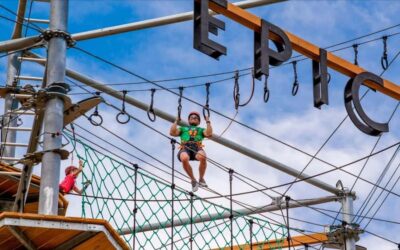
Lists this trek appears in