
Review · LUANG NAMTHA
Nam Ha NPA 3 Day Wildlife Jungle Camp and Village Homestay Trek
The best part of this three-day trek is that it treats the forest as more than scenery. You learn how local people use plants, find food, prepare meals, and move through the jungle, then spend time in a Khmu village where daily life is part of the experience. A night in a banana-leaf jungle camp gives the trip its rough-edged charm.
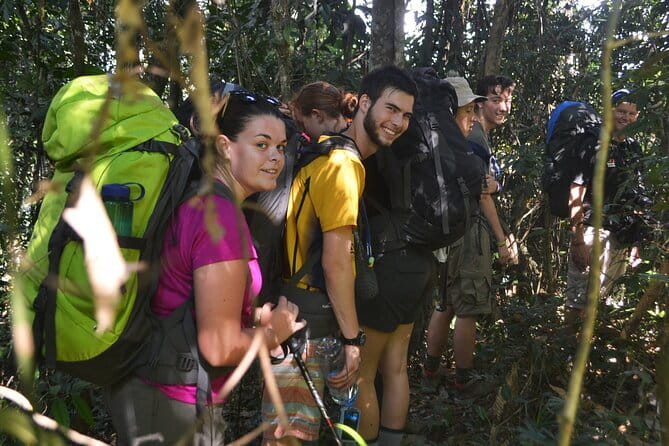
I like the close contact with local guides, especially guides such as Nom, Xiong, Sing, and Sai, who bring practical forest skills and personal knowledge of village life. I also like the small group limit of eight, which makes it easier to ask questions and follow the guide through thick forest rather than shuffle along in a large crowd.
The tradeoff is simple: this is not a gentle nature walk. You need moderate fitness for uphill sections, muddy or uneven ground, and a river crossing. The schedule also leaves room for food preparation and breaks, so you should book it for cultural contact and practical skills, not for nonstop hiking.
Key points to know before you book
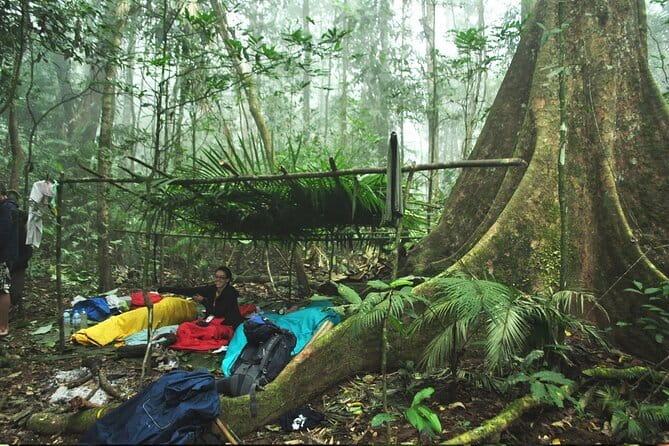
- A real jungle camp: You stay in a traditional hunter-style camp made with local forest materials, including banana leaves.
- Two kinds of lodging: The trip combines a jungle camp with a village homestay, giving you both forest life and community life.
- Guides make the difference: Nom, Xiong, Sing, and Sai are among the guides associated with this trek, with English support available.
- Hands-on forest skills: You may fish, hunt frogs, identify useful plants, pound rice, shoot a crossbow, and help prepare meals.
- A small group format: The maximum group size is eight people, useful on narrow forest paths and during village activities.
- Good value at $149: Transport, meals, water, lodging, park fees, guides, and village activities are included.
Starting in Luang Namtha with a market stop
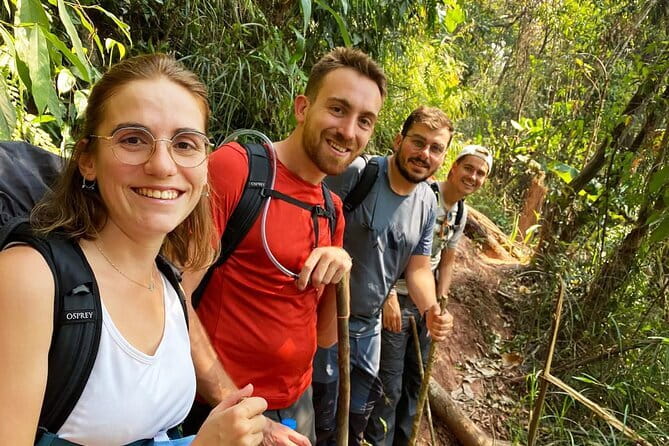
The trek begins at 9:00 a.m. at Phou Iu Travel & Ecotourism in Phonexay Village, Luang Namtha. From there, you travel by tuk-tuk and stop at a local market to gather supplies before heading toward Nam Ha village.
That market stop matters because it connects the trip to the food you will later eat. This is not a packaged hiking day where every meal appears from a cooler. You help carry the rhythm of the journey from market to forest, then see how ingredients and jungle resources become lunch and dinner.
You return to the same meeting point at the end of the third day. Pickup is offered, but the stated meeting point is the tour office, so confirm the pickup arrangement when you book if you are staying somewhere else in Luang Namtha.
More Homestay and Village Treks in Laos:
- The Wild Explorer – 3 days forest trek with homestay and camping
★ 4.5 · 22 reviews - Nalan Trail Kmu Ethnic Experience – 2days forest trek with homestay.
★ 5.0 · 21 reviews - Hunter Trails, 3 days difficult trekking with Camping & Homestay
★ 5.0 · 15 reviews
Day one: from Nam Ha village into the forest
The first trek begins near Nam Ha village with a local guide. The route leads into the forest, with time to stop for a picnic lunch and learn about plants, food, and forest use along the way.
The attraction here is not a famous viewpoint or a list of sights. It is the steady change in how you see the jungle. A plant that first looks ordinary may have a use in cooking or traditional medicine. A forest path becomes a lesson in how local people travel, gather, and make a living.
The guides are central to this part of the day. Nom has been described as having extensive trekking experience, while Xiong is known for leading groups through steep hills, thick jungle, and down toward the river. The provider assigns the guide, so you may not receive one particular person, but the experience depends heavily on the guide’s ability to explain what you are seeing.
Expect about four hours of activity on the first day, including walking, stops, and meal preparation. The route can include challenging uphill sections. You should wear sturdy walking shoes, bring personal medicine, and carry a reusable water bottle. Personal water bottles, snacks, fruit, and medicine are not included.
The banana-leaf camp and cooking with forest resources
The first night is the part that gives this trek its character. You stay in a jungle camp, described as a traditional hunter’s camp, with banana-leaf construction and food prepared from available forest resources.
The experience includes learning to fish and hunt frogs, as well as helping cook. These activities are presented as cultural and practical lessons, not as a staged performance. You see how food gathering and cooking fit into forest life, and you take part rather than simply watching a guide prepare everything.
The camp will appeal to you if you enjoy simple accommodation and hands-on travel. It may not suit you if you need hotel comforts, private facilities, or a predictable indoor setting. The provided information does not specify bedding or bathroom arrangements, so ask the operator before departure if those details matter to you.
Dinner is included, as are breakfast and lunch during the relevant days. Food and water are covered throughout the trek, but you should still bring a personal bottle and any extra snacks you want.
Day two: river crossing, Nalan village, and Khmu culture
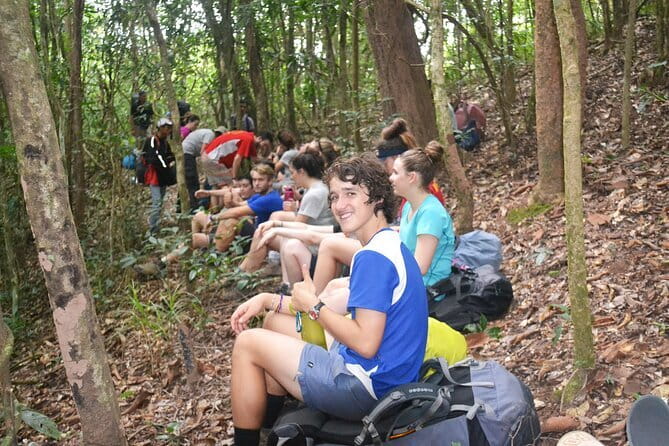
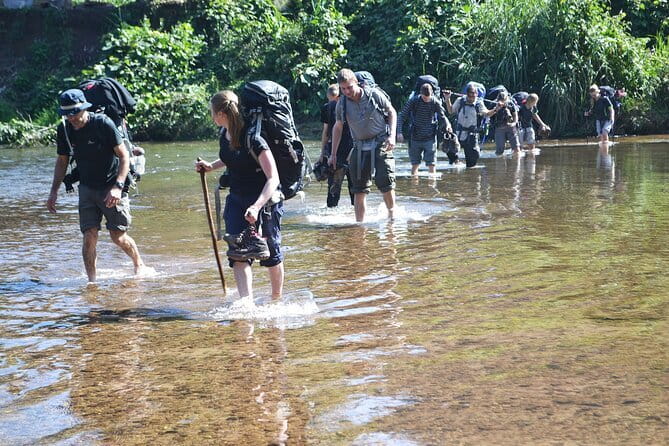
After breakfast, you choose between route options. One listed option takes about three hours and includes crossing the Nam Ha River, walking to Nalan village, and eating a traditional lunch there.
The river crossing adds a physical element to the morning, while Nalan village shifts the focus from forest skills to community life. You learn about Khmu customs and the way people live in a rural setting connected to the surrounding forest.
Another strength of the route is its pace. It is not described as a full day of hard walking. There are breaks and periods for preparing food, which makes the trek more manageable for people who want substantial hiking without spending every hour on the trail.
Still, do not confuse a relaxed pace with an easy route. The trek includes hills, dense forest, and a river crossing. Moderate fitness is required, and the condition of the path can affect how tiring the day feels.
More Jungle Treks in Laos:
- Chiang Mai: 2-Day Jungle Trek with Elephant Farm & Raft Ride
★ 4.7 · 881 reviews - 3-Day Ethical Orangutan Jungle Trek | Bukit Lawang, Sumatra
★ 5.0 · 401 reviews - Monkey Business 3 days – 2 nights Jungle trekking (including rafting)
★ 5.0 · 294 reviews - 2 Days and 1 Night Ethical Jungle Trek
★ 5.0 · 229 reviews
A village homestay that adds context
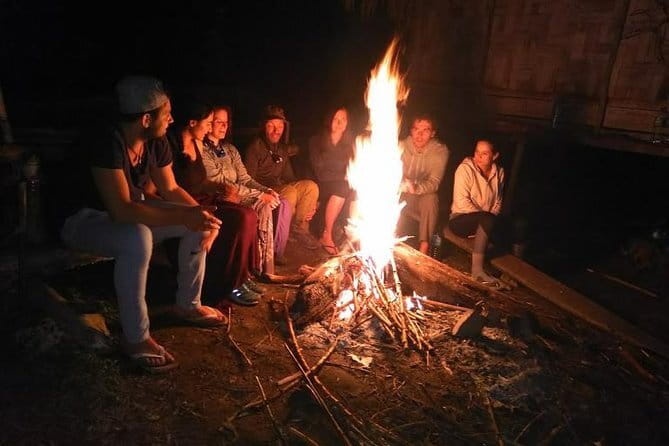
The village homestay gives you a different kind of overnight experience from the jungle camp. Instead of sleeping in a forest shelter, you spend time in a traditional village setting and have a closer look at Khmu customs and household life.
The value is in the contrast. At the camp, you focus on survival skills, plants, food gathering, and forest shelter. At the homestay, you see how those skills connect with a settled community. The combination makes the three days feel like one story rather than two unrelated excursions.
The guides are useful cultural interpreters here. Nom has been praised for clear English and for explaining local plants used in food and medicine. Other guide names connected with the trek include Sing and Sai. English ability may vary by guide, but the tour includes an English-speaking or local guide.
Because this is a community-based trip, you should approach the homestay with patience. Village activities may not run with the exact timing of a city tour. That slower pace is part of the point, but it can frustrate you if you expect a tightly scheduled program.
Day three: coffee, rice pounding, and the return route
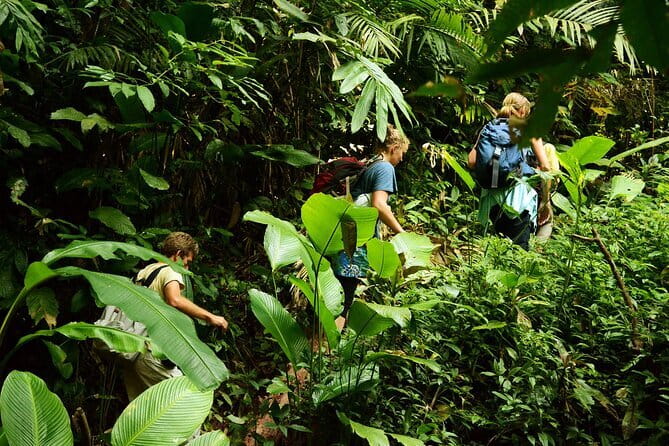
The final morning begins with time in the village. You can try Lao coffee or local tea, practice crossbow shooting, and pound rice. These are small activities, but they provide a direct way to understand everyday tools and food traditions.
The crossbow activity gives the morning a playful edge, while rice pounding shows the work behind a food that appears at nearly every Southeast Asian table. These details are more memorable than a quick photo stop because you use your hands and take part.
After breakfast, you again choose between route options. One listed choice is a three to four hour uphill forest hike before continuing back toward Luang Namtha. The exact route you take may depend on the group, guide, and conditions, so ask about the day’s options at the start of the trek.
By the end, you return to the original meeting point. The full experience lasts about three days, with roughly four hours of scheduled activity shown for each day. That does not mean four total hours from breakfast to dinner. Walking, breaks, meals, village time, and camp tasks fill out the day.
What the $149 price covers
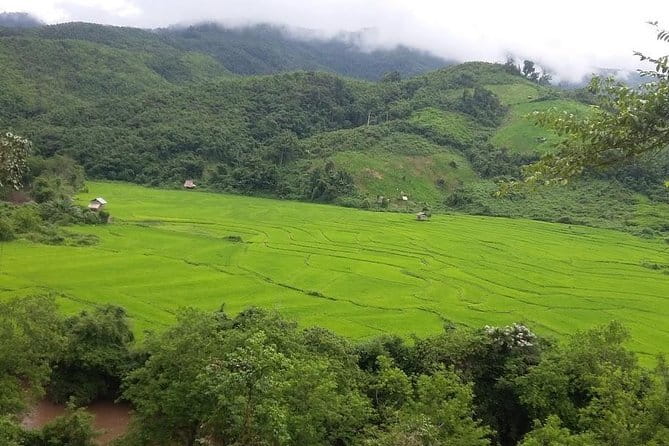
At $149 per person, this trek is priced well for what is included. You receive transportation, a local or English-speaking guide, two nights of accommodation in the camp and homestay, food, water, village activities, the Nam Ha NPA entry fee, taxes, and community distribution.
The meal package includes two breakfasts, three lunches, and two dinners. That is a major part of the value because food and transport can add up quickly on a rural multi-day trip.
The small group limit also helps justify the price. A maximum of eight people allows the guide to explain plants, manage a river crossing, and include people in cooking and village activities without the feel of a large group procession.
You still need to budget for personal snacks, fruit, a water bottle, medicine, and suitable footwear. Sandals or flip-flops are specifically listed as items to bring, but I would treat them as camp or village footwear rather than your main hiking shoes.
How hard is the trek?
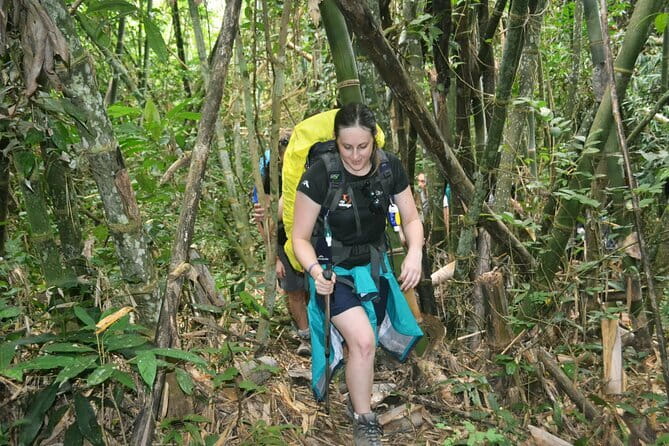
The official fitness level is moderate. That is the right warning for most people considering this trip. The route includes uphill walking, thick jungle, a river crossing, and sections described as challenging.
You do not need to be an expert mountaineer, but you should be comfortable walking for several hours on uneven ground. If you have little hiking experience, the breaks and food preparation may help, yet you should not expect the guide to remove every demanding section.
The best preparation is basic:
- Wear shoes suited to forest paths and hills.
- Bring personal medicine and a refillable water bottle.
- Pack snacks or fruit if you need food between included meals.
- Bring sandals or flip-flops for the camp and homestay.
- Keep your daypack light enough for walking and river crossings.
The operator accepts no more than eight people, and the tour is generally booked well ahead, with an average booking lead time of about 24 days. That suggests you should not leave it until the last minute during a busy visit to Luang Namtha.
The role of the local guides
This trip rises or falls on its guides. The strongest part of the experience is not simply walking through Nam Ha NPA. It is learning what the forest means to people who know it well.
Nom is noted for strong English, kindness, and explanations of edible and medicinal plants. Xiong is described as having completed more than 400 treks and as being comfortable guiding groups up hills, through thick forest, and toward the river. Deang has been involved in pre-trek preparation, including meeting participants before departure to discuss the route.
You may also encounter Sing or Sai, both connected with the local guiding team. The exact guide lineup is not guaranteed, so book this knowing that the provider uses a local team rather than selling access to one specific guide.
The community focus is another reason to choose this trip. Part of the price goes toward community distribution, and the program links the national protected area with village activities. That does not make every part of the trek automatically perfect, but it gives the experience a clearer local purpose than a simple forest walk.
Who should book this experience?
I would choose this trek if you want three things at once: physical activity, local food and customs, and time with guides who can explain the forest. It suits independent-minded visitors who enjoy basic accommodation and do not need every hour planned like a resort excursion.
It is also a good fit if you want a small group. The eight-person maximum keeps the scale manageable and should make it easier to talk with your guide and take part in camp or village tasks.
I would think twice if your main goal is wildlife photography. The tour is called a wildlife trek, but no particular animal sightings are promised. The emphasis is on forest knowledge, plants, food gathering, and local life.
I would also reconsider if you dislike uphill hiking, simple lodging, or uncertain daily pacing. The experience is rewarding because it is close to ordinary forest and village life, but that means it is less polished than a conventional sightseeing tour.
Should you book the Nam Ha NPA trek?
Book it if you want a grounded, active introduction to northern Laos. The mix of jungle camp, village homestay, Khmu customs, forest plants, cooking, fishing, and practical activities offers far more than a standard day hike.
At $149, the package is strong value because it covers three days of guiding, transport, meals, accommodation, park fees, and village activities. Go in prepared for hills, basic conditions, and a flexible pace, and you are likely to get the kind of experience that stays with you long after the trek ends.
If you need comfort, guaranteed wildlife sightings, or a light walking schedule, choose something shorter. If you want to understand how people use and live with the Nam Ha forest, this is the better choice.
FAQ
How long is the Nam Ha NPA trek?
The experience lasts approximately three days and begins at 9:00 a.m. on the first day.
Where does the trek start and finish?
It starts at Phou Iu Travel & Ecotourism in Phonexay Village, Luang Namtha. The activity ends back at the same meeting point.
Is transportation included?
Yes. Transportation is included, and the first day begins with tuk-tuk travel from the meeting point. Pickup is also offered.
How large is the group?
The tour has a maximum of eight travelers.
What accommodation is included?
Accommodation includes a jungle camp and a village homestay. The jungle camp uses traditional hunter-style methods and banana-leaf shelter.
What meals are included?
The package includes two breakfasts, three lunches, and two dinners. Food and water are included.
Do I need to be fit for this trek?
You should have a moderate level of physical fitness. The route includes uphill hiking, forest paths, and a river crossing.
What should I bring?
Bring snacks, fruit, a personal water bottle, personal medicine, and sandals or flip-flops. Sturdy walking shoes are also sensible for the forest sections.
Can I cancel the booking?
You can cancel up to 24 hours before the experience starts for a full refund. Cancellations or changes made less than 24 hours before the start time are not accepted for a refund.
More three-day treks around Laos
- Luang Prabang: Nong Khiaw 3-Day Trekking & camping, Homstay
★ 5.0 · 9 reviews - Luang Prabang: 3-Day Cultural Remote Trek With Homestay
★ 4.9 · 9 reviews - Sapa 3 Days 2 Nights Trekking Tour (1 Night In Ta Van Village, 1 Night In Hotel)
★ 5.0 · 699 reviews - 3-Day Trekking Adventure of Sapa from Hanoi – Stay Ta Van Village
★ 5.0 · 611 reviews
More wildlife trips around Laos
- Khao Sok: Private Waterfalls and Wildlife Half-Day Trek
★ 4.5 · 337 reviews - Ninh Binh: Cuc Phuong Jungle Trek, Wildlife & Ancient Caves
★ 4.0 · 4 reviews
New treks around Laos
- Nong Khiaw: 2-Day Trekking,Hmong village,Home Stay&Kayaking★ 4.9 · 17 reviews
- Luang Prabang: Nong Khiaw 3-Day Trekking & camping, Homstay★ 5.0 · 9 reviews
- Luang Prabang Trekking LongLao to Kuang si falls full day★ 4.7 · 7 reviews
- Luang Prabang: Mountain Trek & Local Villages Overnight Tour★ 5.0 · 7 reviews
- Luang Prabang: 3-Day Cultural Remote Trek With Homestay★ 4.9 · 9 reviews
- Luang Prabang: Full Day Trek to Kuang Si Waterfall & Village★ 4.6 · 20 reviews
- Luang Prabang Thin Pha Trail & Tad Sae Falls Trek★ 4.6 · 17 reviews
- Hunter Trails, 3 days difficult trekking with Camping & Homestay★ 5.0 · 15 reviews
Homestay and Village Treks, side by side.
From Hanoi: 2-Day Sapa Trekking Trip with Homestay & Meals
Read our review →
Number one top rated ethical cultural trekking and homestay by ETHOS
Read our review →
2-Day Sa Pa Ethnic Homestay Tour & Trek with Limousine Bus
Read our review →
Hanoi – Sapa 3 Day 2 Night Trekking With Hotel & Homestay
Read our review →
Sa Pa: 2-Day Trekking Trip with Ethnic Minority Homestay
Read our review →
Sapa : 2-Day Trek & Heartwarming Homestay with an Ethnic Family
Read our review →
3 Day Trek in the Atlas Mountains and Berber Villages from Marrakech
Read our review →Lists this trek appears in