
Review · INDONESIA
Banyuwangi: Ijen Crater Bluefire and Sunrise Guided Trek
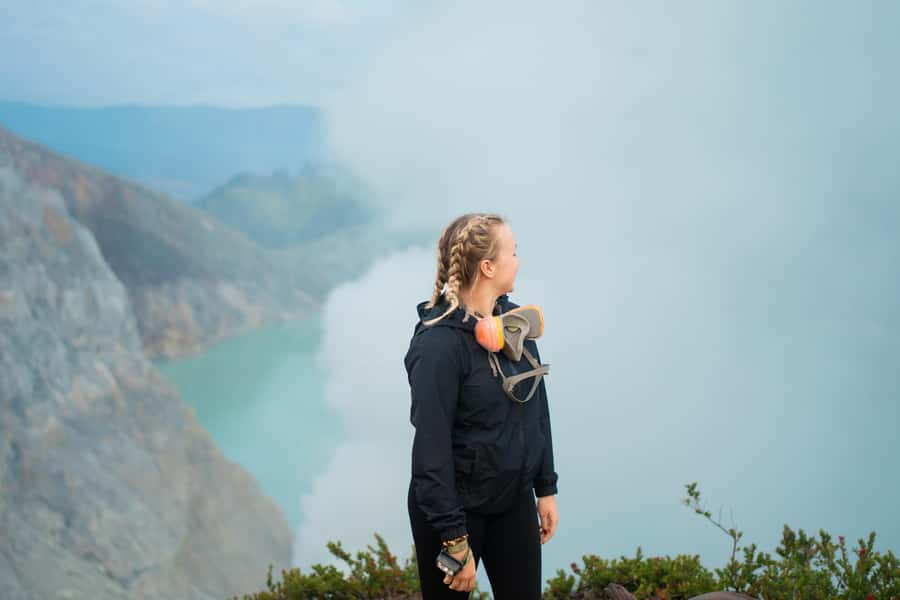
Ijen’s blue fire is the main event: electric-looking flames flickering through sulfur gas in the blackness before dawn. Reaching it means a steep night hike and, when conditions allow, a descent toward the crater, so this is not a gentle sunrise outing.
I like the combination of blue fire and sunrise over the turquoise lake, since you see Ijen in two very different moods. I also like the practical support: transport, entrance fees, headlamp, gas mask, first aid, portable oxygen, and mineral water are included. Guides such as Suleiman and Sule are praised for keeping the pace moving and spirits high.
The main drawback is the effort and uncertainty. The trail is strenuous, the crater can be crowded, and sulfur gas can be dangerous at any time. If you have respiratory problems, are pregnant, or dislike heights, this is probably not your trip.
Key points before you book
- Blue fire before dawn: You may see the rare sulfur flames glowing against the dark sky, but access depends on current safety conditions.
- A hard six-hour mountain stop: The Ijen portion includes hiking, waiting, crater views, sunrise, and the descent.
- Suleiman and Sule may guide your group: Their friendly humor, photo help, and attention to tired walkers are a real asset.
- Safety gear is supplied: You receive a headlamp and gas mask, with first aid and portable oxygen carried for emergencies.
- Traditional sulfur mining is part of the view: You can watch miners working around one of Java’s most unusual volcanic settings.
- A good value at $25: Transport, admission, insurance, guide service, equipment, and water make the low price attractive.
Why the Ijen blue fire is worth the midnight start
Most people come to Kawah Ijen for the blue fire, a rare sight created when sulfur gases burn and glow blue in the darkness. The effect is easy to miss in daylight, which is why the trip begins around midnight and reaches the crater before sunrise.
The darkness adds drama, but it also changes the character of the walk. You climb under a starry sky with a headlamp, cool air, and little to see beyond the beam in front of you. Then, near the crater, the focus shifts from walking to gas, rock, flame, and careful movement.
Ijen is described as one of only two places in the world where this phenomenon can be seen. That makes the sight unusual, but you should not treat it like a guaranteed stage show. Volcanic gas conditions can change, and Mount Ijen’s safety rules take priority.
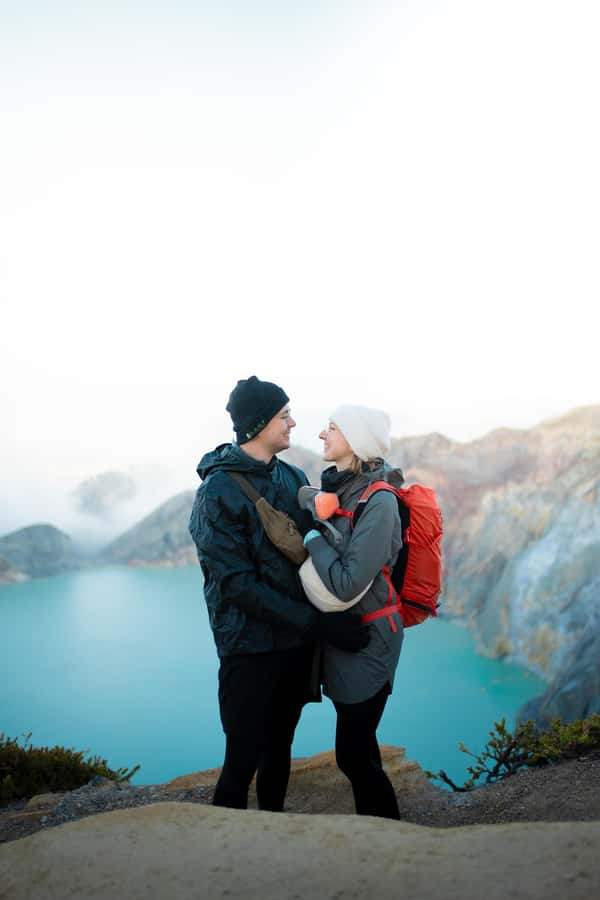
The blue flames are only one part of the appeal. After the dark, the crater changes completely. The first light reveals the turquoise water, the steep volcanic walls, and sulfur miners carrying loads through the same harsh setting. You get a fuller sense of the mountain by staying for sunrise instead of turning back after the fire.
More volcano treks around Indonesia:
- 2D1N Senaru Crater Rim Trekking
★ 5.0 · 178 reviews - Mount Rinjani 2-Day Trek to Senaru Crater Rim
★ 4.8 · 89 reviews - Mt Rinjani Trekking 2 Days 1 Night (Senaru Crater Rim)
★ 5.0 · 85 reviews
Leaving Banyuwangi for the trailhead
The tour picks you up at your Banyuwangi hotel, so you do not need to arrange a separate taxi to the mountain. Wait in the hotel lobby, then expect a drive to the starting point of the trek.
This early pickup is useful if you are staying in Banyuwangi before crossing to Bali or continuing around Java. It also removes one of the biggest night-trip headaches: finding the correct mountain entrance in the dark.
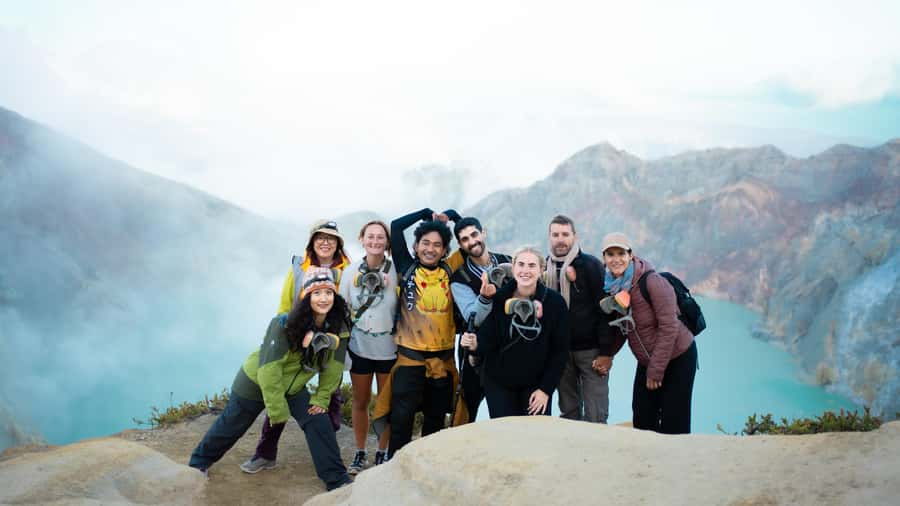
The package is a combined group tour. That keeps the price down to $25 per person, but it means the walking pace may not match everyone in the group. One person may want to push toward the blue fire, while another needs regular pauses. A guide may need to move back and forth to keep people together.
Communication appears to be a strong part of the service. The local team uses WhatsApp, and the guides speak English and Malay. Some guides have also helped communicate with mixed-language groups, including French and German speakers, but those languages are not listed as standard tour languages.
At the trailhead, the guide gives a safety briefing. You receive a headlamp and gas mask, and the tour includes Ijen crater insurance, first aid, a portable oxygen tank, and mineral water. These are important inclusions, not decorative extras. You are entering an area where sulfur gas can harm people without warning.
The uphill walk through the dark
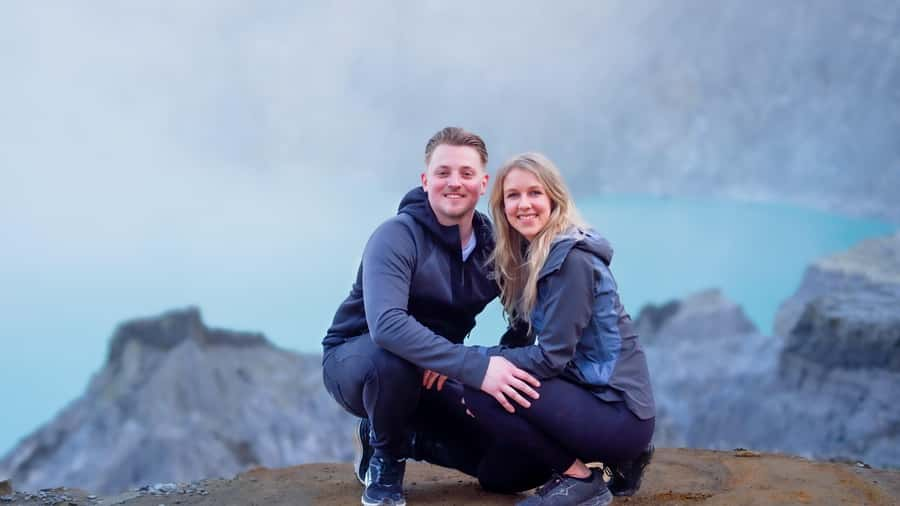
The climb to Ijen Crater is the part that tests your legs. The walk takes place at night, and the route includes uphill sections before you reach the crater area. Reviews describe it as tiring, intense, and physically demanding, so you should arrive rested and ready to walk for several hours.
Your headlamp helps you see the trail, but it does not turn the mountain into an easy path. Bring snacks, use the water supplied, and keep your own pace within the group. If you rush early, the final part of the morning will feel much harder.
The cool night air is a welcome contrast to the effort. Above you, the sky may be clear enough for stars. Around you, the darkness keeps the focus on each step, the guide’s instructions, and the changing volcanic smell.
The guide’s role matters most here. Suleiman, also called Sule in some feedback, is praised for his high energy, humor, and willingness to help people through difficult sections. Other guides, including Sulliman and Soufian, are also singled out for friendly support and good communication. The exact guide is not guaranteed, but the reported strength of the local team is its personal attention rather than formal commentary.
Descending toward the crater for blue fire
The blue fire area is not simply a viewpoint beside the main trail. You may need to descend toward the crater, and the route can feel exposed or uncomfortable if you are afraid of heights. One important piece of advice is to ask your guide about the next difficult section before moving ahead.
The gas mask is supplied for a reason. Sulfur fumes can become strong near the crater, and you must follow the guide’s instructions about where to stand and when to cover your face. The portable oxygen tank and first-aid kit add a layer of emergency support, but they do not make the conditions harmless.
The best way to approach this part is with patience. You are there to see a rare natural event, not to get the closest possible photo at any cost. Guides have helped participants move down carefully and take pictures near the flames, but conditions and safety rules can limit how close you go.
Crowds can make the crater area less smooth than the trail. A combined group may split up when people walk at different speeds, and your guide may need to locate other members. Stay aware of your group and do not assume that the person in front of you is your guide.
More early starts around Indonesia
- Bali: Mount Batur Sunrise Trek With Guide and Breakfast
★ 4.8 · 3,461 reviews - Mount Batur Sunrise Trekking Private All Inclusive
★ 5.0 · 906 reviews - Mount Batur Sunrise Trekking Private Tour with Breakfast and Hotel Transfer
★ 5.0 · 885 reviews - Private Mount Batur Sunrise Trekking Tour
★ 5.0 · 634 reviews
Sunrise over the turquoise crater lake
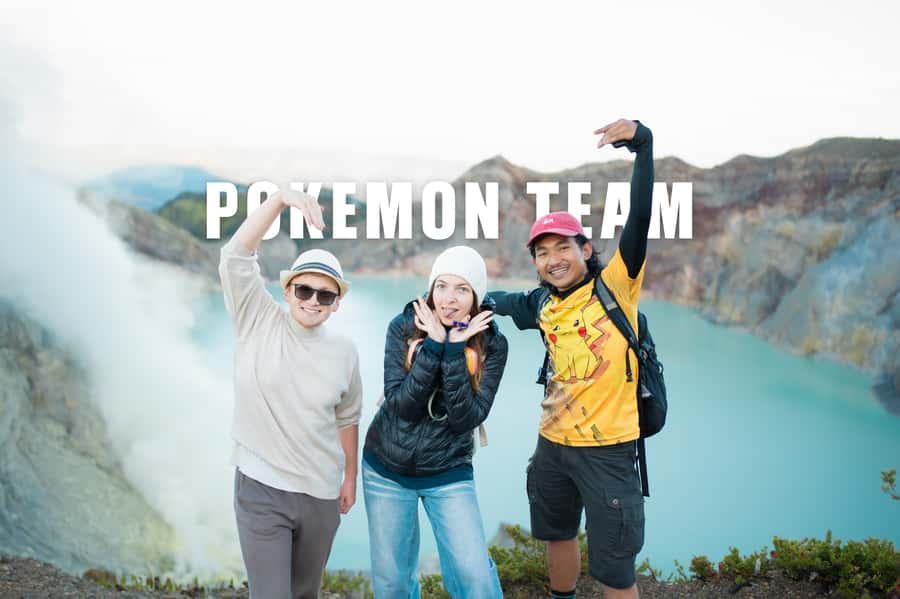
After the blue fire, you return to the top area for sunrise. This is when Ijen becomes easier to understand as a place rather than just a photo stop.
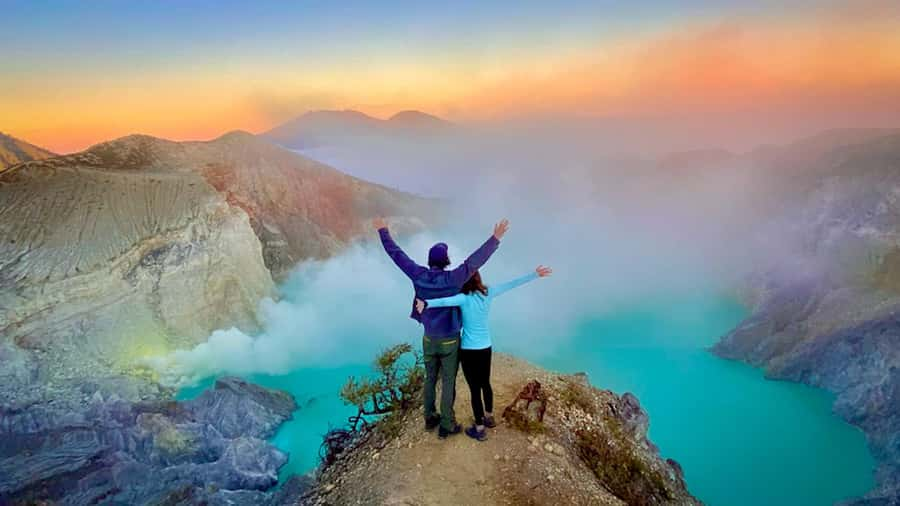
The first rays of sunlight reach the crater and reveal the turquoise lake below. The color is striking, but the setting is also severe: volcanic rock, steep slopes, sulfur activity, and a working mining route. The contrast gives the view its power.
Sunrise is a good reason to accept the difficult schedule. You do not have to choose between the blue fire and daylight scenery. You see the crater first as a mysterious, glowing space, then as a broad mountain view with the lake catching the morning light.
Bring your camera, but keep it protected and use it sensibly near gas. The guides may help with photos, and their familiarity with the route can be useful when the best safe viewpoint is not obvious. Still, your own safety comes first, especially when other people are moving around in low light.
Watching the sulfur miners at work
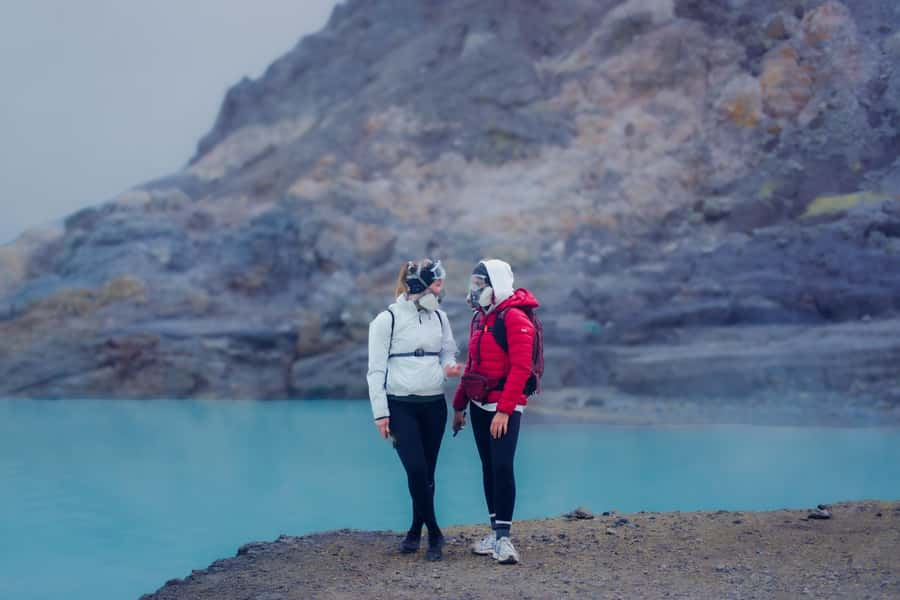
The sulfur miners are not a staged attraction. They are working in a difficult environment, and you should watch respectfully from a safe distance.
You may see miners moving through the crater area and carrying sulfur as part of their daily work. Their presence gives the mountain a human dimension that a normal scenic overlook would miss. It also shows why you should not think of Ijen as a simple recreational hike.
The scene can be sobering. The mountain is beautiful, but sulfur gas and heavy loads make the work dangerous and demanding. A good guide can help explain what you are seeing while keeping you out of the way.
This part of the morning is also a reminder to put the camera away for a moment. The panoramic view is worth taking in without constantly framing it through a screen.
The descent and return to Banyuwangi
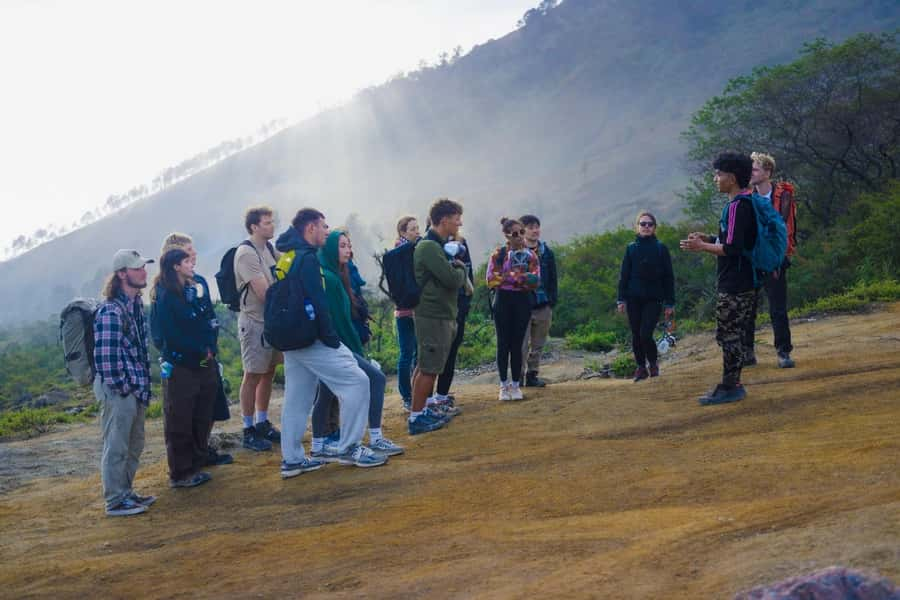
Once you have seen the sunrise and crater views, you hike back to the starting point. The downhill route is easier on the lungs for many people, but tired legs and uneven ground still require care.
This is where group pacing can become noticeable. If one person has stopped often or another has moved ahead, the group may stretch out. Stay close enough to your guide and fellow participants to avoid confusion.
At the starting point, you can rest and refresh. Local vendors may sell snacks and drinks, giving you a chance to replace some energy before the drive back. Mineral water is included during the trip, but bringing extra snacks is sensible.
The vehicle then returns you to your Banyuwangi hotel. The full activity lasts about nine hours, with roughly six hours centered on the Ijen stop and its hiking, views, sunrise, and breaks. You should not plan an important morning appointment immediately afterward.
What the $25 price really includes
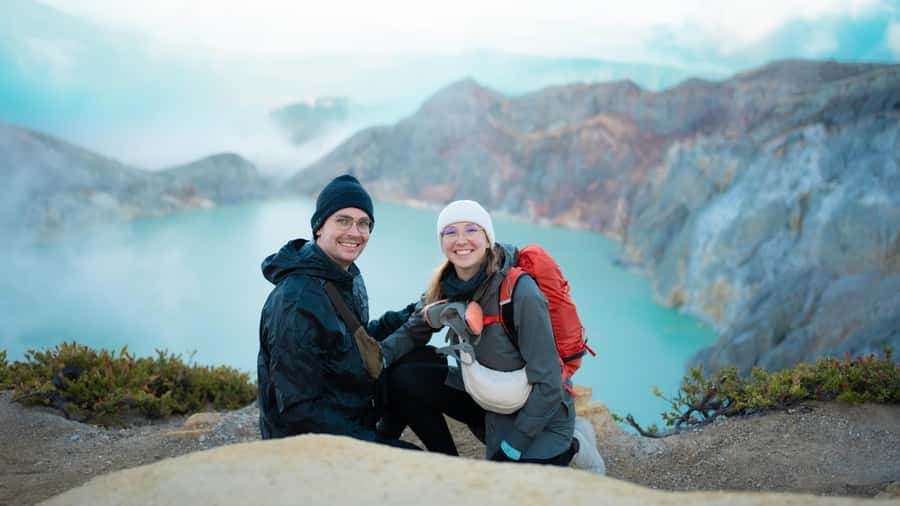
At $25, this is an unusually practical package. You receive:
- Round-trip transport from Banyuwangi to Kawah Ijen
- Entrance to Ijen
- Ijen crater insurance
- An experienced local guide
- Headlamp and gas mask
- First aid and portable oxygen
- Mineral water
Paying separately for transport, admission, equipment, and a guide could quickly cost more than the tour price. The value is especially good if you are traveling alone or do not want to negotiate a private vehicle in the middle of the night.
The low price comes with one tradeoff: this is a combined group package, not a private tour. You may have less control over timing, and the walking ability of the group can affect the morning. The guide may need to pause or search for participants who have fallen behind.
The tour also offers free cancellation up to 24 hours before departure and a reserve-now, pay-later option. Those terms help if your Java plans depend on transport from another area, but they do not remove the need to check the current Ijen opening status.
Health rules and safety details you should take seriously
A valid health certificate is required, and the cost of obtaining a medical certificate is not included. Bring your passport, or a copy, along with the medical statement.
The tour is not suitable for children under 12, pregnant women, or people with respiratory issues. This is sensible given the uphill walk, low-light conditions, and sulfur gas.
Mount Ijen reopened on September 8, 2024, after closure caused by earthquake tremors and toxic gas. The mountain can still close or restrict access if conditions change. Toxic gases may harm participants at any time, so listen to the guide and obey local instructions even if you have already paid.
The site is closed every Friday in the first week. Check the exact date when booking, since a wrong assumption could spoil a tightly planned Java itinerary.
Leave jewelry at home. Bring a camera and snacks, but keep both manageable while walking. Comfortable clothing and suitable walking shoes are important practical choices, even though the listed requirements focus on the passport, medical statement, camera, and snacks.
Who will enjoy this Ijen trek
I would recommend this tour to you if you want an active, unusual morning and are willing to trade sleep for a rare volcanic sight. It suits people who enjoy guided hikes, dramatic natural settings, and a little uncertainty.
It is also a good fit for solo visitors. The transport, guide, safety equipment, and group structure mean you do not have to manage the mountain alone. The friendly style of guides such as Suleiman can make a long walk feel less grim.
You should think twice if you want a relaxed sunrise trip. The climb is strenuous, the blue fire section may involve a steep descent, and the gas makes the crater more serious than a standard sightseeing stop.
I would also avoid booking if you have a respiratory condition or are pregnant. Children under 12 are not accepted, and anyone uncomfortable with heights may prefer to admire volcanic scenery from a less demanding viewpoint.
Should you book the Banyuwangi Ijen tour?
Book it if the rare blue fire is high on your Java wish list and you accept that the outing will be tiring, dark, crowded at points, and controlled by volcanic safety conditions. At $25, the included transport, entrance ticket, equipment, guide, insurance, and water offer strong value.
The best reason to choose this trip is the full sequence: midnight pickup, night climb, blue fire, turquoise lake at sunrise, sulfur miners, and a guided return. The best reason to skip it is the physical and environmental difficulty.
If you go, arrive prepared, stay close to the group, use the gas mask when instructed, and do not treat the crater as a backdrop for a risky photograph. With that approach, this is a memorable and fairly priced way to see one of Java’s strangest natural sights.
FAQ
How long does the Ijen Crater tour last?
The full activity lasts about nine hours. The Ijen portion includes around six hours for the guided visit, hiking, scenic stops, sunrise, and breaks.
What languages does the guide speak?
Live guiding is available in English and Malay.
Is hotel pickup included?
Yes. Round-trip transport from Banyuwangi to Kawah Ijen is included. Wait in your hotel lobby for pickup.
Do I need a medical certificate?
Yes. A valid health certificate is required, and you should bring a medical statement. The cost of obtaining the certificate is not included.
Is the tour suitable for children or people with health concerns?
It is not suitable for children under 12, pregnant women, or people with respiratory issues.
What safety equipment is provided?
The tour provides a gas mask and headlamp. First aid, a portable oxygen tank, Ijen crater insurance, and mineral water are also included.
New treks around Indonesia
- Pergasingan Hill Trek: Unveiling the Beauty of Sembalun★ 5.0 · 5 reviews
- Padang: Lubuk Hitam Waterfall Guided Trekking Tour★ 5.0 · 2 reviews
- Oke Rinjani 2-Day Trek – Summit senaru Climb & Amazing Views★ 5.0 · 3 reviews
- North Bali: Explore Munduk Waterfall Trekking Experience★ 4.9 · 12 reviews
- Munduk Jungle Trek: Twin Lakes View, Temple and Waterfall★ 5.0 · 2 reviews
- Munduk : Jungle Trekking,Canoeing,waterfall &authentic lunch★ 5.0 · 10 reviews
- Mt. Merapi Majesty: Soft Trek and Botanic Village Tour★ 5.0 · 5 reviews
- Munduk Jungle Trek to Banyumala & Pucak Manik – Private★ 5.0 · 29 reviews
Volcano Treks, side by side.
Mount Etna: Trek to 3000m with cable car and 4×4
Read our review →
Mount Etna: Summit Crater Trek with Cable Car
Read our review →
Etna: summit craters trekking with volcano guide 3350mt
Read our review →
Catania: Mount Etna Trekking Tour Beyond the Tourist Trails
Read our review →
Mount Etna: Guided Trek 3,000 Meters to the Summit
Read our review →
Etna Sunset Tour: Volcano trek, Cave & tasting from Catania
Read our review →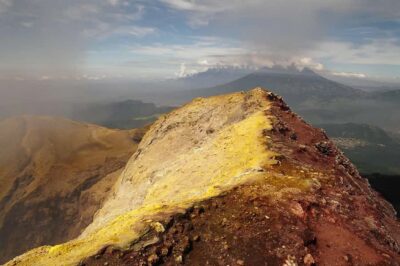
Lists this trek appears in