
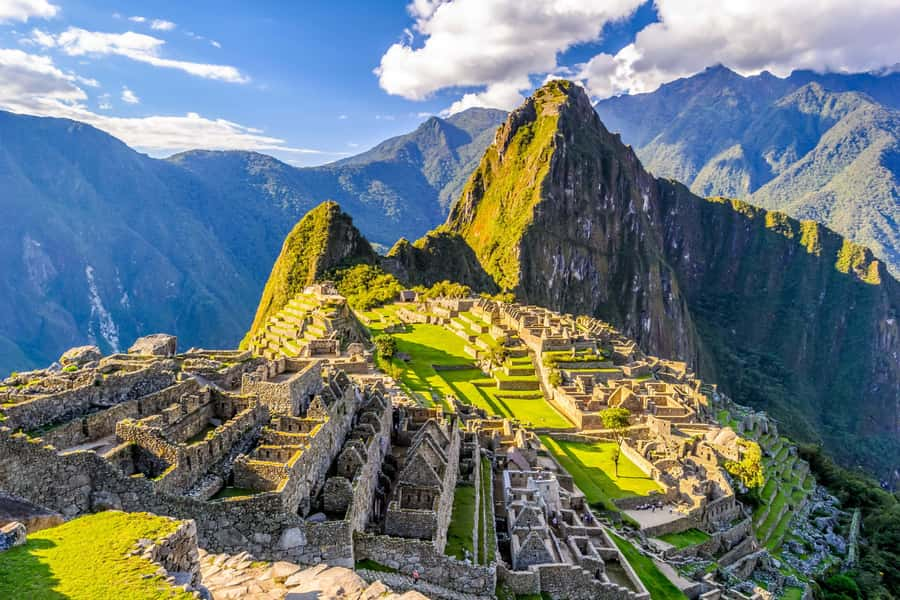
Review · CUSCO
Cusco: 5-Day Salkantay Ultimate Trek to Machu Picchu
The big draw here is the change in scenery. You start among snow peaks and thin air, cross the high Salkantay Pass, then drop through cloud forest and coffee country before reaching Machu Picchu. Humantay Lake and the first view of the citadel from Llactapata give the trek two memorable surprises before the main event.
I especially like the practical support: horses carry equipment and up to 7 kilograms of your belongings, while cooks provide four hot dinners and daily snacks. I also like the Lucmabamba stop, where a family coffee farm adds a local touch that many point-to-point treks lack.
The catch is the physical demand. You reach 4,630 meters on Day 2, and the first two days include long, steep climbs. This is not a gentle walk to Machu Picchu, and people with altitude sickness, back problems, or limited hiking fitness should choose a shorter route.
Key points at a glance
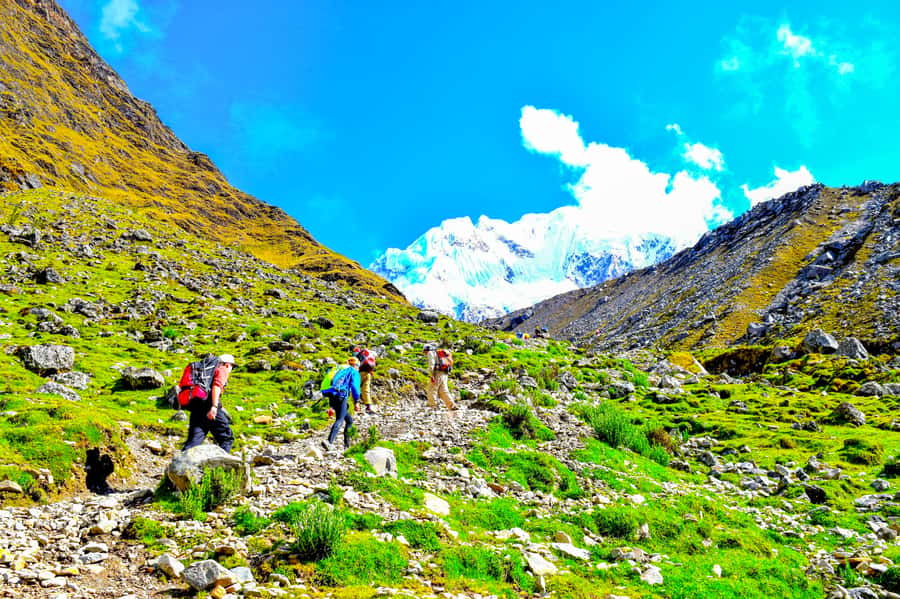
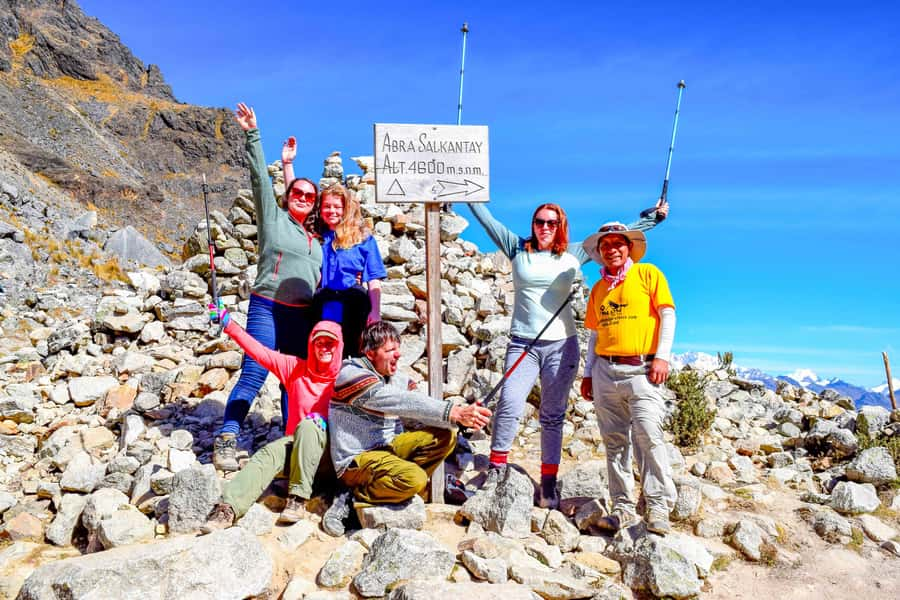
- 4,630-meter Salkantay Pass: The highest point comes on Day 2, with cold, thin air and wide views of snow-capped peaks.
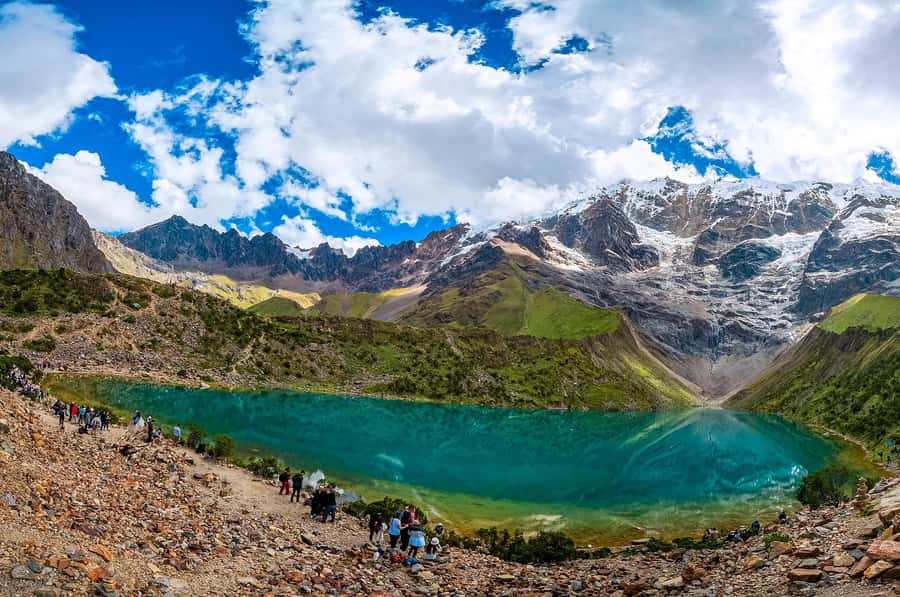
- Humantay Lake at 4,200 meters: A turquoise glacial lagoon makes a striking first-day goal, but the altitude makes the climb harder.
- Lucmabamba coffee country: Stay near a local family and learn about their coffee farm as the trail drops into the cloud forest.
- Llactapata viewpoint: An original Inca trail leads to lesser-visited ruins with an unusual first view of Machu Picchu.
- Supported camping: Horses carry shared gear and 7 kilograms of your personal items, while cooks handle four days of meals.
- Small groups of up to 10: You get a more personal trek than on a large bus-style outing, with an assistant guide for groups of nine or more.
Why this route is worth the hard work
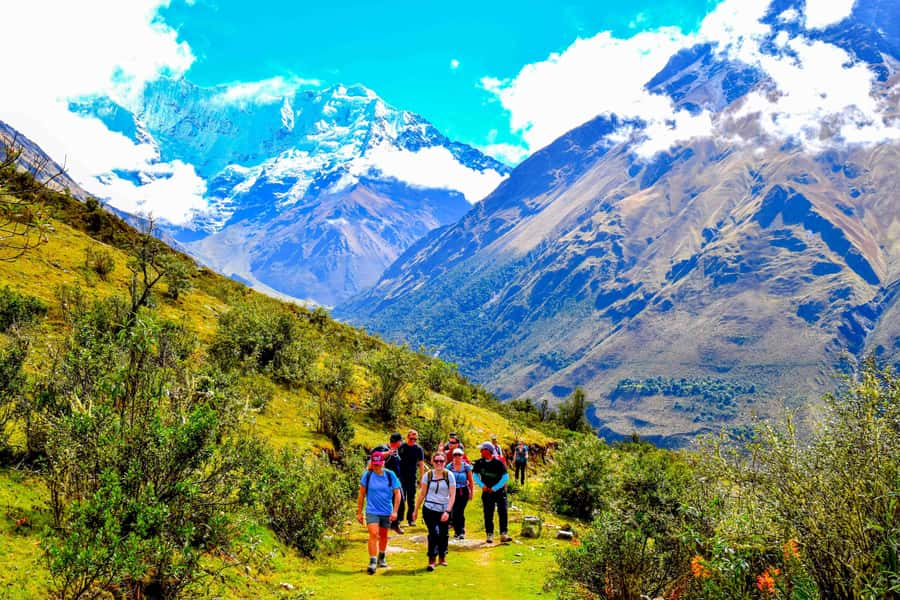
The Salkantay route earns its place beside the better-known Inca Trail because it gives you a much bigger change in scenery. The trip begins in high mountain country, where the air is cold and the peaks are severe. By Day 3, you are walking through warmer forest with waterfalls, fruit trees, and unfamiliar plants.
That contrast is the heart of the experience. You are not simply walking toward a famous ruin. You are moving through several Andean zones, each with its own weather, vegetation, and demands on your body.
At $669 per person, the price reflects more than the Machu Picchu ticket. It includes a professional English-speaking guide, a cook, camping equipment, a hotel in Aguas Calientes, transport, the entrance to Machu Picchu, and horses to carry equipment. Four breakfasts, lunches, afternoon snacks, and dinners are included as well.
That package makes the price reasonable for a five-day guided trek, especially since support staff and pack animals reduce what you need to carry. You still pay extra for a sleeping bag and trekking poles if you need them, and the Day 5 lunch and dinner are not included. The optional Huayna Picchu entry costs $85.
More Inca Trail treks around Cusco:
- Salkantay Trek Challenge – 3 Days / 2 Nights
★ 5.0 · 101 reviews - Choquequirao Trek 4 days and 3 nights
★ 5.0 · 81 reviews - Machu Picchu: 5-Day Salkantay Trek with Panoramic Train
★ 5.0 · 79 reviews
Day 1: Soraypampa and turquoise Humantay Lake
The first day takes you toward Soraypampa at 3,800 meters, with Salkantay Mountain and Humantay Mountain above the route. This is an impressive opening, but do not mistake the short description of the day for an easy start. You are gaining height quickly, and your body may still be adjusting to Cusco’s altitude.
Breakfast on Day 1 is not included, so you need to arrange it before pickup. You should also carry your own water for the first four hours. After that, water is provided, which simplifies the rest of the trek.
A midday Peruvian lunch gives you a useful break before the climb to Humantay Lake. At 4,200 meters, the lagoon sits in a stark setting beneath the peaks. Its turquoise water is the kind of sight that makes a slow, breath-catching ascent worthwhile.
The route returns to camp after the lake visit. Dinner, a tent, and an Andean night follow, with wake-up tea brought to your tent each morning. The sleeping arrangement is a four-person tent shared by two trekkers, and a double-thickness foam mattress is supplied.
This day is a good test. If your head is pounding or your legs are already struggling, tell the guide early. Oxygen and a first-aid kit are carried by the team, but those supplies do not replace sensible pacing.
Day 2: The high point at Salkantay Pass
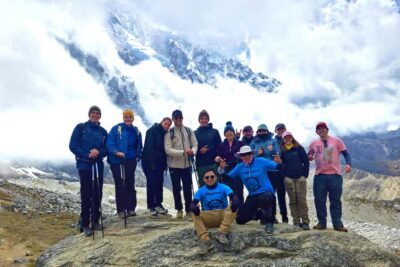
Day 2 is the trek’s toughest and highest section. You climb to Salkantay Pass at 4,630 meters, where the air is thin and the views reach across snow-covered summits, ridges, and valleys.
The pass is the physical centerpiece of the trip. It is also where altitude matters most. Even fit hikers can feel slow and breathless at this height, so keep your pace steady rather than trying to race ahead.
After the pass, the route drops into a high-altitude jungle zone. The change can feel dramatic: cold mountain air gives way to more vegetation and the sounds of nature. This descent is welcome after the climb, though the day remains long and tiring.
A professional cook prepares dinner at camp, and the staff provides an afternoon snack. Those small meals matter on a route where you are walking for hours at a time. Vegetarian, vegan, and gluten-free meals can be requested, along with allergy information, but you should give those details when booking and repeat them at the pre-departure briefing.
The tour operates with a minimum of two participants and a maximum of 10. A group of that size is useful on a demanding route. You are not lost in a crowd, and the guide can keep an eye on pace and altitude symptoms more easily.
Day 3: From mountain air to Lucmabamba coffee country
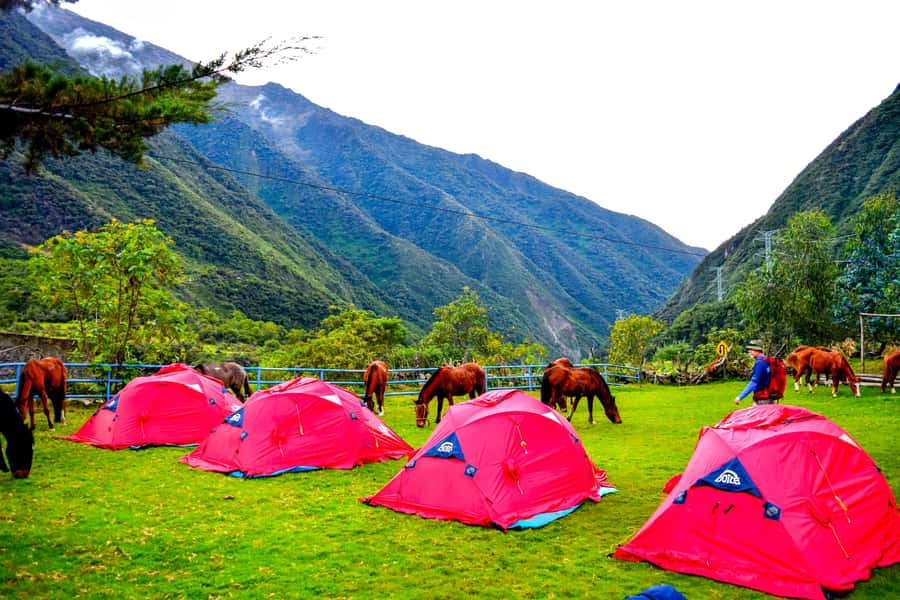
Day 3 brings the most noticeable change in setting. The trail descends through cloud forest for about five hours toward Playa Sahuayaco at 2,200 meters.
The route passes waterfalls, fruit-bearing trees, and unfamiliar plants. After two days of exposed high country, the warmer forest can feel like a different trip. You may find this section easier on your breathing, but the long descent can be hard on knees and feet.
From Playa Sahuayaco, you continue into the area often called the eyebrow of the Amazon. The final destination is Lucmabamba at 2,000 meters, where the campsite sits near an old Inca route leading toward Llactapata.
Lucmabamba is one of the most appealing parts of the itinerary because it adds contact with local rural life. You stay with a family and learn about their coffee farm. The stop gives the trek more meaning than a series of campsites and viewpoints. You see how the lower, warmer part of the route supports crops and family life.
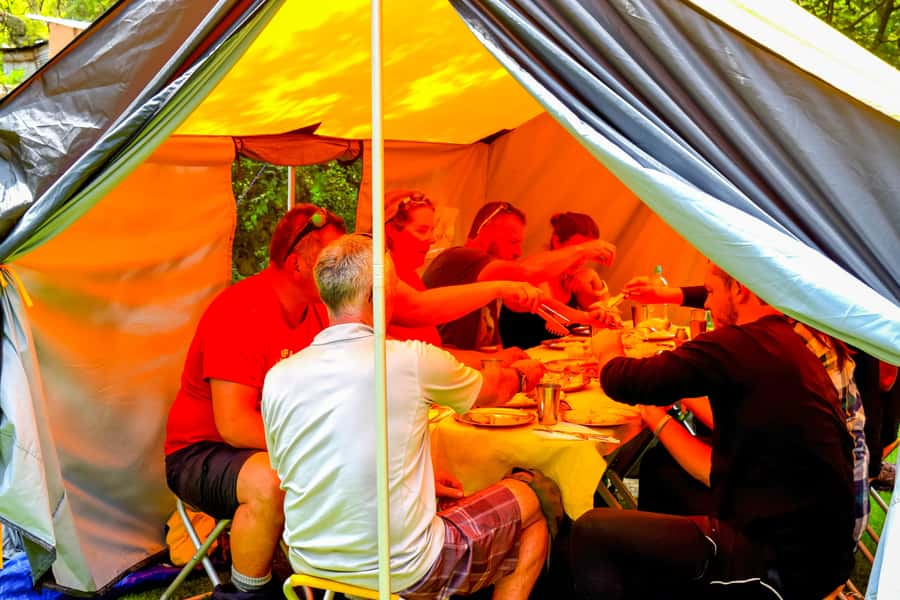
The practical details here are basic. This remains a camping trip, not a lodge-to-lodge walk. The included dining tent has tables and chairs, which gives you a proper place to eat, but you should expect outdoor conditions and changing weather.
More five-day treks around Cusco
- Ausangate Trek 5 Days
★ 5.0 · 74 reviews - 5-Day Salkantay Trek to Machupicchu Sky Lodge Dome
★ 4.0 · 6 reviews - Annapurna base camp trek 5 Days
★ 5.0 · 252 reviews - Kathmandu to Annapurna Base Camp (ABC) 5-Day Trek
★ 5.0 · 102 reviews
Day 4: The original Inca trail to Llactapata
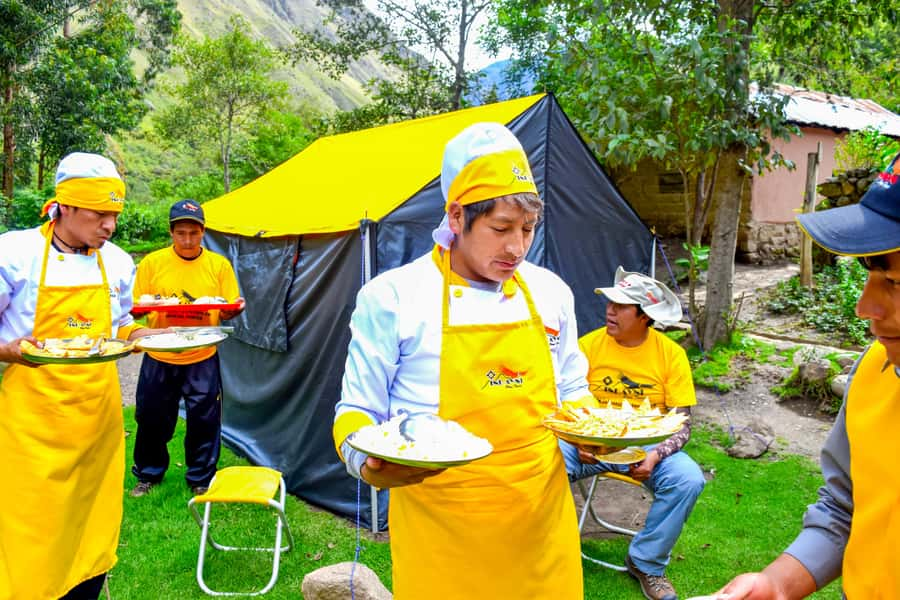
After breakfast, you climb for about two hours along an original Inca trail to Llactapata, at 2,840 meters. This section is short compared with the previous days, but it is uphill and comes after several days of walking.
Llactapata is less visited than Machu Picchu, which is part of its appeal. The terraces offer a first view of Machu Picchu from a different angle. Seeing the famous citadel before reaching it can be a powerful moment, especially after walking through the mountains and forest to get there.
The route then descends for about an hour and a half to the Hydroelectric Station at 1,890 meters. From there, transport takes you to Aguas Calientes, the town below Machu Picchu.
This night in a hotel is a welcome change from camping. It gives you a bed, a chance to reorganize your bag, and a calmer evening before the early start. The hotel is included, but the itinerary does not specify its name or category, so you should expect a practical stop rather than a luxury stay.
Day 4 also marks the point where the physical challenge begins to ease, but you are not finished. Save some energy for the citadel visit, and keep your passport handy. You need a valid passport during the tour activities.
Day 5: Machu Picchu with a guided visit
The final day starts with breakfast and a morning bus from Aguas Calientes to Machu Picchu. The bus avoids the steep walk up to the entrance, which is useful after four days on foot.
Inside the citadel, your guide explains the main structures, including temples, ceremonial areas, terraces, and storage buildings. A guided visit is valuable here because the site can otherwise become a blur of stone walls and crowded paths. The guide gives order to what you are seeing and explains why the different areas mattered.
The included Machu Picchu entrance is a major part of the package value. Huayna Picchu and Machu Picchu Mountain are separate options, however. Huayna Picchu costs $85, and you should not assume either mountain hike is included in the base price.
After the citadel, the group returns to Aguas Calientes for a short rest and lunch. Lunch and dinner on Day 5 are not included, so budget for those meals. In the afternoon, you take the train to Ollantaytambo, followed by a van ride back to Cusco.
The train and van combination makes for a long final day, but it is a practical way to finish a one-way trek without retracing the trail.
What the support package means for you
The support system is one of the strongest reasons to consider this trek. Horses carry equipment and up to 7 kilograms of your personal items, so you do not need to haul a full camping load over the pass.
You receive a duffle bag at the pre-departure briefing, usually held one or two days before departure. Pack only what you need for the trek, because the 7-kilogram limit is not a suggestion to bring a full suitcase.
The cook prepares four breakfasts, four lunches, four afternoon snacks, and four dinners. A dining tent with tables and chairs gives the group a place to eat and rest. Wake-up tea arrives at your tent each morning, a small comfort that becomes surprisingly welcome in cold camp conditions.
The tour also supplies a sleeping mattress, tents, oxygen, a first-aid kit, bus transport to Machu Picchu, and the train and return transport described for the final day. You need to hire or bring a sleeping bag and trekking poles if you want them.
Fitness, altitude, and what to pack
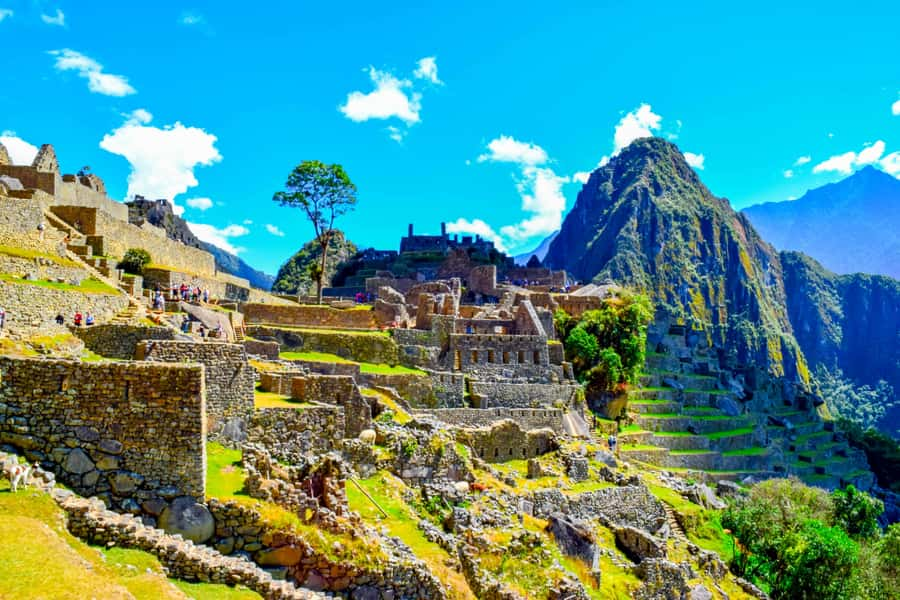
You should treat this as a serious mountain trek. The highest point is 4,630 meters, and the route includes steep climbs, long descents, and several days of continuous walking.
The tour is not suitable for people with back problems, altitude sickness, or those over 70. That does not mean every younger or fit person will find it easy. Altitude can affect anyone, and the early climb to Humantay Lake is already high.
Bring a passport or ID card, sun protection, comfortable clothing, and rain gear. The Andes can change quickly, and rain gear is listed for good reason. You also need water for the first four hours of Day 1.
Travel insurance is strongly recommended for the full trip. Cancellation is free up to 24 hours before departure, and you can reserve now and pay later, which helps if your Cusco plans are still taking shape.
Who should book this Salkantay trek?
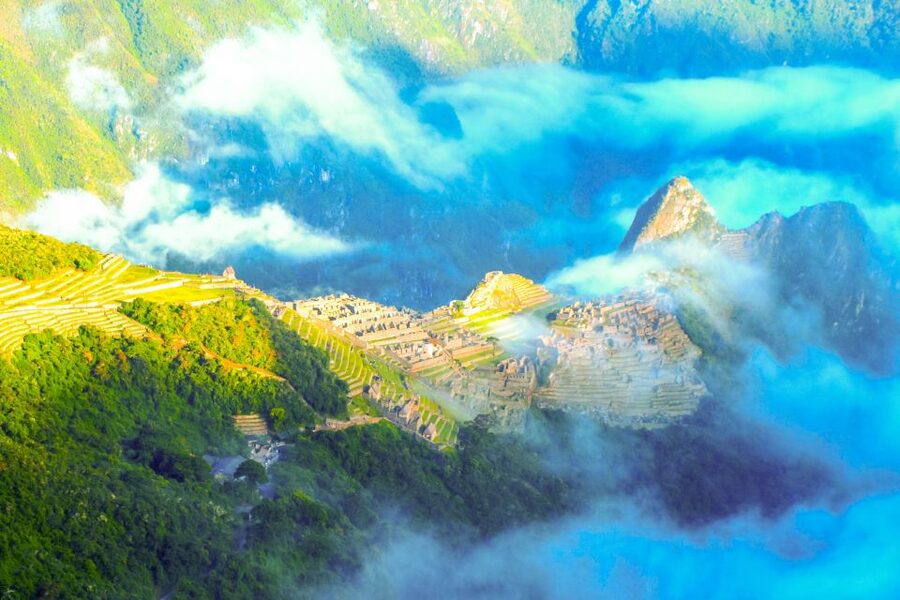
I would choose this trip if you want a challenging route with strong scenery, organized camping, and a clear finish at Machu Picchu. It suits hikers who like variety: high peaks, a glacial lake, cloud forest, coffee country, Inca ruins, and a guided citadel visit all fit into five days.
It is also a good choice if you want support without giving up the feeling of a real trek. The horses, cook, tents, meals, and small group keep the logistics manageable.
I would not choose it if your main goal is a relaxed Machu Picchu visit. The first two days are demanding, and the altitude is serious. A shorter route or a direct visit would suit you better if you dislike camping, struggle with high elevations, or want more time in each town.
At $669, this is a strong-value package for a supported five-day adventure. Book it if you are ready for the effort and want the journey to Machu Picchu to be as important as the ruins themselves.
FAQ
How long is the Salkantay trek to Machu Picchu?
The trek lasts five days and ends with a guided visit to Machu Picchu.
What is the highest point on the trek?
The highest point is Salkantay Pass, at 4,630 meters or 15,190 feet.
Is Humantay Lake included?
Yes. The route visits Humantay Lake on Day 1. The lake is at about 4,200 meters or 13,780 feet.
Is accommodation included?
Yes. The trip includes camping during the trek and a hotel in Aguas Calientes. A four-person tent is provided for every two trekkers.
How large is the group?
The maximum group size is 10 people. An assistant guide is provided for groups of nine or more.
Are meals included?
Four breakfasts, four lunches, four afternoon snacks, and four dinners are included. Breakfast on Day 1 and lunch and dinner on Day 5 are not included.
Are horses provided for luggage?
Yes. Horses carry the equipment and up to 7 kilograms of your personal items.
Are Huayna Picchu or Machu Picchu Mountain included?
The Machu Picchu entrance is included, but Huayna Picchu costs an additional $85. The supplied information does not state a separate price for Machu Picchu Mountain.
What languages are available for the tour?
The tour is offered in English and Spanish, with a professional English-speaking guide included.
New treks around Cusco
- Salkantay Humantay lake trek with Domes-2d-1n★ 5.0 · 2 reviews
- Salkantay Trek to Machu Picchu 5D/4N or 4D/3N by glamping★ 4.4 · 35 reviews
- Rainbow Mountain Trek 1 Day★ 5.0 · 2 reviews
- Rainbow Mountain and Red Valley Hike trek adventure★ 4.5 · 2 reviews
- Tour Pallay Punchu Trek Full Day★ 4.2 · 3 reviews
- Cusco: Machu Picchu Inca Trail 4-Day Trek★ 5.0 · 2 reviews
- From Cusco: Salkantay Trek to Machu Picchu 5D/4N or 4D/3N★ 5.0 · 3 reviews
- Cusco: 4-Day Salkantay Trek to Machu Picchu, Panoramic Train★ 4.3 · 17 reviews
Machu Picchu and Inca Trail Treks, side by side.
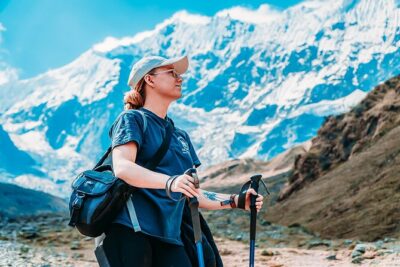
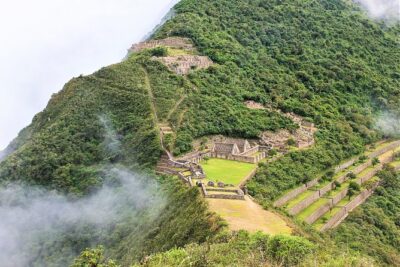
Machu Picchu: 5-Day Salkantay Trek with Panoramic Train
Read our review →
Ancascocha Trek To Machu Picchu 4 Days And 3 Nights
Read our review →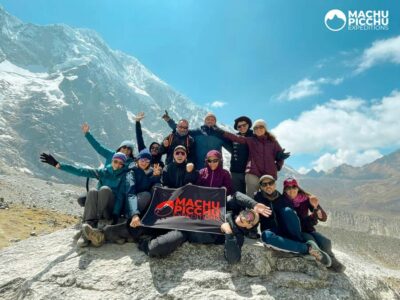
Salkantay Trek to Machu Picchu 5D/4N or 4D/3N by glamping
Read our review →
4 days/3 nights: Inka Jungle Trek to Machu Picchu
Read our review →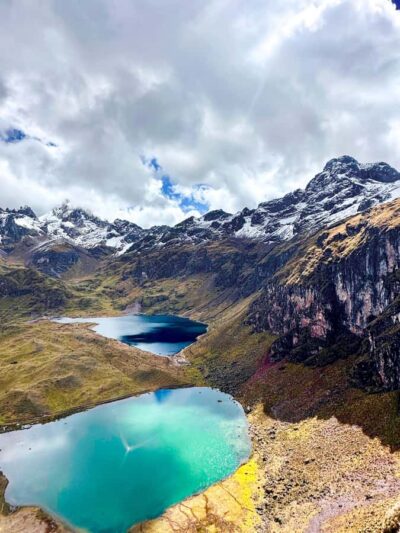
Cusco: 4-Day Lares Trek to Machu Picchu with Panoramic Train
Read our review →
5-Day Salkantay Trek to Machupicchu Sky Lodge Dome
Read our review →Lists this trek appears in