
Review · ITALY
Catania, Etna trekking with guide and cable car at 3000 meters + transfer available
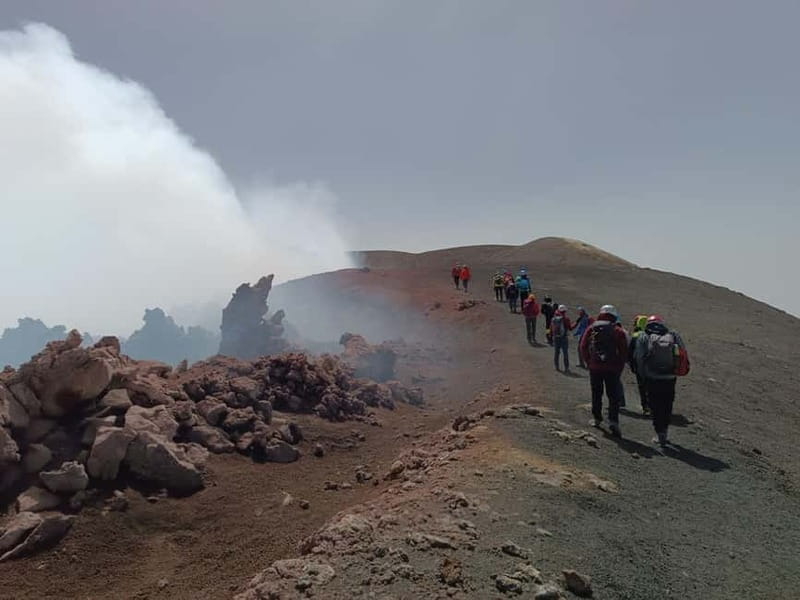
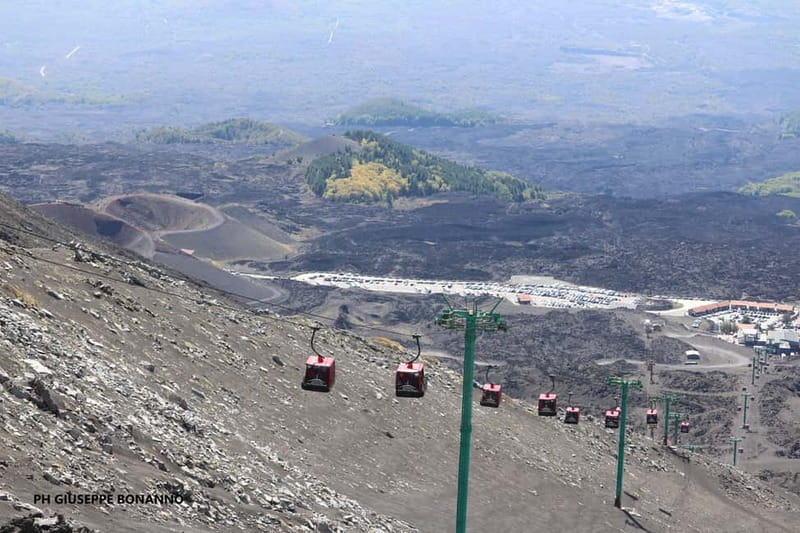
Mount Etna gives you a rare chance to walk across a living volcano, not just look at one from a viewpoint. From Rifugio Sapienza, the cable car lifts you to about 2,500 meters, then an authorized volcanological guide leads you through lava fields, old craters, and the high slopes toward the highest point allowed that day.
I like the mix of cable-car access and real hiking, which lets you reach high volcanic ground without spending the entire day on a punishing climb. I also like the guides’ focus on geology and safety. Giuseppe, in particular, has been praised for explaining Etna clearly and answering questions. The main catch is cost: the advertised activity price does not include the €52 cable-car ticket, and weather or volcanic conditions can change the route.
Key points at a glance
- Walk across recent eruption sites: See ground shaped by Etna’s 2001 and 2002-03 eruptions.
- Reach about 3,000 meters: The cable car takes you to roughly 2,500 meters before the guided hike begins.
- Visit the Barbagallo craters: These craters formed during the 2002-03 eruption and are among the tour’s most striking stops.
- Look into Valle del Bove: The route reaches this huge ancient caldera, formed by the collapse of older eruptive centers.
- Guide, helmet, and shoes included: Walking sticks are available on request, helping reduce the amount of equipment you need to bring.
- Plan for cold and changing conditions: One recent outing had excellent weather but very low temperatures, so warm clothing matters even on a sunny day.
Walking on a volcano instead of just viewing it
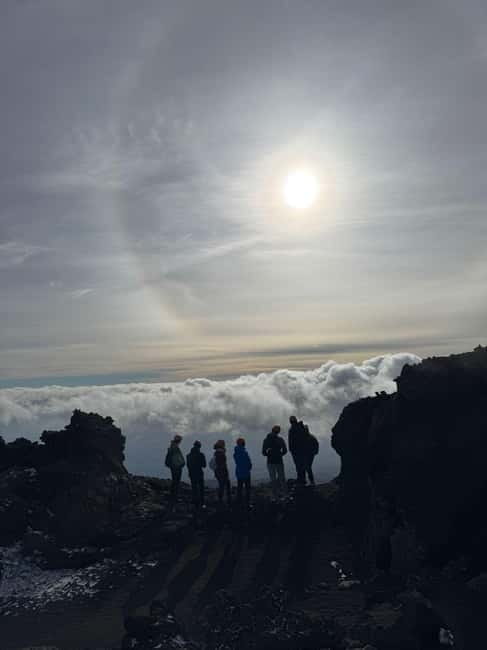
Etna is not a passive mountain. It is an active volcano, and this experience puts you on the volcanic slopes in a controlled and supervised way. You are not promised access to the true summit. Current regulations set the highest point you may reach, and those limits can change with volcanic activity and safety conditions.
That is an important detail. The title refers to an experience at about 3,000 meters, but your exact high point depends on the rules in force on the day. The guide decides how to handle the route within those limits, so you should expect a serious volcano walk rather than a fixed summit expedition.
The excursion lasts about five and a half to six hours. Much of that time is spent moving through black volcanic ground, stopping for explanations, and taking in wide views from the upper slopes. It is a good choice if you want more than a quick cable-car ride but do not want to organize a high-altitude outing on your own.
The hike is described as manageable for people in reasonable shape. It is not presented as an extreme climb, but you still need to walk for several hours on uneven volcanic terrain. Loose gravel, slopes, and cold air can make the outing feel harder than its distance suggests.
More volcano treks around Italy:
- Mount Etna: Trek to 3000m with cable car and 4×4
★ 4.6 · 3,823 reviews - Mount Etna: Summit Crater Trek with Cable Car
★ 4.8 · 1,875 reviews - Etna: summit craters trekking with volcano guide 3350mt
★ 4.7 · 1,712 reviews
Rifugio Sapienza and the cable car to 2,500 meters
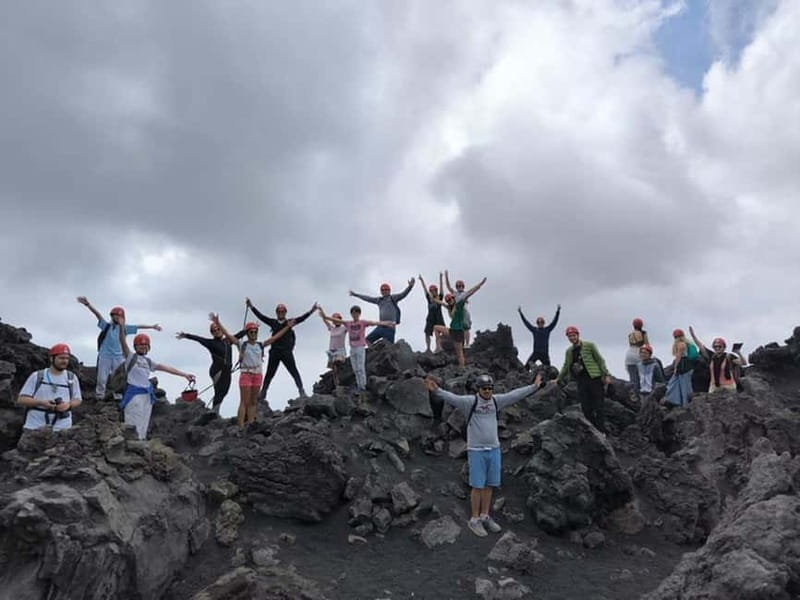
The meeting point is in the Rifugio Sapienza area at approximately 1,900 meters. If you arrange your own transport, contact the operator by WhatsApp after reaching the square. Look for the promoters in fuchsia jackets at the chalet opposite Rifugio Sapienza, marked by orange flags.
The cable car then takes you up to around 2,500 meters. This saves your legs for the more interesting part of the excursion and gives you a quick change in altitude. The cable car ticket is not included in the activity price. You pay €52 per person directly to the guide for the ticket, or €30 for children up to age ten.
That extra charge changes the real cost. The advertised price is $76.47 per person, but you should add the cable-car fee when comparing this outing with other Etna trips. Food and drinks are also your responsibility. If you need hotel transport from Catania or nearby towns, the optional round-trip transfer costs $35 per person.
The cable car is not just a convenience. It takes you above the lower slopes and places you in a much more dramatic volcanic setting. You get more time among craters and lava fields instead of using most of the day on the approach.
Recent lava fields and the changing route
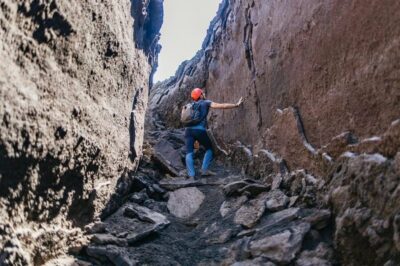
Once you leave the cable car, the walk crosses sites linked to Etna’s most recent and important eruptions. This is where a volcanological guide adds real value. Without explanations, a black lava field can look like a sea of broken rock. With context, you begin to see how different eruptions shaped ridges, cones, and channels.
The route is not a museum trail with fixed signs and a guaranteed endpoint. Volcanic conditions and official restrictions decide how high you may go. Your guide leads you through the permitted area, explaining what you are seeing while keeping the group within current safety rules.
That flexibility is a benefit, but it also means you should not book this expecting a precise summit itinerary. You might reach the advertised upper altitude, or the guide may need to stop lower because of weather, volcanic activity, or official regulations. The supplied information notes that the activity may be non-refundable if it cannot take place for safety reasons, so check the conditions before committing to other plans for the same day.
A 30-minute break above the tree line
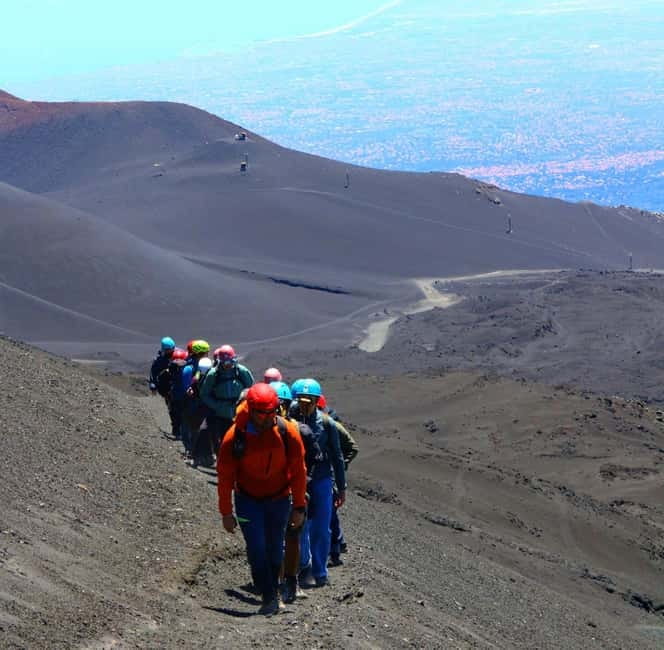
The route includes a break of about 30 minutes. You can eat something, take photographs, and enjoy the views before continuing toward the Barbagallo craters.
Bring your own food and drinks. Nothing is included for lunch, and the high-altitude setting is not the place to assume you can buy what you need during the hike. A simple packed meal and water are the sensible choice.
This pause also helps divide the outing into manageable sections. You get time to catch your breath and adjust clothing before tackling the next part of the route. Do not mistake the break for a long rest day, though. The full excursion still includes several hours of walking over rough ground.
The cold deserves special attention. A recent outing had good weather but felt very cold. At these heights, sunshine does not guarantee warmth, and wind can make conditions uncomfortable. Wear layers, bring a warm outer layer, and choose clothes that let you move easily.
More guided trips around Italy
- Mount Etna: Guided Trek 3,000 Meters to the Summit
★ 4.8 · 1,407 reviews - Etna – Trekking to the summit craters (only guide service) experienced hikers
★ 5.0 · 286 reviews - Mount Etna: scenic Summit Trek with a volcano Guide and Gear
★ 4.5 · 284 reviews - Mount Etna: North Upper Craters Guided Tour by 4×4 with Trek
★ 4.6 · 243 reviews
The Barbagallo craters from the 2002-03 eruption
After the break, you climb toward the Barbagallo craters. These formed during Etna’s 2002-03 eruption, one of the recent events highlighted on the route. Their shape and dark volcanic surfaces give you a clear sense of how quickly Etna can create new features.
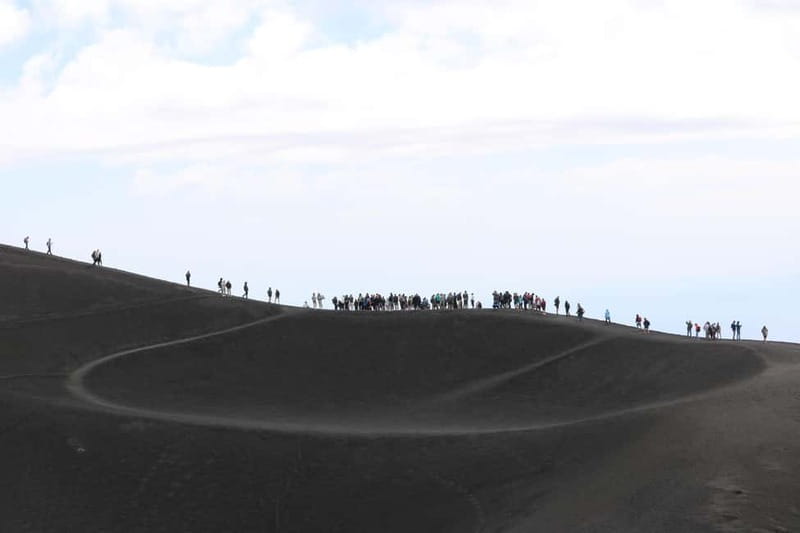
You then descend along the eastern side of the craters. That change in direction gives the walk variety. You are not simply climbing to one viewpoint and turning around. The route moves across several volcanic formations, with different angles toward the mountain and the surrounding countryside.
The craters are also a good place to appreciate why a guide matters. The guide can connect what you see underfoot with the eruptions that formed it. The tour is offered in English, Italian, and French, and the guides are authorized for mountain and volcano excursions.
The walking itself is reported as not too difficult, but the terrain remains uneven. Comfortable clothing is required, and the included walking shoes reduce the need to bring specialist footwear. Walking sticks are available on request, which may be useful on loose sections or during the descent.
Valle del Bove and the great scale of Etna
From the Barbagallo craters, the route heads toward Valle del Bove. This ancient caldera formed around 9,000 years ago when older eruptive centers of Etna collapsed. It is one of the most visually powerful parts of the excursion because it shows the mountain on a much larger scale than the newer cones.
The valley helps you understand that Etna is not one neat cone. It is a changing volcanic system built and reshaped over a very long period. New craters sit within a much older structure, and the route lets you see both at once.
The views here are a major reason to choose the longer guided walk instead of stopping after the cable car. You get time to pause, take photographs, and look across the vast volcanic formations. The exact visibility depends on weather, of course. Clouds can cover the upper slopes, and wind or cold can reduce how long you want to stay still.
This is also one of the places where a safety-led route makes sense. The guide can decide how close the group should go and how long to remain in exposed areas. You get the drama of Etna without having to judge volcanic hazards yourself.
The 2001 crater and the return to the cable car
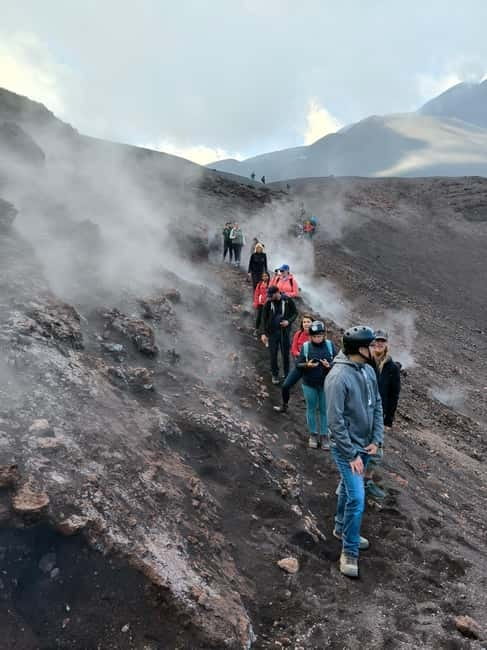
After Valle del Bove, the group continues south toward the base of the crater formed during the major 2001 eruption. Crossing this area adds another chapter to the volcanic story. You see ground linked to a different eruption from the Barbagallo craters, making the route feel like a walk through Etna’s recent activity rather than a single scenic loop.
The final section returns toward the cable car. From there, you descend to the starting point near Rifugio Sapienza. The activity ends back at the meeting area, so you do not need to arrange a second pickup at the end.
The full route takes about five and a half to six hours, including the break and explanations. Starting times depend on availability. If you have a fixed evening booking, ferry, or train, leave a generous buffer rather than assuming the tour will finish at the earliest possible time.
What the guide adds to the day
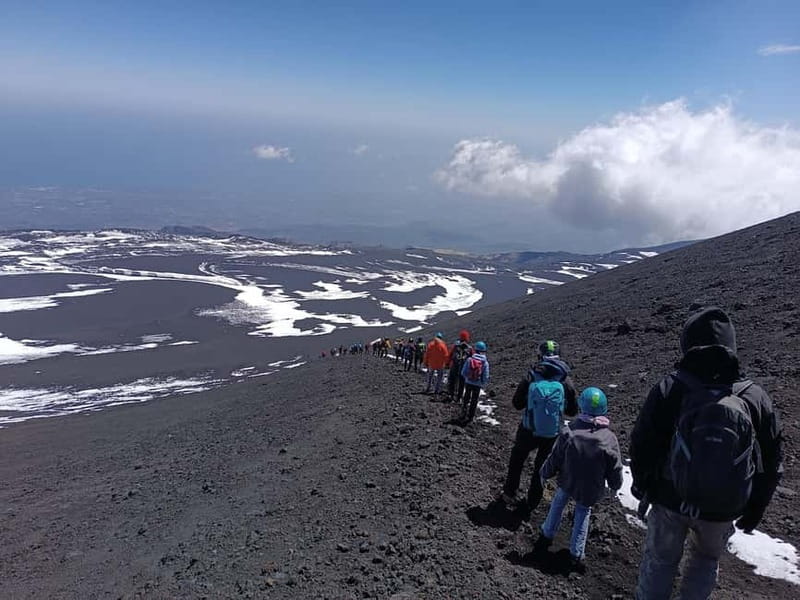
The guide is more than a person leading the way. On Etna, volcanic features can be hard to read without help, and safety decisions are tied to current conditions. An authorized volcanological guide can explain the eruptions, identify the craters, and adapt the route within the permitted zone.
Giuseppe is one guide specifically praised for teaching the group about Etna and volcanoes. The useful trait here is not just local familiarity. You want someone willing to answer questions while keeping the pace manageable and the group together.
The experience is available in English, Italian, and French. A small-group option is also available. Group size can affect the feel of the day: a smaller group usually makes it easier to ask questions and follow the guide’s explanations, though the exact size should be confirmed before booking.
What to wear and bring for a high-altitude walk
The operator provides a helmet and walking shoes. Walking sticks are available on request. You still need to arrive prepared for a cold, exposed mountain environment.
Bring:
- Warm, comfortable clothing with layers
- Food for the 30-minute break
- Water and other non-alcoholic drinks
- Shoes and clothing suitable for several hours of walking
- A phone or camera if you want to photograph the craters and views
Do not rely on the temperature in Catania when packing. Rifugio Sapienza is already high, and the cable car takes you higher still. Cold conditions can make the route tiring even when the sky is clear.
Alcohol is not permitted in the vehicle, and the activity rules prohibit alcohol and drugs. Red wine is specifically listed as not allowed. The restrictions are simple, but they matter on a high-altitude outing where clear judgment is important.
Who should book this Etna experience?
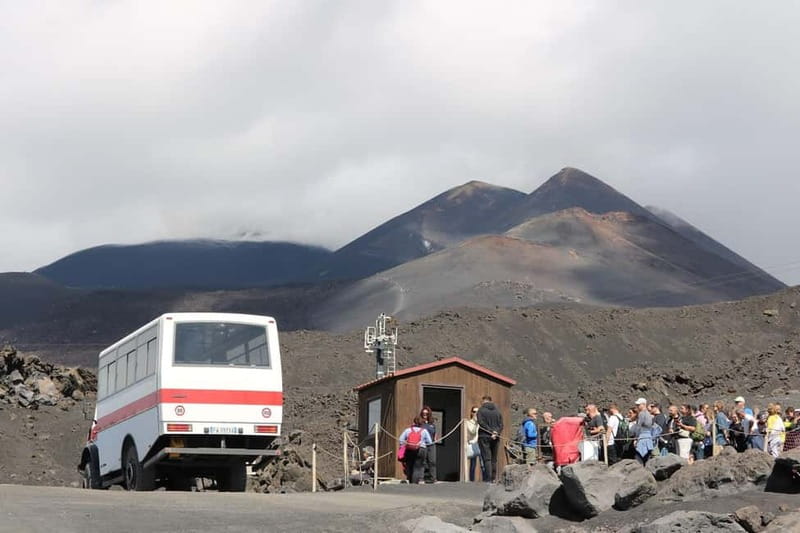
I would choose this tour if you want a serious look at Etna’s volcanic features without arranging transport, equipment, permits, and a guide on your own. It suits people who enjoy walking, geology, open views, and a day that feels active rather than packaged around a short photo stop.
It also works well for visitors staying in Catania who do not have a car. Hotel pickup can be arranged from Catania and much of the surrounding province for an extra $35 per person, round trip. You need to request it in advance through WhatsApp.
The activity is not suitable for children under ten, people with heart, respiratory, or other pre-existing medical conditions, or people with vertigo or motion sickness. It is also not recommended for people over 80, and the information lists people over 95 separately as unsuitable. If you have any medical concern, ask before booking rather than hoping the route will be easy on the day.
The advertised experience has a 4.9 rating from 14 reviews, with the strongest praise focused on the guides, manageable walking, and dramatic volcanic scenery. The most useful takeaway is that the hike is active but not described as technically difficult. You still need reasonable fitness and comfort on uneven ground.
Is the price good value?
At $76.47 per person, the base price looks attractive for a nearly six-hour guided Etna experience with equipment included. But add the €52 cable-car ticket, and the actual adult cost is notably higher. Hotel pickup adds another $35 per person if you need it.
That full price can still be fair. You are paying for an authorized guide, cable-car access, safety equipment, several hours on the volcano, and a route that includes multiple eruption sites rather than one viewpoint. The value is strongest if you want explanation and supervision, not simply a ride up the mountain.
The cost is less appealing if you already have transport, only want a short walk, or are mainly interested in seeing Etna from below. In that case, compare the total price with simpler cable-car or short-excursion options.
Cancellation is free up to 24 hours before the activity for a full refund. The activity also allows you to reserve and pay later, which helps if your Sicilian schedule is still changing. Safety cancellations are a separate concern, and the transfer fee is non-refundable if the excursion cannot take place for safety reasons.
Should you book it?
Book this Etna walk if you want recent craters, volcanic explanations, and high-altitude views in one half-day outing. It is especially useful for visitors based in Catania who want optional hotel transport and do not want to manage the mountain logistics themselves.
Before paying, budget for the €52 cable-car ticket, check the weather, and confirm the meeting details by WhatsApp. Pack food and warm layers. If you have health concerns, vertigo, motion sickness, or limited walking ability, choose a gentler Etna experience instead.
For a reasonably fit person who wants to walk on an active volcano rather than merely photograph it, this is a strong choice. The route is long enough to feel substantial, the guides add meaning to the black rock, and the changing volcanic setting keeps the day from feeling like a routine mountain walk.
FAQ
How long does the Etna experience last?
The activity lasts approximately five and a half to six hours, including the guided walk, break, and cable-car portions.
Where does the activity begin?
It begins in the Rifugio Sapienza area, at about 1,900 meters. Contact the operator by WhatsApp when you arrive at the square and look for the fuchsia-jacketed promoters at the chalet opposite Rifugio Sapienza.
How high does the cable car go?
The cable car takes you from about 1,900 meters to approximately 2,500 meters.
Does the tour reach the summit of Mount Etna?
The route reaches the highest point allowed by current volcanic safety regulations. The exact point can change according to volcanic risk and official rules.
Is the cable-car ticket included?
No. The cable-car ticket costs €52 per person, or €30 for children up to ten years old, and is paid directly to the guide.
What equipment is included?
The activity includes a multilingual volcanological guide, insurance, a helmet, and walking shoes. Walking sticks are available on request.
Are food and drinks provided?
No. You need to bring your own food and drinks for the break.
Is hotel pickup available?
Yes. Pickup can be arranged for an additional $35 per person, round trip, from hotels in Catania and much of the surrounding province. You must request it in advance by WhatsApp.
Which languages are available?
Guided explanations are available in English, Italian, and French.
Who should not take this activity?
The experience is not suitable for children under ten, people with heart problems, vertigo, respiratory issues, motion sickness, or pre-existing medical conditions. It is also not suitable for people over 80, with people over 95 specifically listed as unsuitable.
New treks around Italy
- Motta Camastra: River Trekking Tour in the Alcantara Gorges★ 4.4 · 15 reviews
- River Trekking Gole Alcantara★ 5.0 · 11 reviews
- Portofino Park Trekking- Discover San Fruttuoso Bay★ 5.0 · 3 reviews
- Private Cinque Terre Trekking Tour★ 5.0 · 3 reviews
- Piano Provenzana: Guided Mt. Etna Snowshoeing Trek★ 5.0 · 3 reviews
- Palermo: Monte Gallo Trekking Tour with Picnic★ 5.0 · 2 reviews
- Etna Southern Slope Guided Easy Trek★ 4.8 · 36 reviews
- Mount Etna: trek with vintage car, tasting sicilian produtcs★ 5.0 · 5 reviews
Volcano Treks, side by side.
Mount Etna: Trek to 3000m with cable car and 4×4
Read our review →
Mount Etna: Summit Crater Trek with Cable Car
Read our review →
Etna: summit craters trekking with volcano guide 3350mt
Read our review →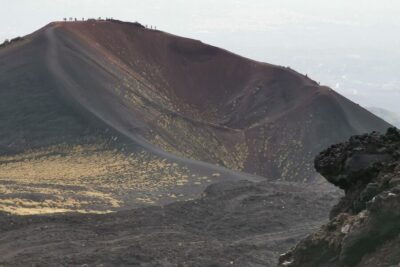
Catania: Mount Etna Trekking Tour Beyond the Tourist Trails
Read our review →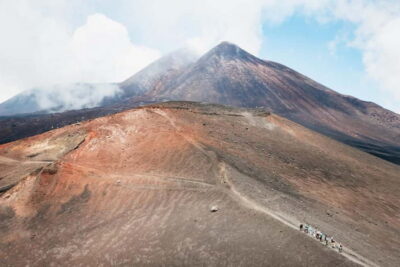
Mount Etna: Guided Trek 3,000 Meters to the Summit
Read our review →
Etna Sunset Tour: Volcano trek, Cave & tasting from Catania
Read our review →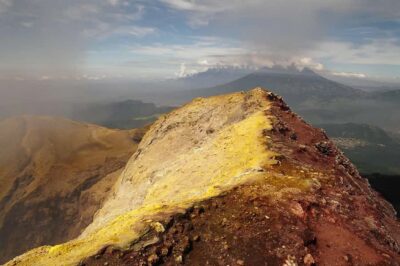
Lists this trek appears in