Review · JAPAN
Frozen fall trekking
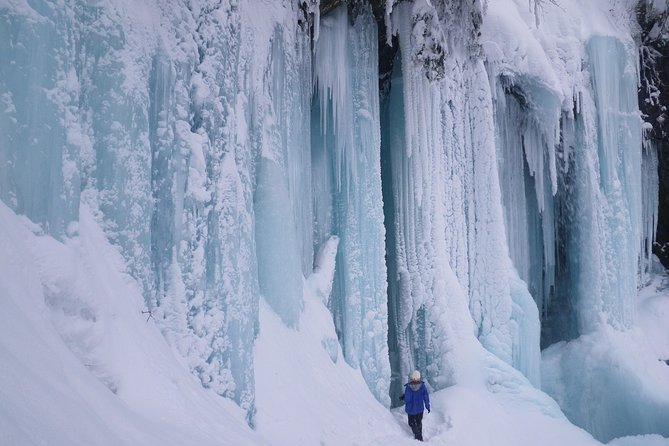
A wall of blue ice appearing through a silent, snow-covered forest is the main event here. You walk into the Hida-Osaka mountains with a local guide, often using snowshoes, and spend real time at one of the area’s most admired frozen waterfalls. It is a full winter day, not a quick roadside photo stop.
I like the private group format, which lets the guide adjust the route to your pace and experience. I also like the local feel: Hida-Osaka is a quiet mountain area between Gero and Takayama, and guides such as Reiko and Osamu have earned praise for clear instructions and warm help with families. The catch is simple: this is demanding winter trekking in very cold conditions, not a gentle woodland stroll.
Key points to know before you book
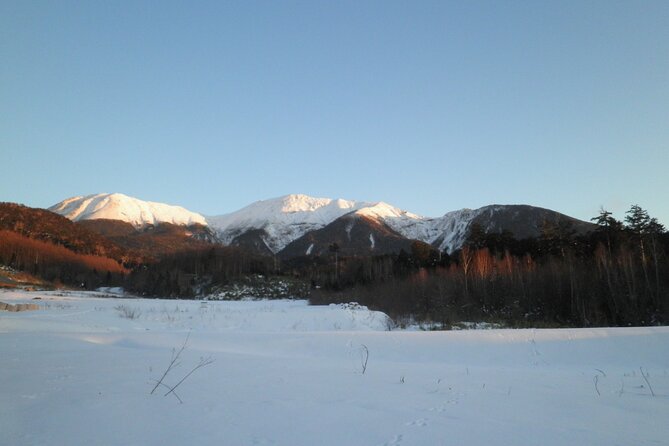
- The frozen waterfall is reached on foot: Expect a snow hike through dense forest before the blue ice comes into view.
- Your route is adjusted to you: The guide chooses a trek suited to your ability, needs, and the day’s conditions.
- You get a small private outing: Your own group receives the guide’s attention, with a maximum of seven people.
- Snow equipment is included: The tour is built around winter trekking gear, and past outings have used snowshoes in deep snow.
- The day lasts about eight hours: Allow most of a full day, including the walk to and from the waterfall.
- Physical and size limits apply: You need strong fitness, must be taller than 140 centimeters and shorter than 190 centimeters, and weigh under 90 kilograms.
Walking into Hida-Osaka’s winter forest
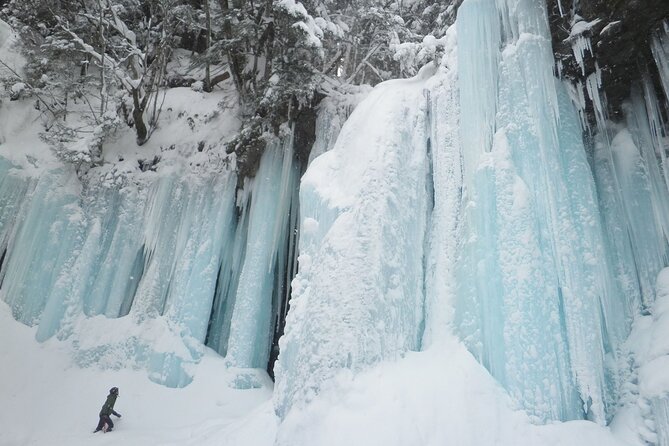
The setting gives this trip its character. Hida-Osaka is surrounded by mountains and forest, about 40 to 50 minutes from either Gero or Takayama by train, bus, or car. It feels far removed from the busy hot-spring streets of Gero and the better-known sightseeing routes around Takayama.
You begin by meeting the guide near Hida-Osaka Station. The listed meeting address is the Waterfalls of Osaka Tour Secretariat at 38-8 Osakacho Ochiai, Gero, Gifu. Since the tour information also describes a station meetup, confirm the exact meeting instructions after booking. That small bit of planning matters in a rural area, particularly if you are arriving by public transport.
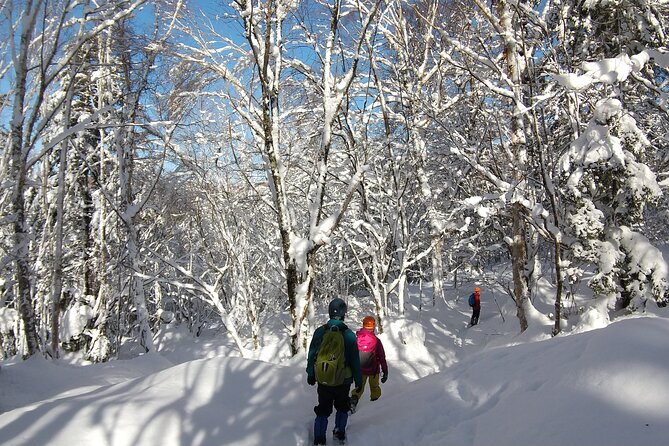
The walk takes you into a snow-covered forest where the pace is set by the group. This is where the private format pays off. A guide can slow down, adjust the route, or explain what to expect without trying to keep a large crowd moving. The route itself may change with snow and weather, so you should think of this as a guided winter outing rather than a fixed sightseeing circuit.
The forest bathing element is central to the experience. The Japanese idea of shinrin-yoku is less about checking off sights and more about letting the woods set the pace. Snow muffles sound, the air feels crisp, and the trees create a strong sense of separation from the towns below. You will not simply arrive at the waterfall and leave. Much of the value comes from the long approach.
More treks around the world:
- Mount Etna: Trek to 3000m with cable car and 4×4
★ 4.6 · 3,823 reviews - Bali: Mount Batur Sunrise Trek With Guide and Breakfast
★ 4.8 · 3,461 reviews - From Chania: Full-Day Samaria Gorge Trek Excursion & Guide
★ 4.6 · 3,191 reviews
The long walk to the blue ice
The waterfall is hidden until you are close, which makes the arrival more dramatic. After walking through the forest, a large frozen mass of blue ice suddenly appears ahead. That change from ordinary snowy woods to a towering frozen cascade is the visual payoff of the day.
The exact conditions can vary. One outing took place at about minus 12 degrees Celsius after heavy snowfall, with deep snow covering the route. That kind of weather can create the most striking scenery, but it also makes the trek harder. Snowshoes help you move across deep snow, yet they do not make the walk effortless. You still need balance, stamina, and patience.
The time spent at the waterfall is another strong point. This tour is intended for people who want more than a quick look. You have time to take in the ice, photograph it, and enjoy the quiet before heading back. The description does not promise a particular amount of time at the falls, so ask the operator if that is your main reason for booking.
Guides have sometimes brought groups close to the waterfall, giving a better view of the ice than a distant lookout would. That proximity depends on safe conditions. Frozen waterfalls can be unstable, and snow depth can change quickly, so follow the guide’s instructions rather than treating the ice as a climbing wall.
What the guide adds to the day
A good guide matters more here than on a simple city walk. The route is affected by snow, temperature, and the group’s ability. The guide also handles the practical side of winter movement, including the use of the supplied equipment.
Reiko is specifically praised for strong English, friendly communication, and working well with children. Osamu has also guided family groups. Other outings have included Jun, Hora, Mura, Komo, and Matchan, so the exact guide may vary. The common thread is a local team rather than one guaranteed individual guide.
Communication before the tour is useful. One guide has been praised for giving clear, specific instructions about what to bring and what to expect. Take advantage of that. Ask about clothing, footwear, the day’s snow level, and where you should meet. The operator can also suggest a different trek when the frozen waterfall route is not suitable.
That flexibility is not a minor detail. One planned waterfall outing changed because of the weather, and the alternate hike became a strong part of the day. If you are willing to accept a safe substitute, this tour is less likely to feel like a wasted journey when conditions change. If seeing this particular waterfall is your only goal, ask about the weather policy before you pay.
Private group size and family suitability
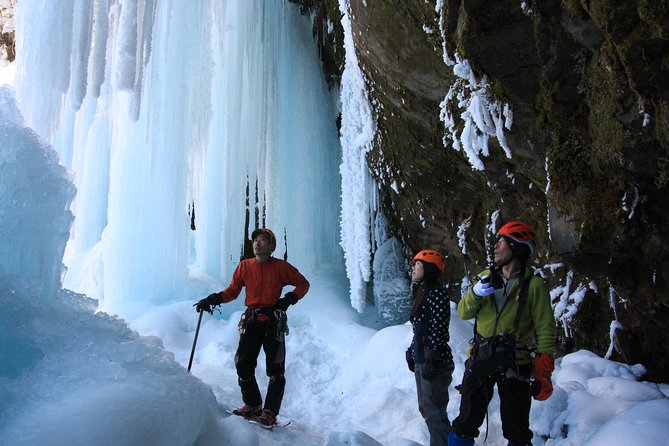
The maximum group size is seven people, and the activity is limited to your own group. That is a useful middle ground. You get more personal help than on a large coach excursion, but you do not need to organize a one-person private guide.
Families can enjoy this outing, but age alone does not determine suitability. A family group with children aged 8, 10, 12, and 13 completed a frozen waterfall trip with Reiko and Osamu. That shows the tour can work for children, especially when the guide is attentive and the children are comfortable in snow.
Still, the operator requires strong physical fitness. A child or adult who struggles with long walks, cold, or uneven snow may find the day too tiring. The minimum height is 140 centimeters, or about 4 feet 7 inches, and the maximum is 190 centimeters, or about 6 feet 2 inches. You must also weigh less than 90 kilograms, or 198 pounds, because the equipment is operated within those limits.
These restrictions are practical rather than cosmetic. Winter equipment must fit correctly, and snow trekking demands more effort than walking on a cleared path. Check every person in your group before booking, especially teenagers who may be near the height limits.
Same mountains, a different route up:
- Mount Etna: Summit Crater Trek with Cable Car
★ 4.8 · 1,875 reviews - La Palma: Tajogaite Volcano Guided Trek
★ 4.8 · 1,810 reviews - Etna: summit craters trekking with volcano guide 3350mt
★ 4.7 · 1,712 reviews - From Rethymno: Samaria Gorge Full-Day Trek, Pickup & Guide
★ 4.5 · 1,610 reviews
What the eight-hour schedule really means
Eight hours is a substantial commitment. You should not plan another major attraction immediately afterward, particularly if you are staying in Gero and need to return by train or bus. The activity ends back at the meeting point, which simplifies the return, but you still need to allow time for onward transport.
The day generally breaks into several parts:
- Meeting the guide and checking the route
- Receiving or using the included winter equipment
- Walking through the snowy forest
- Spending time at the frozen waterfall
- Trekking back to the meeting point
The supplied details do not give exact times for each stage, and snow conditions will affect the pace. A period of heavy snowfall can make the approach slower and more tiring. Build in spare time rather than treating the eight-hour estimate as a precise timetable.
Lunch is not included. Bread and hot soup may be available as an optional addition, which could be welcome after hours in the cold. Confirm the arrangement in advance. If lunch is not added, bring enough food and water according to the operator’s instructions. Do not assume you will find a shop or café along the forest route.
Equipment, clothing, and cold-weather preparation
Professional equipment is included, but the details of every item are not specified. Past outings clearly used snowshoes, and you should expect a proper winter setup rather than ordinary walking shoes. Ask what equipment is supplied and what you must bring yourself.
Dress for long exposure to cold, not a brief photo stop. Warm layers, waterproof outer clothing, gloves, a hat, and suitable winter footwear are sensible starting points. The heavy snow and temperatures below freezing make wet clothing a real problem. Your camera and phone should also be protected from snow and cold.
Pack lightly, since anything you carry must go with you through the forest. At the same time, do not cut essentials to save a little weight. Water, food if lunch is not arranged, spare warmth, and a way to protect electronics are more useful than a large collection of camera accessories.
The forest can look peaceful, but the conditions are serious. Stay close to the group, listen to the guide, and do not wander onto the ice or ahead of the route. The appeal is wild winter scenery, not testing your limits alone.
Is the $180.64 price fair?
At $180.64 per person, this is not a cheap half-day activity. The price covers about eight hours, a professional guide, equipment, and a private group experience capped at seven people. You are paying for access to a remote winter setting and for local judgment about a route that can change with weather.
The value is strongest if you are already visiting Gero or Takayama and want a serious outdoor day beyond hot springs, old streets, and standard sightseeing. Transport to Hida-Osaka is not presented as included, so add the cost and time of reaching the meeting point. From Gero or Takayama, the trip takes roughly 40 to 50 minutes by train, bus, or car.
For a group of friends or family, the private format makes the price easier to justify. You are not paying for a brief group transfer. You receive a route adjusted to your party, equipment, and sustained guide attention. Solo visitors may find the price harder to accept unless the chance to see a frozen waterfall is a top priority.
Because lunch is extra, budget for that separately. Also remember that poor weather can cause a date change or full refund, which protects you from paying for an unsafe outing but does not guarantee that your schedule will remain intact.
When weather changes the plan
This activity depends on good weather and a minimum number of participants. If poor weather cancels the outing, you can receive a different date or a full refund. If the minimum number is not met, you are offered a different date or experience, or a full refund.
That policy is useful, but winter plans still need flexibility. Snow is part of the attraction, yet too much snow or unsafe conditions can change the route. The operator has recommended another hike when the original waterfall trek was not suitable. I would book this with one open day or at least with no unmovable evening plans.
You can cancel for a full refund up to 24 hours before the start time. Changes made less than 24 hours before the activity are not accepted, and late cancellations are not refunded. The booking must be made at least three days before the tour date, with confirmation subject to availability within 48 hours.
Who should book this winter trek?
I would choose this outing if you want a full day in nature and are comfortable with real winter exertion. It suits hikers, photographers, couples, and families with older children who can manage deep snow and cold. It is also a good fit if you have already seen the main sights in Gero or Takayama and want a less polished, more physical experience.
I would hesitate if you want a relaxed walk, dislike cold weather, or need a guaranteed itinerary. The waterfall route may change, lunch is not included, and the eight-hour duration leaves little room for another major activity.
My verdict on the frozen waterfall trek
Book it if the thought of walking through a quiet, snow-capped forest to a blue frozen waterfall sounds better than another indoor attraction. The strongest features are the private group setup, flexible route choice, included equipment, and patient local guidance. The forest approach is not filler. It is the heart of the experience.
Skip it if you are not physically ready for deep snow or if your Japan schedule has no room for a weather change. For everyone else, this offers a rare look at Hida in winter, with enough time to slow down and appreciate the cold, quiet setting.
FAQ
Where does the frozen waterfall trek meet?
The tour information describes an easy meetup at Hida-Osaka Station. The listed start address is the Waterfalls of Osaka Tour Secretariat at 38-8 Osakacho Ochiai, Gero, Gifu 509-3111, Japan. Confirm the exact meeting instructions after booking.
How long does the activity last?
The experience lasts about eight hours and ends back at the meeting point.
Is the tour private?
Yes. The activity is limited to your group, with a maximum of seven people.
Is snow equipment included?
Yes. Professional equipment is included. Past outings have used snowshoes for the walk through deep snow.
Do I need to be fit for this tour?
Yes. The activity requires a strong physical fitness level because you walk through a winter forest and may encounter deep snow and very cold conditions.
Are there height and weight requirements?
You must be taller than 140 centimeters, shorter than 190 centimeters, and weigh less than 90 kilograms.
Is lunch included?
No. Lunch is not included, although bread and hot soup may be available as an optional addition.
New treks around the world
- Sapa: 2-Day Local Guided Valley Trek with Night Homestay★ 5.0 · 27 reviews
- SAPA: 1-DAY TREKKING TOUR WITH LOCALS, LUNCH & RICE FIELDS★ 4.7 · 18 reviews
- Sapa: 2-Day Local Guided Valley Trek with Night Homestay★ 4.8 · 5 reviews
- Santa Marta: Trekking in Minca Complete Waterfall Circuit★ 4.4 · 28 reviews
- Santiago: Longueira, Pico de Antónia & Monte Tchota Trek★ 4.8 · 10 reviews
- Santiago: Trek from Serra Malagueta to Rabelados Community★ 5.0 · 16 reviews
- Santiago Island: Serra Malagueta & Tarrafal Beach Trek Tour★ 4.8 · 61 reviews
- Santa Marta: Multi-Day Trek to The Lost City★ 4.8 · 40 reviews
Japan Trekking Tours, side by side.
Okinawa Jungle Trails & Waterfalls – Private Yanbaru Tour
Read our review →