
Review · CUSCO
Choquequirao Trek 4 days and 3 nights
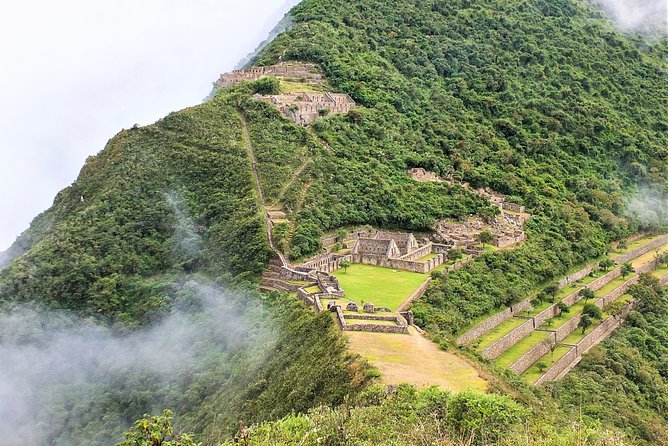
Choquequirao is the kind of Inca site you earn. Reaching it means steep descents, punishing climbs, hot canyon country, and four very early mornings. The reward is a vast stone settlement with far fewer people than Machu Picchu, plus big views into the Apurimac Canyon.
I like the thoughtful support here: a chef prepares every meal, and a porter carries up to 7 kilograms of your personal gear. I also like the human scale of the trip, with a small group and guides such as Elias, Sebastian, and Gary praised for patience, humor, history, and steady encouragement.
The main drawback is simple: this is a hard trek, not a gentle sightseeing tour. The published day-by-day schedule also contains some conflicting distances and camp elevations, so I would confirm the exact route and overnight stops before paying.
Key points to know before you book
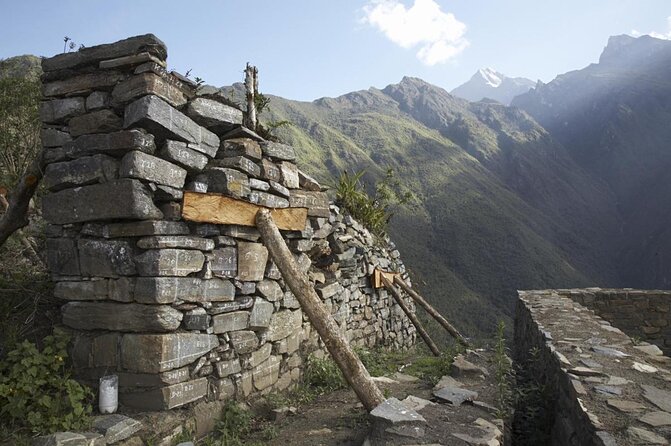
- Choquequirao without the crowds: The site is reached by foot, which keeps visitor numbers low compared with Machu Picchu.
- A serious canyon trek: You go downhill first, then face long uphill sections in hot and changing conditions.
- Meals are a major strength: The camp chef prepares breakfast, lunch, and dinner, with past departures serving varied food and handling dietary requests.
- Support reduces the load: A porter carries up to 7 kilograms of personal belongings, while the trekking crew manages camp and meals.
- Cusco pickup starts before sunrise: Hotel or airport pickup is included, with departure around 4:30 to 5:00 in the morning.
- Check the group size: The trip is described as limited to 12 people in the main description, while the additional information gives a maximum of 16.
Why Choquequirao feels different from Machu Picchu
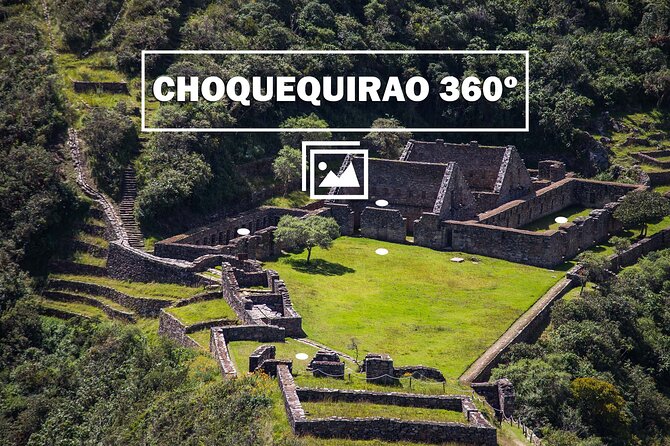
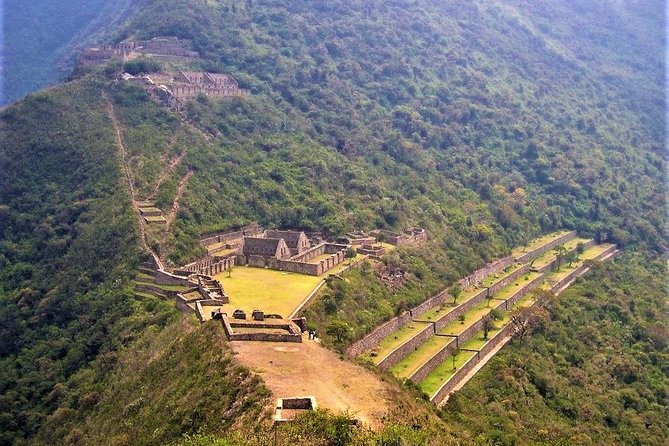
Choquequirao is often called a lost city of the Incas, though it is not truly lost. Its terraces, plazas, ceremonial areas, and stonework have been studied and opened to visitors. What makes it feel remote is the effort required to reach it.
You do not roll up by train or bus. The approach drops from the high Andes into the Apurimac Canyon, then climbs again toward the ruins. That physical separation is valuable. You get a stronger sense of place because the site is part of a long journey, not a quick stop between transport connections.
The setting changes quickly. From Capuliyoc, at about 2,911 meters, you look across high mountain country. Descending toward Chiquiska and Santa Rosa takes you into warmer, more wooded terrain, with the canyon opening below. The trip description also points to flowers, birds, waterfalls, and cloud-forest vegetation along the route.
This is not a trek built around constant archaeological explanations. Much of the appeal comes from the changing views and the quiet. At the citadel, you may have long periods to explore without the dense foot traffic common at Peru’s best-known Inca site.
More Inca Trail treks around Cusco:
- Salkantay Trek Challenge – 3 Days / 2 Nights
★ 5.0 · 101 reviews - Machu Picchu: 5-Day Salkantay Trek with Panoramic Train
★ 5.0 · 79 reviews - Ancascocha Trek To Machu Picchu 4 Days And 3 Nights
★ 5.0 · 77 reviews
Day 1: Capuliyoc to Santa Rosa and the first canyon descent
The day begins early, usually with pickup in Cusco between 4:30 and 5:00 a.m. You can be collected from your hotel, and airport pickup is also listed. The drive crosses the Andes toward Capuliyoc, where the group stops for breakfast before setting off.
Capuliyoc sits at about 2,911 meters, or 9,550 feet. The first major section is a four-hour descent to Chiquiska, roughly 1,893 meters above sea level. This is a good example of what makes the trek demanding: going downhill sounds easy, but long descents can be rough on knees and thighs, especially on uneven ground.
The Apurimac Canyon begins to dominate the view. You see the route unfold through broad mountain spaces, then into warmer vegetation as you lose altitude. This opening section gives you a clear lesson in Andean geography: high, dry country can turn into thick vegetation within a single day of walking.
After lunch at Chiquiska, the route continues downhill for about two more hours to Santa Rosa, where the first camp is listed at approximately 1,478 meters. The stated distance is 10.8 kilometers, or 6.7 miles, with about six hours of walking.
That sounds moderate on paper, but the early start, the elevation change, and the sustained downhill work make it a full day. Bring water within easy reach, use trekking poles if your knees like them, and do not treat the first day as a warm-up.
Day 2: The schedule needs a quick reality check
The supplied day plan for Day 2 repeats the Day 1 description, including the drive from Cusco, breakfast at Capuliyoc, the descent to Chiquiska, and the camp at Santa Rosa. That cannot be the intended sequence for a four-day trek, since you have already completed those sections.
The heading refers to Marampata and Choquequirao, and the overall plan clearly intends the second day to bring you toward the citadel. Still, the details provided do not state the walking time, elevation gain, camp location, or exact order clearly enough.
This is the one practical point I would settle before departure. Ask TreXperience to confirm where you sleep on the second night, when you enter Choquequirao, and how much uphill walking is involved. The answer matters because this is likely the day with the hardest climb, but the supplied schedule does not provide a dependable account.
The support system becomes especially useful here. A guide can set a steady pace and watch for signs that someone needs a rest. Past departures included guides such as Elias, Sebastian, Gary, Sergio, and others, with the strongest praise focused on calm encouragement and personal attention. Names and staffing can change, so confirm your assigned guide during the pre-departure briefing.
Day 3: The citadel, flowers, birds, and another long walking day
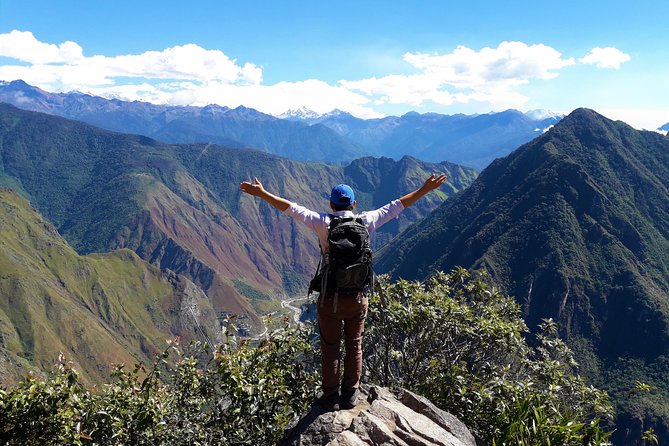
Day 3 is labeled around the Choquequirao Inca Citadel. The plan says you will wake to sunrise at this magical place, followed by breakfast and a long walking circuit. It describes three hours downhill to Santa Rosa, lunch there, then two more hours downhill and two hours uphill to a campsite around Chiquiska.
The figures are not fully consistent. The stated distance appears as 8 kilometers and 11.32 miles, which cannot both describe the same distance. The camp elevation also varies within the supplied figures. Treat the schedule as a broad outline, not a precise trail sheet.
The important point is that this is not just a sightseeing morning followed by an easy return. You should expect a long day on foot, with both downhill and uphill sections. The scenery is a strong part of the experience, with mountain vegetation, flowers, birds, and distant waterfalls mentioned along the route.
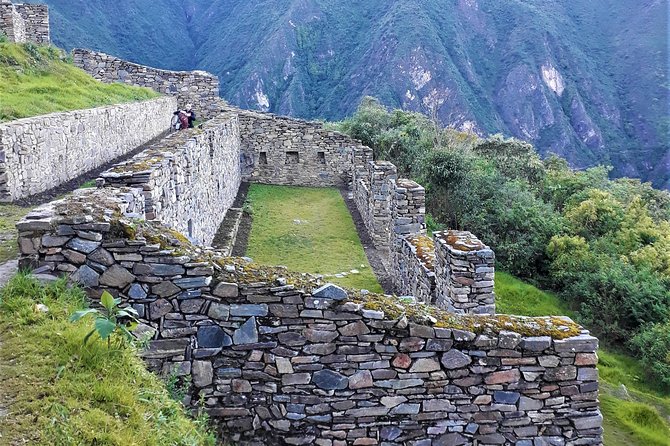
Choquequirao itself deserves time. The site is large enough that a hurried visit would miss much of its character. Your guide can help connect the stonework to the Inca world and explain what you are seeing, while you still have room to explore at your own pace.
The quiet is a real advantage. If you want a major archaeological site where you can pause without being pushed along by a thick line of people, this trek has an edge over more crowded routes.
More four-day treks around Cusco
- Cusco: 4-Day Lares Trek to Machu Picchu with Panoramic Train
★ 4.9 · 20 reviews - Cusco: 4-Day Salkantay Trek to Machu Picchu, Panoramic Train
★ 4.3 · 17 reviews - Cusco: Machu Picchu Inca Trail 4-Day Trek
★ 5.0 · 2 reviews - Pokhara: 4-Day Ghorepani, Poonhill & Ghandruk Mountain Trek
★ 5.0 · 132 reviews
Day 4: Climbing back to Capuliyoc and stopping at Saywite
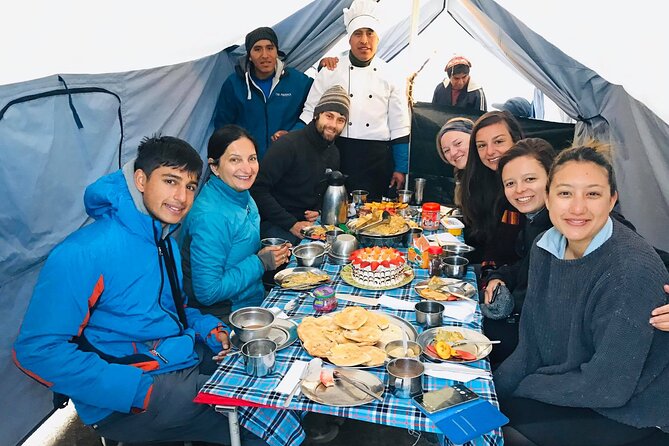
The final day begins with breakfast and a four-hour uphill walk to Capuliyoc. This is the kind of finish that tests your legs because the trip ends with a climb rather than a gentle stroll.
Lunch is planned at Capuliyoc, followed by farewells to the trekking crew. Private transport then takes you to Saywite, an archaeological site known for its mysterious carved rock. You have time to explore before returning to your hotel at about 5 p.m.
Saywite is a useful final stop because it gives the journey an archaeological postscript without requiring another full day on foot. The large carved stone has inspired different interpretations, and the visit adds variety after several days of canyon walking.
The listed Day 4 distance and hiking time also appear inconsistent, showing 8 kilometers and 11.32 miles along with about eight hours of walking. The described uphill section itself is about four hours. Again, ask for the confirmed route details, especially if you are planning onward transport or a fixed evening schedule in Cusco.
Camp cooking is a genuine part of the value
The price is listed at $698 per person. That is not a bargain-basement walking tour, but the inclusions make it easier to understand the cost. You receive transportation from start to finish, a professional English-speaking guide, a chef, a personal porter for up to 7 kilograms, four breakfasts, four lunches, and three dinners.
Food matters on a trek like this. You are using a lot of energy, and poor meals can make a hard route feel miserable. The strongest praise for this operation centers on the cooking. Chefs named Leandro, Balbino, Oscar, Julio Cesar, Juvenal, and Lucio are credited with fresh, varied meals, with no repeated dishes on some departures.
Do not expect restaurant service in the mountains, but you can expect the cooking team to be more capable than many first-time trekkers imagine. Vegetarian meals are available, and you should give notice about any dietary needs when booking.
Your porter allowance is helpful, but it is not a full luggage service. Pack carefully and keep the essentials you need during the day in your own daypack. The optional extras are a mattress, sleeping bag, and trekking poles. Those are not included, so ask what rental choices are available if you do not want to carry your own.
The guide and crew make a hard route manageable
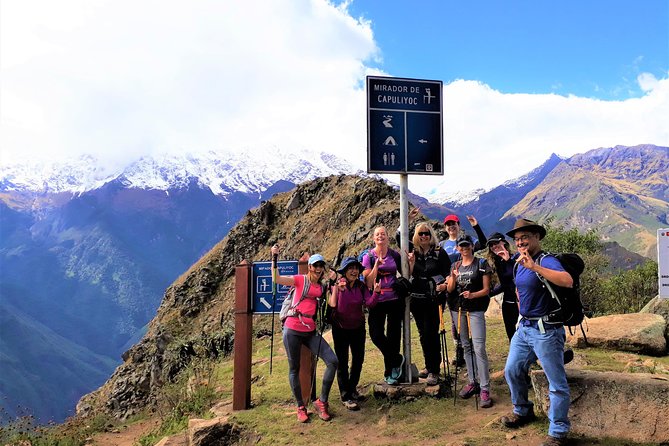
On a demanding trek, a good guide is more than a walking encyclopedia. You need someone who can judge pace, explain the ruins clearly, notice when you are struggling, and keep the mood steady after a long climb.
The strongest staff praise is very specific. Elias is described as kind, funny, patient, and well informed about history and archaeology. Sebastian is noted for a positive manner and practical help. Gary and Sergio led another departure, while guides such as Pepe, Renato, Eddie, Abelardo, Alexis, and Jhon are also associated with highly praised trips.
The names do not guarantee who will lead your departure. They do show the kind of service the company aims to provide. The crew also includes cooks, assistants, mule handlers, and porters. Boris, Leandro, Oscar, Balbino, and others receive particular credit for carrying equipment, preparing food, and looking after camp needs.
The small-group promise is worth examining. The main description says the trek is limited to 12 people, while the additional information says the maximum is 16. That is still smaller than a large coach tour, but it is a meaningful difference on a narrow trail. Confirm the actual group size before booking if personal attention is a major reason you are choosing this trip.
Fitness, packing, and the daily rhythm
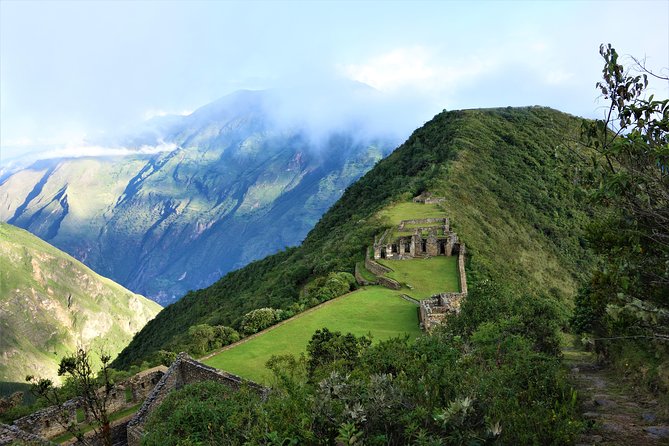
You need moderate physical fitness at minimum. The route includes long descents, long climbs, high starting elevations, and major changes in temperature as you move between the Andes and the canyon.
You do not need to be an elite athlete, but you should be comfortable walking for six to eight hours on mountain trails. Training on hills is more useful than simply walking flat roads. Pay special attention to downhill conditioning, since the first day loses a lot of height.
Start with a good daypack, water, sun protection, layers, rain protection, and comfortable hiking shoes. Keep your personal gear within the 7-kilogram porter limit if you want to use that service. Trekking poles are optional, but they can help on steep descents and the final climb to Capuliyoc.
The pre-departure briefing takes place at 6 p.m. the night before. Use it to ask about the corrected route, camp elevations, baggage arrangements, sleeping equipment, and the identity of your guide and chef.
Who should book this Choquequirao trek?
I would choose this trip if you care more about remote ruins, mountain walking, and quiet trails than about comfort or a relaxed timetable. It suits hikers who want a demanding alternative to the classic Inca Trail and who appreciate having meals, camp work, and most transport organized.
It is also a good match for anyone who worries about managing a multi-day trek alone. The guide, chef, porter, and transport team remove much of the planning burden. You still have to walk the route, but you do not have to organize food, camp transfers, or the return journey yourself.
I would hesitate if you dislike early starts, basic camping, steep descents, or uncertain schedule details. The price is reasonable for the support included, but only if you will use the full service. Independent hikers with their own equipment and strong route-planning skills may prefer a different arrangement.
Free cancellation is offered up to 24 hours before the start time. Poor weather or failure to reach the minimum number of people can also lead to a new date, an alternative experience, or a full refund under the stated conditions.
Should you book it?
Book it if you want Choquequirao for the journey as much as for the ruins. The Apurimac Canyon, the changing vegetation, the small-group support, and the excellent camp cooking create a strong package for the $698 price.
Before booking, get the corrected Day 2 and Day 3 schedule in writing. Also confirm the group size, porter limit, sleeping equipment, and assigned guide. If those details line up with your expectations, this is a serious but rewarding way to reach one of Peru’s great archaeological sites without the crowds.
FAQ
How long is the Choquequirao Trek?
The trip lasts four days and three nights, with approximately six to eight hours of hiking on the scheduled walking days.
What time does the trek begin?
Pickup is scheduled between 4:30 and 5:00 a.m. on the first morning. Hotel pickup and airport pickup are listed as included.
What meals are included?
The package includes four breakfasts, four lunches, and three dinners. A chef prepares the meals during the trek.
Is a porter included?
Yes. A personal porter is included for up to 7 kilograms of personal belongings. A sleeping bag, mattress, and trekking poles are optional extras.
How fit do I need to be?
You should have a moderate level of physical fitness. The route includes steep descents, long uphill sections, changing elevations, and walking days of up to about eight hours.
Can I request vegetarian food?
Yes. Vegetarian meals are available. You should advise the company about vegetarian meals or other dietary needs when booking.
What happens if I need to cancel?
You can receive a full refund if you cancel at least 24 hours before the experience start time. Cancellations or changes made within 24 hours are not accepted for a refund. Weather or minimum group requirements can also lead to a new date, an alternative experience, or a full refund.
New treks around Cusco
- Salkantay Humantay lake trek with Domes-2d-1n★ 5.0 · 2 reviews
- Salkantay Trek to Machu Picchu 5D/4N or 4D/3N by glamping★ 4.4 · 35 reviews
- Rainbow Mountain Trek 1 Day★ 5.0 · 2 reviews
- Rainbow Mountain and Red Valley Hike trek adventure★ 4.5 · 2 reviews
- Tour Pallay Punchu Trek Full Day★ 4.2 · 3 reviews
- Cusco: Machu Picchu Inca Trail 4-Day Trek★ 5.0 · 2 reviews
- From Cusco: Salkantay Trek to Machu Picchu 5D/4N or 4D/3N★ 5.0 · 3 reviews
- Cusco: 4-Day Salkantay Trek to Machu Picchu, Panoramic Train★ 4.3 · 17 reviews
Machu Picchu and Inca Trail Treks, side by side.
Machu Picchu: 5-Day Salkantay Trek with Panoramic Train
Read our review →
Ancascocha Trek To Machu Picchu 4 Days And 3 Nights
Read our review →
Salkantay Trek to Machu Picchu 5D/4N or 4D/3N by glamping
Read our review →
4 days/3 nights: Inka Jungle Trek to Machu Picchu
Read our review →
Cusco: 4-Day Lares Trek to Machu Picchu with Panoramic Train
Read our review →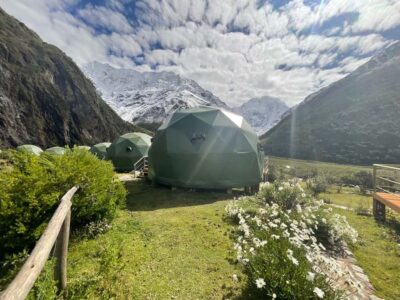
5-Day Salkantay Trek to Machupicchu Sky Lodge Dome
Read our review →
From Cusco: 5-Night Trip with Salkantay Trek & Machu Picchu
Read our review →Lists this trek appears in