
Review · CUSCO
Ausangate Trek 5 Days
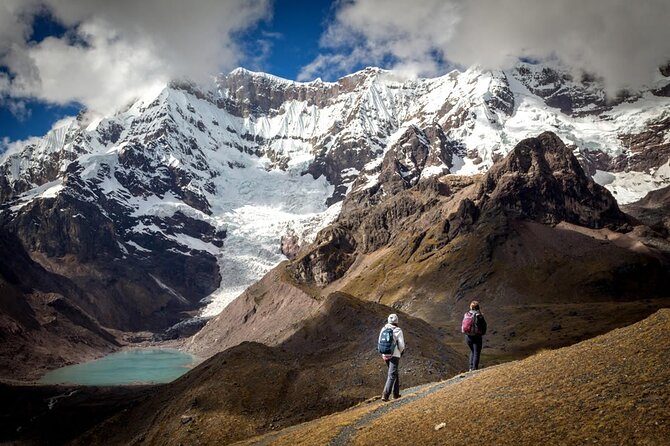
Ausangate is Peru without the crowds: a high, demanding circuit of ice-covered peaks, turquoise lakes, alpacas, hot springs, and remote Quechua communities. The trail reaches 5,200 meters at Palomani Pass, so this is no gentle stroll. It is a serious mountain trip with scenery to match.
I like the small groups, limited to 10 people, and the care given by the support crew. The hot springs at Upis and Pacchanta are welcome rewards, while the local food and weaving visit add real human context. The catch is altitude: cold nights, thin air, and long days make this a poor choice if you want a relaxed holiday.
Key points at a glance
- 5,200-meter Palomani Pass: The highest point of the route brings huge views and a traditional offering to Apu Ausangate.
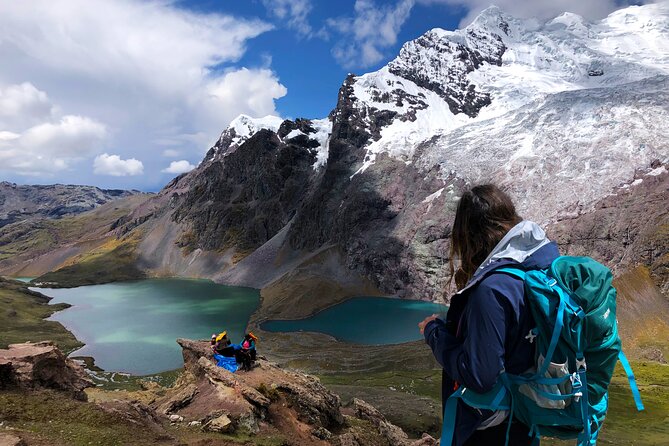
- Remote turquoise lakes: Jatun Puqa Q’ocha, Ausangate Qocha, and other glacial lakes give this trek its changing colors.
- Two hot-spring stops: Soak at Upis early in the trek and finish near Pacchanta after four demanding days.
- Small support team: Groups are capped at 10, with horses carrying camping equipment and cooks preparing meals in camp.
- Local culture on the final morning: Meet a local family, learn about food and weaving, and take part in a cultural ceremony.
- A truly high-altitude route: Camps reach about 4,630 meters, with temperatures that can drop sharply after dark.
Why Ausangate feels different from the Inca Trail
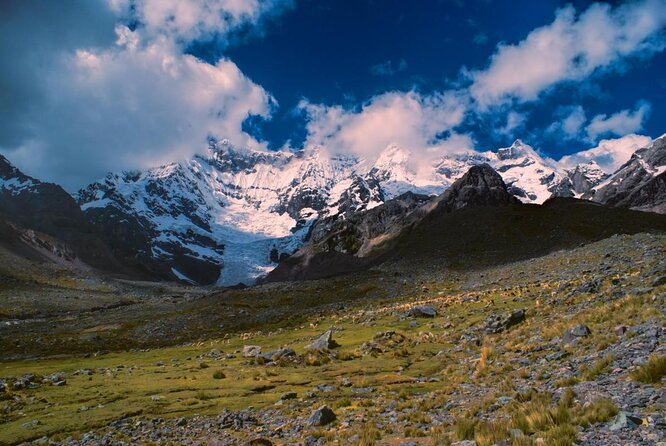
The Inca Trail leads to a famous archaeological finish. Ausangate offers something else: open mountain country, few people, and a close look at life around one of the Andes’ most important peaks. You spend much of the trip far from roads and towns, walking between glaciers, lakes, grazing animals, and high passes.
The mountain is known as Apu Ausangate, a sacred protective spirit in Andean tradition. That belief is not treated as a museum display here. On Day 3, your guide performs a ceremony at Palomani Pass, giving the route a cultural meaning beyond its impressive views.
The scenery changes by the hour. You might walk past green water in the morning, see a bright turquoise lake after lunch, then finish among broad high valleys under the snowy bulk of Ausangate. The route is not built around one single viewpoint. Its appeal comes from the steady sequence of remote places.
That remoteness has a practical cost. You are camping at very high elevations, not staying in lodges. The route requires a moderate fitness level, but I would treat that description with respect. The distance is manageable for a fit hiker, yet the altitude makes every climb harder.
More five-day treks around Cusco
- Machu Picchu: 5-Day Salkantay Trek with Panoramic Train
★ 5.0 · 79 reviews - 5-Day Salkantay Trek to Machupicchu Sky Lodge Dome
★ 4.0 · 6 reviews - Cusco: 5-Day Salkantay Ultimate Trek to Machu Picchu
★ 5.0 · 3 reviews
Day 1: From Cusco to Upis hot springs
Your day starts early, with pickup in Cusco at 5:00 a.m. Private transport takes you toward Tinke. This is the final useful stop for small purchases and breakfast before the trail begins, so use it wisely. After Tinke, you continue to Rondoca, where you meet the cook and horse driver who support the trek.
The first walking day is short by mountain-trek standards, about three to four hours and 8 kilometers. You hike toward the Apu Ausangate area and stop for lunch along the way. The elevation rises from about 3,800 meters to a camp near 4,200 meters, which means the altitude begins affecting you immediately.
The reward is Upis. After reaching camp, you can soak in the hot springs with a cup of coca tea while your muscles loosen. This is a smart first-night arrangement. Instead of pushing through a long opening day, the tour gives you time to settle into the altitude.
Still, do not mistake the short mileage for an easy day. You have already left Cusco early, spent hours in transport, and climbed to a high camp. Keep your pace slow, drink water, and save energy for the days ahead.
Day 2: Two high passes and Jatun Puqa Q’ocha
Day 2 is the first major test. The crew wakes you with hot coca tea, followed by breakfast and a long mountain day of around seven to eight hours. You first climb to Arapa Pass at 4,850 meters.
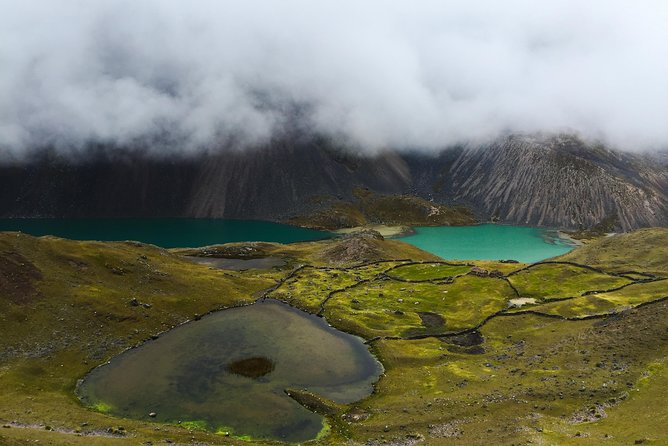
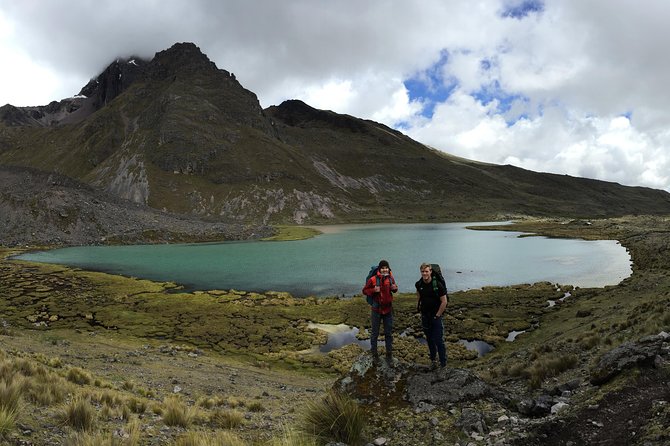
From the pass, the trail drops for about two and a half hours through the valley. You pass the green waters of Puqa Q’ocha before reaching turquoise Jatun Puqa Q’ocha. Lunch beside the lake gives you time to rest and take photographs, with Ausangate forming the backdrop.
The second climb takes you over Apacheta Pass, listed at about 4,980 meters. From here, a turquoise lagoon below reflects the snowmelt from Ausangate. The color contrast is one of the day’s strongest moments: blue-green water, bare mountain slopes, and ice above.
After the pass, you descend for about an hour to Ausangate Qocha, where you camp for the night. The day covers around 12 kilometers, but the number alone understates the effort. You cross two high points and spend the night at roughly 4,630 meters.
This is also the night when cold matters most. A warm sleeping bag is not included, so you must bring or rent one separately. One experienced trekker compared the evening cold to the Himalayas, a useful warning for anyone who thinks Peru’s tropical latitude guarantees warm nights.
Day 3: Palomani Pass and the heart of the trek
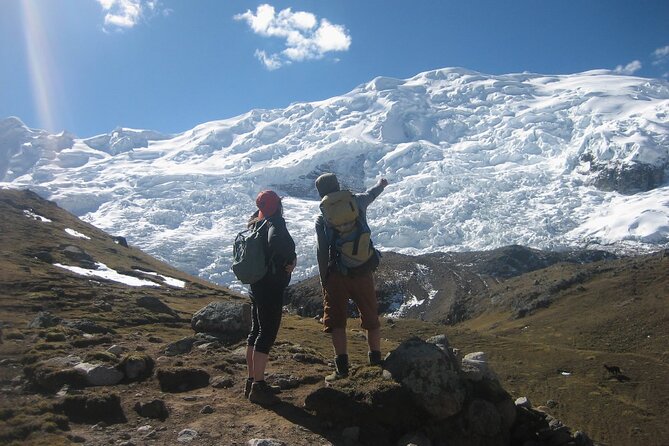
Day 3 takes you to the route’s highest point, Palomani Pass at 5,200 meters. The climb takes about two hours from camp, though your pace will depend on how your body handles the altitude.
At the pass, your guide leads a ceremony for Apu Ausangate. This is one of the most meaningful parts of the route because it connects the physical mountain with the beliefs of the people who live around it. You are not simply stopping for a photograph. You are given a moment to recognize the mountain as a living presence in local culture.
The descent lasts about an hour before lunch at Uchuy Phinaya. The trail then continues for several more hours toward camp. Total walking time is about six to seven hours, with the elevation dropping from roughly 4,600 meters to 4,300 meters before the next camp near 4,500 meters.
This may be the toughest day mentally. You have the highest climb, the cold, and another long afternoon after reaching the pass. The best approach is steady and patient. Let your guide set the pace, and do not spend all your energy racing toward the summit marker.
Guides named in past bookings include Chino, Urbano, and Guillermo. The exact guide depends on your departure, but the experience is designed around local explanation as well as route-finding. Guillermo, in particular, is noted for sharing stories about local life, wildlife, and long-standing traditions. Urbano is also known for helping with photography, which can be useful at a viewpoint where you want more than a quick arm’s-length picture.
More treks around Cusco:
- From Cusco: 7 Lakes Ausangate Trek with Breakfast and Lunch
★ 4.8 · 360 reviews - Cusco: Full-Day Rainbow Mountain & Red Valley Trekking Tour
★ 4.5 · 121 reviews - Salkantay Trek Challenge – 3 Days / 2 Nights
★ 5.0 · 101 reviews - From Cusco: Rainbow Mountain Trek
★ 4.5 · 98 reviews
Day 4: Glacial lakes and Pacchanta
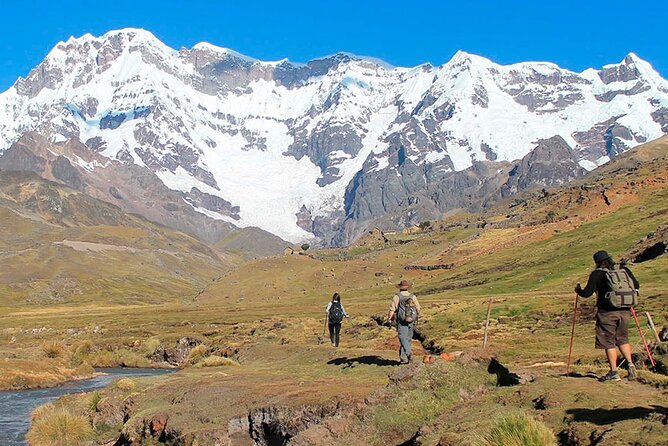
Day 4 covers about 15 kilometers and takes roughly six hours. You cross only one pass, so the day has a different rhythm after the high point of Palomani. The route focuses on lakes, glacial colors, and new views of Ausangate.
The deep blue lagoons are the main event. If conditions and courage allow, you can take a quick cold plunge, but this is optional and the water is glacial. You also see the Pacchanta Valley from a new angle, with Ausangate still visible behind you.
The trail descends toward Pacchanta, where hot springs provide the day’s finish. This is an excellent design choice. After four days at altitude, a warm soak is more than a pleasant extra. It gives your legs a chance to recover before the final cultural visit and bus ride.
The route description lists camp elevation around 4,300 meters while descending toward Pacchanta. Clarify the exact overnight arrangement when you book, since the practical details can vary. The important point is that you are ending the walking section lower than the highest camps, with a hot-spring stop built in.
Day 5: Food, weaving, and a return to Cusco
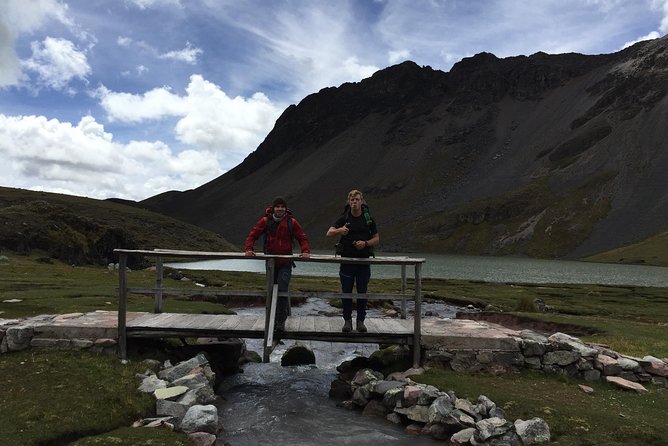
After breakfast, the final morning turns from mountain scenery to living culture. A local family prepares traditional food and shows you aspects of local customs and weaving techniques. You also take part in a ceremony before boarding the bus back to Cusco.
This visit gives the trek a better ending than simply walking to a parking area. You see how food, craft, and family traditions remain part of daily life in the high Andes. It also helps put the scenery into context. The mountains are not empty wilderness. People have lived, worked, and maintained customs here for generations.
The final day lasts about three hours, including the cultural visit and transport. It is far easier than the previous days, but the early start and accumulated fatigue will still be noticeable.
Food, horses, and camp support
The price includes breakfast on four mornings, four dinners, and five lunches. Meals are prepared by the trekking cook, with past crews including Benigno and assistant cook Euden. The food receives unusually strong praise, and that matters on a high route where you burn energy all day.
You should expect substantial camp meals rather than relying on snacks alone. A cook working from a temporary camp kitchen has produced a wide variety of hot food on this trek, which can make a real difference to morale. Bring personal snacks if you have specific dietary needs, but the included meals are a major part of the package’s value.
Horses carry the equipment, and the horse driver handles much of the hard camp work. The crew puts up and takes down tents, transports gear, and supports the cooking operation. This means you are not carrying the full camping load, though you still need a daypack with water, layers, rain protection, and personal items.
Camping equipment is included. A sleeping bag is not, so account for that extra cost. Given the high camps, I would consider a warm mountain sleeping bag essential rather than optional.
What the $660 price really covers
At $660 per person, this is not a bare-bones guided walk. The price includes private transport from Cusco to the trailhead area, a cook, horse support, camping equipment, meals, guiding, and the final return to Cusco.
You are also paying for a small group, with no more than 10 people. That matters on narrow paths and during long climbs. It gives you more room to ask questions, and the guide can better notice how each person is coping with the altitude.
The main extra charges are the entrance fee of 20 soles and the sleeping bag. The price does not include every possible personal expense, so bring money for last-minute supplies at Tinke and any items you need before leaving Cusco.
For a five-day, four-night high-altitude trek with food and animal-supported equipment transport, the package offers solid value. It is especially appealing if you want the logistics handled without joining a large coach-style group. The value drops if you are not prepared for cold nights or if you prefer comfortable accommodation to camping.
Who should book this trek
I would choose this trip if you want remote scenery, cultural contact, and a demanding mountain route that feels far removed from the main tourist circuit. It suits hikers with a moderate fitness base who are willing to walk six to eight hours on several days.
You should also be comfortable with uncertainty at altitude. The tour requires good weather, and the company may move the date or offer a refund if poor weather prevents departure. Conditions in the mountains can change, so flexibility is part of the deal.
This is not the best pick for a first-ever high-altitude experience unless you have allowed time in Cusco to adjust. The route begins near 3,800 meters and quickly reaches camps above 4,000 meters. The information provided does not promise an acclimatization program, so plan your own time carefully before the trek.
The trip works well for people who value a strong crew. Chino, Urbano, Guillermo, Benigno, Angel, José, and Euden have all been part of successful departures. Their roles cover guiding, cooking, horse support, and camp work, and the personal tone of a small crew is one of the trek’s biggest strengths.
Should you book the Ausangate Trek?
Book it if your priorities are big mountain scenery, remote trails, hot springs, and genuine contact with Andean culture. The combination of high passes, colored lakes, local ceremonies, and a family visit gives this trip more depth than a simple scenic hike.
Skip it if you dislike camping, struggle with cold, or want a low-effort holiday. The 5,200-meter pass and camps above 4,500 meters demand preparation, patience, and warm gear.
For the right person, this is a powerful five-day circuit with a small team, very good food, and scenery that changes every day. Pack for the cold, respect the altitude, and you will be ready to enjoy one of the quieter major treks near Cusco.
FAQ
How long is the Ausangate Trek?
The trek lasts approximately five days, with four nights of camping and a return to Cusco on Day 5.
What time does the tour start?
Pickup in Cusco begins at 5:00 a.m.
What is the highest point on the trek?
The highest point is Palomani Pass at approximately 5,200 meters, or 17,060 feet.
How many people can join the group?
The tour has a maximum of 10 travelers.
Are meals included?
Yes. The package includes five lunches, four dinners, and four breakfasts.
Is a sleeping bag included?
No. Camping equipment is included, but you must arrange your own sleeping bag.
What is the cancellation policy?
You can cancel at least 24 hours before the start time for a full refund. Cancellations or changes made less than 24 hours before departure are not refunded or accepted. If bad weather or an insufficient number of participants cancels the trip, you will be offered another date or experience, or a full refund.
New treks around Cusco
- Salkantay Humantay lake trek with Domes-2d-1n★ 5.0 · 2 reviews
- Salkantay Trek to Machu Picchu 5D/4N or 4D/3N by glamping★ 4.4 · 35 reviews
- Rainbow Mountain Trek 1 Day★ 5.0 · 2 reviews
- Rainbow Mountain and Red Valley Hike trek adventure★ 4.5 · 2 reviews
- Tour Pallay Punchu Trek Full Day★ 4.2 · 3 reviews
- Cusco: Machu Picchu Inca Trail 4-Day Trek★ 5.0 · 2 reviews
- From Cusco: Salkantay Trek to Machu Picchu 5D/4N or 4D/3N★ 5.0 · 3 reviews
- Cusco: 4-Day Salkantay Trek to Machu Picchu, Panoramic Train★ 4.3 · 17 reviews
Cusco Trekking Tours, side by side.
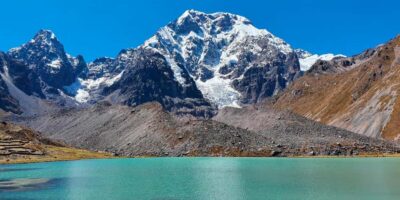
From Cusco: 7 Lakes Ausangate Trek with Breakfast and Lunch
Read our review →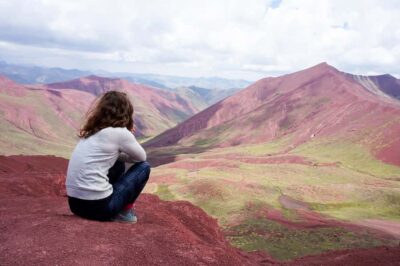
Cusco: Full-Day Rainbow Mountain & Red Valley Trekking Tour
Read our review →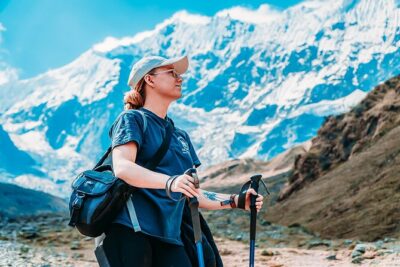
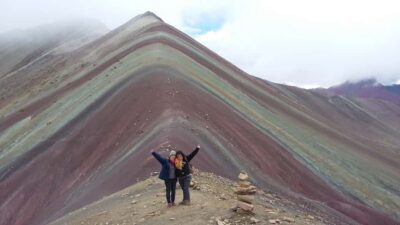
Machu Picchu: 5-Day Salkantay Trek with Panoramic Train
Read our review →
Ancascocha Trek To Machu Picchu 4 Days And 3 Nights
Read our review →
Salkantay Trek to Machu Picchu 5D/4N or 4D/3N by glamping
Read our review →Lists this trek appears in