

Review · CAPE VERDE
Santiago: Calabaceira Valley Trek & Visit to Cidade Velha
Calabaceira Valley gives you a side of Santiago that can surprise you: thick tropical growth, baobab trees, sugar cane, and small farm plots tucked into a mostly dry island. The walk then leads into Cidade Velha, where the story shifts from plants and birds to trade, slavery, religion, and pirate defense.
I like the mix of a local rural walk and a UNESCO-listed town in one outing. I also like that guides such as Mario, Katia, Ivana, Soraya, and Riccardo have been praised for being friendly and well prepared. The main caution is the description of an easy trail. Most hikers should manage it, but the first section is narrow and the route drops steeply in places. One outing also ran close to eight hours instead of four, so allow some flexibility.
Key points to know
- Calabaceira Valley drops from about 200 meters to 14 meters, with roughly 5 kilometers of one-way walking.
- The trail is rated easy, but its opening section is narrow, tilted, and rough in places.
- A local rum distillery offers a look at sugar cane farming and small-scale production.
- Cidade Velha packs several major sights into a compact old town, including Banana Street and Nossa Senhora do Rosário Church.
- São Filipe Fortress costs an extra €5, but gives the clearest view over the town and coast.
- The $82 price includes Praia hotel transport, a guide, and insurance, but not lunch or the fortress fee.
Why this half-day pairing works so well

This experience connects two very different parts of Santiago. In Calabaceira, you walk through farmland and natural vegetation. In Cidade Velha, you face the island’s role in Portuguese expansion and the Atlantic slave trade.
That contrast is the reason I find the outing worthwhile. A visit to Cidade Velha alone can feel fairly brief, especially if you only walk through the main streets. Adding the valley gives your day more texture and puts you in contact with farmers, sugar cane fields, and the terrain that shaped local life.
The tour costs $82 per person. That is not the cheapest way to reach Cidade Velha, but the price includes pickup and drop-off in Praia, transport, a live guide, and liability insurance. For you, the value depends on how much you want explained along the way. If you already have a rental car and prefer to explore at your own pace, the cost may feel high. If you want transport, a valley walk, and a guided history tour without arranging each part yourself, it is a fair package.
The standard duration is four hours, although the full plan includes a substantial walk, several sites in Cidade Velha, lunch, and the return drive to Praia. Build in extra time. A delayed pickup, a slower group, or a longer stop in town can turn this into a much longer outing.
More treks around the world:
- Mount Etna: Trek to 3000m with cable car and 4×4
★ 4.6 · 3,823 reviews - Bali: Mount Batur Sunrise Trek With Guide and Breakfast
★ 4.8 · 3,461 reviews - From Chania: Full-Day Samaria Gorge Trek Excursion & Guide
★ 4.6 · 3,191 reviews
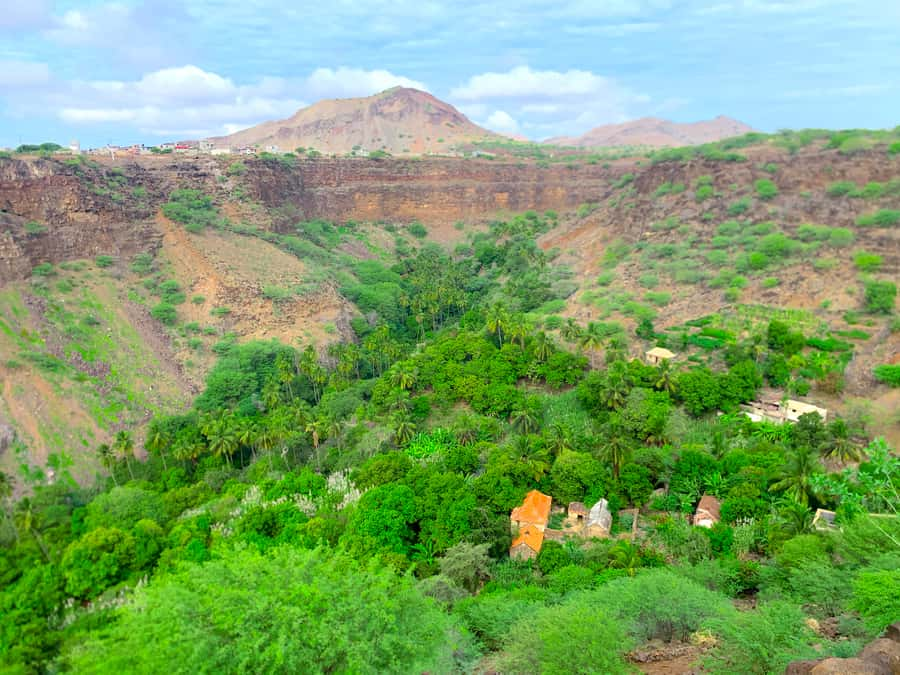
Starting above the green Calabaceira Valley
Pickup takes place at your Praia accommodation. You should wait in the lobby about 10 minutes before the arranged time. The driver carries a sign with your last name and waits no longer than five minutes after the scheduled pickup, so this is one moment when punctuality matters.
From Praia, the vehicle heads toward the small village of Calabaceira. The walk starts near the top of the valley, where the vegetation appears as a striking oasis within the island’s drier setting.
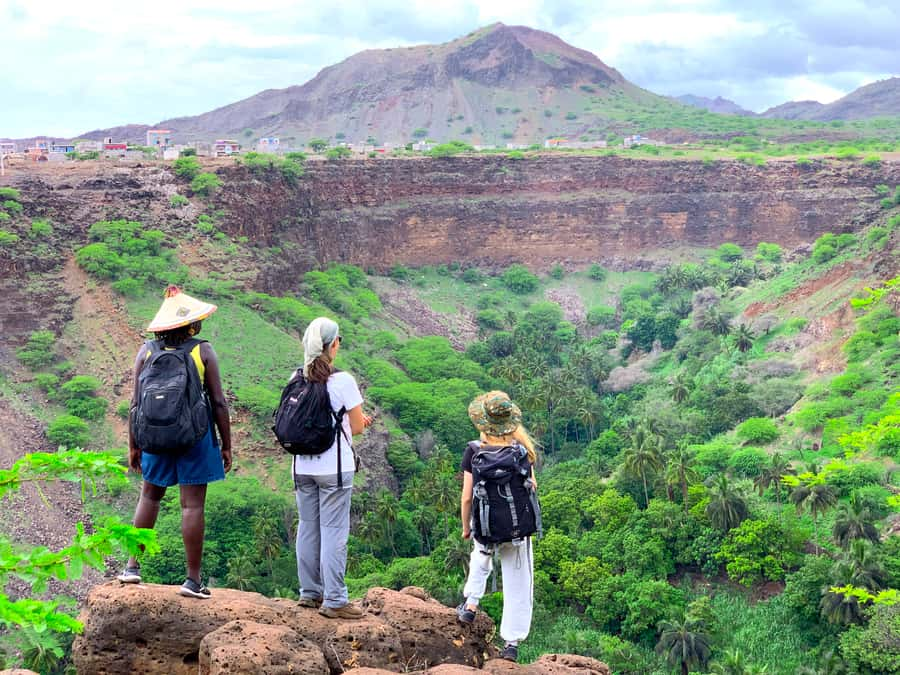
The route covers about 5 kilometers and is one way rather than a loop. The published walking time varies between roughly two and three hours, depending on whether the description is counting the full trek or the active walking time. You will lose around 186 meters in elevation, with only about 3 meters of gain, so the challenge is mainly going downhill rather than climbing.
That sounds gentle, and for a reasonably steady walker it usually should be manageable. Still, do not treat the word easy as meaning flat or perfectly smooth. The early path is narrow, with a medium tilt and some boulders. A United States participant reported that older members of the group struggled with a steep section and that the outing lasted nearly eight hours. That is an important warning for anyone with poor balance, knee trouble, or limited walking strength.
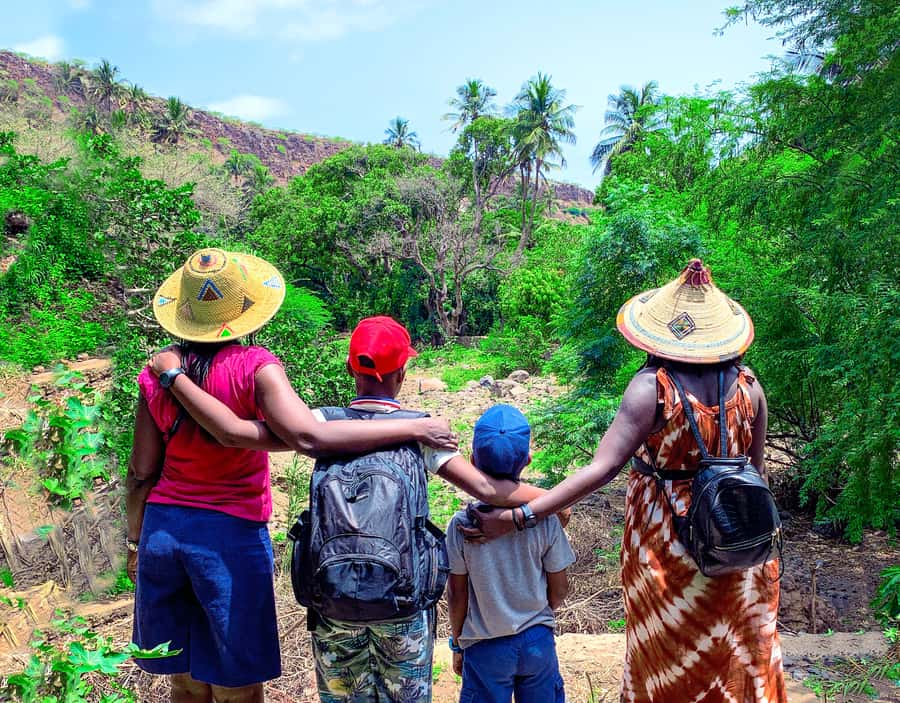
You should wear firm walking shoes, not casual sandals. Hiking trousers are especially useful from August through November, when vegetation can make bare legs uncomfortable. Bring water, a hat, sunscreen, and clothing that can handle dust or contact with plants.
Baobabs, birds, monkeys, and working farms
The valley is not a manicured nature park. That is part of its appeal. You follow a practical local path through vegetation, farmland, and scattered trees while the guide explains how people use the land.
Baobab trees are one of the memorable features. The valley’s baobabs were noted by Charles Darwin, giving the plants an unusual link to the wider story of natural history. You may also see local fauna along the way. One recent departure included kingfishers and many monkeys, though sightings are never guaranteed.
The path passes agricultural fields planted with sugar cane, mango, cassava, bananas, and other crops. These details matter because they turn the walk into more than a scenic stroll. You see how food and drink are tied to the valley’s water and soil, and how small farms fit into the surrounding vegetation.
The guide is important here. A good explanation can help you notice the difference between wild growth and cultivated plots, and can connect the valley to the island’s past. Guides named Mario, Katia, Ivana, Soraya, and Riccardo have led departures, and the available language choices are English, French, Portuguese, and Spanish.
There is also a darker historical layer. The valley served as an escape route for enslaved people. That fact changes the way you read the path. It was not simply a pretty route through greenery. It was also part of a dangerous network used by people trying to get away from forced labor and control.
A small rum distillery at the heart of the valley
The stop at a local rum-making distillery adds a useful human touch. You get a look at how sugar cane from nearby fields connects to a local product, and you have the chance to meet farmers involved in the work.
This is not presented as a large commercial factory visit. Expect something more local and practical, with an explanation of production and agriculture rather than a polished visitor center. That suits the setting. You are seeing a working tradition in the same area where the raw crop is grown.
The stop also breaks up the walk. After the downhill path, it gives you time to pause before heading on to the historic town. If you are hoping for a long tasting session or a formal food tour, keep expectations modest. The main value is the connection between sugar cane farming and rum production.
Same mountains, a different route up:
- Mount Etna: Summit Crater Trek with Cable Car
★ 4.8 · 1,875 reviews - La Palma: Tajogaite Volcano Guided Trek
★ 4.8 · 1,810 reviews - Etna: summit craters trekking with volcano guide 3350mt
★ 4.7 · 1,712 reviews - From Rethymno: Samaria Gorge Full-Day Trek, Pickup & Guide
★ 4.5 · 1,610 reviews
Arriving in Cidade Velha after the walk
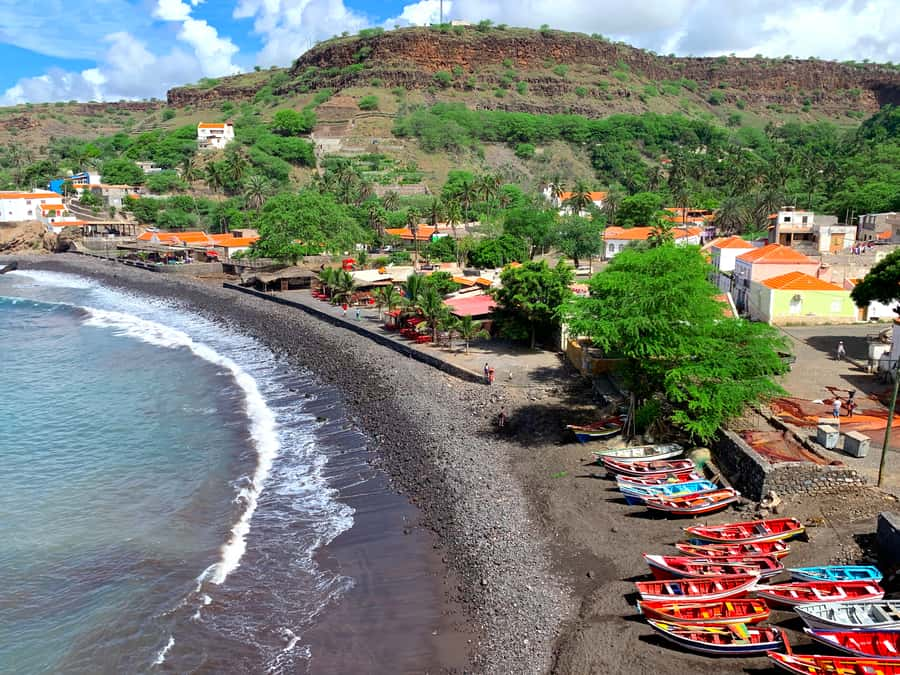
Cidade Velha is a UNESCO World Heritage Site and was the first city built by Europeans in sub-Saharan Africa. Its importance comes from its location and its role in Atlantic trade, colonization, religion, military conflict, and slavery.
The town is compact enough to explore on foot, but the story is not small. This was a major early Portuguese base, and it became closely tied to the forced movement of enslaved people across the Atlantic. A guide helps you connect the surviving buildings and ruins to that larger history.
Your route includes the São Francisco Convent, Banana Street, and Nossa Senhora do Rosário Church. These stops give you several different views of the old town.
The convent points to the religious orders that arrived with Portuguese rule. Banana Street gives you one of the most recognizable historic streets in Cidade Velha, with a direct sense of the town’s old layout. Nossa Senhora do Rosário Church is especially important because it is among the town’s major surviving religious buildings.
The buildings are not presented as isolated photo stops. They help explain how religion, administration, and trade operated together in the colonial town. I would listen closely here, since the value of Cidade Velha comes less from grand architecture than from the meaning attached to its remains.
Lunch by the sea, with the cost left to you
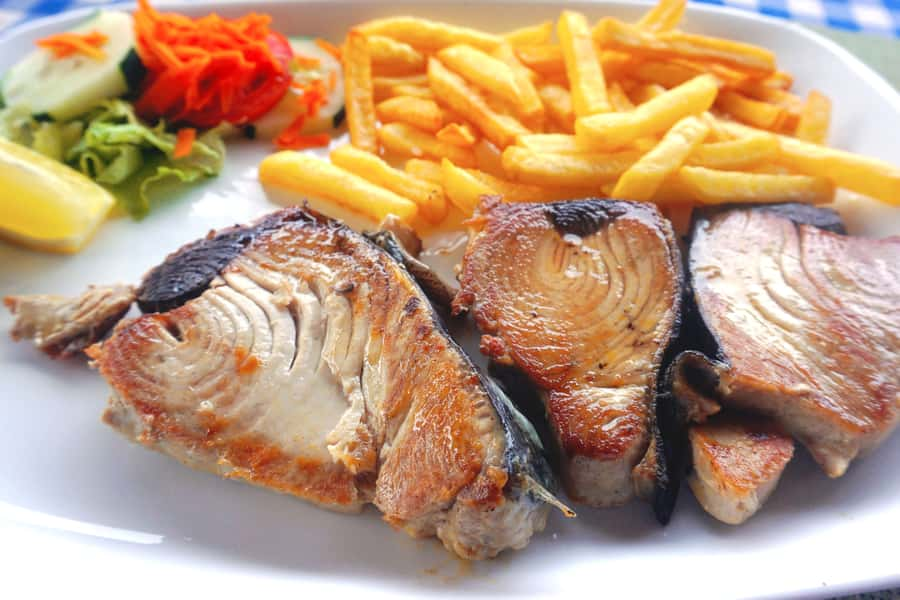
Lunch takes place at a typical restaurant on the seafront, but it is not included in the $82 price. That gives you some choice, but you should budget separately for the meal.
After a downhill walk, a seated lunch is welcome. Local food is part of the appeal, and a meal by the water gives you a pause before the final historic sites. The tour information does not specify a fixed menu or a set lunch price, so you should ask your guide or restaurant about the cost before ordering if you are keeping expenses tight.
This is also where the four-hour schedule becomes difficult to judge. A valley walk, a distillery visit, several town sights, lunch, and a fortress visit can easily stretch beyond a strict four-hour block. If you have an afternoon flight, a timed appointment, or a cruise departure, I would not schedule this too close to it.
The slave market and the ruins of the cathedral
The former slave market is one of the most serious stops in Cidade Velha. The site connects the attractive old streets with the human cost of the Atlantic trade. You should expect the guide to place the market within the history of slavery rather than treating it as a quick curiosity.
The ruins of the Sé Catedral add another layer. The incomplete remains show how important Cidade Velha once was, but also how exposed it was to conflict, changing trade routes, and attacks. The town’s surviving fragments require some imagination. This is not a place where every major structure remains intact.
The history can feel compressed if the guide is rushing. In a small group or private tour, you have a better chance to ask about the sites and pause when something needs more explanation. A shared group keeps the price lower, but the pace may be set by the slowest walker and the group’s interest in each stop.
São Filipe Fortress and the best view over town
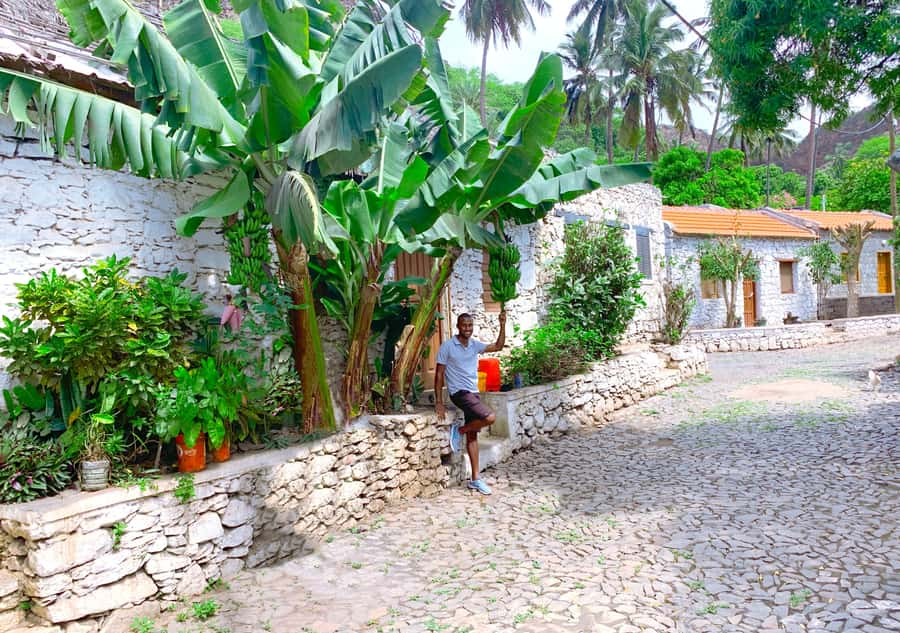
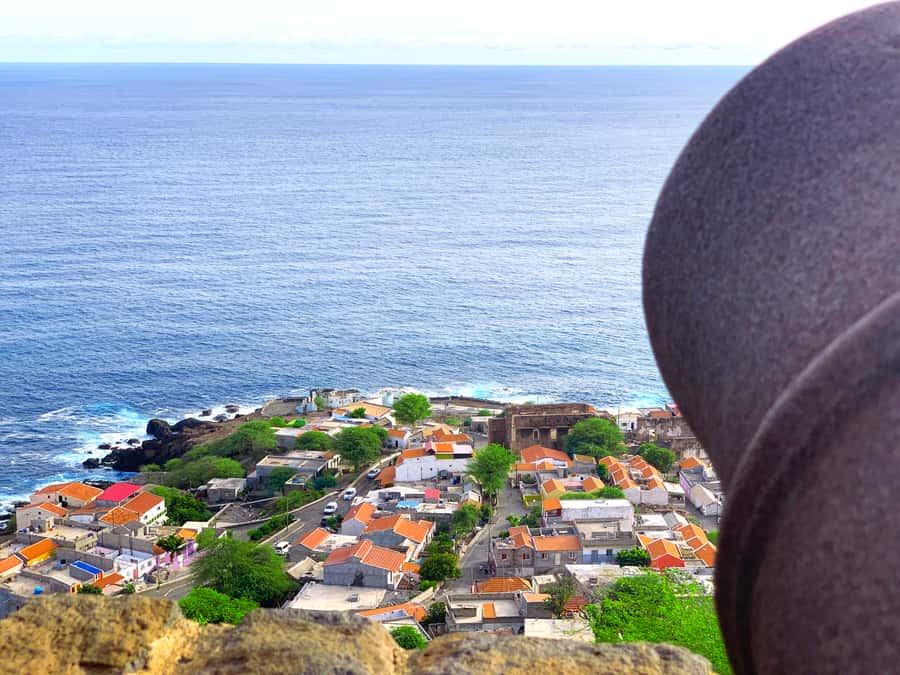
The final major stop is the Royal Fortress of São Filipe. It sits above Cidade Velha and offers a broad view over the old town. From here, you can understand the town’s position much better than you can from street level.
The fortress also explains the defensive system used against pirates. The elevated position was practical, not decorative. From the walls, defenders could watch the approaches and protect the settlement and its shipping interests.
Entrance costs an additional €5. It is worth considering this fee part of the real price of the tour, since the fortress is one of the strongest stops. The view gives you a useful final chapter: after seeing the farms and town streets, you can read the entire setting from above.
The fortress may also be where the trail’s physical demands catch up with you. The valley route is downhill, but you have already spent time walking before reaching the final site. Good footwear and water make a difference.
Shared group or private tour?
You can choose a shared group or private format, with small groups available. The shared option requires at least two participants. If that minimum is not reached, the operator may offer another date, run the tour privately for an extra fee, or cancel with a full refund.
A private tour gives you more control over pace and questions. I would especially consider it if your party includes older walkers, if you want more time at the slave market and fortress, or if you need the day to fit a strict schedule.
A shared trip may be the better value for solo visitors or couples who want company and a lower starting price. Just remember that the walk is one way, and the group cannot move entirely at your preferred speed.
The guides are a major part of the experience. Mario has been noted for explaining both the sites and Cape Verde more broadly. Katia has led a well-regarded valley walk, while Ivana has been praised for her friendly manner. Soraya and Riccardo have also guided departures. Guide assignments can change, but the available language range is useful if you do not speak English.
Who should book this Santiago outing?
I would recommend it to you if you want more than a standard town tour. The combination of nature, farming, rum production, slavery history, and fortress views gives you a strong introduction to Santiago in a short period.
It suits active visitors who can comfortably walk about 5 kilometers downhill on a narrow and sometimes tilted path. It also works well for anyone staying in Praia without a rental car, since transport is included.
I would hesitate if you have a mobility impairment, poor balance, or serious knee problems. The tour is not suitable for people with mobility impairments, and the easy rating should not be mistaken for a fully smooth path. Anyone who dislikes schedule changes should also allow more than four hours.
Bring:
- Firm walking shoes
- Water
- A hat and sunscreen
- Hiking trousers, especially from August through November
- €5 for São Filipe Fortress
- Extra money for lunch
Free cancellation is available up to 24 hours before the start, and you can reserve without paying immediately. Those terms are useful if your plans in Praia are still shifting, but they do not remove the need to check the starting time and allow a generous buffer afterward.
Should you book it?
Book this tour if you want one guided outing that links Santiago’s green interior with its most important historic town. The valley is the refreshing part, with baobabs, farms, birds, monkeys, and sugar cane. Cidade Velha supplies the weight, from the former slave market and church to the cathedral ruins and São Filipe Fortress.
At $82, the experience offers good value when you need transport and want a guide to explain the setting. Add the €5 fortress fee and the cost of lunch when planning your budget.
My main advice is simple: prepare for a real downhill walk, not a flat stroll, and do not rely too closely on the four-hour estimate. If you can handle the path and keep your schedule open, this is one of the more rewarding ways to connect Santiago’s natural and human history.
FAQ
How long is the tour?
The advertised duration is four hours. The Calabaceira route covers about 5 kilometers, with roughly two to three hours of walking, followed by sightseeing in Cidade Velha, lunch, and the return to Praia. The actual day can run longer.
Is the Calabaceira Valley walk difficult?
It is rated easy, with about 3 meters of elevation gain and approximately 186 meters of loss. The trail is one way, narrow and tilted near the beginning, with medium-quality footing. It is not suitable for people with mobility impairments.
What should I bring?
Bring decent walking shoes, water, a hat, sunscreen, and €5 for the entrance to São Filipe Fortress. Hiking trousers are strongly advised from August through November.
Is lunch included?
No. Lunch is taken at a typical seafront restaurant in Cidade Velha, but you pay for it separately.
Is the São Filipe Fortress entrance included?
No. The entrance fee is €5 and is paid separately.
Which languages are available for the guided tour?
Live guides are available in English, French, Portuguese, and Spanish.
New treks around the world
- Sapa: 2-Day Local Guided Valley Trek with Night Homestay★ 5.0 · 27 reviews
- SAPA: 1-DAY TREKKING TOUR WITH LOCALS, LUNCH & RICE FIELDS★ 4.7 · 18 reviews
- Sapa: 2-Day Local Guided Valley Trek with Night Homestay★ 4.8 · 5 reviews
- Santa Marta: Trekking in Minca Complete Waterfall Circuit★ 4.4 · 28 reviews
- Santiago: Longueira, Pico de Antónia & Monte Tchota Trek★ 4.8 · 10 reviews
- Santiago: Trek from Serra Malagueta to Rabelados Community★ 5.0 · 16 reviews
- Santiago Island: Serra Malagueta & Tarrafal Beach Trek Tour★ 4.8 · 61 reviews
- Santa Marta: Multi-Day Trek to The Lost City★ 4.8 · 40 reviews