Review · SAPA
Red Dao Village Trek and Herbal Bath
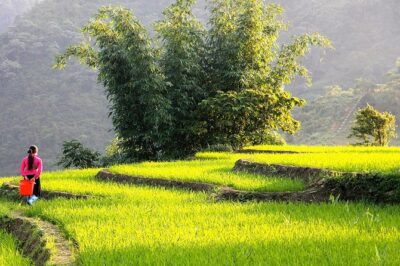
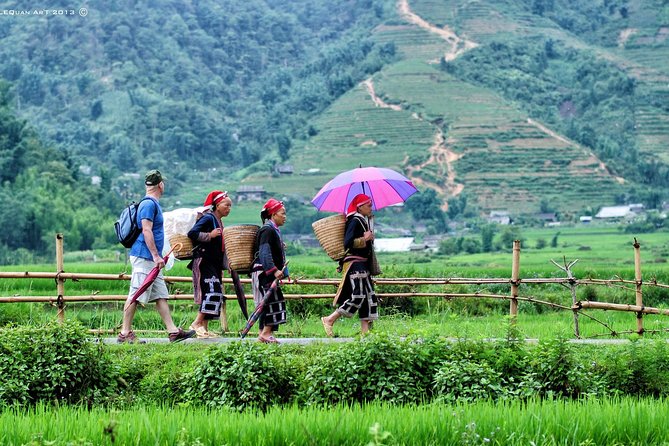
The best part of this six-hour outing is the change of pace. You leave Sapa’s busy center behind and walk through Black Hmong villages, corn fields, bamboo forest, and rice terraces before reaching Ta Phin, home to Red Dao and Hmong families. The route gives you scenery and daily village life, not just a quick photo stop.
I like the local ethnic-minority guides, who can explain customs such as marriage traditions and show how Hmong women embroider, dye indigo, and weave cloth. I also like the simple lunch at a local home or restaurant, often paired with a fine valley view. The catch is clear: this can be a demanding walk of about 12 kilometers, and the herbal bath costs extra.
Key points to know before you book
- A long walk from Sapa to Ta Phin: Plan for roughly 12 kilometers on a route that includes hills, fields, and village paths.
- Three distinct village areas: Suoi Ho and Ma Tra introduce Black Hmong culture, while Ta Phin is known for Red Dao traditions.
- Lunch is included: You eat at a local restaurant or family setting in Can Ho, with water provided.
- The Red Dao herbal bath is optional: You pay separately at the herbal bath house, so bring cash.
- Private group with a local guide: Pickup is available in central Sapa or at Sapa Church.
- Scenery is a major reward: Expect terraced fields, a valley viewpoint, bamboo forest, corn fields, and small roads away from town.
Leaving Sapa behind on foot
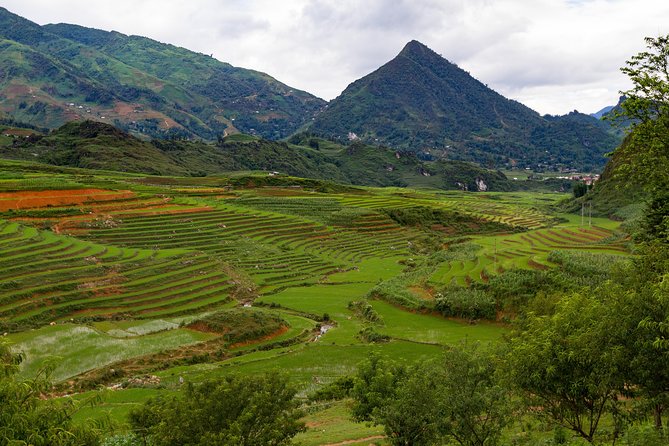
This tour starts in central Sapa, either at your hotel or at Sapa Church if your lodging is outside the pickup area. Your guide waits in the lobby about 15 minutes before the agreed pickup time, then gives you a short briefing before the walk begins.
The first stretch uses a small road leading away from town. That matters because Sapa can feel crowded and commercial, while the route quickly shifts toward farming country and scattered homes. You are not being driven straight to a village for a short visit. The walking is part of the experience, and it is also the part that demands the most from you.
One outing on this route covered about 12 kilometers through the rice fields. The exact path can vary, but you should arrive ready for a serious half-day hike rather than a gentle village stroll. Comfortable shoes are essential. A hat, sunscreen, water, and a change of clothes are also sensible choices, especially if the weather is warm or wet.
More Homestay and Village Treks in Sapa
- Number one top rated ethical cultural trekking and homestay by ETHOS
★ 5.0 · 456 reviews - Sa Pa: 2-Day Trekking Trip with Ethnic Minority Homestay
★ 4.7 · 145 reviews - Sapa : 2-Day Trek & Heartwarming Homestay with an Ethnic Family
★ 5.0 · 143 reviews
Suoi Ho and the first Black Hmong introduction
Suoi Ho is a small Black Hmong village on a hill above a stream and rice fields. The setting gives you an early panorama of Suoi Ho Valley, with the surrounding slopes shaped by farming and footpaths.
This stop is useful because the guide can explain ordinary work rather than giving you only a quick cultural label. You may see traditional houses and Hmong women embroidering, dyeing indigo, or weaving cloth. These crafts help explain why Hmong clothing has such strong color and pattern, and why textiles remain an important part of village identity.
You should keep your expectations realistic. This is a living village, not a staged museum. People may be working, busy, or away from home, and some lanes can feel quiet. One outing found the villages fairly deserted, so the cultural contact can depend on the day and season.
The quieter setting is also part of the appeal. You have room to notice the stream, fields, houses, and hillside views without the pressure of a packed sightseeing schedule. Your guide is the bridge between the scenery and the people who live here.
Ma Tra and the traditions of the Ma family
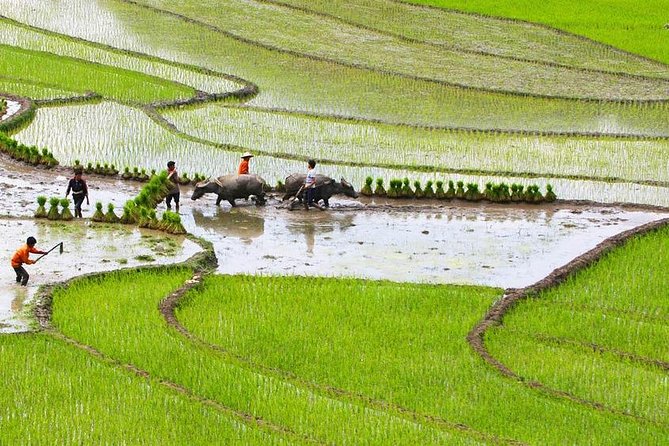
From Suoi Ho, the route continues to Ma Tra. This is another Black Hmong village, but the Ma family community has its own customs and traditions. That distinction gives the visit more depth than treating every Hmong village as interchangeable.
You can see traditional houses and terraced fields here, with the walk continuing through a working rural setting. The guide can discuss local traditions and family life, including marriage customs. These conversations are one of the strongest reasons to choose a guide from the local communities rather than walking alone with only a map.
The terrain is part of the price you pay for the views. Small roads and village paths can rise and fall, and the route may be tiring for anyone who is not used to long walks. If you have limited mobility, this tour is not suitable. Even fit walkers should wear shoes with a firm grip and avoid carrying an oversized bag.
Lunch in Can Ho
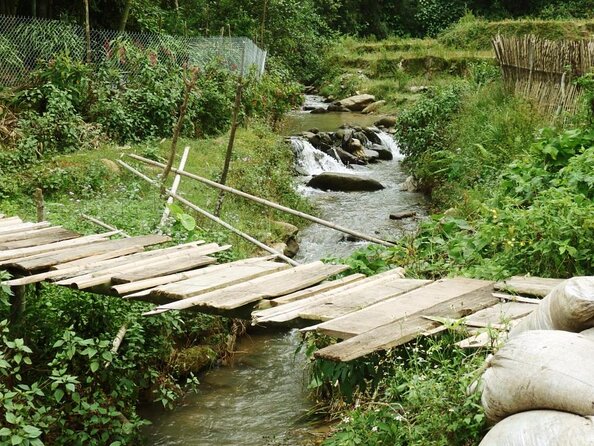
After Ma Tra, you continue to Can Ho, a small village along the route. Lunch is included and takes place at a local restaurant or with a family, depending on the arrangement for the day.
A simple local meal is a welcome break after the first half of the walk. One reported outing had lunch with a family in a setting with a fine view, and that pause became one of the strongest parts of the day. The combination of food, rest, and countryside scenery gives you time to recover before the route continues.
The tour includes 1.5 liters of water per person, but you should still bring cash for extra drinks. The cost does not include drinks along the way, and there may not be a convenient card machine in a small village. Lunch is included in the $38 price, which improves the value, particularly for a private group with a local English-speaking guide.
More Homestay and Village Treks in Vietnam
- Sapa Valley Trek and Homestay – 3D2N
★ 5.0 · 105 reviews - Private Hoang Lien National Park & Tribal Village Trek
★ 4.7 · 30 reviews - Sapa: 2-Day Local Guided Valley Trek with Night Homestay
★ 5.0 · 27 reviews - From Sapa: Muong Hoa Valley View & Village Trek 1-Day
★ 5.0 · 21 reviews
Walking through bamboo forest to Ta Phin
After lunch, the path moves through corn fields, bamboo forest, and terraced fields on the way to Ta Phin. This is the most scenic section for many people because the views keep changing as you leave the earlier villages behind.
The terraces are not simply pretty scenery. They show how mountain communities use steep land for cultivation, with fields arranged along the contours of the hills. The bamboo forest brings a different feel, with a narrower and more shaded route before you reach the village.
This section can also be the most tiring. The route is long, and the surface may be uneven. Rain can make paths slippery, which is why the tour provides a raincoat, though you should still protect your phone and other valuables. If you prefer a short walk with frequent vehicle transfers, this is probably not the right outing.
Ta Phin and Red Dao culture
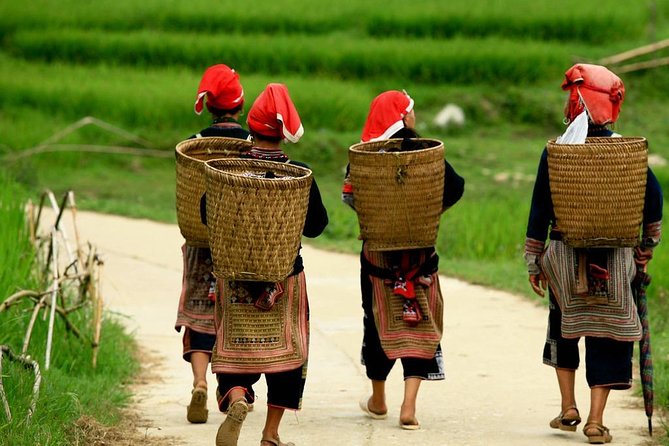
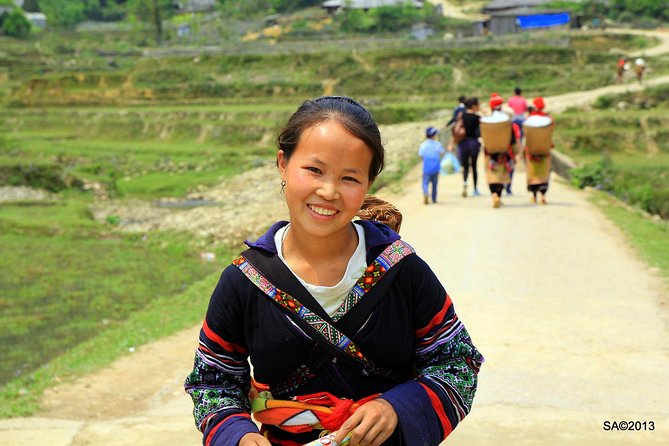
Ta Phin is the main cultural focus of the day. Red Dao and Black Hmong people live in the village, giving you a chance to compare traditions within the same general area.
Your guide explains Red Dao houses, accommodation, family customs, and marriage traditions. These details give the visit a human scale. Instead of simply taking pictures of clothing or buildings, you learn how family and village life are organized.
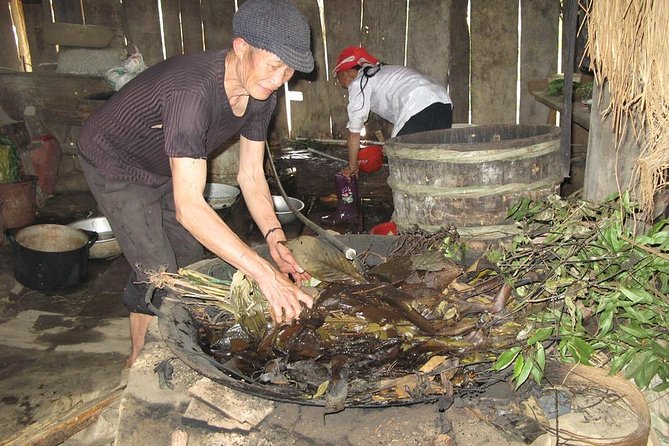
The Red Dao are also known for their herbal bathing tradition. At the end of the tour, you can take a bath at a Red Dao house and learn about the plants and traditional uses connected with the treatment. The bath is not included in the tour price, so you pay directly yourself.
I would treat the bath as an optional extra, not a reason to book the entire outing. It can be a pleasant way to finish a demanding walk, but the basic tour still works if you skip it. Bring a change of clothes if you plan to take the bath, and carry cash because the activity is paid separately.
What the $38 price really covers
At $38 per person, the tour offers reasonable value if you want a private, guided walk rather than a short transfer to a village. The price includes hotel pickup and drop-off in central Sapa, village entry fees, an English-speaking local guide, lunch, 1.5 liters of water, a raincoat, and transport back to Sapa from the final village.
That last transfer is important. You walk through the villages and countryside, but you are not expected to walk all the way back to town after reaching Ta Phin. The outing begins and ends in Sapa, with the return vehicle arranged from the final village.
The herbal bath, extra drinks, insurance, and tips are not included. If you want the bath, add that cost to your budget. You may also want cash for drinks or small personal expenses.
The private-group format is another part of the value. You can ask questions and set the pace more easily than in a large group, though the tour still has a fixed six-hour duration. If you are booking for several people, the per-person price becomes easier to justify.
The guide makes the culture accessible

The company uses local guides from Hmong and Red Dao communities. That is important here because the cultural side of the tour depends on explanation, not just scenery.
A guide such as Chi can make a real difference by answering questions about daily life and traditions. The guide can help you understand the difference between Suoi Ho, Ma Tra, and Ta Phin, explain textile work, and provide context for marriage customs and local houses.
The listed language is English, and an English audio guide is also included. The tour is private, so the quality of the day will depend in part on the guide assigned to your group. A good guide helps turn a walk through fields into a better understanding of the people who farm and live there.
You should still approach village visits with respect. Ask before photographing people, particularly when you see someone working with textiles or inside a home. The aim is to meet people in their own setting, not to treat the village as a backdrop.
How hard is the walk?
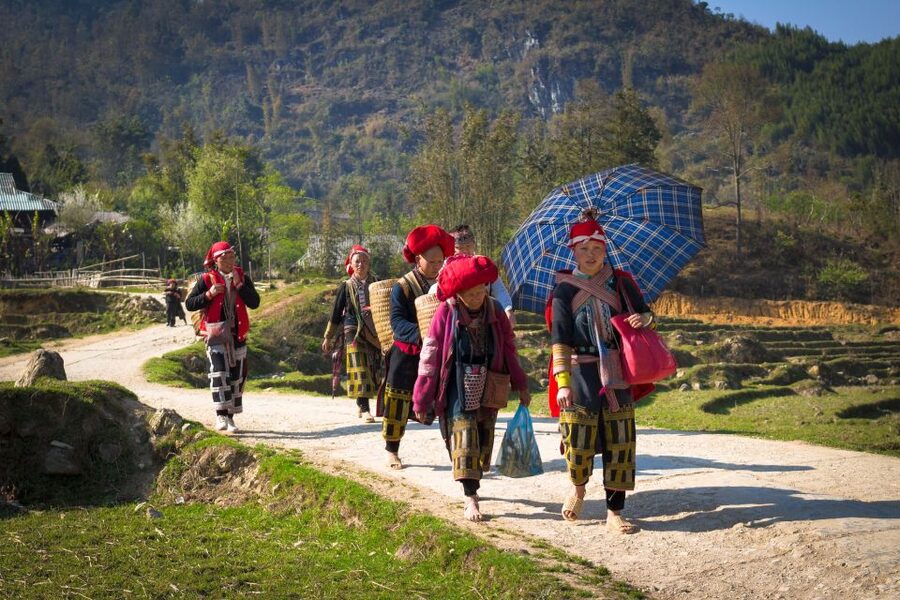
The tour is not suitable for wheelchair users or people with mobility impairments. That warning is important. The route includes hills, fields, bamboo forest, and village paths, and one outing covered about 12 kilometers.
You do not need specialist mountaineering equipment, but comfortable walking shoes are a must. Wear clothes that can handle dirt or rain, and bring a hat and sunscreen. A change of clothes is useful if the weather turns wet or if you take the herbal bath.
The tour provides a raincoat and drinking water, but do not bring oversized luggage. Keep your bag light and carry only what you need for six hours. Cash is useful for the bath and extra drinks.
If you are physically fit and enjoy walking, the distance is a strength because it lets you see more of the countryside. If you are hoping for a relaxed sightseeing ride with only brief walks, choose a shorter village visit instead.
Practical booking advice
The experience lasts six hours, but starting times depend on availability. Confirm the pickup time and location when you book. Central Sapa hotels receive pickup, while people staying outside central Sapa can meet the guide at Sapa Church.
Free cancellation is available up to 24 hours before the activity for a full refund. You can also reserve now and pay later, which helps if your Sapa plans depend on weather or transport from Hanoi.
The company can arrange transport between Hanoi and Sapa if needed. That service is separate from the village walk, so ask for details before booking if you need a complete Hanoi to Sapa plan.
Sapa weather can change quickly, and wet conditions may make the route harder. The provided raincoat helps, but it does not remove the need for sensible footwear and a protected phone. Check the forecast and be honest about your walking ability.
Who should book this Sapa trek?
I would choose this tour if you want a substantial walk, local cultural explanation, and a private guide. It suits people who would rather spend a day moving through villages and fields than visiting only one attraction by vehicle.
It is especially useful for anyone interested in Red Dao and Black Hmong customs, textiles, houses, farming, and marriage traditions. The route gives you several points of comparison, and the optional herbal bath adds a distinctly Red Dao finish.
I would hesitate if you have mobility problems, dislike hills, or want a predictable paved route. The distance can be demanding, and village activity may be quiet on the day you visit. The scenery remains a strong reason to go, but the cultural encounters are not guaranteed to be lively at every stop.
Should you book the Red Dao Village Trek?
Book it if you want a full half-day walk with terraced fields, bamboo forest, local lunch, and cultural context from a Hmong or Red Dao guide. The $38 price is fair for a private outing that includes food, village fees, water, pickup, and the return transfer.
Skip it if the idea of walking about 12 kilometers sounds unpleasant or if you mainly want the herbal bath. The bath is optional and costs extra, while the trek itself is the main event. For fit walkers who want to see more than Sapa’s town center, this is a practical way to reach Suoi Ho, Ma Tra, Can Ho, and Ta Phin in one day.
FAQ
How long does the Red Dao Village Trek take?
The activity lasts six hours. Starting times depend on availability when you book.
What villages does the tour visit?
The route includes Suoi Ho, Ma Tra, Can Ho, and Ta Phin. Suoi Ho and Ma Tra are Black Hmong villages, while Ta Phin is home to Red Dao and Black Hmong people.
Is the Red Dao herbal bath included?
No. The herbal bath is optional and must be paid for separately at the Red Dao house.
What is included in the tour price?
The price includes pickup and drop-off in central Sapa, village entry fees, an English-speaking local guide, lunch, 1.5 liters of water per person, a raincoat, and transport back to Sapa from the last village.
Where does pickup take place?
The guide can pick you up at your hotel in central Sapa. If your hotel or homestay is outside central Sapa, pickup is at Sapa Church.
Is lunch included?
Yes. Lunch is included and takes place at a local restaurant or family setting along the route.
How far do you walk?
One outing covered about 12 kilometers through rice fields and villages. The exact route may vary, but you should prepare for a demanding walk.
Is the tour suitable for people with mobility impairments?
No. The activity is not suitable for wheelchair users or people with mobility impairments.
What should you bring?
Bring comfortable shoes, comfortable clothes, cash, a hat, a change of clothes, and sunscreen. Do not bring oversized luggage.
Can I cancel the tour?
Yes. You can cancel up to 24 hours in advance for a full refund. Reserve now and pay later is also available.
More Homestay and Village Treks in Sa Pa
- Discover Sapa: 2D1N Trekking Adventure & Cozy LaLa Homestay
★ 4.9 · 17 reviews - 2 Night Lao Chai-Ta Van Homestay- Trekking & Fansipan Visit
★ 4.0 · 8 reviews - Sapa: 2-Day Local Guided Valley Trek with Night Homestay
★ 4.8 · 5 reviews - Ha Noi-Sapa Authentic Trek & Homestay wih hmong women (2D1N)
★ 4.8 · 5 reviews
New treks around Sa Pa
- Sapa: 2-Day Local Guided Valley Trek with Night Homestay★ 5.0 · 27 reviews
- SAPA: 1-DAY TREKKING TOUR WITH LOCALS, LUNCH & RICE FIELDS★ 4.7 · 18 reviews
- Sapa: 2-Day Local Guided Valley Trek with Night Homestay★ 4.8 · 5 reviews
- Sa Pa: Fansipan Peak One Day Trek with Local Guide★ 5.0 · 7 reviews
- Private Hoang Lien National Park & Tribal Village Trek★ 4.7 · 30 reviews
- Sapa: Private Muong Hoa Valley and Homestay Trekking 2-Day★ 4.8 · 4 reviews
- From Sapa: Muong Hoa Valley View & Village Trek 1-Day★ 5.0 · 21 reviews
- Mountain Views And Villages Trek★ 4.3 · 3 reviews
Homestay and Village Treks, side by side.
From Hanoi: 2-Day Sapa Trekking Trip with Homestay & Meals
Read our review →
Number one top rated ethical cultural trekking and homestay by ETHOS
Read our review →
2-Day Sa Pa Ethnic Homestay Tour & Trek with Limousine Bus
Read our review →
Hanoi – Sapa 3 Day 2 Night Trekking With Hotel & Homestay
Read our review →
Sa Pa: 2-Day Trekking Trip with Ethnic Minority Homestay
Read our review →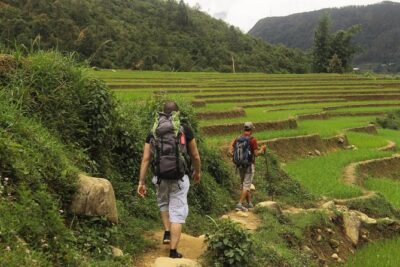
Sapa : 2-Day Trek & Heartwarming Homestay with an Ethnic Family
Read our review →