
Review · POKHARA
4 Day Poon Hill Trek from Pokhara
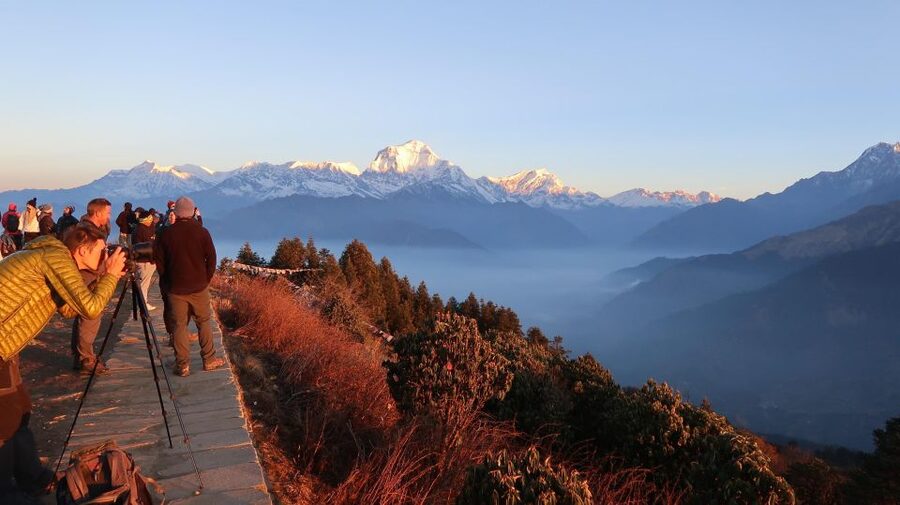
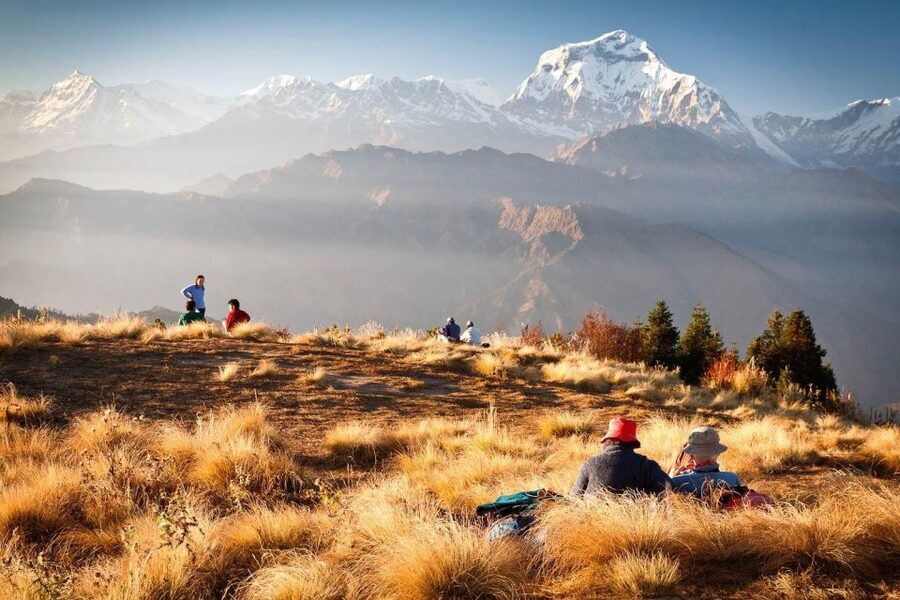
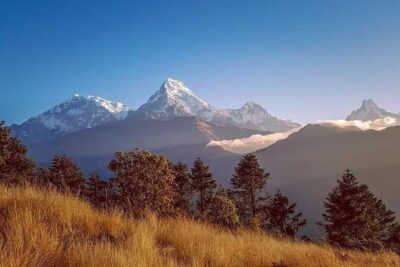
Poon Hill gives you a big Himalayan payoff without asking for a long expedition. You walk from Pokhara through river valleys, stone stairways, rhododendron forests, and mountain villages, then reach Poon Hill at 3,210 meters for sunrise over the Annapurna and Dhaulagiri ranges.
I like the clear four-day shape of this trek, and I like that a private car handles the road sections. Guide Nir has been singled out for attentive, well-organized support, which matters when the route includes thousands of stone steps and early starts.
The main catch is physical: this is not a casual village stroll. The climb from Tikhedhunga to Ulleri is steep, and the sunrise walk to Poon Hill starts early. You also pay separately for meals, which adds about 3,500 Nepalese rupees per person per day.
Key points to know before you book
- Poon Hill sunrise at 3,210 meters: The trek’s main prize is a high viewpoint over the Annapurna and Dhaulagiri ranges.
- A serious stair climb: The route from Tikhedhunga to Ulleri includes thousands of stone steps, so comfortable shoes and steady fitness matter.
- Three different overnight stops: Tikhedhunga sits by the river, Ghorepani brings mountain views, and Tadapani places you among rhododendron forests.
- Gurung culture in Ghandruk: The final village stop gives you time to see local life before returning to Pokhara.
- Private transport and guiding: Pickup, drop-off, permits, a TIMS card, and road transfers by private car are included.
- Meals cost extra: Guesthouse accommodation is included, but food is available for purchase at approximately 3,500 rupees per day.
Why Poon Hill works as a short Nepal trek
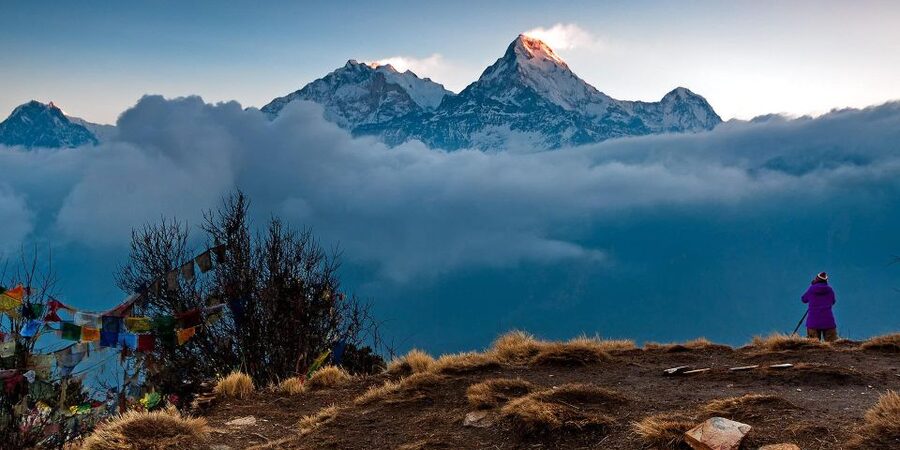
The Poon Hill route is one of Nepal’s better choices when you want mountain scenery but have only a few days. You leave Pokhara, Nepal’s popular base for Annapurna trips, and quickly trade city roads for walking paths beside the Bhurungdi River.
This trek gives you several kinds of scenery in a compact package. You pass through villages, forest, farmland, river country, and high mountain viewpoints. The route also offers a useful introduction to trekking in Nepal because you sleep in simple guesthouses rather than camping.
At $272 per person, the price includes more than just a walking guide. You get hotel pickup and drop-off, a private car for the road portions, permits, the TIMS card, three nights in guesthouses, and an English-speaking guide. Hindi guiding is also available. Private or small-group arrangements give you more control over the walking pace than a large fixed group.
The price does not include food. The stated meal estimate is about 3,500 Nepalese rupees per person per day, so add that amount to your budget for the four-day trip. Optional gratuity is also separate.
The advertised duration can appear as two to four days, but the planned route is a four-day trek. Confirm the exact schedule when booking, especially if you are comparing this trip with shorter Poon Hill options.
More Poon Hill treks around Pokhara:
- Poon hill Trek 3 days
★ 5.0 · 176 reviews - Pokhara: 4-Day Ghorepani, Poonhill & Ghandruk Mountain Trek
★ 5.0 · 132 reviews - Ghorepani – Poon Hill Trek 3N-4D
★ 5.0 · 125 reviews
Day 1: Pokhara to Nayapul and Tikhedhunga
Your first morning begins with pickup in Pokhara and a drive of roughly one and a half to two hours to Nayapul. A private car makes this transfer simpler, especially if you have just arrived in the area or prefer not to arrange separate transport.
From Nayapul, you begin walking through Birethanti, a large village and an important early stop on the route. This is where the trip shifts from road travel to foot travel. The pace should feel manageable at first, giving you time to settle into your boots and adjust to the rhythm of the trail.
The path follows the Bhurungdi River toward Tikhedhunga. Water and village scenery give this first walking day some variety, though it is not simply flat riverside walking. You gain height as you go, and the next day will be much harder.
Tikhedhunga sits at about 1,540 meters and is your first overnight stop. Accommodation is in a guesthouse, with food available to buy along the way and at the lodging. Since meals are not included in the tour price, ask your guide about the food plan early in the day.
This first day is useful for more than reaching a bed. It lets you test your fitness before the steep section to Ulleri. If your shoes rub, your pack feels too heavy, or your walking pace is too fast, this is the time to correct those problems.
Day 2: The stone steps to Ulleri and Ghorepani
Day two is the hardest part for many people. From Tikhedhunga, you climb toward Ulleri on a long series of stone steps. The exact number is not given, but the trip warns you to expect thousands of steps before reaching Poon Hill. That warning is worth taking seriously.
I would keep your pace slow and steady here. Short rests are more useful than racing uphill and stopping for a long recovery. Comfortable shoes are essential, and trekking poles may help, though they are not listed as included equipment.
Ulleri is a village on the climb and a clear marker of progress. Once you pass it, the path continues through rhododendron and oak forests. The trees change the feel of the walk, giving you shade and a quieter setting after the exposed stairway.
Ghorepani sits at approximately 2,750 meters. It is one of the best-known villages on this route because of its mountain views and its position near Poon Hill. The altitude is not extreme by Himalayan trekking standards, but it is high enough for you to notice the thinner air, especially after the steep ascent.
Your overnight guesthouse in Ghorepani is also your practical base for the sunrise walk. Try to organize your clothing, water, and camera before going to bed. The next morning begins early, and you will not want to search through a large bag in the dark.
Large luggage is not allowed on this activity, so pack a small trekking bag rather than bringing a full suitcase. You need comfortable clothes, warm layers suitable for an early mountain morning, and a passport or ID card. A passport-sized photo is also required.
Day 3: Poon Hill sunrise and the forest route to Tadapani
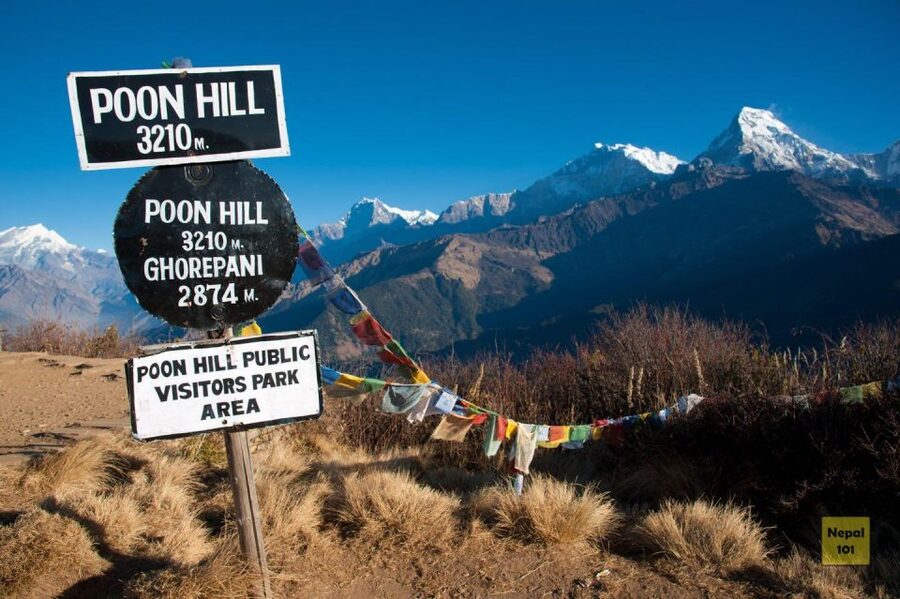
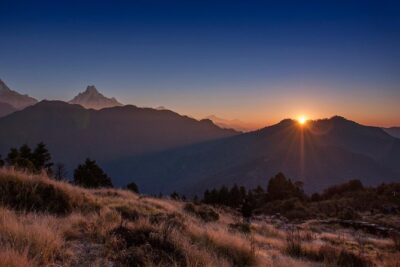
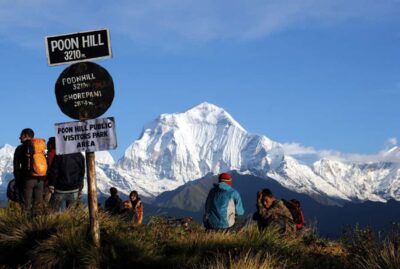
The third day begins before sunrise with the climb from Ghorepani to Poon Hill. At 3,210 meters, Poon Hill is the high point and central reason to choose this trek. You walk up in the early morning, then wait for light to reach the Annapurna and Dhaulagiri ranges.
The appeal is the changing view. Sunrise gives the mountains a different look from the one you see in daylight, and the viewpoint lets you appreciate the scale of the ranges around you. Weather will always affect visibility, so you should treat the viewpoint as a strong possibility rather than a guaranteed clear panorama.
After returning to Ghorepani, you have breakfast and continue toward Tadapani. This section takes you through rhododendron forests, with mountain views appearing along the route. After the steep climb on day two and the early start on day three, the walk can feel tiring even when the trail itself is less demanding.
Tadapani is at about 2,630 meters, somewhat lower than Ghorepani. You spend the night in another guesthouse. The stop breaks up the route well: instead of forcing you directly from the high viewpoint to Ghandruk and then onto the road, the itinerary gives you a night in the forest zone.
This day is where a private guide can make a real difference. A guide can help set a sensible pace, explain the surrounding area, and keep track of the route while you focus on walking. The company’s guide Nir has been praised for being attentive and keeping the trip well organized, details that are especially useful during an early morning departure and a long walking day.
More four-day treks around Pokhara
- Pokhara: 4-Day Mardi Himal Trek
★ 4.9 · 59 reviews - Pokhara: 4-Day Private Trek Tour
★ 4.9 · 43 reviews - From Pokhara: 4-Day Mardi Himal Base Camp Trek
★ 4.9 · 31 reviews - Pokhara: 4-Day Beautiful Ghorepani Poon Hill & Ghandruk Trek
★ 4.8 · 21 reviews
Day 4: Tadapani, Ghandruk, and the return to Pokhara
The final walking section descends from Tadapani through forests to Ghandruk, a Gurung village at around 1,940 meters. After several days of uphill and downhill walking, the descent may sound easy, but downhill steps can be hard on knees. Take your time and use the guide’s help if the path feels tiring.
Ghandruk is more than a transfer point. You have time to explore the village and experience Gurung culture before leaving the mountains. This gives the trek a satisfying human ending. The route does not finish at a roadhead with only a quick vehicle change. Instead, you reach a well-known village where local life is part of the experience.
In the afternoon, you drive back to Pokhara. The itinerary does not give an exact driving time for this section, so keep your later plans flexible. Once you arrive in Pokhara, the four-day trek is complete.
The final drive is useful if you want to return to a hotel, continue sightseeing, or use Pokhara as a base for another Nepal activity. Hotel pickup and drop-off are included, but tell the operator your exact location. If your lodging is outside the usual pickup area or is not listed, pickup can still be arranged for an additional genuine cost.
The views, forests, and village life
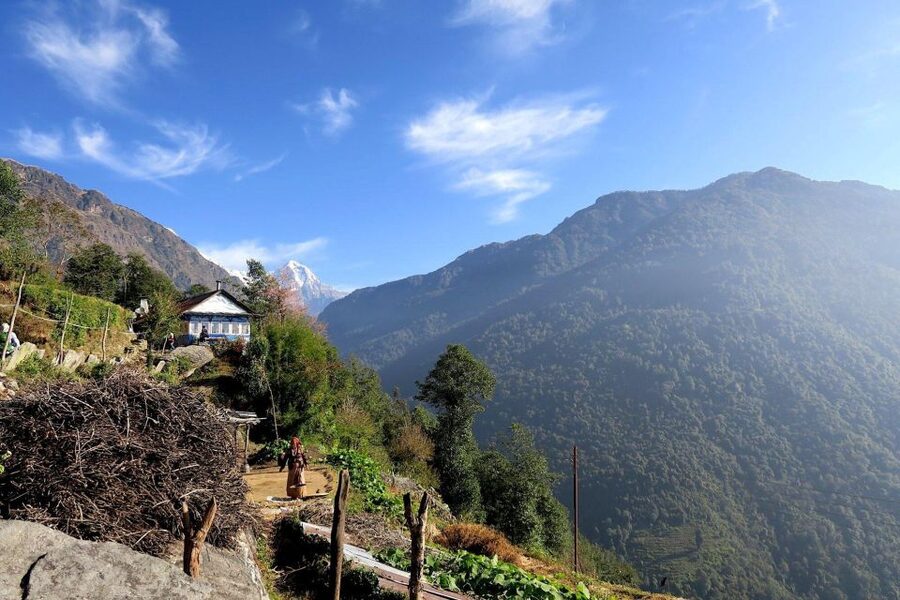
Poon Hill is often sold on the sunrise view, but the route earns its keep before you reach the viewpoint. The walk along the Bhurungdi River gives you a gradual introduction to rural Nepal. Birethanti and the other villages show how the route connects communities rather than passing through an empty wilderness.
The forest sections are another strength. Rhododendron and oak trees cover parts of the route, and the forest setting changes as you gain and lose height. In spring, rhododendrons can add color to the trail, though the timing and flowering conditions are not specified, so do not book solely for that reason.
The cultural side is strongest at Ghandruk. You have time to walk around a Gurung village and see a side of the region that a viewpoint-only trip would miss. The route also gives you repeated contact with village guesthouses, where you can eat, sleep, and rest within the communities along the trail.
Your guide’s role is not only navigation. An English or Hindi-speaking guide can explain what you are seeing and help with practical choices such as pace, breaks, and the timing of the sunrise walk. The trip is available privately or in a small group, which makes it a good fit if you value conversation and flexibility.
What the $272 price really covers
The $272 price is reasonable if you value a private arrangement and do not want to manage every transfer yourself. You are paying for the guide, permits, TIMS card, guesthouse accommodation, hotel transfers, and private road transport. Those included pieces remove several tasks that can be awkward to arrange independently.
Accommodation is simple guesthouse lodging, not a luxury hotel in the mountains. That is appropriate for this route, but you should book it with the right expectations. The main benefit is location and convenience, not high-end comfort.
Food is the main extra expense. At approximately 3,500 rupees per person per day, meals can add a noticeable amount to the total, particularly across four days. Ask whether the estimate covers all meals and clarify how payment works before setting off.
Tips are optional. If your guide handles the transport, permits, route, and early start well, you can decide what feels appropriate at the end. Do not treat gratuity as part of the fixed $272 price.
Free cancellation up to 24 hours before the activity and reserve-now, pay-later booking make this easier to fit around a Nepal itinerary. Still, check the available start times and the exact duration because the activity may be displayed as two to four days while this route is planned for four.
Who should choose this trek
I would recommend this trek to you if you want a first Himalayan walk with a clear route, moderate duration, and no camping. It suits people who want mountain views and village life but do not have time for a much longer Annapurna journey.
It is also a good choice if you prefer private transport and personal guiding. A private or small group can be more comfortable than a large departure, especially on the stair climb and early morning walk.
You should think twice if you dislike steep steps, early starts, or simple guesthouse accommodation. The route is not suitable for wheelchair users or pregnant women, and the thousands of steps make it a poor match for anyone with serious difficulty walking uphill or downhill.
Pack light. Large bags are not allowed, and drones are not permitted. Bring your passport or ID card, a passport-sized photo, comfortable shoes, and comfortable clothing. Add warm layers for the Poon Hill morning, while keeping your pack small enough for several days on foot.
Should you book the Poon Hill Trek?
Book it if you want a short, well-supported route from Pokhara with a strong sunrise viewpoint, forest walking, and a proper village finish. The guide service is a major reason to choose this package, with Nir receiving especially strong praise for attention and organization.
Before paying, confirm the exact four-day schedule, meal costs, pickup point, and guesthouse arrangements. If you are ready for thousands of steps and accept that food costs extra, the $272 package offers a practical way to reach Poon Hill without arranging permits, transport, and guiding on your own.
FAQ
How long is the Poon Hill trek?
The planned itinerary takes four days. The activity may also be shown as lasting two to four days, so confirm the exact schedule and starting time when booking.
What is the highest point on the trek?
Poon Hill is the highest point listed, at 3,210 meters. The route reaches it during an early morning hike from Ghorepani.
Are meals included in the price?
No. Meals are available for purchase, with an estimated cost of about 3,500 Nepalese rupees per person per day.
Is transportation from Pokhara included?
Yes. Hotel pickup and drop-off are included, along with round-trip road transport by private car. Pickup from a location outside the usual area may involve an additional genuine cost.
What should I bring?
Bring a passport or ID card, a passport-sized photo, comfortable shoes, and comfortable clothes. Pack light because large luggage and bags are not allowed.
Is the trek suitable for wheelchair users or pregnant women?
No. The activity is not suitable for wheelchair users or pregnant women. The route also includes thousands of steps, particularly on the climb toward Ulleri and Poon Hill.
New treks around Pokhara
- Pokhara: 9-Day Annapurna Base Camp Trek with Poon Hill★ 5.0 · 6 reviews
- Pokhara: 5-Day Trek to Annapurna Base Camp and Hot Springs★ 5.0 · 4 reviews
- Pokhara: Majestic Mardi Base Camp Guided Trek with HotSpring★ 5.0 · 6 reviews
- Pokhara: 5-Day Ghorepani and Poon Hill Private Trek★ 5.0 · 4 reviews
- Pokhara: 7-Day Annapurna Base Camp Trek & Hot Spring★ 4.0 · 3 reviews
- Pokhara:4-Day Ghorepani Poon Hill Guided Trek via Ghandruk★ 5.0 · 3 reviews
- Pokhara: 4-Day Poon Hill and Ghandruk Guided Trek★ 5.0 · 14 reviews
- Pokhara: 4-Day Private Trek Tour★ 4.9 · 43 reviews
Poon Hill Treks, side by side.
Pokhara: 4-Day Ghorepani, Poonhill & Ghandruk Mountain Trek
Read our review →
From Pokhara: 3-Day Ghorepani Poon Hill Trek with Guide
Read our review →
Pokhara: 3-Day Ghorephani and Poon Hill Private Trek
Read our review →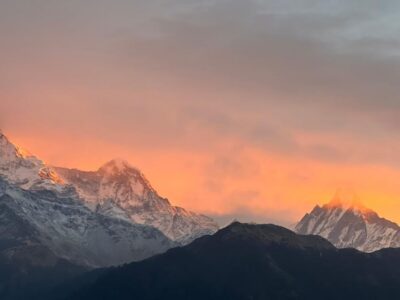
From Pokhara: 2 Day 1 Night Ulleri,Ghorepani Poon Hill Trek
Read our review →Lists this trek appears in