
Review · PERU
From Huaraz: Lake 69 Trek Day Tour – White Mountain Range
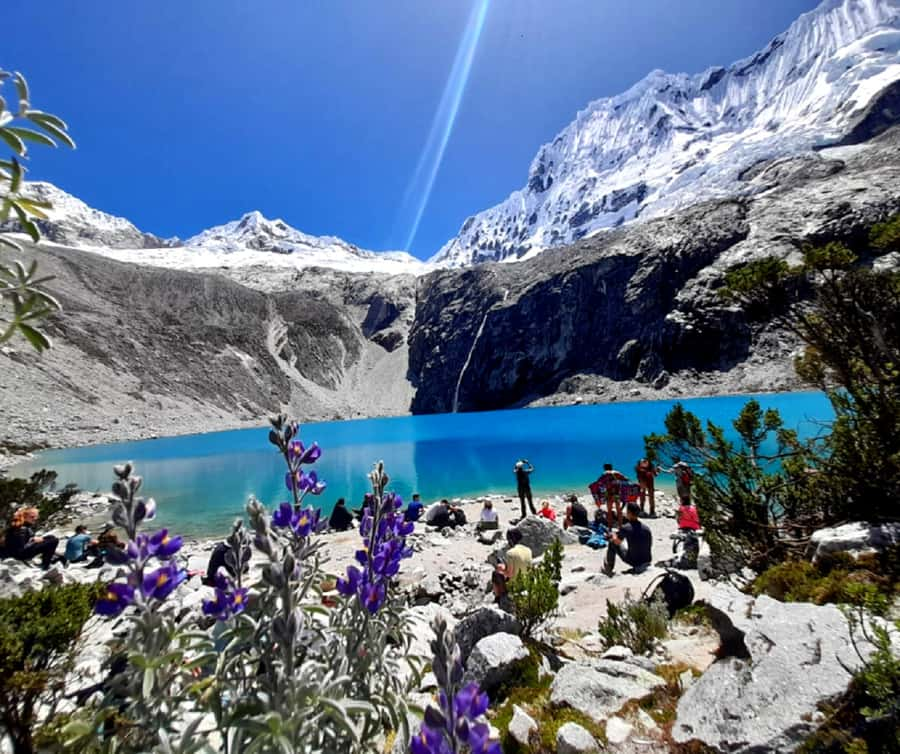
Lake 69 is the prize at the end of a tough 4,600-meter climb: a small, intensely turquoise lake framed by the snowy peaks of Peru’s Cordillera Blanca. The route begins in the Llanganuco Valley, passes Chinancocha and Orconcocha, and then follows a mountain trail from Cebolla Pampa.
I like two things here. First, the views begin before you reach the trail, with snow-capped peaks and Andean villages along the road. Second, the small group, limited to 10 people, gives the Spanish-speaking guide room to keep an eye on the pace. The catch is serious: altitude and a 700-meter ascent make this a hard day, not a casual outing.
Key points to know before booking
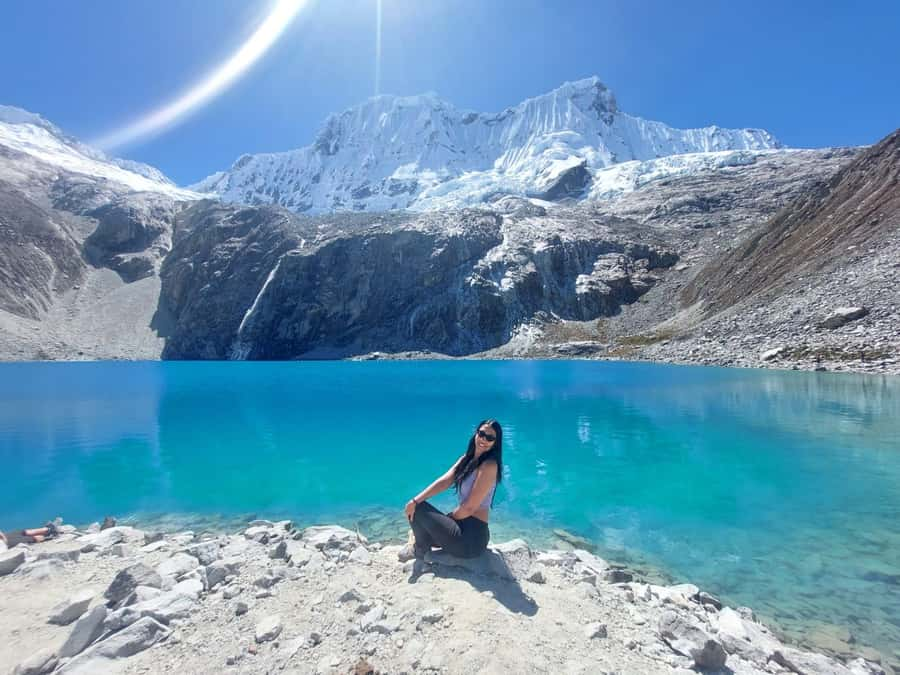
- The lake sits at 4,600 meters, so acclimatization matters as much as fitness.
- The trail climbs about 700 meters from Cebolla Pampa, with a flat opening section followed by steep switchbacks.
- You spend about five hours on the trail, including the walk to Lake 69, time beside the water, and the return.
- The journey is long, with roughly 2.5 hours by coach each way and a total tour time of about 14 hours.
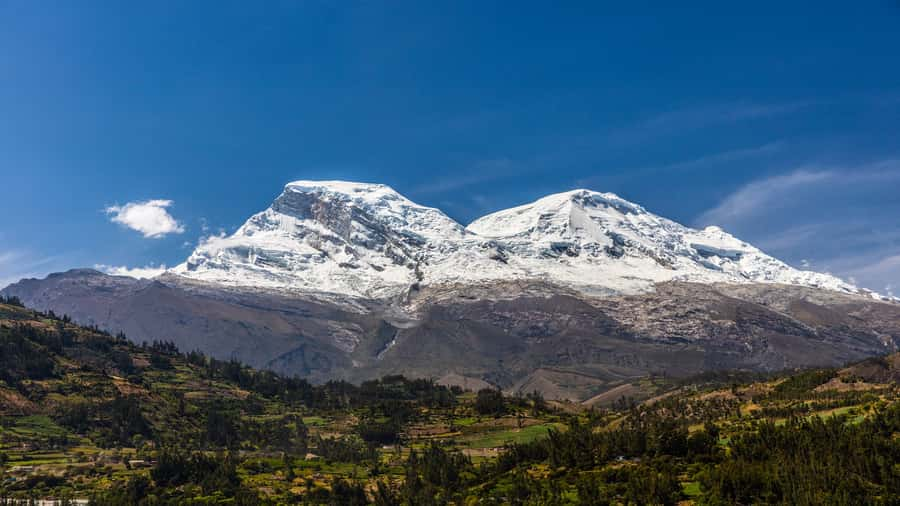
- The setting is exceptional, with views toward Huascarán, Chacraraju, Yanapaccha, and Chopicalqui.
- The $42 price is reasonable, but you still pay 30 Peruvian soles for park entry and bring your own food and drinks.
Why Lake 69 is worth the hard work
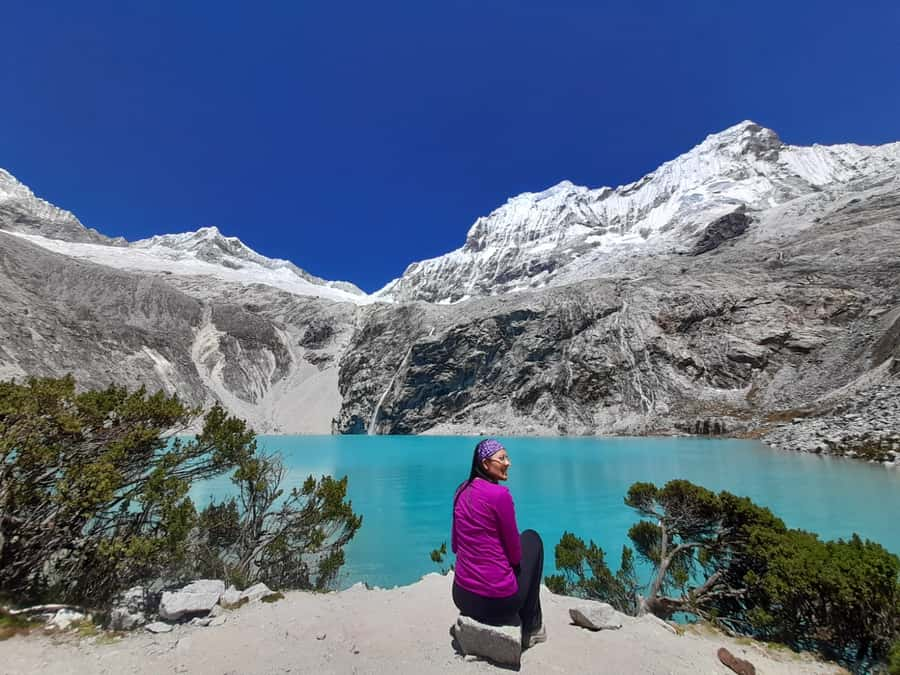
Lake 69 is famous for its color, and the description is not overstated. Its water appears bright turquoise against gray rock, green slopes, and the white peaks of the Cordillera Blanca. At 4,600 meters, the setting feels stark and high, with little to distract you from the lake and the mountain walls around it.
The beauty comes with a price: thin air. This is not simply a long walk. The trail gains about 700 meters from Cebolla Pampa, and the final climb uses repeated switchbacks. You may need to slow down, take breaks, and focus on steady steps rather than speed.
I would not choose this as your first high-altitude activity in Peru. Spend time in Huaraz first, and give your body a chance to adjust before attempting the route. Good physical condition is required, but fitness alone does not remove the effects of altitude.
More treks around Peru:
- From Arequipa: Sillar Route Trek
★ 4.2 · 461 reviews - From Cusco: 7 Lakes Ausangate Trek with Breakfast and Lunch
★ 4.8 · 360 reviews - From Arequipa: 2-Day Colca Canyon Trekking Tour
★ 4.8 · 243 reviews
From Huaraz to the Llanganuco Valley
The day begins with pickup in Huaraz, generally from the listed meeting point at Jr. José de Sucre 723 or from a hotel if the pickup area is confirmed in advance. Check the pickup time carefully. One booking message reportedly gave an 8:30 time even though the guide arrived at 5:00, so I would confirm the exact hour directly before the morning of the trip.
The coach follows the northern route through the Callejón de Huayhuash and small Andean towns. You will see the Cordillera Blanca rising to the east, while the Cordillera Negra lies to the west. The Santa River runs along the Callejón de Huaylas, a valley extending for roughly 150 kilometers.
This drive is part of the experience, but it is not a minor transfer. The listed journey takes about 2.5 hours each way, making the full day long even before the hike begins. One useful warning: the roads can be rough and winding. If you suffer from motion sickness, prepare for a bumpy ride and keep that in mind when deciding if this outing suits you.
After passing through Yungay, the route turns toward the Llanganuco Valley. You enter Huascarán National Park and pass the striking lakes Chinancocha and Orconcocha. These are not the final destination, but they make the drive worthwhile and give you an early look at the water and mountain scenery ahead.
Huascarán National Park and its protected peaks
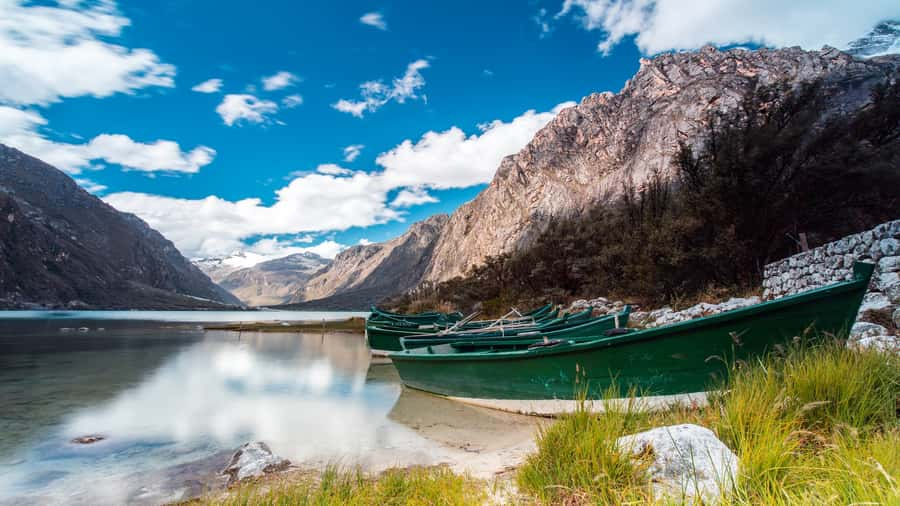
Huascarán National Park has been protected since 1975. It is also a UNESCO Natural World Heritage Site and a Biosphere Reserve, with an area of about 3,400 square kilometers. Those labels matter here because the park protects a large high-mountain setting rather than a single viewpoint or attraction.
Your guide can help explain the peaks, valleys, and protected area as you travel and walk. The tour is conducted in Spanish, so a basic ability to follow Spanish instructions is important, especially on a demanding trail where the guide may need to explain the route or check how you are feeling.
The park’s scale becomes clearer once you leave the road. Snow-covered summits rise above the valley, waterfalls appear on the slopes, and the trail gives you changing views as it climbs. This is one of the best reasons to take a guided outing rather than simply focus on reaching the lake: the surrounding peaks give the day its real sense of place.
Cebolla Pampa, the trailhead at 3,900 meters
The hike begins at Cebolla Pampa, at about 3,900 meters above sea level. Even before the climbing starts, you are already higher than many people have ever walked, so do not expect the first hour to feel easy simply because it is relatively flat.
The opening section takes about an hour across gentler ground. You can look back toward Huascarán, the highest mountain in the Cordillera Blanca, and take in the broad valley. This is a good time to settle into a slow pace, drink water, and avoid burning energy too early.
A short break may be arranged at a local family’s home for breakfast. The meal was specifically praised as very good, and it adds a welcome human touch before the harder part of the route. There are also several restroom stops before the trek, which is useful because facilities become limited once you are on the mountain path.
Same mountains, a different route up:
- Cusco: Full-Day Rainbow Mountain & Red Valley Trekking Tour
★ 4.5 · 121 reviews - Salkantay Trek Challenge – 3 Days / 2 Nights
★ 5.0 · 101 reviews - From Cusco: Rainbow Mountain Trek
★ 4.5 · 98 reviews - 2 Day 1 Night Trek / Colca Canyon
★ 4.5 · 92 reviews
The switchbacks and the real test of altitude
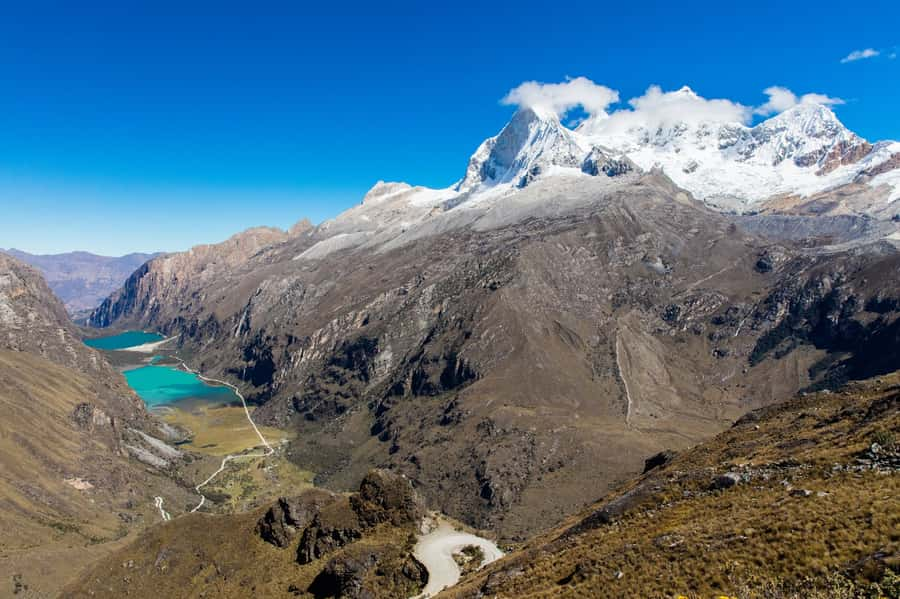
After the flatter opening section, the trail begins to rise through switchbacks. You pass a smaller lake and gain views of Chacraraju, Yanapaccha, Huascarán, and Chopicalqui. Waterfalls in the valley add movement to a scene otherwise shaped by rock, snow, and open sky.
This is the section where the tour becomes physically demanding. The climb is not described as technical, but the combination of thin air, sustained ascent, and high elevation can leave you breathing hard. The most useful approach is simple: walk slowly, take the breaks you need, and do not feel pressured to match another person’s pace.
The guide’s role matters here. Wilson was singled out for being attentive, and Noel was also described as kind and careful about checking that everyone was doing all right. Guides can make a difficult group walk feel more manageable, though you should still take responsibility for your own limits.
Pack warm clothing even if Huaraz feels mild when you leave. Bring rain gear too. Mountain weather can change, and the required packing list includes a jacket, hiking shoes, sunglasses, sunscreen, and insect repellent. Cash is also needed for the park fee and any personal purchases.
Lake 69 at 4,600 meters
The final arrival at Lake 69 is the emotional high point of the day. The lake’s turquoise water looks almost unreal beneath the glacial peaks, but the appeal is more than color. You have reached a high basin surrounded by some of the most impressive summits in the White Mountain Range after a sustained climb.
You are given about an hour at the lake for photographs, rest, and scenery. Use that hour wisely. Take your pictures, but also sit for a while and let the setting register. At this elevation, even standing around can feel tiring, and the thin air may limit how long you want to move along the shore.
The lake is a strong reward for people who enjoy a clear physical goal. You start at Cebolla Pampa, climb through the valley, and finish beside a body of water that feels dramatically different from the road-level lakes earlier in the day. The result is memorable because you worked for it.
Still, do not treat the lake as guaranteed simply because it is the advertised destination. Altitude sickness can make it unsafe to continue. If you develop serious symptoms, tell the guide and follow their advice. The description specifically recommends proper acclimatization, and that is the most important condition of the day.
Returning to Cebolla Pampa and Huaraz
The return follows the same trail back to Cebolla Pampa. Descending is easier on the lungs, but it can be tiring on the knees and legs after the climb. Watch your footing, especially if rain has made the path slick.
Once you reach the trailhead, the coach takes you back through the Llanganuco Valley and toward Huaraz. The return drive takes about 2.5 hours according to the schedule, so this is a long day from beginning to end. You may be ready for a quiet evening by the time you arrive.
Food and drinks are not included. Bring enough for the walk, or plan around the breakfast stop if it is part of your departure. Do not rely on the $42 price to cover every expense: the Huascarán National Park entry fee is an additional 30 Peruvian soles per person.
What the $42 price really covers
At $42 per person, the tour offers fair value for a full-day mountain outing. The price includes transportation, a professional Spanish-speaking guide, and optional hotel pickup. It also gives you a small group of no more than 10 people, which is preferable to a large coach group on a demanding trail.
The park entrance fee is separate, and you pay for your own food and drinks. Those extra costs are modest compared with the overall day, but you should budget for them in advance and carry cash.
The value is strongest if you want the logistics handled for you. The route to the Llanganuco Valley, park entry, trailhead transfer, and return to Huaraz all require planning. A private trip could offer more control, but this small-group option keeps the cost lower while still providing a guide and transport.
Who should book this hike
I would recommend it to you if you are already acclimatized, comfortable walking uphill for several hours, and motivated by mountain scenery rather than an easy sightseeing day. It suits people who see a hard climb as part of the reward.
You should think twice if you have only just arrived in Huaraz, dislike long coach rides, or struggle with high elevations. The hike is described as very tiring, and the road can be rough. The activity is not considered suitable for people over 65, and you must be in good physical condition.
This is also a better choice for independent hikers who do not mind a Spanish-language group. The guide can help with the route and monitor the group, but the tour does not provide an English-speaking guide.
The cancellation policy is forgiving: you can cancel up to 24 hours before departure for a full refund. You can also reserve and pay later, which helps if your Huaraz plans depend on weather or acclimatization.
Should you book the Lake 69 day tour?
Book it if you want one of the Cordillera Blanca’s most striking day hikes and you are ready for the altitude. The turquoise lake, snowy peaks, waterfalls, and Llanganuco Valley make this one of the area’s strongest full-day outings.
Do not book it as a relaxed day in the mountains. You face a 700-meter climb, a high point of 4,600 meters, a long return drive, and changing weather. Confirm the pickup time, acclimatize first, bring warm and waterproof clothing, and carry food, water, sunscreen, and cash.
If those conditions suit you, the $42 price is a practical way to reach Lake 69 with transport and a small Spanish-speaking group. The climb is the cost of admission, but the view at the top gives you a very good reason to pay it.
FAQ
How long does the Lake 69 tour take?
The tour lasts about 14 hours from pickup in Huaraz to return.
Where does the tour start?
The listed meeting point is Jr. José de Sucre 723 in Huaraz. Hotel pickup may be available, but you must provide your hotel so the pickup area can be checked.
How high is Lake 69?
Lake 69 is located at approximately 4,600 meters above sea level.
How much elevation does the hike gain?
The hike gains about 700 meters from Cebolla Pampa to Lake 69.
How long do I walk?
The schedule allows about 1.5 hours from Cebolla Pampa toward the lake, about one hour at Lake 69, and about 1.5 hours walking back.
Is the guide English-speaking?
No. The tour has a live Spanish-speaking guide.
What is included in the price?
Transportation and a professional Spanish-speaking guide are included. Hotel pickup may also be included when available.
Is the national park entrance fee included?
No. The Huascarán National Park entry fee is 30 Peruvian soles per person and is paid locally.
Should I bring food and drinks?
Yes. Food and drinks are not included, so you should bring your own supplies. Cash is also recommended.
Is the hike suitable for everyone?
No. You should be well acclimatized and in good physical condition. The activity is not considered suitable for people over 65.
New treks around Peru
- Salkantay trek to Machu Picchu – 5D/4N – Premium★ 3.3 · 3 reviews
- Salkantay Humantay lake trek with Domes-2d-1n★ 5.0 · 2 reviews
- Salkantay Trek to Machu Picchu 5 Days with Sky Lodge Domes★ 5.0 · 5 reviews
- 5-Day Classic Salkantay Trek to Machu Picchu return by Train★ 5.0 · 3 reviews
- From Cusco: 5-Night Trip with Salkantay Trek & Machu Picchu★ 4.7 · 6 reviews
- Salkantay Trek to Machu Picchu 5D/4N or 4D/3N by glamping★ 4.4 · 35 reviews
- Rainbow Mountain Trek 1 Day★ 5.0 · 2 reviews
- Rainbow Mountain and Red Valley Hike trek adventure★ 4.5 · 2 reviews
Peru Trekking Tours, side by side.
From Cusco: 7 Lakes Ausangate Trek with Breakfast and Lunch
Read our review →
From Arequipa: 2-Day Colca Canyon Trekking Tour
Read our review →
Cusco: Full-Day Rainbow Mountain & Red Valley Trekking Tour
Read our review →
Lists this trek appears in