
Review · AREQUIPA
From Arequipa: Sillar Route Trek
The most memorable part of this four-hour outing is not simply looking at white stone. It is seeing how Arequipa’s famous sillar is cut from volcanic rock, then walking into Culebrillas Canyon, where narrow walls hide old Wari petroglyphs. The route connects working stone quarries, local craft, ancient marks, and wide views of the volcanoes.
I like the low price and the mix of experiences. For $12, you get transport, a guide, a quarry visit, a canyon walk, and a viewpoint without spending a full day away from Arequipa. I also like the chance to meet a stonemason and try cutting a stone block yourself, if that part is offered during your visit.
The main drawback is pace. The quarry can feel more like a photo stop than a detailed workshop, and busy groups may reduce your time there. Bring cash for the 18 soles total entrance fee, insect repellent, sunscreen, a hat, and closed shoes.
At a glance
- See sillar at its source: Visit the working Añashuayco Quarry, where volcanic ignimbrite is cut into the pale blocks used across Arequipa.
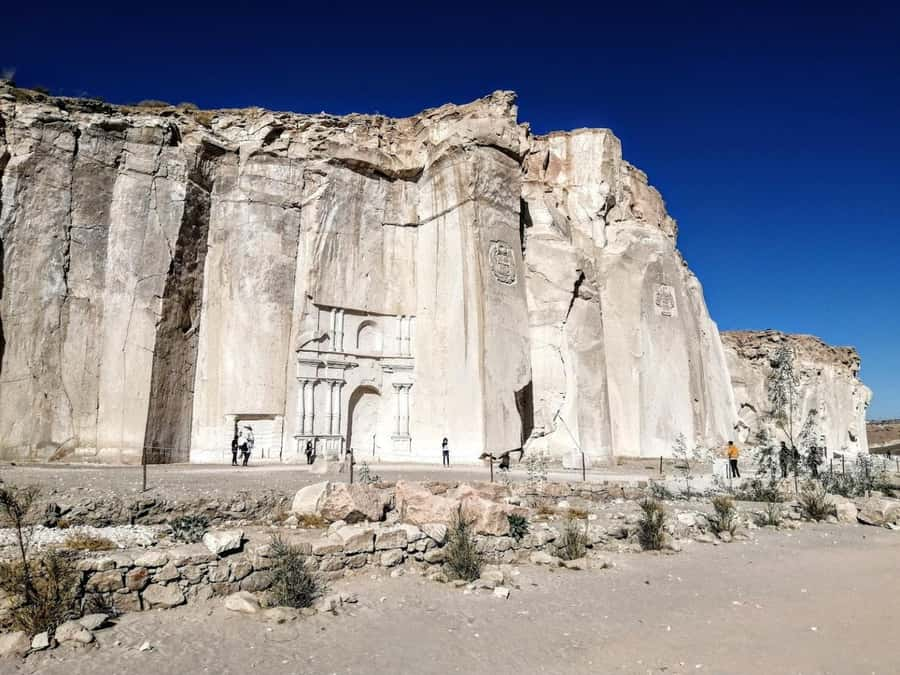
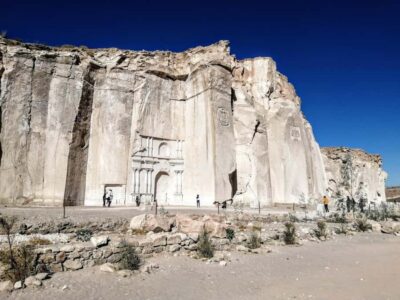
- Look for the giant stone carving: A large carving of the Church of the Company of Jesus gives the quarry a clear connection to the city’s architecture.
- Walk into Culebrillas Canyon: The short route follows a water-cut canyon with walls that rise roughly 15 to 20 meters.
- Find ancient Wari petroglyphs: The rock drawings are more than a thousand years old and appear near the end of the canyon walk.
- Choose morning or afternoon light: The morning outing begins around 9:15 AM, while the 2:00 PM departure can bring warmer sunset color to the stone.
- Keep your expectations practical: This is a budget half-day tour with shared transport, not a strenuous trek or a private archaeological expedition.
Why sillar matters in Arequipa
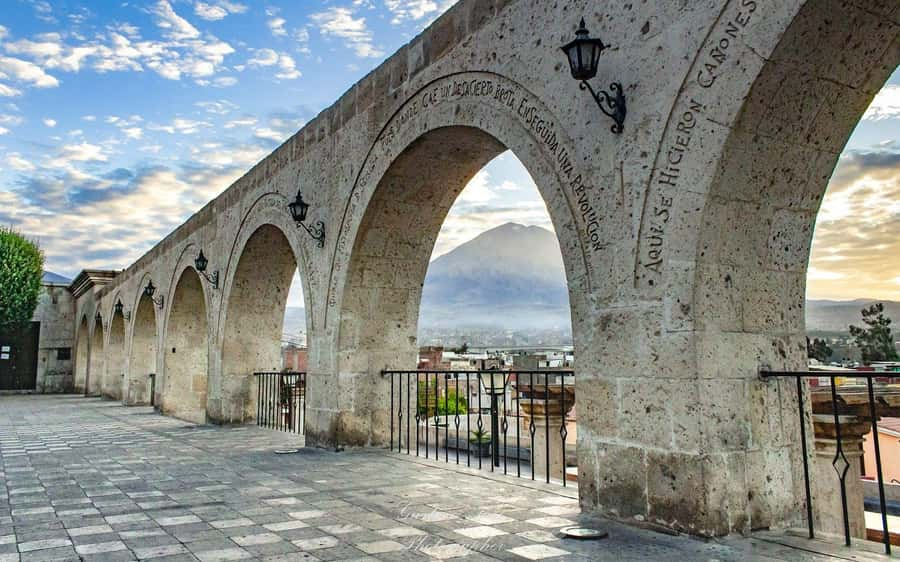
Arequipa is famous for its pale colonial buildings, and sillar is a major reason the city has its distinctive look. The stone is a light-colored volcanic material formed from ash and other volcanic deposits. It is soft enough to cut and shape, yet useful for walls, arches, churches, and decorative facades.
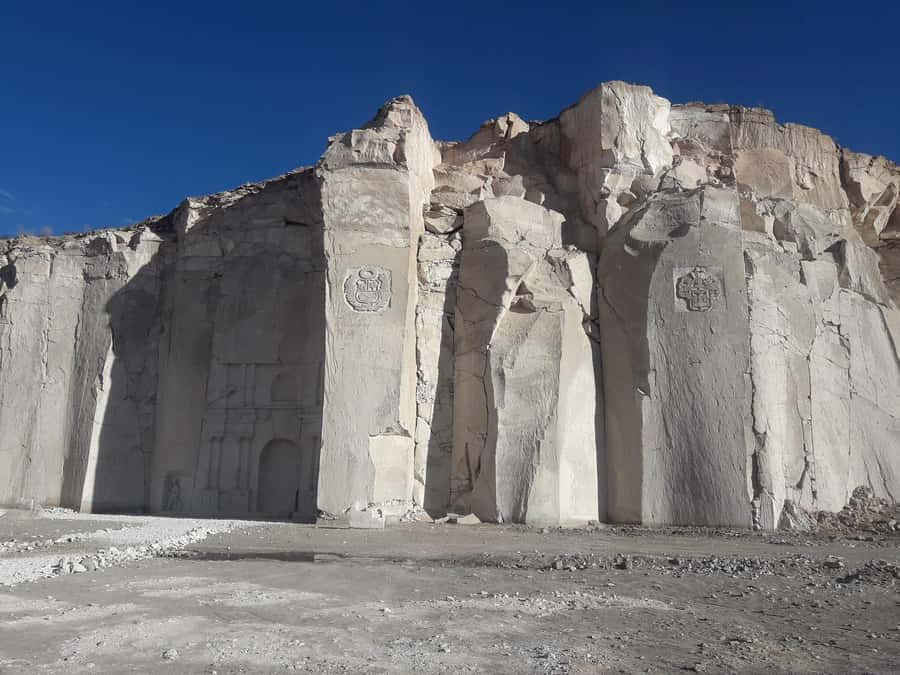
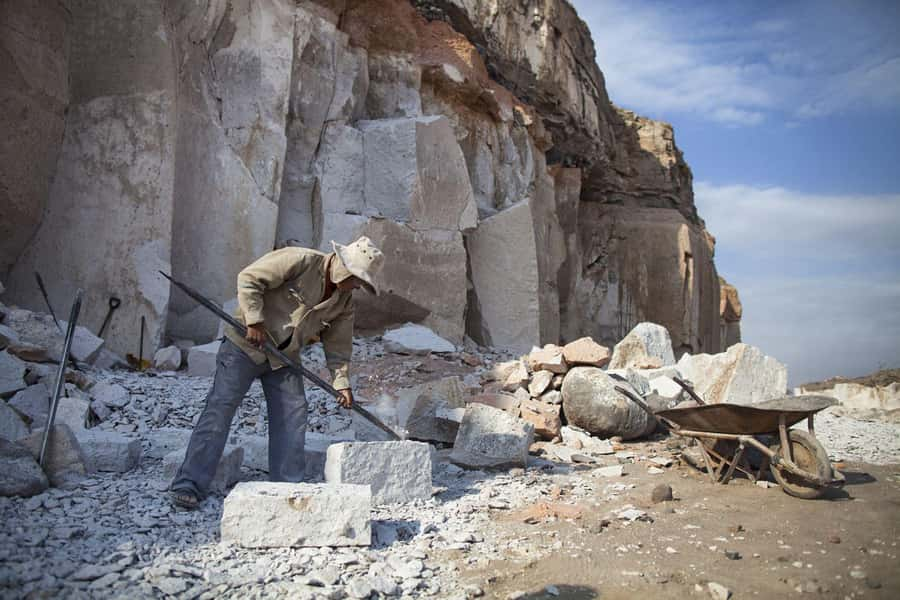
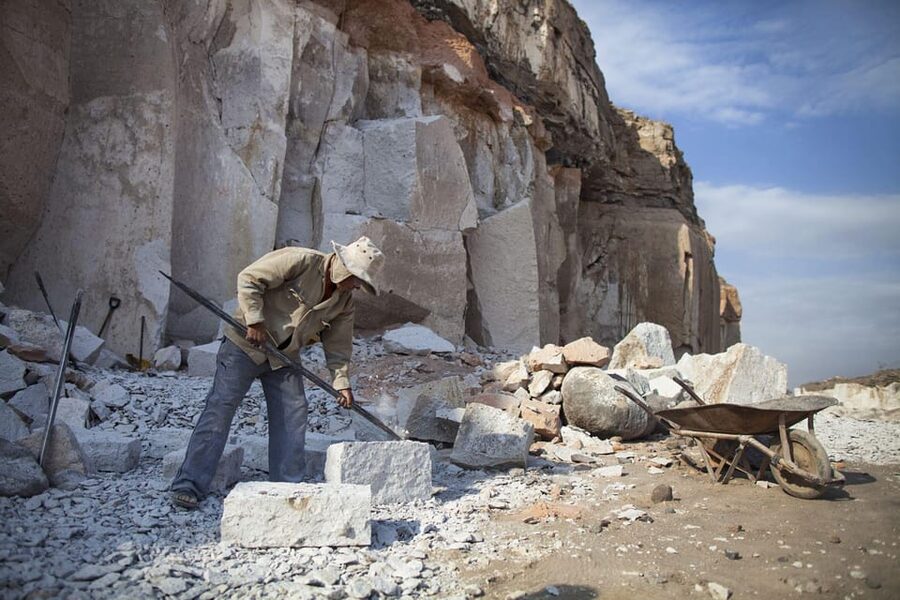
The tour gives you a chance to see the material before it becomes a polished piece of architecture. At Añashuayco, the quarry is still active. Stonemasons work the rock and remove blocks from tall ignimbrite walls, leaving a broad canyon-like cut in the earth.
That working setting matters. You are not looking at a closed museum exhibit. You are seeing a local craft that remains tied to Arequipa’s buildings and identity. The presentation can be basic, though, so you should come ready to ask questions if you want more detail about tools, production, or the economics of stone cutting.
The guides often add useful local context. Depending on the departure, you may be led by someone such as Mike, Jose, Alexandra, Julia, Roni, or Alexa. English and Spanish are available, though the amount of English can vary. English-speaking visitors have generally been included well when they make their needs clear.
More treks around Peru:
- From Cusco: 7 Lakes Ausangate Trek with Breakfast and Lunch
★ 4.8 · 360 reviews - From Arequipa: 2-Day Colca Canyon Trekking Tour
★ 4.8 · 243 reviews - Cusco: Full-Day Rainbow Mountain & Red Valley Trekking Tour
★ 4.5 · 121 reviews
Starting from central Arequipa
The meeting point is the main office at C. Álvarez Thomas 115, on the corner. Your name is checked there before the group receives a few instructions and boards the vehicle.
The total outing lasts about four hours. The morning schedule begins around 9:15 AM and usually returns you near Arequipa’s main square around 1:30 PM. The listed finish is on Av. La Marina. A second departure is available at 2:00 PM.
Transport is shared. It may be a van or a larger tour vehicle, and one account described a group of about 25 people. The vehicle was comfortable but not air conditioned on that occasion. Another departure used an open-top bus, so the exact setup may vary.
The drive is part of the experience, but it is not the reason to book the tour. You spend time on the road between the city, quarry, canyon, and viewpoint. The distances are manageable, and you avoid a long full-day journey, but a larger group can make loading, photo stops, and departures less precise.
The volcano and Andenerias viewpoint
The route includes a stop where you can see the volcanoes and the Chilina Valley. Depending on the season and daily plan, this may be the first stop or may come after the quarry and canyon.
This viewpoint is useful for getting your bearings. Arequipa is not just a colonial center surrounded by mountains. The city sits in a broad volcanic region, and the view helps explain why stone, ash, terraces, and highland agriculture are so closely linked here.
The stop lasts about 25 minutes in the listed itinerary. That gives you enough time for photographs and a short explanation, but not a long walk or a full scenic overlook experience. One practical point: if you have already visited a viewpoint in Yanahuara, this stop may feel less essential. It is still a good addition for first-time visitors who want the wider setting.
The Andenerias reference points to the agricultural terraces visible around the valley. They add another layer to the view, showing how people have shaped the slopes for cultivation over time. Your guide may also explain local volcano names and regional traditions, as some guides have done during the ride.
Añashuayco Quarry and the Church carving
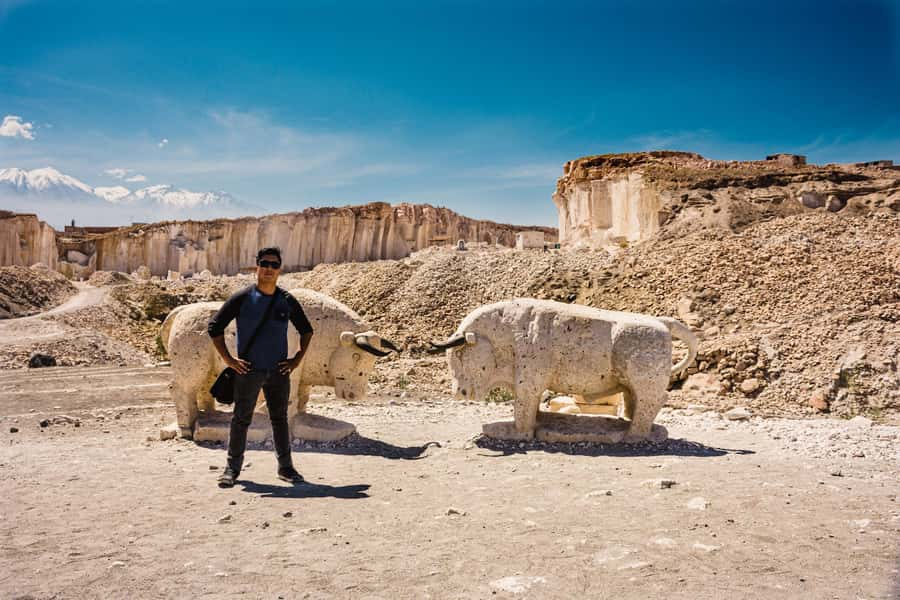
The quarry is roughly 45 minutes from the city, depending on traffic and the exact starting point. Here the white and pale-gray stone walls are the main attraction. Extraction has created tall cliffs and open cuts that make the scale of the work easier to understand.
A large carving of the Church of the Company of Jesus is displayed in the quarry. It is a modern interpretation rather than an ancient monument, but it helps you connect the raw blocks with the ornate religious buildings in central Arequipa.
You usually have guided explanations followed by free time. This arrangement has advantages and disadvantages. Free time lets you take photographs without being tied to every sentence, but the quarry can feel underexplained if you want a detailed account of the craft.
A stonemason may demonstrate the work and invite you to try cutting a block. That hands-on moment is one of the most interesting possibilities on the route. It turns sillar from a decorative building material into something physical and demanding. Do not expect a long workshop, though. The stop is shared with other groups, and the demonstration may be brief.
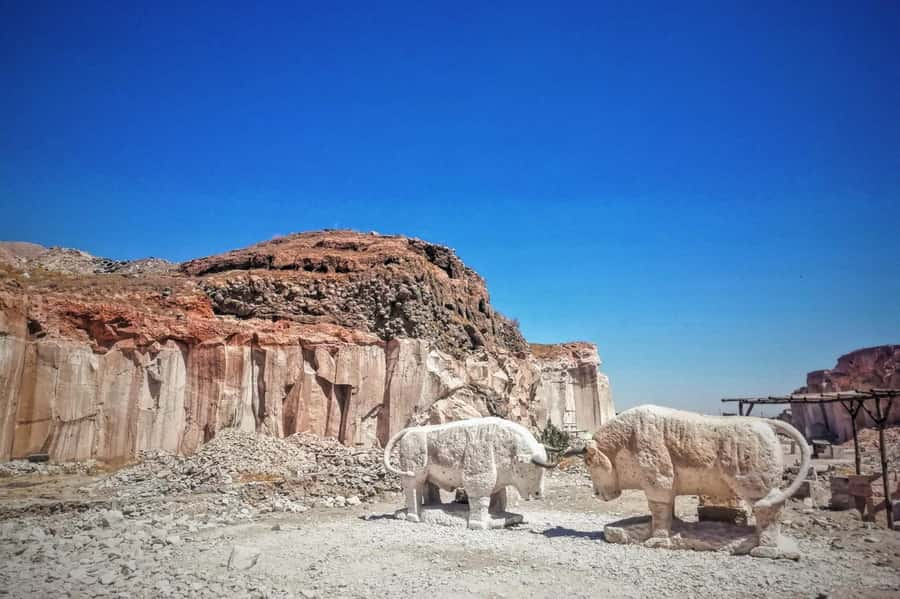
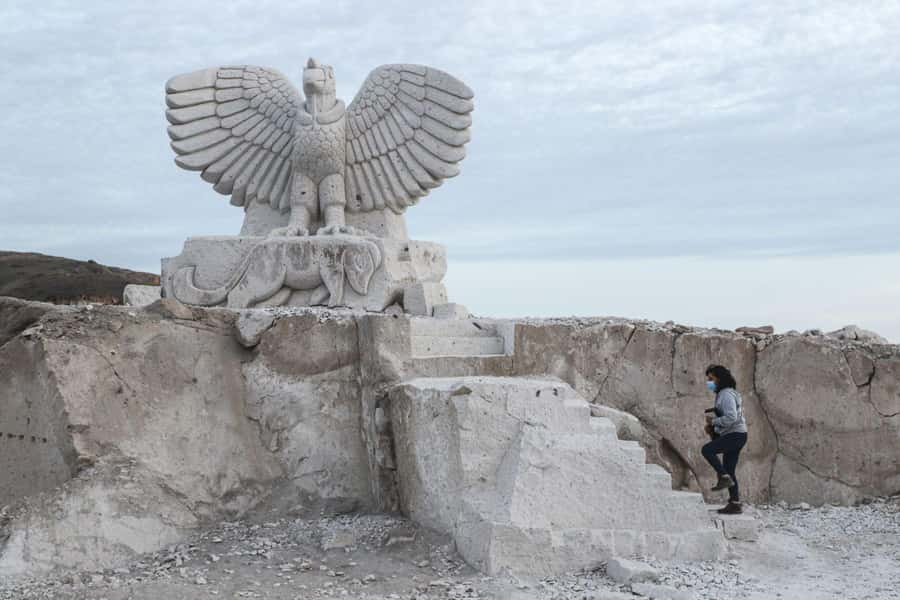
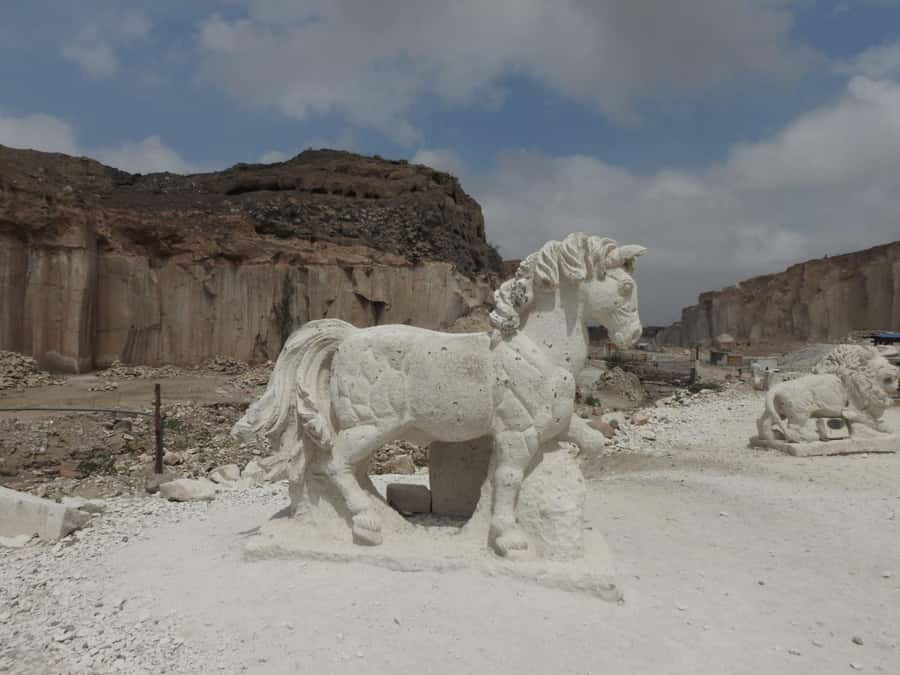
The carved animals and other stone figures are popular photo subjects. If you enjoy staged photographs and large sculptural pieces, you will have plenty to look at. If you are more interested in traditional masonry than modern photo props, you may find the canyon stop more rewarding.
Try to protect your time here. Groups can bunch up around the best photo spots, and waiting for people to finish photographs can make the quarry visit feel rushed. The guide may adjust the order, as one departure did by starting at the canyon to avoid the largest crowds.
Same mountains, a different route up:
- Salkantay Trek Challenge – 3 Days / 2 Nights
★ 5.0 · 101 reviews - From Cusco: Rainbow Mountain Trek
★ 4.5 · 98 reviews - 2 Day 1 Night Trek / Colca Canyon
★ 4.5 · 92 reviews - Choquequirao Trek 4 days and 3 nights
★ 5.0 · 81 reviews
Walking through Quebrada de Culebrillas
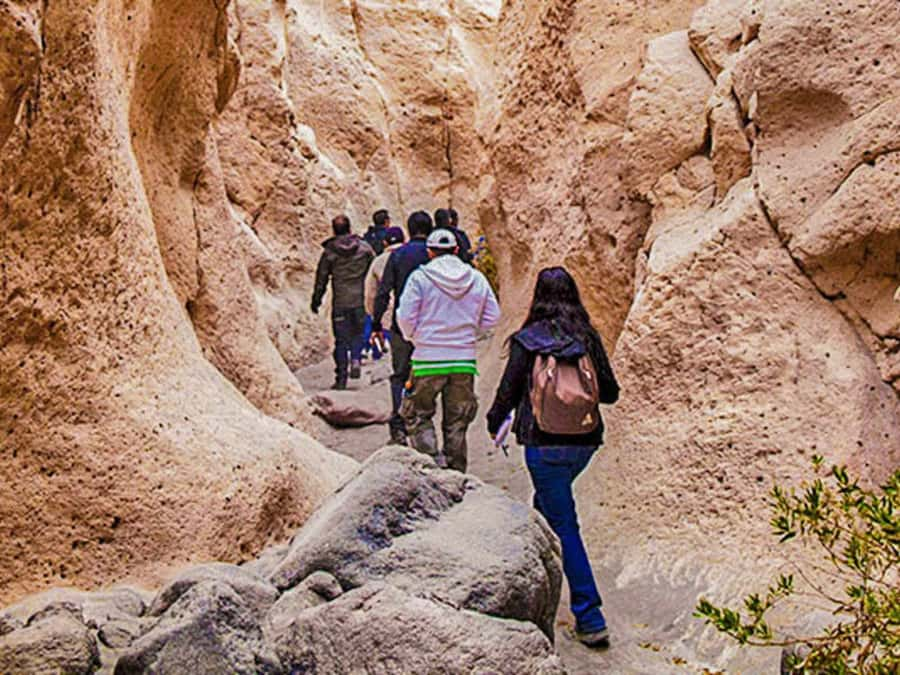
Culebrillas Canyon is the strongest part of the route for many visitors. It is about 30 minutes from Añashuayco, followed by a walk of roughly 20 to 25 minutes inside the canyon.
The passage was formed by water, and its walls rise about 15 to 20 meters. As you walk farther in, the walls become taller and the space feels narrower. The scale changes quickly, so the short walk feels more substantial than the distance suggests.
This is not a demanding mountain trek. It is still a real walk over uneven ground, with some loose or rough surfaces. One participant specifically noted that people with walking difficulties struggled in the mini canyon. Wear closed shoes with a secure sole, and do not count on sandals being comfortable.
Near the end, you can see petroglyphs linked to the Wari culture and dated to more than a thousand years ago. They are a quiet contrast to the quarry’s modern carvings. You are looking at marks associated with an older culture in a natural corridor shaped by water, not at a large archaeological complex with extensive interpretation.
The canyon can become crowded with other tour groups. If your guide offers an early or reversed order, that may improve the experience. The canyon is also the reason to carry insect repellent. It was a repeated practical tip, along with sunscreen and a hat.
The apachetas and their meaning
Before leaving the canyon area, you may see apachetas, small piles of stones placed one on top of another. They are described as gestures of gratitude toward nature and as symbols of good fortune.
You can view them as a living custom rather than simply a pile of rocks. Their presence gives the walk a cultural element that goes beyond geology and photographs. At the same time, avoid treating them as an invitation to rearrange the stones. The point is to observe the practice respectfully.
The apachetas are also a good example of the tour’s overall character. It combines geology, working culture, Indigenous history, local belief, and sightseeing in a short period. None of these subjects receives the depth of a specialist tour, but the combination gives you a useful introduction to the area.
Morning or afternoon departure?
The morning outing is the safer choice if you want to return to Arequipa early and keep the rest of the day free. It normally begins around 9:15 AM and returns around 1:30 PM, although traffic and group timing can affect the finish.
The 2:00 PM departure has a different appeal. Late light can warm the pale stone and create attractive color around the quarry and canyon. Several people found the afternoon views especially pleasing, with one noting beautiful sunset light on the rocks.
The tradeoff is the return through city traffic. A late departure may run into heavier traffic on the way back. If you have a dinner reservation, bus connection, or evening activity, leave extra time.
For photography, I would choose the afternoon. For a simple, predictable half-day addition to an Arequipa itinerary, I would choose the morning.
Is the $12 price good value?
At $12 per person, this is a strong-value outing. Transportation and a guide are included, and you visit three distinct settings: the quarry, the canyon, and the volcano viewpoint.
The extra cost is 18 soles total for entrance fees. That amount is not included, and you should carry small bills or coins in soles. There is no cash withdrawal stop during the tour, so arrange this before meeting the group.
The price also explains some limitations. This is shared transport, the group can be fairly large, and the explanations may be broad rather than highly specialized. One guide may give more detailed history, while another may keep the commentary fairly basic.
The activity has an overall rating of 4.2 from 461 ratings, which fits my reading of its value. The strongest points are punctual transport, friendly guides, useful background about sillar, and the canyon. The weaker points are occasional crowding, uneven time at stops, and a quarry experience that some people find more commercial or photo-focused than expected.
What to bring and how to prepare
You do not need technical trekking equipment, but a few small choices will improve the outing.
- Wear closed shoes with a firm sole for the canyon.
- Carry sunscreen, a hat, and water for the exposed quarry and viewpoint.
- Bring insect repellent, especially if you are taking the canyon walk.
- Keep 18 soles in cash for entry fees, preferably in smaller denominations.
- Bring a camera or phone, but allow time to listen instead of spending the whole quarry stop in a photo line.
- If you speak English, tell the guide at the start. The tour is bilingual, but explanations may otherwise lean toward Spanish when most of the group speaks it.
The walking is short, but it should not be described as entirely effortless. The canyon surface is uneven, and the walls and path are not designed as a fully accessible walkway.
Who should book this tour?
I recommend it for first-time visitors to Arequipa who want to understand the source of the city’s pale stone without giving up a full day. It also suits anyone who enjoys short walks, geology, local craft, and simple cultural stops.
Families and mixed-age groups may appreciate the limited walking, though anyone with mobility problems should think carefully about the canyon section. Photography fans should consider the afternoon departure for softer light.
I would skip it if you want a long wilderness hike, an in-depth archaeology tour, or a private experience with plenty of time at each site. The tour is best understood as an affordable introduction to the Sillar Route, not as a specialist study of stone masonry.
Should you book the Sillar Route Trek?
Book it if you have four free hours in Arequipa and want more than another city viewpoint. The Culebrillas Canyon walk and the chance to see sillar being worked make the outing worthwhile, especially at this price.
Choose the morning for easier scheduling, or the 2:00 PM departure for warmer light and possible sunset color. Carry cash, wear proper shoes, and expect a shared group pace. If you keep those points in mind, this is a practical way to see the volcanic setting behind Arequipa’s architecture.
FAQ
How long does the Sillar Route Trek last?
The tour lasts about four hours. The morning departure begins around 9:15 AM and generally returns to central Arequipa around 1:30 PM.
Where does the tour begin?
The meeting point is the main office at C. Álvarez Thomas 115 in Arequipa. It is located on the corner, where your name is checked before departure.
Is there an afternoon departure?
Yes. A 2:00 PM departure is also available. This option may offer warmer evening light, but traffic can affect the return to the city.
What places does the tour visit?
The route includes the Añashuayco Quarry, Quebrada de Culebrillas, and a volcano and Andenerias viewpoint. The order can change depending on the season, traffic, or crowd levels.
How much are the entrance fees?
Entrance fees cost 18 soles total per person. They are not included in the $12 tour price, so bring cash in soles.
Is transportation included?
Yes. Shared transportation and a live guide are included. The vehicle may be a van or another shared tour vehicle, and the exact setup can vary.
Is the tour available in English?
Yes. Guides provide the tour in English and Spanish. The balance between the two languages may depend on the group, so tell your guide if you need English explanations.
How much walking is involved?
The main walk is approximately 20 to 25 minutes inside Culebrillas Canyon. The ground can be uneven, so closed shoes are recommended.
What should I bring?
Bring sunscreen, a hat, insect repellent, water, cash in soles, and closed shoes. The quarry and viewpoint are exposed, while the canyon requires a short walk over uneven ground.
New treks around Peru
- Salkantay trek to Machu Picchu – 5D/4N – Premium★ 3.3 · 3 reviews
- Salkantay Humantay lake trek with Domes-2d-1n★ 5.0 · 2 reviews
- Salkantay Trek to Machu Picchu 5 Days with Sky Lodge Domes★ 5.0 · 5 reviews
- 5-Day Classic Salkantay Trek to Machu Picchu return by Train★ 5.0 · 3 reviews
- From Cusco: 5-Night Trip with Salkantay Trek & Machu Picchu★ 4.7 · 6 reviews
- Salkantay Trek to Machu Picchu 5D/4N or 4D/3N by glamping★ 4.4 · 35 reviews
- Rainbow Mountain Trek 1 Day★ 5.0 · 2 reviews
- Rainbow Mountain and Red Valley Hike trek adventure★ 4.5 · 2 reviews
Arequipa Trekking Tours, side by side.
From Arequipa: 2-Day Colca Canyon Trekking Tour
Read our review →
4 hours Tour: Route of Sillar with Trek in Culebrillas
Read our review →
Arequipa: Colca Canyon Trekking 2 days and 1 night + food
Read our review →
Lists this trek appears in