Review · CHIANG MAI
Chiang Mai: 2-Days Jungle Trek, Waterfalls and Karen Village
The best part of this two-day Chiang Mai trek is the change of pace. You leave the city behind, walk through White Karen farmland, follow jungle trails, swim beneath waterfalls, and sleep in a village cottage rather than returning to a hotel. The evening campfire and mountain sunrise give the trip a human touch that a standard day hike cannot match.
I like the mix of active hiking and local life, especially the chance to learn about herbs, food, farming, and village customs. I also like the small group size, with no more than 13 people, and the guides’ easygoing teaching style. The catch is simple: this is a real trek, not a gentle nature walk. Expect roughly five to six hours on foot each day, with uphill sections, mud in wet weather, and basic overnight facilities.
Key points to know before booking
- Two full days on foot: Expect about 12 kilometers on the first day and roughly 8 to 10 kilometers on the second, depending on the route and conditions.
- White Karen village stay: The overnight cottage is comfortable enough, but simple, with shared sleeping space and a bucket-flush toilet.
- Waterfalls are part of the route: Bring swimwear, a towel, dry clothes, and sandals or flip-flops for breaks by the water.
- Guides make the difference: Guides such as Kong, Pat, Jo, Pong, Pepe, Nu, and Bo Bo have led groups with humor, nature explanations, and practical help on the trail.
- Cold nights are possible: From November through February, Mae Win can feel surprisingly chilly after dark and before sunrise.
- Pack a small bag: You carry your own belongings for two days, so leave the large suitcase in Chiang Mai if possible.
Leaving Chiang Mai for Mae Win
Pick-up begins around 7:00 to 7:30 AM for hotels inside Chiang Mai’s old city walls. Hotels farther out are generally collected between 7:30 and 8:00 AM. If your hotel is outside the normal service area, you meet at Wat Phra Singh or Maya Shopping Center instead.
The first drive takes about 45 minutes to a local market. This is a useful stop rather than dead time. You can buy snacks, drinks, and personal supplies, or sit down with a coffee before the walking begins. After another 20-minute drive, you reach the White Karen village where the trek starts.
I like this early market stop because it lets you adjust to the day. If you need extra water, snacks, or something salty for the trail, this is your chance. Do not count on carrying a large pack comfortably. You will be walking for hours, so buy only what you can sensibly carry.
The drive is included in the $96 price, along with a guide, meals, accommodation, and travel insurance. For a two-day outing with transport from Chiang Mai and an overnight stay, that is a fair package price. The value is strongest if you want an organized rural experience and do not want to arrange transport, food, and a village stay separately.
More Jungle Treks in Chiang Mai
- Chiang Mai: 2-Day Jungle Trek with Elephant Farm & Raft Ride
★ 4.7 · 881 reviews - Off the Map Chiang Mai Jungle Coffee Trek Roast and Brew
★ 5.0 · 107 reviews - Chiang Mai: Elephant Sanctuary & Jungle Trek w/ Waterfall
★ 4.5 · 18 reviews
Day one: Karen farms, jungle paths, and a waterfall lunch
At the trailhead, your guide gives a short briefing before leading you through farmland around the White Karen village. This opening section helps you see that the countryside is not just untouched forest. Rice fields, crops, and working farms are part of daily life here, and the walking route connects those cultivated areas with the Mae Win jungle.
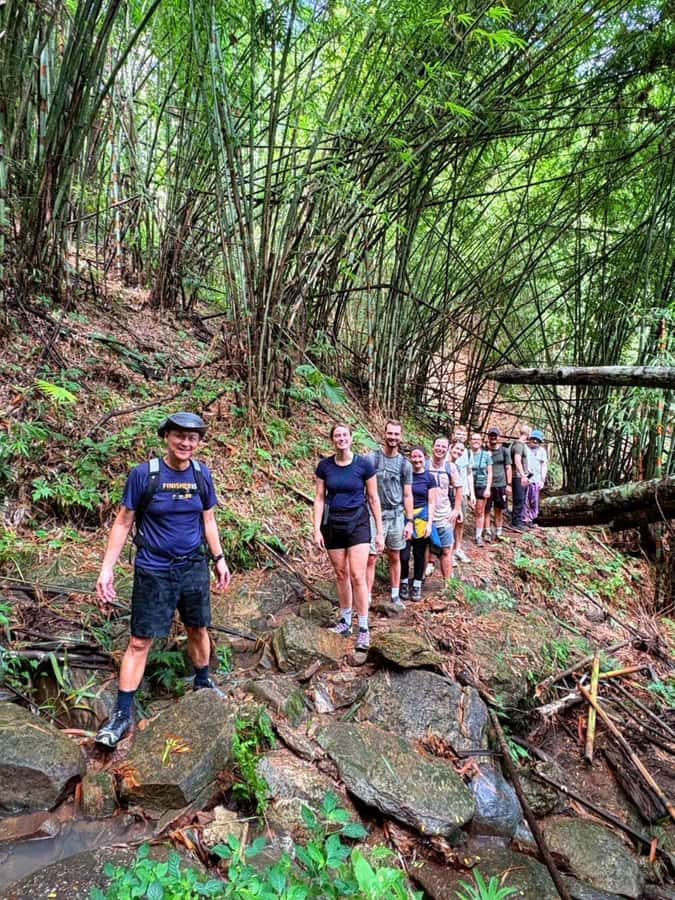
The route then becomes more wooded. You walk for about five to six hours in total, although the actual distance and pace can change with rain, rest stops, waterfall breaks, and the group’s fitness. Some groups cover around 12 kilometers on the first day, while the timing matters more than the exact number.
You should expect uphill climbs and uneven ground. Several people who enjoyed the trek still described it as strenuous, especially in hot or wet weather. Good sports shoes are the minimum. I would choose hiking shoes with a strong sole pattern, since muddy slopes and slick rocks can make ordinary trainers a poor choice.
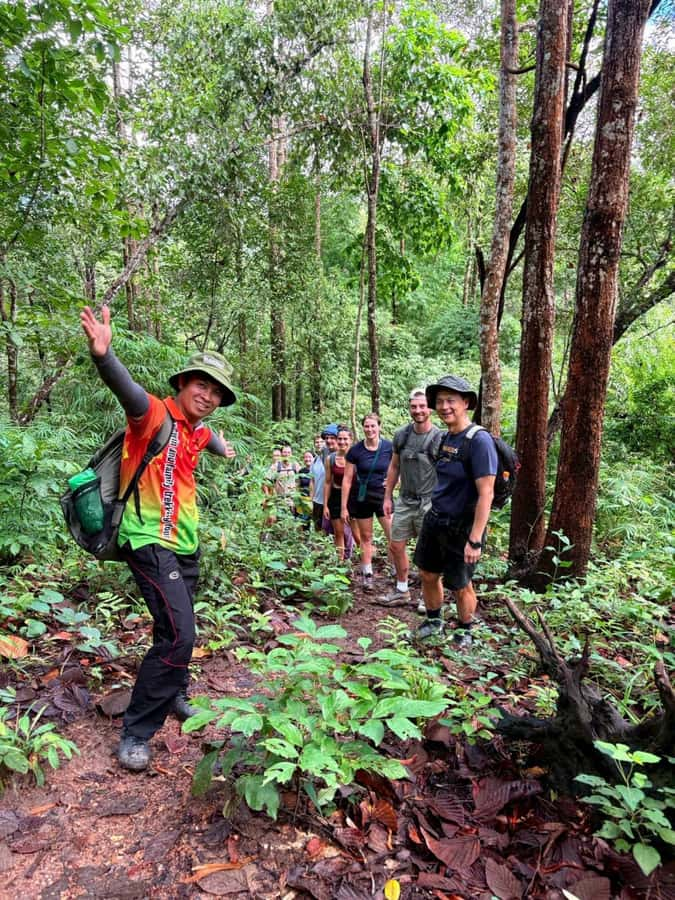
The guides add much more than directions. They may explain local plants and their uses, point out insects and wildlife, and show you simple jungle skills. Past guides have made bamboo rings and leaf crowns, demonstrated jungle instruments, and shared fresh fruit found along the route. These small details turn the walk into a lesson in how people use the forest, not just a march through trees.
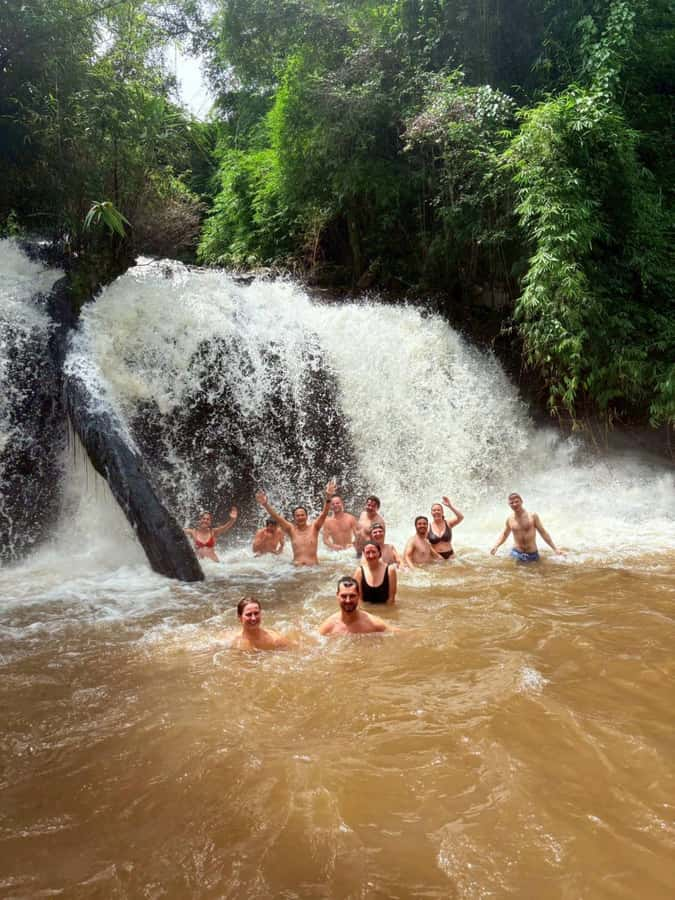
A waterfall provides the first major pause and lunch stop. This is where the day’s physical effort pays off. You can eat, cool off, swim, and let the group spread out for a while. Pack your phone and valuables carefully, and keep a dry change of clothes accessible rather than buried at the bottom of your bag.
The trail continues after lunch to the White Karen cottage where you spend the night. You will still have some walking left after the waterfall, so do not treat the lunch stop as the end of the day. The pace is adjusted to the group, with breaks for water, explanations, views, and swimming.
The White Karen cottage after sunset
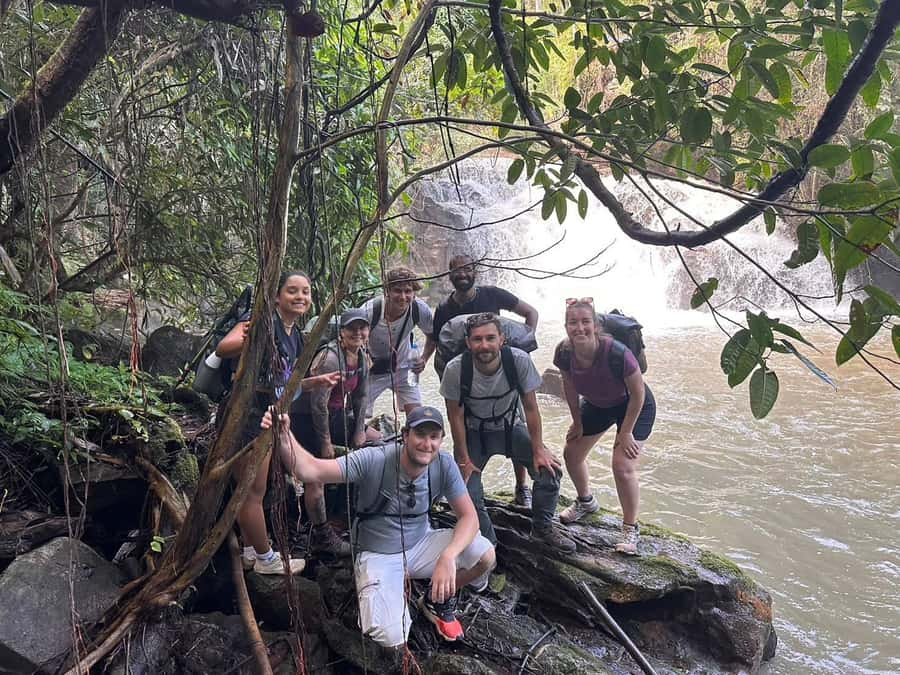
The overnight stay is one of the most memorable parts of the experience, but it is not a hotel. Sleeping arrangements are simple, usually in a shared dorm-style space, and the toilet may be a bucket-flush model. The accommodation is adequate for one night, yet you should book this trip because you want a village stay, not because you expect private rooms or polished facilities.
That simplicity fits the setting. You are close to the village and surrounded by farmland and jungle, with fewer distractions than you would have in Chiang Mai. One of the pleasures is waking to village and forest sounds rather than an alarm or city traffic.
In the evening, you may help prepare dinner. The guide can introduce local herbs and ingredients, which gives the meal a personal connection to the place. Food is included, with dinner on the first night, breakfast the next morning, and lunch on both trekking days. Portions have generally been generous, and there may be an opportunity to buy small extras such as chips or beer.
Then comes the campfire. Groups have spent the evening talking, singing karaoke, playing simple instruments, and watching the stars. The exact mood depends on the people in your group, but the small-group limit gives everyone a fair chance to join in. I like this part because it is social without being forced. You can take part, sit quietly, or simply enjoy the darkness and mountain air.
Pack warm clothes even if Chiang Mai feels hot when you leave. From November through February, nights in Mae Win can be cold. A jacket, long pants, and an extra warm layer will matter more than another change of light daytime clothing.
Day two: jungle wildlife, village lunch, and another swim
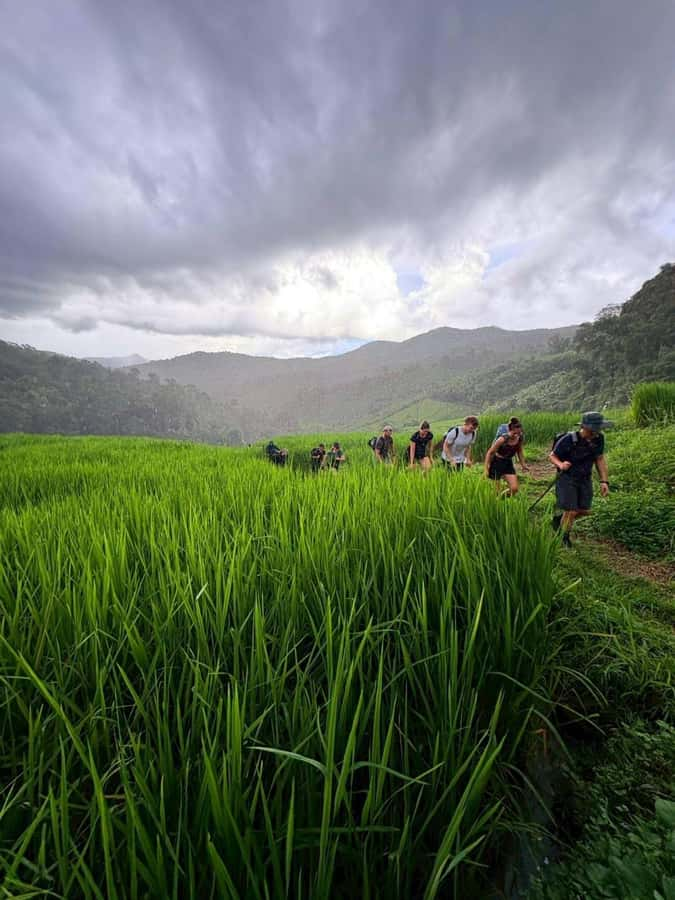
The second morning begins with breakfast and the natural sounds of the village and forest. If the weather is clear, sunrise and the mountain views can be especially fine, and having coffee at the cottage becomes a small highlight of the trip.
Day two takes you through Mae Wang jungle, where you might see monkeys, gibbons, insects, and other forest life. Wildlife sightings are never guaranteed, so think of them as an added possibility rather than the purpose of the trek. The forest itself, along with the guide’s explanations, remains the main attraction.
The walking time is flexible, but you should still expect a serious day outdoors. Some departures cover about 8 to 10 kilometers, and the route can feel demanding after the previous day. Rain adds mud and slippery sections, but it can also make the forest feel cooler and more atmospheric. A rain jacket is sensible during the wet season, along with a bag that protects spare clothing and electronics.
The route includes another hill tribe village, where you stop for lunch and rest. This gives you a second look at local life rather than limiting the cultural part of the trip to the overnight cottage. Keep an open mind and listen to your guide. The experience is most worthwhile when you treat the village as a living community, not a staged photo stop.
After lunch, you continue toward a second waterfall. This is another chance to swim, cool down, and wash away trail dust before the final walk back to the truck. Waterfall stops break up the physical effort, but they do not remove it. You still need enough fitness for long periods on your feet and repeated climbs.
The truck then takes you back to Chiang Mai, with hotel arrival usually around 6:00 to 6:30 PM. Do not schedule a tight evening flight or an important appointment. Weather, trail conditions, group pace, and the drive can all affect the finish time.
More Jungle Treks in Thailand
- Chiang Mai: Jungle Trek, Elephants care & Bamboo Rafting
★ 4.5 · 8 reviews - Chiang Mai: Guided Jungle and Waterfall Trek with Transfer
★ 4.9 · 8 reviews - Khao Sok: Private Day Trekking, Jungle Dinner & Night Safari
★ 4.7 · 206 reviews - Big Buddha Jungle Trekking and Temple tour with Lunch
★ 5.0 · 171 reviews
How hard is the trek?
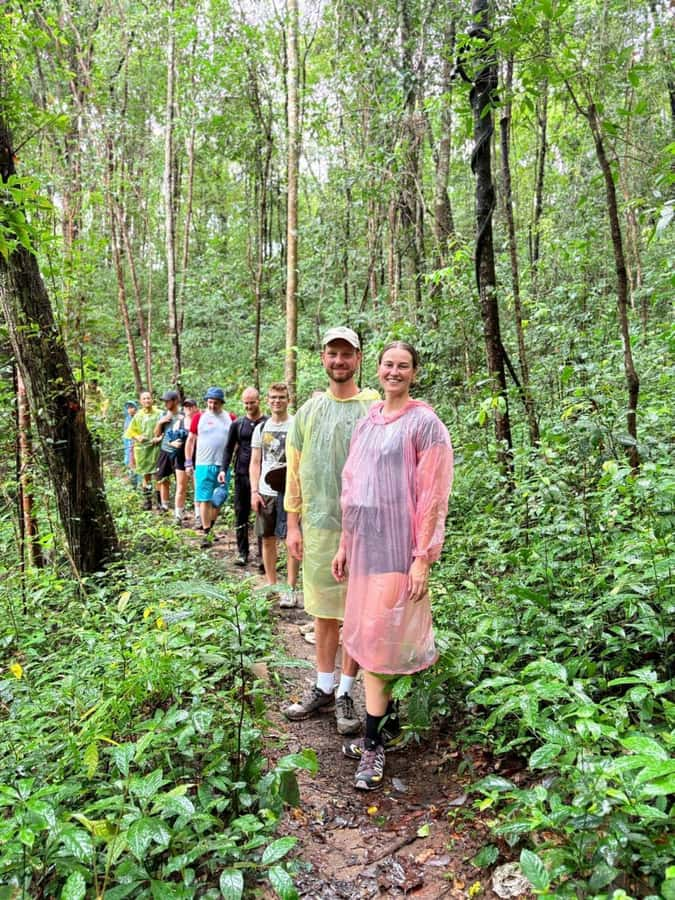
I would rate this as moderate to demanding, depending on your usual activity level. It is not a technical climb, and the walking pace includes regular breaks, but the combination of distance, heat, hills, wet ground, and two consecutive days makes fitness important.
You should be comfortable with:
- Five to six hours of walking on day one
- About eight to ten kilometers on day two, with some routes longer
- Uphill and downhill sections
- Mud and slippery ground during rainy periods
- Carrying your own small backpack
- Basic overnight accommodation
- Swimming or sitting near waterfalls
If you hike regularly, this should be manageable with sensible footwear and a steady pace. If you rarely exercise, have trouble with long uphill walks, or want a relaxed sightseeing trip, I would choose a shorter excursion instead.
The trip is not suitable for pregnant women, wheelchair users, people with altitude sickness, or anyone over 70. Those limits are worth taking seriously. They reflect the trail conditions and the remote setting, not just paperwork.
What to pack for comfort
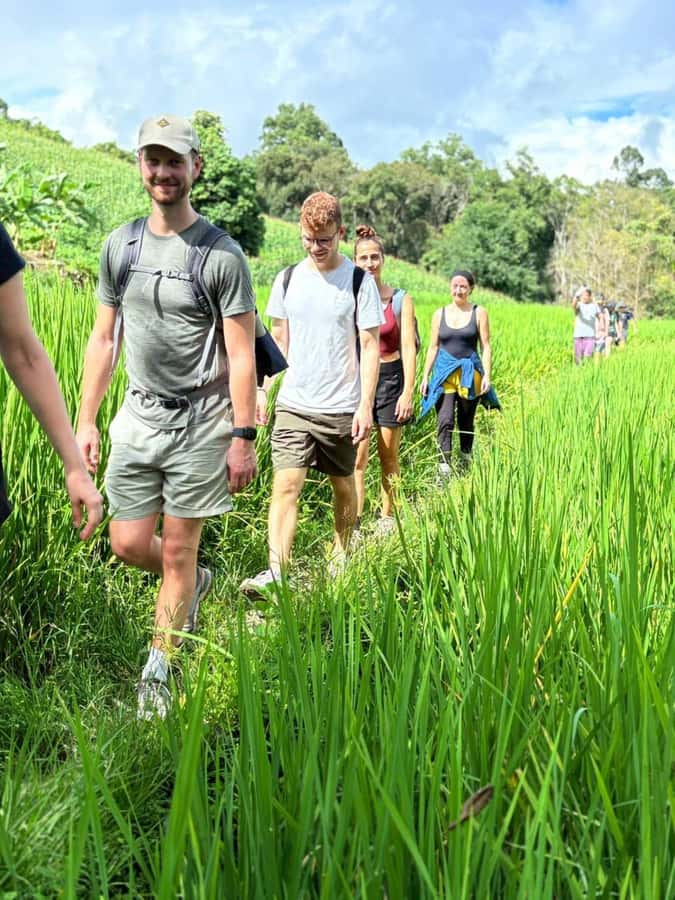
Keep your main luggage in Chiang Mai and take a small daypack. Two days of clothes, a jacket, personal medication, a power bank, and basic toiletries should be enough.
Your useful kit includes:
- Hiking shoes with good grip
- Warm layers from November through February
- Long pants and a pair of shorts
- Swimwear, towel, and a dry change of clothes
- Sun hat, sunglasses, sunscreen, and insect repellent
- Rain jacket during the wet season
- Flip-flops for the cottage and waterfall stops
- Snacks and personal supplies from the market
- Power bank and any essential medication
Avoid overpacking. A heavy bag makes every uphill section harder, and you will not need city clothes for the trail or village cottage.
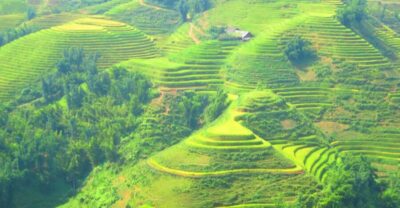
Rice field conditions also change by season. July and August bring planting work, September and October show green fields turning toward gold, and November and December are harvest months, when you may see traditional rice cutting and gathering in Karen villages. These seasonal details can shape what you see around the farms.
The guides and group atmosphere
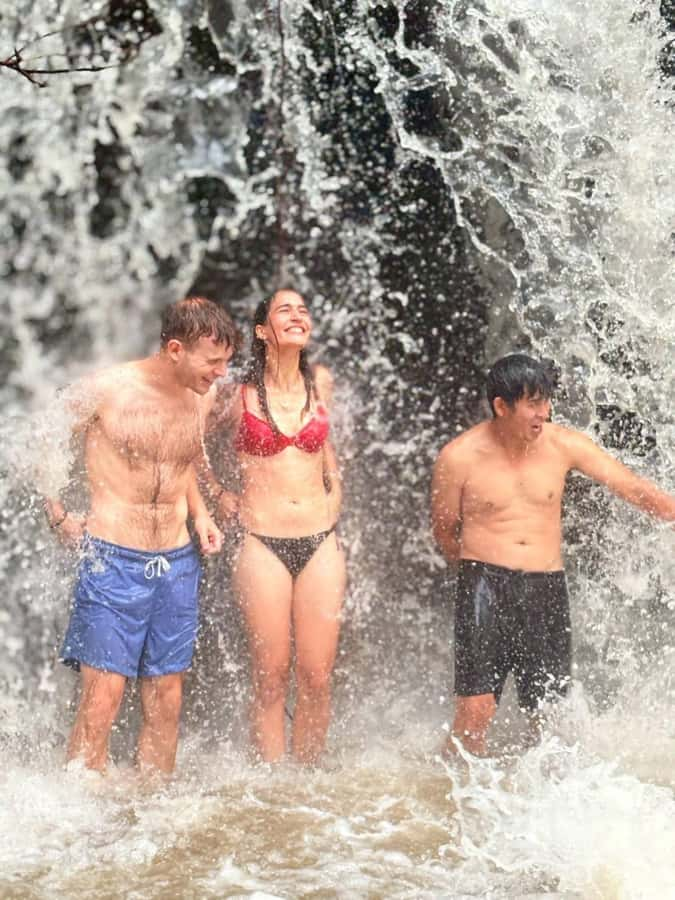
The English-speaking guide is central to the experience. Guides named Kong and Pat have been especially good at making long walks feel manageable, while Jo, Pepe, Nu, Pong, and Bo Bo have also led groups with humor, plant knowledge, and practical trail help. Your assigned guide may differ, but the format gives you a local person who can explain the route and the village setting.
The group is limited to 13 participants. That is small enough for questions and conversation, but not so small that you should expect a private tour. Group fitness levels can vary, and the guide adjusts the pace and rest stops accordingly. One departure may feel calm and steady, while another may move faster if everyone is fit.
The social side is strongest at dinner and the campfire. You meet people from different countries, then share a basic cottage, a meal, and a night outdoors. If you want privacy, silence, and a soft bed, this will feel rustic. If you enjoy shared experiences, it is part of the appeal.
Is $96 good value?
For $96 per person, you receive transportation, an English-speaking guide, two days of trekking, lunches, dinner, breakfast, one night’s accommodation, and travel insurance. You also receive access to a rural area that would be awkward to reach independently without arranging transport and local guidance.
The price is good value for an active two-day trip, especially if you plan to swim, eat locally, and spend the night in the village. It is less attractive if your main goal is comfortable accommodation or a slow countryside drive. The cottage is basic, and the price cannot change the fact that you carry your belongings and spend long hours walking.
Free cancellation up to 24 hours before departure and the option to reserve now and pay later make planning easier. Pick-up is included from listed areas, but airport collection and airport drop-off are not available.
Should you book this Chiang Mai jungle trek?
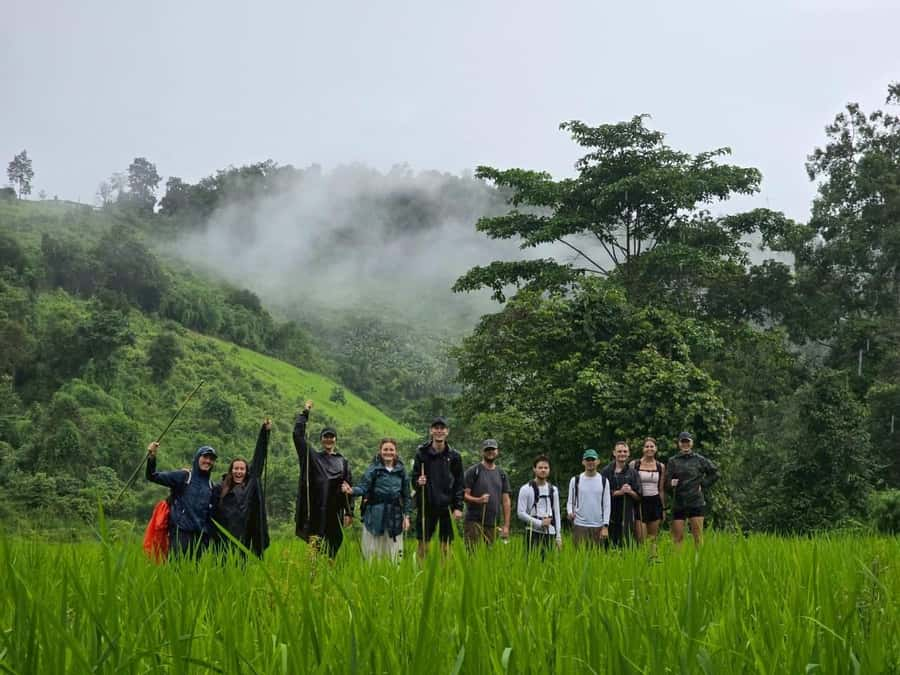
Book it if you want two proper days outdoors, enjoy meeting a local guide and a small group, and are happy trading hotel comfort for a village cottage, campfire, waterfalls, and sunrise. It suits hikers, active couples, friends, and solo visitors who want more than a quick jungle photo stop.
Think twice if you dislike shared sleeping spaces, basic toilets, wet trails, or long uphill walks. You should also avoid it if you have mobility or health concerns listed in the restrictions.
My call is favorable for fit visitors who want an authentic northern Thailand experience without arranging the details themselves. Pack light, bring warm clothing, wear shoes with grip, and leave room in your plans for the trek to finish around 6:00 or 6:30 PM on the second day.
FAQ
How long does the Chiang Mai jungle trek last?
The activity lasts two days. Pick-up begins around 7:00 to 7:30 AM for hotels inside the old city walls, and you usually return to Chiang Mai around 6:00 to 6:30 PM on the second day.
How far do you walk each day?
The route varies with weather, group pace, breaks, and trail conditions. Departures have covered about 12 kilometers on the first day and roughly 8 to 10 kilometers on the second day.
Where do you sleep?
You stay overnight at a White Karen village cottage. The accommodation is basic, usually with shared sleeping space and a bucket-flush toilet.
Are meals included?
Yes. The package includes lunch on both trekking days, dinner on the first night, and breakfast on the second morning.
Can you swim during the trek?
Yes. The route stops at waterfalls where you can relax and swim. Bring swimwear, a towel, a change of clothes, and suitable footwear for wet areas.
What should you wear in winter?
From November through February, bring warm layers, a jacket, and long pants. Nights and early mornings in Mae Win can be cold.
Is the trek suitable for all fitness levels?
No. You need to manage long walks, uphill sections, uneven trails, and possibly mud or slippery ground. The activity is not suitable for pregnant women, wheelchair users, people with altitude sickness, or people over 70.
More Waterfall Treks in Thailand
- Chiang Mai: Mae Ya Waterfall & Pha Dok Siew Trail Trek
★ 5.0 · 13 reviews - Chiang Mai: 1-Day Trekking Experience to Village & Waterfall
★ 4.5 · 5 reviews - Chiang Mai: Karen Tribe & Dual Waterfalls – Private Day Trek
★ 4.7 · 3 reviews - Chiang Mai: Full-Day Tour of Lahu Village and Waterfall Trek
★ 5.0 · 3 reviews
More Waterfall Treks in Chiang Mai
- Chiang Mai ATV & White Water Rafting & Trekking to Waterfall
★ 4.7 · 84 reviews - Chiang Mai Untouched Elephant: Nature Walk & Waterfall Trek
★ 4.7 · 77 reviews - Chiang Mai: Whitewater Rafting and Waterfall Trekking Tour
★ 4.9 · 58 reviews - Chiang Mai Adventure: Trekking, Tubing & Waterfall Slide
★ 4.9 · 20 reviews
New treks around Chiang Mai
- Private Tour Doi Inthanon, Trekking Kew Mae Pan Nature Trail★ 5.0 · 11 reviews
- Private Doi Inthanon, Nature Trail, Wat Phra That Doi Kham★ 5.0 · 6 reviews
- Inthanon national park, Trekking and Sightseeing in one day.★ 5.0 · 5 reviews
- Eco-Friendly: Doi Inthanon & Pha Dok Siew Trekking Day Trip★ 4.1 · 5 reviews
- Private Doi Inthanon With Trekking Pha Dok Siew Nature Trail★ 5.0 · 7 reviews
- Chiang Mai: Jungle Trek, Elephants care & Bamboo Rafting★ 4.5 · 8 reviews
- Chiang Mai: Mae Ya Waterfall & Pha Dok Siew Trail Trek★ 5.0 · 13 reviews
- Chiang Mai: Hmong Village, Doi Suthep and Wat Pha Lat Trek★ 5.0 · 3 reviews
Waterfall Treks, side by side.

Bali: Munduk Waterfalls Trek, Twin Lakes and Temple Tour
Read our review →
Khao Sok: Private Waterfalls and Wildlife Half-Day Trek
Read our review →
Selogriyo Temple and Trekking Java Rice Terraces, hidden waterfall -Nature Java
Read our review →
Ubud: Rice Terrace, Holy Water Temple & Waterfalls Trek Tour
Read our review →
Trekking to Waterfall Adventure Tubing 45 mins. (Only Khao lak)
Read our review →
Wild Elephant Anakulam & Waterfalls Tour(munnar valley Trekking)
Read our review →
Tamanique Waterfalls Complex Trek + El Tunco Beach
Read our review →