Review · CHIANG MAI
Chiang Mai Untouched Elephant: Nature Walk & Waterfall Trek
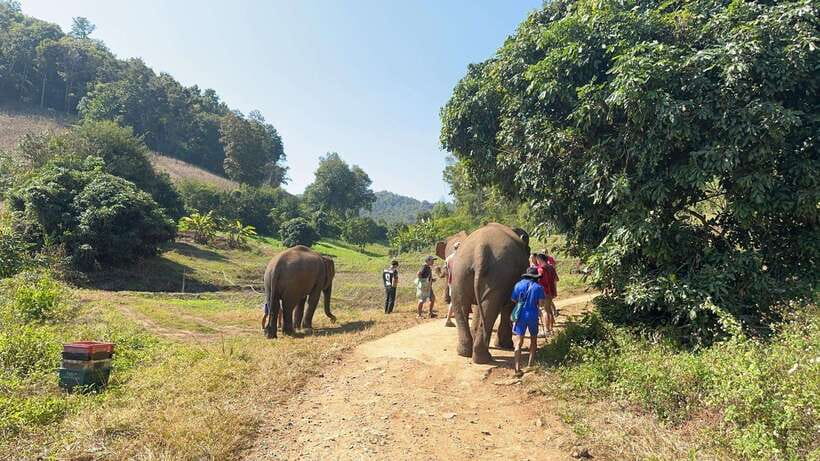
The best part of this Chiang Mai outing is the quiet, natural contact with rescued elephants. You help prepare their food, feed them by hand, walk beside them without saddles or chains, and follow them to the river for mud and bathing. The day feels tied to the animals rather than a performance schedule.
I like two things here: the chance to spend time in a real mahout village, and the home-cooked meal made with local ingredients. You also get a waterfall stop, drinking water, hotel transport, and an English-speaking guide. The catch is the journey, which can be rough and longer than the advertised five hours.
If Jimmy is leading your group, expect a friendly host who keeps things moving without making the day feel stiff. Bring swimwear, a towel, and dry clothes, even though only sun protection and insect repellent are formally listed. This suits you if you want a hands-on rural day, not a polished attraction with fixed animal tricks.
Key points to know before booking
- Elephants set the pace: Activities change according to what the rescued elephants want to do that day.
- No riding or forced acts: There are no chains or hooks at the park, and the elephants are not made to perform.
- The road is part of the outing: You may ride in a 12-seater air-conditioned van, an open-air pickup, and a roofed 4×4 truck.
- Lunch is a real strength: A complimentary local meal is served after the morning with the elephants.
- Mae Wang adds a nature break: You get about an hour at the waterfall for walking and free time.
- Plan for more than five hours: The stated duration is five hours, but the journey and rural pace can make the day longer.
Why this elephant day feels different
Many elephant outings near Chiang Mai are built around a neat sequence of photo stops. This one aims for something less polished. You spend time with families who care for elephants as part of daily village life, then follow the animals through ordinary routines such as eating, walking, and bathing.
That matters because the elephants are not presented as entertainers. They are rescued animals, and the rules are simple: no riding, no chains or hooks, and no forced interaction. If an elephant prefers to rest, wander, or skip part of the activity, the schedule gives way to the animal.
You should still keep your expectations realistic. This is not a private wildlife encounter in a silent forest. There may be other people at the camp, and one account found both the elephant stop and waterfall more crowded than expected. The word untouched sets a high bar. Think rural and less commercial than many alternatives, not guaranteed solitude.
The reward is a closer look at the relationship between elephants and their caretakers. You are not simply handed a few minutes with an animal for a photograph. You see food preparation, feeding, walking, and bathing as linked parts of care.
More Waterfall Treks in Chiang Mai
- Chiang Mai: 2-Days Jungle Trek, Waterfalls and Karen Village
★ 4.8 · 103 reviews - Chiang Mai ATV & White Water Rafting & Trekking to Waterfall
★ 4.7 · 84 reviews - Chiang Mai: Whitewater Rafting and Waterfall Trekking Tour
★ 4.9 · 58 reviews
The ride from Chiang Mai to the mahout village
Pickup is available from hotels in and around Chiang Mai Old Town, with a free transfer within five kilometers of the Old City. You wait in your hotel lobby from 10 minutes before the agreed pickup time. Accommodation outside that area costs extra for transport.
The vehicles are part of the practical trade-off. You may begin in a 12-seater air-conditioned van or an open-air pickup truck, then change to a roofed 4×4 truck for the final road to the sanctuary. The switch gives you access to a more remote setting, but it is not luxury transport.
The mountain roads can take patience. A reported journey took close to two hours from Chiang Mai, and the older minibus and open-air truck were described as uncomfortable. That is especially useful to know if you have back trouble, dislike rough roads, or are traveling with older family members.
On the other hand, the drive helps explain why the setting feels removed from the city. You leave Chiang Mai’s compact streets and move toward a quieter hill area where the day is shaped by village life and animal care. Bring water, though drinking water is included, and use sunscreen before pickup.
The advertised duration is five hours, but one account described a seven-hour day and missed another planned activity afterward. I would not book a tight evening reservation on the same day. Rural transport, elephant behavior, lunch, and the waterfall do not always fit a stopwatch.
Meeting the elephants and their caretakers
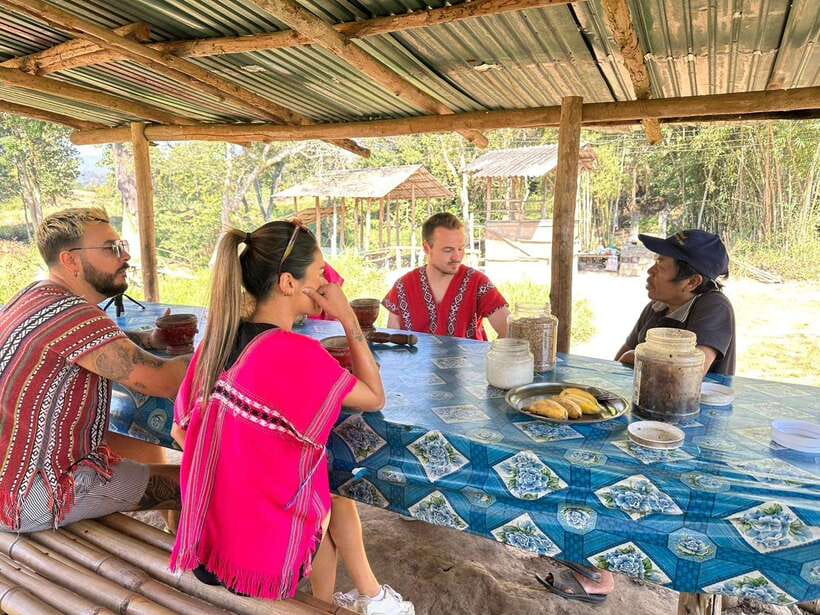
At the elephant care park, you meet the local mahouts and learn how the animals have lived with these families over generations. The setting is intended to feel like a working village rather than a showground, so the introduction may be relaxed and conversational.
The first task is preparing food. This gives you a useful sense of the work behind elephant care. Feeding a large animal is not only a photo opportunity. It involves knowing what to prepare, how to offer it, and how to read the animal’s mood and appetite.
You then feed the elephants by hand. This is one of the most memorable parts of the outing because it lets you notice individual behavior at close range. The experience description points to quiet moments and distinct personalities, but you should not expect every elephant to respond in the same way.
The central rule is respect. You may be close, but the animals decide how much contact they want. Do not expect a guide to force an elephant into a pose or create a staged trick. The exact activities can change on the day, depending on what the elephants choose to do.
That flexibility is a plus for animal welfare, but it can feel loose if you want a tightly managed program. The park is not presented as a professional show with a polished script. You may spend more time watching than doing, and that is part of the point.
Walking through the jungle without saddles
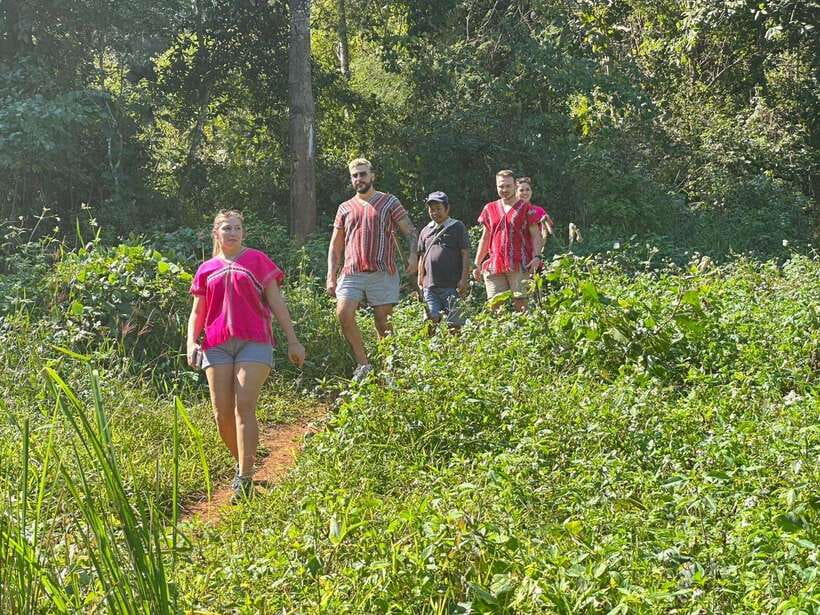
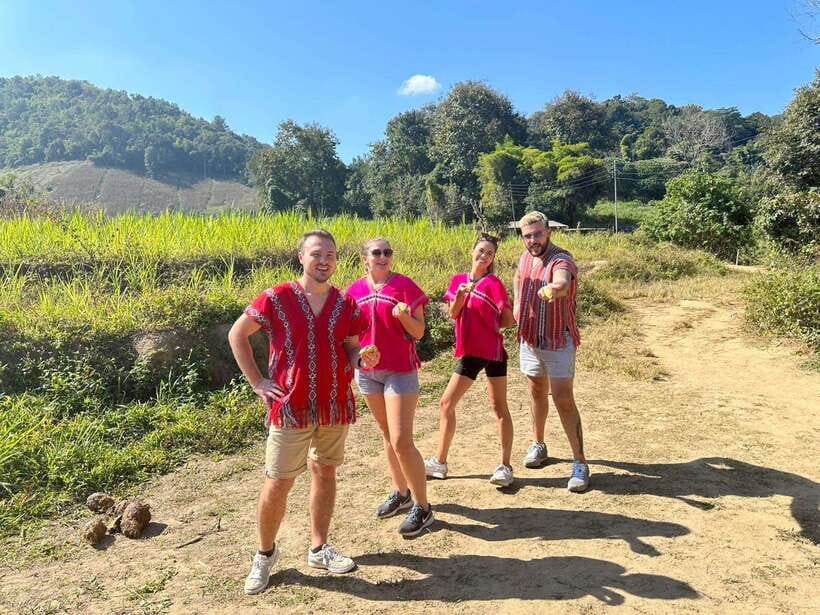
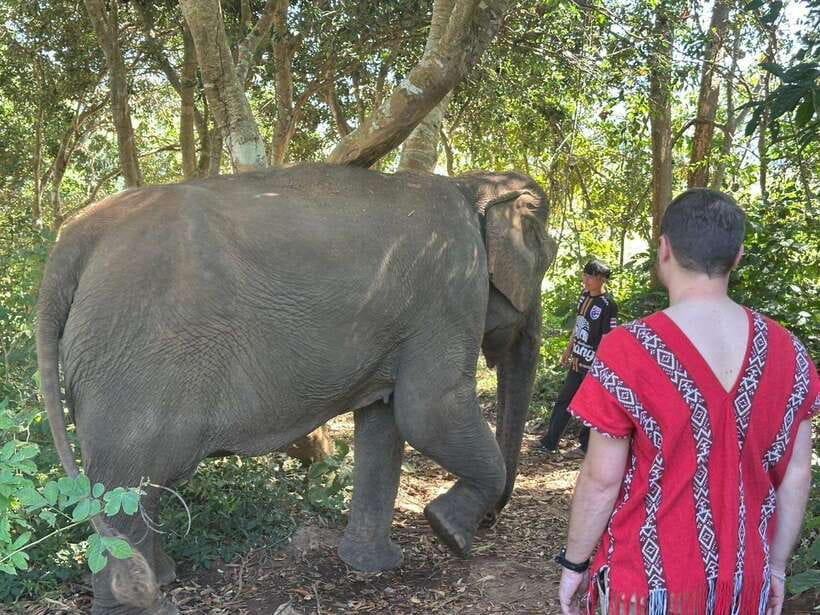
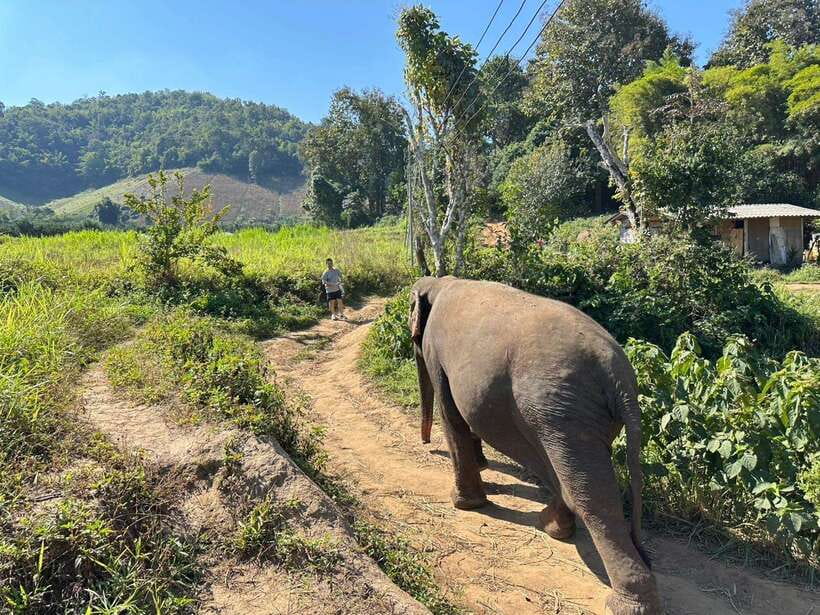
The walk takes you into the surrounding jungle with the elephants moving freely beside you. There are no saddles, and the animals are not chained for the activity. You observe them as they move through their surroundings rather than riding on their backs.
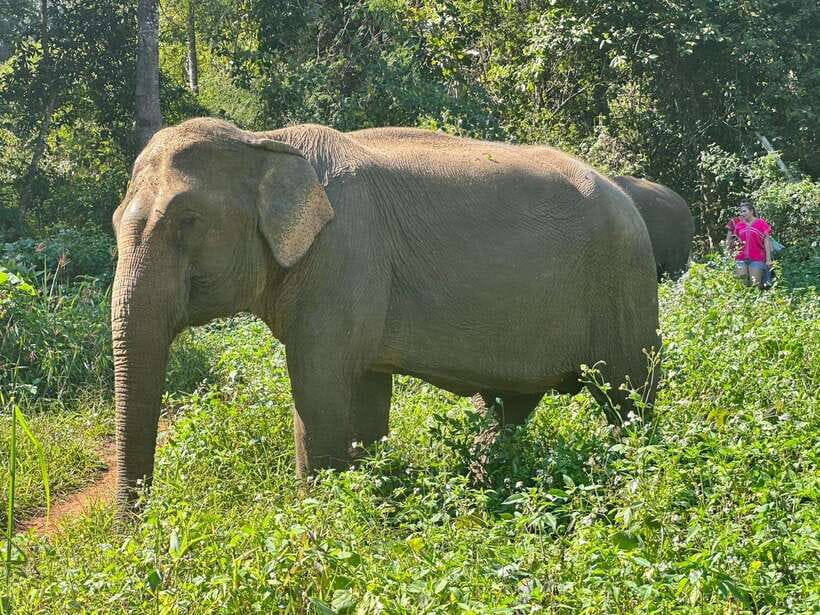
This is where the experience feels most different from traditional elephant camps. Walking beside an elephant gives you a better sense of its size, pace, and habits. You are also encouraged to watch the animal instead of treating it as a prop for a quick picture.
The path is an outdoor walk, not a paved attraction. The activity notes call for moderate fitness, so you should be ready for uneven ground, heat, insects, and a steady period on your feet. Sunglasses, a sun hat, sunscreen, and insect repellent belong in your day bag.
Wear clothes that can get wet and muddy. The formal advice does not list swimwear or towels, but bathing and mud are part of the plan, and practical experience shows that a swimsuit, towel, and change of clothes are sensible. Shoes with a secure fit are also a good idea for a nature walk.
Do not confuse natural interaction with a guarantee of constant contact. The elephants may stop, wander, feed, or rest. That uncertainty gives the day its honesty, but anyone seeking nonstop activity may find it slow.
More Waterfall Treks in Thailand
- Chiang Mai Adventure: Trekking, Tubing & Waterfall Slide
★ 4.9 · 20 reviews - Chiang Mai: Elephant Sanctuary & Jungle Trek w/ Waterfall
★ 4.5 · 18 reviews - Chiang Mai: Mae Ya Waterfall & Pha Dok Siew Trail Trek
★ 5.0 · 13 reviews - Chiang Mai: Guided Jungle and Waterfall Trek with Transfer
★ 4.9 · 8 reviews
The river bath and mud spa
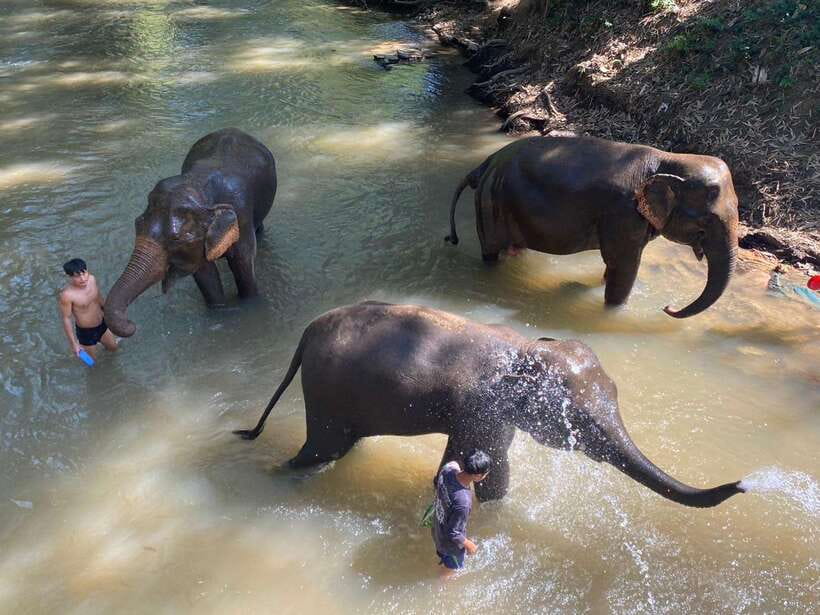
The elephants later head to a river, where you can join them for a mud spa and bath. This is the most playful part of the day. You can splash, scrub, and help wash the animals while enjoying a welcome break from the heat.
The river stop also shows why dry clothes matter. You may get wet even if you plan only to watch, and mud can find its way onto clothing and shoes. Pack a small plastic bag for damp items if you have one.
The bath is not a performance. The elephants are not required to enter the water or stay there for a set number of minutes. If conditions or animal behavior change, the staff may adjust what happens.
That approach is worth keeping in mind before you book. You are paying for access to a respectful care setting, not a guaranteed sequence of elephant poses. The most valuable moments may be quiet ones, such as watching a mahout guide an animal calmly or seeing the elephant choose its own path.
A village lunch after the morning work
After the elephant activities, you return to the village for a complimentary local meal. The food is prepared in a home-style setting with fresh local ingredients, and it is one of the strongest practical features of the day.
Several details make lunch more than a filler stop. You are eating after a warm, active morning, the meal supports the local community, and the setting lets you slow down with the families who care for the elephants. One meal was described as especially good, which matches the importance placed on traditional home cooking.
Food quality can vary from day to day, as it does in any local kitchen. One person found the chips cold, but the wider impression of the meal was positive. Tell the provider about dietary restrictions in advance. The activity includes a local meal, but the supplied details do not promise a specific menu.
The afternoon is intentionally unhurried. You may help with small daily tasks, relax, or simply watch village life. This can be a pleasant change from a checklist tour, though anyone expecting a second round of structured elephant activities may find the loose pace surprising.
Mae Wang Waterfall adds a second setting
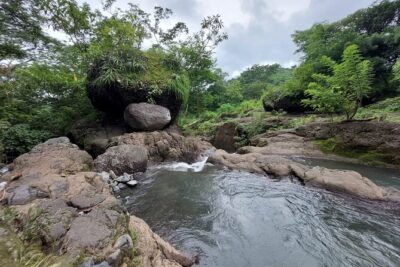
The final major stop is Mae Wang Waterfall, with about an hour for a visit, walking, and free time. It gives you a change of scenery after the elephant park and a chance to stretch your legs before returning to Chiang Mai.
The waterfall is not the main reason to choose this tour. Its value is that it rounds out the day with a simple outdoor stop. You get time to enjoy the water and surrounding area without having to arrange a separate excursion.
Crowds are possible here too. One account found the waterfall busier than expected, so do not picture a private jungle pool. The stop works best as a pleasant bonus rather than a promise of solitude.
If you want to swim, confirm the conditions with your guide on the day and keep your belongings secure. The provided information confirms free time and walking, but it does not promise swimming access or changing facilities.
What $51 gets you

At $51 per person, this is a strong value if you make use of the whole package. Hotel pickup and drop-off, an English-speaking guide, transport between several locations, drinking water, a local meal, elephant care activities, and a waterfall visit are all included.
The price also covers access to a style of experience that can be hard to arrange independently. You are not simply paying for an entrance ticket. You are paying for the transfer into a rural area, local coordination, and time with mahouts and rescued elephants.
The value drops if you want comfort and strict timing. The open-air truck and rougher road are basic, and a five-hour estimate may not hold. A longer day could interfere with another booking, especially if you have an evening flight, dinner reservation, or show.
I would compare this price with your priorities rather than with luxury tours. If animal welfare, local contact, and a flexible pace matter most, $51 is reasonable. If you want air-conditioned transport from door to door, a short ride, and a carefully timed schedule, spend more on a different kind of outing.
Who should book this experience
I would choose this day if you want:
- Close but respectful contact with rescued elephants
- No riding, tricks, chains, or forced behavior
- A look at mahout life in a hill tribe village
- A local meal rather than a standard tourist restaurant
- A flexible day shaped by animals and village routines
- A waterfall stop included in the same trip
You should think twice if you need a precise schedule or easy transport. The road can be tiring, the trucks are not designed for maximum comfort, and the day may run well beyond five hours.
It is also not the best fit if you expect professional guiding at every moment. The experience information is clear that this is not a traditional tour with a fixed program. Your guide helps, but the day follows the elephants and their caretakers.
The activity requires moderate fitness. You walk outdoors, deal with heat and insects, and may get muddy or wet. Bring a hat, sunscreen, insect repellent, sunglasses, swimwear, a towel, and spare clothes.
Should you book it?
Book this Chiang Mai elephant experience if you care more about respectful animal contact and village life than comfort or perfect timing. The feeding, jungle walk, river bath, and home-cooked meal create a full picture of daily care, not just a short photo stop.
Skip it if the idea of an open-air truck, a long mountain transfer, or an unscripted schedule sounds frustrating. For the right person, the rough edges are part of the bargain. You return with a better sense of what caring for elephants involves, plus a waterfall stop and a memorable meal.
FAQ
How long does the experience last?
The advertised duration is five hours, but the day can run longer. One account described a seven-hour experience, and the drive from Chiang Mai may take close to two hours each way in some conditions. Avoid booking another fixed activity immediately afterward.
Is hotel pickup included?
Yes. Pickup and drop-off are available from hotels in and around Chiang Mai Old Town. Transfers are free within a five-kilometer radius of the Old City, while locations outside that area incur a surcharge.
Will I ride the elephants?
No. Elephant riding is not included. The elephants are not forced to perform, and the park does not use chains or hooks for the experience.
What transport is used?
You may travel in a 12-seater air-conditioned van or an open-air pickup truck, then change to a roofed 4×4 truck to reach the sanctuary. The road and vehicle changes can make the journey uncomfortable for some people.
What should I bring?
Bring sunglasses, a sun hat, sunscreen, and insect repellent. You should also pack swimwear, a towel, and a change of clothes because the river bath and mud activity can leave you wet or dirty.
Is lunch included?
Yes. A complimentary local meal is included, along with drinking water. Tell the provider about dietary restrictions in advance.
New treks around Chiang Mai
- Private Tour Doi Inthanon, Trekking Kew Mae Pan Nature Trail★ 5.0 · 11 reviews
- Private Doi Inthanon, Nature Trail, Wat Phra That Doi Kham★ 5.0 · 6 reviews
- Inthanon national park, Trekking and Sightseeing in one day.★ 5.0 · 5 reviews
- Eco-Friendly: Doi Inthanon & Pha Dok Siew Trekking Day Trip★ 4.1 · 5 reviews
- Private Doi Inthanon With Trekking Pha Dok Siew Nature Trail★ 5.0 · 7 reviews
- Chiang Mai: Jungle Trek, Elephants care & Bamboo Rafting★ 4.5 · 8 reviews
- Chiang Mai: Mae Ya Waterfall & Pha Dok Siew Trail Trek★ 5.0 · 13 reviews
- Chiang Mai: Hmong Village, Doi Suthep and Wat Pha Lat Trek★ 5.0 · 3 reviews
Waterfall Treks, side by side.

Bali: Munduk Waterfalls Trek, Twin Lakes and Temple Tour
Read our review →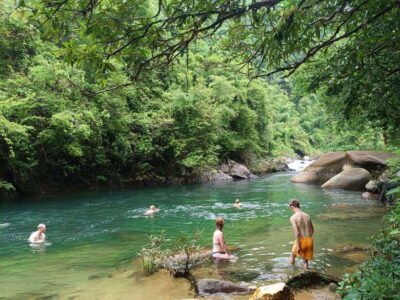
Khao Sok: Private Waterfalls and Wildlife Half-Day Trek
Read our review →
Selogriyo Temple and Trekking Java Rice Terraces, hidden waterfall -Nature Java
Read our review →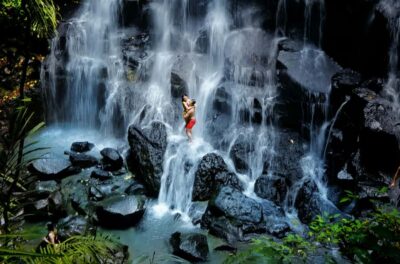
Ubud: Rice Terrace, Holy Water Temple & Waterfalls Trek Tour
Read our review →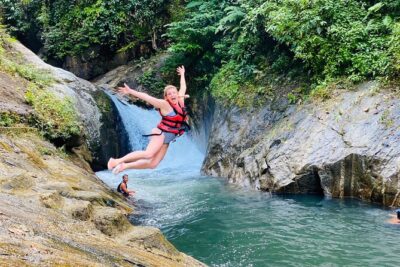
Trekking to Waterfall Adventure Tubing 45 mins. (Only Khao lak)
Read our review →
Chiang Mai: 2-Days Jungle Trek, Waterfalls and Karen Village
Read our review →
Wild Elephant Anakulam & Waterfalls Tour(munnar valley Trekking)
Read our review →